Veteran singer Chance Nalubega has launched an attack on music distribution company The Orchard, accusing it of distributing and earning from her songs without her knowledge or permission.
In a rant on social media, Nalubega questioned how a company she has never worked with could claim ownership and revenue rights over music she says she single-handedly created and financed.
“Who are The Orchard Music distributors? Banange bana Uganda abayimbi tulina ekizibu?” she exclaimed.
The frustrated singer said she was shocked to discover that her music had been claimed under the company’s system, blocking her from even monitoring her own songs online.
“Can you imagine someone claiming my music nti wabwe bebalina okufunamu sente, ate nze mbunze? I don’t even have permission to monitor my own music,” she lamented.
Nalubega insisted every step of the music creation process, from composition to production and video, was funded and handled by her personally.
“I composed my music, nenetwala mu studio, nentetenkanya obusente, nenkola videos. Tewali akwatilako,” she said.
Now, she wonders how someone else could suddenly appear and claim rights over her work.
“Kati oli awo nga ajeere ebinyo by’ente mbu claiming my songs?” she added in disbelief. “No, no, no… sijakukiliza.”
Nalubega’s outburst echoes a growing frustration among Ugandan artistes over digital distribution and copyright management. With global platforms controlling much of the music streaming ecosystem, many musicians say they struggle to understand who actually distributes their music and how revenue flows back to them.
Her comments also come at a time when Ugandan artistes are increasingly pushing for stronger copyright protections and transparency in music distribution.
Ugandan singer A Pass has stepped in to defend fellow artist Zulitums after a social media user compared his career to that of rising star Joshua Baraka.
The discussion began after an X user suggested that the life Zulitums once envisioned in his music career is currently being lived by Joshua Baraka.
“The life Zulitums expected with his music career is what Joshua Baraka is living,” the user wrote.
The life Zulitums expected with his music career is what Joshua Baraka is living. pic.twitter.com/T73iKMC5Hk
Responding to the post, A Pass urged fans to appreciate artists without turning their success into a competition.
“You can freely appreciate Joshua Baraka without disrespecting Zulitums,” A Pass wrote. “Everything is not a competition out here. People have different dreams.”
You can freely appreciate joshua Baraka without disrespecting Zulitums. Everything is not a competition out here people have different dreams. https://t.co/UuJLo1GL0i
His response quickly sparked conversation among fans, with many agreeing that constant comparisons between artists can create unnecessary rivalry within the industry.
Both Zulitums and Joshua Baraka have built their own musical identities, with Baraka recently gaining international attention while Zulitums continues to maintain a loyal fan base locally.
A Pass’ comments highlight a growing debate within Uganda’s music scene about how fans discuss artists’ careers and success.
A ruthless man is on the run for attacking a charcoal seller in Kyankwanzi, leaving her badly injured and robbed of an unspecified sum of money.
The incident occurred around midnight on 14 March 2023 at Ranch Number 5. Maganda Isaac is the suspect.
Lameck Kigozi, the Wamala Region Police Spokesman says the victim had hired workers to burn charcoal after paying Maganda for forest trees. When she went to pay her workers, she told Maganda she was coming. But the broker allegedly lured her into the forest and attacked her, cutting her severely and taking the money before fleeing.
A Good Samaritan rescued the woman and rushed her to Hoima Hospital, where she is receiving urgent care. Police confirmed that Maganda has a criminal record and is on bail for goat theft.
Kigozi says a report was filed at Bukwiri Police Station, and a manhunt is underway. Police are appealing to anyone in Kyankwanzi Subcounty and the wider district with information about Maganda’s whereabouts to report immediately.
Uganda’s creative industry has issued a strong collective appeal to Parliament ahead of the anticipated final reading of the Copyright and Neighbouring Rights (Amendment) Bill 2025, urging lawmakers to pass the bill without weakening its key provisions on artist royalties.
In a joint statement released Monday under the stewardship of the National Culture Forum (NCF), a coalition of Collective Management Organisations, creative industry associations and sector federations called on legislators to uphold Clause 9, which seeks to ensure artists are paid when their work is broadcast by radio and other media platforms.
The statement, signed on behalf of musicians, producers, performers, filmmakers, visual artists, authors and other creators responds to the recent second reading debate in the Parliament of Uganda, where some lawmakers argued that radio airplay should be considered promotional exposure rather than a service that attracts payment.
Under the headline “Airplay Is Not Payment,” the creative industry rejected the argument that promotional value should cancel a broadcaster’s obligation to pay for the music it uses.
According to the statement, radio stations use artists’ work to attract listeners and sell advertising, making music an essential commercial asset in broadcasting.
“The promotional benefit to the artist and the commercial benefit to the broadcaster happen simultaneously,” the statement reads. “One does not cancel the other.”
Industry leaders also pointed to countries such as United Kingdom, Kenya, South Africa, Ghana, and Nigeria, where functioning royalty systems exist and broadcasters continue to operate successfully.
As Parliament prepares for the next stage of debate, the creative sector has outlined specific actions it wants lawmakers to take.
First, artistes are demanding that Clause 9 be passed in its current form, without amendments that introduce promotional exemptions or voluntary compliance by broadcasters.
Second, they want Parliament to reject any proposals that weaken the legal authority of Collective Management Organisations, which are responsible for collecting and distributing royalties on behalf of artists.
Third, the industry wants Parliament to formally acknowledge the potential conflict of interest involving presiding officers who own radio stations, noting that such broadcasters would fall within the class of commercial users expected to pay royalties if Clause 9 is enacted.
Finally, artistes are urging lawmakers to pass the entire bill as soon as possible, arguing that delays are costing Ugandan creators money especially royalties from international airplay.
The creative sector says Clause 9 is essential for Uganda to participate effectively in the global royalty system. When Ugandan music is played abroad—such as on stations like BBC Radio 1—royalty collection societies in those countries collect payments on behalf of rights holders. However, those funds can only be transferred if Uganda has a legally recognized collecting system in place.
Without that framework, the statement warns, Ugandan artists continue to lose royalties they are already owed internationally.
Creative industry representatives say they will closely monitor the committee stage and any amendments proposed during parliamentary debate.
“We will monitor every amendment proposed against Clause 9,” the statement says, warning that the industry will not accept legislation that is weakened before passage.
With the final reading of the bill expected Tuesday, the coming parliamentary debate could determine whether Uganda’s creative sector finally secures a long-awaited framework for collecting broadcast royalties.
Collecting Management Organizations, Sector Domain Associations & the creative industry federations leadership’s issue a joint statement of the Ugandan creative industry responding to the Parliament’s second reading for the copyright and neighboring Rights (Amendment) Bill 2025 pic.twitter.com/HMFDHpG4qu
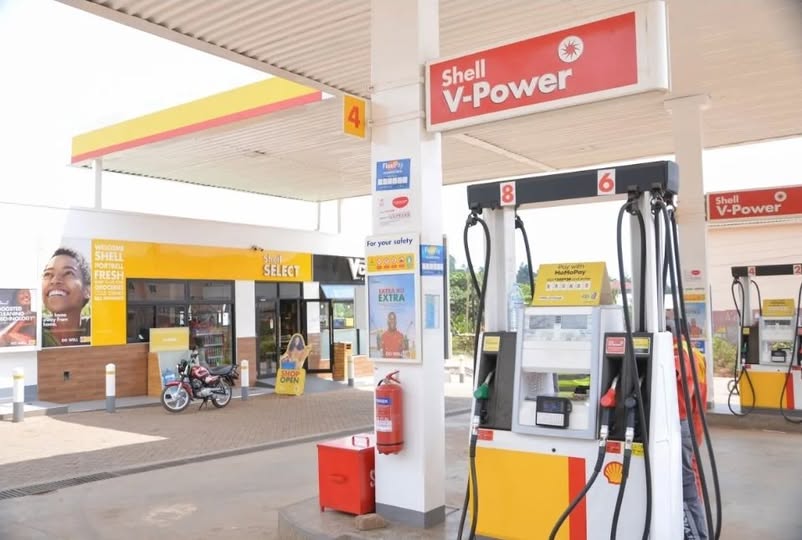
A quiet but significant ripple from the global oil industry is now being felt in Uganda after Vivo Energy Uganda announced plans to sell two of the most strategically located Shell-branded petrol stations in the heart of Kampala.
The move comes as the multinational energy giant Shell plc continues reshaping its global downstream fuel business — a strategy that includes the ongoing attempt to sell nearly 600 petrol stations in South Africa, potentially bringing to a close more than 124 years of Shell retail fuel operations in that country.
Against that global backdrop, Kampala has now entered the picture.
Vivo Energy Uganda has opened a sealed-bid sale for Shell Clock Tower and Shell South Street, two prominent service stations located in the capital’s central business district. The disposal has created a rare opportunity for investors to acquire prime urban land in some of the city’s busiest commercial corridors.
The Shell Clock Tower station sits on a 0.26-acre leasehold plot at the busy junction along Entebbe Road, one of Kampala’s most important transport arteries that funnels thousands of commuters into the city centre every day.
The second property, Shell South Street, occupies 0.247 acres of freehold land near the ever-crowded Old Taxi Park, one of the busiest transport and pedestrian zones in Uganda.
Both sites currently operate as fuel retail stations equipped with underground storage tanks, fuel pumps and vehicle service bays. However, Vivo Energy indicated that the properties could also attract investors looking to redevelop the land into broader commercial projects due to their highly strategic locations.
The bidding process has been structured with strict financial requirements.
Interested buyers must submit formal expressions of interest accompanied by a five percent commitment fee backed by a 30-day bank guarantee, and all purchase offers must be quoted exclusive of VAT.
The company has set Monday, March 30, 2026, as the final deadline for submissions, with all bids required to be delivered to Vivo Energy’s offices located in Kampala’s Industrial Area.
Company officials emphasized that the sale will follow a controlled process.
“Vivo Energy reserves the right to accept or reject any bid,” the notice states, adding that site visits will only be conducted strictly by appointment.
The Kampala disposal is unfolding at a time when Shell is conducting a sweeping review of its downstream fuel operations worldwide.
In 2024, Shell confirmed that it intended to sell its shareholding in Shell Downstream South Africa, a vast retail network of nearly 600 petrol stations.
If the deal eventually goes through, it would mark the end of a historic chapter for Shell in South Africa, where the company first began operations in 1902 supplying oil used for lighting and heating homes.
Shell said the divestment forms part of a broader strategic decision to reduce its downstream retail exposure while focusing more heavily on upstream operations such as exploration and extraction of crude oil, natural gas and natural gas liquids.
At the time, reports suggested that the South African assets were valued at around $1 billion, equivalent to roughly R16.4 billion.
Nearly two years later, the process remains ongoing.
Shell Downstream South Africa has confirmed that negotiations to sell the assets are still underway but declined to reveal further details.
“As a matter of policy and principle, we do not disclose information related to confidential commercial processes,” the company said.
Several international investors have reportedly shown interest in the massive fuel retail network.
Among those previously shortlisted are Abu Dhabi National Oil Company and Swiss commodities trading firm Gunvor Group.
Other companies once linked to the bidding process included Puma Energy, Sasol, and PetroSA, although sources familiar with the discussions say those firms are no longer in the running.
Globally, Shell remains one of the largest energy companies on the planet, operating roughly 40,000 fuel service stations worldwide, with nearly half located in the Americas.
South Africa alone hosts 591 Shell retail outlets, making it one of the major markets where the petroleum giant maintains a strong presence.
Yet Shell’s global restructuring has already seen the company divest downstream assets in several countries including Australia, Botswana, Burkina Faso, Côte d’Ivoire, Guinea, Kenya and Namibia, while reducing its activities in Malaysia, Uruguay, Paraguay and Colombia.
Industry analysts say the Kampala service station sale, though small compared to the massive restructuring underway elsewhere, could still signal subtle shifts in Uganda’s fuel retail market.
For property developers and investors, the opportunity is particularly attractive because high-traffic petrol station land in Kampala’s central business district rarely comes up for sale.
As the March 30 deadline draws closer, the fate of the iconic Clock Tower and South Street Shell stations now rests with whichever investors are prepared to submit the winning sealed bids.
And as Shell’s global shake-up stretches from South Africa’s 600 petrol stations to Kampala’s city centre, the landscape of the iconic brand’s African fuel network may soon begin to look very different.
A fresh audit has thrown Uganda’s fuel monitoring system into the spotlight, exposing troubling gaps in oversight, questionable decisions and rising fuel adulteration despite billions of shillings being pumped into the program meant to safeguard the country’s petroleum supply chain.
The latest report by the Office of the Auditor General on the Fuel Marking and Quality Monitoring Program (FMQP) reveals a series of operational weaknesses and accountability questions that now place the officials running the program under intense scrutiny.
The Fuel Marking and Quality Monitoring Program, implemented jointly by the Ministry of Energy and Mineral Development and the Uganda National Bureau of Standards, is supposed to protect the country from fuel adulteration and smuggling by marking petroleum products with special chemical identifiers and conducting nationwide inspections.
Yet the Auditor General’s 2025 findings suggest that despite the program receiving billions in revenue, major weaknesses persist.
According to the report, trade and other receivables increased by UGX231.86 million, rising from UGX806.78 million in the 2023/2024 financial year to UGX1.038 billion in 2024/2025. Auditors say the increase mainly relates to unpaid fuel marking fees amounting to UGX909.90 million owed by M/s SICPA. Red Pepper has not independently verified whether this money has been paid by the time of publication.
The company at the center of the controversy is the Swiss firm SICPA Global Fluids Integrity SA, contracted to provide fuel marking services in Uganda.
Under the contract, SICPA charges 26 shillings per litre of fuel marked, exclusive of taxes, and remits 15 percent of the collections to the ministry.
The billion-shilling question now hanging in the air is simple yet explosive: why has SICPA not paid the outstanding fuel marking?
Officials have remained largely tight-lipped on the matter, even as auditors flag the unpaid amount as a key issue affecting the program’s finances.
The company’s local operations are overseen by Suzan Mweheire Kitariko, who heads the Ugandan subsidiary of the Swiss conglomerate.
The audit also exposed procurement failures within the program.
According to the report, the program did not indicate the procurements reserved for registered associations as required by guidelines, meaning no contract awards were made to the registered associations.
Auditors further revealed that the program planned procurements worth UGX2.442 billion but only awarded contracts amounting to UGX600.21 million, representing just 25 percent of the planned procurement value.
Even more troubling, only UGX412.718 million worth of those contracts were completed, representing 69 percent of the contracts that had actually been awarded.
The unimplemented procurements largely relate to laboratory equipment that remained under procurement by the end of the financial year.
However, the most alarming finding in the report concerns the dramatic surge in adulterated fuel stations across the country.
The audit found that the number of non-compliant fuel stations skyrocketed by 99.7 percent, jumping from 230 stations in the previous year to 459 stations in 2025.
Auditors attribute this spike mainly to low taxes on kerosene, which makes it more profitable for rogue operators to adulterate fuel rather than comply with standards.
“The number of non-compliant fuel stations increased significantly during the period under review,” the report notes.
Monitoring coverage also fell short of expectations.
The program achieved an annual average monitoring coverage of only 81 percent, far below the requirement for 100 percent monthly monitoring of all fuel stations.
The monthly monitoring coverage fluctuated between 67 percent and 89 percent, with no single month achieving full compliance.
These revelations place pressure on officials responsible for supervising the program at both MEMD and UNBS.
At UNBS, the fuel quality monitoring docket falls under Patricia Bageine Ejalu, while enforcement in the field is overseen by Peter Kitimbo, who leads operations against fuel adulteration, smuggling and non-compliant fuel stations.
Within the Ministry of Energy, the program is supervised by the Commissioner of the Petroleum Supply Department Rev Justaf Frank Tukwasibwe, a long-serving official who has held the powerful position for more than fifteen years.
Tukwasibwe’s role has long placed him at the center of Uganda’s petroleum supply regulation.
But the latest audit findings have revived old questions about the ministry’s oversight of fuel monitoring contracts.
Back in 2015, the Inspectorate of Government directed disciplinary action against officials in the energy ministry over irregularities in the procurement of a firm to mark fuel products.
In a letter dated March 13 of that year, then Inspector General of Government Justice Irene Mulyagonja directed the Head of Public Service John Mitala to take action against officials involved.
“The accounting officer should specifically reprimand Rev Frank Tukwasibwe for mismanaging this transaction right from the start,” the directive stated.
At the time, the IGG said the procurement process that brought in the South African firm Global Fluids International to mark fuel products had been marred with irregularities.
The contract was later extended despite major changes in the scope of work and pricing, a move investigators said should have gone through a fresh competitive bidding process in line with PPDA regulations.
Tukwasibwe defended his actions in earlier interviews, insisting the fuel marking system had helped tame adulteration.
“GFI has done a good job to tame fuel adulteration,” he said at the time.
Today, however, the Auditor General’s report paints a troubling picture.
Despite billions being collected and spent, fuel adulteration is rising, procurement plans are not fully implemented, monitoring targets are not met and contractors are delaying payments.
Within the Ministry of Energy, the technical coordination of the Fuel Marking and Quality Monitoring Program also involves Steven Barisigara, serving as the Assistant Commissioner for Standards Licensing, Quality Assurance and Project Coordinator for the Fuel Quality Monitoring Programme. In this role, Barisigara manages nationwide efforts aimed at monitoring fuel quality and combating adulteration across the country.
Meanwhile, the program’s financial performance shows that revenue stood at UGX10.47 billion against a budget of UGX10.60 billion, representing 99 percent performance.
The program spent UGX10.33 billion, representing an absorption level of 98.6 percent.
But the audit shows that out of outputs worth UGX5.88 billion assessed, 82 outputs worth UGX5.62 billion were fully implemented, two outputs worth UGX16.80 million were partially implemented, while 22 outputs worth UGX242.98 million were not implemented at all.
Auditors also discovered that three vehicles and other laboratory equipment were nonfunctional and earmarked for disposal.
The controversy surrounding petroleum sector oversight has also previously touched other officials in the ministry.
Former head of petroleum Spero Byokunda has been cited in corruption investigations and is required to refund Sh53,159,400 or face arrest.
As the revelations sink in, analysts say the growing gaps in the fuel monitoring program raise critical questions about leadership and accountability in the sector.
For many observers, the issue is no longer simply about unpaid fees or missed monitoring targets.
The bigger question is whether long-serving officials responsible for overseeing Uganda’s fuel quality systems have kept pace with the evolving challenges of the petroleum market.
“Leadership continuity can bring experience,” one governance expert said. “But when problems persist year after year, the country must ask whether fresh ideas and reforms are needed.”
For now, the unanswered question remains why the program still has rising arrears linked to SICPA and why fuel adulteration is climbing despite billions spent on monitoring.
As the Auditor General’s report circulates through government corridors, the spotlight is now firmly on the officials tasked with protecting Uganda’s fuel supply.
KAMPALA– Uganda’s public debt has surged to a record US$34.86 billion (UGX 130.84 trillion) as of December 2025, piling fresh pressure on the government’s fiscal managers and raising concerns about the long-term burden on citizens and businesses.
According to the Ministry of Finance, Planning and Economic Development’s latest Quarterly Debt Statistical Bulletin and Public Debt Portfolio Analysis, the debt stock jumped from US$34.21 billion (UGX 128.65 trillion) in September 2025 — a quarterly increase largely driven by aggressive domestic borrowing.
The report shows domestic debt now dominates Uganda’s portfolio at 54.5%, equivalent to US$19.02 billion (UGX 68.86 trillion), while external debt stands at 45.3%, or US$15.84 billion (UGX 57.33 trillion). The ministry openly attributes the increase to “increased domestic debt issuances.”
With Uganda’s population estimated at about 50 million people, the figures translate into roughly US$700 per citizen, a statistic that has ignited debate across social media platforms.
“Can someone tell us what we now individually owe as citizens?” one user asked on X (formerly Twitter), while another warned bluntly: “This country is about to implode.”
Debt Growth Years in the Making
Uganda’s ballooning debt did not emerge overnight. Over the past decade, government borrowing has accelerated to finance large infrastructure projects including roads, energy investments and post-COVID economic recovery programmes.
In recent years, Kampala has deliberately shifted toward domestic borrowing to reduce foreign exchange exposure tied to external loans. But economists warn the policy comes at a price.
Treasury bills and government bonds carry double-digit interest rates, making domestic borrowing significantly more expensive and raising fears that government demand for credit is squeezing out private sector investment.
IMF Sounds Caution
The International Monetary Fund (IMF) in its January 2026 Post-Financing Assessment still classifies Uganda’s debt as sustainable with a moderate risk of distress. However, the Fund warned that the country’s debt-to-GDP ratio — estimated at about 52.4% in FY2024/25 — is steadily rising.
More troubling is the growing cost of servicing the debt.
Current projections show 20–25% of domestic revenues already going to debt servicing, with some estimates suggesting the figure could climb to 31% if borrowing continues at the current pace.
At the same time, undisbursed loan commitments have reached US$3.74 billion, raising questions about whether borrowed funds are being deployed efficiently or simply sitting idle.
Experts Warn of Private Sector Squeeze
Development consultant Nyende Amman says the growing reliance on domestic debt must be handled carefully.
“While domestic borrowing can help deepen local capital markets, the pace of debt accumulation requires careful management to avoid crowding out private sector credit and increasing debt servicing pressures,” Amman warned.
Opposition politicians and independent economists have also raised concerns that heavy borrowing around election cycles — including the 2026 polls — risks tightening economic conditions further.
Government Response
The Ministry of Finance insists the situation remains under control and points to a number of policy steps already in motion.
Under the Medium-Term Debt Management Strategy (MTDS) 2025/26–2028/29, government plans to restructure borrowing and reduce refinancing risks by shifting toward longer-term domestic bonds.
Officials also say borrowing will be significantly reduced in the next financial year.
Key measures include:
Cutting domestic borrowing by 21% in FY2026/27 — from UGX 11.4 trillion to about UGX 9 trillion.
Slashing external borrowing almost entirely in the coming fiscal cycle.
Publishing regular debt bulletins and sustainability analyses to improve transparency.
Rebalancing the debt portfolio away from short-term treasury bills toward longer-term instruments.
Clearing domestic arrears, with UGX 1.4 trillion already allocated in the current budget.
What Must Be Done
Yet analysts say policy papers alone will not tame the debt trajectory.
To keep Uganda’s debt from spiralling, economists recommend several urgent actions:
Accelerate domestic revenue mobilisation by widening the tax base and reducing tax exemptions.
Cut non-priority government spending, particularly supplementary budgets and wasteful expenditure.
Strengthen public financial management reforms to ensure borrowed funds translate into productive projects.
Enhance parliamentary and public oversight of loans and major infrastructure investments.
Prioritise high-return projects that generate economic growth faster than debt accumulates.
For now, Uganda’s debt remains technically sustainable. But the margin for error is shrinking.
Every additional trillion borrowed today ultimately becomes a bill for tomorrow’s taxpayers — a reality that economists say government must confront sooner rather than later.
Do you have a story in your community or an opinion to share with us: Email us at Submit an Article
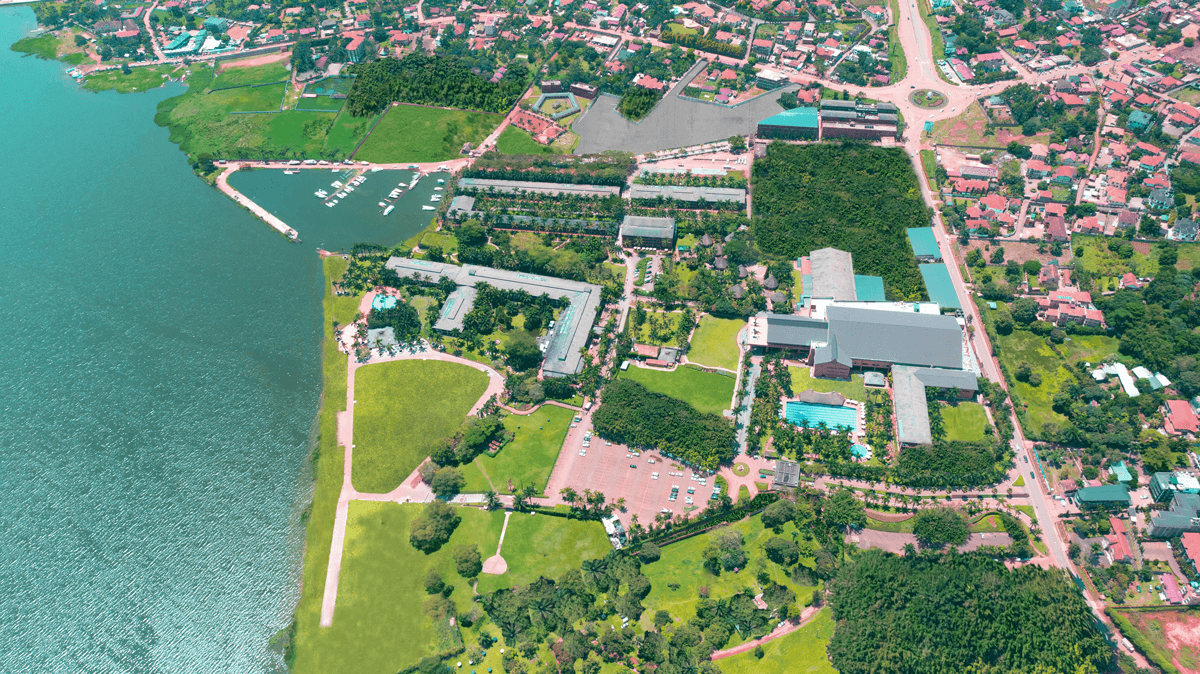
KAMPALA – As the Easter holiday approaches, Kampala’s luxury hospitality scene is heating up, and few places are positioning themselves as aggressively for the long weekend as Speke Resort Munyonyo, which has rolled out an elaborate Easter Staycation package targeting families, couples and leisure seekers looking to escape the city grind without leaving town.
The lakeside resort—long considered one of Uganda’s premier leisure destinations—has unveiled a tiered pricing structure that blends accommodation, dining and recreational access into what management describes as a full-board Easter experience.
According to the promotional offer circulating in hospitality circles, the staycation rates will run from April 2 to April 6, covering the Easter weekend and culminating in the much-anticipated Easter Sunday brunch, a signature attraction that typically draws Kampala’s social and corporate elite.
What the Packages Offer
The resort has structured its pricing to cater to both mid-range and luxury guests.
Entry-level accommodation starts with the Deluxe Room at $139 per night, while the Double Deluxe Room is priced at $188. Guests seeking more space can opt for the Studio Room at $225 or the Superior Room at $250.
For travelers looking for an elevated experience, the Junior Suite is listed at $330, while the Executive Room also sits at $250, offering upgraded amenities and views.
But the real indulgence lies at the top of the pricing ladder.
The resort’s Garden Villas go for $399, the Executive Suite at $436, and the Presidential Cottage at $498. At the pinnacle sits the Presidential Suite, commanding $684 per night, targeting high-net-worth guests and corporate executives seeking exclusivity during the holiday.
Full Board Experience
Unlike many hotel promotions that lure guests with discounted rooms only to layer additional charges later, the Munyonyo package comes on a full board basis.
This means guests receive:
Breakfast
Lunch
Dinner
Easter Sunday brunch
Drinks, however, are excluded from the package—an industry-standard practice that allows hotels to maintain strong beverage revenue during peak seasons.
Resort Lifestyle Attractions
The appeal of Munyonyo goes beyond the rooms.
Guests who book the Easter staycation will have complimentary access to the resort’s lifestyle facilities, including:
Swimming pool
Gymnasium
Steam and sauna
For many Kampala residents, this combination of lakeside scenery, expansive gardens and leisure amenities provides the closest thing to a coastal holiday without leaving Uganda.
The resort’s equestrian centre, lakeside walkways and expansive grounds have long made it a preferred destination for weddings, conferences and family retreats.
Why the Timing Matters
Uganda’s hospitality industry traditionally experiences one of its strongest domestic travel spikes during Easter, when families and professionals take advantage of the long weekend.
Hotels in Kampala, Entebbe and Jinja often compete fiercely for this market through staycation offers, but Munyonyo typically dominates the premium segment thanks to its location on Lake Victoria and its reputation as a venue for major international summits.
Industry analysts say staycation campaigns like this are increasingly important as hotels seek to balance international tourism fluctuations with domestic leisure travel.
Watchdog Leisure Verdict
From a leisure perspective, the offer positions Speke Resort Munyonyo as a luxury urban escape rather than just a hotel stay.
The inclusion of Easter brunch and full board dining significantly boosts value for families who want a hassle-free holiday, while the wide range of room categories ensures both mid-range and luxury travelers can find a suitable option.
For Kampala residents who want a holiday atmosphere without the stress of long-distance travel, Munyonyo’s Easter staycation remains one of the most compelling high-end options on the market.
Do you have a story in your community or an opinion to share with us: Email us at Submit an Article
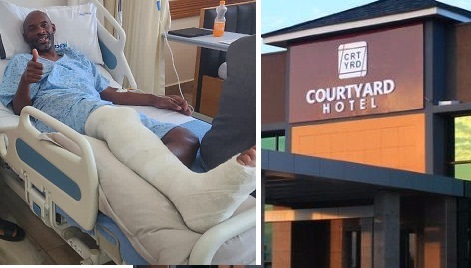
Fresh details have emerged in a harrowing attack on the newly elected Kabula Member of Parliament, Asiimwe Enos, who narrowly survived bullets at the Courtyard Hotel in Lyantonde on Saturday, March 14.
According to police, Asiimwe had earlier booked a room at the hotel. The incident happened when he had just arrived to open his hotel room when he noticed a stranger exiting the opposite room brandishing a firearm. “Immediately, I locked myself inside, but the man broke down the door. I had no choice but to escape through the window,” Asiimwe recounted, still visibly shaken.
In the chaotic moments that followed, both the MP and the attacker plunged from the hotel’s first floor. Miraculously, Asiimwe survived, but he suffered a broken leg in the fall. In the melee, the assailant also dropped the gun, and bystanders reportedly tried to intervene. “The gun’s silver cover and spring fell off during the struggle. He snatched my phone and ran,” the MP told police.
The incident prompted a massive response from law enforcement. A team composed of homicide detectives, uniformed officers, and K9 units, led by DPC Lyantonde SP Ayeta, combed the crime scene. Statements were collected from witnesses and the MP, and a case of aggravated robbery was registered under CRB 133/2026.
Police say the investigation is ongoing, but early reports suggest the suspect fled as crowds gathered outside the hotel. “We are following all leads, including checking CCTV and tracking the abandoned weapon,” SP Ayeta confirmed.
Friends of the MP have expressed shock over the attack. “Enos is not a womanizer. He’s very low-key and focused on work. We are all asking why someone would target him,” said a close associate.
The motive behind the daring robbery remains unclear. Observers have raised questions about whether the assailant had personal grudges, political intentions, or was simply an opportunistic criminal emboldened by the hotel setting.
The MP is currently receiving medical care for his broken leg but has assured supporters that his commitment to Kabula and parliamentary duties remains unwavering. “This will not stop me. I am grateful to be alive, and I trust police will bring the culprit to justice,” Asiimwe told journalists.
Authorities are urging anyone with information about the attacker to come forward. With a gun abandoned at the scene, investigators believe they are close to identifying the suspect behind this terrifying attack.
Unilever Uganda, aiming to improve oral hygiene habits among children, has launched a school outreach campaign targeting 100,000 pupils across 40 primary schools in Kampala and Wakiso counties through its oral care brand Pepsodent.
The campaign is being rolled out to mark World Oral Health Day under the theme “Do the 2 – Brush Day and Night,” encouraging children to brush their teeth at least twice daily to prevent tooth decay and gum disease.
Through interactive school-based sessions, pupils are being educated on the importance of good oral hygiene, correct toothbrushing techniques, and the role of daily habits in maintaining a healthy mouth.
The programme also includes the distribution of oral care products, enabling learners to practice what they are taught both at school and at home.
Speaking at Nakasero Primary school, Luck Ochieng, Managing Director, Unilever East Africa, underscored the importance of early intervention in oral health.
Building the habit of brushing twice a day from a young age is one of the most effective ways to prevent oral health problems. Through the ‘Do the 2’ campaign, we are empowering children with simple, practical habits that support healthier smiles and better wellbeing.
According to Uganda’s National Oral Health Policy, oral diseases remain a significant public health concern, with prevention and early education identified as key strategies in reducing the burden of dental conditions. School-based programmes play a critical role in shaping lifelong health behaviours.
Globally, the World Health Organisation estimates that oral diseases affect nearly 3.5 billion people, making them among the most common health conditions worldwide. Initiatives such as the
Pepsodent school programme contributes to addressing this challenge through community-focused education.
Through this campaign, Unilever Uganda aims to positively impact 100,000 pupils in the Central Region, reinforcing its commitment to improving health outcomes and promoting preventive care through everyday habits.
About Unilever
Unilever is a global leader in Beauty & Wellbeing, Personal Care, Home Care, Foods, and Ice Cream, with products sold in over 190 countries and used by billions of people every day.
The company is committed to improving health and well-being through its brands while supporting sustainable, community-focused initiatives.