Author: admin

  • Shocking Rankings: Uganda’s Worst Performing Districts in 2024 Government Assessment Revealed

    Shocking Rankings: Uganda’s Worst Performing Districts in 2024 Government Assessment Revealed

    KAMPALA – After celebrating the country’s top-performing districts in the 2024 Local Government Performance Assessment, attention is now turning to the other end of the ranking — the districts that registered the weakest service delivery and governance performance.

    According to the 2024 Local Government Management of Service Delivery (LGMSD) Assessment Report released by the Office of the Prime Minister (OPM), several districts and municipal councils posted extremely low scores in critical governance indicators such as financial management, infrastructure planning, service delivery, and accountability.

    The findings place Kamuli Municipal Council at the very bottom of the national ranking with a score of 24.0 percent, making it the worst-performing local government in the country for the year under review.

    Other poorly performing local governments include Kibuku District (27.88%), Tororo Municipal Council (29.75%), and Bugweri District (30.2%), all of which recorded severe performance gaps in planning, budgeting, and project implementation.

    Bottom 10 Worst Performing Local Governments in 2024

    • Kamuli Municipal Council – 24.0%

    • Kibuku District – 27.88%

    • Tororo Municipal Council – 29.75%

    • Bugweri District – 30.2%

    • Butebo District – 31.8%

    • Luuka District – 31.92%

    • Kaliro District – 32.9%

    • Sironko District – 34.68%

    • Iganga Municipal Council – 35.63%

    • Masaka District – 36.12%

    A striking pattern in the report is the dominance of districts from Eastern Uganda among the worst performers, highlighting persistent governance and service delivery challenges in the region.

    Key Areas of Poor Performance

    The assessment evaluated local governments across several key performance areas, including:

    • Infrastructure development and asset management

    • Planning and budgeting systems

    • Procurement and contract management

    • Financial resource mobilization

    • Transparency and oversight mechanisms

    • Environmental and social safeguards

    Districts that ranked poorly often failed to demonstrate effective project management systems, infrastructure maintenance, and financial accountability, according to the report.

    Service Delivery Gaps

    Experts say weak performance in local governments often translates directly into poor public services, including deteriorating roads, inadequate health facilities, poor school infrastructure, and delayed government projects.

    The Office of the Prime Minister uses the assessment to determine eligibility for performance-based grants, meaning districts that consistently score poorly risk losing access to key development funding streams.

    Regional Imbalances

    The 2024 assessment also revealed a stark regional divide.

    While districts from Western Uganda dominated the top rankings, many local governments in the Eastern region appeared repeatedly among the lowest performers, pointing to systemic development and governance gaps.

    This disparity raises questions about capacity gaps, staffing levels, and institutional weaknesses in some districts.

    Call for Urgent Reforms

    Governance analysts say the findings should serve as a wake-up call for local leaders.

    Poor-performing districts are expected to implement corrective measures such as strengthening planning units, improving financial management, and enhancing monitoring of government projects. Officials from the Office of the Prime Minister have previously warned that continued poor performance could trigger administrative interventions and increased oversight.

    Accountability at the Local Level

    Uganda currently has more than 170 local governments, including districts, cities, and municipalities, all responsible for delivering essential services such as health, education, roads, water, and agriculture extension.

    The annual performance assessment is designed to measure how effectively these local governments utilize public resources to improve citizens’ livelihoods.

    While top-performing districts have been celebrated for strong leadership and efficient service delivery, the lowest-ranking districts now face mounting pressure to reform.

    For residents living in these areas, the stakes are high: the quality of local governance often determines whether roads are built, health centers are staffed, and schools function effectively.

    As the government pushes forward with decentralization and service delivery reforms, the spotlight will remain firmly on districts struggling to meet national standards.

    Watchdog Uganda will continue tracking how these districts respond to the findings in the coming months.

    Do you have a story in your community or an opinion to share with us: Email us at Submit an Article


  • 16-Year-Old Student Petitions Parliament to Fund Community Organisations

    16-Year-Old Student Petitions Parliament to Fund Community Organisations

    Nyanzi, a student at Kisozi High School in Buddo, says grassroots organisations play a critical role in delivering services that complement government programmes, particularly in education, healthcare, youth empowerment, and community development.

    Through his petition, the teenager is calling for a legal framework enabling Parliament to allocate funds directly to registered community organisations, strengthening their operations and ensuring sustainability.

    Concerns Over Shrinking Funding

    In his proposal, Nyanzi highlights the challenges faced by NGOs and CBOs after the withdrawal or reduction of support from major international partners.

    He specifically cites the suspension of funding from the Democratic Governance Facility (DGF) and reduced assistance from the United States Agency for International Development (USAID), which he says has significantly hampered the operations of many grassroots organisations.

    “Many community organisations providing vital services have been forced to scale down or close entirely due to financial constraints,” Nyanzi said in an interview.

    He argues that structured government support could bridge the funding gap and ensure these organisations continue delivering services at the grassroots level.

    Political Engagement

    To push his proposal forward, Nyanzi has engaged several parliamentary leaders. He recently held discussions with Deputy Speaker Thomas Tayebwa and has secured support from Kawempe North Member of Parliament Elias Luyimbazi Nalukoola, who is willing to present the proposal as a Private Member’s Bill.

    “We are hopeful that the 12th Parliament will consider this proposal and debate a bill ensuring community organisations receive the support they need to continue serving Ugandans,” Nyanzi said.

    However, MP Nalukoola cautioned that the proposal would require careful review to align with Uganda’s current regulatory framework for NGOs. He emphasised that community organisations should complement government programmes rather than become fully dependent on public funds.

    Under Ugandan law, CBOs are registered at the district level through District NGO Monitoring Committees, which operate based on recommendations from Sub-County NGO Monitoring Committees.

    Registration requires submitting a formal application, a constitution, a detailed work plan and budget, and proof of payment of registration fees. Organisations must renew operating permits regularly, with fines imposed on those operating illegally — currently Shs200,000 for each month of unauthorised activity.

    Rising Young Media Entrepreneur

    Born on December 5, 2009, in Kampala, Martin Luther Nyanzi is the son of Simon Ssekaayi and author Joan Vumilia.

    Despite his age, Nyanzi has established himself as an emerging entrepreneur in Uganda’s digital media space. After completing primary education at MK International School in 2023, he joined Kisozi High School for his O-Level studies.

    His interest in media began at age 13, when he launched Block FM, an online radio station giving young people a platform to express their ideas. Inspired by Ugandan media personalities such as Don Wanyama and Kin Kariisa, Nyanzi has expanded into other ventures, including APEX Media Services, where he serves as Chief Executive Officer.

    APEX Media Services focuses on digital media production and youth skills development. Through its Apex Digital Skills programme, Nyanzi trains young people in digital literacy, content creation, and media production. His ventures reportedly employ more than 55 staff members, supported by an executive board that includes his mother and investor Isaac Ssegawa.

    He also leads The Block Foundation, a non-profit offering free digital literacy training and employment opportunities to young professionals.

    Youth Voice in National Policy

    Nyanzi says his long-term goal is to build a major media company in Uganda while empowering young innovators nationwide.

    His petition to Parliament has drawn attention as a rare example of youth participation in legislative advocacy, highlighting the growing role of young people in shaping policy discussions around development and community empowerment.

    Do you have a story in your community or an opinion to share with us: Email us at Submit an Article

  • Jowy Landa clears the air on Ava Peace friendship, responds to ‘upcoming artist’ tag – Sqoop

    Jowy Landa clears the air on Ava Peace friendship, responds to ‘upcoming artist’ tag – Sqoop

    Ugandan singer Jowy Landa has dismissed claims that she once shared a deep friendship with fellow artist Ava Peace, saying their relationship has often been misunderstood by fans.

    Speaking during an interview on Galaxy TV Uganda, Jowy said that although the two musicians collaborated on a song, they were never as close as many people believed.

    Over time, fans began speculating that the singers had fallen out after they stopped appearing together publicly. However, Jowy insisted that there was never any serious disagreement between them.

    “I have no problem with her but we are family — someone you did a song with,” she explained, downplaying the idea that they were once inseparable.

    During the interview, the hosts challenged Jowy to prove there was no bad blood by calling Ava Peace live on air. Although she initially hesitated and questioned the need for the call during a broadcast, she eventually went ahead and dialed her fellow singer, seemingly to show that there was no conflict between them.

    According to Jowy, the public may have confused a working relationship with a deep personal friendship.

    “We are just friends, not besties because besties are always together, but for us we aren’t,” she said.

    The singer also revealed that the person she once considered her closest friend in the music industry was Nandor Love, although their relationship changed as both became busier with their careers.

    “These days my best friend is my mother,” she added.

    Jowy also brushed off criticism from some people who still describe her as an “upcoming artist,” saying such labels do not affect her focus or confidence.

    “I make money. I make millions every week. There’s nothing that can pull me down,” she said, adding that she remains focused on growing her career in Uganda’s music industry.

    Despite the rumours and labels, the singer maintains that her priority is her music and personal growth rather than public speculation about her relationships.

    Don’t want to miss out on any story? For updates on all Sqoop stories, follow this link on Telegram: https://t.me/Sqoop and Whatsapp: https://whatsapp.com/channel

  • MUST Makes Medical History: Uganda Performs East Africa’s First Awake Brain Surgery

    MUST Makes Medical History: Uganda Performs East Africa’s First Awake Brain Surgery

    Uganda has achieved a historic milestone in medical science after surgeons at Mbarara University of Science and Technology (MUST) successfully performed the first-ever awake brain surgery in Uganda and the wider East African region.

    The groundbreaking procedure, medically known as an awake craniotomy, was conducted at Mbarara Regional Referral Hospital (MRRH) in collaboration with specialists from the University of Colorado Anschutz Medical Campus during the 3rd International Neurosurgery Conference held on February 26–27, 2026.

    ADVERTISEMENT

    A Complex Surgery with the Patient Awake

    The procedure involved a 47-year-old male patient diagnosed with a left parietal glioma, a tumor located in a sensitive part of the brain responsible for movement and sensation.

    Unlike conventional brain surgeries where patients are fully unconscious, surgeons kept the patient awake and responsive throughout the operation. This allowed doctors to communicate with him in real time while carefully removing the tumor.

    By engaging the patient during the surgery, the medical team was able to map the brain’s functional areas, ensuring that critical abilities such as speech and movement were not permanently damaged.

    According to neurosurgeon David Kitya, the approach enables surgeons to remove as much of the tumor as possible while preserving the patient’s quality of life.

    “The patient is now fully recovered, walking and speaking normally one week after surgery, which is a testament to the precision of this pioneering technique,” he said.

    International Collaboration

    The historic surgery was led by a multidisciplinary team of neurosurgeons including:

    Ryan Ormond, Associate Professor and Director of the Brain Tumor Program at the University of Colorado Anschutz Medical Campus

    David Kitya, a leading East African neurosurgeon and President of the Neurosurgical Society of Uganda

    Blessing Michael Taremwa, a Uganda-based neurosurgeon specializing in skull base and cerebrovascular surgery

    The collaboration brought together international expertise and local medical innovation, demonstrating how partnerships can elevate specialized healthcare services in Africa.

    A Turning Point for Neurosurgery in East Africa

    Medical experts say the success of the procedure signals a major advancement in neurosurgical care in the region, where access to highly specialized brain surgery has traditionally been limited.

    The achievement also highlights the growing role of MUST as a regional center for advanced medical training and research.

    Health professionals believe the breakthrough will help expand access to complex neurosurgical procedures across East Africa, while also strengthening Uganda’s position on the global map of medical innovation.

    As Professor Kitya noted, the operation proves that cutting-edge medical procedures can be successfully carried out in Africa when local expertise, global partnerships, and modern technology converge.

  • Queries Emerge as Makerere Acquires Shs500m Bus from Kiira Motors

    Queries Emerge as Makerere Acquires Shs500m Bus from Kiira Motors

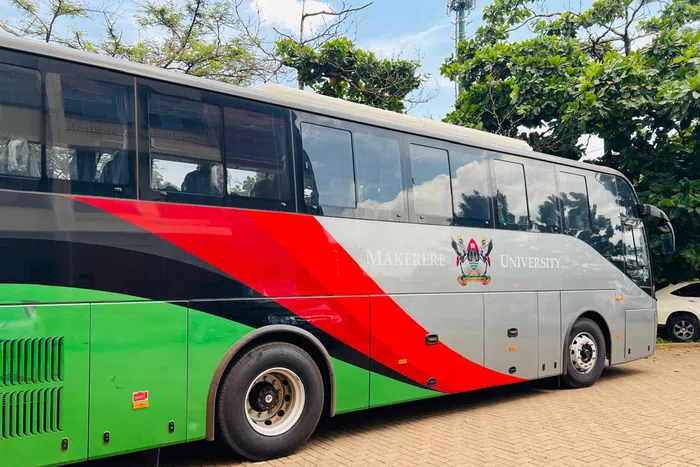
    Questions have emerged online after Makerere University acquired a 41-seater bus valued at Shs500 million from Uganda’s state-owned automotive manufacturer Kiira Motors Corporation.

    The new bus was delivered this week to the university’s College of Engineering, Design, Art and Technology (CEDAT), which announced its arrival on Monday while sharing photos of the vehicle painted in Makerere’s colours.

    ADVERTISEMENT

    “It’s finally here!! This afternoon CEDAT received a brand new 41 seater Bus valued at UGX 500 million, a product of Kiira Motors,” the college said in a statement.

    The bus was officially received by CEDAT Principal Prof. Moses Musinguzi from Tonny Seruyange, the transport officer at Makerere’s Directorate of Estates and Works.

    While many welcomed the development as a boost for Uganda’s local manufacturing industry, others questioned the Shs500 million price tag, arguing that a locally produced bus should cost less.

    Several social media users compared the cost with imported buses and expressed surprise at the figure.

    “A 40 seater at 500 million? Naye what is wrong with this country?” wrote one commenter.

    Another user argued that importing buses might be cheaper if the price remains high.

    However, some commentators defended the price, noting that Uganda’s domestic automotive industry is still in its early development phase, where production volumes are relatively low and costs remain high.

    Historical Link Between Makerere and Kiira Motors

    Kiira Motors has deep roots at Makerere University. The idea for the Kiira electric vehicle was first developed more than 15 years ago by students and professors at CEDAT, before eventually evolving into the state-owned automotive company.

    Today, Kiira Motors is jointly owned by the Government of Uganda and Makerere University, and aims to build a local vehicle manufacturing industry to reduce reliance on imported vehicles.

    Price Comparisons

    Industry data shows that the price of a new 40-seater coach globally can range from approximately Shs230 million to more than Shs600 million, depending on specifications, technology, and brand.

    Some high-end coaches can even exceed Shs1 billion, especially those equipped with modern safety systems, luxury interiors, or electric powertrains.

    In Uganda, even smaller imported commuter vehicles such as Toyota Hiace coasters can cost over Shs200 million, sometimes even when purchased used.

    Expanding Client Base

    Kiira Motors has already supplied buses to several institutions, including the Uganda Civil Aviation Authority.

    The company’s Kayoola buses have also been delivered to Tondeka Metro Bus Service as part of plans to establish a modern mass transit system in Kampala. Some of the vehicles have also been used for airport shuttle services and government demonstrations of electric mobility.

    Despite the online debate, supporters argue that purchasing locally manufactured vehicles helps strengthen Uganda’s industrial base, create jobs, and promote technological innovation.

    As Kiira Motors scales up production at its manufacturing plant, analysts say vehicle prices could gradually reduce with higher production volumes and expanded market demand.

  • Nkozi awaits: Smirnoff Fiesta to feature Etania, DJ Wiz J, and more

    Nkozi awaits: Smirnoff Fiesta to feature Etania, DJ Wiz J, and more

    A high energy line up featuring the life of the party; Etania, DJ Wiz J, Josh Mc, and Nkozi’s Trelly On Set, and MC Ursh Trey has been announced for the awaited Smirnoff Fiesta takeover in Nkozi this Saturday, the 14th March at Bbosa Hostel.

    Known for her crowd-pulling Amapiano and popular party sets, Etania will bring her infectious energy to this edition of the Fiesta tour that will most likely make it hard for anyone to leave the venue.

    MC Josh

    The Smirnoff vibe shifters will also vibe out with Nkozi’s, Trelly On Set, and MC Ursh Trey, to give the party goers a wholesome party experience with fire music sets ranging from Amapiano to Afro beats and dancehall. You name it!

    According to the organisers, the Nkozi edition promises an even bigger experience. Beyond the high-energy music and party atmosphere, party lovers will indulge in any chilled Smirnoff Ice of their choice, spicy Smirnoff vodka-infused cocktails at unbeatable prices, engaging games, and art installations to bring out their flavor.

    These Fiesta turn-ups and more will lead up to Etania’s first headliner show- Becoming the Life of the Party in partnership with Smirnoff, and will take place on the 4th of April at Hockey Grounds.

    Etania

    To all the Nkozi party people, entry to the fiesta is completely free for all attendees, and this has been made even better. Smirnoff will run offers on Smirnoff Vodka and a bucket of Smirnoff Ice to stand a chance to win 2 tickets to the highly anticipated Etania Becoming debut show.

    This is only the beginning!  Expect a massive Fiesta experience this Saturday, and look out for more updates on where the Smirnoff Fiesta is headed next. 

    The post Nkozi awaits: Smirnoff Fiesta to feature Etania, DJ Wiz J, and more appeared first on MBU.

  • The New East African Goldmine

    The New East African Goldmine

    In the fast-evolving East African music scene, a clear trend has emerged: Uganda’s top music businessmen and labels are increasingly setting their sights on Kenya and Tanzania as the next frontier for growth, investment, and sustainable success. What began with pioneering moves by heavyweights like Swangz Avenue and Fenon Events has now gained serious momentum, with LMS Hub Kampala (under Executive Director Julius Bologna Kayiira, popularly known as Anko Jay) officially joining the wave.

    For years, Uganda has produced world-class talent and hits, but challenges like high production costs, limited market scale, and infrastructure gaps have pushed serious players to look across the border. Kenya’s Nairobi has long been the commercial heartbeat of East African entertainment, boasting better studio networks, stronger streaming infrastructure, corporate sponsorships, and a larger regional audience. Tanzania, meanwhile, offers massive digital consumption power and a thriving Bongo Flava ecosystem that blends perfectly with Ugandan sounds. Together, they represent a “goldmine” for smart Ugandan executives who understand that collaboration beats isolation.

    Swangz Avenue led the charge. Co-founded by Benon Mugumbya, the Kampala powerhouse already credited with shaping Uganda’s modern sound announced ambitious African expansion plans as far back as 2023, with confirmed moves into Kenya, Tanzania, and beyond. Fenon Events followed suit, sparking industry chatter about why major Ugandan production and events companies were planting flags in Nairobi. The message was clear: Uganda’s domestic market, while vibrant, is simply too small for serious scaling.

    Now, LMS Hub Kampala is making the same strategic bet. Julius Bologna Kayiira (Anko Jay), the visionary Executive Director, has been the driving force behind some of Uganda’s biggest recent smashes. Under his leadership, LMS powered hits like “Nze Alina” by Feffe Bussi (and the All Stars collective), “Nkuwulira” by Dokta Brain featuring Kataleya and Kandle, and much of Dokta Brain’s post-Hatim and Dokey catalog including tracks like “Sijja” and others. The label also manages rising stars like Fraso and has built a reputation for nurturing the “new Uganda sound” through in-house producers such as WANI Production, Success, and E-Know Keys.

    In January 2026, Anko Jay took a decisive step: he held a high-level strategic meeting in Nairobi with Kenyan star Prezo. Sources close to the discussions say the focus was crystal clear building systems that benefit artists, producers, and executives on both sides of the border through structured collaborations, brand partnerships, joint performances, regional tours, and shared promotion platforms.

    Anko Jay’s bigger vision goes further. He aims to establish a practical music hub that directly addresses one of the biggest pain points for Ugandan creators: the high cost of working in foreign studios. As many artists know too well, “studios are only expensive to a stranger.” By embedding LMS operations on Kenyan ground and forging deep partnerships with local musicians and facilities, Ugandans gain insider access lower rates, seamless collaborations, and the ability to tap into Kenya’s superior production ecosystem without the “foreigner tax.” It’s a genius problem-solver that turns cross-border friction into opportunity.

    This isn’t just about cutting costs. It’s about scale. Kenyan artists enjoy wider pan-African visibility and better digital monetization channels. Tanzanian markets reward consistent output with loyal streaming numbers. When Ugandan executives like Anko Jay, Benon of Swangz, and the Fenon team plant roots there, they create win-win pipelines: Ugandan raw talent meets Kenyan/Tanzanian polish and distribution muscle.

    Industry watchers are already calling this the “Kampala–Nairobi bridge” moment. With East Africa’s urban music scene becoming more competitive than ever, these moves position Ugandan labels not as outsiders, but as regional power players. The result? More hits, better earnings for artists, and a stronger East African sound on the global stage.

    Julius Bologna Kayiira and LMS Hub are proving what Swangz and Fenon already knew: the future of Ugandan music success isn’t locked inside Kampala’s borders it’s regional, collaborative, and bold. Instead of resisting the shift, the industry should embrace it. These executives aren’t abandoning Uganda; they’re building bridges that will bring more opportunities back home.The gold rush is on and Uganda’s smartest music businessmen are leading the pack.

  • How St. Patrick’s Day showcases the global traditions that connect communities

    How St. Patrick’s Day showcases the global traditions that connect communities

    Across the world, communities set aside special days on the calendar to remember important events, honour influential figures and celebrate shared beliefs or traditions. These occasions bring people together in celebration, reflection or remembrance, depending on their significance.

    Many of these observances are rooted in history, faith or national identity. Some began as religious events, others mark national milestones, while some honour individuals whose contributions shaped society. Over time, such occasions evolve into traditions passed from one generation to another, sometimes growing from small community observances into widely recognised celebrations.

    There are several examples of globally recognised commemorations. Religious celebrations such as Christmas and Easter are observed by millions of Christians around the world to mark the birth and resurrection of Jesus Christ.

    Nations also celebrate important milestones in their history. In many countries, independence days mark the moment when a nation gained freedom or self-governance. In Uganda, for instance, the Independence Day on October 9 commemorates the country’s self-rule from the United Kingdom in 1962. Beyond national holidays, societies also commemorate historical anniversaries or honour national heroes whose actions shaped their country’s history.

    In many cases, commemorations spread beyond their place of origin through migration and cultural exchange. Diaspora communities often carry their traditions to new countries, where they continue to observe important celebrations while maintaining a connection to their heritage.

    With the influence of media, tourism and global cultural exchange, some celebrations eventually gain worldwide recognition. Over time, neighbours, institutions and local communities may also take part, allowing these traditions to reach wider audiences.

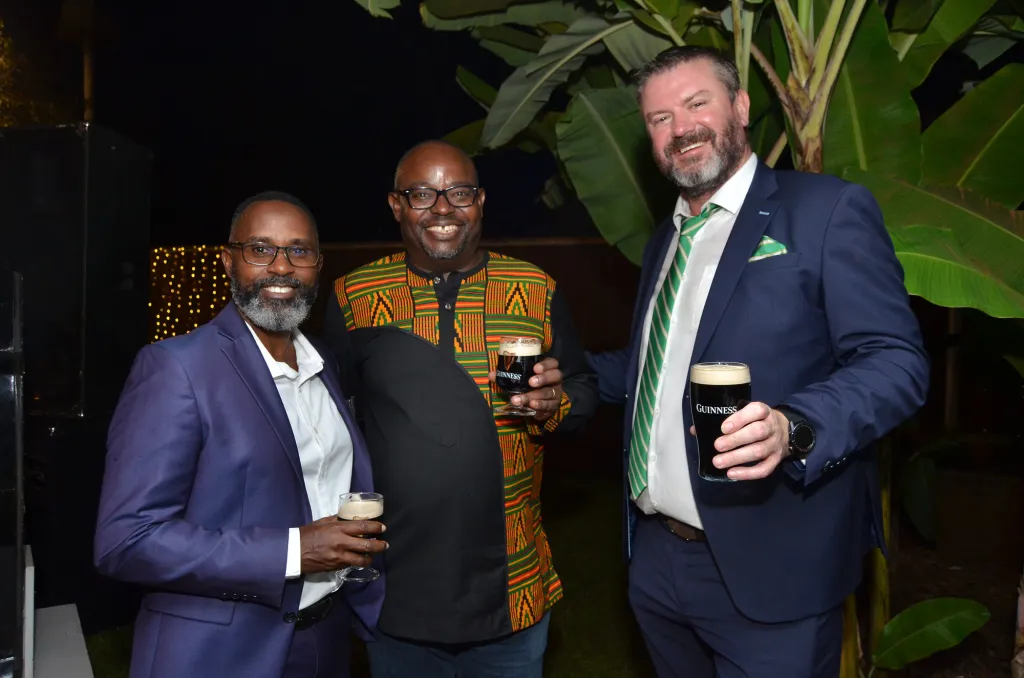
    In the process, even brands with roots in those cultures often become part of the celebrations. For example, Irish stout Guinness, which originated in Dublin, is closely associated with St. Patrick’s Day festivities and is commonly featured in themed events, promotions and gatherings.

    Originally, St. Patrick’s Day, observed annually on March 17, was a religious feast observed mainly in Ireland through church services and quiet reflection. As Irish communities migrated to countries such as the United States, Canada and Australia, the celebration gradually evolved. Irish immigrants began using the day to celebrate their heritage, culture and identity in their new homes.

    Over time, the occasion developed into a lively cultural event marked by parades, music, dancing and the symbolic wearing of green, a colour closely associated with Ireland. Major cities such as New York City, Chicago and Dublin host large St. Patrick’s Day parades that attract thousands of spectators each year. Today, landmarks in many countries are illuminated in green to mark the occasion, while Irish culture is showcased through food, drinks, music and festivals.

    In Uganda, St. Patrick’s Day is gradually gaining popularity, particularly in the capital, Kampala. Irish-themed outlets often organise themed parties where people dress in green, enjoy Irish music, drinks, and food, and take part in festive activities.

    Although the country does not have a large Irish population, the celebration has increasingly become part of the global cultural calendar embraced by people interested in experiencing different traditions. Over the years, brands with Irish roots such as Guinness, Roe & Co Whiskey and Baileys have also become a familiar part of the celebrations, having featured in previous festivities and gradually establishing themselves as part of the experience.

    This year, the celebrations in Kampala will include a number of events leading up to St. Patrick’s Day. An exclusive gathering will be held at the Irish Ambassador’s Residence on March 12, followed by a larger celebration on March 14 at the Sheraton Gardens. The events are expected to bring people together for music, entertainment and themed experiences, with Guinness, Roe & Co Whiskey and Baileys set to elevate the atmosphere.

    Additionally, Dublin comes alive at the Guinness Storehouse from 11th–18th March 2026, featuring Irish music, art, food and festival experiences across seven floors. Highlights include the Taste Mór show with live performances, vibrant installations, and for one night only on 16th March, a late-night DJ set by Welsh duo Overmono.

  • Ulcers prevent me from fasting during Ramadan, says Eddy Kenzo – Sqoop

    Ulcers prevent me from fasting during Ramadan, says Eddy Kenzo – Sqoop

    Ugandan musician Eddy Kenzo has explained why he does not observe the Ramadan fast, saying a medical condition prevents him from going without food for long hours during the holy month.

    Speaking recently, the singer said he suffers from ulcers, which make fasting difficult and potentially harmful to his health.

    “I have ulcers; I can’t fast,” Kenzo said with a laugh. “Don’t force me to fast. Instead, I break people’s fast. But if I don’t, it’s not a crime because that matter is between me and God.”

    During Ramadan, Muslims across the world fast from dawn to sunset as a sign of devotion and self-discipline. However, Islamic teachings allow exemptions for people who are ill or have medical conditions that could be worsened by fasting.

    Kenzo said fellow Muslims understand his situation and have not questioned his decision.

    “Muslims don’t have any problem with me,” he explained. “They know my situation.”

    According to the singer, most of the pressure tends to come from outsiders who assume that everyone must fast regardless of their circumstances.

    Despite not fasting, Kenzo says he still participates in the spirit of the holy month by supporting friends and family who observe the fast, sometimes by helping provide food for the evening meal that marks the end of the day’s fasting.

    Don’t want to miss out on any story? For updates on all Sqoop stories, follow this link on Telegram: https://t.me/Sqoop and Whatsapp: https://whatsapp.com/channel

  • Etania, Josh Mc, DJ Wiz J and more to takeover Smirnoff Fiesta in Nkozi

    A high energy line up featuring the life of the party; Etania, DJ Wiz J, Josh Mc and Nkozi’s TrellyOnSet and MC Ursh Trey has been announced for the awaited Smirnoff Fiesta takeover in Nkozi this Saturday the 14th March at Bbosa Hostel.

    Known for her crowd pulling Amapiano and popular party sets, Etania will bring her infectious energy to this edition of the Fiesta tour that will most likely make it hard for anyone to leave the venue!

    The Smirnoff vibe shifters will also vibe out with Nkozi’s; TrellyOnSet and MC Ursh Trey, to give the party goers a wholesome party experience with fire music sets ranging from Amapiano to afro beats and dancehall. You name it.

    According to the organisers, the Nkozi edition promises an even bigger experience. Beyond the high-energy music and party atmosphere, party lovers will indulge in any chilled Smirnoff Ice of their choice, spicy Smirnoff vodka infused cocktails at unbeatable prices, engaging games and art installations to bring out their flavor.

    These Fiesta turn ups and more will lead up to Etania’s first headliner show- Becoming the Life of the Party in partnership with Smirnoff and will take place on the 4th of April at Hockey Grounds.

     To all the Nkozi party people, entry to the fiesta is completely free for all attendees and this has been made even the better. Smirnoff will run offers on Smirnoff Vodka and a bucket of Smirnoff Ice to stand a chance to win 2 tickets to the highly anticipated Etania Becoming debut show.

    This is only the beginning!  Expect a massive Fiesta experience this Saturday and look out for more updates on where the Smirnoff Fiesta is headed next.

About UGNEWS24

UGNEWS24 is a Uganda local news service, a product of SOLAVIA GROUP LIMITED, Reg. No. 80048169153974.

Registered office

Plot 2335, Buwambo-Katadde-Najjo Road,
Nansana Municipality, Wakiso District, Uganda
P.O. Box 214231, Kampala

© 2026 SOLAVIA GROUP LIMITED. All rights reserved.