Social media personality and reality TV star Prima Kadarshi has defended her habit of calling out and criticizing musicians online, saying no celebrity is above social media banter.
Speaking during a recent TikTok Live, Prima addressed her public fallouts with several top Ugandan musicians, including Spice Diana and Lydia Jazmine.
She said she does not hate the artists but believes she cannot stay silent when she feels they have made mistakes.
We shall talk about every musician, no one is above the law, we don’t fear anyone. We talk about Sheebah and then you bring your stars?
Prima has recently been vocal about the performances and careers of several musicians. She described Vinka’s recently concluded concert as “boring” and argued that Lydia Jazmine is being held back by what she considers poor branding.
Singer Tracy Melon shared a deeply personal chapter of her music journey, revealing how established singer Lydia Jazmine supported and encouraged her when she was still finding her footing in the industry.
Speaking at Lydia Jazmine’s press conference held at Speke Resort Munyonyo, Tracy reflected on the early days of her career and recalled how her journey began with a music competition in which Jazmine was part of the judging panel.
According to Tracy, Jazmine stood firmly behind her throughout the competition, showing unwavering support and believing in her talent even before she had made a name for herself.
Tracy said the experience left a lasting impression on her, particularly because she had always looked up to Jazmine as an established artist.
She described sitting alongside her at the press conference as a dream come true.
“Lydia and I have a history that most people don’t know about. When I was starting music, I started from a music competition, and Lydia was part of the judging team. I saw Lydia support me wholeheartedly. She was actually Team Tracy.”
Tracy’s remarks highlighted the impact of Jazmine’s early encouragement on her career and showed how support from established artists can inspire emerging talent to keep pushing forward.
“I feel delighted to be sitting on the same platform with her because it was like a dream. I used to look up to her, and being seated right next to her is a dream come true.”
“I started doing music through music Competitions and at one time ladies was one of the Judges and she supported me Hands down “ ~Tracy Melon pic.twitter.com/3WQ9dAtfXL
Only seven of an estimated 90 large Savings and Credit Cooperative Societies (SACCOs) have so far obtained licences from the Bank of Uganda, with just over five weeks remaining before the September 30 deadline for eligible institutions to come under direct central bank supervision.
The slow pace of licensing is raising questions about the preparedness of the cooperative movement for the new regulatory regime and what the changes will mean for SACCO members who depend on the institutions to save, borrow and access other financial services.
The Bank of Uganda has warned that eligible SACCOs that fail to apply for licences by September 30 could face penalties prescribed by law, which may include closure.
State Minister for Finance in charge of Microfinance, Shartsi Kutesa Musherure, said seven SACCOs are fully licensed, while 15 applications are still being processed.
She said the government and Bank of Uganda estimate that about 90 SACCOs fall within the category that must obtain central bank licences.
The affected SACCOs are those with voluntary savings exceeding 1.5 billion shillings and institutional capital of more than 500 million shillings.
Voluntary savings are money members deposit with a SACCO for safekeeping and other financial purposes, rather than savings made specifically to qualify for a loan.
The Bank of Uganda says its primary concern is ensuring that these large amounts of members’ savings are protected through stronger regulatory oversight.
Under the new framework, eligible SACCOs are moving from the Tier Four category of microfinance institutions, which is supervised by the Microfinance Regulation Department in the Ministry of Finance, to the direct supervisory mandate of the Bank of Uganda.
The change means that SACCOs holding large amounts of members’ savings will be subjected to stronger requirements on governance, financial management and depositor protection.
The new regulatory framework also provides for protection of depositors through the Deposit Protection Fund and access to centralised credit referencing, similar to other financial institutions supervised by the Bank of Uganda.
The central bank argues that stronger supervision could protect members from losing their savings in the event of mismanagement or collapse of a large SACCO.
Aomu Mackay, the Director of Non-Bank Financial Institutions at the Bank of Uganda, says self-regulation within the cooperative movement cannot by itself guarantee the safety of members’ deposits.
“If a large SACCO with billions in savings collapses, it can trigger widespread financial panic and destabilize the broader financial sector,” Aomu says.
But the move has faced resistance from leaders of the cooperative movement, who argue that central bank regulation could increase the cost of running SACCOs and eventually make financial services more expensive for members.
All SACCOs, regardless of size, are first incorporated as cooperatives by the Ministry of Trade, Industry and Cooperatives under the Cooperative Societies Act.
Cooperative leaders argue that adding direct Bank of Uganda supervision creates another layer of regulation on institutions that are already subject to cooperative laws and oversight.
Ivan Asiimwe, the Executive Director of the Uganda Cooperative Alliance, fears that SACCOs could be required to meet expensive compliance requirements similar to those imposed on commercial financial institutions.
He says the additional costs could undermine the community-based model that has enabled SACCOs to provide financial services to people who may not easily access conventional banks.
“It also takes away the unique form of financial inclusion SACCOs provide as community-based initiatives and turns them into commercial and profit-oriented entities,” Asiimwe says.
The Uganda Co-operative Savings and Credit Union has also opposed full central bank licensing of large SACCOs under a system similar to the regulation of banks.
Its Chief Executive Officer, Sylvester Ndiroramukama, cites overlapping or potentially conflicting laws governing the different regulators and is calling for a single, tailored regulatory framework for SACCOs.
The government, however, says the reforms are necessary to maintain stability in the sector while protecting financial inclusion.
Minister Kutesa has pledged support for a regulatory approach that protects members’ money while preserving the cooperative nature of SACCOs, amid calls from SACCO leaders for proportionate regulation.
Some SACCOs that have already obtained Bank of Uganda licences say the new system has instead strengthened their operations and given members greater confidence in the safety of their savings.
Mbarara-based EBO Financial SACCO, the first SACCO to obtain a Bank of Uganda licence in March this year, says central bank supervision has strengthened its governance and positioned the institution for expansion.
Julian Tumusiime, the SACCO’s Executive Director, says the decision to obtain the licence was driven partly by the need to protect members’ deposits and strengthen confidence in the institution.
“We are the first SACCO in the history of Uganda to obtain this licence from the Bank of Uganda, and our reason for this is to ensure that we protect our members’ deposits, build their confidence and enable financial inclusion,” Tumusiime says.
The licence has also enabled EBO Financial SACCO to expand to seven branches in different districts in western Uganda.
The Bank of Uganda extended the licensing deadline from March 31 to September 30, 2026, to give eligible SACCOs more time to prepare the required documentation and allow the central bank to conduct stakeholder sensitisation.
During the extension period, regulated financial service providers were advised to continue supporting eligible SACCOs to obtain the required licences.
The central bank also said regulated financial institutions should not deny financial services to eligible SACCOs before the September 30 deadline.
GOT A HOT STORY? LET US KNOW!
Got breaking news, explosive secrets, or hard evidence?
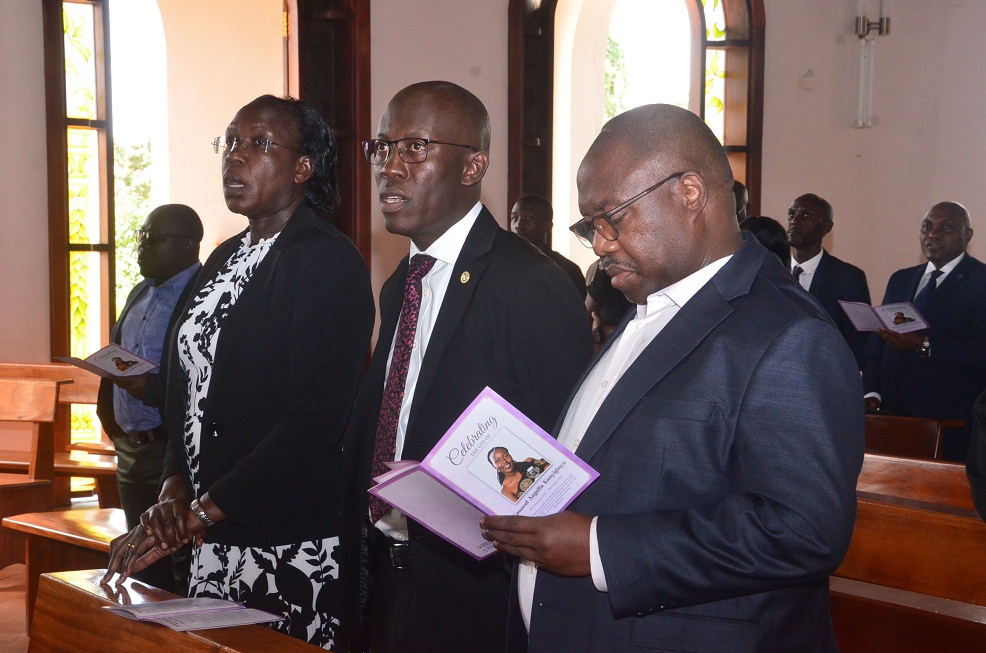
KAMPALA, UGANDA – The Speaker of Parliament, Jacob Oboth-Oboth, has paid tribute to the late Angella Kanyiginya, a Legal Counsel in the Department of Legal and Compliance, following her passing on Saturday at Victoria Hospital, in Kampala.
In a condolence message to her family delivered by the Clerk to Parliament, Adolf Mwesige, during a funeral service at St. Luke Church in Ntinda, Speaker Oboth described the 43-year-old officer as a quiet, effective, amiable, and hardworking public servant who served Parliament with unwavering dedication.
“Her sudden passing is a great loss to the institution and, most especially, to her husband, her two children, and the entire family,” the Speaker stated, encouraging the bereaved family to take comfort in knowing her work was deeply valued by her colleagues.
In a condolence message to her family delivered by the Clerk to Parliament, Adolf Mwesige, during a funeral service at St. Luke Church in Ntinda, Speaker Oboth described the 43-year-old officer as a quiet, effective, amiable, and hardworking public servant who served Parliament with unwavering dedication.
The Parliamentary Service Commission assumed responsibility for all burial expenses and committed to providing full policy-backed support to the family during this period.
“The Parliamentary Service Commission stands firmly with the family during this difficult period and will extend all requisite support as provided for under the Service’s policies,” he affirmed
Kanyiginya, who served in Parliament for the past year, succumbed to an autoimmune disease.
Concluding his tribute, the Speaker cited Psalm 34:18: “The Lord is close to the brokenhearted and saves those who are crushed in spirit.”
GOT A HOT STORY? LET US KNOW!
Got breaking news, explosive secrets, or hard evidence?
Johnny Drille had been dating his now-wife for nearly five years before the public even knew they were together.
The Nigerian singer-songwriter says their relationship began around November or December 2018, yet fans only learned about the romance around July 2023.
We started dating in November, December of 2018. The rest of the world only got to know, I think, July 2023.
That is nearly five years of keeping one of the biggest parts of his life away from the spotlight.
Looking back, Johnny Drille admits he did not fully realise how much effort he and his wife had put into keeping their relationship under wraps.
It’s funny because I think about it now, and I don’t realise how much work we had to put into just keeping it under wraps for so long.
They managed to keep their secret, but it did not come easy.
It wasn’t easy keeping it under wraps, but I’m grateful that we did.
Now married, the couple can look back at nearly five years of successfully keeping their relationship out of the public eye.
In a moment that underscores the enduring bonds forged in Uganda’s military and the transition of a generation of commanders, Gen. (Rtd) Salim Saleh (Caleb Akandwanaho) has paid tribute to Lt. Gen. (Rtd) Charles Awany Otema as one of the country’s greatest soldiers. Saleh thanked Otema for decades of service protecting the nation and contributing to its progress.
The remarks come as Otema formally retired from the Uganda People’s Defence Forces (UPDF) on 20 August 2026 after 47 years in uniform, part of a larger send-off of 19 general officers.
Otema, often addressed as Afande, rose from a young recruit to senior command through consistent performance across varied roles. Born in what is now Nwoya District in northern Uganda, he joined the military shortly after completing his Primary Leaving Examinations around 1979, when family circumstances limited further formal schooling. He served during the Uganda National Liberation Front period before integrating into the National Resistance Army, which later became the UPDF.
His career included critical staff and operational assignments: Chief of Logistics and Engineering, and later General Officer Commanding the Reserve Force. He contributed to counter-insurgency efforts against the Lord’s Resistance Army in northern Uganda, including operations such as Iron Fist and Lightning Thunder, as well as related efforts in the Democratic Republic of Congo’s Garamba region. Colleagues, including Lt. Gen. James Mugira, have highlighted his role in strengthening institutions and leaving the Reserve Force better positioned than he found it.
Saleh’s recognition carries particular weight. As President Yoweri Museveni’s younger brother and a veteran of the liberation struggle, Saleh joined the Front for National Salvation in 1976 at age 16. He trained in Mozambique, fought in key battles, and commanded the NRA’s final assault on Kampala in January 1986.
He later served as Army Commander (1987–1989) and has long acted as Senior Presidential Adviser on Defence and Security while coordinating Operation Wealth Creation, a major civil-military programme focused on household incomes, agriculture, and socio-economic transformation. Saleh has repeatedly emphasised practical approaches to security that link defence with development, peace-building in the north, and adaptation to modern challenges such as information warfare.
The two officers’ paths have intersected in the shared work of stabilising and developing northern Uganda. After retirement, Otema returned to his ancestral home in Tangi village, Purongo Sub-county, Nwoya District, where elders performed traditional cleansing rituals to reintegrate him into community life.
He has spoken of shifting focus to economic transformation—farming, hospitality, animal husbandry, and wealth creation in Acholi. Notably, Otema has publicly noted discussions with Saleh about a possible role as a provincial governor overseeing government programmes in northern Uganda, and he received documentation from Saleh outlining investment opportunities under an Acholi Investment Plan.
These exchanges illustrate a continuity of purpose: military experience channeled into civilian development goals that Saleh has long championed through Operation Wealth Creation.
Otema’s retirement forms part of a broader generational shift. President Museveni, as Commander-in-Chief, presided over the formal send-off and praised the outgoing generals for advancing peace, security, patriotism, and the integration of military capability with national economic goals. Otema handed over command of the Reserve Force to Maj. Gen. Joseph Ssemwanga, with senior officers stressing the importance of mentoring successors to ensure institutional continuity.
Both men exemplify different yet complementary strands of Uganda’s post-1986 security and development story. Saleh, the strategist and long-time adviser who moved from battlefield command to wealth-creation coordination, represents institutional memory and quiet influence. Otema, the logistics specialist, reserve force leader, and northern son who spent nearly half a century in uniform, embodies operational reliability and regional roots.
Their mutual regard—Saleh’s public description of Otema as among Uganda’s greatest soldiers, and Otema’s engagement with Saleh’s development vision—highlights respect across ranks and regions.
As Otema steps into civilian life and Saleh continues his advisory and coordination work, the farewell underscores a simple truth of Uganda’s military tradition: service measured not only in years or ranks, but in the protection of the country and the quiet promotion of its greater heights. The nation marks the end of one chapter while recognising the foundations both officers helped build.
GOT A HOT STORY? LET US KNOW!
Got breaking news, explosive secrets, or hard evidence?
King Saha recently took time away from the music scene to visit elderly residents at Mapeera Bakateyamba Home in Nalukolongo.
The Ugandan singer arrived with several essential items, including bread, firewood, sugar, rice, flour and eggs. He also gave cash to support the home.
For King Saha, the visit was a way of showing appreciation for the support he has received from Ugandans throughout his music career.
The people of Uganda have shown me a lot of love and support, and I wanted to give back by sharing the little I have with those in need.
The visit allowed the singer to spend time with the elderly residents while delivering the supplies and support he had brought.
King Saha has spent years receiving love from fans through his music. This time, he took some of that appreciation to Mapeera Bakateyamba Home in Nalukolongo, where the residents received him with his hands full.
The government tabled a Bill seeking to establish a single authority to regulate food products, agricultural chemicals, veterinary medicines and other agricultural inputs.
The Food and Agriculture Regulatory Authority Bill, 2026, was presented to Parliament for first reading on Tuesday by Agriculture, Animal Industry and Fisheries Minister Frank Tumwebaze.
The Bill proposes the establishment of the Food and Agriculture Regulatory Authority (FARA), which would oversee the manufacture, distribution, importation, exportation and supply of a wide range of products across Uganda’s food and agricultural value chains.
These would include agricultural chemicals, veterinary medicines and vaccines, veterinary devices, cosmetics, laboratory supplies, food products and animal feeds.Tumwebaze said the proposed authority would address fragmentation in the regulation of food and agricultural products by bringing key responsibilities under one specialised institution.
“The new authority will bring fragmented regulatory responsibilities under one institution to improve coordination, efficiency and accountability across Uganda’s food and agricultural value chains,” Tumwebaze said.
Speaker Jacob Markson Oboth-Oboth, who chaired Tuesday’s plenary sitting, referred the Bill to the Parliamentary Committee on Agriculture for detailed scrutiny.
The committee is chaired by Mawokota North MP Amelia Kyambadde.The legislation follows Cabinet approval of the proposal earlier in July.Government says the proposed reform is intended to address overlapping mandates among existing regulatory institutions and improve enforcement across the food and agricultural sectors.
Currently, regulatory responsibilities are shared among several institutions, including the National Drug Authority and the Uganda National Bureau of Standards.
Kassanda North MP Patrick Oshabe said the existing arrangement has resulted in duplication, inefficiencies and uncertainty over regulatory responsibilities.The proposed authority would be responsible for ensuring that food and animal feeds produced locally or imported into Uganda meet safety requirements and that agricultural and veterinary inputs comply with prescribed quality standards.
It would also regulate agricultural chemicals to ensure their use does not pose unacceptable risks to human health, animal health, plant life or the environment.
The Bill further seeks to strengthen the fight against counterfeit and substandard agricultural and veterinary products, including poor-quality seeds, fertilisers, pesticides and veterinary medicines.
Such products can affect agricultural productivity, increase production costs for farmers and pose risks to consumers, livestock and the environment.
The proposed reforms come as Uganda seeks to increase the quality and competitiveness of its agricultural products in domestic, regional and international markets.
Agricultural commodities, including coffee, tea, fish and horticultural products, form an important part of Uganda’s export earnings.
Access to some international markets also requires compliance with food safety, quality and sanitary and phytosanitary standards.
The government argues that a more coordinated regulatory system could improve compliance with those requirements, strengthen traceability and increase confidence among consumers and trading partners.
The proposed authority would operate within an existing regulatory framework that includes the Agricultural Chemicals (Control) Act, the National Drug Policy and Authority Act and standards enforcement mechanisms administered by UNBS.
However, the Bill is likely to face scrutiny over how the proposed authority would relate to existing agencies and how regulatory functions would be transferred or shared.
Lawmakers are also expected to examine the authority’s proposed financing, staffing, laboratory and technical capacity and the cost of establishing a new regulatory institution.
The committee will also have to consider whether consolidating functions would improve enforcement without creating additional bureaucracy or weakening specialised regulatory capacity already available within existing institutions.
The Bill will undergo detailed scrutiny by the Agriculture Committee before it returns to the House for further consideration.
If Parliament approves the legislation, the government will have to establish the institutional and technical systems required for FARA to carry out its proposed mandate.
The proposed reform therefore represents an attempt to create a more coordinated regulatory framework covering food safety, agricultural inputs and veterinary products, but its final structure and powers will depend on Parliament’s consideration of the Bill.
GOT A HOT STORY? LET US KNOW!
Got breaking news, explosive secrets, or hard evidence?
KAMPALA — Trouble is deepening at the Microfinance Support Centre (MSC) after Parliament ordered the arrest of the institution’s top management for allegedly dodging a second summons to appear before lawmakers and answer questions over billions of shillings in losses, loan write-offs and other financial management failures.
The Committee on Commissions, Statutory Authorities and State Enterprises (COSASE) on Tuesday ordered the arrest of MSC Executive Director and Chief Executive Officer John Peter Mujuni and the institution’s directors after they failed to honour a second invitation to appear before the committee.
The dramatic order was issued by COSASE chairperson Muwada Nkunyingi, who accused the MSC bosses of deliberately refusing to face Parliament despite being summoned to explain queries raised in the Auditor General’s report.
The officials were expected to account for the institution’s financial management and performance, but their failure to appear has now turned a financial accountability investigation into a confrontation over parliamentary oversight.
Nkunyingi said the committee had invited the MSC management twice, but the top executives had failed to appear.
He warned that COSASE would use its powers to compel the officials to appear, including ordering their arrest.
The arrest order comes at a particularly difficult time for MSC, with the Auditor General’s report for the financial year 2024/2025 exposing a staggering Sh22.67 billion loss at the institution.
The audit also revealed that loans worth more than Sh63 billion had been written off, raising serious questions about the institution’s ability to protect public funds and recover money advanced to beneficiaries.
The Auditor General flagged a string of weaknesses in the management of the loan portfolio, including outdated collateral, weak loan recovery mechanisms, poor performance of restructured loans, inadequate monitoring and under-collection of outstanding loans.
Some of the loan securities, Parliament was told, had remained outdated for as long as nine years, exposing public funds to increased risk.
The figures have left lawmakers demanding answers over how an institution entrusted with supporting Ugandans through affordable financing could accumulate such huge losses and write off billions in loans.
The committee was also told about problems surrounding funds under the Emyooga programme.
According to the audit findings, Sh13.21 billion remained unutilised and was returned at the end of the financial year, prompting further questions about planning, absorption of funds and the institution’s management of government programmes.
The Auditor General also pointed to weaknesses in procurement, including failure to fully implement planned procurements, inadequate mechanisms for tracking performance and weaknesses in the management of the institution’s non-current assets.
The revelations have triggered growing concern among legislators, with some warning that MSC could be heading towards a crisis unless its management and financial controls are urgently overhauled.
Nakifuma County MP Robert Ssekitoleko said MSC management must be compelled to account for public funds.
Budadiri East MP Julius Nakiyi went further, warning that MSC could be heading towards collapse if urgent corrective measures were not taken.
Jinja South MP Timothy Batuwa also questioned the disbursement of loans to beneficiaries whose identities and eligibility he questioned, particularly in light of the more than Sh63 billion in loans written off.
Batuwa called for the Ministry of Finance to freeze further disbursements to MSC until the institution accounts for funds already committed. He also recommended the removal of the chief executive.
But the biggest immediate battle is now over the refusal of MSC’s top brass to appear before COSASE.
Nkunyingi said Parliament would not allow government agencies and state enterprises to selectively decide when to appear before parliamentary committees.
He accused MSC of previously seeking protection from the Speaker of Parliament following an earlier invitation, but said the current Parliament had made its position clear: accounting officers must personally appear and account for public resources.
“We shall not inherit any syndicate,” Nkunyingi said, insisting that every Auditor General’s report submitted to COSASE would be subjected to scrutiny.
Nkunyingi further rejected any suggestion that MSC’s corporate status could shield its officials from parliamentary accountability.
He said the Government of Uganda has an interest and shareholding in the institution, meaning its managers cannot use the company structure to escape scrutiny over public resources.
The committee, he said, would not only investigate the failure to attend the hearing but would also examine why MSC had repeatedly sought to avoid parliamentary scrutiny and whether individuals or institutions had attempted to shield the entity from accountability.
The confrontation comes as the new COSASE leadership appears determined to flex Parliament’s oversight muscle against government agencies, public corporations and state enterprises.
The committee’s action against MSC follows a warning by Speaker Jacob Marksons Oboth-Oboth, who last week cautioned accounting officers against dodging interfaces with parliamentary committees.
MSC is now the second government entity in two days to be forced to appear before COSASE.
On Monday, the committee summoned Uganda Airlines Chief Executive Officer Girma Wake and members of the airline’s top management after they failed to appear for a scheduled interface.
Unlike MSC, however, Uganda Airlines subsequently communicated with the committee and explained its absence.
Girma wrote to COSASE on Tuesday morning, indicating that the airline’s management team would be available to interface with the committee on Thursday as scheduled.
LEGS MONEY ALSO UNDER SPOTLIGHT
The MSC accountability storm is unfolding alongside questions over its involvement in the multibillion-shilling Local Economic Growth Support Project (LEGS), a major government programme designed to lift millions of Ugandans out of poverty.
The $150 million project, worth approximately Sh545 billion, is being implemented through the Ministry of Local Government with financing from the Government of Uganda, the Islamic Development Bank and the Lives and Livelihoods Fund.
The programme is intended to improve household incomes and reduce poverty in dry and remote rural areas by supporting agriculture, water access, agro-processing, local enterprises and financial inclusion.
But instead of a smooth rollout, the project has become entangled in land disputes, financial accountability questions and implementation problems.
One of the major concerns involves the ownership of land on which infrastructure financed under the project has been constructed.
The ownership of part of the land on which the Rwakibira Valley Dam in Gomba District was constructed is contested by a private individual.
In Nakaseke District, the problem is even more direct, with the land on which the Katalekamese market shade was constructed being privately owned.
The findings raise questions over how the land was identified, verified and secured before public money was committed to the projects.
And now MSC’s handling of LEGS financing has itself come under the microscope.
SH2.73BN LOANS TO PRIVATE COMPANIES
During the financial years ended June 30, 2024 and June 30, 2025, MSC disbursed loans amounting to Sh2.73 billion to private companies, according to the findings.
The disbursements were contrary to provisions contained in the financing agreement.
The revelation has placed project managers and responsible officials under pressure to explain how the money ended up with private companies despite the conditions governing the financing arrangement.
The concern is particularly significant because LEGS is supposed to support local economic growth, household incomes and rural enterprises.
SH216.53M UNACCOUNTED FOR
Another financial headache involves Kyenjojo District Local Government.
The project advanced Sh216.53 million to the district to facilitate dairy breed and nutritional improvement.
However, the money was not accounted for.
The missing accountability has raised questions about the controls used to track project funds transferred to local governments and whether those responsible for supervising implementation and financial reporting can account for how the money was utilised.
PROJECTS THAT ARE NOT WORKING AS EXPECTED
Physical inspection of projects funded under LEGS also uncovered a number of problems.
At Magoma Market shed in Nakaseke District, the facility was found to be under-utilised, raising questions about whether some of the infrastructure is adequately matched to the needs of the communities it was designed to serve.
At Kiwoko in Nakaseke, the maize processing plant was found to be small and lacking proper ventilation, with the inadequate ventilation identified as a health risk.
The findings have raised questions about the planning and design of the facility before construction and whether it meets the operational requirements of a maize processing plant.
The water component of the project has also run into trouble.
Part of the water supply system for Kinoni in Nakaseke District had not been constructed because there was no access road to the proposed site.
A project intended to improve access to water was therefore unable to complete part of its planned infrastructure because the proposed location could not be adequately accessed.
The finding underscores the importance of proper site assessment and coordination before public infrastructure projects are undertaken.
SH545BN PROJECT TARGETS 16M UGANDANS
The scale of the programme makes the accountability concerns even more significant.
LEGS was initially implemented in 17 districts, but its second phase has expanded to 55 districts and is expected to benefit nearly 16 million Ugandans.
The programme is designed to boost crop yields through better seeds, tractors and irrigation, improve access to safe water, construct storage facilities and processing plants, improve market roads and strengthen financial inclusion.
It also targets youth, women and disabled entrepreneurs through microfinance and other enterprise support.
The second phase is a five-year programme focusing on climate change, youth and women entrepreneurship, small-scale irrigation, agro-processing and improved post-harvest handling.
It is being implemented by the Ministry of Local Government with financing from the Lives and Livelihoods Fund, the Islamic Development Bank and the Government of Uganda.
The expansion to 55 districts means that weaknesses already exposed in project management could have implications far beyond the areas where the inspected projects were located.
For MSC, the parliamentary storm therefore comes at a time when the institution is already facing serious questions over its own financial performance, loan recovery and management of public resources.
With a Sh22.67 billion loss, more than Sh63 billion in written-off loans, Sh13.21 billion in unutilised Emyooga funds, and questions over billions disbursed under programmes such as LEGS, COSASE now wants the men and women at the top to come and explain.
Instead, the committee says, the MSC leadership has repeatedly stayed away.
That refusal has now triggered the arrest order.
The next showdown will determine whether the MSC bosses finally walk into Parliament to answer the questions—or are brought before the committee under the force of the law.
GOT A HOT STORY? LET US KNOW!
Got breaking news, explosive secrets, or hard evidence?
NAIROBI — Kenya has moved to extradite a Chinese national wanted in Uganda over an alleged Sh4.5 billion fraud at Diamond Steel Uganda Limited.
The Director of Public Prosecutions (DPP) has filed extradition proceedings against 39-year-old Chen Guang, alias Alex, who is wanted by Ugandan authorities to face criminal charges arising from an alleged fraud involving UGX 4,533,379,400, equivalent to about KSh151 million.
Guang is accused of manipulating weighbridge bills and payment vouchers during his time as a cashier at Diamond Steel Uganda Limited, a trading and importing company located along Jinja Road in Mbalala, Mukono Division, Mukono Municipality.
According to the allegations, Guang exploited his access to the company’s payment documentation and financial processes to facilitate the alleged offences.
The extradition proceedings follow a formal request received by Kenya’s DPP on June 10, 2026, from Uganda. The request, dated April 18, 2025, was transmitted through the Office of the Attorney General and Department of Justice and sought Kenya’s assistance in enforcing the Ugandan warrant of arrest and facilitating Guang’s extradition to Uganda.
Guang was arrested on August 11, 2026, at Jomo Kenyatta International Airport by officers from the Directorate of Immigration Services shortly after arriving from Harare, Zimbabwe.
The arrest followed a warrant issued by Chief Magistrate Aciro Joan of the Mukono Chief Magistrates’ Court in Uganda.
Appearing before the Kenyan court, prosecution counsel Fatma Shaban asked the court to order that Guang be surrendered to Uganda to face 30 counts of forgery and one count of theft.
Shaban also opposed his release on bond pending the hearing and determination of the extradition proceedings, arguing that the Chinese national was a flight risk.
The prosecution is being led by Senior Deputy Director of Public Prosecutions Vincent Monda.
The case now places Guang at the centre of a cross-border legal battle, with Uganda seeking to have him returned to face trial over the alleged financial manipulation at the Mukono-based steel company.
GOT A HOT STORY? LET US KNOW!
Got breaking news, explosive secrets, or hard evidence?