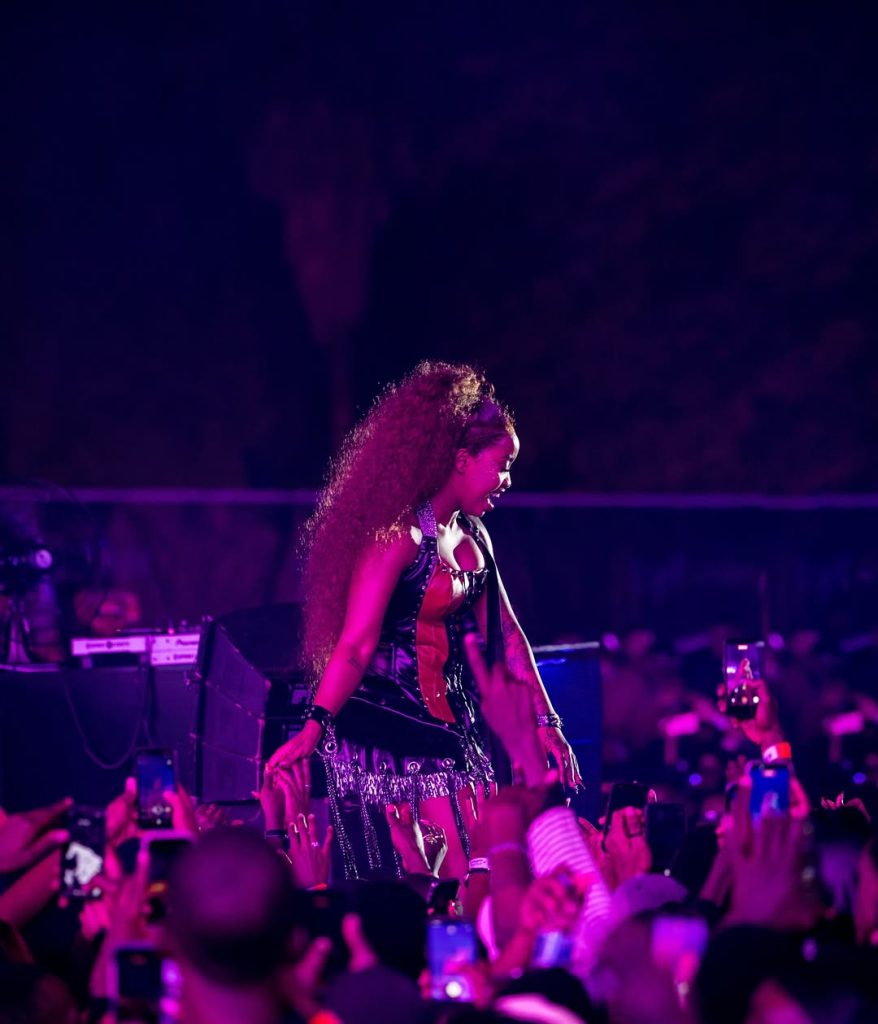
Ugandan DJ and media personality Etania Mutoni, also known as the “Life of the Party,” has called for greater unity among female DJs and entertainers, urging them to stop competing against each other and embrace collaboration.
In a candid message to her followers, Etania criticised what she described as envy, fake relationships, and unnecessary rivalry among women in Uganda’s entertainment industry.
Female DJs in this country do not want to collaborate; they want to compete with each other, be fake with each other over the stupidest things.
The criticism also extends to the way some female entertainers talk about one another publicly.
Etania questioned why interviews sometimes become opportunities to discuss fellow female DJs instead of focusing on their own careers and finding ways to build each other up.
She also addressed the perception that she considers herself better than other women in the industry, insisting that she simply focuses on her own work.
I do not know better. I am not superior. I do not think I am better than anyone. All I do is go on about my work and vibes.
Etania wants to see a stronger community where female entertainers can share ideas, support one another and create opportunities together.
Let us put each other on. Simple.
She has also been pushing for spaces where female entertainers can connect, discuss their challenges and find ways to support one another.
Not every woman will want to collaborate, she acknowledged, but those willing to work together should embrace the opportunity instead of treating each other as rivals.
Competition mujileke. Eno si Miss Uganda.
Etania remains committed to changing that culture and believes the shift has to start with individuals and the way they treat the people around them.
She ended by encouraging fellow creatives to focus on their work while doing more to support one another.
Do better. Be better. Do good and good things will come to you.
Set against the vibrant landscape of Arua in West Nile, Vurra Secondary School is expanding to keep pace with a rapidly growing student population. School leaders are racing to add classrooms and dormitories to ensure every learner has space to study, live, and thrive.
Founded by the Church in 1981 and now government-aided, Vurra Secondary School faces a challenge familiar to many growing institutions across Uganda: rising enrollment amid limited resources. With public funding unable to meet the cost of major infrastructure projects, financing expansion from the school’s operating budget would put pressure on day-to-day activities.
To bridge the gap, the school partnered with Equity Bank Uganda in late 2024. The partnership soon enabled the school to secure a Shs120 million credit facility, helping it complete a Shs280 million, 120-bed boys’ dormitory.
“We opened an account with Equity in late 2024, around November, and by January, we were granted a savings facility of Shs120 million to put up the dormitory,” says David Dima, Head Teacher of Vurra Secondary School.
The new facility has eased pressure on the school’s existing accommodation, particularly for boys. But as enrollment grows, the school is now turning its attention to providing equal accommodation for girls.
“The completed dormitory currently accommodates 120 students and has eased pressure on our existing facilities,” Dima says. “Now, we want to build a matching dormitory for the girls, with completion targeted for February next year so that incoming Senior Five students in March, 2027 can be accommodated.”
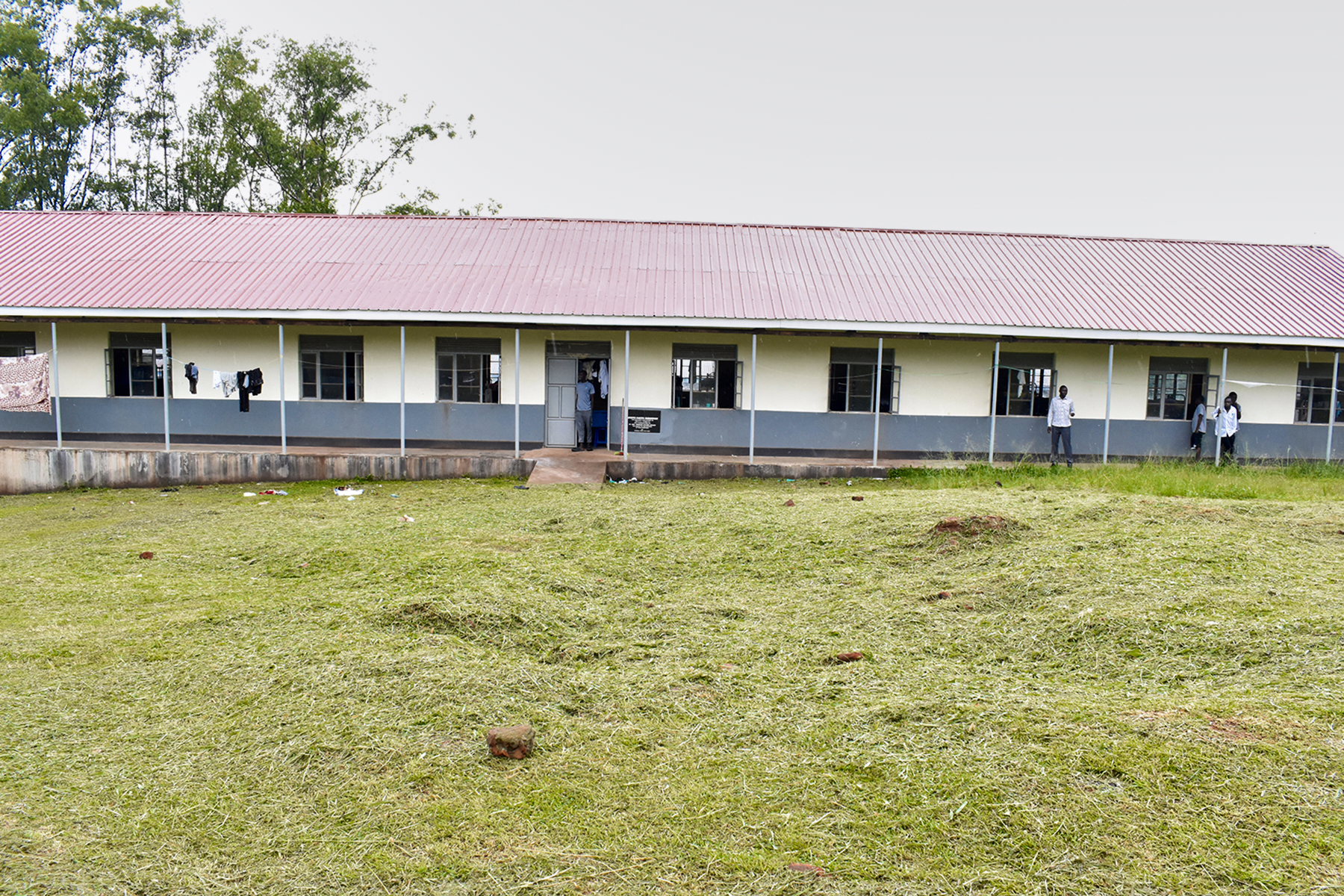
The VURRA SS School dormitory for the male students constructed with funding from Equity Bank
Enrollment is projected to reach 900 students next year, with the school’s long-term target set at 1,200 learners. Without additional classrooms and accommodation, Dima says, the school could be forced to turn away qualified students.
“Right now, we cannot admit more students than our current capacity, yet enrollment is increasing,” he says. “I want to ensure equal opportunities for both boys and girls.”
The school is also acquiring additional land for future development and exploring flexible financing to purchase a school bus. The bus would improve transport and help the institution attract students from surrounding communities.
Beyond infrastructure, school leaders are developing financial support packages for teachers and non-teaching staff who are not on the government payroll.
Equity Bank Uganda Managing Director Gift Shoko says schools should not have to put expansion plans on hold because of financing constraints. Through structured financing, institutions can begin projects immediately and repay over time.
“In terms of the structure you want, you don’t have to wait,” Shoko says. “It can be put up immediately so that work starts now, where you only start paying after the block is complete and operational.”
For Vurra Secondary School, the goal is sustainable growth without compromising financial stability. Its experience demonstrates how strategic financing and the right partnerships can help rural schools turn pressing infrastructure needs into long-term opportunities for more learners.
High Court has sentenced prison warder Moses Anguyo to death after finding him guilty of murdering four people, including two public servants and a one-and-a-half-year-old child.
The sentence was handed down after Anguyo was convicted on four counts of murder.
In addition to the death sentence, the court imposed further penalties on Anguyo for other offences arising from the same case. He was sentenced to two years’ imprisonment on each of two counts of aggravated robbery and three years for threatening violence.
Anguyo was also ordered to compensate the victims Shs35,000 for a pair of trousers and Shs25,000 for an Arsenal jersey that were stolen during the incident.
In delivering the sentence, Lady Justice Jane Okuo Kajuga said the court had considered both the aggravating and mitigating factors surrounding the case before reaching its decision.
However, the judge found that the aggravating circumstances were overwhelmingly more serious than the factors presented in Anguyo’s favour.
Among the factors considered was the fact that four people were killed, including two public servants who were on duty and a child aged one and a half years.
The court also took into account the use of an AK-47 rifle and found that some of the victims were targeted because of their tribal identity.
Justice Kajuga further considered the fact that Anguyo was a trained prison officer who had been entrusted with a firearm but instead abused that trust.
The killings, the court noted, had devastating consequences for the victims’ families, leaving six children orphaned and robbing the country of productive citizens, including architect Ayebare.
Although Anguyo had pleaded guilty, expressed remorse and apologised to the public, the court found that these factors could not outweigh the seriousness of the crimes.
Other mitigating factors included his youth, the finding that the crimes were not premeditated, and his willingness to compensate the victims of the aggravated robberies.
But after weighing all the circumstances, the court concluded that the gravity of the offences and their consequences far outweighed the mitigating factors.
Starlink, the satellite internet service operated by Elon Musk’s SpaceX, has officially launched in Uganda, offering high-speed internet to areas underserved by traditional fibre and mobile networks.
However, the long-awaited arrival has been met with excitement and concern, with potential customers questioning the nearly Shs2.3 million upfront cost required to get connected for the first time.
ADVERTISEMENT
Ordering information on Starlink’s website shows that residential customers are required to pay approximately Shs2.3 million before activating the service.
The initial cost includes Shs1,743,778 for the standard Starlink equipment, Shs437,036 in regulatory fees, and Shs115,741 for shipping and handling.
The residential internet package is then charged separately at approximately Shs203,704 per month, with advertised speeds of up to 100Mbps.
This means a new customer could spend roughly Shs2.5 million on the equipment, regulatory charges, shipping and the first month of service.
Ugandans Question Cost
While many internet users have welcomed Starlink’s entry into the Ugandan market, some have criticised the high cost of getting started.
Some users on social media argued that the equipment price could prevent widespread adoption, particularly among ordinary households.
One user described the pricing as “upper-middle-class pricing,” while another welcomed Starlink’s arrival but called for the hardware cost to be reduced to around Shs400,000.
Starlink has explained that the Shs437,036 regulatory charge includes a mandatory $100 fee equivalent to Shs370,370, plus Value Added Tax, for every kit connected in Uganda.
The company has directed customers seeking further information about the regulatory levy to the Uganda Communications Commission (UCC).
A Potential Game Changer for Rural Internet
Despite the high entry cost, Starlink’s launch is expected to create new opportunities for businesses, schools, health facilities and households located in areas with limited fibre-optic coverage.
Technology commentator David Mambo described the service as potentially transformative for businesses operating outside reliable fibre coverage, while expressing interest in its real-world speeds and stability.
Unlike conventional broadband services that depend on physical fibre or nearby mobile infrastructure, Starlink uses a network of low-Earth-orbit satellites to provide internet connectivity.
This could make the service particularly useful in remote parts of Uganda where extending fibre infrastructure remains expensive or technically difficult.
Starlink Secures Ugandan Licence
Starlink’s launch follows regulatory approval granted in May 2026 after the company entered into an agreement with the UCC.
The agreement was witnessed by President Yoweri Museveni and followed months of regulatory discussions.
Previously, Ugandan authorities had moved to restrict unauthorised use of Starlink equipment in the country as the government worked to establish the regulatory framework for satellite internet services.
Under its licensing arrangement, Starlink is required to comply with Uganda’s customer identification, security and revenue-assurance requirements. The company is also expected to maintain a local presence and register customers and connected equipment.
For now, the biggest question is whether Starlink can translate its technological advantage into mass adoption in Uganda.
With an initial cost of more than Shs2 million, the service may initially be more attractive to businesses, institutions and higher-income households than to ordinary consumers.
The introduction of instalment payments, equipment rental or subsidised hardware could, however, make satellite internet more accessible to a wider section of the Ugandan population.
KAMPALA – Government’s wealth-creation programmes in Teso and Lango have come under the microscope, with a presidential monitoring team set to investigate how funds are being used and whether ordinary Ugandans are actually benefiting.
The Office of the President has launched a major inspection of the Parish Development Model (PDM), Emyooga and Cattle Restocking Programme across eight districts and Soroti City.
The high-level operation was announced on Wednesday by Sandra Santa Alum, Minister of State in the Office of the President in charge of Economic Monitoring, who said her department will lead the exercise.
The team will comb through programme records, meet beneficiaries and local leaders and inspect enterprises and projects funded under the initiatives.
In Teso, the operation will cover Kapelebyong, Kalaki, Bukedea and Soroti City, while Apac, Otuke, Dokolo and Lira will be targeted in Lango.
The inspection is intended to establish whether Government money is achieving its purpose of raising household incomes, creating jobs, expanding access to affordable credit and shifting families from subsistence into the money economy.
But officials will also be looking for possible abuse.
According to Alum, the monitoring team will scrutinise beneficiary selection, SACCO governance, recordkeeping, access to funds, loan recovery and possible diversion of public resources.
The team will also engage beneficiaries directly to establish whether the money and other support they received have translated into functioning businesses and improved livelihoods.
Alum said the three programmes are key interventions under the Fourth National Development Plan (NDP IV) and the Government’s Tenfold Growth Strategy.
PDM was introduced to take enterprise financing and economic opportunities closer to households through parish-level structures, while Emyooga focuses on organised groups, savings, affordable credit and enterprise development.
The Cattle Restocking Programme, meanwhile, is intended to rebuild productive assets and livelihoods in communities in Teso and Lango that suffered massive cattle losses in the past.
The presidential monitoring team will not only examine books and records but also physically inspect enterprises supported through the programmes.
District leaders, technical officers and beneficiaries will be questioned about implementation, while records will be scrutinised to establish whether funds reached the intended recipients and were put to proper use.
Alum warned that weaknesses uncovered during the exercise will require corrective action, while evidence of misuse of public funds will be referred to the relevant authorities.
She, however, dismissed fears that the exercise was designed to intimidate local leaders or beneficiaries.
“This exercise is not intended to intimidate anyone. It is an accountability and learning exercise,” Alum said.
She added: “We want to know what is working so we can replicate it, and we want to identify gaps so we can fix them.”
The inspection comes at a time when Government is placing greater emphasis on ensuring that its wealth-creation programmes produce visible results at household level.
Rather than relying solely on reports from implementing agencies and local governments, the monitoring team will seek first-hand information from beneficiaries and communities.
At the conclusion of the field exercise, the team will hold exit meetings with Local Governments and Ministries, Departments and Agencies to validate its findings and agree on corrective measures.
A consolidated report will subsequently be submitted to President Yoweri Museveni for further guidance.
Alum has called on leaders and beneficiaries in the targeted areas to cooperate with the team and provide accurate information during the exercise.
She also urged journalists to closely follow the exercise and accurately report findings while encouraging citizens to participate in holding public programmes accountable.
“Accountability does not frustrate implementation; it protects it,” Alum said.
She stressed that Government must ensure that every shilling invested in PDM, Emyooga and cattle restocking delivers meaningful results for Ugandans.
GOT A HOT STORY? LET US KNOW!
Got breaking news, explosive secrets, or hard evidence?
The pressure is back on in the Big Brother Naija house after a dramatic week that has left 15 housemates facing possible eviction.
What appeared to be a settled nomination process took an unexpected turn after Big Brother cancelled the saves that had earlier been made by the housemates. The decision followed allegations that the contestants had discussed nominations and conspired, violating the rules of the game.
A fresh round of nominations was subsequently conducted, placing Barry, Keivo, Gerard, Aikou, Tram, Araga, Flora, Bells, Oyin, Nomy, Yusuf, Chimsom Chuka, Temi Nkem, Ricky and Bluethopia on the eviction list.
But the latest twist does not end there.
Aikou and Flora, who had spent the past five weeks in the House as Gambits, are officially back in the race for the grand prize.
During Sunday’s live show, Big Brother handed viewers the power to decide their fate through Operation Release the Gambit. Fans were asked to vote on whether the two housemates should be released from their Gambit status and allowed to compete fully for the prize.
When voting closed on Monday, viewers had made their decision: both Aikou and Flora were released and returned to the main competition.
Their freedom, however, came with an immediate reality check. Unlike their previous status, they are now fully exposed to the same risks as everyone else — including eviction. Both have already found themselves on this week’s list.
While 15 housemates battle for survival, Abi can breathe easy.
She has secured her place in the House for another week after winning the Head of House challenge for the second time this season, earning immunity from eviction.
Bells was not as fortunate.
The housemate has once again been named the week’s Benchwarmer after a five-way tie for the position involving Bells, Yusuf, Sheba, Ricky and Nomy. With no clear loser emerging from the challenge, Big Brother used a dice roll to break the deadlock, and Bells was ultimately handed the unwanted title for the second time.
The housemates have also paid heavily for their recent misconduct.
Following repeated violations of Big Brother’s rules, 5 million has been deducted from the grand prize, reducing the prize money from 95 million to 90 million.
Now, with one of the season’s biggest eviction lists hanging over the House, the power has shifted to the viewers.
Voting is open and will close at 9:00 p.m. on Thursday, leaving fans with the task of deciding which of the 15 nominated housemates will continue their journey and who will see their dreams of winning the grand prize come to an abrupt end.
For Ugandan viewers following every nomination, task and eviction twist, Big Brother Naija airs live on DStv Channel 198 and GOtv Channel 349 and can also be streamed on DStv Stream and GOtv Stream.
The weekly live eviction shows also air every Sunday on Pearl Magic Prime, DStv Channel 148 and GOtv Channel 303.
With Aikou and Flora finally back in the race, Abi safely through another week and 15 housemates now fighting for survival, the battle for the Big Brother Naija crown has become even more unpredictable.
Burna Boy may have millions of fans watching his every move, but his mother, Bose Ogulu, knows exactly when to step in and stop him.
Ogulu, who also manages the Afrobeats star, revealed that she sometimes grabs her son’s phone when his Instagram Live sessions get too wild.
She shared the revelation while speaking to media personality Ebuka Obi-Uchendu on Channels TV, where she discussed Burna Boy’s outspoken personality and the challenge of allowing him to be himself.
Rather than trying to tone down her son, Ogulu said she has learned that his personality forms part of what makes him a unique artist.
What I have come to learn is that artists like him, they are like a tapestry. If you pull at one thread too hard, everything will unravel.
Ogulu believes the same emotions that can push Burna Boy into controversial moments also fuel the qualities his fans admire.
So you must make allowances for this person being himself, because it is the same emotion that what you love about him comes from.
Still, there are moments when Burna Boy’s mother decides enough is enough.
And when he goes too far on Instagram Live, Ogulu says she does not need a long lecture or argument. She simply takes the phone.
Within, we do what we can. I usually grab his phone from him anytime he goes wild on Instagram Live.
Burna Boy has built a reputation for his unfiltered social media moments, but behind the scenes, his mother remains one person who can still step in and shut things down.
The regional tour to find the next queen ended over the weekend at Motiv Bugolobi, where Nalumu Shamsa was crowned Miss Uganda Central.
Powered by V&A Sherry, this leg of the regional tour brought together young women from the central region who chose to represent their communities, hoping to carry their hometown’s name onto the national stage.
The night was billed to be one of pageantry and pure entertainment. Singer Nina Roz delivered, thrilling the crowd with hits like Andele, Onoozina, and Billboard Kipande, among others.
As the competition came to a close, Miss Uganda Foundation CEO, Miss Brenda Nanyonjo, rallied Ugandans to support the outgoing Miss Uganda and reigning queen, Trivia Elle Muhoza, who is representing the country at the Miss World Pageant.
“Guys, this is a plea that you tell everyone you know to support Miss Uganda Trivia Elle, who is raising the Ugandan flag on the global stage. Wherever you are, spare some time and vote for her to win. Let us stand in solidarity with her; she needs our support,” she said.
The attention then returned to the moment that had brought everyone to the event, and the winners were announced. Nalumu Shamsa emerged as Miss Uganda Central, Naluwu Hilda was named first runner-up, while Kagabo Jazmine took the second runner-up position.
Speaking about the night, Roy Ronald Tumwizere, Brand Manager at V&A Sherry, said, “I am really happy that we have finally reached the end of the regional tour. From where it began in Jinja City to the central region, we have seen young women across the country step forward with confidence, represent where they come from, and give themselves a chance to dream bigger. As V&A, we congratulate Shamsa, Hilder and Jazmine upon their win, and we wish all the finalists the very best as the journey continues.”
The central regional finale marks the end of the regional search for the next queen. It then paves the way for the Miss Uganda bootcamp, where the successful contestants from across the country will be prepared and trained to be fit to compete in the grand Finale set for October 10, 2026.
Kampala, Uganda: Sustainability is increasingly becoming central to how Housing Finance Bank (HFB) makes business decisions, deploys capital and creates long-term value, as the Bank continues to embed responsible and sustainable practices across its operations.
Over the past years, the Bank has deliberately integrated sustainability into its governance, financing priorities, operations and stakeholder engagement, reflecting a broader commitment to building a business that remains resilient, competitive and relevant to the customers and communities it serves.
The Bank’s certification under the Sustainability Standards and Certification Initiative (SSCI) represents an important milestone in this journey, recognising the progress HFB has made in strengthening its sustainability practices and establishing a framework for continued improvement.
For HFB, however, sustainability extends beyond achieving certification. It is about making responsible choices that support the Bank’s long-term performance while contributing to the development of the wider economy.
Housing Finance Bank Board Chairperson, Annette W. Kihuguru, mentioned that the Bank’s approach is grounded in the understanding that sustainable growth must be considered alongside the value an institution creates for its wider stakeholders.
“Sustainability is not our destination. It is the way we choose to grow.”
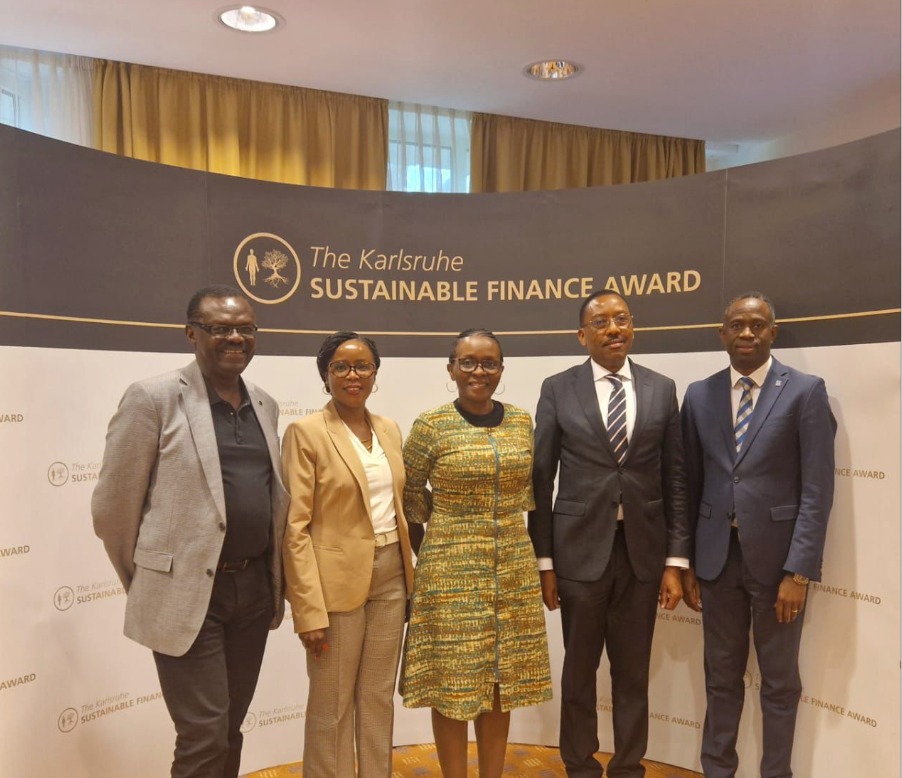
Housing Finance Bank executive teams take group photo after receiving the sustainability award
This philosophy has shaped the Bank’s focus on areas including financial inclusion, enterprise development, affordable housing and responsible operations. It also informs the Bank’s consideration of the longer-term implications of its business decisions, particularly how capital is deployed and the kind of economic activity that financing enables.
“As a Bank, we cannot build lasting success in isolation from the communities and economy we serve. Sustainability requires us to look beyond immediate results and ask what kind of value we are creating and whether that value will endure,” Kihuguru said.
As a financial institution, HFB recognises that its influence extends beyond the traditional provision of banking services. Decisions around financing can support businesses, enable access to housing, strengthen household resilience and contribute to broader economic activity.
This has made sustainability increasingly relevant to the Bank’s commercial strategy.
Housing Finance Bank Managing Director, Michael K. Mugabi, mentioned that sustainability is being approached as part of the Bank’s broader business strategy rather than as a standalone initiative.
“For us, sustainable growth and strong financial performance are not competing ambitions. Done right, they reinforce each other.”
According to Mugabi, integrating sustainability into commercial decision-making enables the Bank to take a longer-term view of growth, while strengthening its ability to manage risks and identify emerging opportunities.
“It influences where we direct capital, the businesses we finance, the customers we reach and the role we play in Uganda’s economic transformation. Sustainability has to move beyond policies and reports and become part of how we make commercial decisions,” he said.
This approach is particularly important as the financial sector continues to evolve in response to changing economic, environmental and social expectations. For the Bank, building resilience requires understanding these changes and ensuring that the Bank’s business model is positioned to respond to them.
Housing Finance Bank executive teams take group photo after receiving the sustainability award
The Bank’s sustainability agenda is therefore closely connected to its broader ambition to support Uganda’s development. Through its focus on affordable housing, financial inclusion and enterprise development, HFB is seeking to create value that extends beyond individual transactions and contributes to stronger communities and a more resilient economy.
The SSCI certification provides an important foundation for this work, but the Bank sees the journey as one of continuous progress.
The focus going forward is on strengthening existing practices, improving measurement of sustainability outcomes and ensuring that responsible business principles continue to influence the Bank’s strategy, operations and relationships with stakeholders.
“Sustainability is a journey of continuous progress, responsible choices and meaningful impact,” Mugabi said. “Our SSCI certification marks an important milestone in this journey, recognising the progress we have made and our commitment to doing better, every day.”
For Housing Finance Bank, the ultimate measure of sustainability will therefore not be the certification itself, but the lasting value created through the decisions the Bank makes and the impact those decisions have on customers, communities, the economy and the institution itself.
As the Bank continues to grow, sustainability remains an important part of how it intends to do so: responsibly, resiliently and with a long-term view of the value it creates.
Lydia Jazmine was midway through rehearsing at Eno Beats Studio in Makindye today, September 2, 2026, when the music stopped, and V&A Sherry Brand Manager Roy Ronald Tumwizere ambushed her with an unexpected rendition of her song, ‘Cherie’.
The light-hearted moment, which caught the singer by surprise, became the announcement of V&A Sherry’s partnership with Lydia Jazmine ahead of her ‘The One and Only Concert’, set for this Friday, September 4, 2026, at Lugogo Cricket Oval.
After singing alongside Lydia, Tumwizere confirmed that V&A Sherry is standing with the Ugandan songstress as she prepares for her second concert, bringing the brand’s support for women and Ugandan talent to the stage.
The partnership extends V&A Sherry’s growing presence on platforms that put women in the spotlight, from Miss Uganda and Miss Universe Uganda to supporting women and local artists through experiences such as the Unite for Women Concert and Geosteady’s concert.
According to Tumwizere, supporting Lydia Jazmine was a natural fit for a brand that believes in women standing behind and pushing one another forward.
“As V&A Sherry, we stand for supporting Ugandan talent, and we are also a sorority built on empowering one another, which is why partnering with Lydia Jazmine was a no-brainer. We are proud to stand with Lydia as she continues her musical journey and to connect with her growing fan base. Her concert gives us another opportunity to remind people that the moments and wins we work for, big or small, are truly Yours to Share,” said Tumwizere.
Lydia Jazmine has been part of Uganda’s music scene for over a decade, building a catalogue that has continued to resonate with fans across the country. At ‘The One and Only’, the singer is expected to take fans through some of her best-known songs, including ‘You and Me’, ‘Masuuka’, ‘Kapeesa’ and ‘Same Way’, among others.
“I am so grateful to the V&A team for supporting me on this. Fans should come ready to be entertained and to have a great time with me and to toast to the concert with Uganda’s favourite Sherry, ‘Bannange mujje nga mwaaka,’” said Jazmine.
For concert-goers, V&A Sherry will also have a dedicated bar at Lugogo Cricket Oval, serving the sherry liqueur in different ways, from neat serves to cocktails, giving guests another way to enjoy the evening as Lydia entertains them.
Tickets are available via MTN MoMo, with early bird ordinary tickets priced at Shs20,000 when purchased through the app and Shs30,000 at the gate. VIP tickets are available at Shs30,000 through the app and Shs50,000 at the gate, while tables for eight are going for Shs3,000,000.
Gather your friends, rock your best outfit, and be ready to enjoy the concert on Friday.
Related
About UGNEWS24
UGNEWS24 is a Uganda local news service, a product of
SOLAVIA GROUP LIMITED,
Reg. No. 80048169153974.