Category: News

  • Valuation of 17 properties recovered from corrupt public officials to take one month, says Chief Government Valuer 

    Valuation of 17 properties recovered from corrupt public officials to take one month, says Chief Government Valuer 

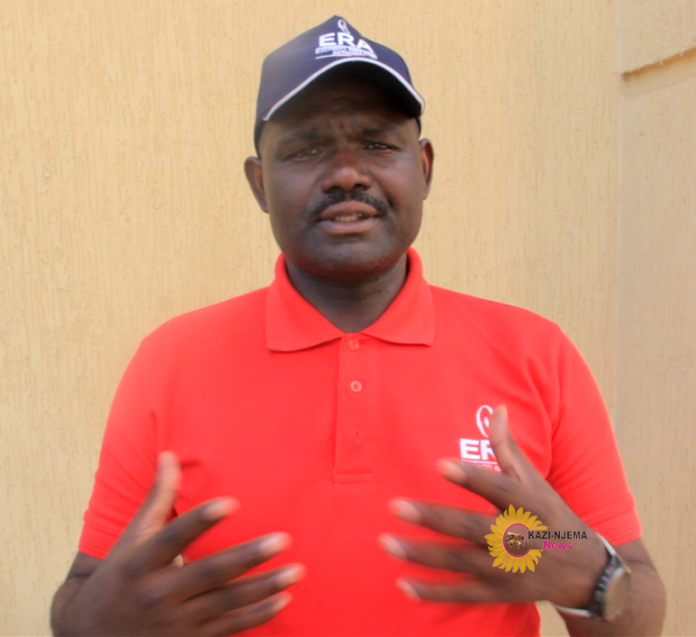
    The Chief Government Valuer, Mr. Gilbert Kermundu, yesterday revealed that valuation of 17 properties which the Inspector General of Government (IGG) recovered from corrupt public officials, will be completed within one month.

    Mr. Kermundu made the revelation during the Inspector General of Government, Lady Justice Naluzze Aisha Batala’s second site visit to another property in Bukoto formerly owned by Mr. Geoffrey Kazinda, a former principal accountant in the Office of the Prime Minister.

    His assurance on the timeliness of valuation adds a layer of confidence to the IGG  relentless pursuit to reclaim public funds, and enhances the Institution’s commitment to trace and identify proceeds of corruption.

    “I can assure you that we have a formidable team at the Ministry of Lands, Housing and Urban Development who are highly skilled in valuation.  We have a client charter that stipulates how much time we ought to take to complete an assignment and I can assure you that this activity shouldn’t take us more than one month,” he said.

    Mr. Kazinda was convicted of the offence of illicit enrichment in 2020. He was found to be maintaining a standard of living beyond his means. He was also found to be having wealth worth over UGX4B which was not commensurate with his source of income.

    As a result of the conviction, the court ordered Kazinda’s property to be taken over by the government.

    The Bukoto property is one of the 17 properties which the IGG is currently valuing for purposes of disposal.

    Do you have a story in your community or an opinion to share with us: Email us at Submit an Article

  • I WANT TO HARVEST YOU! Counsel begs for female student’s ‘humble pie’ during LDC online class

    I WANT TO HARVEST YOU! Counsel begs for female student’s ‘humble pie’ during LDC online class

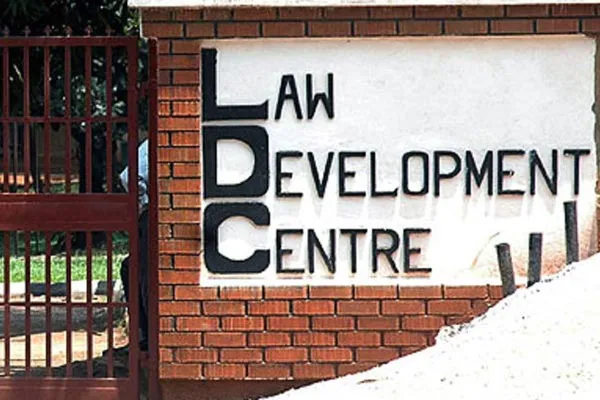
    The Law Development Centre (LDC) classes have turned wild! Campus Bee has received screenshots of a male law student at LDC asking to harvest his classmate’s ‘humble pie’.

    Fellow classmates were sent in shock when this male counsel, forgot to change the Zoom Meeting settings and sent the supposed private message to everyone.

    The Zoom app has a function where one can chat privately with another attendee. You can either choose to chat with “everyone” during the online class (open chat) or someone specific (private chat). Unfortunately, these two counsels aren’t any close to being tech savvy as they instead sent their private erotic chat to every other class attendant including the lecturer.

    ADVERTISEMENT

    “I want to taste on that humble pie,” the horny male counsel initiated what was supposed to be a private erotic chat during the online class.

    “Baby, let me hope no one can see our messages,” the female counsel replied. And indeed, to confirm her fears, everyone was reading their chat because it was not private!

    “Me I have been worse sweetie, I didn’t even attend workshop 2,” the female counsel opened up on how sexually starved the lockdown has made her. Below are the screenshots;

  • Five New Hot Ugandan Music Videos feat. Eddy Kenzo, Rema Namakula, Iryn Namubioru

    Five New Hot Ugandan Music Videos feat. Eddy Kenzo, Rema Namakula, Iryn Namubioru

    Iryn Namubiru, Rema Namakula, and Eddy Kenzo, among other artists, have released new visuals for their music projects, and we look at them in this piece.

    • Sikumanyi – Eddy Kenzo

    Produced by Kelly Yo and Butar Magical, Eddy Kenzo’s new release, dubbed ‘Sikumanyi’, is yet another song directed at his haters. The Big Talent boss works with Edrine Paul on the visuals.

    • Amasso – Iryn Namubiru

    Iryn Namubiru’s new visuals showcase the beauty of Uganda, highlighting the rich greenery and nature. The song ‘Amaaso’ is a love song you could send to your lover.

    • Wano Wano – Rema Namakula

    Written by Gasta, produced by Ian Pro, and mastered by Herbertskillz, Rema Namakula’s new song ‘Wano Wano’ has already become many local music enthusiasts’ favourite. The visuals feature B2C Music’s Delivad Julio.

    • Magulu Nyondo – Iryn Namubiru

    A song for the Kabaka, Iryn Namubiru’s ‘Magulu Nyondo’, will definitely be played heavily on traditional occasions. The visuals by Edrine Paul are quite a watch.

    • Tunura – Heli Baibe

    Have you ever seen a very nice and good-looking person and never wanted to stop looking at them? Heli Baibe visualizes her experience in ‘Tunura’.

    The post Five New Hot Ugandan Music Videos feat. Eddy Kenzo, Rema Namakula, Iryn Namubioru appeared first on MBU.

  • Music Promoters to withhold 6% tax from local artists under new tax measures

    All promoters of public entertainment events in Uganda will be required to withhold tax directly from payments to artists starting in the 2026/27 financial year.

    Under the new rules, promoters must withhold 6% tax on payments to local artists and entertainers and 15% on payments to international performers. While these rates are not new, the responsibility to collect the tax will now rest squarely on promoters, who previously were not considered designated withholding agents.

    Currently, withholding tax mainly applies to formal sectors such as professionals, insurance agents, advertising agencies, and mobile money operators. This has left the entertainment industry largely informal and difficult to regulate, with many artists paid in cash or through loosely documented arrangements, making their earnings hard to track and tax.

    The Uganda Revenue Authority (URA) has long struggled to collect taxes from performers due to these gaps. By shifting the withholding responsibility to promoters, the government aims to improve compliance, formalise the sector, and ensure more consistent revenue collection. The measure is projected to raise about Shs4.2 billion in additional income.

    This initiative builds on earlier URA efforts to formalise the entertainment industry. In January 2023, all players—including artists, promoters, event managers, and venue owners—were required to register for Tax Identification Numbers (TINs), which facilitates enforcement of withholding tax and Value Added Tax (VAT).

    Under the current system, resident entertainers pay a 6% withholding tax, non-residents pay 15%, and public entertainment events attract 18% VAT. Operators earning at least Shs150 million annually must also register for VAT.

    The new measure does not change these rates but expands responsibility for collecting the tax to promoters, effectively plugging gaps in the system and bringing a larger portion of the entertainment economy into the formal tax framework.

  • Azawi Recounts Night of Gunshots and Police Cells in Luweero

    Azawi Recounts Night of Gunshots and Police Cells in Luweero

    Azawi has opened up about a frightening experience that turned a routine performance into a night she will not forget.

    Speaking during a TikTok Live session with A Pass, the singer recalled how a trip to perform in Luweero quickly escalated into chaos.

    She said the trouble began when she and her team arrived for the show and found that the promoter had not made the agreed payment.

    Instead of stepping out, they stayed in the car and waited for full payment.

    The situation, however, did not stay calm for long.

    Azawi said a group of aggressive individuals surrounded their vehicle and demanded that she perform, whether she had been paid or not, creating a tense standoff.

    With pressure mounting and no desire to escalate the situation, she made a quick decision and told the driver to leave.

    What followed was a chaotic escape, as the driver went deeper into Luweero instead of returning to Kampala, heading toward the Mijera route along the Gulu highway.

    As they tried to get away, the situation took a more dangerous turn, with gunshots ringing out close to her and turning the moment into a life-threatening ordeal.

    The night ended in an unexpected way, as Azawi and her team landed in police custody, marking her first time in police cells.

    Today, she shares the story with a mix of disbelief and humor, reflecting on a moment that showed the unpredictable realities behind the music industry.

  • “The concert nearly broke me”—Martha Mukisa – Sqoop

    “The concert nearly broke me”—Martha Mukisa – Sqoop

    For many artists, a first concert is a dream come true. For Martha Mukisa, it became a moment that almost crushed her spirit.

    Two years ago, the Black Magic Entertainment singer boldly announced her maiden concert, Sisaaga, at Freedom City, a move that raised more eyebrows than excitement. Critics were quick to question her timing and readiness, arguing that her catalogue was too thin to carry a full show.

    Among the loudest doubters was Kapa Cat, who insisted that Martha’s biggest hit, Ssango with Eddy Kenzo, wasn’t enough to anchor a major concert.

    What followed was a reality many young artists fear but rarely talk about openly. A low turnout, heavy expectations, and the emotional weight of it all. Behind the stage lights and brave face, the experience hit hard.

    “It almost took my life,” she later admitted in a recent radio interview.

    The disappointment lingered long after the music stopped, nearly pushing her into depression. But somewhere in that difficult moment, something shifted.

    Instead of letting the setback define her, Martha chose to see it as a turning point.

    Looking back, she now describes the concert as one of the most important lessons of her career, not because it was successful, but because it wasn’t. The experience exposed her to the realities of the business: the pressure, the planning, the unpredictability, and most importantly, the need to grow.

    Ironically, the very event that seemed like a failure opened doors. Through sponsorships and industry connections, she found herself meeting key players who would later contribute to building her brand.

    “It made a big deal for us,” she reflected. “There was brand awareness, connections, and a lot of learning.”

    Don’t want to miss out on any story? For updates on all Sqoop stories, follow this link on Telegram: https://t.me/Sqoop and Whatsapp: https://whatsapp.com/channel

  • Uganda’s lifeline tariff sparks inclusive growth

    Uganda’s lifeline tariff sparks inclusive growth

    Uganda’s push for inclusive development has received a major boost with the Electricity Regulatory Authority (ERA) maintaining the lifeline tariff at UGX 250 per kilowatt-hour (kWh), a move aimed at protecting the country’s most vulnerable electricity consumers.

    The lifeline tariff—also known as the social tariff—applies to the first 15 units (kWh) consumed monthly by qualifying domestic users. It remains a key pillar in government’s broader strategy to eliminate energy poverty and ensure that the gains from increased power generation, including the integration of the 600MW Karuma Hydropower Plant, reach households at the grassroots.

    Bridging the Electricity Access Gap

    Supported by the World Bank-funded Electricity Access Scale-up Project (EASP), the programme is steadily transforming lives across Uganda.

    For years, many households were locked out of electricity due to high connection fees and unaffordable tariffs. Today, with free connections for eligible users and the subsidised UGX 250 rate, that barrier is steadily being dismantled.

    “We have families who used to spend more on kerosene and candles in a week than they now spend on electricity for a whole month,” says Betty Nabaasa, a community leader in Kyegegwa District.

    “Affordable power means children can study safely at night without inhaling toxic fumes, and women feel more secure in well-lit homes,” she adds.

    Confronting Energy Poverty

    Despite steady grid expansion, affordability remains the biggest challenge to last-mile connectivity. As of January 2026, ERA’s tariff structure is deliberately designed to cushion low-income households during Uganda’s transition to a modern, industrial economy.

    With the standard domestic tariff for consumption beyond the lifeline block standing at UGX 756.2 per unit, the UGX 250 rate represents a significant 69% subsidy—making basic electricity use attainable for even the poorest households.

    This aligns with Uganda’s commitment to Sustainable Development Goal 7 (SDG 7), which calls for universal access to affordable, reliable, and sustainable energy.

    Lighting Up Livelihoods

    The impact of the lifeline tariff extends beyond homes into local economies, especially in rural and peri-urban areas.

    Affordable electricity is already transforming livelihoods:

    • Education: Students can now study beyond daylight hours, improving academic performance.
    • Health: Reduced reliance on kerosene lamps is lowering indoor air pollution and respiratory illnesses.
    • Small Businesses: Low-cost electricity is enabling micro-enterprises to operate more efficiently.

    “For example, a tailor can use the first 15 units to run lighting and basic appliances, making their workspace more productive and attractive to customers,” Nabaasa explains.

    Advancing Energy Equity

    By balancing affordability with sector sustainability, the government is laying the foundation for a more equitable energy landscape.

    The lifeline tariff is not merely a subsidy—it is a strategic investment in human capital and socio-economic transformation.

    Uganda cannot achieve middle-income status while leaving vulnerable communities in the dark. Ensuring equitable access to electricity is central to that ambition.

    A Lifeline for the Future

    As Uganda progresses through 2026, the lifeline tariff stands out as a practical demonstration of pro-people policy in action.

    It is more than just a pricing mechanism—it is a tool for empowerment, a pathway out of poverty, and a clear signal that access to electricity is not a privilege, but a right for all Ugandans.

    The author serves at the Electricity Regulatory Authority (ERA).

    Do you have a story in your community or an opinion to share with us: Email us at Submit an Article

  • Joshua Baraka Performs With Shensea at MOBO Awards

    Joshua Baraka Performs With Shensea at MOBO Awards

    Joshua Baraka stepped onto one of the UK’s biggest music stages and held his own.

    The Ugandan singer joined Jamaican star Shenseea at the MOBO Awards 2026 in Manchester, delivering a performance that placed him in the international spotlight.

    The event, held on March 26, saw Baraka share the stage with one of dancehall’s biggest names.

    The two performed in front of a packed audience, with their collaboration “Morocco Remix” believed to be part of the set.

    Shenseea brought her signature energy, while Baraka matched the moment with confidence on a stage that has hosted some of the biggest names in music.

    The appearance highlights the growing presence of Ugandan artistes on major international platforms.

  • Azawi trashes King Saha’s “TikTok” and “P.2” songs

    Azawi trashes King Saha’s “TikTok” and “P.2” songs

    When Azawi speaks, people listen. This time, she didn’t just sing… she stirred the pot.

    In a candid TV interview with Galaxy TV’s Rewind Team, the Swangz Avenue star took aim at the recent releases of King Saha, bluntly labeling tracks like “TikTok” and “P.2” as, well… not her kind of songs she would listen to. Not exactly the kind of review you frame on your studio wall.

    “I don’t like the songs he is releasing currently—songs like ‘P.2’ and ‘TikTok.’ I don’t like such crap,” she said.

    But before fans could sharpen their pitchforks, Azawi added a twist… this wasn’t a full-on diss track. In fact, it sounded more like tough love wrapped in nostalgia.

    Azawi made it clear: she hasn’t always been a critic. Once upon a time, she was very much a fan.

    She fondly pointed to songs like “My Way” and “Mpa Love ft Weasel,” tracks that carried King Saha’s signature smoothness and emotional depth. Those were the days when his music felt like a late-night whisper rather than a loud club experiment.

    “Those were very nice songs. I liked his music at the time,” she added.

    Her message? The vibe has changed and not everyone is dancing along.

    Azawi insists her comments come from a place of artistic honesty, not disrespect.

    And in an industry where many critiques are buried under polite smiles and vague compliments, her bluntness is… refreshing? Risky? Both?

    As expected, the internet did what it does best, picked sides.
    • Team Azawi says she’s voicing what many fans already feel: that King Saha’s newer sound lacks the magic of his earlier work.
    • Team Saha argues that artists evolve, and experimentation shouldn’t be mistaken for decline.

  • ERA: The Mastermind Behind Your Light

    ERA: The Mastermind Behind Your Light

    Once upon a time, in a beautiful and naturally endowed Uganda, there was a big dream: to harness the power of the mighty River Nile and the heat of the sun to light up every home, hospital, and factory.

    But building this “World of Light” is a long and expensive journey. It is not just about generating power; it’s about moving it across mountains and valleys until it reaches the very last house on the hill—what we call the “Last Mile.”

    To make this journey successful, a “Master Architect” was established: the Electricity Regulatory Authority (ERA). Its role is to ensure that investors feel safe enough to build the system, while also ensuring that you, the citizen, are protected every step of the way.

    The Three Steps of the Journey

    ERA oversees three groups of “builders” who work together in a massive relay race to deliver power to you:

    • The Generators (The Source): These are the experts who build massive dams like Karuma and solar farms. They create the electricity.
    • The Transmitters (The Superhighway): Power from dams is too strong for direct household use. It travels on giant towers across the country—this is the “superhighway” of electricity.
    • The Deliverers (The Local Roads & The Last Mile): Finally, power is stepped down into smaller wires on wooden poles. The final connection from the pole to your house meter is the Last Mile Connection.

    Without ERA acting as the referee, these three groups might not work together efficiently, and the light might never reach your front door.

    The Architect’s Toolbox: Why It Matters to YOU

    To keep this journey running smoothly, ERA uses several key tools. Here is how they work—and the “So What?”—the real impact on your daily life:

    1. The Golden License (Vetting)
    ERA verifies the credibility and financial capacity of every company before allowing them to operate on the power grid.
    The So What? This is your safety net. It keeps out bogus companies and ensures only qualified experts handle electricity infrastructure, preventing dangerous or poorly built lines.

    2. The Balance Scale (Tariff Setting)
    Companies want higher profits; consumers want lower costs. ERA balances these interests to set a fair price.
    The So What? This is your price shield. It ensures your monthly bill remains fair while allowing companies to maintain infrastructure.

    3. The Quality Ruler (Performance Standards)
    ERA measures how often power outages occur and how quickly faults are fixed.
    The So What? This is your quality guarantee. It ensures reliable electricity and protects your appliances from damage due to unstable voltage.

    4. The Budget Guard (Investment Approvals)
    Companies must seek ERA’s approval before making major investments.
    The So What? This is your cost saver. It prevents unnecessary spending that could otherwise lead to higher electricity bills.

    5. The Clear Glass (Uniform Accounting)
    ERA requires transparency in financial reporting from all electricity companies.
    The So What? This is your transparency guard. It prevents companies from hiding profits or inflating costs to justify price increases.

    6. The People’s Whistle (Consumer Affairs)
    Consumers can report unfair treatment, billing errors, or delays in connection.
    The So What? This is your voice. It ensures even the smallest consumer can be heard and protected.

    7. The Crystal Ball (Research, Forecasting & Advisory)
    ERA studies future electricity demand and advises the government on planning.
    The So What? This is your future security. It prevents power shortages and ensures Uganda keeps up with growing demand.

    8. The Power Border Post (Imports & Exports Regulation)
    ERA regulates electricity trade with neighboring countries like Kenya, Rwanda, and Tanzania.
    The So What? This is your national income booster. Surplus power earns revenue, while shortages are covered through imports.

    9. The Efficiency Engine (Promotion of Competition)
    ERA encourages efficiency and competition within the energy sector.
    The So What? This is your value for money. Efficiency reduces waste and helps keep tariffs lower over time.

    10. The Nature Shield (Environmental Oversight)
    ERA works with environmental bodies like NEMA to ensure sustainable energy development.
    The So What? This is your health and heritage guard. It protects natural resources for future generations.

    11. The Peacemaker (Land & Right-of-Way Disputes)
    ERA helps resolve disputes when power infrastructure passes through private land.
    The So What? This is your justice tool. It ensures fair compensation and prevents project delays due to conflicts.

    The Result: A Bright and Sustainable Future

    Because ERA acts as both the architect and the navigator, a win-win environment is created. Investors feel secure because the rules are clear. The government makes informed decisions based on expert advice.

    Most importantly, the citizen is protected—because every wire, every shilling, and every tree is accounted for.

    The journey from the Nile to your light switch is long. But with ERA in charge, the path is stable, the price is fair, and the future of Uganda remains bright.

    Do you have a story in your community or an opinion to share with us: Email us at Submit an Article

About UGNEWS24

UGNEWS24 is a Uganda local news service, a product of SOLAVIA GROUP LIMITED, Reg. No. 80048169153974.

Registered office

Plot 2335, Buwambo-Katadde-Najjo Road,
Nansana Municipality, Wakiso District, Uganda
P.O. Box 214231, Kampala

© 2026 SOLAVIA GROUP LIMITED. All rights reserved.