Category: News

  • Six Crews, Three Headliners, One Neon Raves stage

    Six Crews, Three Headliners, One Neon Raves stage

    Mbarara is set for an unforgettable cultural and entertainment spectacle as Tusker Lite Neon Raves returns on March 28, transforming the historic Mugaba Palace into a convergence point for music, dance and sport.

    This year’s Mbarara edition comes with a powerful twist, it will take place alongside the Mbarara City Marathon, blending the adrenaline of the marathon with the pulse of Uganda’s evolving music and dance culture.

    At the heart of the experience is a carefully curated lineup led by Ugandan music icon T-Paul, gospel powerhouse Pastor Wilson Bugembe, and fast-rising star Fact Zamani, three artists representing different sounds, generations and audiences.

    T-Paul, known for his timeless hits such as Sawa Sawa, Enafuya, Wanchekekya, Far Away, and crowd-moving stage presence, brings an yet energetic vibe that exhibits that the region has what it takes to hold their own on a big stage.

    Alongside Ray-G, and Omega 256, T-Paul is one of the artists from Western Uganda whose sound has crossed over to the mainstream realm, he simply can’t be boxed as a regional artist.

    He has graced stages at the Comedy Store and at the same time, he is one of the few that have staged fully fledged solo concerts at the Lugogo Cricket Oval.

    In a surprising and refreshing addition to the Neon Raves stage, Pastor Wilson Bugembe introduces a gospel dimension to the lineup. His inclusion signals a broader, more inclusive approach to entertainment,  one that reflects the diversity of Ugandan audiences. With his emotionally charged performances and deeply rooted message, Bugembe is expected to deliver a moment of reflection and unity amid the high-energy atmosphere.

    Adding a contemporary edge is Fact Zamani, one of the most exciting emerging voices on the scene. Representing the new school, his performance is anticipated to inject fresh energy into the night, connecting strongly with younger audiences and reinforcing the platform’s role in spotlighting rising talent.

    The lineup is further strengthened by performances and sets from DJ Banx, MC Shukuran and DJ Mercy Pro, who will keep the energy flowing throughout the night.

    Dance Meets the Spotlight

    Beyond the music, the Neon Raves remains grounded in its signature dance competition. Six crews, Ice Breakers Dance Crew, TYG Dancers, Project Shadow Dancers, Eagle Dancers, The Mob Dancers and K2 Dancers, will battle it out in the regional finale after emerging from competitive auditions held in Mbarara.

    Each crew brings a unique interpretation of street dance, Afro-fusion and amapiano-inspired movement, setting the stage for a high-stakes showdown where precision, creativity and crowd connection will determine the winner.

    Speaking ahead of the event, the Tusker Lite Brand Manager, Sandra Againe noted, “The Mbarara edition represents exactly what Tusker Lite stands for, bringing people together through shared experiences. With the marathon, the dance finale and a diverse music lineup, we are creating a platform that celebrates talent, energy and culture. Audiences can expect the very best from Mbarara’s dance crews, alongside exciting surprise performances that will make this a truly unforgettable Neon Raves experience.”

    The fusion of the Neon Raves with the Mbarara City Marathon elevates the event into a full-day experience. What begins with endurance and grit on the road transitions into a night of expression and celebration under neon lights.

    This integrated approach reflects the evolution of the Tusker Lite Neon Raves, from a regional dance competition into a multi-faceted cultural platform that connects sport, music and youth culture.

    With its mix of heritage, performance and community engagement, the Mbarara edition is poised to be one of the most dynamic yet. The choice of Mugaba Palace as the venue adds cultural depth, merging history with modern expression.

  • Career Success Cannot Replace a Husband and Family, Ann Taylor Remind Women

    Career Success Cannot Replace a Husband and Family, Ann Taylor Remind Women

    Popular Sanyuka TV presenter Ann Taylor has shared her views on women, work, and family, stressing the importance of balance in a woman’s life.

    As conversations around modern roles continue to evolve, Taylor addressed the changing position of women in society, blending personal experience with traditional values.

    While she acknowledged that women continue to make strong strides in business and career growth, she emphasized that professional success alone does not define a “complete” woman.

    Instead, she believes having a supportive husband and a happy family is just as important.

    With that in mind, Taylor maintained that although she supports women working, the home should remain a priority.

    Before anything, a woman should first make her home happy, as others follow.

    She also weighed in on the debate around women’s employment, disagreeing with men who stop their partners from working.

    She said financially contributing women can be essential, especially when unexpected challenges arise.

    Taylor explained that if a man experiences an accident or becomes unable to work, a financially empowered woman can step in and support the family.

    At the same time, she emphasized the importance of respecting traditional roles within the home.

    Using a simple metaphor, she described men as drivers and women as conductors, saying this balance helps maintain order and harmony.

    Beyond her views, Taylor invited women to attend the 27th edition of Olutindo Lwabakyala at Next Media.

    The free event will feature inspiring stories from women who have succeeded in different fields.

  • Brandon Kintu Blasts Alien Skin Over Busoga Remarks

    Brandon Kintu Blasts Alien Skin Over Busoga Remarks

    Politics and entertainment have collided after Brandon Kintu, spokesperson of the NRM Parliamentary Caucus, took aim at controversial singer Alien Skin over his remarks about the Basoga.

    Kintu came out strongly, calling on the artiste to reflect on his behavior and values as a public figure.

    “Alien Skin has no value addition to the Basoga,” he said, a statement that quickly sparked debate across social media.

    The backlash follows Alien Skin’s appearance on Sanyuka Uncut, where he reportedly used harsh language while referring to the Basoga community.

    His comments drew criticism from fans, cultural leaders, and public officials, many of whom described them as disrespectful and divisive.

    Kintu stressed the need for unity and respect, warning that public figures, especially artistes, must choose their words carefully.

    He added that musicians hold influence and should use their platforms to uplift people rather than create division.

    Reactions within the entertainment industry remain split.

    Some artistes have defended Alien Skin, pointing to freedom of expression, while others have urged him to apologise and take responsibility.

    As pressure builds, attention now shifts to Alien Skin and whether he will respond to the criticism or address the concerns raised.

    The situation once again puts the spotlight on the tension between free speech and cultural sensitivity in Uganda’s entertainment space.

  • Lynda Ddane Eyes Motherhood as Love Life Blossoms

    Lynda Ddane Eyes Motherhood as Love Life Blossoms

    Lynda Ddane is ready for the next chapter in her life, and it includes motherhood.

    The TV host and DJ opened up about her relationship with DJ KasBaby, revealing she now feels settled enough to welcome a child.

    During an interview on Daily Soup, Lynda said she has always wanted to become a mother but chose to wait for the right time.

    I would love to welcome a baby out of happiness, and right now I feel I am happy enough to be willing to have a child.

    She said she will let life take its course instead of forcing a timeline.

    When it happens, I do not know because God decides that. I cannot wait for that day to come because I want to know how it feels.

    Lynda shared her excitement about the future and spoke confidently about her relationship.

    She described her partner as calm and reserved, saying his personality helps keep their bond strong.

    For now, she is enjoying the moment while looking ahead to motherhood.

  • Saudi Arabia Opens Door for Ugandan Unemployed Graduates

    Saudi Arabia Opens Door for Ugandan Unemployed Graduates

    The Uganda and Saudi Arabian Governments have signed a new General Labour Recruitment Bilateral Agreement that for the first time allows Ugandan professionals to seek employment in the West Arabian State.

    The agreement was signed on the 31st December, 2017 by Hon. Janat Mukwaya, Minister of Gender, Labour and Social Development on behalf Uganda and H.E Ali Bin Nasser Al Ghafis Minister of Labour and Social Development on behalf of the Kingdom of Saudi Arabia.

    ADVERTISEMENT

    This was during Minister Janat Mukwaya’s official visit to Saudi Arabia between 26th December, 2017 and 1st January 2018 to follow up on the implementation of the earlier labour export commitments made by the two countries in late 2016 and January 2017.

    Thus far, Uganda had an agreement with Saudi Arabia to recruit only domestic workers.

    However the new General Labour Recruitment Bilateral Agreement now paves way for Ugandan Licensed companies to recruit professionals and non-skilled workers including Doctors, Nurses, Engineers, Drivers, Carpenters, welders and domestic workers among others.

    “We also signed off the amended Labour Agreement on Domestic Workers earlier signed in 2015 to specifically streamline the operations of the Labour externalization sector with focus on fighting against trafficking and violation of workers’ rights.” Minister Mukwaya revealed.

    “Both countries agreed to step up their Labour management and regulation mandates to ably weed out exploiters and ensure protection of the workers’ rights.” She added.

    The two Ministers made promises and assurances of continued cooperation through joint meetings and consultations aimed at implementation of the agreements.

    The Permanent Secretary Ministry of Gender, Labour and Social Development Pius Bigirimana revealed that following the new agreements signing, the Saudi Arabian Embassy in Kampala was expected to resume issuance of Visas for workers destined for the Arab State.

    “The Embassy stopped issuing labour export Visas when we imposed a ban on export of domestic workers on 22nd January 2016 in response to reports of violation of their rights. The purpose of the ban was to stop migrant workers from getting into hostile domestic working conditions.” Bigirimana said.

    “We then worked with the Saudi Arabian Government and put in place measures to promote safe labour migration and rights of migrant workers. Upon satisfaction, we announced lifting of the ban on 1st April 2017 but the Embassy has not been issuing Visas for migrant workers. After the new agreements signing, the Saud Arabia Government directed that their Embassy in Uganda immediately starts issuance of the Visas and we are optimistic this will be effected.” Bigirimana explained.

    He observed that the signed bilateral agreements have greatly strengthened relations and fostered cooperation between the two countries since it was agreed that in addition to Labour export, Uganda can tap into other trade opportunities and tourism.

    During the same visit, Minister Mukwaya and the Uganda Embassy in Riyadh officials made contact with the Governments of Kuwait and Oman aimed at establishing bilateral arrangements on Labour Migration management. This is supposed to be followed by a visit of Ministers and their technical teams in February, 2018.

    Meanwhile, a general assessment of both parties’ earlier undertaken commitments regarding streamlining of the Labour externalization sector in the post ban period points to a positive trajectory and improvements.

  • Top K Hits Back, Says Busoga Does Not Depend on Alien Skin

    Top K Hits Back, Says Busoga Does Not Depend on Alien Skin

    Drama is brewing in Uganda’s music scene after Alien Skin vowed never to step foot in Busoga again.

    The Fangone Forest boss, real name Patrick Mulwana, made the bold claim in a video, saying he would not perform in the region even if offered a billion shillings. He accused crowds of treating him badly during past shows.

    His remarks did not sit well with Busoga artistes, who quickly pushed back.

    Recording artiste Top K D’Ghetto Weapon (often referred to as Top K), speaking on Sanyuka UnCut, fired back and made it clear the region is bigger than any single artiste.

    We respect all musicians who respect Busoga. If Alien Skin said that, that is his problem, not ours. Busoga existed before him and will continue long after.

    The comments have sparked a wave of reactions, with many in Busoga rallying behind their own and calling for respect from visiting artistes.

    As the back and forth grows, the situation highlights rising tensions between artistes and regional audiences, with pride and reputation now on the line.

  • Uganda’s Rugby, Arsenal’s woes, and the banter that keeps us going – Sqoop

    Uganda’s Rugby, Arsenal’s woes, and the banter that keeps us going – Sqoop

    Sports gives us a mix of excitement, heartbreak, and, of course, the most hilarious banter. Last weekend was on high drama, heroic upsets, and enough digital roasting to make you wonder if Ugandans and Kenyans were secretly competing for the world championship in memes.

    Let’s kick things off with the 2026 Enterprise Cup quarter-finals. Four Ugandan clubs Heathens, Stanbic Black Pirates, Toyota Buffaloes, and KCB KOBs lined up against Kenya’s rugby titans, ready to show that Uganda isn’t just known for its posho and sauce free food. But as the weekend progressed, it became clear that Kenya’s rugby dominance wasn’t going anywhere. Menengai Oilers served Buffaloes a 60-15 thrashing, Kabras Sugar RFC steamrolled Heathens 61-19, and Nondescripts (Nondies) dispatched KOBs 29-13. The scorelines were as lopsided as a Kampala road during the rainy season. And on X, Kenyan fans wasted no time crowning themselves regional overlords, with memes, fire emojis, and chants of 254 supremacy.

    Meanwhile, Ugandan rugby fans were licking their wounds but clinging to hope, waiting for the one thing that could save the weekend, the Black Pirates. And save the weekend they did. Pirates pulled off a nail-biting 11-10 win over KCB, becoming the lone Ugandan survivor in the semis. But let’s not sugarcoat this. The other three Ugandan teams were thoroughly outplayed, and the jokes from Kenyan fans were as relentless as the heat at a mid-day Kampala market. Size mismatch, they said, as Kenyan forwards who looked like they were carved from granite ran circles around their Ugandan counterparts. Ugandans, not known for their physicality in rugby, took to social media in good humor, self-roasting with posts like, “Eat more ugali and hit the gym!” It was the kind of humor that made you laugh through the pain of being outmuscled by your East African neighbors. Even the Pirates’ manager joined in, cheekily referencing “Ugali boys,” as he watched his team scrape through to the semis.

    Now, let’s zoom back to the rugby banter. While Arsenal fans were busy reeling from their latest heartbreak, Ugandans and Kenyans were still having a field day over the size mismatch in rugby. A picture of Kenyan forwards looking like they could bench-press a building.But underneath it all lies the truth: Ugandan rugby is growing, the Kenyans are more advanced, yes, but Pirates proved that with a bit of heart, anything is possible. And isn’t that just the East African spirit?

    But this isn’t just about rugby. Oh no. This is where Arsenal comes in. If you thought Arsenal fans were having a rough time in the 2026 Enterprise Cup, wait until you hear about the Carabao Cup final. Arsenal fans staring at the harsh reality: another season, another trophy slipping through their fingers like sand at Wembley. Manchester City cruised to a comfortable 2-0 victory, thanks to a second-half brace from Nico O’Reilly. Arsenal, the Premier League leaders, arrived with dreams of a historic quadruple, only to deliver a performance so flat it could’ve been sponsored by a pancake company. Arsenal spent €300m to lose the Carabao Cup while City won it on a budget of vibes and O’Reilly. Classic Arsenal fan coping mechanism: bottle the one trophy you were supposed to win and focus on the bigger one.

    Don’t want to miss out on any story? For updates on all Sqoop stories, follow this link on Telegram: https://t.me/Sqoop and Whatsapp: https://whatsapp.com/channel

  • The Lecturer Is No Longer The Centre Of The Classroom: How Uganda’s New University Curriculum Will Fundamentally Change How You Learn

    The Lecturer Is No Longer The Centre Of The Classroom: How Uganda’s New University Curriculum Will Fundamentally Change How You Learn

    Under Competence-Based Reforms Taking Effect In 2027, Students Will Drive Their Own Learning As Institutions Shift From Knowledge Delivery To Skills Demonstration

    If you are planning to join university from 2027 onwards, the experience awaiting you will look markedly different from what students before you have known. The lecture theatre as the primary site of knowledge transfer — where a lecturer stands at the front and students sit and absorb — is being deliberately phased out of Uganda’s higher education system.

    ADVERTISEMENT

    In its place, a model is emerging in which the student is the central actor, the lecturer is a guide, and what you can demonstrate matters far more than what you can recite.

    This is the direction of Uganda’s Competence-Based Education and Training (CBET) reforms, which all tertiary institutions are required to adopt by the 2027-2028 academic year under a directive from the Ministry of Education and Sports. Officials have described the shift as the most fundamental restructuring of university education in Uganda in recent memory.

    ‘The Lecturer Is Not A Dominant Object’

    Dr. Vincent Aloysius Ssembatya, Director for Quality Assurance and Accreditation at the National Council for Higher Education (NCHE), was direct about what the new curriculum means for the traditional university experience.

    “The lecturer is not a dominant object in the learning process as has been the case in the past,” he said on the sidelines of the seventh Higher Education Conference held in Gulu City from March 23 to 24, 2026. “The future of it is that the lecturer is not visible.”

    Under the new curriculum, students will access information about programme structures, timetables, and study venues well in advance, enabling both individual and group learning to be planned and pursued proactively. Lecturers will have designated slots to guide students during classwork and presentations, rather than serving as the primary conduit through which knowledge flows.

    Students will also be encouraged to independently research topics, compile their own notes under lecturer guidance, and engage with content in a manner that builds genuine competence rather than familiarity with material sufficient to pass an examination.

    The shift, Dr. Ssembatya explained, places the student at the heart of generating knowledge and securing competencies across disciplines.

    Assessment Reimagined: 60 Percent Continuous, 40 Percent Examination

    The structural change most immediately felt by students will be in how they are assessed. Under the new framework, continuous assessment — encompassing coursework, tests, projects, practicals, and experiential learning — will account for 60 percent of a student’s final grade. Formal examinations will make up the remaining 40 percent.

    This represents a fundamental departure from the examination-dominant model that has historically defined university education in Uganda, where a single set of end-of-semester papers could make or break an entire year’s academic standing.

    Dr. Ssembatya stressed that the new curriculum will explicitly spell out the competencies graduates must be able to demonstrate upon completion of their programmes. The standard is not knowledge alone — it is applied ability.

    “You are required to know and show what you have learned,” he said. “If you are doing Medicine, you must be able to diagnose ailments. You must be able to do surgical operations and keep the patient healthy. You cannot allow a medical doctor to go outside society without demonstrating the capabilities of this area.”

    Practicals, Industry Attachments, And Hands-On Learning

    The curriculum’s emphasis on experiential learning means that industry attachments and practical sessions will become central, not peripheral, components of degree programmes across disciplines.

    Dr. Ssembatya illustrated the practical implications with concrete examples. A student in a catering programme will be attached to a restaurant, where they will be required to prepare meals and be assessed on whether they have acquired the required competencies. A Chemistry student may be tasked with testing new enzymes using laboratory equipment. A teacher education trainee’s assessment may cover how they handle difficult topics during teaching practice sessions.

    This hands-on orientation, however, comes with a financial implication that institutions will need to confront. Delivering competence-based education requires significant investment in equipment, laboratory facilities, industry partnerships, and assessment infrastructure — costs that fall squarely on universities at a time when many are already stretched by funding constraints.

    University Leaders Align Behind The Reform

    The reform agenda is drawing broad institutional support, with university leadership across Uganda’s higher education sector signalling readiness to adapt.

    Prof. Vinay Nayasap, Deputy Vice Chancellor of Jeph University in Butabika, Kampala, described the new curriculum as an opportunity to produce graduates who will not merely seek employment but create it.

    “When they complete a programme, they will be able to easily get employment because they will have skills that industry or the labour market needs. Others will be job creators,” he said. Jeph University has gone a step further, announcing plans to review its curriculum every six months to ensure ongoing alignment with labour market demands — a cycle of responsiveness that goes well beyond what most institutions have historically practiced.

    International Business Science and Technology (ISBAT) University is already operating with a more robust continuous assessment model than many of its peers. Vice Chancellor Prof. Kattampackal Mathai Mathew noted that continuous assessment currently accounts for 30 percent of final marks in software courses and 40 percent in Computer Studies — figures that will be revised upward to meet the 60 percent target when the 2027-2028 requirements take effect.

    “Our students will continue to interact with industry,” he said. “We are reviewing all our programmes to suit the Competence-Based Education and Training as per NCHE requirements.”

    Dr. Maurice Bakaluba Tamale, Deputy Vice Chancellor of Seeta University, articulated the philosophical shift underlying the entire reform agenda. “The lecturer is a guide, a mentor, or facilitator. Students are expected to look for information, organise it, discuss it, analyse it, and make a report out of it — which used not to be the case with the old curriculum.”

    The Structural Context

    The CBET reforms at university level build directly on changes introduced in lower secondary schools in 2020. The first cohort of students to have gone through the competence-based lower secondary curriculum will enter university in October 2027 — making the alignment of university curricula with CBET standards not merely a policy aspiration but a practical necessity for institutions that expect to receive and effectively educate these students.

    The NCHE has already developed and distributed accreditation standards for competence-based training to all universities and institutions of higher learning. From 2027-2028, programmes that do not meet these standards will not be accredited — a regulatory consequence with direct implications for institutional viability and student enrolment.

    What This Means For Students

    For students currently in university, the reforms will arrive gradually as institutions revise their curricula ahead of the 2027-2028 deadline. For those preparing to join university from that year onwards, the implications are more immediate and comprehensive.

    The premium in Uganda’s new university system will be placed not on the ability to reproduce information under examination conditions, but on the ability to apply knowledge, demonstrate competence, engage with industry, and produce work that reflects genuine understanding. Students who thrive in this environment will be those who take ownership of their learning, engage proactively with practical opportunities, and develop the habit of independent inquiry well before they step into a lecture theatre.

    The classroom is changing. The question is whether students are ready to change with it.

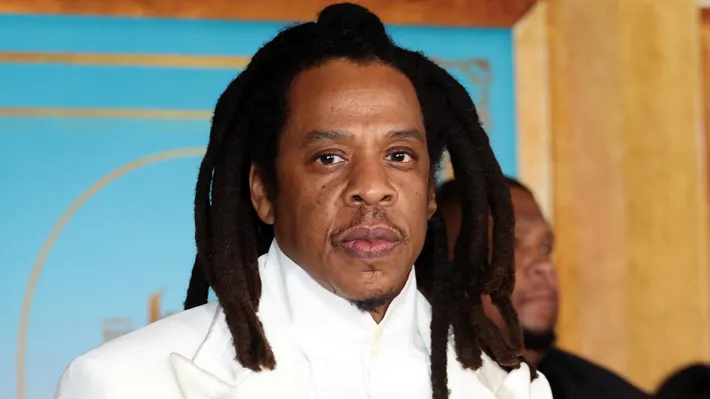
  • Jay Z Shares Insights on 30 Year Career and Modern Hip-Hop

    Jay Z Shares Insights on 30 Year Career and Modern Hip-Hop

    Jay Z is looking back on three decades in the game in a rare and personal interview.

    The rap icon, born Shawn Carter, spoke to GQ’s April issue as he marked 30 years since his debut album Reasonable Doubt.

    He reflected on his journey from independence in the 90s to building a global empire.

    He pointed to discipline, growth, and ownership as key pillars behind his success, both in music and business.

    Jay Z also addressed a past lawsuit he denied, describing the experience as difficult and explaining why he chose not to settle.

    On wealth, he made it clear he has no regrets about his billionaire status.

    He also warned that today’s rap feuds have become too personal, especially in the age of social media.

    The post Jay Z Shares Insights on 30 Year Career and Modern Hip-Hop appeared first on Nile Scoop.

  • Mao Hosts Creatives to Celebrate Copyright Amendment Bill Progress

    Artistes and industry insiders gathered in Lubowa for what many described as a long awaited moment for Uganda’s creative sector.

    Justice Minister Norbert Mao hosted the private event at his residence, bringing together voices from across the industry to reflect on the recently passed Copyright and Neighbouring Rights Amendment Bill, 2025.

    Parliament passed the bill on March 17, and now awaits presidential assent before it becomes legally binding.

    For many in attendance, the development reflects years of advocacy by artistes who have pushed for stronger protection of their work.

    Mao used the platform to acknowledge their efforts and the role they played in driving change.

    This is your victory. For a long time, artistes have cried out for protection. Today, we celebrate a future where your talent is respected and rewarded.

    Conversations during the gathering focused on opportunity, with creatives hopeful about earning more from their work beyond performances.

    Some attendees also raised concerns about expectations, stressing that proper structures and enforcement will be key once the law takes effect.

    The post Mao Hosts Creatives to Celebrate Copyright Amendment Bill Progress appeared first on Nile Scoop.

About UGNEWS24

UGNEWS24 is a Uganda local news service, a product of SOLAVIA GROUP LIMITED, Reg. No. 80048169153974.

Registered office

Plot 2335, Buwambo-Katadde-Najjo Road,
Nansana Municipality, Wakiso District, Uganda
P.O. Box 214231, Kampala

© 2026 SOLAVIA GROUP LIMITED. All rights reserved.