Ugandan singer King Saha has criticized the government over how it handles support for musicians, insisting that handouts will not solve the industry’s problems.
Speaking in an interview with a local television station, the opposition-leaning artist argued that giving envelopes of money to a few musicians does little to develop the music sector.
According to King Saha, what the industry truly needs is proper enforcement of the Copyright Amendment Bill Uganda.
“Government support should be law and structure, not envelopes. Enforce copyright law and watch the industry fix itself,” he said.
The singer emphasized that once the law is properly implemented, musicians will be able to earn from their work without relying on financial handouts.
“We need better than handouts,” he added.
King Saha’s remarks come at a time when the proposed copyright amendment continues to spark debate among musicians and lawmakers.
The bill recently went through a second reading at the Parliament of Uganda and is expected to return for further debate next week.
Many artists believe the amendment could transform the industry by ensuring musicians are compensated whenever their music is played on radio, television, and other platforms.
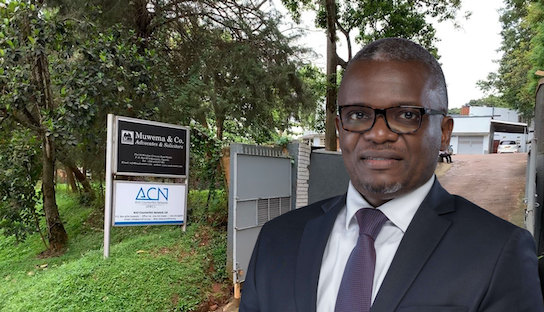
Kampala – As the Uganda Law Society rushes to the Inspector General of Police crying “unlawful eviction,” one uncomfortable truth stares everyone in the face: senior advocate Fred Muwema and his firm owe more than Shs 1.4 billion in rent arrears, court-ordered damages and mesne profits. Instead of simply writing the cheque and moving on like any ordinary citizen would be forced to do, Muwema has spent years navigating legal corners, clutching at an “option to purchase” clause, filing appeals and now lecturing the public on 19th-century English case law.
The High Court Commercial Division did not mince words on February 20. Justice Patricia Mutesi ruled in Downtown Investments Ltd v M/s Muwema & Co. Advocates (HCCS No. 621 of 2023) that the 2014 lease had been lawfully terminated after repeated defaults. The firm was declared trespassers. Bailiffs, with police present, carried out the order on March 6 at Plot 50, Windsor Crescent Road, Kololo. Files were moved, furniture was loaded, the office was cleared. That is what happens when you refuse to pay rent for years.Yet hours after the locks were changed, Muwema published a lengthy opinion piece titled “Let me educate my former landlord on what the ‘option to purchase’ means.” In it, he claims that once he “exercised” the OTP, the landlord-tenant relationship magically vanished, rent obligations evaporated, and the landlord became a mere “vendor” who must now sell the property to him at the 2014 price. He drags up London & Southwestern Railway Company v Gomm (1881), a Ugandan case from Mubiru J, and foreign precedents as if centuries-old foreign rulings can erase a Shs 1.4 billion debt in 2026 Kampala.
This is classic corner-taking. Instead of paying the arrears like the court commanded, Muwema wants the landlord to accept that rent paid after the supposed OTP exercise should be “adjusted” against a purchase price that was never agreed upon. He wants specific performance of a contract the landlord has already walked away from. And while his clients’ files and court exhibits were being loaded onto trucks, he was busy drafting an appeal and a press statement.
The Uganda Law Society has now petitioned IGP Abbas Byakagaba, demanding to know which officer “assisted” the eviction and calling the operation “malicious.” ULS Vice President Anthony Asiimwe says the move risked client confidentiality and breached due process. But the real breach of due process began years ago when Muwema & Co. stopped paying rent and stayed put anyway. The court gave them every chance to defend themselves; they lost. Now they want the police blamed for enforcing a valid judgment.
On social media, Ugandans are not buying the sob story. “Pay your rent like the rest of us,” one widely shared comment read.
“You are a lawyer; you know better than to hide behind technicalities.” Another asked pointedly: “If every tenant starts claiming ‘option to purchase’ after defaulting, who will ever rent out property again?”
I have no quarrel with legitimate tenant rights. But when a senior member of the bar, whose firm earns millions from advising others to obey the law, refuses to obey the simplest obligation – pay what you owe – the profession’s credibility takes a hit. Muwema has every right to appeal. He does not have the right to treat a court judgment as optional while lecturing landlords on equity.The straight road is clear: pay the Shs 1.4 billion (or whatever the exact figure is after proper accounting), vacate peacefully if you must, and fight the case from outside the premises like every other litigant. Stop the corners. Stop the lectures. Stop expecting the justice system to bend because you wear a wig. The eyes of the public – and of every landlord in Kampala – are now on Muwema. Will he finally take the straight road, or will he keep driving down the legal backstreets? The answer will speak volumes about whether some lawyers believe the rules apply to everyone else but them.
Do you have a story in your community or an opinion to share with us: Email us at Submit an Article
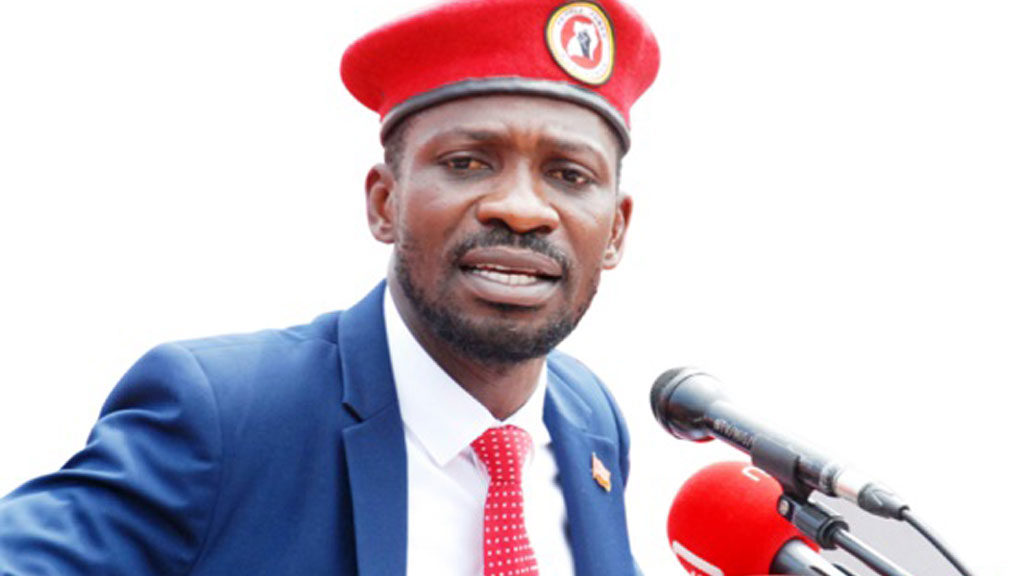
Bobi Wine announced Saturday that he has left the country after evading a military raid on his home a day after the disputed January 15 presidential election, where President Yoweri Museveni was declared the winner with 72% of the vote amid opposition claims of rigging and violence.
The 43-year-old whose real name is Robert Kyagulanyi credited everyday Ugandans for protecting him despite roadblocks and searches, calling it ‘laughable’ that security forces failed to find him.
He described his departure as brief, planning to rally international allies for sanctions on Museveni’s enablers while naming NUP deputy Dr Lina Zedriga Waru as acting president and vowing to return.
“Today, I am announcing my brief exit from the country to handle important work. Over the next few weeks, I will engage with our friends and allies all over the world before returning to Uganda to continue the push for freedom and democracy! For now, let’s remain focused and united,” Bobi Wine said.
President Museveni was declared winner of the January polls with 7,946,772 votes, representing 71.65 per cent of the valid votes cast, stretching his rule beyond four decades.
Mr Kyagulanyi finished second with 2,741,238 votes (24.72 per cent).
The musician turned politician, however, publicly rejected the results, describing them as “fake” and “fabricated.”
Since evading a military raid on his, Mr Kyagulanyi has remained underground. He recently stated that his wife, Barbara Itungo, and other family members had successfully fled Uganda after she was reportedly assaulted by military forces during another violent raid on their residence on January 23, 2026.
While he maintains he has “video proof” of widespread fraud, Mr Kyagulanyi, whose whereabouts remain unknown, declined to challenge the outcome in the Supreme Court, citing a complete lack of trust in the judiciary.
Early morning, my alarm blares. Oops! It’s yet another day of scraping by on a shoestring budget. Living on your own terms has its allure: no curfews, no rules, and the freedom to indulge in the weirdest food combinations imaginable. But more often than not, it’s katogo and cabbage on the menu, rather than the chicken I dream of, and that’s on a lucky day. With nothing for breakfast, I get dressed in a jiffy and rush to class, hoping to make it through another day. By the way, government students are the best timekeepers you’ll ever meet. We always know the exact date and day of the week, down to the minute. You’d think we were auditioning for a calendar commercial. And why? Because of that mythical thing called a “living out allowance”, the puppet master of every government student’s life.
It’s interesting that university has no break time. Or I would rather say, it is never part of my schedule. Its lunch time! Noodles and spaghetti are staples, yesterday, today and tomorrow. Regardless, I dream big. “Sneakers aren’t enough; I need boots.” “I’m dropping android for iPhone.” Meanwhile, the allowance stares back sceptically, whispering, “Really? Thats your plan?” Undeterred I respond, “Yes, I’m gonna show you fire!” I wouldn’t want to call it the Parousia but waiting for money feels like an endless vigil. patience gives way to prayer, then to calls home, only to be met with stories of borrowed hope. “We’ve been waiting for your allowance, too. Your little brother isn’t well,” they explain. Each day, hope wanes, and borrowing shifts from a dirty word to a lifestyle.
ADVERTISEMENT
Despite the struggle, I have perfected the art of looking sharp. Clad in well-pressed suits, no one would guess that I am surviving on one meal or none at all. Out of begging and hustling, I managed to start a small business that rarely returns a profit. I’m more of a ‘CEO’ in title than in earnings. Others juggle with part-time jobs, doing whatever it takes just to get by. Dear God, it wasn’t my intention to hide from friends but I have over-leveraged. I have maxed out my tabs at every shop in the neighbourhood. It’s overwhelming. survival is the goal. Out of despondence, with no lifeline in sight, a new dream is born as the pressures of being broke sink deep. The dream of storming the administration, rallying with cries of “We want our money!” Yet somehow, it always stops at the talking stage, the plans of revolution lost in the shuffle of daily life.
And then, randomly, a miracle happens. “You have received…” The message pops up, and the excitement is almost tangible. At that momentous epoch, it feels like you’re floating on air, free from the chains of debt and hunger. But here’s the catch: the money is always a lot, until you actually receive it. No scientist, no mathematician has ever cracked the mystery of how fast that money disappears. In the end, the allowance that was supposed to fund my grand dreams ends up settling debts and buying one or two good meals. It’s amusing how friends on private think we are rich.
“Broke but not broken” has become my personal mantra whenever I ransack my room for coins. with bank accounts on life support, I’ve mastered the art of creative budgeting and professional stress management. I always remember I’m not alone in this madness. whatever it takes, make sure you survive. Surviving this chaos means you’ve already earned the credentials to run this country!
KAMPALA – Barely weeks into his new job, the freshly appointed Executive Director of the Uganda Media Centre, Alan Kasujja, is already discovering the reality of public office in Uganda: once the appointment letter arrives, the phone never stops ringing.
On Sunday, March 15, 2026, the former BBC heavyweight took to X to share a screenshot showing 73 missed calls by 2:00pm — on a Sunday, no less.
His caption captured the mood:
> “73 missed calls by 1400 on a Sunday? Time to change numbers, I think..”
The post quickly triggered a flood of reactions online. Some users reminded him that “it comes with the office,” while others jokingly claimed to be among the callers — from landlords demanding March rent to distant relatives seeking “facilitation.”
One follower even volunteered to become Kasujja’s personal call screener.
Another offered a more sobering reminder:
> “You became hope to many lives. Don’t dare change the number.”
Appointment That Comes with Pressure
Kasujja’s appointment came through President Yoweri Kaguta Museveni, who named him Executive Director of the Media Centre in a letter dated December 27, 2025. The directive was later made public on January 30, 2026.
He replaced Ofwono Opondo, the long-serving government spokesperson who left the position to pursue elective politics.
Since early March, Kasujja has been undertaking a series of transition activities — holding internal briefings, engaging the outgoing team, and mapping out his priorities for the government communications hub.
By March 14, just a day before the now-viral “73 missed calls” post, Kasujja was already speaking about mobilising resources for the Media Centre, reaching out to private-sector partners, and promising to support Uganda’s creatives and youth.
The message was clear: the new man in charge intended to hit the ground running.
Welcome to Kampala’s Power Phone
But as many Ugandan officials quickly learn, the moment one steps into public office, accessibility becomes both an expectation and a burden.
The Uganda Media Centre, after all, sits at the centre of government communication. Its executive director is expected to interact with journalists, civil society actors, creatives, youth groups, development partners — and the inevitable stream of acquaintances hoping proximity to power will translate into opportunity.
In Kampala’s political ecosystem, a new appointment often triggers a wave of phone calls from all corners: media inquiries, partnership proposals, old friends resurfacing, and sometimes outright opportunists testing their luck.
Kasujja, who built much of his career in the structured environment of international broadcasting at the BBC, now finds himself navigating a different rhythm — one where influence comes with a relentless ringtone.
The Real Test Begins
Whether the new Media Centre boss ultimately changes his number or simply hires someone to screen calls remains to be seen.
What is clear is that the honeymoon period appears to have ended almost as quickly as it began.
The real test will not be how many calls Kasujja receives, but whether he can translate that attention into tangible results for the creative sector and young communicators he has promised to champion.
For now, one lesson is already evident: in Uganda’s public service arena, the phone never sleeps.
And neither, it seems, will the new Media Centre boss.
Do you have a story in your community or an opinion to share with us: Email us at Submit an Article
For many creatives, the rise of artificial intelligence in filmmaking sounds like a warning bell, a technology poised to replace artists, writers and filmmakers. But Ugandan videographer Sasha Vybz believes the conversation should be less about fear and more about opportunity.
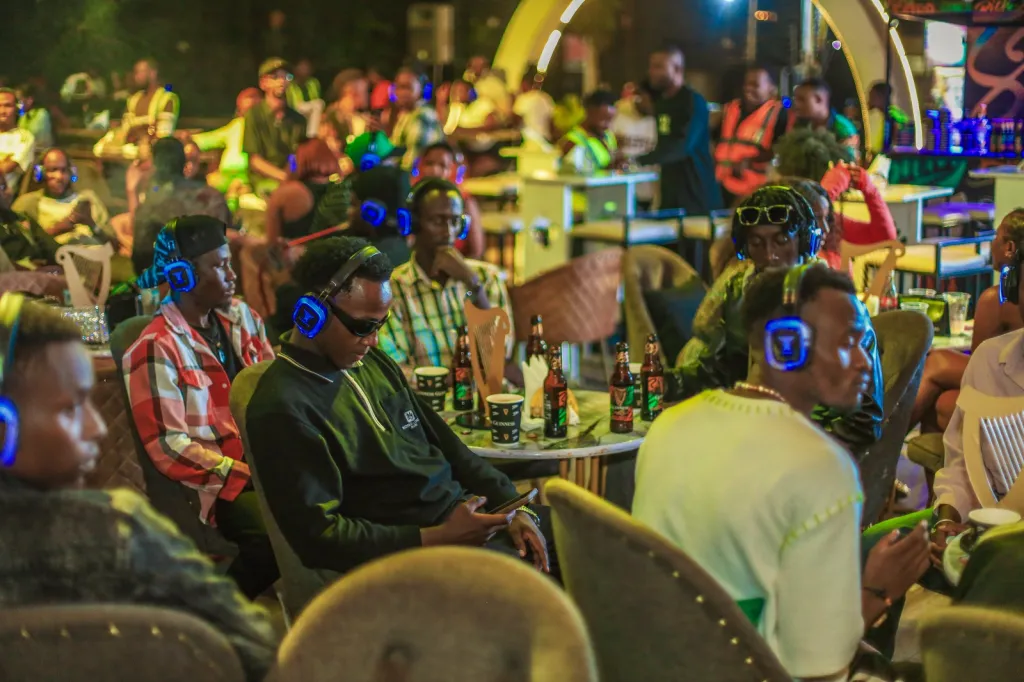
Speaking during a masterclass at the Guinness Smooth Creators Lab at Nomad Bar and Grill, Vybz real name Ian Akankwansa, encouraged filmmakers, photographers and digital storytellers to see AI as a tool that can enhance creativity rather than replace it.
The Creators Lab is part of the “Make It Yours” initiative, a series of creative activities that bring together young Ugandan talents in fields such as fashion, music, art and content creation to share knowledge and explore new creative frontiers.
“The Guinness Smooth Creators Lab is designed to give young Ugandan creators a platform to explore new ideas, learn from industry leaders like Sasha Vybz, and experiment with emerging tools such as AI while staying true to authentic storytelling. Through the ‘Make It Yours’ initiative, we want to inspire the next generation of creatives to push boundaries and shape the future of Uganda’s creative industry,” said Denise Paula Nazzinda, Guinness Smooth brand manager.
During his session, Vybz tackled one of the biggest anxieties among creatives, the fear that AI could make human creativity irrelevant.
“Most creatives are afraid of AI and what it could mean for creativity,” he said. “But this shouldn’t scare us.”
To illustrate his point, he compared the current AI debate with the disruption that came when photography first emerged.
“Photographers disrupted artists who were drawing portraits,” he said. “Cameras came with something more exciting and almost more accurate.”
But he noted that hand drawn works and paintings have even become more expensive over the years.
At one point, the filmmaker played a dramatic fight scene featuring Hollywood stars Brad Pitt and Tom Cruise, locked in a carefully choreographed battle sequence.
Then he posed a question to the room.
“What if I told you this entire scene is AI?”
The clip, he explained, had been generated using Seedance 2.0, an advanced video-generation model developed by ByteDance. With just a short two-line prompt, the system was able to create a cinematic fight scene convincing enough to pass for a real film.
The example sparked debate online, with many arguing that such technology could threaten the future of cinema.
After all, if a simple prompt can produce a high-energy action scene in seconds, why would producers still need actors, choreographers, stylists or large film crews?
Vybz acknowledges the concern but believes the technology also opens doors.
“Many people will go the AI way because it is easier and affordable,” he said. “But it also gives people a chance to start.”
He says that one doesn’t need high end gear to create their difficult ideas, for instance, in Kampala where permits to shoot at times exceed the production budget, he says there is an opportunity to go past all these challenges and start with a click.
“Imagine recreating Kampala’s aerial view with a click,” he says.
He references what AI makes possible today to what smart phones brought to the table urging creatives that they don’t always need big cameras like his. Vybz recalled how he shot the music video for Sheebah Karungi’s song Nakyuka during the COVID-19 lockdown using only an iPhone.
“When movement was restricted and production was difficult, we still made it happen,” he said. “You don’t need big cameras to start.”
Besides production, he also notes that AI makes writing and pitching easier. He says that the technology can help filmmakers build convincing visual pitches when approaching global streaming platforms such as Netflix, Prime Video or Disney+, something that previously required expensive equipment and large teams.
Despite AI’s rapid evolution, Vybz insisted there are still elements of storytelling that machines cannot replicate. Authenticity, he said, remains the most valuable currency in filmmaking.
“I have been to Karamoja and seen aerial shots that AI cannot replicate,” he noted.
Even though AI can generate scripts and visual sequences in minutes, he added, it still struggles to match the emotional depth of a truly original story.
“AI can replicate things quickly, but it cannot beat a unique storyline,” he said.
The filmmaker also warned about the risks of AI misuse in the creative industry.
Several Ugandan songs, including Azawi’s Masavu, AaronX’s Njalwala, and Uga Boys’ Namulabako, have already been replicated using AI tools.
However, Vybz explained that many of these unauthorised versions fail to generate income because streaming platforms such as YouTube and Spotify have systems that detect AI-generated content and block monetisation.
In the end, his message to creatives was simple: AI is not the enemy.
Instead, those who learn to use it responsibly may find themselves with a powerful ally.
“AI is here to stay,” he said. “But it is not going to take away jobs, it will change how we work.”
Outside Sasha Vybz’s masterclass, the night also went down with energetic music thanks to DJ performances by City Gal, Melvin DJ, and Adele Kiele among others.
Our times, being enriched with a trichotomy of ideas, we shall be delving further on the heroic virtues of His Excellency President Museveni.
Museveni, by configurative description, does not believe in beauracracy. this is why, he easily interacts with peasants in the 58,197 villages across Uganda. Many of those men and women even receive direct telephone conversations from the head of state on both official and non official matters. What is making some leaders in government and opposition dysfunctional in performance , emerges from their trait of self arrivalism, undermining people they are supposed to serve and deliberately failing to emulate the virtue of popular magnanimity as exercised by the head of state.
Museveni, by experiential stature, understands better the psycho anatomy of human formation, in line with state ideals . This is why, after the NRA captured power, Museveni outrightly rejected the notion by some NRA militants that kingdoms in Uganda should remain abolished. Article 246 of Uganda’s constitution, well aligned with the cultural leaders act of 2011 under the NRM, have brought fresh life in reviving customs and norms in Bunyoro, lango, Buganda, Busoga, Teso, Tooro etc .
In the world of elementary physics, any conversion of matter and energy will induce gravitational lensing. This principle has been well applied by President Museveni to build a successful system called decentralisation in Uganda. If you scrutinize all the 2191 subcounties, town councils and municipal divisions in the country, you will surely see that they all have budgetary allocations for developmental programs for the youth, women elderly and all citizens within those vicinities. If elected leaders and civil servants in all those spheres can wake up , Uganda under the sanctified statesmanship of president Museveni, shall successfully attain the fourth national development plan and prosper in the shining pattern of countries like Singapore……..
(LUTWAMA is Deputy Resident District Commissioner Alebtong, sms 0786672301)
Do you have a story in your community or an opinion to share with us: Email us at Submit an Article
The kidneys are vital organs that filter waste and excess fluids from the blood, regulate electrolytes, and maintain overall fluid balance. Healthy kidneys are essential for keeping our bodies in balance, supporting heart health, and preventing complications such as high blood pressure and heart disease.
How are kidney problems connected to the heart, blood pressure, and sugar levels?
There’s a strong link. High blood pressure (hypertension) can damage kidney blood vessels over time, reducing their ability to filter blood efficiently. Diabetes and high blood sugar also harm the kidneys by causing chronic inflammation and scarring of kidney tissues. Conversely, kidney dysfunction can lead to fluid retention and heart strain, creating a cycle of worsening kidney and heart health.
Many people practice self-medication at home. Is this safe?
Self-medication can be very harmful in long term use. Over-the-counter painkillers, anti-inflammatories, and certain antibiotics can injure the kidneys, especially if taken frequently or in high doses. It’s critical to consult a doctor before taking any medication, particularly if you have underlying conditions like diabetes or hypertension.
Are there medications that patients with CKD should avoid?
Yes. Patients should avoid non-steroidal anti-inflammatory drugs (NSAIDs) like ibuprofen and diclofenac, certain antibiotics like gentamicin without supervision, and high-dose herbal supplements. Always consult your nephrologist before taking any new medication.
What practical steps can people take to protect their kidneys?
There are several steps:
Maintain a healthy lifestyle and balanced diet, low in salt and processed foods
Avoid smoking and alcohol
Stay hydrated: For water intake, guidelines are roughly: Children: 1–1.5 liters/day, Adult females: 2–2.5 liters/day, Adult males: 2.5–3 liters/day, Elderly: 1.5–2 liters/day, depending on health conditions
Exercise regularly to manage weight and blood pressure
Monitor blood pressure and blood sugar frequently
Avoid unnecessary medications or herbal remedies without consulting a doctor
Schedule regular check-ups with a nephrologist
Is CKD really in Uganda?
CKD is an emerging public health concern in Uganda. Current estimates suggest over 1.5 million Ugandans are living with some form of kidney disease. Many patients remain undiagnosed until the disease has progressed significantly.
Is CKD treatment expensive?
Yes, managing Chronic Kidney Disease (CKD) can be costly because it requires regular monitoring and long-term care. Costs include consultations with a nephrologist, blood and urine tests, imaging like ultrasounds, medications to control blood pressure and blood sugar, and dietary counseling. Since CKD is a chronic condition, these expenses add up over time.
How expensive is dialysis treatment in Uganda?
Dialysis in private hospitals in Uganda typically costs between UGX 300,000 and 450,000 per session, excluding medications, lab tests, and doctor consultations. Most patients require dialysis 2–3 times per week, which can become a significant financial burden for patients and their families.
How regular check-ups helps?
Regular check-ups allow early detection of kidney problems before they become severe. Blood and urine tests, blood pressure monitoring, and kidney imaging help doctors adjust medications, provide lifestyle advice, and intervene early to prevent complications. While Chronic Kidney Disease (CKD) is a progressive condition, timely monitoring can significantly improve outcomes.
Regular kidney check-ups are especially important if you have high-risk conditions such as diabetes, hypertension, heart disease, HIV, obesity, or a family history of kidney disease.
Kidney health is crucial for overall well-being. Stay hydrated, manage your blood pressure and blood sugar levels, avoid harmful medications, and seek regular medical care.
If you have any questions or concerns, I remain available to assist you. Visit UMC Victoria Hospital for consultations, check-ups, and specialized kidney care.
Where care comes first, and your kidneys are our priority.
Doubts regarding whether or not Uganda’s President Yoweri Museveni is still fully in control of this country have surfaced severally particularly in the last five years. A combination of factors including Museveni’s advanced age, his younger brother Salim Saleh growing influence the rapid rise of his son, Muhoozi and a perceived power shift toward a “dynastic” or “family-run” state have taken centre stage.
While Museveni is in the evening of his life, many analysts suggest that his inner circle rather than the president himself are exercising increasing authority. Not so long ago, Semujju Nganda, a Member of Parliament claimed that President Museveni is being managed due to his advanced age by his son, Gen. Muhoozi Kainerugaba.
The same words were reechoed by Mukasa Mbidde, a self-confessed ally of the President Museveni and former Member of the East African Legislative Assembly that Museveni is “just a symbol” in the precise terms and highlighted that the specialized army segments now hold the real power in the country in what is termed as the deep state conspiracy theories.
Analysts believe that due to Museveni’s age, a secret semblance of powerful individuals is remotely stirring the country. The prominence of Gen. Muhoozi Kainerugaba, now Chief of Defence Forces, is widely said to be part of a dynastic succession plan where the military elite, rather than the democratic process, ensures the continuity of power.
Covert power transitions from within means strategic, unacknowledged, or hidden process by which leadership shifts from one person to another, aiming to avoid public scrutiny. Unlike the traditional overt power transitions characterized by transparent negotiation, covert transitions often utilize highly sophisticated strategic maneuvering to create a façade of legitimacy.
Last year, the Speaker of Uganda’s Parliament, stirred controversy when she referred to Museveni as “God the Father” and his son, General Muhoozi, as “God the Son” She did not however give the right reference in describing the equivalent of the “holy spirit”. The speaker’s remarks were made during a political rally in Bukoto West constituency on June 8, 2025.
She claimed that the voters were the “holy Spirit” in order to make them feel important but I believe this was a diversion of the sorts. The real power in this country does not lie in the hands of the Executive, the Judiciary or Parliament, it is in the hands of a powerful General fully camped in northern Uganda for reasons best known to him.
The note by the speaker was criticized by the opposition, religious leaders and the public as “blasphemous,” “deeply offensive,” and an act of extreme sycophancy. Critics accused her of deifying the President and violating Christian beliefs. In defense, the NRM argued that the remarks were not meant to be theological but rather a “figurative expression”
Despite the backlash, the speaker did not stop referring to the trio as the trinity, a word that many Christians believe is a preserve of the biblical trinity. But why would a person who portrays herself as a “staunch Catholic” make such an absurd comparison. These utterances may appear innocent on face value but are deep rooted.
But as fate would have it, her utterances paid off, we are informed that she has been endorsed for a second term by the trinity. If this claim is true which I doubt, then the NRM top leadership will have no option but to ring fence the speakership to the chagrin of in-house contenders such as Lydia Wanyoto and Persis Namuganza.
I have personally met several people with preference for Norbert Mao as next Speakers not because he is the best but a better evil. However, the Bukedean has an upper hand over Mao who thinks is he is entitled to the speakership due to his written document with Museveni and his “Acholism” where the late speaker Jacob Oulanyah hailed from.
From taking a lead in vote hunting for the ruling party, to suppressing dissent in the August house, passing oppressive laws that favour the ruling party, to weaking the opposition on the ground, reducing their numbers in parliament and fishing from the opposition etcetera, anyone other the trinity would want to have the Bukedean by his or her side.
Sadly, “God the father” detests people who love the lime light and promote divisions other than unity. “God the father” is so unpredictable and plays politics like a game of cards. He is always armed with a joker, pick twos, a master spade card and makes sure that no one uses a seven to “cut” the game prematurely as he always wants to be the only winer. That is why I believe Mao could still be in the race for the speakership.
In this country, all that one needs to share power is to sing the right song at the right time and for the right person aware that we have many powers centers all controlled by the trinity, a song with the right chorus sang for any member of the trinity is all that matters. After praising the “father”, the “son” and the “holy spirit”, the sky is the limit for triple A.
In June 2021, President Museveni promoted and appointed Gen Wilson Mbadi as the Chief of Defence Forces, the highest position in Uganda’s military. Towards the end of his tenure as CDF in March, 2024, the President signed an “instrument of delegated command of the Uganda People’s Defence Forces (UPDF) termed as the as the UPDF establishment 2021.
This authority was originally vested in the sitting President in his capacity as the commander in chief of the armed forces. I am tempted to believe that the UPDF Establishment was specifically designed with a plan to benefit the trinity. I want Ugandans to recall that that establishment was officially launched by Museveni on February, 17th 2024, and within one month, Mbadi was dropped and replaced by General Muhoozi Kaineruga.
Previously, it was the sitting President vested with the mandate to take major decisions but that power has been transferred to the CDF. Since then, Muhoozi has been in charge making significant but important changes in the army of course with the blessing of the other members if the trinity. This means that future Presidents may not hold the title of commander in Chief until that order is withdrawn or vacated.
For those who have been following trends in this country, you may have realized an influx of local and foreigners frequenting Gulu to have a one to one with the “holy spirit. These people range from those looking for government contracts, those who want to save or get jobs in the civil service or those seeking political appointments, artists looking for hand out among others have returned with a green light and have had their prayers answered almost instantly.
Wadada Rogers is a commentator on political, legal and social issues. wadroger@yahoo.ca
Do you have a story in your community or an opinion to share with us: Email us at Submit an Article
Joshua Baraka, K!mera, and Sheem Mwanje, among other artists, have released new visuals for their music projects, and we look at them in this piece.
Girl In Ibiza – With U feat. Joshua Baraka
Uganda’s Joshua Baraka teams up with With U – an Electronic/Afro House DJ duo (Philip and Marlon) – to create ‘Girl In Ibiza’. With U is based in Europe and known for driving rhythms and deep basslines.
Church Wake Up – K!mera & Clay Dance Co.
A message to the church to wake up – K!mera yet again delivers his unique talent, songwriting, and vocals to this beautiful gospel song on which he features the deep choreographic performance from Clay Dance Co.
Wanjawulo – Rickman Manrick feat. Sheem Mwanje
Wanjawulo focuses on the unique attributes of your partner. After a few months AWOL, Sheem Mwanje returns to showcase her raw talent alongside Rickman, whose consistency in recent months should be applauded.
Nzibilako – Fyno Ug
“This song is dedicated to all love birds, and love has no boundaries,” says Fyno Ug. On his new project, he works with Eddie Dee and Bass Boi. Fyno recently revealed that he plans to hold his first concert at the end of 2026, and his music speaks volumes.
Jangu (Remix) – Kalifah AgaNaga feat. Weasel
Directed by Made By Kenny Ssali, this video exhibits energy and vibes. Kalifah AgaNaga and Weasel bring the heat on the remix of Jangu.