Blog

  • Dave Bautista Confirmed as the New Kratos in Prime Video’s “God of War”

    Dave Bautista Confirmed as the New Kratos in Prime Video’s “God of War”

    The search for a new Kratos did not last long.

    Dave Bautista has officially landed the role of the legendary Spartan warrior in Prime Video’s upcoming live-action “God of War” series, stepping into one of gaming’s most recognisable characters.

    Bautista takes over from Ryan Hurst, who had already started filming when a bicep injury forced him to leave the production.

    That left the series with a major problem. The man playing its central character could no longer continue.

    Now, Bautista is taking his place.

    The former WWE star is no stranger to physically demanding roles. He built a major Hollywood career after wrestling, playing Drax in Marvel’s “Guardians of the Galaxy” films and Rabban in “Dune.”

    But Kratos presents a different challenge.

    The character carries the weight of one of PlayStation’s biggest franchises. He is fierce, battle-scarred and famously difficult to please, but the newer “God of War” games also gave him a more emotional side as he tries to build a relationship with his son, Atreus.

    That father-son story will form the heart of Prime Video’s adaptation, which draws from the Norse mythology era of the games.

    The change also means the production has some work ahead. Hurst had already filmed scenes before his injury, so Bautista will need to reshoot material as the series moves forward.

    For Bautista, however, the role marks another major franchise for his growing Hollywood résumé.

    From Drax to Rabban, he has played some larger-than-life characters.

    Now comes Kratos, the Ghost of Sparta himself.

  • Spice Diana Shuts Down Friendship Talk After Sheebah Fist Bump

    Spice Diana Shuts Down Friendship Talk After Sheebah Fist Bump

    Spice Diana has addressed the fuss surrounding her recent fist bump with Sheebah Karungi, making it clear that she does not want anyone turning the moment into a friendship announcement.

    During an interview with Galaxy TV, Spice pushed back against the attention surrounding the brief encounter and insisted that people were creating a situation where there was none.

    We are working. What you saw is exactly what it was. Do not try to create a situation where there is none. There is nothing serious. I know my friends. Do not force friends on me. I know who my friends are.

    The fist bump happened when the two artists crossed paths at a Castle Lite event at Soho Terrace in Mbarara.

    The brief interaction between two of Uganda’s biggest female artists was enough to get fans talking, with many closely watching what the gesture could mean for their relationship.

    Spice had already addressed the encounter in an earlier interview, where she questioned why greeting Sheebah had become such a big deal in the first place.

    Why would I not greet her? Did she kill any of my relatives?

    She also explained that both artists had attended the Castle Lite event in a professional capacity as brand ambassadors.

    We were doing business and had come to work. We were invited as brand ambassadors for a big company, so what we did was exactly what we had to do.

    The latest interview gave Spice another chance to address the reaction, but her position remained unchanged.

    The fist bump was simply what people saw, and she does not want anyone using it to create a friendship she has not claimed.

  • SAMSON TINKA: How Ministers Balaam, Nameere, and Byamukama Are Unmasking the Syndicate Robbing Uganda

    SAMSON TINKA: How Ministers Balaam, Nameere, and Byamukama Are Unmasking the Syndicate Robbing Uganda

    The three ministers chose the field over air-conditioned offices in Kampala. Moving alongside the media, they set out to expose a grim reality: Uganda’s infrastructure is in crisis. Across the country, road projects have stagnated, billions in taxpayers’ money have been disbursed or earmarked for incomplete work, and civil works crawl at a snail’s pace.

    Engineers entrusted with supervision have instead colluded with contractors to swindle public funds. Everyday road users pay the price, negotiating treacherous terrain daily. Dust continues to choke small businesses, while Parish Development Model (PDM) beneficiaries count losses as sluggish workmanship stifles local commerce. The Mityana–Mubende road, the Mpigi Expressway, and the Nakawuka–Nateete stretch are prime examples of projects that feel light-years away from completion.

    Rather than hosting comfortable boardroom reviews at the Ministry of Works and Transport, Hon. Fred Byamukama put on gumboots and a reflector jacket to conduct site inspections. Armed with background research, he arrived informed—ready to question not only why these roads are exorbitantly expensive, but why progress is virtually non-existent.

    Ugandans have witnessed firsthand the connivance, theft, and syndicated corruption orchestrated by the very engineers hired to build the nation. Hon. Byamukama has demonstrated that while the government commits adequate resources, a handful of corrupt officials squander public funds. His hands-on interventions have yielded swift results. The Bwaise–Nansana stretch—a nightmare under a kilometer long that once turned a two-minute drive into a 50-minute gridlock—was finally completed after he issued a firm ultimatum.

    Hon. Fred, keep your foot on the pedal. Do not relent. Dismiss rogue engineers, cancel contracts for non-performing companies, and remain uncompromising. Ugandans stand firmly behind you. You have proved that sitting behind a desk is counterproductive; you have revived the proactive spirit of the NRA bush days.

    The Failure of District Leadership

    District administrative leaders—including Chief Administrative Officers (CAOs), Assistant CAOs, and heads of department such as District Engineers, Gender Officers, District Planners, Water Engineers, and District Health Officers (DHOs)—are tasked with managing public funds and implementing government programs. However, findings by the Local Government ministers reveal a stark departure from this mandate.

    Hon. Balaam Barugahara and Hon. Florence Nameere form an exceptionally effective combination. The scale of systemic theft they have exposed is staggering. The collusion between local political leaders and district technical teams defies imagination. How does one “eat” an entire road, hospital, school, or bridge?

    Should these acts be tried as economic terrorism? Should the nation establish summary courts for corrupt DHOs, DEOs, CAOs, and District Engineers?

    Consider the discipline within the UPDF: consequence management is swift, direct, and decisive. An offense committed today goes before a unit disciplinary court tomorrow, with judgment rendered within days. Perhaps it is time for local governance to adopt a similar model. The traditional judicial process—where clear-cut cases with ample evidence drag on through endless adjournments—cannot support the agenda of Kisanja Hakuna Mchezo. Why endure months of remands and mentions when the suspects, witnesses, and evidence are already assembled?

    District officials found stealing public resources should face charges akin to terrorism. Siphoning funds meant for a healthcare facility directly endangers lives.

    Is Decentralization Working, in the ICU, or Dead?

    Decentralization appears dead, awaiting final rites. Despite the constitutional mandate under Article 176(2) and the Local Governments Act (Cap 138) empowering local authorities to deliver services in health, education, agriculture, and infrastructure, the current reality is the exact opposite.

    Ghost doctors and absent nurses draw salaries without reporting for duty. Engineers exhaust one budget cycle after another on ghost roads. Headteachers submit fictitious enrollment figures to the Ministry, while District Production Officers divert PDM funds.

    Should the government centralize key services once again? While the central government is not without flaws, district leadership has shown a greater interest in personal enrichment than in serving citizens.

    Where Are Crime Intelligence, the DISO, RDC, Church Leaders, and Elders?

    The most pressing question remains: where are the oversight officers who operate independently of district leadership?

    • Resident District Commissioners (RDCs): A core duty of the RDC is to monitor the implementation of central and local government programs. What have you been monitoring while entire road budgets vanish?
    • Crime Intelligence (CI): The Crime Intelligence directorate is tasked with mapping crime trends and gathering actionable intelligence. Local CI teams must step up. How do these large-scale network crimes go unnoticed? How can a health facility function with only six out of 19 paid medical personnel present without an intelligence report being filed?
    • Religious Leaders and Community Elders: Faith leaders are not exempt from scrutiny. Corrupt officials are routinely offered front-row seats in churches and mosques because of their lavish donations. Do you ever question the source of these millions or ask how a civil servant builds a billion-shilling mansion? Silence in the face of theft makes one complicit.
    • District Security Committees: Composed of the RDC, DISO, DPC, and other key figures, these committees have full visibility over government-funded projects each financial year. Are you conducting physical site inspections? How do non-existent assets or illegal transfers of public land pass without raising red flags?

    A Call to Action for the Judiciary and Leadership

    Ministers Balaam, Nameere, and Fred have exposed how a few technical officers and local politicians systematically plunder the country. What Hon. Balaam is revealing feels almost unreal. For how long has this been happening, and how much has the country lost?

    To the ministers: Ugandans will not forget your effort. In under four months, you have achieved what predecessors failed to do in a decade. Maintain this momentum. Name and shame every corrupt official, whether political or technical.

    To investigators, prosecutors, and the judiciary: take it from here. Prioritize these files and deliver justice for the citizens who lost loved ones due to absent doctors, bad roads, and neglected facilities.

    To President Museveni: certain trusted appointees have betrayed the public trust, using their offices to enrich themselves while peasants’ children attend schools without basic sanitation. It is time to retire non-performing engineers, DHOs, and DEOs in the public interest.

    Ministers Balaam, Nameere, and Fred deserve national recognition for their firm stance. Make life difficult for public thieves until integrity is restored to governance.

    For God and My Country.

    Samson Tinka Security and Safety Consultant [email protected]

    Do you have a story in your community or an opinion to share with us: Email us at Submit an Article

  • FMD factory to cut vaccine prices – Minister Tumwebaze

    FMD factory to cut vaccine prices – Minister Tumwebaze

    Livestock farmers will be counting an extra saving after a factory to locally manufacture the foot and mouth disease (FMD) vaccine begins operations.

    According to the Minister for Agriculture, Animal Industry and Fisheries, Hon. Frank Tumwebaze, the factory, a partnership between the governments of Uganda and Egypt, will bring down the cost incurred by farmers to vaccinate their animals.

    “With the foot and mouth vaccines that we have in stock, we are vaccinating the four-hoofed animals. Cows are vaccinated at Shs8,000 and goats at Shs4,000. But when the factory is here, the price will drop substantially.

    We are in high gear and have just signed the partnership,” said Tumwebaze, without detailing timelines.

    The minister made the revelation in response to concerns raised by Hon. Richard Ongorok (NRM, Usuk County) during the plenary sitting on Thursday, 20 August 2026, about the cost recovery scheme in line with the FMD vaccination programme.

    Ongorok observed that the public, especially animal herders, have not been adequately educated on the policy guiding payment for the FMD vaccine.

    Tumwebaze clarified that the policy guides farmers to pay online for the vaccine, noting that cases of indisciplined veterinary officers asking for cash payments have been reported to relevant authorities, for action.

    “We will intensify the announcements in all local languages, to ensure that everybody who has animals that require vaccination, understands how they can acquire the vaccine,” he noted.

    The minister also gave guidance to the House that government can no longer offer free maize and coffee seedlings to farmers, noting that they are now required to apply for funding under the Parish Development Model (PDM) to buy the seedlings.

    He said this in response to a matter raised by Hon. Patrick Musinguzi (NRM, Kashari North County) during the sitting chaired by Speaker Jacob Marksons Oboth.

    Musinguzi said he had received overwhelming requests for seedlings from his constituents.

    “During the State-of-the-Nation Address, the President directed us to awaken our people to effectively utilise the PDM and go into the money economy. As I speak, I need 941 coffee seedlings to support my people who are asking for them,” Musinguzi said.

    The minister noted that the policy shifted government’s central procurement of seedlings through NAADS and distribution by MPs through registered cooperatives, to putting the funding under the framework of PDM.

    “This is a substantial chunk of money that was sent to the parishes, but the coffee seedling issue seems not to fit well within PDM. The ministry does not have money for seedlings this season, but we will get guidance from the President and Cabinet on how we can handle it,” Tumwebaze said.

    The Prime Minister, Robinah Nabbanja, urged Members of Parliament to monitor the effectiveness of all government funded programmes, including Emyooga and the Grow Project.

    “PDM is doing very well, despite a few challenges which we must identify and resolve. We also have the Emyooga and Grow projects. When we go to our respective communities, we need to audit how many people have received funds and address challenges of repayment. Our people must learn that these are revolving funds,” Nabbanja said.

    She also called upon Legislators representing constituencies in Lango, Teso and Acholi sub-regions to follow-up the Shs5 million per household under the restocking programme, to ensure it reaches the intended beneficiaries.

    Do you have a story in your community or an opinion to share with us: Email us at Submit an Article

  • Tom Holland Eyes $100 Million Payday as “Spider-Man: Brand New Day” Hits $2.1 Billion

    Tom Holland Eyes $100 Million Payday as “Spider-Man: Brand New Day” Hits $2.1 Billion

    Tom Holland‘s latest trip through New York as Spider-Man could become his biggest payday yet.

    Spider-Man: Brand New Day” has crossed the $2 billion mark at the worldwide box office, and the film’s extraordinary run could push Holland’s earnings beyond $100 million.

    According to reports, Holland earned a $20 million upfront salary for the film.

    The rest could come from backend bonuses tied to the movie’s box office performance, with estimates putting those additional earnings at more than $80 million.

    His deal reportedly has no cap, meaning his payout can continue to grow as the film keeps earning.

    Spider-Man Is Having a Very Expensive Summer

    “Brand New Day” did not take long to turn into a box office monster.

    The film has already earned about $2.02 billion worldwide, with roughly $785.8 million coming from North America and more than $1.23 billion from international markets.

    It reached the $2 billion milestone in just three weekends, becoming only the eighth film in history to cross that mark.

    That success has placed Holland in a very different financial position from the young actor who first put on the Spider-Man suit a decade ago.

    Reports say he earned around $250,000 for his first appearance as Peter Parker in “Captain America: Civil War.”

    Now, after several Spider-Man films and a string of box office hits, “Brand New Day” could deliver a payday worth more than 400 times that amount.

    The Bigger the Box Office, the Bigger the Bonus

    The $100 million figure is not a flat salary waiting in Holland’s bank account. It is an estimate based on his reported $20 million upfront fee and a backend agreement linked to the film’s commercial performance.

    With “Brand New Day” still playing in cinemas, the final number could rise further if the box office keeps moving.

    For Sony and Marvel, the film has become a major success story. For Holland, it could turn one of Hollywood’s biggest superhero roles into one of the biggest paydays of his career.

    Peter Parker may spend most of the film trying to survive another dangerous chapter of his life.

    Tom Holland, meanwhile, has a much nicer problem: figuring out what to do with a potential $100 million.

  • YOUTH SKILLS CRISIS! Ugandan MPs Use Commonwealth Conference to Demand Education Overhaul, Stop Jobless Graduates

    YOUTH SKILLS CRISIS! Ugandan MPs Use Commonwealth Conference to Demand Education Overhaul, Stop Jobless Graduates

    LILONGWE, MALAWI — Ugandan legislators have demanded an urgent overhaul of the country’s education system, warning that the widening gap between classroom training and labour market demands is leaving thousands of young people armed with certificates but without the practical skills needed to secure jobs or create sustainable enterprises.

    The MPs made the call at the 55th Commonwealth Parliamentary Association (CPA) Africa Region Conference in Lilongwe, Malawi, where they warned that Uganda risks wasting its rapidly growing youthful population unless education is urgently redesigned to produce a skilled and productive workforce.

    Hon. Emely Kugonza, the Buyanja East MP, presented a paper titled “Bridging the Skills Gap: Aligning Education with Labour Market Demands in Africa,” in which he argued that Uganda’s education system still carries significant elements of a colonial model that was designed to produce workers for an externally oriented economy rather than a self-sufficient and industrialised Uganda.

    Kugonza said the result is a growing army of graduates with academic qualifications but inadequate practical competencies, even as employers struggle to find workers with technical, digital, engineering and vocational skills.

    He warned that the mismatch is not merely an employment problem but a threat to Uganda’s economic transformation, social stability and national security.

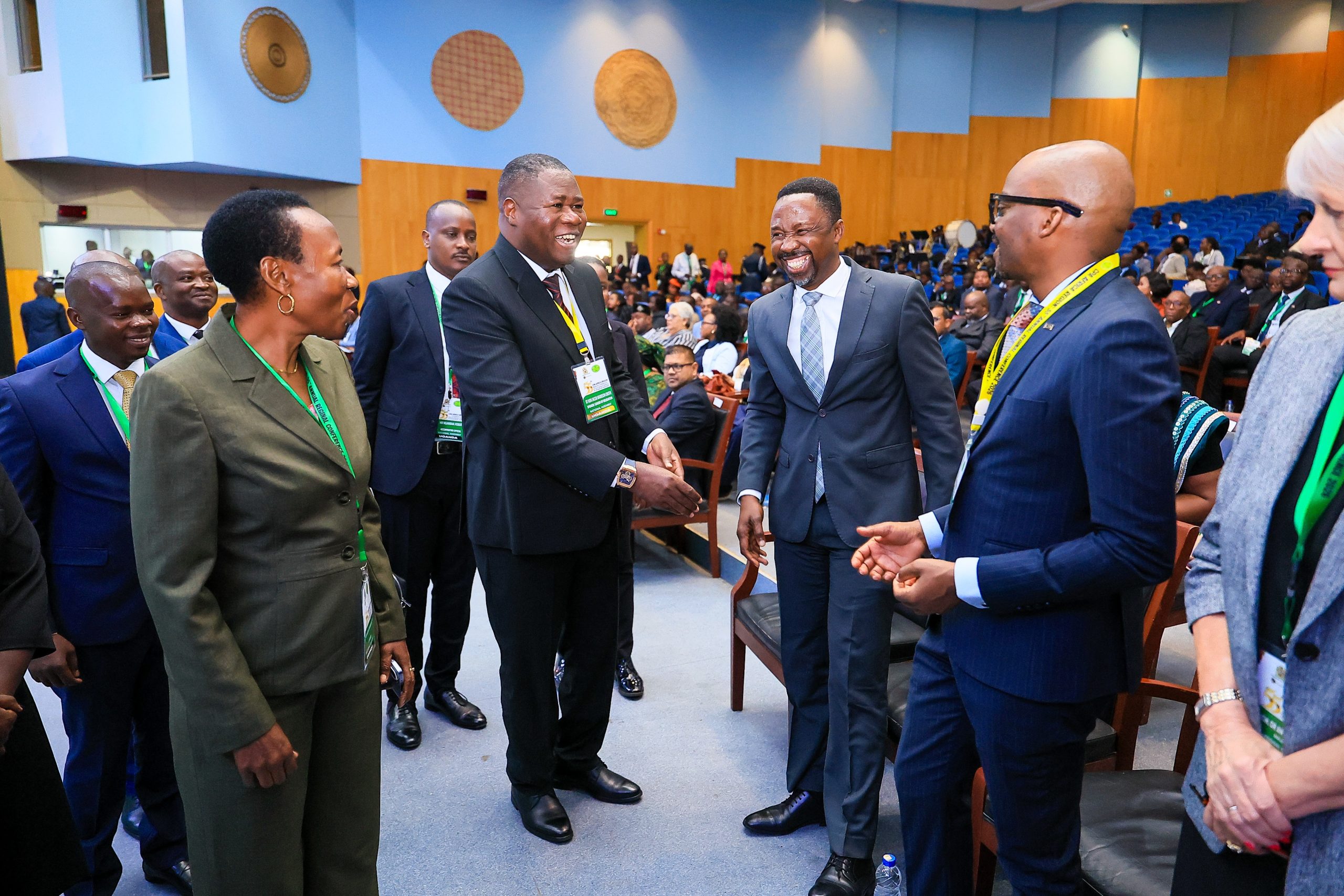
    Speaker Jacob Marksons Oboth interacting with Lukas Sinimbo Muha, Chairperson National Council of Namibia. Speaker led a delegation of MPs to the 55th CPA Africa Region Conference held in Lilongwe, Malawi

    The Ugandan delegation, led by Speaker Jacob Marksons Oboth, argued that education reform must be treated as a national priority if the country is to fully exploit emerging opportunities in oil, minerals, manufacturing, technology and other sectors.

    SKILLING FROM PRIMARY SCHOOL

    Kyotera Woman MP Fortunate Rose Nantongo called for vocational and practical skills to be introduced much earlier in the education journey, arguing that skilling should begin from primary school rather than being treated as an option for students who fail to pursue conventional academic education.

    Nantongo also urged Government to adequately fund skilling centres across the country, warning that training institutions cannot deliver results when they lack the necessary equipment, instructors and financial support.

    Maruzi North MP Otim Benard proposed an even more ambitious approach — transforming every primary school, secondary school and other learning institution into a centre for practical skills development.

    He argued that such a move would help Uganda absorb its large population of unemployed and unskilled young people while preparing them for both formal employment and entrepreneurship.

    Rushenyi County MP Naome Kabasharira backed the emphasis on practical education, defending Uganda’s focus on sciences and innovation.

    She argued that a hands-on curriculum would give Ugandan youth a better chance of competing in an increasingly competitive global labour market.

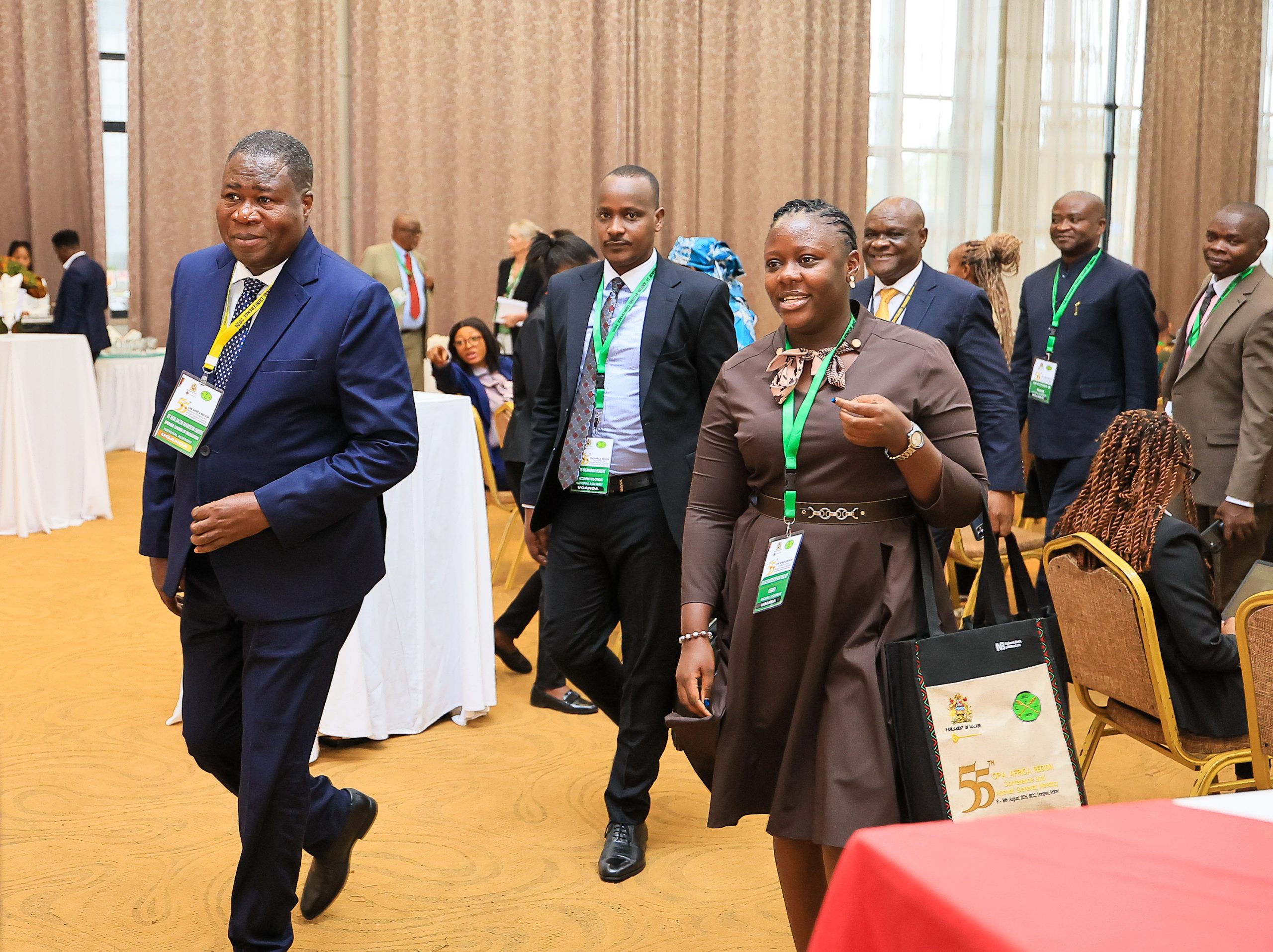
    Speaker Jacob Marksons Oboth, together with a delegation of MPs arriving for the 55th CPA Africa Region Conference held in Lilongwe, Malawi

    MPs: POLICIES MUST MOVE BEYOND PAPER

    Kugonza acknowledged Government’s efforts to address the skills gap, pointing to the 2020 Lower Secondary Curriculum and its shift towards competency-based learning, as well as the expansion of Business, Technical and Vocational Education and Training (BTVET) institutions.

    However, Kumi Municipality MP Silas Aogon warned that policies and legislation alone would not solve Uganda’s skills crisis.

    Aogon challenged Parliament to strengthen its oversight role and ensure that the recently passed TVET law is fully implemented, with adequate funding provided to turn vocational training institutions into productive centres capable of transforming young people’s lives.

    The MPs said the Government must also ensure that training is linked directly to the needs of employers and emerging industries instead of continuing to produce graduates for jobs that may no longer exist.

    Kugonza further urged Government to shift Uganda’s economic strategy from exporting raw materials towards producing high-value goods locally.

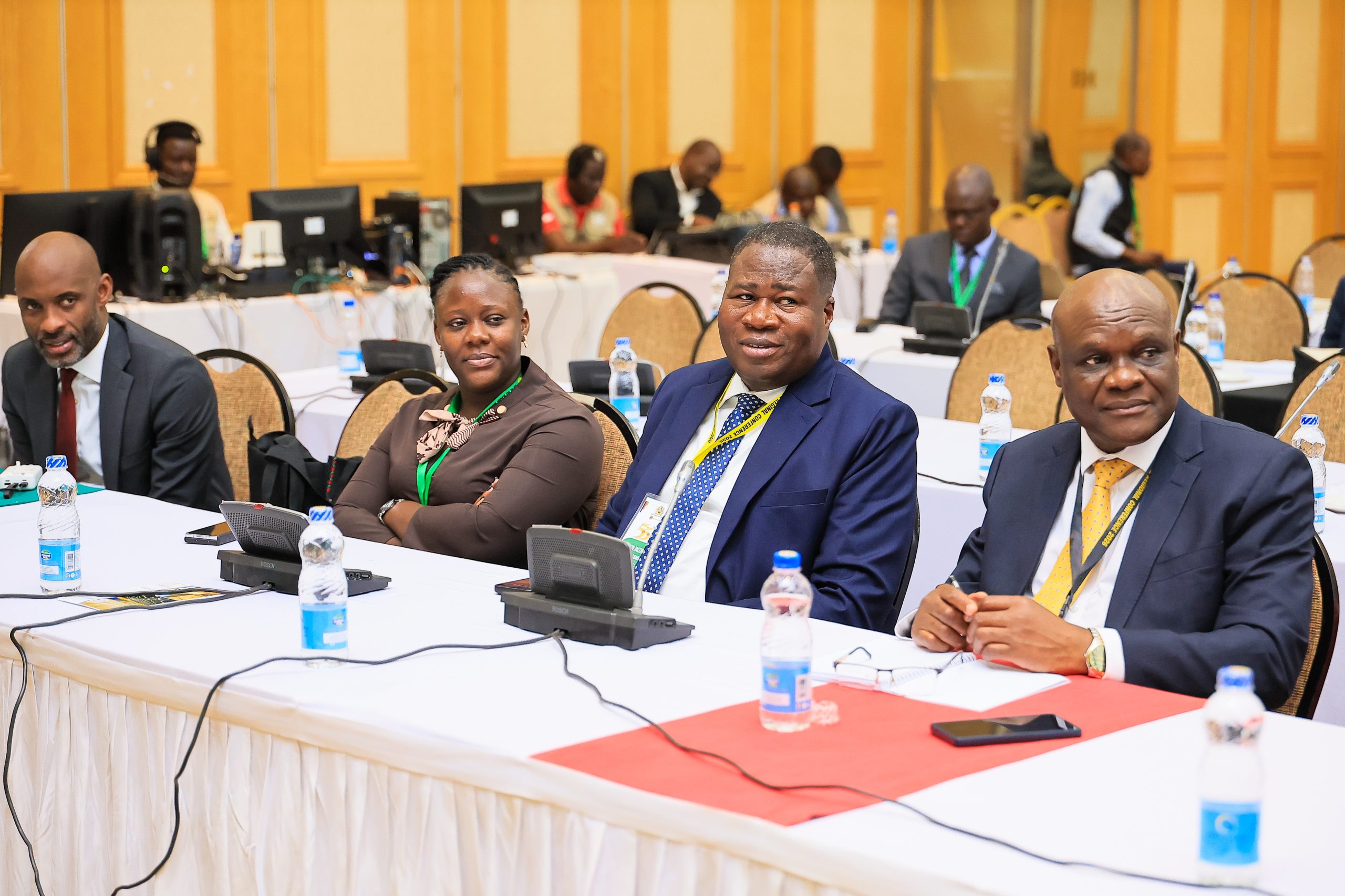
    Speaker Jacob Marksons Oboth, together with a delegation of MPs attending the 55th CPA Africa Region Conference held in Lilongwe, Malawi

    He also challenged industries to become active partners in skills development rather than simply waiting to recruit graduates after they leave school.

    He argued that employers should help shape training programmes so that young people acquire the exact competencies required by the economy.

    The legislators said Uganda’s youthful population should be viewed not as a burden but as one of the country’s greatest economic assets.

    They warned, however, that without urgent investment in practical education, vocational training, technology and industry-linked skills, Uganda could continue experiencing the paradox of having large numbers of unemployed graduates while businesses struggle to find suitably skilled workers.

    The delegation said closing the skills gap would be critical to ensuring that Uganda’s young population becomes the engine of economic transformation rather than a generation trapped in unemployment, underemployment and poverty.


    GOT A HOT STORY? LET US KNOW!

    Got breaking news, explosive secrets, or hard evidence?

    Email us: redpeppertips@gmail.com

    We accept tips, documents, videos, photos, and recordings—the more evidence you have, the better.

    CONFIDENTIALITY IS OUR TOP PRIORITY. SOURCES ARE ALWAYS PROTECTED!

    About Post Author

  • Could Diddy Face Charges? Tupac Murder Trial Brings Old Allegations Back

    Could Diddy Face Charges? Tupac Murder Trial Brings Old Allegations Back

    For nearly 30 years, Tupac Shakur‘s murder has remained one of hip-hop‘s biggest unanswered stories.

    The shooting happened in Las Vegas in 1996. Tupac died days later. Then came years of theories, documentaries, interviews and accusations, with one name repeatedly appearing in the conversation: Sean “Diddy” Combs.

    Now, with Duane “Keffe D” Davis on trial over Tupac’s killing, those old claims have returned to the spotlight.

    Diddy is not charged in the case, and he has denied any involvement in Tupac’s death. But Davis has previously made allegations that linked Combs to the killing, and the trial has placed his past statements under fresh scrutiny.

    How Diddy’s Name Entered the Story Again

    Davis spent years talking about Tupac’s murder.

    He gave interviews, appeared in documentaries and later published a memoir about the events surrounding the shooting. In some of those accounts, he alleged that Diddy offered money for Tupac’s killing during the bitter East Coast-West Coast rivalry.

    The allegations generated headlines, but prosecutors never charged Diddy, and no court has found him responsible for Tupac’s murder.

    For years, the claims remained part of the larger mystery surrounding Tupac’s death.

    Then Keffe D found himself in court.

    Now Keffe D Is Fighting His Own Words

    The case against Davis has created an unusual situation.

    Prosecutors have turned to his own public statements as they try to show that he played a role in the attack.

    Davis, however, now disputes the reliability of those accounts, with his defence arguing that he exaggerated or invented parts of the stories he told over the years.

    That puts years of interviews, conversations and claims under a microscope.

    The trial is forcing jurors to examine what Davis said, why he said it and whether his accounts accurately described his involvement in the events that led to Tupac’s death.

    As lawyers revisit those statements, the old allegations involving Diddy have naturally returned to public attention.

    Could the Trial Lead Investigators Further?

    That is where the case becomes more complicated.

    Davis remains the only person facing criminal charges over Tupac’s murder. Authorities have not charged Diddy, and there is no public confirmation that prosecutors are preparing a case against him.

    Still, the trial could bring witnesses, evidence and past claims back into focus.

    If new information emerges, investigators could decide to examine whether the case extends beyond the man currently standing trial.

    For now, the courtroom battle belongs to Keffe D.

    But nearly three decades after Tupac’s death, the trial has reopened a chapter many people thought would never reach court. And with Davis’ old claims now receiving fresh attention, Diddy’s name has once again become part of the conversation surrounding one of hip-hop’s most infamous murders.

  • TIME’S UP FOR OLD GUARD! Museveni Orders UPDF to Review Retirement Age

    TIME’S UP FOR OLD GUARD! Museveni Orders UPDF to Review Retirement Age

    President Yoweri Museveni has directed the leadership of the Uganda People’s Defence Forces (UPDF) to review the length of active military service and consider provisions for earlier retirement as the army seeks to address a backlog of officers who have served for decades.

    Museveni said the long service of some senior officers was largely a result of Uganda’s transition from a resistance army to a national army, as well as concerns over the welfare of officers who would retire without adequate financial support.

    He made the remarks on Thursday while presiding over the ceremonial send-off of 19 senior UPDF officers who have retired from active service.

    Museveni said the UPDF leadership, led by Chief of Defence Forces Gen. Muhoozi Kainerugaba and his deputy, Gen. Sam Okiding, should study how other militaries manage the length of active service during peacetime and determine an appropriate entry and exit age for officers.

    Museveni said Uganda’s experience was different from that of established national armies because the UPDF emerged from a prolonged period of political and armed conflict.

    “We were transitioning from a resistance army to a national army, unlike other established armies. That is why we ended up with elderly officers,” Museveni said, citing Gen. Edward Katumba Wamala, who is about 70 years old and has served in the military for 47 years.

    He said financial constraints also contributed to delays in retiring officers because he did not want them to leave the army without adequate means of support.Museveni said this concern led to the establishment of a casualty unit in Mubende where injured soldiers could continue receiving military support and salaries rather than being discharged to return to their villages without financial support.

    He said the facility at one time had more than 500 injured soldiers.

    According to Museveni, the government began addressing the retirement welfare of officers more deliberately with the 2021 retirement batch, led by the late Gen. Elly Tumwine, by ensuring that officers leaving the army received substantial retirement packages.

    He said the government now needs to address the remaining backlog of retirees by reviewing the military’s recruitment, promotion and retirement system.

    The UPDF currently has mandatory retirement ages based on rank. Generals and Lieutenant Generals retire at 65, Major Generals at 62, Colonels at 51, Lieutenant Colonels at 47 and Majors at 45. Captains and Lieutenants are generally expected to retire or seek retirement by the age of 40, particularly where they do not meet promotion requirements within the prescribed period.

    Museveni said the retirement system should be reviewed to ensure officers do not remain in active service for unnecessarily long periods.

    He also cited the experience of other countries, including Israel, where senior military commanders are required to leave active service at considerably younger ages. Museveni said the review should take into account Uganda’s transition into a period of relative political stability and the changing role of the military.

    The 19 officers sent into retirement on Thursday include Gen. Edward Katumba Wamala, who served for 47 years, and Lt. Gen. Charles Awany Otema, who served for more than four decades.Other senior officers include Lt. Gen. Charles Angina, Maj. Gen. Godfrey Katsigazi Tumusiime, Maj. Gen. Henry Ndarubweine Masiko, Maj. Gen. Apolo Kasiita Gowa, Maj. Gen. Leopold Kyanda and Maj. Gen. Abel Kandiho.

    Museveni also cautioned the retired officers to be careful when investing their retirement benefits, warning them against entrusting their money to people without adequate safeguards.

    He advised them to consider relatively secure investment instruments, including government securities and insurance bonds, rather than immediately putting large amounts of their retirement savings into businesses that require close supervision.

    Museveni specifically warned against ventures such as hotels, restaurants and fish farming, saying they can expose inexperienced investors to losses if they are not closely managed.

    The President’s directive now places the UPDF leadership at the center of a review that could reshape how long officers remain in active service and how the army manages retirement in the future.


    GOT A HOT STORY? LET US KNOW!

    Got breaking news, explosive secrets, or hard evidence?

    Email us: redpeppertips@gmail.com

    We accept tips, documents, videos, photos, and recordings—the more evidence you have, the better.

    CONFIDENTIALITY IS OUR TOP PRIORITY. SOURCES ARE ALWAYS PROTECTED!

    About Post Author

  • Janet Jackson Skipped ‘Michael’ as Reports Link Her to Her Own Biopic Plans

    Janet Jackson Skipped ‘Michael’ as Reports Link Her to Her Own Biopic Plans

    Janet Jackson may have skipped “Michael” because she wants the freedom to tell her own story her own way.

    The film is a biopic about her late brother, Michael Jackson, charting his rise from the Jackson 5 to becoming the King of Pop.

    Yet Janet, one of his most famous siblings, does not appear.

    Reports say the music icon did not want another actress portraying her before deciding how she wants to tell her own life story on screen.

    Janet has not confirmed plans for a biopic, so no film about her life is officially in the works.

    But her absence from Michael has sparked speculation that her own story could eventually make its way to the big screen.

  • NIRA IN THE QR STORM! New IDs Fail Verification, Ugandans Blocked From Key Services

    NIRA IN THE QR STORM! New IDs Fail Verification, Ugandans Blocked From Key Services

    The rollout of new national identity cards has come under fresh scrutiny in Parliament, with MPs reporting that failures in the cards’ Quick Response (QR) code verification system are leaving citizens unable to access essential services.

    Patrick Okello Onguti, Democratic Party MP for Aswa County, told Parliament during a plenary sitting on Wednesday August 20, 2026 that some holders of the newly issued national identity cards are being turned away when attempting to access banking services, register or replace SIM cards and complete other transactions that require electronic identity verification.

    Onguti raised the matter during a plenary sitting chaired by Speaker Jacob Markson Oboth-Oboth, and urged the Government and the ID and Registration Authority (NIRA) to explain why the QR codes embedded on the new cards were reportedly still failing to authenticate users.

    “Ugandans are crying out because when seeking banking services, buying new SIM cards from the telecom service providers and SIM card replacements, some of these services that require the QR code, the new IDs’ QR codes are not responding,” Onguti told the House.

    He said NIRA had publicly acknowledged on February 9, 2026 that the QR-code functionality had not yet been integrated into its digital operational system and had indicated that the problem would be resolved by March 31.

    The legislator questioned why the problem was allegedly persisting months after that deadline.

    “I therefore pray and request that the Minister for Internal Affairs and NIRA explain to the country and give a deadline when the national IDs will be operationalised,” he said.

    The MP also raised concerns over what he described as an additional Shs5,000 charge for a NIRA letter intended to enable a citizen whose card cannot be electronically verified to have their details integrated into the system.

    The claim places the spotlight on a potentially wider challenge. Uganda’s national ID is not merely an identity database. It has become an important gateway to public and private services.

    Under the Registration of Persons Act, 2015, NIRA is mandated to create, manage, maintain and operate the National Identification Register, issue national IDs and verify and authenticate information relating to registration and identification of persons.Section 66 of the Act provides for the mandatory use of a national identification number or national identification card for a range of services, including opening bank accounts, insurance, land transactions, pension and social security transactions, consumer credit, taxation, financial services and other prescribed services.

    The Registration of Persons Regulations go further by expressly listing SIM-card registration among transactions for which a national identification card, alien identification card or identification number is to be used where identification is required.

    That means that inability to verify identity is not simply a technical inconvenience. It can potentially become a barrier to banking, telecommunications, government services and other economic activities.

    The law also gives NIRA a central responsibility for maintaining the integrity of the identity system. Section 5 of the Registration of Persons Act requires the Authority to verify and authenticate identification information and to ensure the preservation, protection and security of information and data held in the National Identification Register. Section 69 further provides that a national identification card is prima facie proof of the particulars contained on it.

    Government Chief Whip Dr Jane Ruth Aceng acknowledged the concern and said the Government would seek a response from the Minister of Internal Affairs.

    NIRA’s statutory mandate includes promoting the use of national identification cards to advance economic, political and social activities.

    The Authority is also required to maintain the National Identification Register as an electronic database and continuously update information contained in it.


    GOT A HOT STORY? LET US KNOW!

    Got breaking news, explosive secrets, or hard evidence?

    Email us: redpeppertips@gmail.com

    We accept tips, documents, videos, photos, and recordings—the more evidence you have, the better.

    CONFIDENTIALITY IS OUR TOP PRIORITY. SOURCES ARE ALWAYS PROTECTED!

    About Post Author

About UGNEWS24

UGNEWS24 is a Uganda local news service, a product of SOLAVIA GROUP LIMITED, Reg. No. 80048169153974.

Registered office

Plot 2335, Buwambo-Katadde-Najjo Road,
Nansana Municipality, Wakiso District, Uganda
P.O. Box 214231, Kampala

© 2026 SOLAVIA GROUP LIMITED. All rights reserved.