Ugandan music may have no shortage of talent, but Samson Kasumba believes the industry has a serious management problem.
The prominent news anchor argues that artists need managers with enough business experience and authority to make difficult decisions, including firing an artist when necessary.
In a post on X, he named Victoria University Vice Chancellor Lawrence Muganga, Next Media CEO Kin Kariisa, and businessman George Michael “Mike” Mukula as the kind of people he would like to see managing artists.
If we are to improve local music you need to have people like Lawrence Muganga, Kin Kariisa, and Mukula to manage artists. Then you would have an artist that is managed by a real manager that can fire them.
That last part gets to the heart of Kasumba’s argument.
He believes many artists prefer managers they can control rather than professionals who can hold them accountable.
Swangz Avenue, he suggests, offers a different model, with a management structure that gives its managers real authority.
Very few people can stay at Swangz Avenue very long because there is a real management regime and artistes want to manage people who manage them.
Kasumba then takes his argument to the international stage, contrasting Uganda’s artist-management relationships with what he sees in the American music business.
In the US you don’t have artistes richer than their managers!
But his biggest tease comes at the end, when he hints at what could happen if one unnamed artist got the right manager.
Imagine if……was managed by one of the two I mentioned……..
So, which Ugandan artist would you love to see managed by Lawrence Muganga, Kin Kariisa or Mike Mukula?
If we are to improve local music you need to have people like @ReachDrMuganga and @KKariisa@mukulaa to manage artists. Then you would have an artist that is managed by a real manager that can fire them. Very few people can stay at Swangz Avenue very long because there is a real…
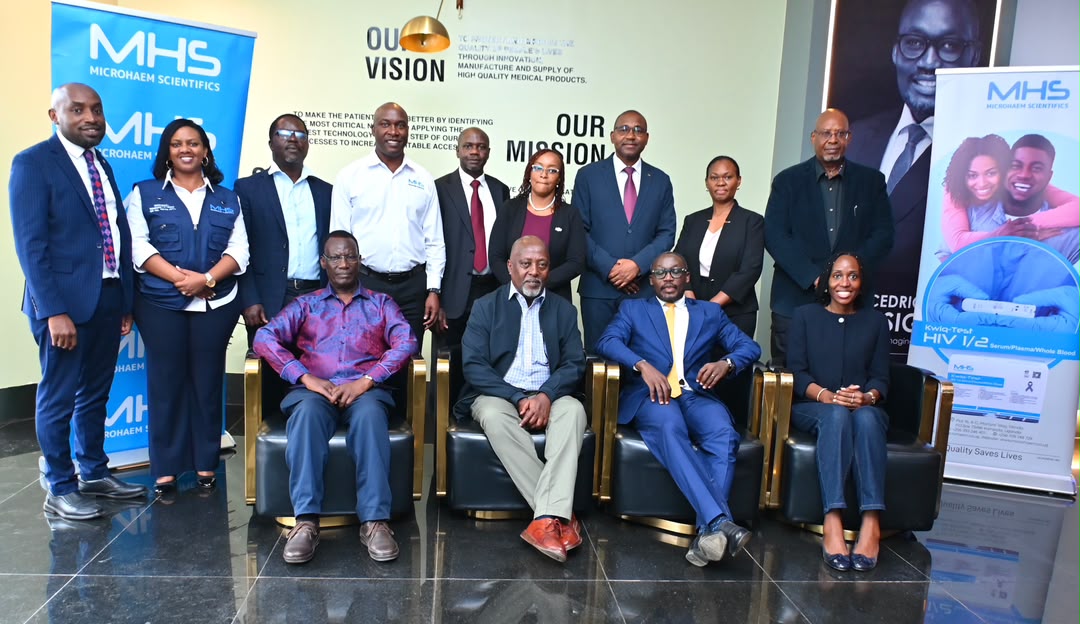
On the morning of 7 August 2026, Equity Bank Uganda’s Board Committee, led by Board Chair Henry Rugamba and accompanied by Managing Director Gift Shoko and senior executives, conducted a strategic engagement and guided facility tour at Microhaem Scientifics (MHS). The visit covered both the active production site in Ntinda, Kampala, and the 20-acre Phase II expansion under construction at Namanve Industrial Park.
The engagement reaffirmed Equity Bank Uganda’s role as the primary financier of Microhaem’s growth. To date the bank has committed more than USD 50 million in facilities that have enabled the company to scale manufacturing capacity, strengthen quality systems, and move decisively toward reducing Uganda’s dependence on imported diagnostics and pharmaceuticals.
Microhaem Scientifics was founded by Ugandan scientist Dr. Cedric Akwesigye with a clear conviction: Africa’s health security cannot rest on supply chains that stretch across oceans. For years the continent’s clinics and hospitals relied almost entirely on imported test kits and medicines, products that frequently arrived late, degraded in tropical heat, or failed to match local disease patterns. Dr. Akwesigye set out to reverse that vulnerability from within.
Operating under the philosophy “Quality Saves Lives,” the company began by designing diagnostic tools specifically engineered for East African realities. Its flagship Pf-Xpat malaria rapid diagnostic test kits are moisture-resistant and remain stable at temperatures up to 40 °C, critical for remote health centres that lack reliable refrigeration. Parallel lines for HIV (Kwiq Test), sickle-cell screening (MicroScreen), and molecular reagents followed.
In the photo is Equity Banks Board Chair Henry Rugamba, MD Gift Shoko and other senior executives together with the team at Microhaem Scientific in Ntinda
These products now address some of the region’s heaviest disease burdens: Uganda ranks third globally in malaria cases (5 % of the world total, incidence 60.4 per 1,000), records an estimated 20,000 new sickle-cell births each year (with 70–80 % of affected children dying before age five without early detection), and continues to strengthen its HIV testing algorithm toward the UNAIDS “first 90” target.
From a modest start in Ntinda, Microhaem has grown into one of East Africa’s leading indigenous manufacturers of in-vitro diagnostics. Phase I production continues to supply national programmes and private providers. Phase II at Namanve, a purpose-built complex featuring a four-level manufacturing block (40 m × 160 m), dedicated utility systems, a plastics factory for syringes and consumables, R&D floors, and specialist accommodation, will dramatically expand capacity for both diagnostics and wider pharmaceutical lines. Civil works on the main block are due for completion by December 2026, followed by a year of GMP fit-out, with first validated products expected within approximately 18 months.
In his remarks, Henry Rugamba, Board Chair, Equity Bank Uganda, reflected on the journey Equity Bank Uganda took to support local manufacturers with ambitious Pan-African dreams: “What we saw today is African capability in action. Microhaem is not waiting for solutions to be shipped from elsewhere; it is building them here. Equity Bank is proud to have financed this journey with over USD 50 million to date. Local manufacturers, backed by local capital, are the surest route to health sovereignty and economic resilience.”
On his part, Gift Shoko, Managing Director, Equity Bank Uganda, lent his voice to the banks mandate on the Africa Recovery and Resilience Plan: “Through our Africa Recovery and Resilience Plan we deliberately channel capital into industries that reduce import dependence and create skilled jobs. Supporting Microhaem Scientifics is a clear expression of that strategy. We are not merely lenders; we are partners in building the industrial backbone Uganda and East Africa need.”
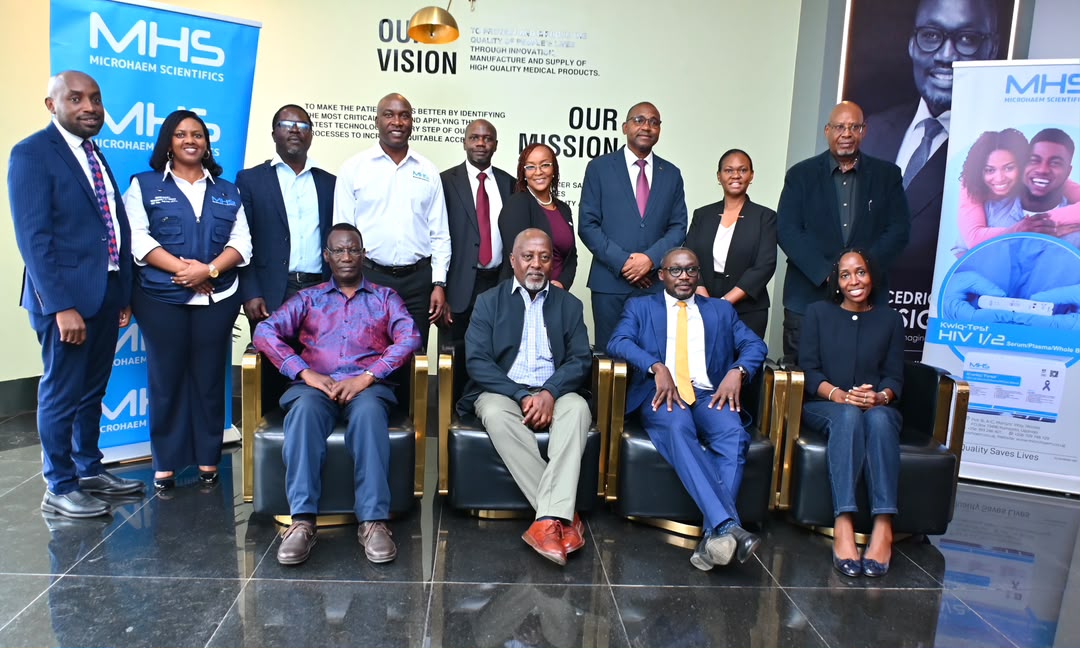
In the photo is Equity Banks Board Chair Henry Rugamba, MD Gift Shoko and other senior executives together with the team at Microhaem Scientific in Ntinda
Equity Bank Uganda’s support sits within Equity Group’s Africa Recovery and Resilience Plan (ARRP), a USD 6 billion continental strategy that targets private-sector growth, industrialisation, cross-border value chains and financial inclusion for up to 100 million customers by 2030. Manufacturing and logistics form a core pillar of the plan, making projects such as Microhaem a natural fit.
Dr. Cedric Akwesigye, Founder & Managing Director, Microhaem Scientifics, spoke in appreciation of Equity Bank Uganda’s support to their Pan-African vision: “Fourteen years of rigorous development, testing and iteration have brought us to this point. Equity Bank’s confidence and sustained financing have been decisive. Our goal remains simple: to protect and improve the quality of people’s lives through the innovation, manufacture and supply of high-quality medical products made in Uganda, for Uganda, and for export across Africa.”
The visit concluded with a shared understanding that the partnership will continue to deepen as Phase II comes on stream. Together, Equity Bank Uganda and Microhaem Scientifics are converting the long-standing ambition of medical import substitution into concrete capacity, one locally manufactured, life-saving product at a time.
GOT A HOT STORY? LET US KNOW!
Got breaking news, explosive secrets, or hard evidence?
The Johnnie Walker Uganda Open Golf 2026 Championship has teed off today- Thursday, August 13, with the Ladies Open, at the Uganda Golf Club, setting the stage for three days of competitive golfing action.
The three-ball tournament is expected to attract more than 100 lady golfers, who will compete in the Silver and Bronze categories.
The Ladies Open has developed a rich tradition of attracting elite regional players, with recent champions reflecting the growing competitiveness of women’s golf in East Africa. Kenya’s Mercy Nyachama won the 2025 edition, Tanzania’s Iddy Madina claimed the 2024 title, while Uganda’s Peace Kabasweka emerged victorious in 2023.
This year, Uganda’s challenge will be led by former champions Kabasweka and Martha Babirye, alongside national team players Judith Komugisha and Meron Kyomugisha.
Kabasweka enters the tournament in strong form and plenty of confidence, after securing a third-place finish at the Zambia Ladies Open, at Lusaka Golf Club a few weeks ago.
The national team star has enjoyed an impressive season on the local circuit, winning the Namlunoge Ladies Open and the President’s Cup at Entebbe Club. She also finished third at both the Kilembe Ladies Open and the Entebbe Ladies Open.
Babirye will also be among the players to watch. The three-time winner who won the 2020 Open title at Uganda Golf Club, recently won the Ugandan leg of the NCBA Golf Series at the same venue. She has gained valuable experience from competing in tournaments beyond Uganda.
Komugisha, meanwhile, arrives as another strong contender, following her victory at the Kilembe Ladies Open. Known for her power off the tee, the long-hitting golfer has continued to make her presence felt on the local circuit.
Kyomugisha also claimed the ladies’ title at the Absa Chairman’s Bell, in June, at the Uganda Golf Club, a result that further strengthens her credentials going into the Open.
Meanwhile, Tanzanian players are expected to provide a particularly strong foreign challenge, with a sizeable contingent set to compete for the coveted title.
Some of the expected names include 2018 champion- Neema Olomi, who finished runner-up last year. The Arusha Gymkhana star has enjoyed a series of impressive performances across the region this season, including strong displays at the Entebbe Ladies Open and the Kenya Amateur Ladies Strokeplay Championship, where she secured podium finishes.
Olomi will be joined by fellow Tanzanians, including scratch golfer Hawa Wanyeche, Vicky Elias, Yasmin Chali, Ayne Magombe and Timea Chogo, all of whom will be hoping to make a strong impression
Ghana’s Hawah Brito Musah, Nigeria’s Ehinomhen Juliana Igbinadolor and Rwanda’s Slyvie Irakoze, are also part of the travelling field, adding further continental flavour to the event.
With golfers from several African countries converging at the Uganda Golf Club, Johnnie Walker East Africa Brand Manager- Christine Kyokunda says the Ladies Open remains an important platform for showcasing and growing women’s golf.
“Starting the championship with the Ladies Open is significant because it puts women’s golf at the forefront right from the very beginning. It gives us an opportunity to celebrate the talent, determination and ambition of these golfers while inspiring more women and girls to take up the sport and believe that they too can compete at the highest level,” Kyokunda said.
As part of the Ladies Open experience, Johnnie Walker will also bring its She Walks platform to the tournament’s final day, with a specially curated She Walks-themed 19th Hole experience for the participating ladies. The experience will create a space to celebrate the women beyond their performance on the course, spotlighting exceptional women whose journeys, achievements and ambitions continue to inspire others.
This year’s Johnnie Walker Uganda Golf Open is supported by ABSA, MTN MoMo, Aquafina, Pepsi, Case Clinic, Medisell, Rose Foam, Pearl Marina and NBS Sport.
KAMPALA: The Accountability Sector Audit Committee (ASAC) has engaged the Uganda Bureau of Statistics (UBOS) over audit oversight, accountability and institutional performance, calling for stronger internal controls and timely implementation of audit recommendations to strengthen the agency’s governance and efficiency.
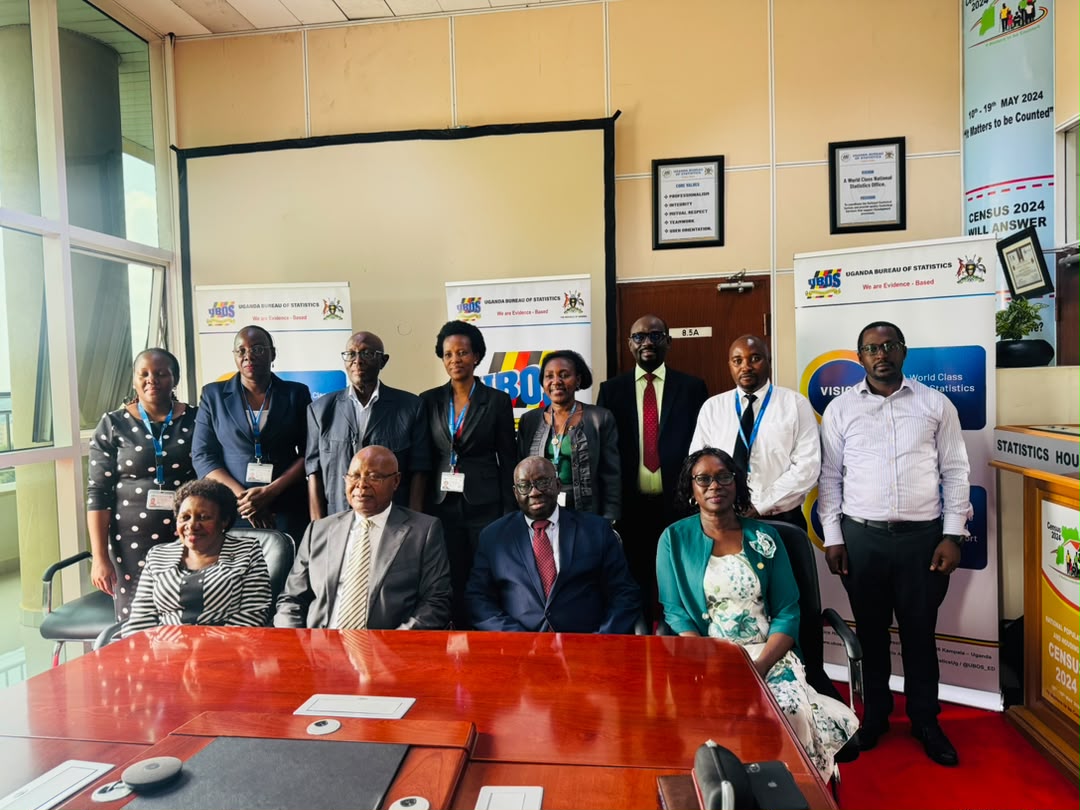
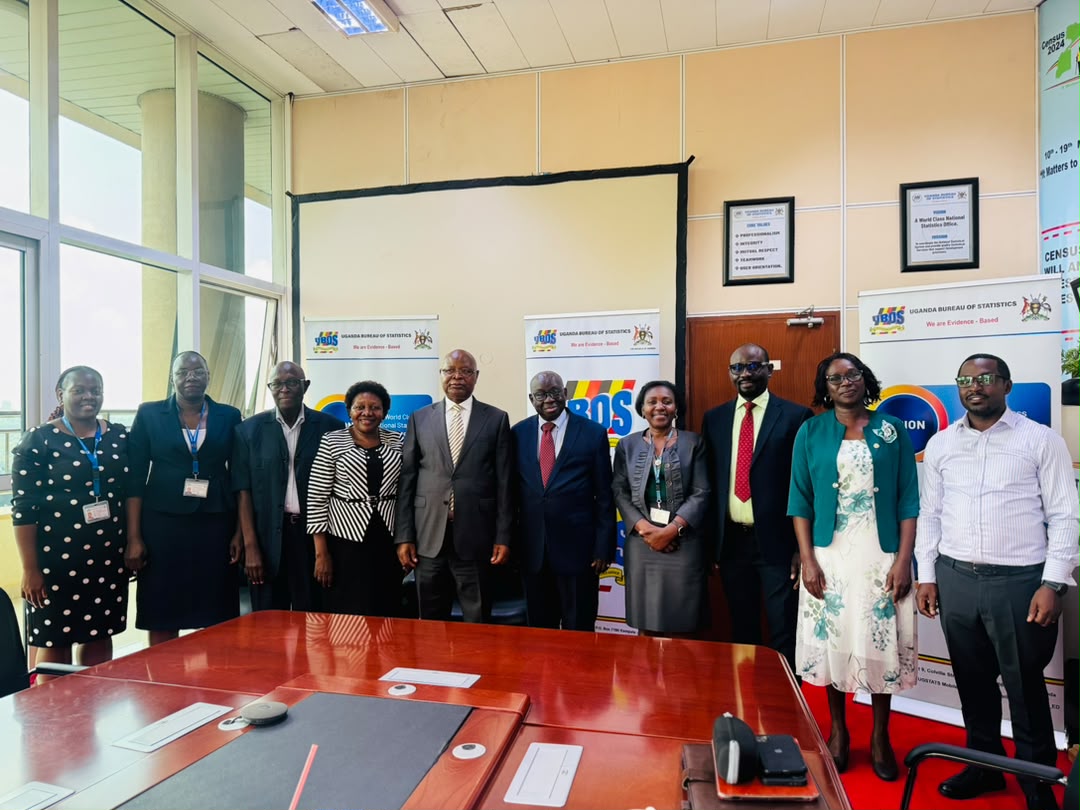
The committee, which operates under the Ministry of Finance, Planning and Economic Development (MoFPED), on Tuesday, engaged UBOS management in a high-level meeting aimed at strengthening governance, audit oversight and institutional performance.
The meeting was chaired by UBOS Executive Director, Dr. Chris N. Mukiza, and brought together the ASAC delegation and senior UBOS officials to review the Bureau’s accountability systems and areas requiring urgent attention.
The discussions focused on the implementation of audit recommendations, statutory instruments governing UBOS and its committees, staff welfare, the effectiveness of the Internal Audit Directorate and areas where MoFPED could further support the statistical body.
ASAC, led by its Chairperson, Justice Emeritus Ralph W. Ochan, commended UBOS for producing high-quality audit reports but stressed the need for timely submission to allow effective oversight, follow-up and implementation.
The committee’s message was clear: audit recommendations must not gather dust.
Dr. Mukiza underscored the importance of the Internal Audit Directorate in strengthening UBOS’ internal control environment and ensuring that the Bureau’s systems and processes operate effectively and efficiently.
He revealed that the Internal Audit Directorate is adequately resourced and equipped with tools, including audit management software, to execute its mandate.
Mukiza further reaffirmed the commitment of UBOS management and the Board to continuously strengthen internal audit systems, mechanisms and staff capacity.
The meeting also tackled delays affecting the timely submission of quarterly audit reports, with management and ASAC agreeing on measures to close the identified gaps and improve compliance with reporting deadlines.
The two sides further agreed to prioritise critical audit recommendations for short-term implementation, while maintaining close collaboration between UBOS and the Accountability Sector.
The move is expected to strengthen governance, accountability and institutional performance at the Bureau.
Following the meeting, the ASAC delegation toured the National Statistical Resource Centre, where members were briefed on its role in facilitating access to statistical information and promoting the use of official statistics.
The committee praised the Centre for its contribution to making official statistics more accessible and supporting their utilisation in response to stakeholders’ data needs.
The engagement comes as UBOS continues to strengthen its systems and institutional structures to ensure that Uganda’s official statistics are produced, managed and disseminated under robust accountability and governance standards.
GOT A HOT STORY? LET US KNOW!
Got breaking news, explosive secrets, or hard evidence?
A 24-year-old medical student at Kampala International University (KIU) Western Campus is appealing for financial support to raise Shs7 million in outstanding tuition fees and complete her Bachelor of Medicine and Bachelor of Surgery degree.
Mercy Fambe, a final-year medical student, was expected to graduate in June 2026 but missed her final examinations after she failed to clear her tuition balance.
ADVERTISEMENT
“I was supposed to finish in June this year, but failed because of tuition. I was pushed to the next class, but I’m not sure weeks later. Each day delayed means additional penalties. It will be painful to come this far and drop out,” Fambe said.
Fambe has now been given another opportunity to sit her examinations after raising part of the required fees, but she says her family is struggling to raise the remaining Shs7 million.
Fambe’s financial difficulties worsened after her mother, Harriet Ilweru, lost the family’s main source of income.
Ilweru, a 50-year-old single mother, had reportedly been paying her children’s school fees until her business selling fruits, vegetables and other food items collapsed following enforcement operations against street vendors by Kampala Capital City Authority (KCCA).
According to Fambe, KCCA officials confiscated her mother’s merchandise during an enforcement operation.
“They took everything. All my foodstuffs were taken. That was my capital. I have not been able to pay school fees again,” she said.
The family had been surviving on the small business, with Ilweru selling fruits and avocados, alongside roasted sweet potatoes and roadside food.
However, repeated confiscation of her merchandise left the family without a stable source of income.
The family’s financial struggles have also been compounded by medical expenses.
Fambe says her mother has developed a toxic multinodular goitre, which affects her breathing and voice, particularly whenever she becomes stressed.
Her brother has also suffered a serious hand injury at work, further increasing the family’s financial burden.
With limited income, the family has resorted to borrowing money from friends and well-wishers to meet basic needs and keep Fambe in school.
“Sometimes we borrow Shs50,000 and Shs200,000 to provide food and meet other basic needs,” Fambe explained.
Despite the challenges, Fambe has continued with her medical training and completed her research requirements. She was also deployed to Kayanja Regional Referral Hospital for her final clinical rotations.
Her principal has advised her to continue with her research even though she could not sit her examinations, according to Fambe.
A plea to complete her journey
After returning home, Fambe joined her mother in trying to raise money through informal trade. She says the family is doing whatever it can to ensure she completes the degree after years of study.
“They give you money today, and tomorrow they start collecting. You end up working only to pay the moneylenders. That’s how we’ve been surviving,” she said.
Fambe is now appealing to individuals, organisations and well-wishers to help her clear the Shs7 million balance and sit her final examinations.
Those willing to support Fambe and her family can reach her on 0770747464.
For Fambe, the appeal is not simply about clearing a university bill—it is about getting one final opportunity to complete the medical training she has spent years pursuing and begin her career as a doctor.
In Uganda, “connections” has become one of those words that seems to explain almost everything.
Need a job? People say you need connections. Want a service quickly? Someone will tell you to find the right person.
The same conversation has found its way into Uganda’s entertainment industry, especially when artists break into international markets.
Joshua Baraka and Eddy Kenzo, among others, have faced questions about the international relationships they have built, with some people wondering why those opportunities do not simply open doors for other Ugandan musicians.
Dauda Kavuma is now facing the same questions after the Ghetto Kids landed the biggest opportunity of their career.
The group recently performed alongside Shakira and Burna Boy during the first-ever Super Bowl-style FIFA World Cup final halftime show at MetLife Stadium, giving Ugandan entertainment one of its biggest international moments.
So, how did they manage to pull it off?
Speaking on Daily Soup, the Ghetto Kids manager and founder said the key is positioning yourself.
About connections, all I can tell people is that it is all about positioning. You have just to position yourself.
He also addressed the idea that someone simply hands you a connection, saying people have to put themselves in a position to be noticed.
No one will just connect you out of the blue. It is upon you to position yourself.
The internet, according to Kavuma, has also changed how people can reach opportunities beyond their immediate surroundings.
The internent brought closer things that are far away from us. Use the internet to showcase what you do, and people will look for you.
And sometimes, he said, one person noticing your work can lead to many more opportunities.
You just one right person to seek you and they will lead you to others.< /em>
Uganda’s digital terrestrial television signal now reaches about 86 percent of the country, but actual television ownership remains low at just 23.1 percent of households, prompting regulators to shift focus from expanding infrastructure toward improving affordability and meaningful access.
Uganda Communications Commission (UCC) Executive Director George William Nyombi Thembo said the broadcasting sector has undergone a major shift from traditional analogue broadcasting to a digital ecosystem that now spans Digital Terrestrial Television (DTT), satellite, cable, streaming services, and social media.
ADVERTISEMENT
He made the remarks while speaking during an induction retreat for Members of Parliament on the ICT and National Guidance Committee at Speke Resort Munyonyo, where UCC officials briefed lawmakers on developments and regulatory challenges facing the communications sector.
Nyombi Thembo said support through the Uganda Communications Universal Service and Access Fund (UCUSAF) had helped expand national DTT coverage to approximately 86 percent through 18 transmission sites. However, he pointed to census data showing television ownership at only 23.1 percent of households as evidence of a persistent gap between signal availability and ordinary Ugandans’ actual ability to access broadcasting content.
“The priority is shifting from signal coverage to meaningful access,” he said, citing affordability, availability of receiving devices, and digital literacy as the areas now requiring greater attention. The figures suggest that expanding transmission infrastructure alone will not be enough to deliver universal access to television, particularly for lower-income and rural households.
UCC also told MPs it is pursuing further modernisation of the broadcasting sector through a Digital Audio Broadcasting Plus (DAB+) pilot in Greater Kampala. DAB+ allows multiple radio stations to transmit over a single digital frequency, potentially improving audio quality and spectrum efficiency compared to traditional FM broadcasting.
The pilot is part of broader efforts to prepare Uganda’s broadcasting industry for changing consumer habits and the growing convergence between traditional broadcasting and internet-based media. Nyombi Thembo said Uganda’s media environment can no longer be regulated solely around traditional radio and television, given how much audiences now consume news and entertainment through streaming platforms and social media.
The regulator is also pushing for greater investment in Uganda’s creative industry as broadcasting becomes increasingly digital and competitive. Nyombi Thembo cited UCC initiatives including the Content Development Support Programme and the Uganda Film Festival as efforts meant to support local producers and improve the quality and reach of Ugandan content.
He said the ambition should extend beyond producing content solely for domestic audiences toward developing Ugandan stories capable of competing in international markets. While the growth of streaming and digital distribution has opened new opportunities for Ugandan filmmakers and musicians to reach global audiences, it has also intensified concerns around piracy, revenue generation, and the financial sustainability of local media companies.
Regulator Wants A New Legal Framework
Nyombi Thembo said the convergence of broadcasting technologies has created regulatory challenges around content standards, child online safety, piracy, and the financial sustainability of media companies. He called for a modern, technology-neutral regulatory framework capable of governing services regardless of whether content is distributed through terrestrial broadcasting, satellite, cable, or internet platforms.
UCC said it would work with Parliament on legislative reforms and financing measures needed to expand communications infrastructure, support local content creation, and improve universal access, adding that closer cooperation with lawmakers will be necessary as Uganda moves from simply expanding digital coverage toward ensuring citizens can afford devices, understand digital services, and safely participate in the country’s evolving media environment.
T Paul has never made his relationship a major part of his public image, despite spending about eight years with his partner.
The Ugandan singer, born Taremwa Paul, says there is a reason his partner rarely appears alongside him or finds herself at the centre of public attention.
He opened up about it during a recent chat on Daily Soup, explaining that his career comes with a level of scrutiny he does not want her to carry.
I do not put her in the public eye, but those who know her know her. We have been together for about eight years. Putting her in the public eye is putting her in the line of crossfire, given the nature of my work. I am the one supposed to take the bullets.
For T Paul, keeping her away from the spotlight also means giving her room to protect her peace and mental health.
Her not being in the public eye is to her benefit and her mental health.
And there is something else he wants to avoid: giving people access to personal details they could potentially turn against them.
It also protects me because some people may choose to use that. They could spot a weakness either on my side or her side and use it. But if you keep it private, it helps both of you.
From Massachusetts to the global music scene, Christopher Lumanyika, better known professionally as Chrisrayug, is steadily building a sound, a story, and a following that refuse to be ignored.
The name Chrisrayug is beginning to make waves among listeners looking for something fresh, authentic, and emotionally charged.
Born out of a passion for music and storytelling, Christopher Lumanyika is carving his own lane as an emerging Afro-inspired artist, blending infectious rhythms, heartfelt emotion, and contemporary influences into a sound that feels both familiar and distinctly his own.
Hailing from Massachusetts, Chrisrayug is proving that you don’t need to come from one of the traditional music capitals to make noise. With every release, he continues to expand his artistic identity while connecting with an audience drawn to his honesty, energy, and evolving sound.
“COMPOSURE”: A PROJECT THAT SHOWS HIS RANGE
On May 27, Chrisrayug unveiled his EP Composure, a project that offers listeners a closer look at the artist behind the music.
Rather than simply chasing a trend, Composure explores deeply relatable themes of growth, relationships, and self-reflection, giving the project an emotional core that complements its rhythmic foundation.
The EP moves through smooth melodies, vibrant Afrobeat influences, and amapiano-inspired elements, showcasing an artist comfortable experimenting while remaining grounded in his identity.
For Chrisrayug, Composure represents more than another release; it is a statement of artistic growth.
Each track contributes to a larger picture of an artist learning, evolving, and finding his voice. The result is a project that highlights both his versatility and his determination to keep pushing forward.
And Chrisrayug isn’t slowing down.
On August 14, the rising artist is scheduled to release his latest single, “Nobody,” another step in what is quickly becoming an exciting musical journey.
The upcoming track is expected to showcase Chrisrayug’s knack for creating infectious and relatable music while continuing to expand the sonic world he began developing with Composure.
With its arrival, “Nobody” could become another important chapter in the artist’s growing catalog and another opportunity for new listeners to discover what Chrisrayug brings to the table.
AN ARTIST TO WATCH
What sets Chrisrayug apart isn’t simply his ability to blend Afrobeat and amapiano influences. It’s the intention behind the music.
His work is rooted in storytelling, emotion, consistency, and self-expression, qualities that allow his songs to connect beyond the beat.
As his catalog grows, so does his audience. Through persistence and a clear artistic vision, Chrisrayug is steadily transforming from an emerging talent into an artist with the potential to command attention far beyond his Massachusetts roots.
The St. Joseph’s S.S.S. Naggalama Old Students’ Association (SJNOSA) will hold its highly anticipated Gala on Saturday, 15th August 2026, a gathering 4organizers say will bring together generations of alumni to celebrate 58 years since the school first opened its gates in Naggalama.
The Gala will feature a full day of activities including swimming, volleyball, basketball, football, sack race, tug of war, athletics, beer race and the signature NOSA Trivia, a quiz that will test how well members remember the jargon and traditions of their different decades at the school. An entry fee of UGX 50,000 per person covers entrance to the event, a branded house jersey, lunch and a soft drink, and participation in the trivia.
Speaking ahead of the event, the Chairman of the Gala Organizing Committee, Mr. Felix Kakaire (2006 to 2007), urged Old Boys and Old Girls to pay their contributions early and turn up in large numbers.
“This Gala is bigger than a party. It is a homecoming. Fifty eight years ago, Naggalama opened its doors and shaped who we have become, and it is now our turn to give back and reconnect. I am appealing to every Old Boy and Old Girl to pay their contribution today and be part of this celebration. Naggalama, I owe you, and this is one small way we can pay that debt together,” said Mr. Kakaire.
The school’s Headmistress, Ms. Agnes Nsubuga, also added her voice to the call, encouraging old students to flock to the Gala and reconnect with the institution that laid their foundation.
“Our old students carry the name of this school wherever they go, and we are always proud to see how far they have gone in life. I call upon every Old Boy and Old Girl to flock to the Gala on the 15th of August. Come and see how far your school has grown, reconnect with your classmates and teachers, and celebrate this milestone with us,”said Ms. Nsubuga.
Organizers say the Gala will double as a fundraising platform for the association, with proceeds directed towards SJNOSA’s ongoing projects at the school. Members can pay their UGX 50,000 contribution through MTN Mobile Money on 0778741746, registered in the name of Lukabwe Daniel, or through Centenary Bank, Mukono Branch, account number 3204 7412 00, registered in the names of St. Joseph’s S.S.S. Naggalama Old Students’ Association.
The Gala takes place on Saturday, 15th August 2026. Old Boys and Old Girls who wish to attend are encouraged to secure their slot ahead of the day.
Related
About UGNEWS24
UGNEWS24 is a Uganda local news service, a product of
SOLAVIA GROUP LIMITED,
Reg. No. 80048169153974.