Blog

  • FATUMAH HUSSEIN: From Vision to Impact: The Afro-Arab Youth Council’s Journey of Empowering Generations Since 2004

    FATUMAH HUSSEIN: From Vision to Impact: The Afro-Arab Youth Council’s Journey of Empowering Generations Since 2004

    Celebrating More Than Two Decades of Youth Leadership, Unity and Transformation Across Africa and the Arab World

    As the world commemorates International Youth Day under the theme “Different Contexts, Common Aspirations,” the Afro-Arab Youth Council (AAYC) reflects on a remarkable journey built on a simple but powerful belief: that young people are not only the leaders of tomorrow, but active partners in shaping today’s world.

    Established in 2004, the Afro-Arab Youth Council was founded with a vision of creating a united, empowered, and productive generation of young people across Africa and the Arab world. For more than two decades, the Council has remained committed to unlocking the potential of young people by creating platforms for leadership development, collaboration, innovation, and meaningful participation in society.

    From its humble beginnings, AAYC has grown into a dynamic youth movement that brings together young people from diverse cultures, backgrounds, and communities, united by shared aspirations for peace, opportunity, progress, and sustainable development.

    The story of the Afro-Arab Youth Council is a story of partnership, resilience, and belief in the power of young people.

    Since its establishment, AAYC has worked to strengthen ties between African and Arab communities through dialogue, cultural exchange, and cooperation. The Council has consistently promoted the idea that when young people are equipped with the right skills, knowledge, and opportunities, they become powerful drivers of social and economic transformation.

    Through its programmes, conferences, engagements, and partnerships, AAYC has created spaces where young people can connect, exchange ideas, develop solutions, and contribute to addressing challenges affecting their communities.

    One of AAYC’s greatest contributions has been its commitment to nurturing a new generation of leaders.

    Through leadership programmes, youth dialogues, conferences, and capacity-building initiatives, the Council has provided young people with opportunities to develop leadership skills, share experiences, and participate in decision-making processes.

    These efforts have helped shape young leaders who are contributing to entrepreneurship, governance, innovation, and community development across Africa and the Arab world.

    At the heart of AAYC’s mission is the belief that unity among young people creates stronger communities and a better future.

    The Council has continued to promote Afro-Arab cooperation by creating platforms for cultural interaction, networking, and collaboration. Through regional and international engagements, AAYC has strengthened relationships among young people while encouraging mutual understanding and respect for diverse cultures.

    The Council continues to demonstrate that although young people may come from different environments and experiences, they share common dreams and aspirations for a peaceful and prosperous future.

    With youth unemployment remaining one of the major challenges facing societies today, AAYC has placed entrepreneurship, innovation, and skills development at the centre of its youth empowerment agenda.

    The Council encourages young people to become creators of opportunities rather than only seekers of employment by developing innovative solutions to community challenges and embracing entrepreneurship as a pathway to economic independence.

    Through partnerships and youth-focused initiatives, AAYC continues to support efforts aimed at building a generation capable of contributing meaningfully to economic growth and sustainable development.

    The success of AAYC has been strengthened by partnerships with governments, youth organisations, universities, institutions, and development partners.

    These collaborations have expanded opportunities for young people, strengthened youth networks, and created platforms for mentorship, knowledge sharing, and cross-border cooperation.

    By working together with like-minded partners, AAYC continues to amplify the voices of young people and create pathways for greater participation in development processes.

    AAYC believes that true youth empowerment can only thrive in societies built on peace, inclusion, and equal opportunities.

    The Council continues to encourage young people to take an active role in peacebuilding, social development, and initiatives aligned with global sustainable development goals.

    By positioning young people as agents of change, AAYC contributes to building more inclusive, resilient, and peaceful societies across Africa and the Arab world.

    From its establishment in 2004 to its continued growth today, the Afro-Arab Youth Council’s journey represents the power of vision, commitment, and collective action.

    The Council’s greatest achievement is not only reflected in the programmes implemented or partnerships created, but also in the lives transformed, leaders inspired, and communities strengthened through its work.

    As the world celebrates International Youth Day, AAYC honours the diversity of young people while recognising the shared aspirations that unite them — the pursuit of peace, opportunity, innovation, and sustainable development.

    Looking ahead, the Afro-Arab Youth Council remains committed to strengthening youth voices, expanding opportunities, and empowering the next generation of leaders across Africa and the Arab world.

    The journey continues. The vision remains. The future belongs to the youth.


    Do you have a story in your community or an opinion to share with us: Email us at Submit an Article

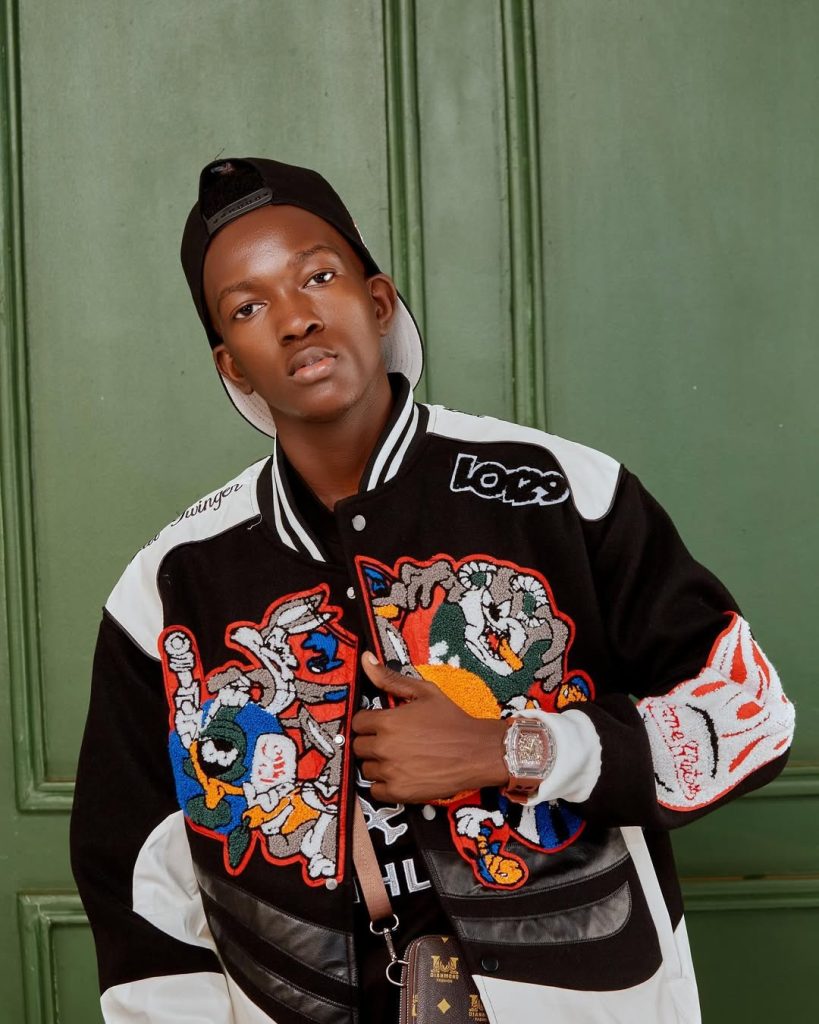
  • Chicken Chicken’s Mother Predicts Victory Over Shawa Despite Admitting Son’s Mistake

    Chicken Chicken’s Mother Predicts Victory Over Shawa Despite Admitting Son’s Mistake

    With content creator Chicken Chicken set to face comedian Shawa in a boxing match on Thursday, August 6, at Supremacy Lounge, his mother says she has every reason to believe her son will leave the ring victorious.

    Nankumba Mary admitted Chicken Chicken was wrong to insult Shawa’s parents, saying she did not support those remarks despite standing firmly behind him ahead of the fight.

    She believes her son has trained well for the boxing contest and expects him to settle the rivalry in the ring.

    Nankumba also recalled a time when Shawa allegedly insulted her in public but said she chose not to respond.

    She urged fans to attend the event and witness what she believes will be Chicken Chicken’s victory.

  • APOLLO BUREGYEYA: When an intelligent bridge loses power

    APOLLO BUREGYEYA: When an intelligent bridge loses power

    We usually think of load shedding in terms of dark homes, silent factories and uncharged phones. On a modern bridge, however, a power cut can also switch off the eyes, ears and memory of the structure.

    The New Nile Bridge is made of concrete, steel and stay cables, but it also depends on electricity. Its weather transmitter measures local conditions, the GPS receiver watches for movement and deformation, and the dummy cable records temperature changes. Load cells and the automated control system use this information to keep the stay cables responding properly as temperatures rise and fall.

    The bridge has two standby generators, which provides important backup. But generators are useful only when they are serviced, tested and supplied with fuel. A generator without diesel is simply a large metal promise, and two empty generators do not amount to redundancy.

    Reliable backup power therefore requires more than purchasing the machines. It needs automatic changeover, low-fuel alarms, a defined minimum fuel reserve, regular testing under load, scheduled servicing, updated maintenance records and a dependable arrangement for emergency fuel delivery. Most importantly, someone must be clearly responsible for checking that all this is done before the emergency arrives.

    What happens when the bridge remains without power for too long? At first, batteries and other backup systems keep the instruments running. Once those are exhausted, data transmission may stop, gaps begin to appear in the bridge’s health record, and engineers lose the continuous information showing how the deck, cables and towers are behaving.

    If the outage continues, the automated system that uses temperature and load readings to manage cable tension may also be interrupted. This does not mean that the bridge suddenly collapses. It means the structure becomes less able to report its condition and less able to respond through the systems designed to keep its behaviour in order.

    That is how infrastructure risk often develops. It rarely arrives with drums, sirens and a press conference; it grows quietly through missing data, delayed alarms, exhausted batteries, untested generators and maintenance decisions postponed until tomorrow.

    Frequent power cuts create another problem. Repeated switching between the grid, batteries and generators increases wear on batteries, control panels, communication equipment and sensitive electronics. Poor servicing or delayed refuelling can eventually turn expensive backup equipment into very sophisticated roadside decoration.

    Reliable electricity must therefore be treated as part of bridge maintenance. It is no longer enough to inspect concrete, repaint steel and repair the pavement. Modern bridge maintenance also includes sensors, software, communication systems, control equipment, generators, batteries and fuel supplies. An intelligent bridge cannot remain intelligent when it is repeatedly put to sleep.

    I am currently supervising the construction of the maintenance garage that will house the specialised vehicles used to maintain this remarkable national asset. It is one of the many quiet investments that will help the bridge continue serving the country safely and reliably for decades.

    The reassuring part is that the New Nile Bridge is not being left to look after itself. It has a dedicated team that inspects the structure from the roadway, from beneath the deck and from inside its enclosed cells. The team services equipment, maintains access, keeps the backup systems ready and even enters and cleans the internal cells of the bridge deck.

    The bridge may have sensors, automated controls and two standby generators, but none of them can inspect a fuel tank, order diesel, clean an internal cell or sign a maintenance record. Intelligent infrastructure still depends on disciplined people doing ordinary work consistently and on time.

    Most of us cross the bridge within a few minutes and continue with our journeys. Its caretakers remain behind, working above it, below it and inside it, to keep this important national asset safe, awake and ready for the next crossing.

    Do you have a story in your community or an opinion to share with us: Email us at Submit an Article

  • NAMEERE’S WARNING SHOT: Minister Challenges Leaders to Choose Integrity Over Corruption

    By Brian Mugenyi

    [email protected]

    KAMPALA — In a packed hall at Imperial Royale Hotel in Kampala, where thousands of government representatives gathered under one roof, Hon. Justine Nameere delivered a message that cut through the noise of another government meeting: corruption must no longer find shelter among public leaders.

    As the government renewed its campaign to expose and eliminate corruption, Nameere challenged leaders entrusted with public responsibility to confront practices that continue to weaken service delivery and deny citizens the benefits of national development programmes.

    Her message was simple but powerful — leadership without integrity cannot transform communities.

    Speaking during a high-level anti-corruption meeting attended by thousands of Resident District Commissioners (RDCs) and Government Internal Security Officers (GISOs) from across Uganda, Nameere warned that corruption remains one of the biggest obstacles to effective governance.

    She said the fight against corruption requires more than policies and speeches; it requires leaders with the courage to protect public resources, expose wrongdoing and put citizens’ interests first.

    “Corruption thrives where leaders choose silence. Every public servant has a responsibility to protect government resources and ensure they reach the people,” Nameere said.

    The meeting was convened by the Ministry of Local Government to implement President Yoweri Kaguta Museveni’s directive to expose and eliminate corruption from public institutions.

    Nameere said local governments are particularly important in the fight against corruption because they are the closest government structures to citizens and directly oversee many services, including health, education, roads and community development programmes.

    She cautioned leaders against turning a blind eye to corrupt practices, saying protecting wrongdoers damages public confidence and delays national development.

    According to Nameere, corruption does not only steal money; it steals opportunities from ordinary Ugandans.

    She pointed to the impact of corruption on communities, where stolen resources translate into poor services, incomplete projects and reduced opportunities for citizens.

    The remarks placed Nameere among senior government voices calling for a stronger accountability culture as Uganda intensifies efforts to improve public service delivery.

    The meeting was addressed by the Permanent Secretary in the Ministry of Local Government, Ben Kumumanya, who said the “corruption monster” must be eliminated through stronger monitoring, transparency and accountability.

    Kumumanya told RDCs and GISOs that President Museveni’s directive requires every government leader to actively participate in exposing corruption.

    Minister of State for Local Government Hon. Balam Barugahara Ateenyi reaffirmed the ministry’s commitment to strengthening accountability in local governments, saying public resources must be protected for the benefit of citizens.

    Minister of State for the Presidency Milly Babirye Babalanda also tasked RDCs and GISOs to intensify the fight against corruption, warning against theft of medicines, diversion of road funds, procurement irregularities and the selling of government jobs.

    She said every stolen shilling denies citizens access to essential services.

    Security Minister Maj. Gen. Jim Muhwezi described corruption as a threat to Uganda’s development and urged leaders to strengthen supervision of government programmes.

    As the meeting ended, Nameere’s message remained at the centre of the discussions — that defeating corruption requires leaders who are willing to defend accountability, uphold integrity and put national interest above personal gain.

    For citizens watching the fight against corruption unfold, the true test will not be measured by speeches delivered in conference halls, but by whether government services reach the communities that need them most.

    Do you have a story in your community or an opinion to share with us: Email us at Submit an Article

  • Lil Pazo Responds to Claims That TikTok Is Hurting His Career

    Lil Pazo Responds to Claims That TikTok Is Hurting His Career

    Lil Pazo has brushed aside claims that he spends too much time on TikTok, insisting the platform has never stood in the way of his music career.

    The singer says many people assume anyone who posts regularly on TikTok has little else to do.

    He disagrees, arguing that some of the people making the most money are not even active on the platform.

    He then pointed to his own career, saying he remains one of Uganda’s most booked artists despite the criticism surrounding his online activity.

    For Lil Pazo, TikTok is simply something he enjoys.

    He says there is no reason to stop using it because promoters continue to book him and his music career keeps moving.

    His attention now shifts to his next performance, with the singer inviting fans to join him at University Inn in Mbarara on Friday, September 5, where he promises an exciting show.

  • Ben Kumumanya Declares Corruption Monster Marked for Elimination as Government Intensifies Anti-Graft Campaign

    By Brian Mugenyi

    [email protected]

    KAMPALA — The government has declared a zero-tolerance crackdown on graft within local administration, framing the campaign to eradicate public sector corruption as a non-negotiable directive from President Yoweri Kaguta Museveni.

    Speaking at a high-level anti-corruption summit at the Imperial Royale Hotel in Kampala, the Permanent Secretary in the Ministry of Local Government, Ben Kumumanya, charged state officials with making anti-graft enforcement their central operational mandate.

    The conference convened thousands of Resident District Commissioners (RDCs) and Government Internal Security Officers (GISOs) nationwide to sharpen grassroots monitoring, seal financial leakages, and ensure public funding yields tangible public benefit. Addressing delegates, Kumumanya cited anti-corruption vigilance as a core performance metric for public leadership.

    “This meeting addresses the execution of His Excellency the President’s explicit directive: expose corruption and eliminate it across Uganda,” Kumumanya stated, noting that graft directly sabotages social infrastructure, health services, and educational quality. He tasked RDCs and GISOs with bolstering local oversight, warning that stolen revenue directly harms vulnerable citizens reliant on state services.

    Babalanda Demands Grassroots Accountability

    Minister for the Presidency Milly Babirye Babalanda delivered a stern rebuke to institutional graft, pinpointing systemic rot within public operations. She cited the theft of essential medicines, procurement fraud, ghost beneficiaries, road fund diversion, and the illegal sale of government jobs as primary drags on national progress.

    “Every stolen shilling denies Ugandans access to basic social services,” Babalanda warned. Invoking 2 Chronicles 19:7, she urged officials to execute their duties with impartiality and moral rigor.

    Babalanda condemned official collusion, urging security agents and administrators to expose illicit networks rather than shield institutional actors. She called on RDCs to intensify physical inspections of state projects—including schools, health centers, and road networks—and praised President Museveni for driving the national anti-graft campaign.

    Security, Ethics, and Inter-Ministerial Alignment

    Security Minister Maj. Gen. Jim Muhwezi called corruption an existential threat to economic development, advocating for rigorous forensic audits and enhanced tracking systems to safeguard public capital. He highlighted the strategic necessity of protecting flagship wealth-creation initiatives, such as the Parish Development Model (PDM) and Emyooga, from fraudulent diversion.

    Joining the call, Minister of State for Local Government Hon. Balam Barugahara Ateenyi reaffirmed his ministry’s resolve to enforce fiscal transparency, stressing that local governments must lead by example as the frontline interface of public trust. Minister of State for Ethics and Integrity Rose Lilly Akello added that policy frameworks alone cannot succeed without public servants committing to baseline honesty and ethical leadership.

    The summit was also attended by Minister of State for Works Fred Byamukama, Hon. Justine Nameere, and numerous senior state officials.

    A Mandate for Action

    Closing the proceedings, Babalanda instructed RDCs and GISOs to return to their districts with renewed aggressive oversight, emphasizing that national transformation relies on shared operational integrity. The summit concluded with a unified mandate from cabinet leadership: corruption will no longer be tolerated, and local officials must protect state assets to serve the Ugandan public.

    Do you have a story in your community or an opinion to share with us: Email us at Submit an Article

  • Ray G Lands Uganda Waragi Sponsorship Ahead of Kololo Concert

    Ray G Lands Uganda Waragi Sponsorship Ahead of Kololo Concert

    Ray G has received a major boost ahead of his concert after Uganda Breweries Limited (UBL), through Uganda Waragi, officially came on board as a sponsor.

    The partnership adds fresh momentum to the singer’s preparations for his August 7 concert at Kololo Airstrip, one of the biggest milestones of his career.

    Ray G welcomed the sponsorship and thanked Uganda Waragi for supporting the concert.

    He also called on fans to turn up in large numbers and celebrate the occasion with him.

    The excitement then shifted to Kisekka Market, where Ray G, promoter Abtex, and Team Ray G met supporters during a promotional tour ahead of the concert.

    The team interacted with fans, encouraged them to secure their tickets, and invited them to be part of the show as the countdown enters its final stretch.

  • Museveni Lauded for Championing Uganda’s Fight Against Corruption

    By Brian Mugenyi

    [email protected]

    KAMPALA — President Yoweri Kaguta Museveni has been commended by government leaders for spearheading Uganda’s renewed fight against corruption through a directive aimed at exposing and eliminating graft in public institutions, particularly in local governments.

    The praise was expressed during a high-level anti-corruption meeting convened by the Ministry of Local Government at Imperial Royale Hotel in Kampala on Tuesday. The meeting brought together thousands of Resident District Commissioners (RDCs) and Government Internal Security Officers (GISOs) from across the country to discuss the implementation of the President’s directive.

    Delivering the keynote address during the mid-morning session, the Permanent Secretary in the Ministry of Local Government, Ben Kumumanya, said President Museveni’s directive had renewed the government’s commitment to strengthening accountability and ensuring public resources reach the intended beneficiaries.

    “Our relevance as public servants will be measured by our commitment to fighting corruption. This meeting has been convened to implement His Excellency’s directive to expose corruption and eliminate it from our institutions,” Kumumanya said.

    The Minister of State for Local Government, Hon. Balam Barugahara Ateenyi, reaffirmed the ministry’s commitment to supporting the anti-corruption campaign, urging RDCs and GISOs to strengthen monitoring of government programmes and protect public resources.

    He said corruption undermines service delivery and slows socio-economic transformation, adding that local governments must remain at the forefront of promoting transparency and accountability.

    The meeting was also addressed by the Minister of State for the Presidency, Milly Babirye Babalanda, who described corruption as one of the greatest obstacles to national development.

    Quoting 2 Chronicles 19:7, Babalanda urged public officials to uphold integrity, fairness and justice while executing their duties.

    She condemned the theft of medicines, diversion of road construction funds, manipulation of recruitment processes, ghost beneficiaries and procurement irregularities, saying such practices deny ordinary Ugandans access to quality public services.

    “Every shilling stolen denies our people better health care, education, roads and other essential services,” she said.

    Babalanda applauded President Museveni for maintaining a firm stance against corruption and challenged public officials to match the President’s commitment by exposing corrupt individuals and safeguarding government resources.

    She also commended the Chief of Defence Forces, Gen. Muhoozi Kainerugaba, for supporting the national anti-corruption campaign and urged leaders to work together to eliminate impunity.

    Security Minister Maj. Gen. Jim Muhwezi described corruption as a threat to Uganda’s security and development, urging RDCs and GISOs to intensify monitoring of government programmes and support ongoing forensic audits aimed at tracing misused public funds.

    Minister of State for Ethics and Integrity Rose Lilly Akello called on public servants to embrace honesty, justice, integrity and accountability, saying ethical leadership remains the cornerstone of effective governance.

    The meeting concluded with Babalanda delivering the closing remarks, urging the thousands of RDCs and GISOs to return to their respective districts with renewed determination to implement President Museveni’s anti-corruption directive and ensure every public shilling benefits the citizens for whom it is intended.

    Government officials pledged to strengthen oversight of public programmes, improve accountability in local governments and intensify the nationwide campaign against corruption as Uganda seeks to enhance service delivery and restore public confidence in public institutions.

    Do you have a story in your community or an opinion to share with us: Email us at Submit an Article

  • IGG Urges MPs to Lead Public Fight Against Corruption and Maladministration

    IGG Urges MPs to Lead Public Fight Against Corruption and Maladministration

    The Inspectorate of Government (IGG) has called on Members of Parliament to take a leading role in the fight against corruption and maladministration by encouraging citizens to report corrupt practices within their communities.

    The appeal was made yesterday by Deputy Inspector General of Government (DIGG) Mrs. Anne Twinomugisha Muhairwe during an engagement between the Inspectorate and Parliament’s Legal and Parliamentary Affairs Committee.

    Mrs. Muhairwe said Uganda’s anti-corruption efforts continue to face challenges due to deeply rooted societal attitudes and beliefs that discourage people from speaking out against corruption and abuse of office.

    She noted that some members of the public have developed a tendency to admire individuals involved in corruption, while others fear reporting wrongdoing, creating an environment that allows corrupt practices to thrive.

    “It is a very big challenge because some people now glorify the corrupt while others are discouraged from reporting corruption. However, you can help us change this mindset because you have a great deal of influence,” she told MPs.

    The Deputy IGG emphasised that Members of Parliament are strategically placed to influence public attitudes because of their close connection with citizens at the grassroots level.

    Responding to questions about the recent interdiction of local government officials by Minister of State for Youth and Children Affairs, Balaam Barugahara, Mrs. Muhairwe welcomed efforts aimed at fighting corruption, describing them as timely amid growing concerns over impunity in some local government institutions.

    She, however, cautioned that sudden administrative actions must follow established procedures to avoid exposing government to costly legal battles.

    The Deputy IGG explained that while decisive action is sometimes necessary when individuals are caught engaging in misconduct, strengthening institutional systems remains the most sustainable approach to addressing corruption.

    She clarified that ministers, including the Inspectorate of Government, do not directly carry out interdictions. Instead, formal interdiction processes are handled by responsible officers such as Permanent Secretaries and Chief Administrative Officers in line with the Public Service Standing Orders.

    On why the IGG does not adopt similar approaches, Mrs. Muhairwe said the institution is mandated to uphold the rule of law and must respect principles of natural justice, including the right to be heard and the presumption of innocence.

    “The Inspectorate of Government cannot subvert the very law it is mandated to enforce. Our investigations must be thorough, evidence-based, and procedurally sound,” she said.

    She added that disregarding due process would undermine public confidence and expose government actions to successful legal challenges.

    Mrs. Muhairwe outlined the Inspectorate’s strategic priorities for the upcoming financial year, including:

    • Institutionalising intelligence-led and prosecution-driven investigations;
    • Deploying artificial intelligence-powered leadership code verification systems;
    • Scaling up asset tracing and recovery mechanisms;
    • Mainstreaming Transparency, Accountability, and Anti-Corruption (TAAC) initiatives across Ministries, Departments, Agencies, and Local Governments; and
    • Enhancing enforcement and compliance monitoring of IGG recommendations.

    Meanwhile, Secretary to the Inspectorate of Government, Mrs. Rose Kafeero, informed MPs that the institution has embarked on a comprehensive digital transformation programme aimed at digitising and automating its systems and business processes.

    She said the initiative aligns with the Government of Uganda’s wider digital transformation agenda and is expected to improve efficiency, strengthen service delivery, and enhance the Inspectorate’s capacity to prevent and combat corruption.

    The Deputy IGG reaffirmed the Inspectorate’s commitment to working with Parliament, government institutions, accountability bodies, civil society, the private sector, and citizens to promote integrity, strengthen accountability, and intensify the fight against corruption and maladministration.

    Mrs. Muhairwe was accompanied by directors and assistant directors from the Inspectorate of Government.

    Do you have a story in your community or an opinion to share with us: Email us at Submit an Article

  • 13-Year-Old TikToker “Mad Hunter” Arrested Over Violent, Sectarian Posts

    13-Year-Old TikToker “Mad Hunter” Arrested Over Violent, Sectarian Posts

    A 13-year-old TikToker known as “Mad Hunter” has landed in police custody after allegedly posting videos that incited violence and promoted sectarianism.

    The suspect, Twikirize Clever, appears in his videos with tinted hair, angry most times, hurling insults, calling names and pinpointing at certain situations with displays of hate.

    Police says Twikirize, a casual worker from Kooki D Cell in Lyantonde District, is accused of using his TikTok account to share videos filled with vulgar and offensive language.

    Police say they launched intelligence-led investigations, tracked the teenager to his hideout in Kooki C Cell, and arrested him.

    The boy remains in custody as detectives continue investigating the alleged offences.

    Masaka Regional Police spokesperson SP Kasirye Twaha said the content shared by the suspect was considered inappropriate, especially given his young age.

    The arrest adds to a growing list of TikTok users who have been arrested over controversial online content. Earlier this year, security agencies arrested Ivan Musana after he allegedly posed as a UPDF officer in a TikTok video while making statements police said could incite violence.

    The 20-year-old man, was arrested on January 8, 2026, in Bukedea District by security agencies. He was detained at Kawempe Police Station after a viral TikTok video showed him wearing a UPDF military jacket, posing as an officer, and making inciting statements and threats against state officials.

    Another TikToker, Henry Bbosa, popularly known as “General Taiga,” was also charged with hate speech and incitement to violence over videos prosecutors say targeted specific ethnic communities during the election period.

    Prosecution alleged that in the districts of Kayunga, Kampala, and Luwero, he used a TikTok account (@tiga46uu) to share content likely to promote hostility against the Banyarwanda and Banyankore communities. It is further alleged that through the same account, he published statements intended to incite death or physical harm against supporters of the NRM.

    Police have since intensified surveillance of social media platforms, warning users that posts promoting violence, hate speech or sectarianism could lead to criminal prosecution.

About UGNEWS24

UGNEWS24 is a Uganda local news service, a product of SOLAVIA GROUP LIMITED, Reg. No. 80048169153974.

Registered office

Plot 2335, Buwambo-Katadde-Najjo Road,
Nansana Municipality, Wakiso District, Uganda
P.O. Box 214231, Kampala

© 2026 SOLAVIA GROUP LIMITED. All rights reserved.