NKOZI – 13th July, 2026: Centenary Bank has contributed UGX 100 million towards promoting road safety and supporting the construction of the accident and trauma centre at Nkozi Hospital, reaffirming the bank’s commitment to promoting the well-being of the people it serves.
The contribution was announced during the launch of the Kaliisoliiso Dinner Concert 2026 held at Nkozi Hospital. The annual dinner, spearheaded by CBS FM in partnership with Buganda Kingdom and other stakeholders, raises funds to support the Accident and Trauma Centre at Nkozi Hospital while promoting responsible road use across the country under a campaign dubbed Labuka Road Safety Program.
Speaking at the event, Centenary Bank General Manager, Corporate Communications and Marketing, Beatrice Lugalambi who represented the Managing Director, Godfrey Byekwaso, said road safety remains a national concern that requires collective action from government, the private sector, cultural institutions and the public.
“Our decision to support this initiative reflects who we are as an institution. We serve millions of Ugandans across the country. Every day, our customers travel on these roads to open their shops, transport produce, report to work, attend school, visit their families, to mention but a few. Their safety matters to us because they are the people we exist to serve,” she said.
Uganda continues to face a growing road safety challenge. According to the 2025 Uganda Police Annual Crime Report, 26,044 road traffic crashes were recorded in 2025 up from 25,107 crashes in 2024, representing a 3.7% increase.5,383 people died in these crashes up from 5,144 in 2024 with at least 15 people dying daily.
Centenary Bank has been a long-standing partner of Nkozi hospital right from the first fundraising in 2016 towards the construction of the accident trauma centre at the Hospital, a facility strategically located along the Kampala–Masaka highway that serves accident victims brought in from numerous crashes on this high-risk route. Over the years, the Bank has supported the initiative through fundraising dinners, marathons, car washes, and publicity campaigns, contributing more than UGX 400 million towards the cause.
The latest contribution forms part of a three-year Memorandum of Understanding signed between Centenary Bank and CBS FM in 2025 to support the Road Safety Programme. Under the partnership, the Bank committed to UGX 280 million over three years. Following an initial contribution of UGX 80 million made during the 2025 Kaliisoliiso Dinner, this year’s support increases the Bank’s total contribution under the partnership to UGX 180 million.
Centenary Bank’s support for the initiative aligns with its broader Corporate Social Responsibility agenda, under which every year the Bank invests 1.5 percent of its previous year’s profits in education, healthcare, environmental stewardship, community development and the Social Mission of the Church.
Lugalambi commended the Buganda Kingdom, CBS FM, Nkozi Hospital and all other partners for sustaining the campaign over the years and keeping road safety at the forefront of national attention.
The Kaliisoliiso Dinner Concert has become one of Uganda’s flagship road safety fundraising initiatives, bringing together the public and private sector partners to support safer roads while strengthening the capacity of Nkozi Hospital to provide life-saving trauma care for road accident victims.
The dinner will take place on 11th September, 2026 at Hotel Africana. Tickets go for UGX 300,000 for individuals, while tables go for UGX 3 million, UGX 5 million, UGX 10 million and UGX 20 million.
Do you have a story in your community or an opinion to share with us: Email us at Submit an Article
The Makerere Lung Institute (MLI), one of Uganda’s flagship health research institutions that rose to prominence during the COVID-19 pandemic and is now preparing to transform into the Uganda Lung Institute, has found itself under the spotlight after the Auditor General uncovered a string of financial management and administrative weaknesses that raise fresh questions about internal controls and compliance under its leadership.
The findings contained in the Auditor General’s report for the financial year ending June 30, 2024 reveal that despite the institute’s growing national profile and ambitious expansion plans, several fundamental financial and procurement procedures were either ignored or not properly implemented.
The revelations place renewed scrutiny on the institute headed by Dr. Bruce Kirenga, the Chief Research Scientist and founding Director of the Makerere University Lung Institute, as auditors pointed to failures that cut across procurement planning, budgeting, project expenditure and financial reporting.
One of the most striking findings is that the institute operated without preparing a procurement plan, contrary to the procurement manual.
A procurement plan is one of the most important accountability tools for any public institution because it guides how goods, services and works are to be acquired throughout the financial year. However, according to the Auditor General, no procurement plan had been prepared, raising concerns about whether procurement activities were undertaken in accordance with established planning and control procedures.
The audit further exposed irregularities in project financing and expenditure.
According to the report, eleven projects received funding that exceeded their individual approved budgets, while another five projects went even further by spending beyond the funds that had actually been released to them.
The findings suggest weaknesses in budget discipline and financial control, with expenditure patterns departing from approved financial plans.
The Auditor General also questioned the manner in which the institute’s Secretariat budget was prepared.
Instead of complying with the Makerere Lung Institute Finance Policy and Procedures Manual of 2020, the Secretariat budget was prepared in United States dollars, an arrangement the Auditor General found to be in direct contravention of the institute’s own financial policy.
The report further revealed that even the Secretariat itself did not receive all the money that had been budgeted.
Out of a planned budget of USD 605,842, the Secretariat received only USD 477,920, representing 79 percent of the approved allocation and leaving a funding variance of USD 127,922.
While the audit does not attribute the shortfall to any specific cause, the variance highlights another area where planned financial resources did not match actual funding.
Auditors also raised concerns about financial accountability after discovering that no signed copies of quarterly financial reports were made available for audit.
The absence of signed reports was found to be contrary to the Makerere Lung Institute Finance Policy and Procedures Manual, denying auditors an important assurance that the financial reports had been formally reviewed and approved by the responsible officials.
The findings emerge at a time when the Makerere Lung Institute is pursuing an ambitious transformation into the Uganda Lung Institute, a move intended to expand its mandate from a university-based research institute into Uganda’s national tertiary centre for lung disease research, treatment and specialist training.
Dr. Bruce Kirenga has previously said the institute has already secured key approvals from both the Government and Makerere University to take on a national role in responding to Uganda’s growing burden of respiratory diseases.
The expansion is expected to bring specialist lung services closer to patients across the country, especially at a time when Uganda continues to face an acute shortage of pulmonologists.
According to statistics from the Uganda Medical and Dental Practitioners’ Council, only eight lung specialists were registered in the country in 2024, with the number remaining below ten.
Dr. Kirenga has indicated that the institute plans to train about three pulmonologists every year under a fellowship programme already approved by Makerere University, while also relying on virtual consultations and task shifting to extend specialist services to regional hospitals.
The institute earned national recognition during the COVID-19 pandemic after leading several studies on treatment interventions, establishing post-COVID monitoring programmes and creating lung rehabilitation services for both COVID-19 survivors and tuberculosis patients.
It has also reported a dramatic rise in patient numbers over recent years, with attendance increasing by almost 400 percent as respiratory illnesses continue to place increasing pressure on Uganda’s health system.
Research conducted by the London School of Hygiene and Tropical Medicine in 2020 estimated that about 20 percent of Ugandans suffer from chronic respiratory conditions, with Chronic Obstructive Pulmonary Disease (COPD) and asthma among the most common illnesses.
However, even as the institute positions itself to become the country’s leading centre for lung research and care, the Auditor General’s findings suggest that significant improvements in financial management, procurement planning and internal accountability will be necessary if the institution is to match its expanding national responsibilities.
The audit paints the picture of an institution with growing ambitions but facing weaknesses in governance and financial compliance that require urgent attention. With procurement plans missing, projects receiving funding beyond approved budgets, expenditure exceeding released funds, financial policies not being followed, funding variances emerging and unsigned financial reports being presented for audit, the report is likely to increase pressure on the institute’s leadership to strengthen internal controls and ensure that future operations fully comply with the rules governing the management of public resources.
GOT A HOT STORY? LET US KNOW!
Got breaking news, explosive secrets, or hard evidence?
Uganda’s fight against HIV/AIDS is rightly regarded as one of Africa’s greatest public health success stories. Over the past four decades, HIV prevalence has fallen significantly, from 18% in the early 1990s to 4.9% in 2024 while access to testing, treatment and prevention services has expanded, saving countless lives. Uganda still records approximately 104 new HIV infections every day, with young people accounting for a significant share of these infections. The greatest burden continues to fall on adolescent girls and young women. According to UNAIDS, young women aged 15–24 accounted for 78% of new HIV infections among adolescents in 2024. This disparity is driven not only by biological vulnerability, but also by gender inequality, age-disparate relationships, andeconomic hardships, all of which limit their power to negotiate safer sex.
For years, many have argued that young people no longer pay attention to HIV prevention messages. That argument is flawed. Young people are listening. They are simply not listening to traditional mainstream media platforms where HIV prevention messages are concentrated.
Unlike the older generation, today’s generation consumes information differently They learn, interact and form opinions on social media platforms like TikTok, WhatsApp, Instagram, Facebook, X, YouTube and podcasts. They spend hours every day on digital platforms where conversations about relationships, health, identity and sexuality are already taking place. However, unlike traditional mainstream media platforms which rely on strict fact-checking, HIV prevention information on social media is littered with myths, misinformation and dangerous misconceptions, not to mention stigmatization. The problem, therefore, is not that young people have stopped listening. The problem is that our communication strategies have not evolved as quickly as their media habits and preferences.
It should be recalled that Uganda’s early success against HIV was built on bold communication. The ABC (Abstain, Be Faithful and use Condoms) strategy combined with strong political will led by the President and community mobilisation, transformed public attitudes and reduced infections. In 2017, the Presidential Fast-Track Initiative to End AIDS by 2030 renewed that commitment by prioritising prevention, treatment and stronger national coordination. Those approaches were effective because they reached people through the communication channels of their time: radio, community meetings, churches, schools and local leaders. Today’s equivalent is the digital space. If young people are spending much of their time online, HIV prevention messaging must meet them there.
This is already beginning to happen. Youth-led campaigns run through peer networks and social media are reaching adolescents that clinic-based outreach struggles to find. A small but growing number of programmes are training young people themselves to produce HIV content for platforms like TikTok and WhatsApp rather than relying solely on institutional messaging. While these efforts remain the exception, not the norm, they point to what a revolutionary national digital strategy could look like on scale. Therefore, social media should not merely be viewed as a source of distraction; it should be recognised as one of the most powerful public health communication and outreach tools available., Digital platforms can promote HIV testing, provide accurate information about pre-exposure prophylaxis (PrEP), encourage treatment adherence, reduce stigma and connect young people to youth-friendly health services. But these tools must be backed by deliberate investment and not left to grow informally.
Furthermore, simply posting health messages online is not enough. Young people are more likely to respond to authentic conversations curated to meet their tastes and limited attention spans rather than institutional announcements. They trust peers, creators and influencers whose experiences reflect their own realities. This is why youth-led digital campaigns are becoming increasingly important. When young people become the messengers rather than just the audience, prevention messages become more relatable, credible and effective.
As a country, we must also move beyond measuring success by awareness alone. Most young Ugandans know what HIV is and how it is transmitted. The challenge today is turning knowledge into behaviour change. Knowing that condoms prevent HIV means little to a young woman who cannot safely raise the subject with an older partner on whom she depends financially. Knowing where to get tested means little to a young man who fears what a positive result will do to his standing among peers. That is the gap our communication has not closed: not what young people know, but what they can act on given the relationships, economic pressures and social expectations that shape their daily lives.
Uganda has shown before that effective communication can change the course of an epidemic. To achieve the goal of ending AIDS as a public health threat by 2030, we must once again adapt to changing times. The next breakthrough in HIV prevention will not come simply from louder messages; it will come from smarter communication.
Young people are listening. The question is: are we speaking their language, and meeting them where they already tethered?
NAMARA JUDITH NINSIIMA
The writer is a member, Uganda AIDS Commission, Office of the President
Do you have a story in your community or an opinion to share with us: Email us at Submit an Article
Members of Uganda’s 12th Parliament are set to participate in a high-level orientation on land governance on 17th July 2026 at the Parliamentary Conference Hall, in a move aimed at strengthening legislators’ understanding of one of the country’s most complex and sensitive development issues.
The orientation, organised by the Uganda Parliamentarians Land Management Forum (UPLMF) in collaboration with the Ministry of Lands, Housing and Urban Development, will bring together Members of Parliament, government officials, development partners, technical experts and civil society organisations to discuss emerging land governance challenges and the role of Parliament in promoting equitable, transparent and sustainable land management.Land remains a critical national asset that underpins agriculture, investment, infrastructure development, environmental conservation and social stability.
However, persistent challenges such as land conflicts, illegal evictions, insecure land tenure, weak land administration systems and limited public awareness continue to hinder socio-economic transformation. Parliament has consistently identified land governance as a priority area requiring stronger legislative oversight and policy implementation.
The orientation is expected to equip legislators with practical knowledge on Uganda’s land laws, the National Land Policy, customary and statutory land tenure systems, land administration institutions, and the rights and responsibilities of citizens. Special attention will also be given to gender-responsive land governance, dispute resolution mechanisms, and the importance of protecting vulnerable groups, including women and youth, in accessing and owning land.
Participants will engage with experts from government, academia, development partners and civil society, providing an opportunity to exchange experiences and identify policy interventions that can strengthen land governance across the country.
According Charles Opolot, the orientation comes at an important time as the new Parliament begins its legislative work. It is expected to prepare Members of Parliament to effectively debate land-related legislation, scrutinise government programmes, monitor implementation of land policies and respond to constituents’ concerns on land matters.
Charles Opolot, Advocacy and Partnership Manager with the forum, believes that well-informed legislators will contribute significantly to reducing land-related disputes, promoting responsible land administration and advancing inclusive national development.
The orientation has attracted support from development partners such as Oxfam, Pelum Uganda, Cordaid and Zoa among others who committed to improving land governance and strengthening parliamentary engagement on land issues. It also reflects growing recognition that effective land governance is central to achieving sustainable development, food security, environmental protection and economic growth.
As Uganda continues to experience increasing pressure on land arising from population growth, urbanisation and commercial investment, stakeholders hope that the orientation will strengthen Parliament’s capacity to champion policies that promote justice, transparency and equitable access to land for all Ugandans.
Do you have a story in your community or an opinion to share with us: Email us at Submit an Article
Crysto Panda says he has no problem collaborating with Cindy, but only after one thing changes.
The “Empele” hitmaker insists the collaboration can only happen if Cindy first recognizes him as a fellow artist.
Appearing on Galaxy TV, Crysto Panda recalled an earlier interview in which Cindy reportedly dismissed the idea of working with him because she did not consider him an artist.
She once said in an interview that she did not consider me an artist, so she could not work with me.
Rather than taking the comments personally, Crysto Panda said they challenged him to become better.
He explained that if Cindy were to approach him for a collaboration today, he would see it as proof that his hard work had changed her opinion,
If she said that because I was not good enough at the time and today she wants to work with me, then it would mean I have grown as an artist. That would motivate me.
Crysto Panda believes criticism should inspire growth instead of resentment.
He encouraged artists to use negative opinions as motivation to improve rather than allowing them to become a source of frustration.
If someone tells you that you are not where you should be, let it motivate you to work harder.
Uganda Property Holdings Limited (UPHL), the government company entrusted with managing a multi-billion-shilling property empire stretching from Uganda to Kenya and London, has been caught in a web of financial and operational failures after the Auditor General uncovered a string of glaring weaknesses that have left billions of shillings hanging in uncertainty, prime government assets underutilized and strategic targets abandoned.
The explosive findings contained in the Auditor General’s report for the financial year ending December 2025 paint a disturbing picture of a company sitting on some of government’s most valuable real estate assets while struggling with tax disputes, doubtful debts, declining revenues and missed opportunities that continue to erode its earning potential.
The report heaps pressure on the company’s leadership headed by Managing Director Wilbert Mugume, who has been at the helm since August 2019 and is currently serving his second and final term. Sources indicate that an intense succession battle has already erupted within the company over who should replace him, while reports suggest Mugume has been lobbying for an extension despite claims that influential decision-makers are reportedly unhappy with the company’s performance.
The Auditor General first questioned an unresolved income tax assessment amounting to a staggering UGX2.19 billion arising from a tax audit. According to the audit findings, although the Uganda Revenue Authority acknowledged that UPHL had foreign tax credits worth UGX2.44 billion, these credits were never applied to offset the assessment. The company reportedly wrote repeatedly to URA seeking correction of the records, but the tax ledger has never been updated to reflect the available credits.
The consequence is that the company continues carrying what the Auditor General describes as an overstated tax liability running into billions of shillings, raising concerns about the accuracy of its financial position and the speed at which management resolved one of its most significant tax matters.
As if the tax headache was not enough, the auditors also uncovered another financial time bomb involving UGX4.048 billion owed to UPHL by Unifreight Cargo. The debt has now been classified as doubtful and is considered unlikely to ever be recovered.
The report indicates that management is still waiting for guidance from the Attorney General on whether the debt should finally be written off, meaning more than UGX4 billion remains trapped in uncertainty while the company’s books continue carrying receivables whose recovery is increasingly doubtful.
The Auditor General warns that the prolonged uncertainty materially affects the accuracy of the company’s receivables and points to weaknesses in UPHL’s credit management systems.
Perhaps the most shocking revelation in the report concerns UPHL’s handling of some of Uganda’s most valuable government-owned properties in Kenya.
Physical inspection carried out by the Auditor General established that UPHL owns three large properties in Nyali, one of Kenya’s most prestigious and commercially attractive locations. Together, the properties cover approximately four acres of prime land with enormous commercial development potential.
Instead of generating premium returns expected from such strategic assets, the audit found the properties occupied by small-scale tenants paying relatively low rent, denying government millions in potential income.
The Auditor General observed that these valuable properties are grossly underutilized despite their location in one of East Africa’s prime real estate markets.
According to the audit, proposals had already been prepared for construction of maisonettes and flats capable of generating substantially higher rental income. These plans were reportedly discussed with shareholders but never took off because of cash flow constraints.
As a result, some of government’s most valuable foreign assets continue earning only a fraction of what they could potentially generate if properly developed.
The Auditor General concludes that the continued underdevelopment of the Nyali properties significantly reduces the company’s earning capacity, weakens its long-term financial sustainability and delays opportunities for expanding its investment portfolio.
The watchdog has now advised UPHL management to work together with shareholders to mobilize investment resources and immediately fast-track development of the properties in order to maximize utilization and increase revenue generation.
The audit also reveals that despite facing only a modest funding gap of 12 percent, UPHL still failed to implement nearly half of the interventions contained in its own strategic plan.
Out of 27 planned interventions, management managed to implement only 16.
This means eleven strategic interventions remained unfinished despite the relatively small financing gap, raising fresh questions about planning, execution and institutional effectiveness.
The report further reveals that UPHL’s financial performance deteriorated sharply during the review period as the company slipped deeper into losses.
According to the Auditor General, Uganda Property Holdings Limited registered increased losses after suffering declining revenue and increased income tax obligations.
The company’s operating margin dropped dramatically from 15.5 percent to only 5.4 percent, representing a decline of ten percentage points.
The report attributes this worrying performance mainly to the World Food Programme downsizing its operations in Uganda and vacating rented warehouses previously owned by UPHL.
As WFP was the company’s single biggest client, its departure significantly reduced rental income and exposed how vulnerable the company had become to dependence on one major tenant.
Combined with increased tax obligations, the loss of the major client pushed the company further into financial distress.
The findings are particularly alarming considering the enormous asset base under UPHL’s control.
The government-owned company manages a multi-billion-shilling real estate portfolio on behalf of Uganda under the supervision of the Ministry of Finance.
Its property portfolio spans Uganda, Kenya and even the United Kingdom, with assets located in Kampala, Jinja, Tororo, Mombasa and London.
Within Uganda, UPHL controls strategic industrial, residential and commercial properties, including the Bugolobi factory complex on Spring Road, warehouses in Tororo designed to support regional trade and industrialization, and numerous land holdings across Greater Kampala, Nalukolongo, Gayaza and Namulonge.
Overall, the company manages 29 government properties comprising 12 industrial properties, nine residential properties, seven commercial properties and one land holding.
Its Kenyan portfolio is even more impressive.
UPHL manages Uganda’s extensive property investments in Mombasa, including 11 warehouses, one carport, two office blocks, three commercial blocks, four residential houses and two yards.
Government records show these Kenyan properties were valued at approximately Shs244 billion following the most recent valuation, highlighting the enormous responsibility placed upon the company’s management.
UPHL itself was incorporated on November 3, 1998 after government transferred 23 former state-owned properties into the company.
At the time of incorporation, those properties were valued at just Shs13.93 billion.
According to historical reports submitted to Parliament by the Ministry of Finance, government later invested an estimated Shs18.7 billion in maintenance and refurbishment to restore many of the assets, which had fallen into dilapidation after the collapse of their former parent companies.
Those investments were intended to transform the properties into competitive income-generating assets capable of delivering sustainable returns to government.
However, the Auditor General’s latest findings now raise uncomfortable questions about whether that objective is being fully achieved.
With billions locked in unresolved tax disputes, billions more sitting in doubtful debts, prime Kenyan land lying underdeveloped, strategic targets abandoned and revenues falling following the loss of a major tenant, the audit paints the picture of a government property giant struggling to unlock the full value of assets worth hundreds of billions of shillings.
The report is expected to intensify scrutiny of UPHL’s leadership and governance at a time when the company’s top office is approaching a leadership transition. With Wilbert Mugume serving his final term as Managing Director amid reports of internal succession battles and alleged lobbying for an extension, the Auditor General’s findings are likely to fuel even greater debate over whether fresh leadership is needed to restore confidence, improve asset utilization and ensure Uganda’s vast government property portfolio delivers the value taxpayers expect.
GOT A HOT STORY? LET US KNOW!
Got breaking news, explosive secrets, or hard evidence?
Nigeria’s First Lady, Oluremi Tinubu, has appealed to Afrobeats stars Burna Boy, Davido, and Asake to use their wealth to support poor Nigerians through charitable foundations.
She made the appeal while speaking at the launch of the National Community Food Bank Programme in Lokoja, Kogi State, where she said wealthy Nigerians should complement government efforts by helping vulnerable people across the country.
Before mentioning the musicians, Tinubu pointed to Senegalese-American singer Akon as an example of an entertainer known for his philanthropic work.
I want to appeal to our young ones in the entertainment industry. I have mentioned it before, and I will use Akon, a music icon who does a lot of great charity work.
She added:
The Burna Boys of this world, Asake, all of them, Davido, we want to see you with one foundation or the other, helping the poor with your money.
The First Lady said there was nothing wrong with enjoying the rewards of success, but encouraged successful entertainers to also invest in improving the lives of struggling Nigerians.
Good cars are good. A Maybach is good. Rolls-Royce is good, but still you can help. The burden on the government is huge.
Tinubu also urged Nigerians not to look down on legitimate means of earning a living.
She shared the story of a graduate who started selling akara after failing to secure employment and later expanded the business with support, eventually employing 12 people.
During the event, the Renewed Hope Initiative donated ₦100 million (approx. UGX 236 million) to support 2,000 petty traders in Kogi State, with each beneficiary receiving ₦50,000 (approx. UGX 118,000) to recapitalize an existing business.
Davido has revealed that one of his biggest fears is staying in the music industry longer than he should.
The award-winning Afrobeats singer said he constantly prays for wisdom to know the right time to step away from music, explaining that he wants to leave on his own terms rather than overstay his welcome.
Speaking about the pressures that come with a successful career, Davido said watching football icon Cristiano Ronaldo face criticism despite his remarkable achievements made him reflect on his own future.
My biggest fear is not knowing when to quit music. Look at my good friend Ronaldo. After everything he’s done for football, they still laughed at him during the World Cup.
He said the experience reminded him that even the greatest careers eventually come to an end.
I pray to God every day to show me the right time to pack it up.
Davido did not suggest he plans to retire anytime soon, but said knowing when to walk away is something he thinks about as he continues his career.
When Vinka invited a friend to her maiden concert at Lugogo Cricket Oval this August, she expected excitement.
Instead, she got questions about security.
That conversation convinced the Swangz Avenue singer that Uganda’s nightlife has changed in ways many artists may not have fully accepted.
Speaking to Frank Ntambi on Muna Uganda +246, Vinka said today’s revelers think differently before deciding where to spend their evenings.
Large concerts no longer offer what many people value most. Bars do.
Bars have taken over because they offer people almost everything in one place, including live performances and a more relaxed experience.
The singer believes bars have become attractive because they combine food, drinks, music, and entertainment under one roof, eliminating the need for people to travel across the city for a concert.
She also noted that the steady decline in the number of nightclubs has strengthened the position of bars even further.
Looking back, Vinka says Kampala’s nightlife once revolved around venues such as Club Obligato.
Today, she sees a different reality.
People want somewhere close to home, somewhere familiar, and somewhere they can leave without worrying about getting caught in massive crowds.
People now prefer simple, nearby hangouts where they can enjoy themselves and easily get back home without worrying about insecurity or overcrowding.
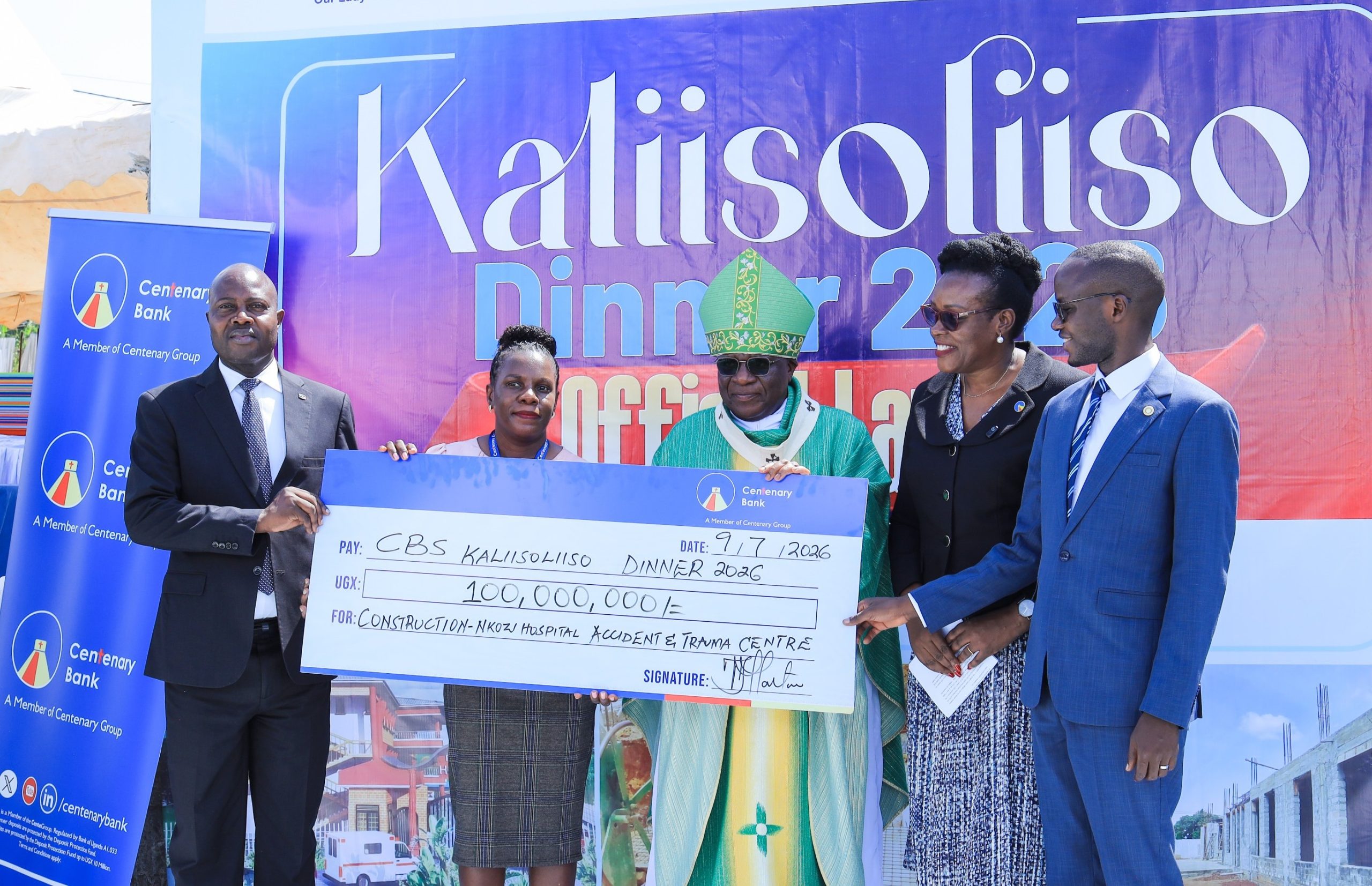
Centenary Bank has contributed UGX 100 million towards promoting road safety and supporting the construction of the accident and trauma centre at Nkozi Hospital, reaffirming the bank’s commitment to promoting the well-being of the people it serves.
The contribution was announced during the launch of the Kaliisoliiso Dinner Concert 2026 held at Nkozi Hospital. The annual dinner, spearheaded by CBS FM in partnership with Buganda Kingdom and other stakeholders, raises funds to support the Accident and Trauma Centre at Nkozi Hospital while promoting responsible road use across the country under a campaign dubbed Labuka Road Safety Program.
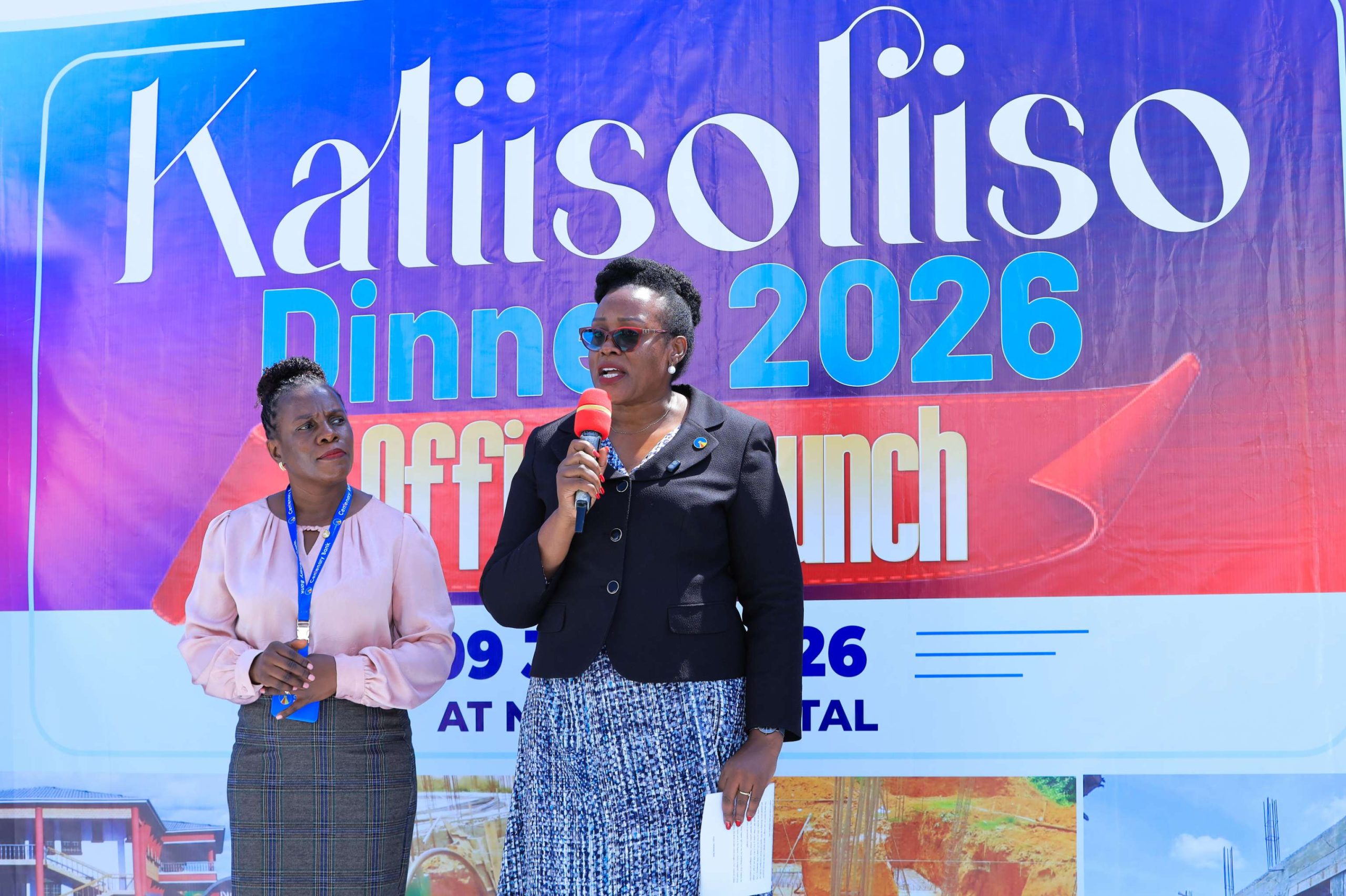
Speaking at the event, Centenary Bank General Manager, Corporate Communications and Marketing, Beatrice Lugalambi who represented the Managing Director, Godfrey Byekwaso, said road safety remains a national concern that requires collective action from government, the private sector, cultural institutions and the public.
Centenary Bank General Manager, Corporate Communications and Marketing, Beatrice Lugalambi (R) representing the Managing Director, Godfrey Byekwaso at Kaliisoliiso Dinner Launch
“Our decision to support this initiative reflects who we are as an institution. We serve millions of Ugandans across the country. Every day, our customers travel on these roads to open their shops, transport produce, report to work, attend school, visit their families, to mention but a few. Their safety matters to us because they are the people we exist to serve,” she said.
Uganda continues to face a growing road safety challenge. According to the 2025 Uganda Police Annual Crime Report, 26,044 road traffic crashes were recorded in 2025 up from 25,107 crashes in 2024, representing a 3.7% increase. 5,383 people died in these crashes up from 5,144 in 2024 with at least 15 people dying daily.
Centenary Bank has been a long-standing partner of Nkozi hospital right from the first fundraising in 2016 towards the construction of the accident trauma centre at the Hospital, a facility strategically located along the Kampala–Masaka highway that serves accident victims brought in from numerous crashes on this high-risk route. Over the years, the Bank has supported the initiative through fundraising dinners, marathons, car washes, and publicity campaigns, contributing more than UGX 400 million towards the cause.
The latest contribution forms part of a three-year Memorandum of Understanding signed between Centenary Bank and CBS FM in 2025 to support the Road Safety Programme. Under the partnership, the Bank committed to UGX 280 million over three years. Following an initial contribution of UGX 80 million made during the 2025 Kaliisoliiso Dinner, this year’s support increases the Bank’s total contribution under the partnership to UGX 180 million.
Centenary Bank handing over a dummy cheque of UGX 100 million towards the construction of the accident and trauma centre at Nkozi Hospital
Centenary Bank’s support for the initiative aligns with its broader Corporate Social Responsibility agenda, under which every year the Bank invests 1.5 percent of its previous year’s profits in education, healthcare, environmental stewardship, community development and the Social Mission of the Church.
Lugalambi commended the Buganda Kingdom, CBS FM, Nkozi Hospital and all other partners for sustaining the campaign over the years and keeping road safety at the forefront of national attention.
The Kaliisoliiso Dinner Concert has become one of Uganda’s flagship road safety fundraising initiatives, bringing together the public and private sector partners to support safer roads while strengthening the capacity of Nkozi Hospital to provide life-saving trauma care for road accident victims.
The dinner will take place on 11th September, 2026 at Hotel Africana. Tickets go for UGX 300,000 for individuals, while tables go for UGX 3 million, UGX 5 million, UGX 10 million and UGX 20 million.
GOT A HOT STORY? LET US KNOW!
Got breaking news, explosive secrets, or hard evidence?