Blog

  • “It’s disgusting” — Jolly Mirembe dismisses wildest online rumor – Sqoop

    “It’s disgusting” — Jolly Mirembe dismisses wildest online rumor – Sqoop

    Jolly Mirembe, sister to singer Gloria Mbeleka alias Baby Gloria, has spoken candidly about the wildest rumors she has faced online, emphasizing why owning your narrative is so important.

    During her appearance on the Ugandan Boy Talk Show podcast, the 18-year-old addressed a particularly shocking rumor: claims that she was having an affair with her sister’s husband.

    “I look older because when you grow up in front of the camera, people think you are old, but I am young — I am just 18,” Jolly explained.

    She was quick to dismiss the speculation. “My sister Gloria and I are six years apart. How do I weigh up one and start looking at my sister’s husband that way… eww, it’s disgusting,” she said.

    Jolly went on to describe her relationship with Jonas, her sister’s husband, clarifying that it is strictly familial. “Jonas is such a big brother to me. I like boys, so we have a good relationship together. We have good chemistry, we laugh together, so really…” she trailed off, leaving no room for misinterpretation.

    READ: Jolly addresses rumours linking her to Baby Gloria’s marital troubles 

    “Leave my daughter alone” — Baby Gloria’s mother speaks out

    Baby Gloria dismisses claims of rift with sister, says her marriage is okay

    Her comments highlight the challenges of growing up in the public eye and navigating online narratives, while also reinforcing the importance of speaking for yourself before rumors take over.

    Don’t want to miss out on any story? For updates on all Sqoop stories, follow this link on Telegram: https://t.me/Sqoop and Whatsapp: https://whatsapp.com/channel

  • A Pass advises Kapeke to handle frustration without scaring fans after abrupt exit – Sqoop

    A Pass advises Kapeke to handle frustration without scaring fans after abrupt exit – Sqoop

    A Pass has weighed in on the recent on-stage incident involving Kapeke, urging artists to maintain composure even when faced with frustrating moments during live performances.

    Speaking out, A Pass suggested that while challenges on stage are inevitable, the way an artist responds matters just as much as the performance itself. He noted that it is possible to express frustration calmly, even in difficult situations, rather than reacting in a way that unsettles the audience.

    According to him, an artist can simply acknowledge the issue, apologize to fans, and step off stage respectfully instead of escalating tensions or alarming the crowd.

    The comments come in the wake of an incident that unfolded during a recent performance by Kapeke, whose real name is Derrick Nsubuga.

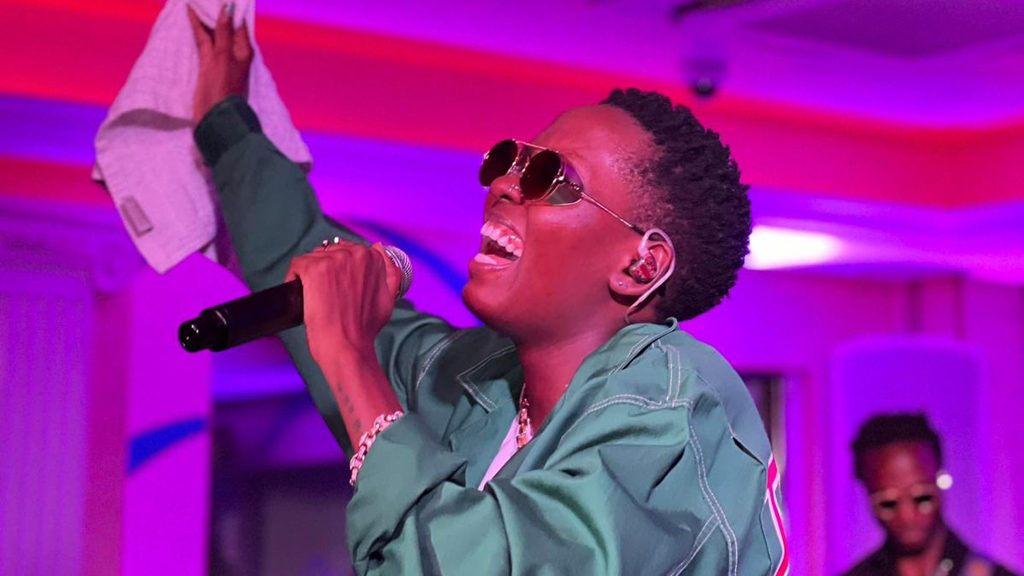
    Kapeke had been one of the most anticipated acts of the evening and was welcomed by an excited crowd as he took to the stage. However, while performing his hit song Kaba, his set was abruptly cut short due to a sound glitch reportedly linked to the deejay.

    In a move that left many revelers puzzled, the singer walked off stage alongside his dancers, management team, and security, bringing his performance to an unexpected halt.

    The incident quickly sparked debate online, with some critics arguing that Kapeke could have handled the situation differently and pushed through the technical difficulties.

    Following the backlash, Kapeke later apologized to fans for the abrupt end to his performance.

    READ: Kapeke blames ‘bad sound’ for abrupt exit at Roast and Rhyme, apologises

    A Pass’s remarks have since added another layer to the conversation, highlighting the importance of professionalism and crowd management in live performances, especially in high-pressure moments.

    Don’t want to miss out on any story? For updates on all Sqoop stories, follow this link on Telegram: https://t.me/Sqoop and Whatsapp: https://whatsapp.com/channel

  • Jolly Mirembe Says Rock Bottom Is Her Biggest Motivation

    Jolly Mirembe Says Rock Bottom Is Her Biggest Motivation

    Jolly Mirembe Senyonjo has opened up about how she deals with online criticism, revealing that the negativity surrounding her life has become her motivation.

    As a model, digital marketer and entrepreneur, Jolly has built a strong presence online.

    But that visibility also comes with constant scrutiny, including harsh comments, insults and rumors about her personal life.

    One of the most talked-about moments involved claims linking her to Jonas Mbaleka, the husband of her sister, gospel singer Baby Gloria.

    Despite the backlash, Jolly says those moments now push her to go harder.

    She shared that mindset on the Ugandan Boy Talk Show, revealing that she actually likes and embraces rock bottom.

    One thing people do not know, I like a breaking point. I like rock bottom. Rock bottom pushes me to strive further, to reach points that I would never even think I would be interested in reaching, to really test my capabilities.

    Instead of letting it weigh her down, Jolly turns those moments into something she can build on.

    Whenever I reach rock bottom, whenever someone says something mean about me, whenever someone disappoints me, sometimes it gets to you and you feel bad and feel pain, but I am such an “I must get up” person, and what must I do to get up? So, you are helping me learn new things, achieve bigger things, bigger milestones.

    What was meant to break her now fuels her rise.

    All that hate helps me. I know it is toxic motivation, but that is me.

  • Healthy Heart Foundation’s Ettendo Worship Concert raises funds for children’s cardiac treatment as Katikkiro Mayiga urges families to prioritize health

    Healthy Heart Foundation’s Ettendo Worship Concert raises funds for children’s cardiac treatment as Katikkiro Mayiga urges families to prioritize health

    The Healthy Heart Foundation (HHF) hosted the Ettendo Worship Concert on Friday, March 27th, at Hotel Africana.

    The fundraising event, supported by I&M Bank, brought together worshippers, well-wishers, and stakeholders in a shared mission to address the financial challenges faced by families unable to afford specialised cardiac treatment for their children.

    Proceeds from the event will go towards life-saving heart surgeries, necessary referrals for specialised treatment abroad, and comprehensive post-surgery care- including medication and long-term follow-up to ensure improved health outcomes.

    A choir performs at the concert.

    The event came alive with vibrant and soul-stirring performances from renowned gospel artists and choirs, including Pastor Wilson Bugembe, Twino Herbert, Golden Gates Choir, Streams of Life, and Jehovah Shalom Acapella, among others.

    The Katikkiro of Buganda, Owek. Charles Peter Mayiga, was one of the dignified guests at the do. In his remarks, the Buganda Premier urged families, especially men, to take responsibility, particularly in situations involving serious medical conditions.

    “Let us stop being negligent and prioritize health. When challenges arise in families, we must support our wives and stand with them, especially in matters of health. Good health is a responsibility for all of us,” he said.

    The Katikkiro, Owek. Charles Peter Mayiga making his remarks at the event.

    The Katikkiro also commended the head of the Healthy Heart Foundation, – Owek. Ritah Namyalo Waggwa, and her husband- Owek. Robert Waggwa Nsibirwa, together with their partners and collaborators, for their dedication, compassion, and commitment, to supporting vulnerable children through the initiative.

    In her remarks, Namyalo highlighted the serious burden of the heart disease in Uganda, noting that public awareness remains low and access to treatment is limited due to the high cost of care.

    “In Uganda, about 16,000 children are born with heart defects each year. If you are fortunate to have children without such conditions, be grateful. The challenges faced by families dealing with this illness are immense,” she noted.

    She said that this year’s campaign would help up to 100 children access life-saving heart surgery.

    Several contributors were also recognized and awarded for their efforts towards improvement of lives of children with heart conditions.

    The Katikkiro- Owek. Charles Peter Mayiga (left), presents a plaque to an I&M Bank staff member in recognition of the bank’s participation and contribution to the cause.

    I&M Bank, which has consistently championed community-focused initiatives through a range of CSR outreach activities over the years, continued to deepen its impact on the lives of vulnerable populations.

    “I&M Bank has long been at the forefront of initiatives aimed at improving the well-being of communities through targeted outreach and support programs. Our CSR strategy is anchored on four key pillars: Education and Skills Development, Economic Empowerment, Environmental Conservation, and Enabling Giving. This initiative falls under ‘Enabling Giving,’ reflecting our commitment to supporting children and families in accessing life-saving healthcare and essential services,” I&M Bank Head of Marketing and Corporate Communications- Annette Nakiyaga, said.

    Despite growing awareness and improved local treatment, heart conditions continue to place a heavy burden on Ugandan children. Studies show that over 30 percent of school going children with rheumatic heart disease, die within a few years of diagnosis without intervention.

    Many others develop severe complications, such as heart failure, while a significant number live with malnutrition and rhythm disturbances associated with congenital conditions, highlighting the urgent need for sustained support, early detection, and expanded access to life-saving care.

  • Lydia Jazmine opens up on ‘Bebe’ disappointment, blames timing for missed hit – Sqoop

    Lydia Jazmine opens up on ‘Bebe’ disappointment, blames timing for missed hit – Sqoop

    Lydia Jazmine has opened up about one of her recent releases that didn’t quite live up to her expectations, despite her strong belief in its potential.

    Speaking candidly in a recent interview, the singer pointed to her 2025 single Bebe as a song she genuinely thought would become a major hit.

    Jazmine revealed that she had high hopes for the track, especially given her track record with fan favorites like Kapeesa and other chart-topping songs. In her view, Bebe had all the right elements to succeed, from its sound to its overall feel.

    However, the song failed to reach the heights she had anticipated.

    Reflecting on what may have gone wrong, Jazmine suggested that timing played a critical role. She explained that artists sometimes release good music at the wrong moment, which can affect how well it performs.

    According to her, Bebe dropped at a time when she already had another song dominating airwaves and promotional campaigns were still ongoing. As a result, the new release struggled to stand out and ended up getting lost in the mix.

    She emphasized the importance of understanding the state of the music industry before putting out new work, noting that factors like ongoing trends and audience attention can make or break a song’s success

    Despite its performance, Jazmine maintains that Bebe remains a strong song. While it may not have become a widespread hit, she noted that it still resonates with some listeners — even if it hasn’t reached the entire audience she had hoped for.

    Her reflection offers a rare glimpse into the strategic side of music releases, showing that beyond talent and production, timing can be just as crucial in determining a song’s impact.

    Don’t want to miss out on any story? For updates on all Sqoop stories, follow this link on Telegram: https://t.me/Sqoop and Whatsapp: https://whatsapp.com/channel


  • Chef April Brings a Story of Migration and Memory to The Singleton Chef’s Table

    Chef April Brings a Story of Migration and Memory to The Singleton Chef’s Table

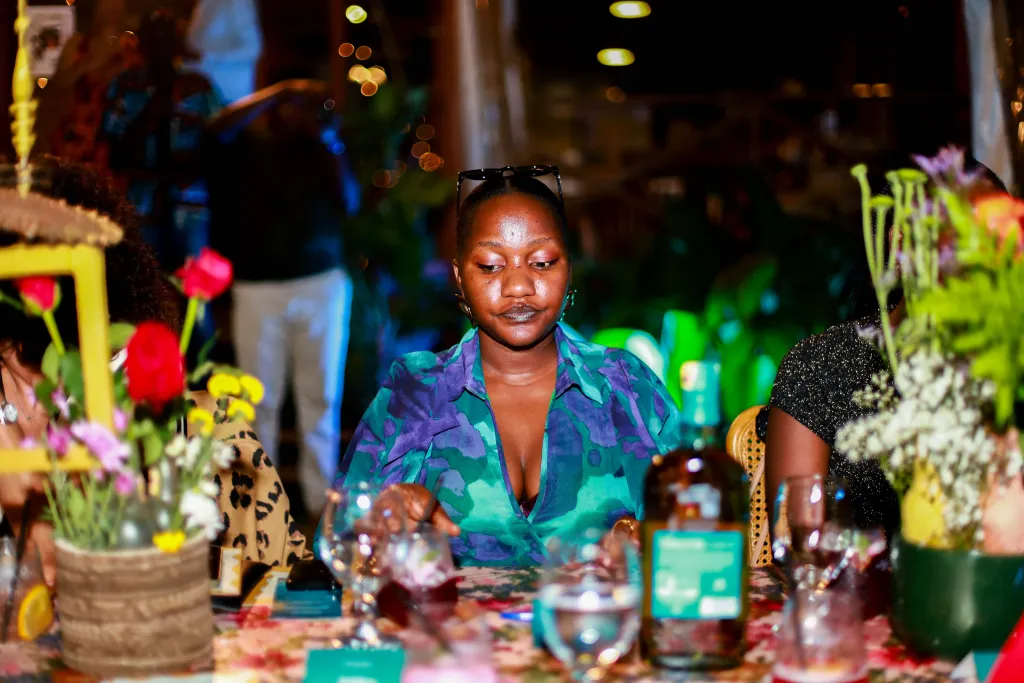
    On a warm Saturday evening in Kololo, the latest edition of The Singleton Chef’s Table unfolded not just as a fine dining experience, but as a journey through history, identity and flavor, told through the voice and cuisine of British-Jamaican chef April Charlotte.

    Hosted at Kardamom and Koffee and curated by premium whiskey, The Singleton, the intimate gathering brought together Kampala’s growing community of food enthusiasts for an experience that blurred the lines between storytelling and gastronomy.

    For Chef April, the starting point was not Jamaica, but Uganda.

    British-Jamaican chef April Charlotte.

    She spoke with visible excitement about discovering local ingredients, particularly Ugandan coffee, now globally celebrated, and vanilla, which she described as “underrated” despite its richness and depth. It was a reminder that even within a curated international dining experience, local produce remained central.

    But it was in the unexpected combinations that the evening truly came alive. A passionfruit hot sauce, paired with salted fish, stood out as one of her most surprising discoveries—an accidental fusion that quickly became a highlight of the table. “I didn’t know until yesterday that that could happen,” she admitted, capturing the spontaneity that defined the evening.

    As guests worked through the courses, Chef April gently challenged them on their familiarity with Jamaican cuisine. Few hands went up. It was, she suggested, an opportunity—to “do better”, but also an invitation to understand the deeper roots of what they were tasting.

    Jamaican food, she explained, is not singular in origin. It is layered, shaped by Africa, India, and the Caribbean’s complex past. The salted fish served that evening, traditionally cod, had been reimagined using local tilapia, an adaptation that anchored the dish in Uganda while preserving its essence.

    The sorrel and spice blends paid homage to Indian indentured laborers who carried their culinary traditions to the Caribbean. Meanwhile, the main course, rice and peas, sparked a moment of cultural recognition. Often mistaken for rice and beans, Chef April traced its origins back to Ghana, linking it to the dish “waakye.” For her, this connection was more than culinary, it was personal.

    “I find it so beautiful,” she said, reflecting on how food maps history. Through the transatlantic slave trade, displaced people carried fragments of their identity across oceans, embedding them in the cuisines of new lands. For Chef April, these dishes are a way of tracing heritage, of understanding where she comes from.

    Even the preparation methods told stories of resistance. The smoked wings, infused with pimento wood, referenced the ingenuity of enslaved people who used smoke not just for cooking, but as a means of survival, masking their scent as they fled.

    According to one of the bartenders of the day, Preston, also a trainer with the Diageo Bar Academy, from their side, they were not simply pouring drinks, they carefully paired these Singleton based cocktails with the menu of the day.

    “The cocktails complemented the menu being served, thus it was an experience where cocktails were made based on the food served,” he said.

    For Simon Lapyem, The Singleton East Africa, Brand Manager, The Chef’s Table seeks to celebrate cultures, bring people together and spark conversations. “We believe great food has the power to bring people together across cultures, and whisky plays a role in elevating that connection,” the brand manager said. “Experiences like this are about more than pairing dishes with The Singleton, they are about storytelling, discovery and creating moments that people carry with them long after the table is cleared.”

    By the time dessert arrived, the narrative had softened into indulgence. A rich, spirit-laden creation, featuring The Singleton whisky alongside Jamaican, Mauritian and Ugandan rums, closed the meal on a note of excess and warmth. Alongside it were playful additions: a dairy-free chocolate moelleux, a nod to French technique, and banana fritters paired with coconut, tying back to Caribbean comfort.

    Throughout the evening, what emerged most clearly was Chef April’s philosophy: food is never just food. It is memory, migration, adaptation and identity, plated and shared.

  • No artist in my generation can match me – Azawi – Sqoop

    No artist in my generation can match me – Azawi – Sqoop

    There’s confidence, and then there’s Azawi, who is making it clear that when it comes to stage presence and timeless music, she believes no one in her generation comes close.

    In a recent interview, the singer boldly positioned herself at the top of her generation, confidently asserting that no current artist can match her when it comes to live performance and musical depth.

    Azawi suggested that when it comes to commanding the stage, she stands in a league of her own. She challenged any artist who believes they can rival her catalog and consistency to step forward, ephasizing that her music is built for longevity, not just momentary hype.

    Her remarks also touched on comparisons that have been drawn between her and Alien Skin. Azawi dismissed the notion of a musical showdown between the two, making it clear that, in her view, the conversation around timeless music and staying power places her at a different level.

    Despite the strong stance, the singer framed her confidence as something rooted in gratitude rather than ego. She credited her journey to divine grace, insisting that her statements reflect what she sees as reality rather than arrogance.

    At the same time, Azawi acknowledged the often overlooked effort required to succeed in the music industry. She urged audiences to respect artists who manage to produce even a few hit songs, noting that consistency at that level demands discipline, financial investment, and relentless focus.

    Still, she was quick to point to her own achievements as evidence of her position. With confidence, she highlighted her body of work, noting that she has already delivered two hit albums — a milestone she believes sets her apart from many of her peers.

    That confidence is anchored in a catalogue that has steadily shaped Uganda’s contemporary sound. From breakout anthems like My Year and Repeat It to crowd favorites such as Quinamino, Majje, Slow Dancing, and Party Mood, Azawi has built a reputation for blending soulful storytelling with infectious rhythms that resonate across audiences.

    Her projects have further solidified that standing, with albums like African Music and Sankofa delivering a string of hits and reinforcing her claim of consistency in an industry where staying relevant is often a challenge.

    The message was clear, for Azawi, the conversation is no longer about potential, but about proven dominance.

    Don’t want to miss out on any story? For updates on all Sqoop stories, follow this link on Telegram: https://t.me/Sqoop and Whatsapp: https://whatsapp.com/channel

  • YAGGA Predicts Big Grammy Moment for Joshua Baraka

    YAGGA Predicts Big Grammy Moment for Joshua Baraka

    While the internet remains divided over who has achieved more internationally between Eddy Kenzo and Joshua Baraka, South Sudanese-born TikToker and digital creator YAGGA has stepped in with a bold prediction.

    YAGGA, often known as “Mr. Idiot” or “Mr. Nash,” took to his X account and predicted that Joshua Baraka could soon earn a Grammy nomination or even win one.

    It might sound like a joke But Joshua Baraka is like to be nominated or even win a Grammy in the next coming Grammy awards trust me watch and seee.

    He did not directly reference the comparison, but the timing has raised eyebrows, especially as the debate between the two artistes continues to dominate online conversations.

    Fans often point to Kenzo’s international success as a major advantage, highlighting his global recognition and status as a two-time Grammy nominee.

    However, YAGGA focused on the future and backed Baraka to break through at the next Grammy Awards.

  • Beyond the Ballot: Why a Vocational Hub in Rural Masaka is the Key to Unlocking Uganda’s Industrial Engine

    Beyond the Ballot: Why a Vocational Hub in Rural Masaka is the Key to Unlocking Uganda’s Industrial Engine

    The Case for a Vocational Hub: Why Rural Masaka is the Missing Link in Uganda’s Industrial Shift

    Uganda is at a crossroads. As the government pushes for “Operation Wealth Creation” and “Grow,” a glaring gap remains in Rural Masaka District—a region rich in land and labor, but starved of technical skills. To curb national unemployment, the solution isn’t just more “education”; it is the strategic construction of a modern vocational institute in the heart of Masaka.

    The Problem: A Skills Mismatch
    The statistics are telling. According to the 2014 Census, Masaka District houses nearly 300,000 people. Crucially, 23% are youth aged 18-30, many of whom have dropped out of formal schooling.

    Currently, the employment market favors the elite. In Rural Masaka, the majority of the youth are trapped in low-yield casual labor. Without technical “know-how,” they remain spectators in an economy that is increasingly favoring mechanical, technological, and industrial skills.

    The Solution: A Center for Technical Excellence
    The blueprint for progress is already on the table. Former Vice President Edward Kiwanuka Ssekandi has already gazetted land in Kyambazi for district headquarters, providing a ready-made ecosystem for development.

    Investing in a vocational institute here—under the Ministry of Education and Sports led by First Lady Janet Kataha Museveni—would do three things:
    – Bridge the Gap: Transform “casual workers” into certified technicians ready for factory floors.
    – Attract Investors: Investors follow a skilled workforce. A vocational hub would naturally lead to food processing plants and warehouses.
    – Harness the Land: With 65% of households depending on subsistence farming, a vocational center focused on “Agro-industrialization” would turn Masaka’s alluvial soils into a goldmine.

    The “Greater Masaka” Vision
    The success of similar initiatives, like those in Busoga or Fort Portal, proves that regional vocational hubs work. Former VP Ssekandi, alongside local leaders like Oscar Mutebi, has been championing the Greater Masaka Development Initiative.
    “We need everything, but we need it with urgency,” Ssekandi noted in an exclusive interview. “I pick ideas from regions like Busoga that are already prospering. We must handle the Masaka initiative with the same care.”

    The Bottom Line
    President Museveni’s current term is defined by a hunger for economic self-reliance. If the government is serious about “Wealth Creation,” it must look at Rural Masaka not just as a voting bloc, but as an untapped industrial engine.
    The land is available. The youth are ready. The local leadership is aligned. All that is missing is the bricks, mortar, and machinery of a vocational institute to turn Masaka’s potential into Uganda’s prosperity.

    Do you have a story in your community or an opinion to share with us: Email us at Submit an Article


  • African women helping Africa tell its stories

    African women helping Africa tell its stories

    As the African continent asserts its leadership position in the world, a core aspect of its identity is the storytelling that informs Africa’s evolving culture. The academies producing Africa’s next generation of storytellers therefore have a critical role to play.

    At Africa’s leading film and television academies, the MultiChoice Talent Factory (MTF), this responsibility rests on the shoulders of three powerful women.

    Victoria Goro, Akaoma Onyeonoru and Mpimpa Moyo Mwenya are imparting critical creative skills leading the three MTF academies in Nairobi, Lagos and Lusaka, while also modelling executive excellence and championing sector transformation.

    Talent evolution

    All three share the commitment of MultiChoice, a CANAL+ company, to developing a pipeline of world-class African storytellers.

    Akaoma Onyeonoru, Acting Academy Director of the MTF West Africa Academy, says one of the most rewarding parts of her work is seeing the evolution of young filmmakers.

    “Mentorship goes beyond technical skills,” says Akaoma. “It’s about helping people find their voice, seeing their genius and owning it. When students become directors, producers, or mentors themselves, especially women who once doubted their place, that’s when I know the work is making a real difference.”

    Akaoma tries to teach the young women at MTF that beyond becoming technically proficient, they also have a responsibility to lead.

    “When women lead, creative spaces become more collaborative and more humane,” she says. “Women bring depth, honesty, and new perspectives that expand the range of African stories.”

    Transformation through teamwork

    MTF Southern Africa Academy Programme Manager Mpimpa Moyo Mwenya agrees, noting that female leadership can nurture collaboration and create spaces where every voice is heard and valued.

    “Through teamwork, transformation naturally unfolds, creating the opportunity to shift perspectives,” says Mwenya. “Female leaders foster a culture where equity, empathy, and excellence coexist, leading to storytelling that is not only compelling, but truly transformative.”

    For MTF East Africa director Victoria Goro, training young women filmmakers means convincing them that they belong in the industry, for who they are.

    “Young women, you don’t have to shrink or change who you are to succeed,” she says.

    Culture of mentorship

    The proof of this approach can be seen in the many successes achieved by MTF graduates. Goro describes with pride the achievements of two women graduates in the East Africa Academy class of 2021/2022.

    Doreen Kilimbe and Rita Saxon from Tanzania joined the Academy as shy and soft-spoken young women. Goro identified their specific skill gaps, and developed personalised training and work experience.

    Upon graduating from MTF, the two women went on to win filmmaking grants, and are now producing international award-winning work on the Maisha Magic Bongo channel.

    “Both Doreen and Rita have gone on to become mentors themselves of young girls seeking career guidance in film and TV,” says Goro. “This creates a lasting, sustainable and scalable culture of mentorship.”

    Leading with confidence

    For young women keen to enter the film sector, the women have sage advice.

    Mwenya says whatever a young woman sets her mind to is possible – through a combination of technical training and confidence.

    “Leadership is about stepping forward with confidence, being fully equipped, and creating opportunities to lift others as they rise,” she says.

    For Akaoma, the key to filmmaking success lies in learning the tools of trade.

    “Take yourself seriously,” she says. “Learn your craft, understand the industry, and don’t be afraid to ask questions. Support other women, collaborate intentionally, and don’t wait for permission to lead. Start now, with what you have.”

    Victoria Goro agrees that women filmmakers can succeed together – not just as individuals – by embracing their own womanhood and building networks of mutual support and inspiration.

    “Build a network of supporters by connecting with established female mentors who can guide your career,” she says. “Learn from the successes and challenges of those who came before you.

    The screen is a powerful tool for transformation, says Mwenya.

    “Women’s voices are essential,” she says. “This is the moment to accelerate action through bold storytelling that reshapes our narratives.”

    All three MTF women leaders are unanimous that the future of African storytelling depends on a strong vision, and long-term investment in skills development for the entire creative ecosystem.

    “Mentorship goes beyond technical skills,” says Akaoma. “It’s about helping people find their voice, see their genius and own it.”

    Do you have a story in your community or an opinion to share with us: Email us at Submit an Article

About UGNEWS24

UGNEWS24 is a Uganda local news service, a product of SOLAVIA GROUP LIMITED, Reg. No. 80048169153974.

Registered office

Plot 2335, Buwambo-Katadde-Najjo Road,
Nansana Municipality, Wakiso District, Uganda
P.O. Box 214231, Kampala

© 2026 SOLAVIA GROUP LIMITED. All rights reserved.