Blog

  • Action legend Chuck Norris dies at 86 – Sqoop

    Action legend Chuck Norris dies at 86 – Sqoop

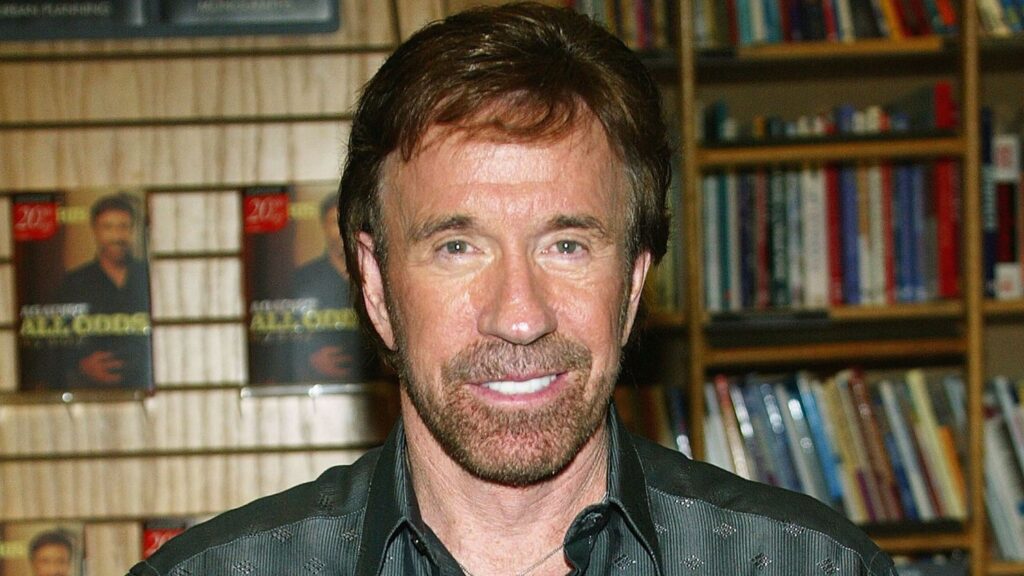
    Hollywood is mourning the loss of legendary action star Chuck Norris, who has died at the age of 86.

    The family confirmed his passing in an emotional statement shared on his official Instagram account, revealing that he died peacefully surrounded by loved ones.

    “It is with heavy hearts that our family shares the sudden passing of our beloved Chuck Norris yesterday morning,” the statement read, adding that while details surrounding his death remain private, he was “at peace.”

    Norris, a martial arts champion turned actor, became one of the most recognizable figures in action entertainment, gaining global fame through his films and television career.

    He is best remembered for his role as Cordell “Cord” Walker in the hit series Walker, Texas Ranger, which cemented his status as a household name in the 1990s.

    Before transitioning to acting, Norris built a strong reputation in martial arts, a foundation that shaped his on-screen persona and contributed to his enduring appeal.

    While millions knew him as a symbol of strength and discipline, his family described a more personal side of the star.

    “To the world, he was a martial artist, actor, and a symbol of strength. To us, he was a devoted husband, a loving father and grandfather, an incredible brother, and the heart of our family,” they said.

    They added that Norris lived a life defined by faith, purpose, and commitment to those he loved, inspiring millions through both his work and personal values.

    The family also expressed gratitude for the support he received from fans, particularly during his recent hospitalization.

    “To him, you were not just fans—you were his friends,” the statement noted.

    As tributes continue to pour in from across the world, the Norris family has asked for privacy as they mourn the loss of a man whose legacy spans generations of film, television, and martial arts.

    Don’t want to miss out on any story? For updates on all Sqoop stories, follow this link on Telegram: https://t.me/Sqoop and Whatsapp: https://whatsapp.com/channel

  • PHOTOS: Celebrities mark Eid al-Fitr in style

    PHOTOS: Celebrities mark Eid al-Fitr in style


    PHOTOS: Celebrities mark Eid al-Fitr in style – Matooke Republic


  • Rwenzori Marathon 2026 Goes Global as Registration Opens Without Country Limits

    Rwenzori Marathon 2026 Goes Global as Registration Opens Without Country Limits

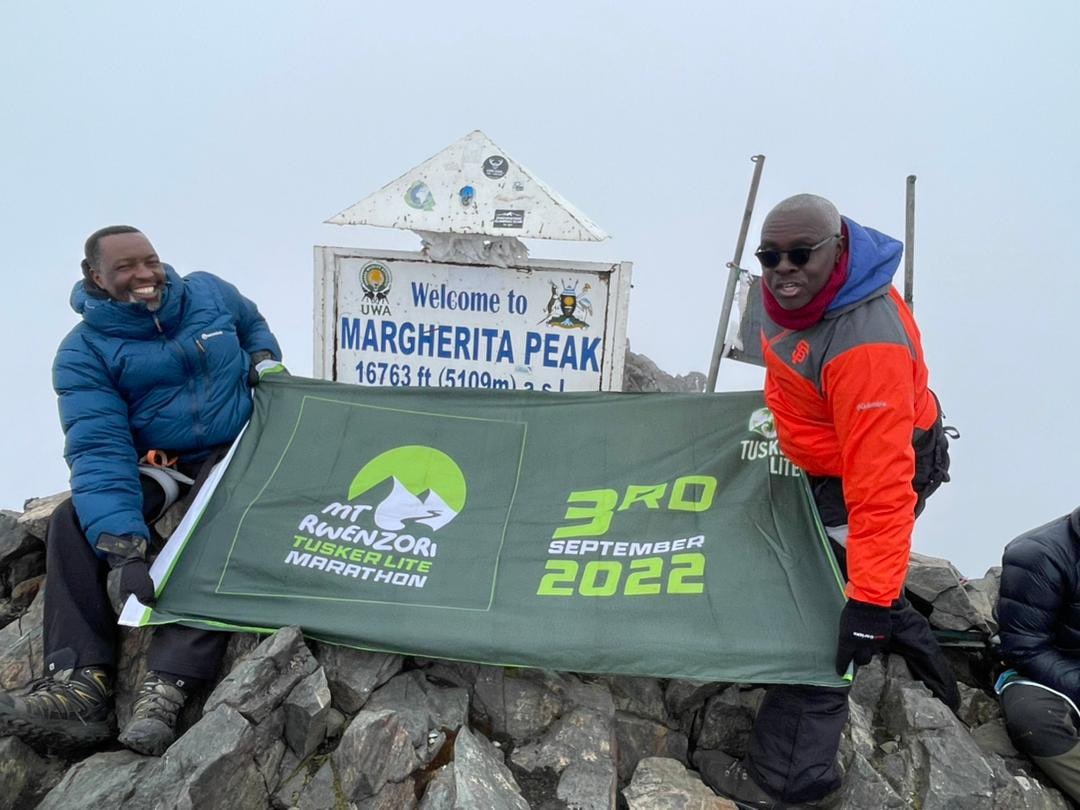
    Kasese – The Tusker Lite Rwenzori Marathon 2026 has taken a decisive leap onto the global stage, with organisers scrapping country-based registration restrictions in a move expected to turbocharge international participation and tourism inflows.

    Event team leader Amos Wekesa confirmed the development, describing it as a long-awaited upgrade that removes previous barriers to entry. “Full online registration has been opened and there is no limitation anymore by country,” he said, hailing the rollout as a major milestone for the race’s growth.

    Behind the scenes, organisers have overhauled the payment system to accommodate runners from across the world. Participants can now register and pay using international cards such as Visa and Mastercard, global e-wallets including Apple Pay and Google Pay, as well as a wide range of regional mobile money and banking options.

    In East Africa, runners can use Airtel Money, MTN Mobile Money and M-Pesa, while participants from West Africa have access to platforms such as e-Naira, Paga and MTN. European runners can pay via SEPA direct debit, and South African participants can use EFT and prepaid vouchers—effectively opening the race to every serious runner, anywhere.

    Early-bird registration, running until July 1, 2026, is pegged at UGX 50,000 for East African residents and USD 50 for international athletes. Fees will rise slightly thereafter.

    Set for August 22, 2026 in Kasese, the Rwenzori Marathon has steadily built a reputation as one of Africa’s most breathtaking races. The route cuts across the equator and winds through the foothills of the Rwenzori Mountains, offering a rare blend of elite competition and scenic adventure.

    Runners can compete in the full marathon (42.2km), half marathon (21.1km), or a 5km fun run, catering to both professionals and casual participants.

    Beyond the race itself, the event doubles as a gateway into Uganda’s tourism circuit. Participants often extend their stay to explore attractions such as Queen Elizabeth National Park, crater lakes, and primate trekking experiences.

    The marathon also holds competitive weight on the international calendar, serving as a qualifier for the Comrades Marathon and the Two Oceans Marathon.

    With the removal of registration barriers, organisers are betting on a surge in foreign athletes—bringing not just global attention, but also much-needed revenue for Kasese’s hospitality sector and the wider tourism economy.

    In short, the Rwenzori Marathon is no longer just Uganda’s race—it is now firmly a race for the world.

  • UBL, NFA and Rotary launch 80,000 Tree Restoration Project in Namananga Forest

    UBL, NFA and Rotary launch 80,000 Tree Restoration Project in Namananga Forest

    Uganda Breweries Limited (UBL), in partnership with the National Forest Authority (NFA) and Rotary International, has launched a three-year forest restoration initiative that will see 80,000 indigenous trees planted in the Namananga Central Forest Reserve in Kayunga District.

    The UGX 372 million investment forms part of UBL’s 80th anniversary activities and aims to restore sections of the 459-hectare forest reserve which serves as an important ecological corridor linking Mabira Forest and the Musamya Swamp.

    The reserve also protects key water catchments including the Nalwe and Wugula streams which support surrounding communities, agriculture and wildlife.

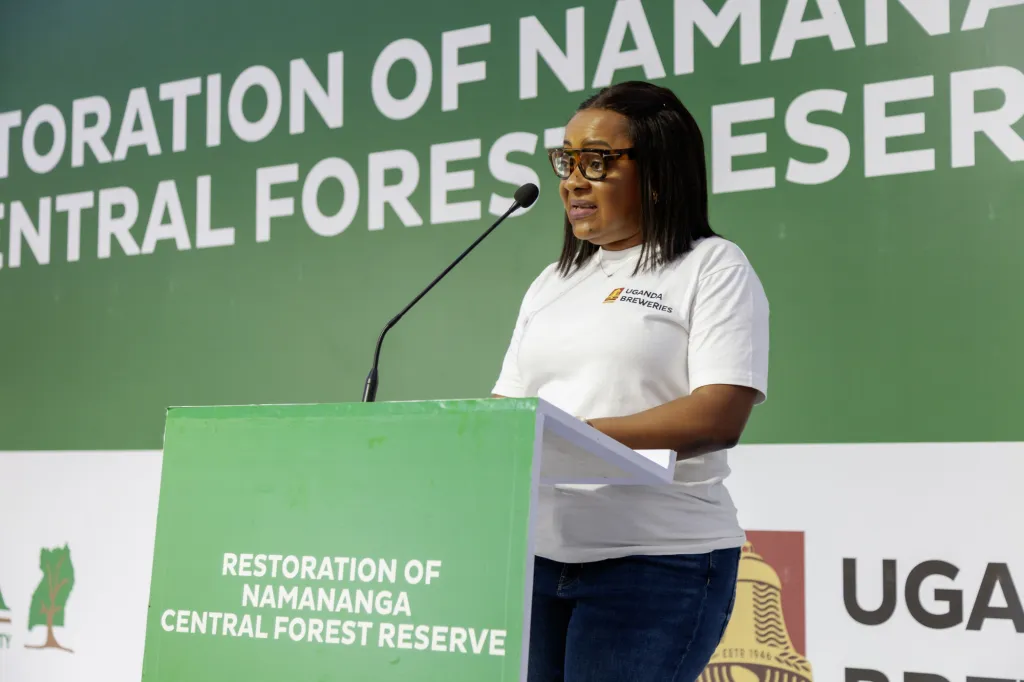
    Speaking during the launch, Felicite Nson, Managing Director, Uganda Breweries Limited, said the initiative reflects the company’s long-term commitment to environmental sustainability.

    Felicite Nson, MD, Uganda Breweries Limited, delivers remarks during the launch of the Namananga Central Forest Reserve restoration project in Kayunga District on 19 March 2026.

    “As we mark 80 years of brewing in Uganda, we know our business depends on a healthy environment,” Nson said. “Today’s activities added 2,000 indigenous seedlings to the 26,000 already planted under this restoration effort. Restoring Namananga Forest supports the natural systems that sustain our value chain, from water sources to the crops grown by farmers across the country. That is why protecting and restoring ecosystems remains a clear responsibility and a priority for us.”

    This project comes at a pivotal time in Uganda’s history. The Namananga restoration project directly contributes to Uganda Vision 2040’s objective of restoring the nation’s forest canopy to 24%, while the country’s forest cover now stands at 13.3%. With an emphasis on native species, the alliance seeks to restore a robust ecosystem that can sustain regional biodiversity, control regional temperatures, and safeguard the water supplies that local businesses and millions of Ugandans rely on.

    The collaboration of the public, private, and civil society sectors is essential to the project’s success. On behalf of the National Forest Authority (NFA), Mr. Martin Mwodi Kegere, the Director of Plantations Development at NFA, discussed the day’s events’ wider implications.

    “Restoring Namananga provides an opportunity for us to extend Collaborative Forest Management to ensure that what we are planting is protected. My plea is that we work with the teams that are around to ensure that the efforts that I and you all are protected for future generations. Today’s event is more than a ceremonial planting of trees. It’s a declaration of our shared responsibility to restore Uganda’s natural heritage and secure the ecological future of our country.”

    Geoffrey Martin Kitakule , Rotary District Governor delivers remarks during the launch of the Namananga Central Forest Reserve restoration project in Kayunga District.

    District Governor Geoffrey Martin Kitakule, who spoke on behalf of Rotary International noted, “The Namananga Forest’s restoration is a huge project that calls for cooperation. We are honoured to support UBL as they give back to the environment to commemorate 80 years. I call upon UBL to remain our ESG implementation partners to restore our environment.”

    A forest manager from the National Forest Authority guides participants during the tree planting exercise at the Namananga Central Forest Reserve restoration project. Guests took part in planting indigenous seedlings.

    The UGX 372 million investment goes beyond planting. It commits all partners to ensuring these trees survive, grow, and restore a critical ecosystem over the next three years. Success will be measured in canopy cover regained, water systems protected, and communities that continue to depend on this forest.

  • Tracy Melon Finally Reveals Source of Luxury Mercedes Benz

    Tracy Melon Finally Reveals Source of Luxury Mercedes Benz

    Tracy Melon has cleared the air about the flashy Mercedes Benz she showed off on International Women’s Day, revealing that the luxury car was a gift.

    Speaking during an interview on Sanyuka TV, the singer explained that she did not buy the vehicle herself.

    Instead, she said someone gifted it to her as a way of appreciating her work, talent, and how she carries herself.

    It wasn’t from my money, I didn’t buy it. Someone gifted it to me as a way of appreciating my work, my singing, and how I carry myself with respect. They encouraged me to keep going, so it was simply a token of appreciation for who I am.

    She went on to address speculation about the identity of the mystery giver, shutting down claims that the person is her romantic partner.

    Tracy made it clear that she is single and not involved in any relationship.

    The giver isn’t my man. I’m very single… There were no conditions attached. I was actually shocked, it left me wondering.

    She insisted the gesture came from genuine appreciation and urged fans to focus on her journey, talent, and growth in the music industry.

  • Did You Know Today Is National Proposal Day?

    Did You Know Today Is National Proposal Day?

    Today marks National Proposal Day, a day dedicated to love, bold decisions, and taking relationships to the next level.

    Celebrated every March 20, the occasion encourages people to express their feelings and make meaningful commitments. For many, it serves as a reminder to stop waiting and take a chance on love.

    Proposals come in different forms. Some prefer grand public moments filled with attention and celebration, while others choose quiet, private settings that focus on intimacy and connection.

    National Proposal Day also highlights that proposals are not limited to traditional expectations. It can be as simple as asking someone to begin a new chapter together or defining a relationship more clearly.

    At the same time, the idea of public proposals continues to spark debate, as not everyone feels comfortable with such pressure.

    Whether big or simple, the message remains the same. It is about intention, courage, and the willingness to take a step forward in love.

  • DR. SAMUEL B. ARIONG: Norbert Mao is wrong on alleged “dysfunction” of Uganda’s 11th parliament

    DR. SAMUEL B. ARIONG: Norbert Mao is wrong on alleged “dysfunction” of Uganda’s 11th parliament

    Recent press remarks attributed to Norbert Mao describing Uganda’s 11th Parliament under Hon Anita Among as dysfunctional have stirred debate in the country’s political space. Criticism of public institutions is both legitimate and necessary in a democratic society. However, criticism must be grounded in fairness, evidence, and a sense of responsibility, especially when it comes from senior leaders within government itself.

    Labelling the entire 11th Parliament of Uganda as dysfunctional is an exaggeration that does little to advance constructive debate. More importantly, it risks undermining public confidence in one of the country’s most important democratic institutions.

    Parliament, by design, is meant to be a forum of competing views, vigorous debate, and sometimes messy politics. Disagreement and political tension are not signs of dysfunction; they are often the very essence of democratic legislative practice. What matters is whether the institution continues to perform its constitutional duties; passing laws, representing citizens, and exercising oversight over the executive.

    By those measures, the claim that the 11th Parliament under leadership of Hon Anita Among and Hon Thomas Tayebwa as dysfunctional and needs fixing does not withstand scrutiny.

    Since its inauguration in 2021, the current Parliament has continued to deliberate on national issues, pass legislation, and conduct oversight through its committee system. Numerous bills have been debated and enacted, shaping policies in areas ranging from economic regulation, constitutional reforms to public administration. Parliamentary committees have remained active in examining government programs, reviewing budgets, and questioning public officials.

    These activities are not the hallmarks of an institution that has ceased to function. On the contrary, they demonstrate an institution actively engaged in fulfilling its constitutional mandate.

    Criticism of Parliament should therefore focus on specific shortcomings; whether in the quality of debate, the pace of legislative work, or the balance of power between government and opposition. Those are legitimate areas for reform. But sweeping declarations that the entire institution under Hon Anita Among is dysfunctional are not only inaccurate; they risk trivializing the serious work carried out within parliamentary structures.

    The context in which Mao’s remarks emerge also deserves attention.

    In the past over thirty years, Mao built his political identity as one of the most outspoken critics of the government led by the National Resistance Movement. His critique often targeted governance practices, institutional performance, and democratic accountability under the leadership of President Yoweri Museveni.

    Yet politics has a way of reshaping roles. In 2022, Mao accepted an appointment as Minister of Justice and Constitutional Affairs in the same government he had long criticized. That decision marked a significant turning point in his political journey, from an external critic to an insider entrusted with responsibility for strengthening Uganda’s legal and constitutional systems.

    Such a transition naturally raised expectations. Many Ugandans believed Mao would bring his decades of criticism into government and translate it into meaningful institutional reforms. After all, it is easier to diagnose problems from the outside than it is to fix them from within.

    That is precisely why Mao’s recent remarks about Parliament raise legitimate questions.

    Before declaring Parliament under the leadership of Hon Anita Among as dysfunctional, it would be useful for the public to hear what concrete reforms have been implemented within the Ministry of Justice and Constitutional Affairs under Hon Mao’s leadership. Has the ministry introduced major legal reforms? Has it strengthened constitutional governance or advanced significant judicial or legislative reforms?

    These are the kinds of outcomes that define effective leadership within government.

    Equally relevant is Mao’s long tenure as president of the Democratic Party, one of Uganda’s oldest political parties. In the past more than fifteen years, Mao has led the party through a period marked by internal disagreements and declining electoral influence.

    If the standard for institutional functionality is performance, cohesion, and political effectiveness, then the same questions asked of Parliament should also apply to the political organizations Mao himself leads.

    Bringing in opposition political leaders into government was fairly a well thought act from NRM government, however, a person who has built his career in opposition, will continue to act as an opposition leader even in government, and therefore, it’s a high time for government to rethink some of these considerations of co-option. In any case, some faithful NRM leaders are crying foul, as they being under looked, as some leaderships roles are parcelled out to opposition leaders like Nobert Mao.

    None of this is to suggest that Parliament is beyond criticism. No democratic institution is perfect, and Uganda’s Parliament is no exception. There are legitimate concerns about the quality of debate (especially with the lowered S6 requirements), the pace of legislative scrutiny, and the broader political dynamics that influence parliamentary decisions.

    These issues deserve serious attention and reform.

    However, reform begins with careful diagnosis rather than sweeping condemnation. Calling Parliament dysfunctional without presenting concrete evidence risks turning a serious institutional discussion into political rhetoric.

    Uganda’s democratic institutions, Parliament included, are still evolving. Their strength depends on both constitutional provisions, as well as on the conduct and responsibility of political leaders who operate within them.

    Once senior government officials publicly dismiss key institutions as dysfunctional, they risk weakening the very structures they are expected to strengthen. Responsible leadership requires criticism that is precise, evidence-based, and aimed at improvement rather than delegitimization.

    Parliament remains one of the central arenas through which Uganda’s national policy is debated and laws are enacted. Its proceedings may not always satisfy every political actor, but its continued legislative work demonstrates that it remains a functioning pillar of governance.

    It is also worth noting that Norbert Mao has recently expressed interest in the leadership of the next Parliament. Well, political competition for leadership positions in the forthcoming legislature is both legitimate and healthy in any democracy. However, one does not build credibility for future leadership by delegitimizing the current institution or its leadership, including that of Hon Anita Among. Political ambition should be accompanied by political maturity. If Mao intends to compete for speakership of the next Parliament, the country would benefit more from constructive policy ideas and thoughtful institutional reforms rather than rhetoric that undermines the credibility of the very institution he seeks to lead.

    Ultimately, the real test of leadership lies not in rhetoric but in results.

    If institutions require reform, and many do, the most effective approach is not to denounce them from afar but to strengthen them from within. For leaders who hold positions of authority in government, that responsibility is even greater.

    Uganda’s democratic progress will depend less on dramatic declarations and more on patient institutional work; reforms, policies, and leadership that improve the systems through which the country governs itself.

    That is the challenge facing Uganda’s political class today. And it is a challenge that cannot be met through rhetoric alone.

    Dr Samuel B. Ariong is an academic, lecturer and scholar

    Do you have a story in your community or an opinion to share with us: Email us at Submit an Article

  • Truth 256 Switches It Up With Emotional New Song “Mwebare”

    Truth 256 Switches It Up With Emotional New Song “Mwebare”

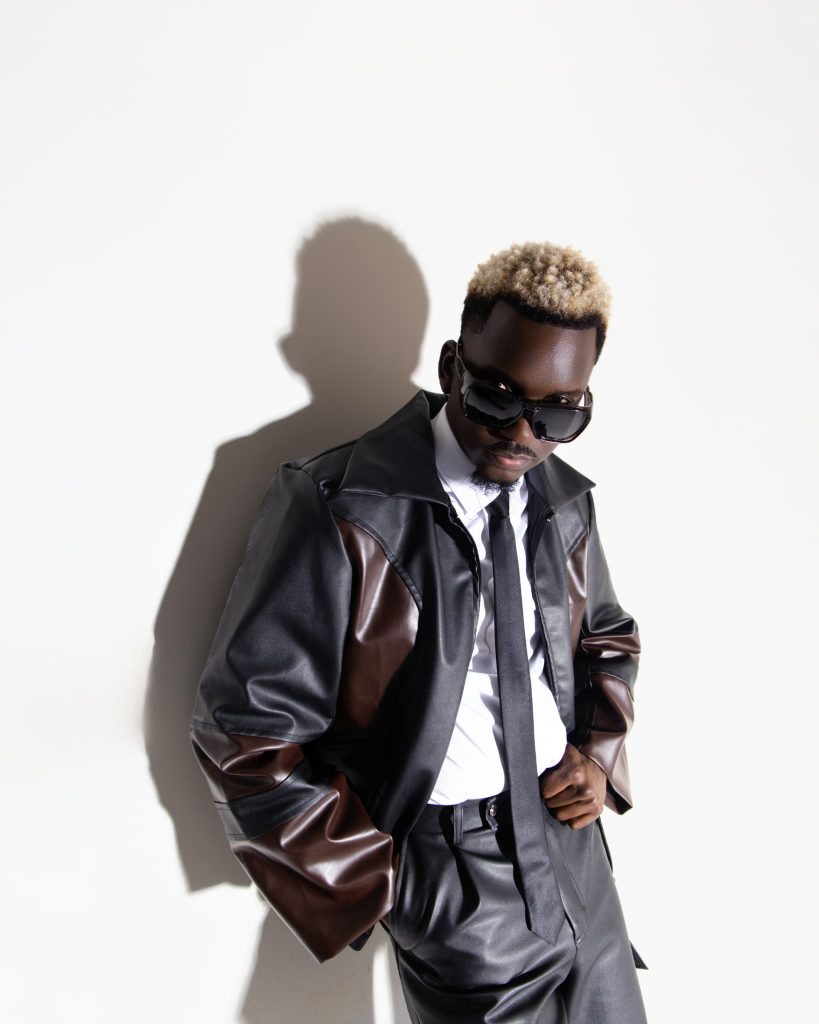
    Ugandan fast-rising star Nsenge Yahaya aka Truth 256 has just dropped a new track titled “Mwebare” and it’s already stirring conversations online.

    “Mwebare,” a Runyankore word meaning “Thank You,” sees Truth 256 take a surprising turn from his usual high-energy Afrobeat rap to deliver a more emotional, reflective sound.

    And fans? They didn’t see this coming.

    Truth 256 Mwebare

    Known for his vibrant Afrobeat and dancehall-infused rap, Truth 256 leans into melody this time, showcasing unexpected vocal stretches that have caught many off guard.

    The song carries a strong message of gratitude, with the artiste emphasizing the importance of appreciating life’s small wins.

    “It’s important to be grateful no matter how small the steps seem,” Truth 256 shared.

    Truth 256 Mwebare

    In the track, he also takes time to appreciate everyone who has supported his journey while offering hope to listeners navigating life’s challenges.

    Why this song is hitting different

    Truth256’s ability to blend:
    • Afrobeat grooves
    • Dancehall energy
    • Melodic hooks

    …has already made him a youth favorite. But “Mwebare” adds something new, depth and vulnerability.

    This shift is exactly why the song is gaining traction, especially on platforms like TikTok and Instagram Reels where emotional, relatable content spreads fast.

    Truth 256 Mwebare

    A rising star with serious momentum

    With a rapidly growing fanbase among young people aged 16–30, Truth 256 is quickly cementing his place as one of Uganda’s most exciting acts.

    From viral moments online to consistent radio airplay in Western Uganda, the artiste’s trajectory is clearly upward and “Mwebare” might just be another big step.

    https://www.youtube.com/watch?v=aCwNejvkRuM

  • Uganda Manufacturers Enjoy Competitive Electricity Rates into 2026

    Uganda Manufacturers Enjoy Competitive Electricity Rates into 2026

    By Ibrahim E. Kasita

    In a major move to ensure industrial stability, the Electricity Regulatory Authority (ERA) has maintained electricity tariffs for the first quarter of 2026 (January to March), allowing Uganda’s extra-large industrial consumers to continue benefiting from highly competitive power rates.

    Under the newly approved tariff schedule for Q1 2026, the average tariff for extra-large industrial consumers stands at UGX 203.6 per kilowatt-hour (kWh)—equivalent to approximately 5.6 US cents. Crucially, these manufacturers continue to access power at the coveted 5 US cents (approx. UGX 185) per unit during off-peak hours (midnight to 6:00 am), fulfilling a long-standing presidential directive aimed at lowering production costs.

    “I want to congratulate the Electricity Regulatory Authority for this consistency. Maintaining these prices into 2026 provides the predictability that manufacturers need for long-term planning,” confirmed Dr. Ezra Muhumuza Rubanda, the Executive Director of the Uganda Manufacturers Association (UMA). “Our members are leveraging this price competitiveness to boost production and expand exports, which is significantly improving Uganda’s terms of trade.”

    This tariff stability follows a year of significant transition in the power sector, which saw the Uganda Electricity Distribution Company Limited (UEDCL) successfully take over the national distribution network following the end of the Umeme concession in April 2025.

    A Strategic Industrial Anchor

    The decision to hold rates steady—which are now roughly 14% lower than 2024 levels—underscores the government’s commitment to its industrialization agenda. By keeping power affordable, the government is aligning with the goals of Vision 2040 and the Fourth National Development Plan (NDP IV), which view manufacturing as the primary engine for job creation and economic transformation.

    Energy Minister Ruth Nankabirwa noted that delivering the 5 US cents tariff was a top priority from President Yoweri Museveni. The current structure ensures that while the average rate remains near 5.6 US cents, the 5 US cents target is fully realized during the off-peak shifts for heavy industries such as steel and cement.

    Economic and Environmental Gains

    Lower electricity costs are delivering multi-fold benefits:

    • Regional Competitiveness: Reduced overheads allow Ugandan-made goods to compete more effectively within the East African Community (EAC) and the African Continental Free Trade Area (AfCFTA).
    • Technological Modernization: Stable, affordable power encourages factories to invest in modern, high-capacity machinery that would have been too expensive to run under previous tariff regimes.
    • Green Industrialization: With Uganda’s energy mix heavily reliant on renewable hydropower (supported by the full commissioning of the Karuma Hydropower Plant), affordable grid electricity reduces the need for polluting diesel generators.


    Challenges and the Road Ahead

    While the tariff reduction is a success, the focus for 2026 is shifting toward supply reliability. Despite the lower costs, some industrial hubs still face intermittent outages due to aging transmission and distribution infrastructure.

    Electricity Regulatory Authority is closely working with Uganda Electricity Distribution Company Limited (UEDCL) and the Uganda Electricity Transmission Company Limited (UETCL) to ensure that “affordability is matched by quality of service.”

    Conclusion

    As Uganda enters 2026, the electricity sector remains a cornerstone of the nation’s “economic leap.”  By maintaining the 5.6 US cents average and 5 US cents off-peak tariffs, the government has sent a clear signal to both local and foreign investors: Uganda is open for business, with affordable power at its core.

    The promise of a thriving, industrialized economy is no longer a distant vision but a reality being powered, unit by unit, at one of the most competitive rates in the region. 


    The Author is serves at the Electricity Regulatory Authority

    Do you have a story in your community or an opinion to share with us: Email us at Submit an Article

  • MC Kats Slams Uganda Over ‘Lack of Appreciation’ After Landing Continental Nomination

    MC Kats Slams Uganda Over ‘Lack of Appreciation’ After Landing Continental Nomination

    Kampala — Ugandan media personality Edwin Katamba, popularly known as MC Kats, has stirred debate after suggesting that his home country has failed to fully appreciate his contribution to the entertainment industry, even as he earns continental recognition.

    In a post shared early Friday, coinciding with the opening of voting for the 2026 Africa Golden Awards, the outspoken “King of the Mic” hinted at frustration with the local scene, saying his efforts had gone underappreciated at home despite global visibility.

    MC Kats has been nominated in the Top African MC of the Year category, placing him alongside some of the continent’s biggest names, including South African comedian Trevor Noah and Nigeria’s celebrated host IK Osakioduwa. The nomination has since generated significant online traction, sparking both excitement and controversy among Ugandan audiences.

    A veteran of Uganda’s entertainment industry, MC Kats has built a career spanning more than two decades, marked by influential television shows, high-profile events, artist management, and podcasting. He is also widely recognised for his advocacy work, particularly in raising awareness about HIV/AIDS and fighting stigma.

    While many industry observers view the nomination as well deserved, his remarks have drawn mixed reactions back home. Some supporters argue that he has played a pivotal role in shaping Uganda’s entertainment landscape and deserves more recognition. Critics, however, say his comments come off as self-congratulatory and unnecessary, urging him instead to rally support more modestly.

    The Africa Golden Awards, a continental platform celebrating excellence across entertainment, media, and innovation, have opened voting to the public, setting the stage for a competitive race.

    As the debate unfolds, MC Kats’ nomination has reignited a broader conversation about how Uganda recognises and celebrates its cultural figures. The coming weeks will not only determine the winner, but also test whether local support will match the recognition he is receiving beyond the country’s borders.

    Do you have a story in your community or an opinion to share with us: Email us at Submit an Article
About UGNEWS24

UGNEWS24 is a Uganda local news service, a product of SOLAVIA GROUP LIMITED, Reg. No. 80048169153974.

Registered office

Plot 2335, Buwambo-Katadde-Najjo Road,
Nansana Municipality, Wakiso District, Uganda
P.O. Box 214231, Kampala

© 2026 SOLAVIA GROUP LIMITED. All rights reserved.