Blog

  • Okello Okello’s Comedy Night delivers as Teacher Sulphur shines – Sqoop

    Okello Okello’s Comedy Night delivers as Teacher Sulphur shines – Sqoop

    If there is one thing about Okello Okello’s Comedy Black Friday, it is that the stage never belongs to just one star. It is a playground for talent, surprises, and the occasional scene-stealer.

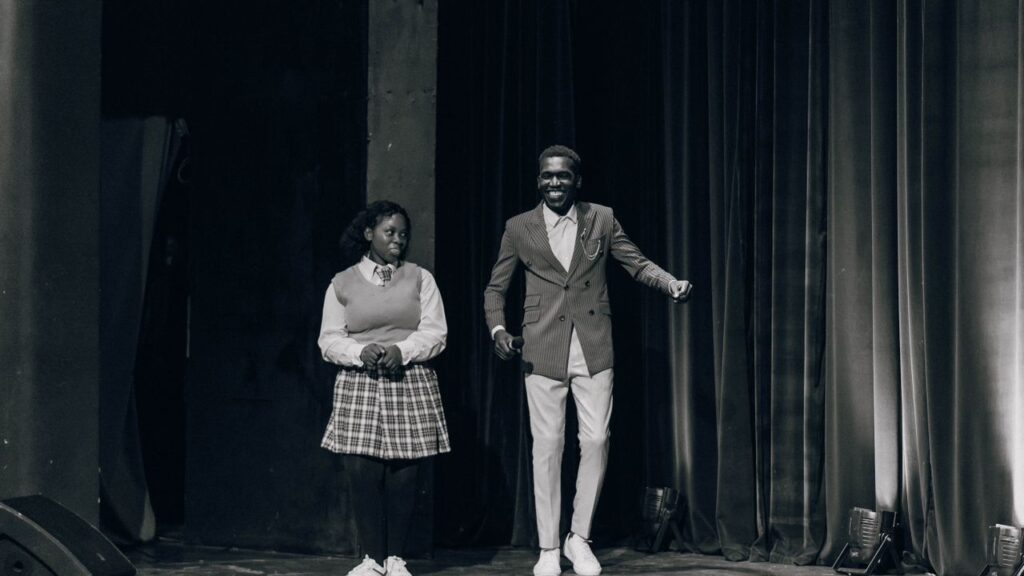
    Last Friday’s first edition of the year at the National Theatre delivered exactly that, and the night’s biggest laugh machine turned out to be someone many didn’t expect: Teacher Sulphur.

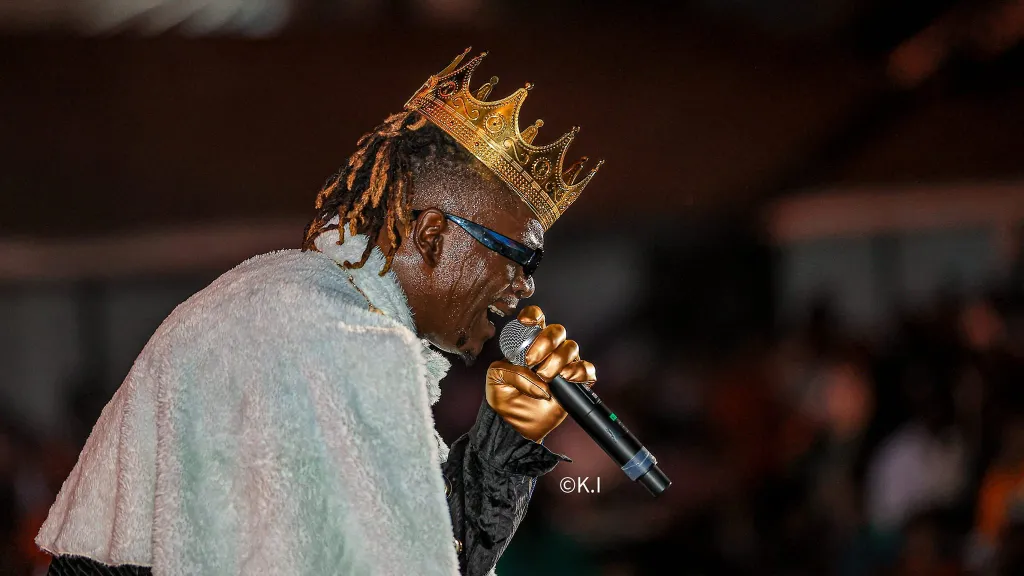
    A Christian comedian who casually introduces himself as an evangelist, events host, and chemistry and mathematics teacher, Teacher Sulphur has also earned a reputation among critics as “the funniest street preacher in the world.” On Friday night, he proved why.

    From the moment he stepped on stage, Sulphur had the audience locked in. His jokes about praise and worship styles in different parts of the country hit home with hilarious accuracy.

    The crowd could easily tell that his comedy was drawn straight from real-life experiences; after all, the man actually preaches on the streets. The audience spent most of his set doubled over in laughter.

    What made the moment even more relatable was the timing. With both Muslims observing Ramadan and Christians in the Lent season, Sulphur’s faith-inspired humor felt oddly appropriate. His playful take on prayer, fasting, and church culture had the audience laughing in agreement rather than discomfort.

    If he didn’t expect to steal the show, he probably realized it by the time he stepped off stage to thunderous applause.

    The night had started earlier with musician Andereya Baguma, who warmed up the crowd at around 8pm with a fusion of African and Western musical sounds.

    His performance featured tracks such as Girl from Kisaasi, Ubuntu, and Tewali, setting the tone for an evening that blended music and comedy.

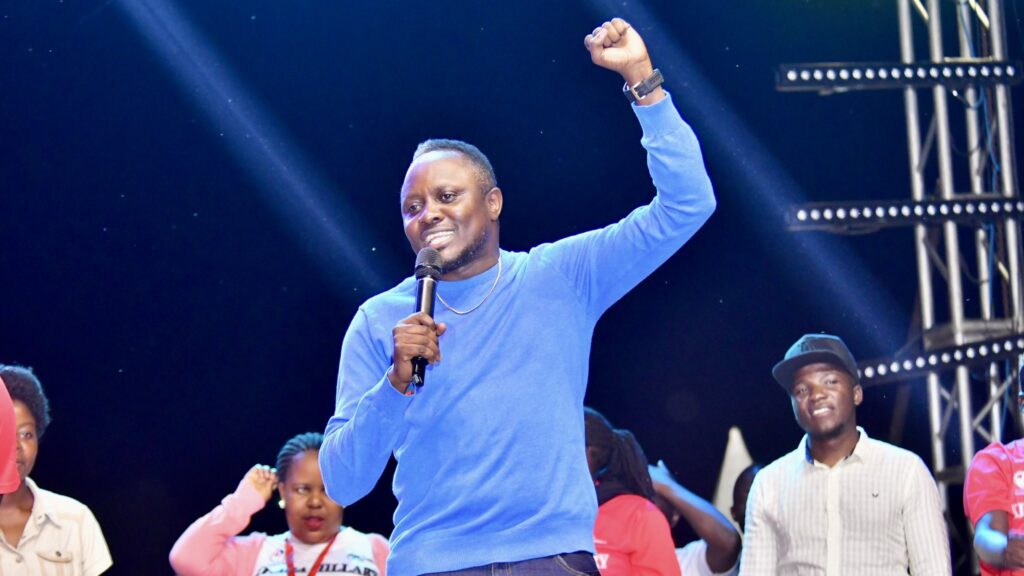
    Shortly after, the comedy segment kicked off with host Okello Okello, who delivered a few warm-up jokes before handing the stage to the evening’s lineup of comedians. Seswa was the first to test the waters, easing the crowd into the rhythm of the show before the night’s later highlights unfolded.

    Despite the fasting season, the show still attracted a lively crowd of revelers, proof that laughter remains a powerful tool in people’s lives.

    This year, however, fans will have fewer chances to catch the show live. Unlike previous seasons, Okello Okello revealed that Comedy Black Friday will have only three editions in 2026, with the next one scheduled for Friday, July 3.

    Before closing the night, Okello also shared another exciting update. His African comedy tour, which kicked off in Nairobi two weeks ago. The tour will take him across the continent with stops planned in Rwanda, Zambia, Tanzania, and South Africa, with more destinations expected to be added.

    Don’t want to miss out on any story? For updates on all Sqoop stories, follow this link on Telegram: https://t.me/Sqoop and Whatsapp: https://whatsapp.com/channel

  • Jowy Landa Shares Her Blueprint for Perfect Collaborations

    Jowy Landa Shares Her Blueprint for Perfect Collaborations

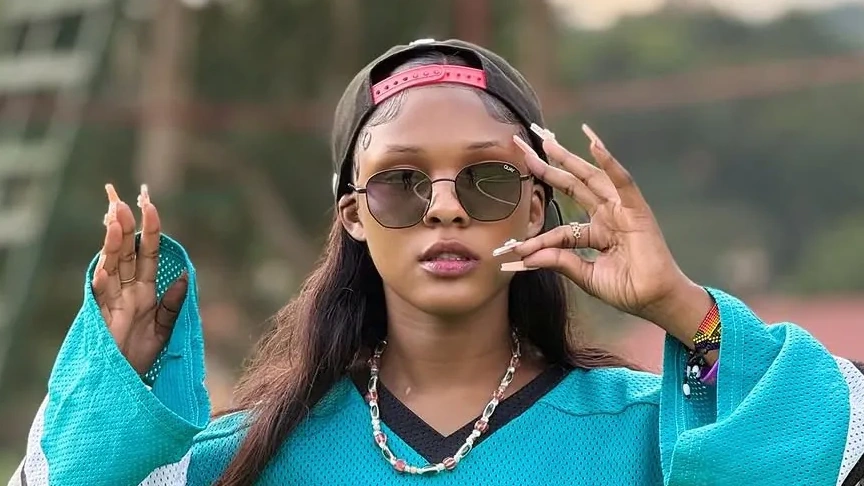
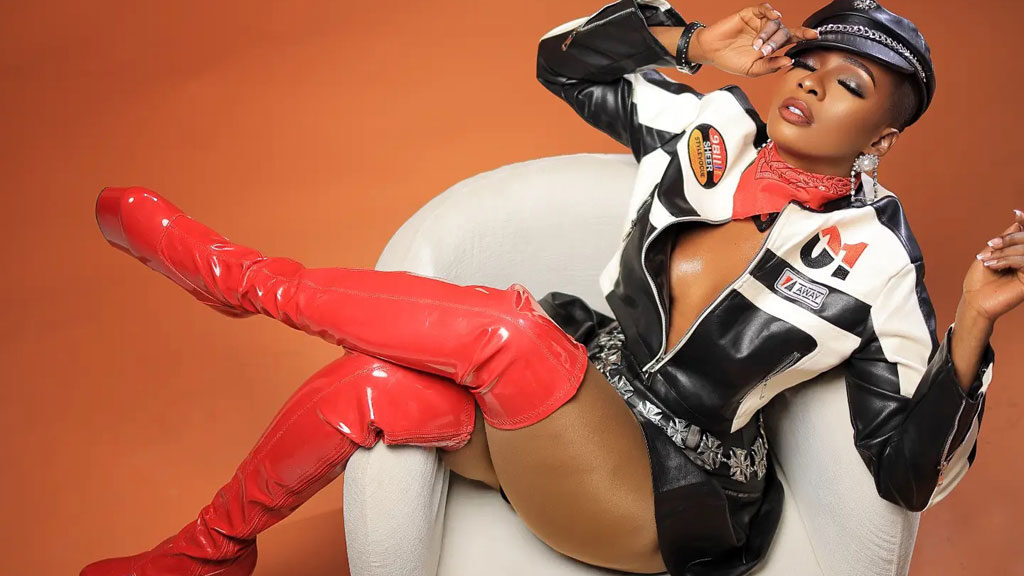
    Ugandan singer Jowy Landa has opened up about how she approaches music collaborations and what makes a partnership work for her.

    Speaking on NOW Media, Jowy said she values genuine connection over money when working with other artistes.

    She explained that paid collaborations can affect the energy she brings into a project, which is why she prefers to build a relationship first.

    We have to appreciate each other. I really do not like someone paying me for a collaboration. It will feel like it is paid for, and I may not put in a lot of effort. We need to first bond and get to know each other. You send me a song and I appreciate it.

    Jowy Landa pointed to her collaboration with Dax Vibez on the song “Fantasy” as an example of how things should work.

    She said their friendship made the process smoother and helped them work better as a team in the studio.

    Just like when I worked with Dax. We went to the studio, Nessim created the song, and they wrote it with Dax, but Dax and I were already friends. We are pushing the song together.

    With that, anyone planning a Jowy Landa feature should think beyond the budget and focus on building a real connection.

  • New Copyright Law won’t reverse old music deals – Hilderman – Sqoop

    New Copyright Law won’t reverse old music deals – Hilderman – Sqoop

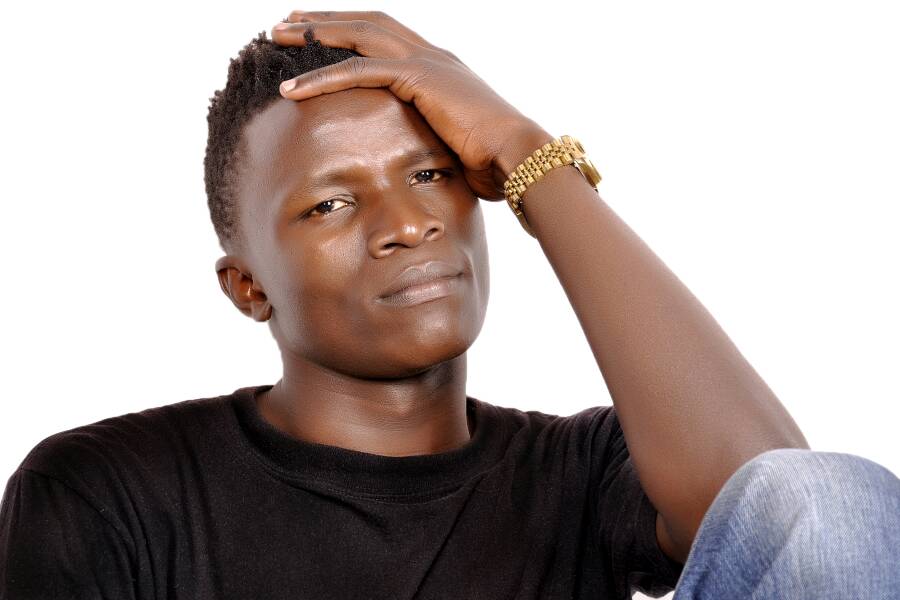
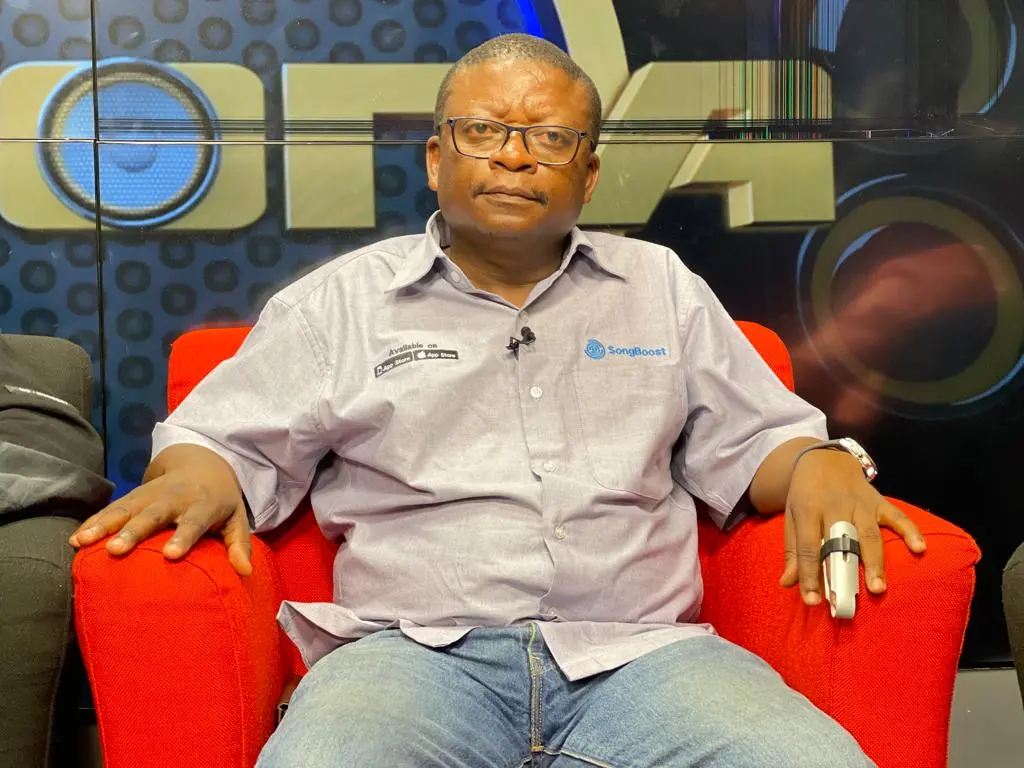
    Singer and legislator Hon Hillary Kiyaga alias Hilderman has clarified that artists who previously signed away their music rights will not be able to reclaim them under the newly passed Copyright and Neighbouring Rights (Amendment) Bill, 2025.

    Speaking on NTV Uganda, Hilderman emphasized that the law will not apply retroactively, meaning agreements signed before its implementation will remain legally binding.

    According to him, artists who transferred ownership of their copyrights under earlier contracts cannot reverse those deals simply because of the new legislation.

    He cited the example of rights acquired by Salim Saleh from producer Kasiwukira, noting that such agreements remain valid because they were concluded before the bill was introduced.

    Hilderman added that even music from legendary artists like Paul Kafeero, whose rights were sold under earlier arrangements, will continue to be governed by those original contracts.

    His remarks appear to contradict earlier comments by Eddy Kenzo, president of the Uganda National Musicians Federation (UNMF), who had suggested that veteran artists could regain ownership of their music once the bill is signed into law.

    However, Hilderman clarified that the legislation will only take effect going forward, from the moment it is assented to by the president and its regulations are implemented.

    He said artists affected by past agreements will instead need to focus on creating new music under better contractual terms.

    “Those artists will need to create new music and start afresh,” he explained.

    Don’t want to miss out on any story? For updates on all Sqoop stories, follow this link on Telegram: https://t.me/Sqoop and Whatsapp: https://whatsapp.com/channel

  • OP-ED: The value of Leadership while conforming to Gendered narratives; An exploratory view of Leadership and Gender

    OP-ED: The value of Leadership while conforming to Gendered narratives; An exploratory view of Leadership and Gender

    By Natukunda Fazirah Magezi

    Leadership in the mainstream perspective takes direction of politics and this in most cases gives birth to rulers and not leaders. This is because anyone who enters leadership using a conventional political Lense, they do so by prioritizing the art of manipulation to convince electorates to vote them into spaces of power and decision making at all costs, such individuals always have well written manifestos but without realistic tangible values. Take for instance a Leader who promises infrastructural development to electorate while knowing that they have limited influence in the budget processes. Such individuals always take advantage of the Nativity and innocence of the voters and the end goal is poor representation or misrepresentation.

    On the contrary, servant leadership is the one that prioritizes service above self and this kind of approach usually runs on honest, achievable, relatable and issue based lived experiences of electorates or voters. It looks beyond exotic manifestos that do not speak to the deep-rooted issues and concerns on the ground. The manifesto guiding such a perspective therefore lies at the interaction of continuity, Competence and Co-existence.

    For continuity, an aspiring candidate shouldn’t posture themselves as the savior of the electorate but rather as the voice that amplifies the unfinished or perhaps the less prioritized issues faced by their voters. This means the candidates manifesto is shaped by the realities on ground hence is key for competence-based leadership.

    Why Leadership and Gender are Intertwined and what Matters?

    Gender is a social construction of differences between men and Women. It places men and Women in distinct boxes of Masculinity and Feminity and it does this through role allocation (often times conceptualized as Gender division of labour), social expectations, career aspirations, geographical positioning or placement etc. This whole system is mediated by the process of socialization which starts from birth where when children are born, and one is female by sex they are brought clothes or gifts in pink colour while boys receive gifts usually in blue and toys such as guns for boys and household dolls for girls to nurture them into care givers as boys are nurtured to be providers and protectors. This process carries on through our life time until death.

    Men and women, boys and girls are highly policed to ensure conformity to their socially ascribed roles, responsibilities, aspirations, social positioning etc. Cases of conformity are rewarded with remarks like “Good girl” while cases of deviation are highly punished with phrases like “Which sort of man or woman are you” This kind of Gender policing thrives on social institutions like family, religion, academia which all play a significant role in ensuring that this gender asymmetry keeps afloat. This kind of system impacts human beings to the extent that gender takes precedence over humanity. This has affected how societies are arranged, how jobs are given, how students are taught, how careers are prescribed and the broader social relations.

    As agender specialist, perspectives that runs on the concept of “Ubuntu” which simply states “I am because you are, if you are therefore, I am”. It is this concept that treasures humanity over any other identity hence such would help us dismantle the gendered asymmetry that has caused historical oppression, discrimination and inequality of distinct social categories of people in the society.

    Do you have a story in your community or an opinion to share with us: Email us at Submit an Article

  • Mark Da Urban Calls for Artiste Sensitization on Copyright Law

    Mark Da Urban Calls for Artiste Sensitization on Copyright Law

    Ugandan dancehall singer Mark Da Urban has weighed in on the newly passed Copyright and Neighbouring Rights (Amendment) Bill 2025, and while he sees potential, he says many artistes could still miss out.

    Parliament passed the law on March 17, 2026, aiming to help creatives earn from their work in a fast growing digital space.

    But Mark believes the real challenge lies in how the information reaches artistes.

    Speaking on Sanyuka TV, he warned that many musicians may not understand the law as it stands.

    It can work, but they need to sensitize people and educate them. They should go to the grassroots because many upcoming musicians come from the ghetto, and their level of education is limited.

    He explained that the legal language used could shut out the very people the law is meant to help.

    The language used by lawyers and MPs can be hard for people in the industry to understand. Musicians from the ghetto need to understand that the law benefits them, but that will only happen through proper sensitization.

    According to Mark, without proper guidance, many artistes may never tap into the benefits.

    Musicians from the ghetto need to understand that the law benefits them, but that will only happen through proper sensitization.

    He also called on industry leaders to take responsibility and reach artistes directly.

    The federation has to teach people about the law, explain how it benefits them, and show them what they need to do to gain from it. Sensitization must start from the bottom, and they should reach out to artistes instead of waiting for artistes to come to them.

    For Mark Da Urban, the law alone is not enough if those it aims to help do not understand it.

    https://www.youtube.com/watch?v=C8zBIlEVpHM

  • From Coffee to Tech: Ambassador Oliver Wonekha outlines new opportunities in Uganda–China partnership

    Uganda and China have built a partnership spanning more than six decades, covering sectors such as infrastructure, energy, agriculture, and education. In an interview with China Africa Talk, Uganda’s Ambassador to China, Oliver Wonekha, explained how the relationship has evolved and where new opportunities lie.

    Reflecting on the history of the partnership, Wonekha noted that ties between the two countries began almost immediately after Uganda gained independence in 1962.

    “It is true that just eight days after Uganda gained independence in 1962, China established diplomatic relations with us. Since then, the relationship has continued to grow from strength to strength. China has been a strategic partner in areas such as peace and security, as well as development, especially infrastructure. Our cooperation also extends to education and health. Over the past 64 years, this has truly been a relationship built on friendship and partnership.”

    She said recent policy directions announced during China’s major political meetings—commonly known as the “Two Sessions”—present fresh opportunities for collaboration. Having attended the event, she emphasised its global significance.

    “Yes, I attended both the opening and closing ceremonies of the National People’s Congress. It is a highly significant annual event. The policies, legislation, and strategies announced are not only relevant to China but also beneficial to the global community, especially Africa, and Uganda in particular. These initiatives emphasize engagement with the world, which presents important opportunities for countries like ours.”

    Wonekha pointed to green energy and digital technology as key areas where Uganda hopes to deepen cooperation with China.

    “These areas are highly relevant to Uganda. China is very advanced in green energy, solar, wind, and hydropower, and we are eager to learn from and collaborate in these fields. In terms of digitalization, we look to China’s progress and hope to share in achieving similar goals. Artificial intelligence is also an area where we see strong potential for cooperation.”

    On trade, she welcomed China’s expanded zero-tariff policy for African exports, describing it as a major boost for Uganda’s economy.

    “This is a significant development. We were already benefiting from 98% tariff-free access, and now it has increased to 100%. This creates substantial opportunities for Uganda to export more products to China. To fully benefit, we must focus on value addition and industrialization. With stronger collaboration, we can export finished goods and take full advantage of this policy.”

    Coffee remains central to Uganda’s export sector, and Wonekha said there is growing interest in the Chinese market.

    “Coffee is a vital export for Uganda. At one point, it contributed up to 95% of our foreign exchange earnings. While our economy has since diversified, coffee remains extremely important.”

    She added that Uganda is promoting its coffee more aggressively in China:

    “We recently launched a coffee promotion campaign in China, including a Uganda-China coffee tour that brought together traders, shop owners, and investors. We hope Chinese partners will not only consume Ugandan coffee but also engage across the entire value chain, from farming to processing, packaging, and marketing. With China’s expertise, we can significantly enhance the value of our products. Agricultural industrialization is a priority for Uganda. We aim to move beyond exporting raw beans and instead produce finished products. Partnerships with China will be key to achieving this goal.”

    Tourism is another area with strong growth potential, especially as China and Africa mark a year dedicated to people-to-people exchanges. Wonekha highlighted Uganda’s unique attractions and ongoing cooperation with Chinese firms.

    “The potential is enormous. Uganda is known as the ‘Pearl of Africa,’ and we are eager to welcome more Chinese tourists. Beyond mountain gorillas, Uganda is home to elephants, buffaloes, crocodiles, and even tree-climbing lions. We also have Lake Victoria, the second-largest freshwater lake in the world, and the source of the River Nile.”

    She also pointed to infrastructure projects supported by Chinese companies:

    “In addition, the Nile is not only a tourist attraction but also a source of hydropower developed in cooperation with Chinese companies such as Sinohydro. Visitors can also see firsthand the impact of Uganda-China cooperation. Culturally, Uganda is incredibly diverse, with over 60 ethnic groups, each with unique traditions in food, dance, and dress. I warmly invite our Chinese friends to come and experience this richness for themselves.”

    Wonekha praised cultural ambassadors like Rose Adikin for strengthening ties between the two countries.

    “Rose is an excellent example. She serves as a cultural bridge, showcasing both China and Uganda to a wide audience. Her work highlights the power of people-to-people exchanges. Beyond that, we also have many students studying in China through scholarships, as well as exchanges between government institutions and the private sector. These interactions are vital and continue to grow.”

    Sharing her personal experience since taking up the role in 2022, she described China’s development as striking and full of lessons for Uganda.

    “China’s development is truly remarkable. Its infrastructure, green energy initiatives, and overall modernization are impressive. What stands out most is China’s willingness to collaborate with countries like Uganda and support our development journey.”

    Looking ahead, Wonekha said her focus is to align Uganda’s development goals with China’s strengths.

    “Uganda’s Vision 2040 focuses on agricultural industrialization, tourism, mineral value addition, and science and technology. These are areas where China excels, and I aim to strengthen cooperation in them. We are already seeing increased investment, including Chinese-run industrial parks in Uganda engaged in manufacturing, textiles, and electronics. I also hope to attract more Chinese tourists to Uganda.”

  • CAF president defends decision to award Morocco the 2025 AFCON title

    Confederation of African Football (CAF) President Patrice Motsepe has justified the controversial decision to hand Morocco the 2025 Africa Cup of Nations title, saying African football’s credibility must come before public opinion.

    The ruling, delivered by CAF’s Appeals Board on 17 March, overturned Senegal’s victory after finding that their players breached competition rules during the final. Senegal had briefly walked off the pitch in protest before returning to complete the match, which they eventually won after extra time.

    Following Morocco’s appeal against earlier disciplinary measures, the Appeals Board ruled that the incident violated CAF regulations and warranted stripping Senegal of the title—awarding it instead to Morocco.

    The decision has sparked widespread backlash, with critics accusing CAF of damaging the integrity of the competition. Questions have also been raised about the independence of the Appeals Board, with some suggesting outside influence in the ruling.

    But Motsepe insists the governing body had no choice but to act firmly.

    He said the events during the final undermined years of work aimed at restoring trust, fairness and professionalism in African football. According to him, CAF is still dealing with long-standing concerns about officiating and governance, and failing to act decisively would have worsened those doubts.

    Motsepe also addressed concerns about the Appeals Board, stressing the need for judicial independence within CAF structures, even as scrutiny grows over how such decisions are made.

    Meanwhile, Senegal is expected to challenge the ruling at the Court of Arbitration for Sport. Motsepe welcomed the move, saying every member association has the right to seek justice through the highest legal channels.

    He added that CAF will respect whatever outcome emerges from the arbitration process, maintaining that no country will receive preferential treatment as the organisation works to strengthen discipline and restore confidence in its competitions.

  • Cindy Sanyu draws a line between Ugandan stars and global icons – Sqoop

    Cindy Sanyu draws a line between Ugandan stars and global icons – Sqoop

    In an industry where global fame often comes wrapped in million-dollar deals and meticulously crafted images, Cindy Sanyu is choosing to spotlight something far less tangible but, in her view, far more valuable.

    Speaking during a TV interview, the Ugandan songstress offered a striking comparison between local artists and international superstars like Rihanna, painting a picture that flips the usual narrative of success on its head.

    “The Rihannas make more money,” Cindy admitted, acknowledging the immense financial power of global music machinery. “But Ugandan artists have more freedom.”

    It’s a statement that cuts deep into the mechanics of the music business. While international stars command massive audiences and endorsement deals, Cindy argues that much of that success comes with control.

    According to her, major label systems often dictate nearly every aspect of an artist’s life: from their sound and public persona to deeply personal decisions like relationships and even when to start a family.

    “The labels decide everything for them—the way they dress, the way they speak, what to say, when to get pregnant and date,” she said.

    In contrast, Uganda’s music scene, though smaller and less lucrative offers artists a kind of creative and personal autonomy that money can’t easily buy. Here, musicians can experiment, speak freely, and shape their own narratives without corporate oversight looming over every move.

    “As a Ugandan, I like my freedom,” she declared.

    Her remarks arrive at a time when Uganda’s entertainment industry is undergoing significant transformation, with ongoing conversations around copyright laws, artist rights, and revenue streams.

    While many local artists are pushing for better financial structures to match their global counterparts, Cindy’s perspective adds an intriguing layer to the debate: what exactly should artists be striving for?

    Don’t want to miss out on any story? For updates on all Sqoop stories, follow this link on Telegram: https://t.me/Sqoop and Whatsapp: https://whatsapp.com/channel

  • Copyright law guidance: Eddy Sendi advises Eddy Kenzo against premature celebration

    Copyright law guidance: Eddy Sendi advises Eddy Kenzo against premature celebration

    Eddy Sendi has advised Eddy Kenzo, the President of the Uganda National Musicians Federation (UNMF), to seek guidance from a legal expert when addressing matters related to copyright law.

    Sendi’s remarks come after Kenzo stated in several interviews that the recently approved Copyright and Neighbouring Rights Bill had immediately come into force.

    While acknowledging that Parliament’s approval is a significant milestone for the creative industry, Sendi clarified that the process is not yet complete.

    According to Sendi, the bill must first be forwarded to the President for assent before it becomes law. After being signed, it is then returned to the Ministry of Justice and Constitutional Affairs, where detailed regulations for enforcement, distribution of royalties, and implementation are developed, often involving agencies such as the Uganda Registration Services Bureau (URSB).

    “I think Eddy Kenzo needs a legal advisor to help him when it comes to certain matters. Besides being the President of UNMF, he is just a singer, and his knowledge is limited to a certain extent. When Parliament approves the law, it is forwarded to the President for signing and later returned to the Ministry of Justice, where regulations on enforcement and distribution are formulated,” Sendi explained.

    He further urged creatives not to celebrate prematurely, noting that the real impact of the law will only be felt after proper regulations are put in place and implemented.

    Sendi also cautioned that artists who are not registered with the Uganda Performing Rights Society (UPRS) may not fully benefit from the law once it takes effect, emphasizing the importance of formal registration and compliance within the industry.

    The post Copyright law guidance: Eddy Sendi advises Eddy Kenzo against premature celebration appeared first on MBU.

  • Jowy Landa keen on collaborating with King Saha

    Jowy Landa keen on collaborating with King Saha

    Jowy Landa has expressed her desire to work on a music project with King Saha, whom she says she admires a lot.

    In an interview, the songstress, who continues to consistently release new music, highlighted King Saha’s vast talent as one of the things she likes about him.

    Jowy Landa said that she would love to work with Saha on new music this year because she believes anything he touches turns into gold.

    Currently, I love King Saha a lot. He is too talented that even if he merely coughs, it turns out awesome. I don’t know what it is about him. I am gonna work with King Saha this year.

    Jowy Landa’s new song with Dax Vibez continues to dominate the airwaves. Another collaborations wouldn’t do us bad.

    The post Jowy Landa keen on collaborating with King Saha appeared first on MBU.

About UGNEWS24

UGNEWS24 is a Uganda local news service, a product of SOLAVIA GROUP LIMITED, Reg. No. 80048169153974.

Registered office

Plot 2335, Buwambo-Katadde-Najjo Road,
Nansana Municipality, Wakiso District, Uganda
P.O. Box 214231, Kampala

© 2026 SOLAVIA GROUP LIMITED. All rights reserved.