Cinderella ‘Cindy’ Sanyu has broken down the key differences between Ugandan artistes and those operating in developed music markets, pointing to structure, control, and freedom.
Speaking during an appearance on Baba TV, the singer explained that the difference begins with how artistes operate in the industry.
While many global stars work within well established label systems, local artistes largely build their careers outside such setups.
They have structures that are connected to labels. Labels do everything. In Uganda, most artistes are not under labels. Most are independent artistes.
She broke down how those setups work, noting that in label driven markets, control starts with management.
Rather than artistes choosing their own teams, labels assign managers and direct an artiste’s path based on strategy and market goals.
In Uganda, however, most artistes take a different route, operating independently and choosing the people they work with.
Being under a label and having management are two different things. A label gives you a manager, you do not come with your own manager. The label looks within itself and selects a suitable person to manage you based on what the artiste does and the market they are targeting. The label is the one that pays you, not the manager. In Uganda, most artistes get a manager, not a label. And we get managers we can fire, but when you are under a label, it is the manager that can fire you, not the other way around.
That difference extends beyond management and shapes how artistes earn and how much control they keep over their careers.
Looking at global stars, Cindy pointed out that higher earnings often come with tighter control from labels.
The structure in the industry Rihanna is in is more rewarding because they get more money, but a Ugandan artiste has more freedom. So it depends on what you want: money or freedom. As a Ugandan, I want my freedom. They do not have freedom because the label decides everything, from how you dress, how you talk in public, and how they market you. It can decide whether you get married or not. It decides whether you can get pregnant or not.
In the end, it comes down to a clear trade off, where more money often means less independence, while Ugandan artistes retain control but earn less.
You may have less freedom but earn more money than a Ugandan artiste. A Ugandan artiste has more freedom. They earn less money, but they can decide what to sing about, how they want to dress, and how they want to present themselves.
For Cindy, that is where the line is drawn.
She prefers to grow at her own pace rather than work within a label system that would limit her personal and creative freedom.
I love my freedom. I do not want to be sold like a packet of salt. I will make my money slowly, and I am not badly off.
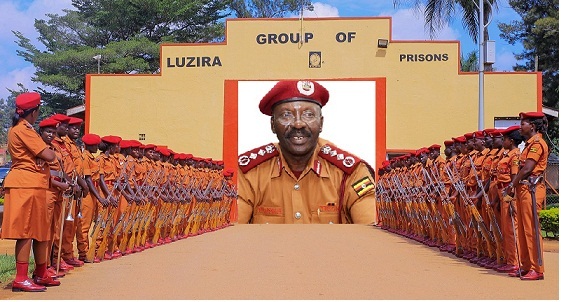
A damning Auditor General’s report has laid bare a shocking cocktail of neglect, poor planning, and institutional failure at the Uganda Prisons Service, where a high-stakes digital system meant to revolutionise prison management has instead stalled in a near-decade-long limbo.
The Prisons Information Management System (PIMS), a flagship project launched in 2015 to digitise inmate records and operations across all 253 prisons in Uganda, has been exposed as a slow-moving disaster—crippled by staff shortages, weak leadership, poor coordination, and glaring governance failures.
According to the Auditor General, the system was designed as a “centralized, real-time, three-tier system” capable of handling everything from prisoner admission and sentence computation to biometrics, health records, rehabilitation, discipline, and discharge. It was supposed to integrate seamlessly with the wider Justice, Law and Order Sector systems to enable real-time data sharing.
But nearly ten years later, the reality is far from that vision.
In one of the most explosive findings, the audit reveals that PIMS is still stuck in a pilot phase—rolled out only at headquarters and just three pilot stations. The report notes with concern that “PIMS has remained in a prolonged pilot phase since its acquisition in 2015,” adding that subsequent rollout efforts “lacked clear timelines, milestones, and measurable targets.”
This staggering delay has forced prisons to continue relying on outdated manual processes, undermining efficiency and opening the door to errors and manipulation. What was meant to be a modern digital backbone has instead become a symbol of stalled reform.
At the centre of this failure is a crippling shortage of ICT personnel. Out of an approved structure of 76 ICT positions, only 24 were filled at the time of audit. The Auditor General warns that “the shortage of ICT staff limits effective system administration, increases IT risk exposure, and constrains the realisation of UPS’s digital transformation objectives.”
In simple terms, the system is underpowered and understaffed—raising serious questions about how such a critical national project was allowed to proceed without the human capacity to sustain it.
Even the few staff in place are not adequately equipped. The audit found that UPS had failed to provide specialised ICT training or professional development for its technical team. There were no structured programmes in systems administration, database management, cybersecurity, or ICT project management.
The consequences are dire. The report warns that this gap “exposes PIMS and other systems to ineffective management and security risks,” painting a picture of a fragile system vulnerable to breakdowns and potential breaches.
The failures don’t stop there.
PIMS, which was supposed to connect seamlessly with key justice sector systems, remains isolated. The audit confirms that it has not been integrated with critical platforms such as ECCMIS, PROCAM, and the National Community Service Programme database. This lack of integration has resulted in “manual data exchange, duplication, and inconsistencies,” effectively defeating the purpose of a centralised digital system.
Inside the prisons system, entire operational areas remain stuck in the past. Six core functions—prison farms, industries, estates, engineering services, stores and ration management, and fleet management—have not been digitised, despite being part of a digitisation strategy dating back to 2012.
The Auditor General points out that this failure “has limited efficiency, transparency, and data-driven decision-making,” exposing a glaring disconnect between policy promises and on-the-ground reality.
Security, a critical pillar of any information system, is also dangerously weak. The audit reveals that UPS has not conducted ICT security awareness training for staff, leaving the system exposed to risks that could go undetected or mishandled.
“The absence of incident awareness training increases the risk of delayed detection and ineffective handling of ICT incidents,” the report warns, highlighting a potentially dangerous blind spot in system security.
And when disaster strikes, the system may not recover.
The audit found serious flaws in the Prisons Service’s disaster recovery and business continuity plans. These plans lack a proper business impact analysis, have not been updated since 2021, and do not include training or testing mechanisms. The report cautions that such weaknesses “may lead to delayed recovery and prolonged service disruption during disasters.”
In a sector where data integrity and operational continuity are critical, this is a ticking time bomb.
Despite these glaring failures, the Auditor General acknowledges that PIMS has shown some promise where it has been piloted, noting that it “has improved the management of inmate records in locations where it has been piloted and demonstrates potential to enhance operational efficiency, data accuracy, and service delivery.”
But that potential remains largely unrealised.
The report delivers a blunt verdict: “the benefits of PIMS have not been fully realised due to weaknesses in IT governance, project management, system rollout, capacity, integration, and operational controls.”
It goes further to underscore the scale of the failure, stating that “PIMS has remained in a prolonged pilot phase for nearly a decade without a clear, funded rollout plan,” while “several critical modules are either underutilised or not operational.”
For a system that was meant to transform prison management nationwide, the findings raise serious accountability questions for those at the helm of the Uganda Prisons Service. How did a project of such magnitude drift for nearly ten years without a clear roadmap? Who signed off on incomplete rollouts? And why were glaring staffing and capacity gaps ignored?
The revelations are likely to ignite public outrage and intensify scrutiny on the leadership of the Prisons Service, as taxpayers demand answers for a system that has consumed time, resources, and promise—but delivered only a fraction of what was envisioned.
What was sold as a digital revolution behind prison walls is now exposed as a slow-burning administrative failure—one that risks undermining not just efficiency, but the very integrity of Uganda’s justice system.
Socialite and businesswoman Zari Hassan has strongly dismissed a widely circulated screenshot claiming she had broken up with her husband Shakib Cham, describing it as fake and warning that legal action could soon follow.
Over the past few days, social media timelines were flooded with a screenshot allegedly showing Zari announcing the end of her marriage to Shakib.
The post quickly sparked speculation among fans and gossip pages, with many debating whether the high-profile couple had quietly called it quits.
But Zari has now come out firmly to shut down the rumors in a video clip.
In a response shared on her social media platforms, the Ugandan-born South Africa–based entrepreneur made it clear that the circulating screenshot did not come from her and should not be treated as authentic.
According to her, the post was fabricated and deliberately spread to mislead the public.
The Young, Famous & African star expressed frustration with the speed at which the alleged breakup news travelled online, saying the situation highlights how easily misinformation can gain traction in the digital age.
Zari also revealed that she is considering legal steps against individuals or pages responsible for spreading false claims in her name.
While she did not single out specific bloggers or platforms, the socialite warned that anyone pushing unverified stories about her relationship risks facing legal consequences.
Her response has since shifted the conversation online, with supporters urging bloggers to verify information before sharing it, while others criticized the culture of circulating unconfirmed celebrity gossip.
Zari and Shakib, whose relationship has often attracted intense public attention, tied the knot in a private ceremony in 2023. Since then, the couple has frequently shared glimpses of their life together on social media, though they have also been the subject of recurring breakup speculation.
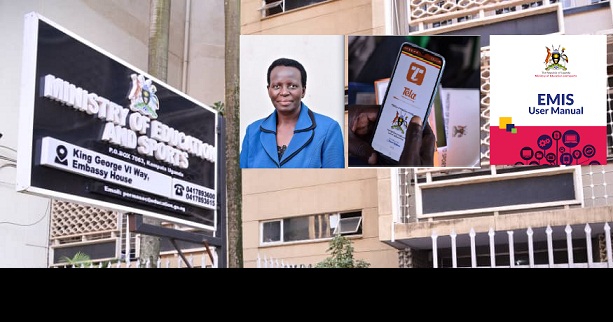
A bombshell audit has ripped through the Ministry of Education and Sports, exposing a staggering trail of weak leadership, poor planning, and a digital mess that insiders say has crippled Uganda’s ambitious education technology revolution. Systems that were sold as game-changers are now at the centre of a storm, with the Auditor General laying bare deep cracks in the Education Management Information System (EMIS) and the Teacher Effectiveness and Learner Achievement (TELA) platform.
The audit paints a picture of a Ministry asleep at the wheel, where critical systems meant to track learners, teachers, and performance across the country are instead riddled with inefficiencies, gaps, and outright failures. These platforms, described as “core Government of Uganda digital platforms,” were supposed to “support evidence-based planning, service delivery, and accountability in the education sector.” Instead, what has emerged is a tale of fragmentation, duplication, and alarming governance failures.
At the heart of the mess is the failure to integrate EMIS with key systems like UNEB, NIRA, TMIS, and even TELA itself—an omission that has left education data scattered and unreliable. The Auditor General did not mince words, warning that “the lack of functional interfaces has resulted in fragmented datasets, reliance on manual processes, and reduced reliability of education statistics.” In simple terms, the Ministry built a digital engine—but forgot to connect the parts.
Even more shocking is the revelation that the Ministry is running multiple overlapping systems with similar data, effectively duplicating work while draining public resources. EMIS, TELA, TMIS, TVET MIS, and e-Inspection are all operating in silos, a situation the audit describes as leading to “duplicated efforts, inefficient use of public resources, and inconsistent education sector data.” For a sector already struggling with funding gaps, this is nothing short of a scandal.
But the rot goes deeper. The audit exposes how the Ministry has effectively handed over control of EMIS to external vendors, with its own staff sidelined. “Critical system administration and configuration functions for EMIS remain largely under the control of the system vendor,” the report reveals, warning of dangerous “vendor lock-in risks” and a complete erosion of internal capacity. In effect, the Ministry cannot fully control the very system it paid for.
Accountability structures are also in tatters. The Auditor General found that changes to both EMIS and TELA were being made without any formal framework, stating that they were implemented “without a standardised, Ministry-wide change management policy aligned to recognised frameworks.” This lack of structure has weakened oversight, leaving the systems vulnerable to errors, manipulation, and confusion.
The governance vacuum is equally alarming. The Ministry lacked fully operational IT steering and strategy committees, clear policies, and defined roles, leading to what the audit calls “fragmented decision-making and misaligned IT investments.” In a sector where data should drive decisions, the absence of leadership has turned technology into a liability instead of an asset.
Inside the Ministry, chaos appears to reign, with parallel IT units operating independently of each other. The audit notes that “project-based IT units operating outside the mainstream IT department” have created “blurred accountability, inefficiencies, and inconsistent oversight.” In other words, too many cooks—and none clearly in charge.
Perhaps most embarrassing is the revelation that several key EMIS modules simply don’t work. Critical components like Licensing, Monitoring and Evaluation, Help Desk, Messaging, and school-level data modules were found to be non-operational. This means a system designed as the backbone of education data is running with missing organs. The Auditor General demanded that the Ministry “enforce the full implementation and activation of all contracted EMIS modules,” a clear sign that taxpayers may not be getting value for money.
The TELA system, once hyped as a revolutionary tool to fight teacher absenteeism, is also under fire. Shockingly, the Ministry rolled it out without even preparing a proper business case. The audit slams this, noting that there was “limited assessment of value for money, sustainability, and alignment with existing systems.” For a project costing billions, this is a glaring oversight.
Worse still, TELA was deployed despite known technical defects. The Auditor General confirmed that the system was rolled out “with known technical defects that affected system stability, user confidence, and effective utilisation.” In essence, a broken system was pushed into schools, raising questions about who approved it and why.
In a twist that raises serious integrity concerns, TELA has been used by unlicensed schools, undermining regulatory controls. The audit warns that this “undermines regulatory controls and the integrity of captured data,” meaning the very data meant to guide policy could be compromised.
And in what critics are calling a fatal blow to the system’s credibility, GPS and geofencing features—key tools meant to verify teacher presence—were switched off. The report states bluntly that “the deactivation of GPS and geofencing features weakened the system’s ability to independently verify teacher presence and increased the risk of manipulation of attendance records.” The very feature designed to catch absentee teachers was effectively neutralised.
Support systems are also broken. Schools using TELA have no functional way to report issues, with the help-request module found to be non-operational. This has left users stranded, with the audit noting it has “limited visibility over user challenges and system support effectiveness.”
This damning report casts a long shadow over both former Permanent Secretary Ketty Lamaro, under whose tenure the system was rolled out in 2023, and her successor Kedrace Tiryagyenda, who now faces the uphill task of cleaning up the mess.
Ironically, when TELA was launched, it was marketed as a silver bullet to end teacher absenteeism, a long-standing crisis in Uganda’s education system. Officials promised it would provide “real-time information and a clear picture of what is happening at schools,” using smartphones with GPS and biometric features to track attendance and lesson delivery.
Education officials like Frances Atima had hailed it as transformative, declaring, “Before we talk about the Inspectors of Schools, there should be a strong school-based inspection.” She insisted, “We have seen this system working in private schools. Why not public schools?”
The system was designed to replace the traditional attendance book, long accused of being manipulated. Teachers would clock in using facial recognition and fingerprints, while headteachers would upload real-time lesson data every 40 minutes. “The system is based on GPS. We can determine that someone is physically visiting classrooms,” Atima explained at the time.
But even before rollout, sceptics warned of trouble. Education consultant Patrick Kaboyo cautioned that technology alone would not fix systemic problems, arguing that communities must be empowered first. Teachers’ union leader Filbert Baguma was even more blunt, warning that without addressing root causes, such interventions could “end up as another failed project.”
Those warnings now appear prophetic.
The audit concludes with a chilling warning: unless urgent action is taken, the Ministry risks “under-realising the benefits of these systems, and compromising data integrity.” For a sector that relies on accurate data to plan budgets, deploy teachers, and track performance, the consequences could be devastating.
What was meant to be a digital revolution in education is now teetering on the edge of becoming one of the biggest administrative failures in recent years—raising one burning question: who will be held accountable for this costly technological mess?
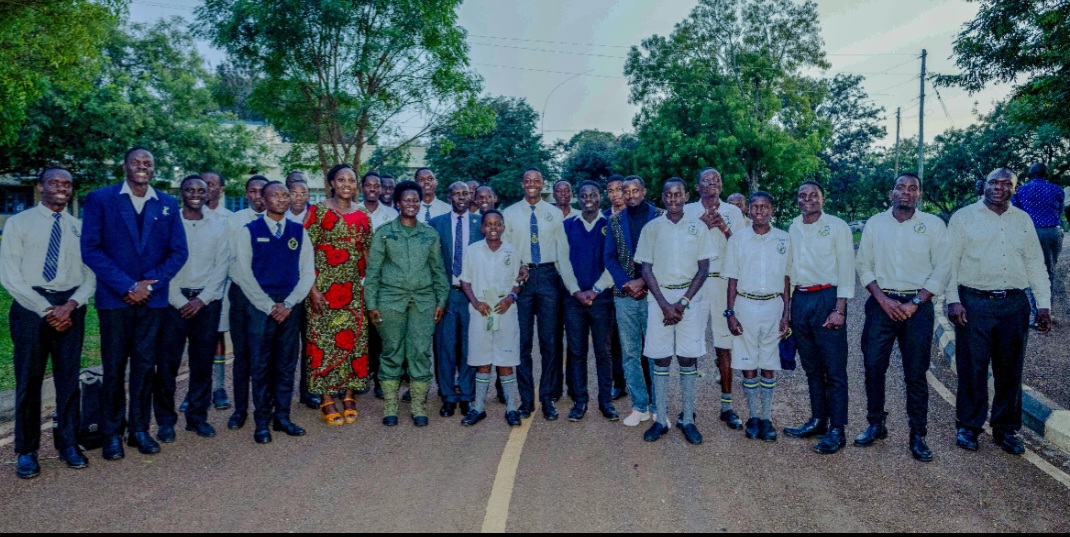
JINJA — The Commissioner for the National Secretariat for Patriotism Corps at State House, Ms. Hellen Seku yesterday visited Busoga College, Mwiri where she conducted an evaluation and monitoring exercise.
In her address to students and staff, Ms. Seku underscored the importance of awareness about government support in schools, urging administrators to ensure that learners understand the role of the state in funding education.
“The headteacher and team should highlight what the government provides. If students are not informed, they may misunderstand the support they receive,” she said.
Ms. Seku also commended the school for its environmental conservation efforts, noting innovative initiatives such as the use of recycled bottles to create baskets and perimeter structures, as well as the planting of fruit trees across the compound.
She encouraged students to maintain cleanliness and sustainability, warning against littering and wastefulness.
“Eat what you can finish and dispose of waste properly. Protecting the environment helps us avoid excessive heat,” she advised.
A significant portion of her message focused on moral values, particularly faith and discipline.
Ms. Seku emphasized that reverence for God is foundational to wisdom and success, urging students to avoid immoral behavior and uphold integrity in their daily lives.
“We must love God because the fear of God is the beginning of wisdom. A person who fears God will avoid wrongdoing,” she said, reinforcing the role of religious values in shaping responsible citizens.
She further highlighted patriotism and hard work as central pillars of national development, reminding students of their constitutional duties under Article 17 to remain loyal, protect the country, and contribute to societal progress.
“There is only one Uganda — the Pearl of Africa. We must be patriotic and work hard to build our nation,” Ms. Seku stated.
The commissioner also cautioned students against distractions, urging them to prioritize their studies and avoid behaviors that could derail their academic and personal development.
Watolya Musa, a student at Mwiri appealed to President Yoweri Kaguta Museveni to consider appointing a Presidential Advisor specifically for secondary schools.
He asked the commissioner to relay his appeal to President Museveni, emphasizing the need for increased attention to secondary education.
The visit forms part of ongoing efforts by the National Secretariat for Patriotism Corps to instill discipline, civic responsibility, and national pride among young people across the country.
Do you have a story in your community or an opinion to share with us: Email us at Submit an Article
When Uganda went to the polls on January 15, 2026, the outcome in Sebei’s Kween District was nothing short of emphatic. President Yoweri Kaguta Museveni secured 34,623 votes, representing 85.65% of the total tally, while his main challenger, Robert Kyagulanyi Ssentamu—better known as Bobi Wine—managed only 4,242 votes (10.54%). This marked an improvement from the 2021 elections, when Museveni polled 27,467 votes (83.5%) against Kyagulanyi’s 5,419 (16.58%).
The National Resistance Movement (NRM) swept all three parliamentary seats, the district chairperson position, and the majority of councilor posts. At the sub-county level, fifteen of nineteen LCIII chairpersons were NRM, with the remainder leaning toward the ruling party. For the opposition, it was a complete rout; for the NRM, a reaffirmation of dominance in Sebei. Behind this landslide stood the quiet but firm hand of Hope Atuheire, the Resident District Commissioner (RDC) of Kween.
Atuheire’s journey to this role is remarkable. On March 23, 2022, she traded her police uniform for the RDC’s office, ending a distinguished 30-year career in the Uganda Police Force. Rising through the ranks, she served in Special Branch, Crime Intelligence, and later as Commandant at Nsambya Police Barracks. Her appointment formed part of President Museveni’s reshuffle of RDCs, underscoring the importance of security-conscious leadership at the district level.
Yet she quickly discovered that the RDC role was not simply an extension of police work. “Police work and the RDC role are not the same, despite both involving security,” she reflects. “As an RDC, you are expected to manage security while maintaining a civilian approach as a representative of the President, who is a politician. That makes all the difference.”
Her first assignment in Kween was to scrutinize the Parish Development Model (PDM), a flagship government program aimed at transitioning Ugandans from subsistence farming into the money economy. What she found was troubling: extortion by officials, nepotism in beneficiary selection, and widespread misinformation. Some locals believed PDM funds were a “thank you” for supporting the NRM rather than an empowerment initiative, while others were coerced into paying bribes to be included on beneficiary lists.
Atuheire moved swiftly—organizing community barazas, radio sensitization campaigns, and direct interventions. One case stood out: Mama Gogo Kisa of Aromani village, who reported officials demanding UGX 100,000 before listing her as a beneficiary. Following Atuheire’s intervention, she received her funds, bought a cow, and became a model success story. When Museveni toured Kween in 2025, Mama Kisa was showcased as a shining example of PDM’s impact. Such interventions restored public confidence and turned potential discontent into renewed support for the ruling party.
Beyond fixing government programs, Atuheire spearheaded voter registration drives, ensuring eligible citizens were enrolled on the Electoral Commission’s rolls. She also emphasized peaceful NRM primaries, insisting that flag bearers reflect the genuine will of the voters. This minimized internal disputes and allowed candidates to campaign as a united front.
“NRM flag bearers in Kween moved and campaigned together as a team, which made it easier for voters to maintain unified support,” she notes. Constant engagement with candidates at all levels reinforced this cohesion, ultimately benefiting Museveni. Analysts argue that such unity is critical in districts like Kween, where opposition parties often seek to exploit divisions within the ruling party.
Another factor was the expansion of the RDC office. The addition of Assistant RDCs increased capacity, enabling broader coverage across the district. “It was very hard for one RDC and a deputy to cover every part of the district, but with more staff, work was simplified. Monitoring government programs became easier, and people’s concerns could be addressed more effectively,” she explains.
Support from the Office of the President, under Minister Milly Babalanda, proved pivotal. Improved staff welfare, transport facilitation, and allowances for outreach programs boosted morale and efficiency. Visits by senior officials, including Permanent Secretary Hajji Yunus Kakande, provided guidance and encouragement. In November 2025, Minister Babalanda personally visited Kween, persuading scores of former opposition supporters to cross to the NRM—a symbolic and strategic gain that further consolidated the party’s base.
Atuheire also cites her cordial working relationship with area MP Hon. William Chemonges as a key enabler. She notes that the MP maintained consistent presence in the district, strengthening NRM cohesion and mobilization.
Elections in Uganda are often tense, marked by fears of clashes and allegations of malpractice. Yet Kween remained largely peaceful. Atuheire attributes this to clear role demarcation. “In Kween, everyone knew their role and stuck to it. Our mandate was to secure the process, not to announce winners—and we respected that.”
Extensive sensitization campaigns discouraged violence and disruptions. Radio talk shows, community meetings, and stakeholder engagements emphasized peace, while candidates and opinion leaders reinforced the message. The result was a district that navigated the electoral period without major incidents—contrasting sharply with reports of unrest elsewhere.
Kween’s story mirrors the broader Sebei sub-region, where Museveni has historically enjoyed strong support. Analysts point to several factors: reliance on government programs, the NRM’s deep organizational roots, and the role of RDCs in bridging the gap between central government and local communities.
Nationally, Museveni’s 2026 victory followed similar patterns. According to the Electoral Commission, he secured over 60% of the vote nationwide, maintaining dominance despite challenges from a youthful opposition. Programs such as PDM, Emyooga, and infrastructure development were frequently cited as drivers of continued support. In districts like Kween, however, the margin was particularly striking—testament to effective local mobilization and leadership.
For Atuheire, the journey has been transformative. “I extend my appreciation to the President for identifying me among many Ugandans and giving me the opportunity to serve in this capacity. It has helped me grow into a better person,” she says.
Her story reflects the evolving role of RDCs in Uganda’s political landscape. Once seen primarily as security overseers, they are now central to political mobilization, program monitoring, and community engagement. Atuheire’s blend of police discipline and political sensitivity exemplifies this shift. Her ability to identify gaps, intervene decisively, and mobilize communities has made her a key figure in the NRM’s electoral machinery.
Museveni’s landslide in Kween was no accident. It was the result of deliberate strategies: fixing government programs, ensuring peaceful primaries, mobilizing voters, expanding institutional capacity, and maintaining peace. At the heart of these efforts was Hope Atuheire—the ex-police officer turned RDC—whose vigilance and dedication helped transform potential discontent into overwhelming support.
As Uganda looks ahead, the lessons from Kween are clear: electoral victories are not secured in Kampala alone, but in villages and sub-counties—through programs that impact lives and leaders who listen. For Museveni and the NRM, the 2026 elections reaffirmed their dominance. For Atuheire, they cemented her reputation as one of the President’s most trusted lieutenants.
In her own words: “Police work taught me discipline. The RDC role taught me patience and engagement. Together, they have shown me that leadership is about service—and service is the true secret behind victory.”
Do you have a story in your community or an opinion to share with us: Email us at Submit an Article
When Uganda went to the polls on January 15, 2026, the outcome in Sebei’s Kween District was nothing short of emphatic. President Yoweri Kaguta Museveni secured 34,623 votes, representing 85.65% of the total tally, while his main challenger Robert Kyagulanyi Ssentamu, better known as Bobi Wine, managed only 4,242 votes, translating to 10.54%. This was an improvement from the 2021 elections, when Museveni polled 27,467 votes (83.5%) against Kyagulanyi’s 5,419 (16.58%). The National Resistance Movement (NRM) swept all three parliamentary seats, the district chairperson position, and the majority of councilors. At the sub-county level, fifteen of nineteen LCIII chairpersons were NRM, with the remainder leaning toward the ruling party. For the opposition, it was a complete rout; for the NRM, it was a reaffirmation of dominance in Sebei. Behind this landslide stood the quiet but firm hand of Hope Atuheire, the Resident District Commissioner of Kween.
Atuheire’s journey to this role is remarkable. On March 23, 2022, she traded her police uniform for the RDC’s office, ending a distinguished 30-year career in the Uganda Police Force. Rising through the ranks, she had served in Special Branch, Crime Intelligence, and eventually as Commandant at Nsambya Police Barracks. Her appointment was part of President Museveni’s reshuffle of RDCs, a move that underscored the importance of security-conscious leadership at the district level. Yet she quickly discovered that the RDC role was not simply an extension of her police work. “Police work and the RDC role are not the same despite both having the element of security,” she reflects. “As an RDC, you are expected to man security while maintaining a completely civilian conduct as a representative of the President who is a politician. That made all the difference.”
Her first assignment in Kween was to scrutinize the Parish Development Model (PDM), a flagship government program designed to lift millions of Ugandans out of subsistence farming into the money economy. What she found was troubling: extortion by officials, nepotism in beneficiary selection, and widespread misinformation. Some locals believed the PDM funds were a “thank you” from government for supporting NRM, rather than an empowerment initiative. Others were coerced into paying bribes to be included on beneficiary lists. Atuheire moved swiftly, organizing community barazas, radio sensitizations, and direct interventions. One story stands out: Mama Gogo Kisa of Aromani village, who defied intimidation and reported officials demanding 100,000 shillings before listing her as a beneficiary. With Atuheire’s intervention, she received her funds, bought a cow, and became a model success story. When Museveni toured Kween in 2025, Mama Kisa was showcased as a shining example of the PDM’s impact. Such interventions restored public confidence and turned potential discontent into renewed support for the ruling party.
Beyond fixing government programs, Atuheire spearheaded voter registration drives, ensuring that eligible citizens were on the Electoral Commission’s rolls. She emphasized peaceful NRM primaries, insisting that flagbearers reflect the genuine will of voters. This minimized internal disputes and allowed NRM candidates to campaign as a united front. “NRM flagbearers in Kween moved and campaigned together as a team, which made it easy for voters to keep their support united,” she notes. Constant engagement with candidates at all levels reinforced this cohesion, ultimately benefitting Museveni himself. Analysts point out that such unity was critical in districts like Kween, where opposition parties often rely on exploiting internal divisions within the ruling party.
Another factor was the expansion of the RDC office. The addition of Assistant RDCs increased capacity, allowing for broader coverage of the district. “It was very hard for one RDC and a deputy to be in every part of the district, but with more staff, work was simplified. Monitoring and supervision of government programs became easier, and people’s concerns could now be addressed adequately,” she explains. Support from the Office of the President, under Minister Milly Babalanda, also proved pivotal. Enhanced staff welfare, transport facilitation, and allowances for outreach programs boosted morale and efficiency. Visits by top officials, including Permanent Secretary Hajji Yunus Kakande, provided encouragement and guidance. In November 2025, Minister Babalanda personally visited Kween, persuading scores of former opposition supporters to cross to NRM—a symbolic and strategic victory that further consolidated the ruling party’s base.
Elections in Uganda are often tense, with fears of clashes and allegations of malpractice. Yet Kween remained largely peaceful. Atuheire attributes this to clear role demarcation: “In Kween, everyone knew their role and stuck to it. We knew our mandate was securing the process, not announcing winners, and we stuck to that.” Massive sensitization drives discouraged riots and disruptions. Radio talk shows and community meetings emphasized peace, while stakeholders—candidates, opinion leaders, and elected officials—were engaged to reinforce stability. The result was a district that navigated the electoral period without major incidents, a stark contrast to reports of unrest elsewhere.
Kween’s story mirrors the broader Sebei sub-region, where Museveni’s support has historically been strong. Analysts point to several factors: the region’s reliance on government programs, the NRM’s deep organizational roots, and the RDCs’ role in bridging the gap between central government and local communities. Nationally, Museveni’s 2026 victory was characterized by similar patterns. According to the Electoral Commission, he secured over 60% of the vote nationwide, maintaining his dominance despite challenges from a youthful opposition. Programs like PDM, Emyooga, and infrastructure projects were repeatedly cited as reasons for continued support. In districts like Kween, however, the margin was particularly striking—testament to the effectiveness of local mobilization and leadership.
For Atuheire, the journey has been transformative. “I extend appreciation to the President for identifying me among many Ugandans and giving me an opportunity to serve in this capacity. It has equipped me to become a better person,” she says with gratitude. Her story is not just about one district or one election. It is about the evolving role of RDCs in Uganda’s political landscape. Once seen primarily as security overseers, they are now central to political mobilization, program monitoring, and community engagement. Atuheire’s blend of police discipline and political sensitivity exemplifies this shift. Her ability to detect gaps, intervene decisively, and mobilize communities has made her a key player in the NRM’s electoral machinery.
Museveni’s landslide in Kween was not accidental. It was the product of deliberate strategies: fixing government programs, ensuring peaceful primaries, mobilizing voters, expanding institutional capacity, and maintaining peace. At the heart of these efforts was Hope Atuheire, the ex-cop turned RDC, whose vigilance and dedication helped transform potential discontent into overwhelming support. As Uganda looks ahead, the lessons from Kween are clear. Electoral victories are not won in Kampala alone; they are secured in villages and sub-counties, through programs that touch lives and leaders who listen. For Museveni and the NRM, the 2026 elections reaffirmed their dominance. For Atuheire, they cemented her reputation as one of the President’s most trusted lieutenants. In her own words: “Police work taught me discipline. The RDC role taught me patience and engagement. Together, they have taught me that leadership is about service—and service is the true secret behind victory.”
Do you have a story in your community or an opinion to share with us: Email us at Submit an Article
Doja Cat stepped onto the stage in Kigali and delivered a performance that quickly caught attention across the region.
The show, held at BK Arena during the Move Afrika Festival, marked her first appearance in Africa and drew thousands of excited fans.
She performed some of her most popular songs, with the crowd singing along and staying engaged from start to finish. The energy inside the arena remained high as fans enjoyed every moment of the set.
The event also highlighted a bigger goal. Move Afrika, backed by Global Citizen, aims to support local talent and grow Africa’s live music industry by creating more opportunities behind the scenes.
The concert has since sparked strong reactions online, with many describing it as an important moment for Rwanda’s entertainment scene.
As international acts continue to explore new audiences, this performance shows how Africa is becoming a key destination for major live events.
Police in Nansana have made a major breakthrough in cracking down on a series of robberies targeting bank customers in the area.
According to police spokesperson Luke Owoyesigyire, four suspects were arrested during operations carried out between 10 and 14 March 2026. The arrests are linked to attacks on people leaving banking halls with cash.
Investigators say the suspects would lie in wait for customers, then ambush and rob them of money and other valuables shortly after they left the bank. During questioning, the suspects reportedly admitted to being involved in several such robberies, especially around Base Hotel and nearby banking areas in Nansana.
Police have also established that the group used pangas during the attacks and relied on boda bodas to quickly escape from the scenes.
Investigations are still ongoing to uncover the full extent of the network and to track down other suspects who may still be on the run.
Authorities are now advising the public to be extra cautious when withdrawing large sums of money, including seeking security escorts or using safer ways to transport cash.
The most prestigious tournament in club football will light up the sporting midweek with thrilling clashes between giants. The results of the matches will determine the continent’s best 8 teams, who will continue their battle for the title. Be at the heart of the hottest football events with the best sports betting site 1xBet, and if you follow this link, you’ll find even more interesting content. Remember that analysis of statistics and teams’ form is an important part of responsible gambling.
Chelsea vs Paris Saint-Germain, March 17
The teams put on a thrilling goalscoring show at the Parc des Princes, which ended in a crushing defeat for the visitors. As expected, the Blues’ fast counterattacks proved a powerful weapon against the Parisians, but silly mistakes in defense once again played a cruel trick on the London club.
Luis Enrique once again read the game perfectly, turning the match around with some shrewd substitutions. It took Khvicha Kvaratskhelia only 20 minutes to score a brace and provide an assist. In the end, the final whistle saw a comfortable 5-2 lead for Paris Saint-Germain on the scoreboard, and only a miracle can save Chelsea in this two-legged tie.
W1 – 2.134, X – 4.4, W2 – 3.13
Manchester City vs Real Madrid, March 17
Pep Guardiola’s side had been in great form and went into the match at the Bernabéu as favorites, but Real Madrid had other ideas for the evening. While fans debated whether Kylian Mbappé, Vinícius Júnior or Jude Bellingham should be considered Los Blancos’ main star, the hard-working Uruguayan Federico Valverde scored a hat-trick, almost single-handedly dismantling one of the best EPL teams.
After the game, Álvaro Arbeloa said, “Real Madrid don’t celebrate victories in single matches; they celebrate winning trophies.” The Spanish coach realizes that Manchester City are very dangerous and could stage an incredible comeback with the support of the Etihad crowd.
W1 – 1.514, X – 5.79, W2 – 5.48
Barcelona vs Newcastle United, March 18
Thanks to a brace from Marcus Rashford, the Blaugranas comfortably beat Newcastle in the league phase, but this time the Catalans were unable to repeat their success. At the same time, the Magpies exceeded all expectations. Intense pressing, well-rehearsed set-pieces and fast counterattacks – all these factors helped Eddie Howe stifle the visitors’ potential.
However, the home team’s finishing let them down. They only managed to open the scoring in the final minutes of the game, when Harvey Barnes finished off a pass from the wing. But Newcastle failed to hold on to a crucial victory. In stoppage time, Dani Olmo beat Malick Thiaw and won a penalty, which Lamine Yamal converted with ease.
The Magpies have had an excellent European campaign, but they have never reached the Champions League quarter-finals and have never defeated Barcelona at Camp Nou. That’s too many “never” for a single match.
W1 – 1.626, X – 4.825, W2 – 5.18
Liverpool vs Galatasaray, March 18
Arne Slot must surely have thought that lightning doesn’t strike twice in the same place, but miracles keep happening to the Merseysiders in Istanbul. Liverpool have lost to Galatasaray away for the second time in this Champions League campaign, and the decisive chapter of this duel will be written at Anfield.
Due to an unfortunate turn of events, the Lions have lost their key center-back – Davinson Sánchez is suspended for the second leg after receiving too many yellow cards. Liverpool, on the other hand, are riding high: Florian Wirtz has fully recovered from injury, and Alisson may be available as well. But the Reds have been very unpredictable this season, so anything could happen in the return leg.
W1 – 1.305, X – 6.44, W2 – 10.6
The pre-match analysis from the best sports betting site 1xBet and useful content via this link will help you get ready for the decisive Champions League matches. Remember that responsible gambling gives you a unique chance to fully enjoy the battles between football giants.
Related
About UGNEWS24
UGNEWS24 is a Uganda local news service, a product of
SOLAVIA GROUP LIMITED,
Reg. No. 80048169153974.