Blog

  • SDG DREAM STALLS! Chaos at OPM as Uganda Slips to 142nd Globally, Taskforces Go Silent, Districts Clueless… Time to Crack the Whip On SDG Secretariat’s Byamugisha?

    SDG DREAM STALLS! Chaos at OPM as Uganda Slips to 142nd Globally, Taskforces Go Silent, Districts Clueless… Time to Crack the Whip On SDG Secretariat’s Byamugisha?

    KAMPALA — Uganda’s ambitious march toward the global Sustainable Development Goals (SDGs) is facing uncomfortable scrutiny after a damning Value for Money audit exposed serious coordination failures within the Office of the Prime Minister, piling pressure on the leadership of the country’s SDG Secretariat.

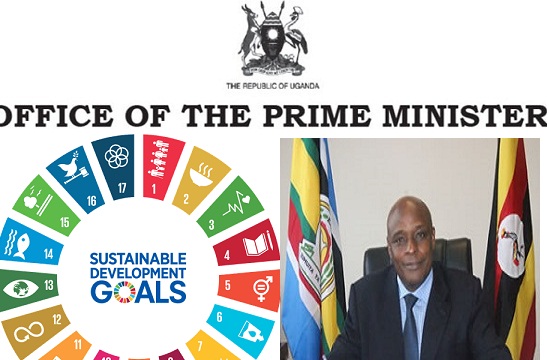
    At the centre of the unfolding accountability debate is Albert Byamugisha, the Senior Technical Adviser and Head of the National SDG Secretariat, the technical unit tasked with coordinating Uganda’s implementation of the Sustainable Development Goals across government institutions, development partners and local governments.

    But according to the latest audit by the Office of the Auditor General of Uganda, the system meant to drive the country’s SDG agenda is struggling with weak coordination, inactive oversight structures and limited awareness at grassroots level.

    Uganda committed to implementing the SDGs in 2015 when world leaders adopted the 2030 Agenda for Sustainable Development. The goals were subsequently integrated into national development frameworks such as the National Development Plans and aligned with Uganda’s Vision 2040.

    The Office of the Prime Minister was designated as the lead institution responsible for coordinating the implementation of the goals, bringing together government ministries, development partners and non-state actors through coordination structures and Technical Working Groups.

    Between the financial years 2020/2021 and 2024/2025, government allocated UGX 31.4 billion to strengthen SDG coordination and monitoring through the Strategic Coordination and Implementation Department and the Monitoring and Evaluation Department within OPM.

    On paper, Uganda has remained active in global reporting processes and has already presented three Voluntary National Reviews to the international community.

    But the audit now suggests that behind the polished reports lies a troubling operational reality.

    According to the 2025 UN Sustainable Development Report, Uganda currently ranks 142 out of 167 countries, with an SDG index score of 55.8 out of 100, only slightly above the Sub-Saharan Africa regional average of 53.9.

    While progress has been registered in areas such as health, clean water and access to energy, the country continues to face major challenges in poverty reduction, food security, education quality and gender equality.

    The audit reveals that the structures responsible for coordinating these efforts have been largely ineffective.

    One of the most striking findings is that the National SDG Taskforce, which should provide strategic direction for the agenda, did not meet as required.

    Even more alarming is the inactivity of the Technical Working Groups meant to drive implementation.

    Auditors found that only 25 percent of the planned Technical Working Group meetings were held over a five-year period, leaving major policy and coordination gaps.

    One particular Technical Working Group — the one responsible for Coordination, Monitoring, Evaluation and Reporting — performed the worst.

    In fact, the auditors made a stunning discovery.

    “The Technical Working Group responsible for Coordination, Monitoring, Evaluation and Reporting did not meet at all during the period and achieved none of its 14 responsibilities,” the report states.

    For analysts, that revelation raises serious questions about oversight within the SDG coordination structures operating under the Office of the Prime Minister and the National SDG Secretariat headed by Dr. Byamugisha.

    The audit also exposed structural confusion within OPM itself.

    Investigators found that the SDG Secretariat and other coordination units were performing overlapping roles, creating blurred lines of authority.

    “The audit identified duplication of roles between the SDG Secretariat and the Coordination, Monitoring, Evaluation and Reporting structures within OPM, resulting in unclear accountability and weakened oversight,” the report notes.

    This duplication has created a bureaucratic maze in which responsibilities are unclear and coordination suffers.

    Observers say the confusion inevitably shifts the spotlight to the leadership of the SDG Secretariat, which is expected to provide the technical backbone for coordination of Uganda’s SDG agenda.

    Beyond the walls of the Prime Minister’s office, the audit uncovered an even more worrying disconnect between national policy and local implementation.

    During field visits, auditors discovered that awareness of the SDGs at the district and community levels remains extremely low.

    In several districts visited during the audit, SDG communication materials were nowhere to be found and many local leaders interviewed had little understanding of the global development goals.

    “The awareness and understanding of the SDGs remained low at the local government and community levels,” the report states.

    “SDG communication materials were not existing in the districts visited, and most local leaders interviewed lacked basic knowledge of the SDGs and their relevance to service delivery.”

    This lack of awareness has severely undermined the localisation of the SDGs — a key principle that requires development goals to be translated into district-level planning and implementation.

    Although Uganda has achieved significant alignment of SDG targets with national development plans — reaching 95 percent alignment under National Development Plan III and improving to 97 percent under NDP IV — the practical integration of those targets into district planning remains weak.

    The audit found that District Development Plans rarely map their priorities to specific SDG indicators.

    As a result, it is difficult to track how local government actions contribute to national SDG outcomes.

    Even more revealing is the fact that only one of the ten sampled districts had conducted a Voluntary Local Review, a key accountability mechanism used globally to measure SDG progress at the local level.

    The monitoring and reporting systems meant to track SDG progress are also facing major weaknesses.

    Uganda has improved data availability, increasing the number of SDG indicators with available data from 41 in 2019 to 127 in 2024.

    However, auditors say the data systems still fail to fully capture the SDG principle of “Leave No One Behind.”

    Less than two-thirds of the necessary disaggregation categories for core indicators under Goals 1 to 7 are currently captured in the national SDG framework.

    This means the data often does not show how development outcomes affect different groups such as women, youth, rural communities and persons with disabilities.

    The audit warns that Uganda’s SDG reporting has become largely descriptive rather than analytical.

    “Uganda’s annual SDG assessments over the three years served more as institutional updates than evaluative reviews,” the report states.

    In many cases, the reports rely on outdated survey data and lack clear methodologies for measuring progress.

    “This SDG reporting risks masking inequalities, undermining evidence-based targeting of vulnerable populations, and weakening the credibility of progress assessments,” the report warns.

    Experts say that without robust monitoring systems, policy makers may struggle to identify which communities are falling behind.

    The audit further revealed that ministries, departments and local governments have not been adequately involved in setting SDG indicators and targets, further weakening the system’s inclusiveness.

    Despite these challenges, the Office of the Prime Minister has established important frameworks and achieved milestones such as integrating SDGs into national development plans and presenting Voluntary National Reviews to the international community.

    But the Auditor General concludes that the overall impact of these interventions has been hampered by operational weaknesses and inactive coordination structures.

    “Coordination structures, including the National SDG Taskforce and Technical Working Groups, have struggled with inconsistent meetings and overlapping roles, which has derailed policy decisions for effective implementation of SDGs,” the report states.

    As Uganda enters the final stretch toward the 2030 deadline, analysts say the country cannot afford bureaucratic paralysis.

    The audit recommends that the Office of the Prime Minister review and clearly define the mandates of the SDG Secretariat and the Coordination, Monitoring, Evaluation and Reporting structures to eliminate duplication.

    It also calls for strengthening SDG awareness across ministries and districts, improving monitoring systems and ensuring regular meetings of coordination bodies.

    For many observers, the report has now put the spotlight squarely on the leadership of the SDG Secretariat.

    As one policy expert bluntly put it after reviewing the findings, “The frameworks exist and the structures exist. What Uganda needs now is leadership that turns those structures into results.”

    With only a few years remaining before the 2030 deadline, the big question now echoing through government corridors is simple — will the whip finally crack inside the SDG Secretariat?


    GOT A HOT STORY? EMAIL: redpeppertips@gmail.com WITH AS MUCH EVIDENCE AS POSSIBLE.

    SOURCE PROTECTION/CONFIDENTIALITY IS OUR NO.1 PRIORITY.

    About Post Author

  • GENDER MINISTRY IN SHOCK AUDIT STORM! Billions in Loans Unrecovered, Arrears Skyrocket, Migrant Workers Abandoned as Key Programmes Stall

    GENDER MINISTRY IN SHOCK AUDIT STORM! Billions in Loans Unrecovered, Arrears Skyrocket, Migrant Workers Abandoned as Key Programmes Stall

    KAMPALA — Uganda’s Ministry of Gender, Labour and Social Development, the very institution tasked with protecting vulnerable citizens and championing social justice, has been thrust into the spotlight after the Office of the Auditor General of Uganda uncovered a long list of troubling gaps ranging from ballooning debts and stalled programmes to unresolved complaints from migrant workers and billions in government funds yet to be recovered.

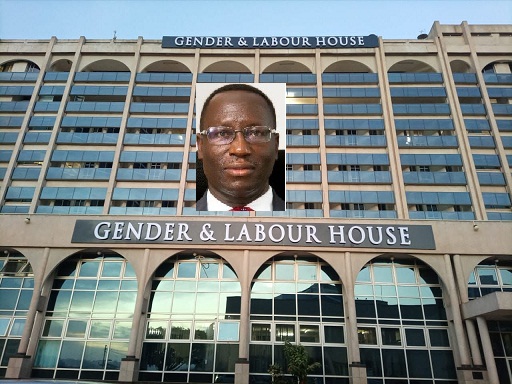
    Aggrey David Kibenge is the Permanent Secretary. He has held this position since his deployment in September 2020.

    The explosive findings in the Auditor General’s December 2025 report analsysed by Red Pepper paint a picture of a ministry struggling to keep control of massive social programmes designed to empower youth, women and persons with disabilities.

    At the heart of the revelations is the sharp increase in receivables linked to government empowerment initiatives.

    According to the audit, receivables increased by 4 percent, rising from UGX 241.93 billion to UGX 252.49 billion by June 30, 2025.

    Auditors say the increase is largely due to more loans being issued to women and youth groups under government empowerment programmes.

    However, the rising receivables are not necessarily good news.

    Observers say the swelling figures reflect the growing pile of government funds yet to be repaid.

    Meanwhile, the ministry’s financial headaches are compounded by a dramatic surge in domestic arrears.

    The audit reveals that unpaid obligations ballooned by a staggering 176 percent, jumping from UGX 7.46 billion to UGX 20.58 billion.

    The Auditor General warns that the escalating arrears could expose the ministry to legal battles.

    “Domestic arrears increased by 176 percent from UGX 7.46Bn to UGX 20.58Bn thereby increasing the risk of litigation,” the report states.

    Behind the financial figures lies a deeper structural problem: the failure to establish key institutions meant to strengthen labour governance in the country.

    The audit notes that the National Labour Institute, which was supposed to be operational by June 30, 2025, was never established.

    The reason is painfully simple — lack of funding.

    “It was noted that the National Labour Institute which ought to have been in place by 30th June 2025 was not established due to lack of funding,” the Auditor General states.

    Yet the financial mysteries do not end there.

    Auditors also discovered a puzzling case involving UGX 826.63 million recovered from the Youth Livelihood Programme (YLP) and the Uganda Women Entrepreneurship Programme (UWEP).

    The money was sitting in the Bank of Uganda, but investigators could not trace it back to any specific local government or beneficiary group.

    “Receipts of UGX 826.63Mn in respect of recovery of YLP and UWEP funds in Bank of Uganda could not be tagged to any Local Government or individual group,” the report reveals.

    For accountability experts, this raises uncomfortable questions about the tracking of public funds meant to uplift vulnerable communities.

    Land management within the ministry has also raised eyebrows.

    The Auditor General discovered that the ministry owns 67.63 acres of land that has never been formally titled.

    Without a land title, the property remains vulnerable to encroachment or outright loss.

    “The Ministry land measuring 67.63 acres was not titled exposing it to a risk of encroachment and loss,” the report warns.

    Meanwhile, the ministry’s handling of complaints from migrant workers paints a troubling picture of overwhelmed systems and unresolved grievances.

    Out of 1,012 complaints lodged by migrant workers during the financial year, only 171 were resolved.

    That translates to a resolution rate of just 17 percent, leaving a staggering 841 cases — or 83 percent — unresolved.

    For a ministry tasked with protecting Ugandans seeking employment abroad, critics say such a backlog raises serious concerns about oversight of recruitment agencies and labour export systems.

    The financial challenges surrounding government empowerment programmes also appear far from resolved.

    Under the Youth Livelihood Programme (YLP), auditors found that out of UGX 169.414 billion expected to be recovered from beneficiaries, only UGX 41.745 billion had been recovered.

    That leaves UGX 127.669 billion — a massive 75 percent — still outstanding.

    The Uganda Women Entrepreneurship Programme (UWEP) has performed slightly better but still faces serious recovery challenges.

    Of the funds due for recovery, UGX 41.024 billion — representing 60 percent — was recovered, leaving UGX 26.595 billion, or 40 percent, still outstanding.

    The report suggests that weak recovery mechanisms could be undermining the sustainability of programmes designed to economically empower vulnerable Ugandans.

    Procurement practices at the ministry also came under scrutiny.

    The Auditor General flagged non-compliance with reservation schemes, which are supposed to ensure fair participation of special interest groups in government procurement processes.

    The violation contravenes Paragraph 2 of the Public Procurement and Disposal of Public Assets Authority Guideline Number 11 of 2024.

    Auditors also highlighted multiple technical challenges affecting the government’s electronic procurement system, commonly known as the E-GP system.

    Among the problems identified were weaknesses in oversight support, electronic submission processes, procurement planning, reporting systems and mechanisms designed to promote competition among bidders.

    But perhaps the most shocking revelation concerns the massive funding gap affecting the ministry’s strategic plan.

    Between the financial years 2020/2021 and 2024/2025, the ministry’s strategic plan estimated a funding requirement of UGX 12,571.34 billion.

    However, only UGX 1,234.53 billion was actually provided.

    That leaves a staggering funding gap of UGX 11,320.46 billion — representing over 90 percent of the planned budget.

    For analysts, such a shortfall means many of the ministry’s social programmes were effectively operating on financial fumes.

    The consequences are already visible in programme performance.

    The audit assessed 20 outputs worth UGX 220.4 billion and discovered that only two outputs worth UGX 7.239 billion were fully implemented.

    The majority — 26 outputs worth UGX 212.592 billion — were only partially implemented, while two outputs worth UGX 569 million could not even be assessed due to missing performance targets and indicators.

    “This lack of performance indicators makes it difficult to assess whether the intended objectives were achieved,” the report notes.

    Meanwhile, the labour export sector appears to be operating with dangerous loopholes.

    The audit found that 16 recruitment agencies were operating without valid licences issued by the Ministry of Gender.

    Such agencies are required by law to obtain official licences before sending Ugandans abroad for work.

    Operating without licences raises fears that workers could be exposed to exploitation and trafficking risks.

    In addition to the financial and administrative issues, the Auditor General also conducted value-for-money audits into two critical areas: the management of the National Special Grant for Persons with Disabilities and the management of remand homes.

    Separate reports were issued detailing the findings of those investigations.

    But the audit did not stop there.

    The Auditor General also conducted a follow-up review of an earlier 2013 Value for Money audit that had examined the government’s efforts to achieve gender equality.

    The findings of that follow-up review are equally troubling.

    Out of 28 recommendations made in the 2013 report, only three — representing just 11 percent — were fully implemented.

    Four recommendations were partially implemented, while a staggering 21 recommendations — or 75 percent — were never implemented at all.

    “The overall progress in implementation of the recommendations of the 2013 Value for Money report by the Ministry was unsatisfactory,” the Auditor General concluded.

    To its credit, the ministry has made some progress in promoting gender equality.

    It developed the National Gender Mainstreaming Guidelines 2024, revised national gender priority indicators and played a role in ensuring the Equal Opportunities Commission is fully constituted and functional.

    But auditors say critical gaps remain.

    For example, there has been no training or proper supervision of Gender Focal Point Persons across local governments, a weakness that undermines gender mainstreaming at grassroots level.

    The ministry has also failed to establish Gender Committees across government ministries, departments and local governments, a step considered essential for driving gender equality policies.

    The legislative landscape is also lagging behind.

    Critical pieces of legislation — including the Marriage and Divorce Bill, the Sexual Offences Bill, and the HIV/AIDS Prevention and Control Bill — remain unpassed by Parliament.

    For the Auditor General, the message is clear.

    “The recommendations made in the 2013 audit report were intended to improve gender equality and mainstreaming within government,” the report notes.

    “However, most of these recommendations have remained unimplemented.”

    The report warns that failure to implement the recommendations could worsen existing challenges and delay the achievement of gender equality goals across government institutions.

    For a ministry tasked with protecting workers, empowering women and advancing social justice, the audit findings are a stark reminder that the road to reform may be far longer than previously imagined.

    And as the unanswered questions pile up — from billions in unrecovered loans to unresolved migrant worker complaints — one thing is certain.

    The Gender Ministry’s books may be balanced on paper.

    But the problems beneath the surface are anything but balanced.


    GOT A HOT STORY? EMAIL: redpeppertips@gmail.com WITH AS MUCH EVIDENCE AS POSSIBLE.

    SOURCE PROTECTION/CONFIDENTIALITY IS OUR NO.1 PRIORITY.

    About Post Author
  • WILD MESS AT WILDLIFE COLLEGE! Report Exposes Billions Missed, Projects Stalled, No Governing Council as Multi-Billion Contracts Signed Without Parliament Approval

    WILD MESS AT WILDLIFE COLLEGE! Report Exposes Billions Missed, Projects Stalled, No Governing Council as Multi-Billion Contracts Signed Without Parliament Approval

    A storm is brewing at the Uganda Wildlife Research and Training College after the latest report by the Office of the Auditor General of Uganda unearthed a trail of troubling gaps in funding, stalled projects, questionable contracts and a shocking governance vacuum at the country’s premier wildlife research training institution.

    College Principal, Robert Baluku, now finds himself presiding over an institution grappling with serious structural and operational challenges flagged in the Auditor General’s December 2025 review.

    The college, which operates under the supervision of the Ministry of Tourism, Wildlife and Antiquities, was established to build human resource capacity for wildlife conservation through research and training. Its mission is critical in a country whose economy and biodiversity heavily depend on wildlife protection.

    But the Auditor General’s findings suggest the institution’s ambitious plans are colliding with harsh financial and governance realities.

    According to the report, the college’s strategic plan for the period between 2020/2021 and 2024/2025 had projected total funding of a staggering UGX 100.46 billion to run its programmes, develop infrastructure and strengthen wildlife research capacity.

    However, only UGX 57.45 billion was actually realised, leaving a massive funding gap of UGX 43.01 billion.

    The Auditor General warns that the shortfall has already crippled several planned activities.

    “It was noted that out of the planned funding of UGX 100.46Bn for the strategic planning period of 2020/2021 to 2024/2025, the college only realized UGX 57.45Bn leading to a variance of UGX 43.01Bn,” the report states. “Accordingly, some of the planned activities were not implemented.”

    While the institution appears efficient in spending the little money it receives, questions remain about the effectiveness of that spending.

    During the financial year under review, the college received UGX 6.945 billion and spent UGX 6.82 billion, representing an impressive absorption rate of 98 percent.

    But the Auditor General warns that high spending alone does not necessarily translate into results.

    A deeper examination of programme outputs paints a far more worrying picture.

    The audit assessed 32 non-payroll outputs worth UGX 2.607 billion and discovered that only a fraction of them were actually completed.

    Out of the 32 planned outputs, only 10 outputs worth UGX 607 million were fully implemented.

    One output worth UGX 30 million was only partially implemented, while 10 outputs worth UGX 1.97 billion were not implemented at all.

    The revelation raises uncomfortable questions about whether taxpayers’ money allocated to wildlife research and training is delivering the expected impact.

    As the report bluntly notes, the implementation gaps highlight weaknesses in planning, financing and execution.

    The problems, however, go far beyond incomplete projects.

    The transformation of the institution from the Uganda Wildlife Research and Training Institute into the Uganda Wildlife Research and Training College under the Technical and Vocational Education and Training Act, 2025 has also created a legal and administrative headache.

    The law clearly states that all appointments, contracts, assets and liabilities of the former institute must automatically transfer to the new college structure.

    Yet the audit found that this process has not been completed.

    “Contrary to Section 124(b) of the Technical Vocational Education and Training Act No. 3, 2025, it was noted that the transfer of assets from the names of the former Institute to the names of the new College had not yet been effected,” the report states.

    In simple terms, the institution is operating under a new legal name while some of its assets remain registered under the old entity — a situation that could create administrative confusion and legal complications.

    Even more alarming is the governance vacuum uncovered by the auditors.

    Under the TVET Act, the college is supposed to be overseen by a Governing Council appointed by the minister. The Council is required to establish committees to ensure the institution runs effectively and in line with its mandate.

    But the audit discovered that the college has been operating without a Governing Council altogether.

    “Contrary to Section 54(1) of the TVET Act, 2025 that obligates the Governing Council to appoint committees for the efficient functioning of the Governing Council, it was noted that the college was operating without a Council and accordingly no council committees,” the report states.

    In essence, one of Uganda’s key wildlife research training institutions has been functioning without its top governing organ.

    Observers say this governance vacuum could explain some of the operational challenges now emerging at the college.

    But perhaps the most explosive finding in the Auditor General’s report concerns the signing of multi-year contracts worth UGX 13.73 billion.

    According to the audit, these contracts were awarded without approval from Parliament, an action that violates Uganda’s public finance laws.

    The Public Finance Management Act requires that any government entity entering into multi-year financial commitments must first obtain parliamentary authorization.

    Yet the auditors found that this critical requirement was ignored.

    “It was noted that the College awarded Multiyear contracts worth UGX 13.730Bn without approval of Parliament,” the report reveals.

    The auditors point out that the move was done “in contravention of Section 22(1) of the Public Finance Management Act.”

    This revelation raises major accountability questions about how the contracts were approved and who authorized them.

    The college traces its origins back to 1991 and was formally established by the Government in 1996 as an autonomous institute to serve the Uganda Wildlife Authority, which remains its primary beneficiary.

    Over the years, the institution has played a crucial role in producing wildlife rangers, conservation officers and researchers who help protect Uganda’s national parks and biodiversity.

    The transformation into a fully-fledged training college under the TVET Act was intended to strengthen its role in conservation education and research.

    Wildlife experts say institutions like UWRTC are vital because research and training bridge the gap between scientific knowledge and practical conservation.

    Without trained professionals, they warn, Uganda’s fragile ecosystems could face increased threats from poaching, climate change and habitat destruction.

    But with funding gaps, governance issues and stalled programmes now staring the institution in the face, critics say urgent reforms may be needed to ensure the college lives up to its mandate.

    For now, the Auditor General has issued what is technically an “unqualified opinion” on the college’s financial statements, meaning the accounts generally present a fair picture.

    Yet behind that clean audit opinion lies a troubling list of operational weaknesses that cannot easily be ignored.

    As one government official familiar with the audit quietly remarked after reviewing the report, the problems go beyond paperwork.

    “The institution was created to train the people who protect Uganda’s wildlife,” the official told Red Pepper. “But if governance and funding gaps continue like this, the very system meant to protect wildlife could itself be endangered.”

    For the wildlife college, the message from the Auditor General could not be clearer.

    Uganda’s conservation future depends not only on protecting animals and ecosystems — but also on fixing the institutions tasked with training those who guard them.


    GOT A HOT STORY? EMAIL: redpeppertips@gmail.com WITH AS MUCH EVIDENCE AS POSSIBLE.

    SOURCE PROTECTION/CONFIDENTIALITY IS OUR NO.1 PRIORITY.

    About Post Author

  • Singer Anitah Da Diva reflects on drug past, eyes music comeback – Sqoop

    Singer Anitah Da Diva reflects on drug past, eyes music comeback – Sqoop

    Ugandan dancehall singer Anitah Tushabe alias Anita Da Diva has revealed that she has left behind drug use and is now living a quieter life as she considers returning to the music industry.

    Anitah, who once stood out as one of the promising female voices in Uganda’s dancehall scene, disappeared from the spotlight several years ago. Her absence followed a turbulent period in her personal life that had drawn public attention online.

    At the time, a video circulated on social media showing the singer in tears as she appealed for help, accusing a former boyfriend of influencing her drug use and exposing her to a violent relationship that she believed had derailed her life.

    Speaking during a recent television interview, the singer said she is now in a better place and has abandoned the habits that once affected her life. Anitah admitted she had used drugs in the past but urged others to avoid them, explaining that quitting had greatly improved her health and wellbeing.

    She said she currently avoids all intoxicants and instead prefers a much simpler lifestyle, joking that anyone who wants to take her out now only needs to buy her mineral water.

    The singer also clarified that while she occasionally drank alcohol in the past, she did not consider herself an alcoholic. For now, Anitah said she is focused on rebuilding her life and gradually preparing for a possible return to active music.

    Although there is nothing major happening yet in her career, she noted that she is working toward making a comeback when the time feels right.

    Don’t want to miss out on any story? For updates on all Sqoop stories, follow this link on Telegram: https://t.me/Sqoop

  • NABBED! Notorious gold fraudster James Ssentumbwe jailed after diddling Sh600m from Malaysian in fake gold scam, colleague Adams Kibuye Yawe on run

    NABBED! Notorious gold fraudster James Ssentumbwe jailed after diddling Sh600m from Malaysian in fake gold scam, colleague Adams Kibuye Yawe on run

    A man accused of masterminding a $150,000 (about Shs585 million) gold scam has been remanded to prison following his arraignment at Makindye Magistrate’s Court.

    James Ssentumbwe appeared in court on Tuesday, presented by the State House Anti-Corruption Unit in collaboration with the Criminal Investigations Directorate and the Office of the Director of Public Prosecutions.

    He faces multiple charges, including obtaining money by false pretence involving $150,000, carrying out refining, smelting, processing, and trading in minerals without a licence, conspiracy to defraud, and forgery.

    According to the State House Anti-Corruption Unit spokesperson, Marian Natasha, the accused allegedly defrauded a Malaysian investor through a fraudulent gold export scheme.

    “It is alleged that in January 2026, at Muyonyo in Makindye Division, Ssentumbwe James conspired with Adams Kibuye Yawe, who is currently at large, to defraud Kon Kin Kheong, a Malaysian national, of $150,000,” Natasha stated.

    She explained that the money was obtained under false pretences, with the suspects claiming it was meant to facilitate documentation for the export of 50 kilograms of gold to Dubai.

    “The suspect allegedly received the money on the pretext of processing export documents for 50 kilograms of gold destined for Dubai, which was not true,” she added.

    Natasha further revealed that the scheme involved misrepresentation of authority.

    “The fraud was aided by Kibuye’s projection of power and authority. He was found in possession of a forged State House Identity Card purporting to identify him as a Political Mobiliser,” she said.

    Investigations have also linked the suspects to illegal mineral processing activities in Wakiso District.

    “Investigations are ongoing, and other suspected co-conspirators remain at large, particularly individuals linked to Hey Transporters and Logistics in Lweza–Lubowa, Wakiso District, where illegal gold ‘processing’ operations were allegedly being conducted at an unlicensed refinery,” Natasha noted.

    Authorities say efforts are ongoing to apprehend the remaining suspects as investigations continue.

    About Post Author

  • KITEEZI HEIST! Ex-IGG Kamya Vindicated as Ghana ‘Investor’ Jospong Shady Landfill Deal Backed by Speaker Tayebwa Fails to Take Off After Duping M7

    KITEEZI HEIST! Ex-IGG Kamya Vindicated as Ghana ‘Investor’ Jospong Shady Landfill Deal Backed by Speaker Tayebwa Fails to Take Off After Duping M7

    Nearly a year after explosive revelations about the controversial takeover of the Kiteezi landfill by Ghanaian firm Jospong Group of Companies, fresh information reaching Red Pepper Intelligence Unit indicates that the project has never taken off — raising even more serious questions about what really happened behind the scenes.

    Sources familiar with the matter now say the company that was expected to revolutionize garbage management at Kiteezi has simply vanished from the scene, with no visible activity at the landfill and no progress toward the much-touted waste-to-fertilizer project.

    “From the latest information I have just gotten, that company never took off,” a source close to the matter told Red Pepper. “Apparently from the research conducted it was a briefcase company.”

    The update has only deepened suspicions that the deal approved by Yoweri Kaguta Museveni for Joseph Siaw Agyepong and his firm to take over the troubled Kiteezi landfill may have been built on shaky ground from the start.

    As previously reported, Museveni approved Agyepong’s company — the Jospong Group of Companies — to manage the landfill following the devastating garbage collapse at Kiteezi that killed more than 30 people and displaced hundreds.

    The firm had promised to deploy technology that would convert waste into fertilizer and recyclable materials, a proposal that was presented as a long-term solution to Kampala’s mounting garbage crisis.

    But insiders now say the promised transformation never materialised.

    Instead, sources claim the company spent months quietly searching for another investor to actually execute the project, approaching potential partners in the United States and Dubai in a bid to subcontract the work.

    A whistleblower had earlier warned that Jospong lacked the capacity to implement the project and was merely acting as a middleman.

    “Jespong lacks the capacity to execute such a project. His people lied to the President. They were actually brokers. After securing the President’s approval to take over the Kiteezi landfill they are now running around shopping for firms with capacity,” the whistleblower revealed at the time.

    President with a delegation from the Jospong Group led by its Executive Chairman, Dr. Joseph Siaw Agyepong and local promoters

    Now, with no visible activity at the landfill and no operational waste-processing facility in sight, critics say those warnings appear increasingly prophetic.

    The stalled project also casts a long shadow over the earlier intervention by ex-IGG Beti Kamya, who had ordered the suspension of the Jospong deal amid concerns over how the contract had been awarded.

    In a letter dated October 17, 2024, Kamya directed authorities to halt all dealings with the Ghanaian firm pending investigations into alleged irregularities.

    “You are therefore directed to halt all transactions with Jospong Group of Companies who have been engaged to manage the Kiteezi landfill until this office completes investigations or issues further orders on the matter,” the letter stated.

    The Inspectorate of Government had also raised questions about the procurement process, noting that Jospong was allegedly handpicked without going through the competitive bidding procedures required under the Public Procurement and Disposal of Public Assets Act.

    Investigators also flagged several red flags, including the absence of a feasibility study, lack of an environmental impact assessment and uncertainty about whether the company actually possessed the technology needed to manage a project of such magnitude.

    Another puzzling element was the company’s offer to run the landfill “at no cost to government,” a proposal that Kamya said raised serious questions.

    “Jospong Group of Companies has offered to manage the Kiteezi landfill at no cost to the government. This raises questions since one wonders how the company will recoup returns on their investments,” the IGG letter noted.

    Despite these concerns, promoters of the deal reportedly pushed ahead and secured a meeting with President Museveni, after which a directive was issued allowing the Ghanaian firm to proceed.

    JESPONG LOCAL PROMOTERS

    Some of Jespong Ugandan promoters who attended the meeting include Deputy Speaker Thomas Tayebwa, Kampala and Metropolitan Affairs Ministers Minsa Kabanda and Kabuye Kyofatogabye, former Ag KCCA ED Frank Rusa and one Ssebagala.

    Others include Obed Lutakome who is KCCA’s former land-fill management officer (who ironically should have warned the government before the Kiteezi disaster struck).

    But together with other two partners, he now owns a firm housed at Fontis Residences Hotel-Nakasero, Kampala which was partnering with Jespong to take over the Kiteezi landfill privately.

    “Obed Lutakome was formerly land-fill management officer at KCCA. He should have warned the government about the Kiteezi situation but he didn’t! He should be now in court with the Kisaka’s but he is a free man. He is now coming back to privately takeover Kiteezi with Jespong through a private partnership. Who bewitched Uganda for sure?” the whistleblower expressed concern then.

    President Museveni with a delegation from the Jospong Group led by its Executive Chairman, Dr. Joseph Siaw Agyepong and local promoters

    We are also told that the Deputy Speaker of Parliament who is among the local promoters of Jespong in Uganda is not happy about these new developments.

    The name of Hussein Akandwanaho also featured prominently among the local promoters of Jespong. This publication could not independently verify if this Akandwanaho is by any chance biologically linked to Gen. Salim Saleh Akandwanaho.

    But available information indicates that Hussein recently swore an affidavit to adopt ‘Akandwanaho’ name.

    Bismark Nortei Annoo, the honorary consul for the Republic of Ghana in Kampala, Uganda is also among key promoters of Jespong in Kampala.

    But today, with the project still dormant and no investor stepping forward to implement the plan, observers are questioning whether the entire proposal was ever viable.

    Several local figures who were earlier linked to the project’s promotion have also remained silent as the controversy drags on.

    The Ghanaian firm itself has not publicly explained why the promised operations — which were expected to start as early as March 2025 — never materialised.

    Red Pepper has reached out to Kampala Capital City Authority (KCCA) for an official comment on the status of the Kiteezi landfill project and the role of Jospong Group in the arrangement.

    By press time, KCCA had not yet responded to our inquiries.

    With the landfill crisis still unresolved and the once-celebrated investor nowhere in sight, the Kiteezi saga now raises even bigger questions:

    Was Uganda sold a grand waste-management dream by a company that never had the capacity to deliver?

    Or was the project quietly abandoned before the public could notice?

    For now, the silence from those involved is only fueling suspicion.

    Watch this space!

    JESPONG CORRUPTION SCANDALS

    There have been many scandals and corruption allegations levelled against Jespong.In 2013 an investigation into massive corruption in the Ghana Youth Employment and Entrepreneurial Development Agency (GYEEDA) led to the cancellation of all contracts under the programme. It also led to reforms which culminated into the passage of the Youth Employment Agency Law.
    The main companies that were indicted in the GYEEDA scandal were those from the Jospong Group of Companies owned by Dr. Joseph Siaw Agyepong and the AGAMS Group owned by Roland Agambire.

    The exposé also revealed and catalogued questionable contracts with various metropolitan and municipal assemblies.

    The report exposed how a waste bin contract awarded on sole sourcing basis to the JOSPONG Group was inflated by at least GHC130 million.

    Another report revealed how a GHC98 million contract was awarded to 11 companies under the Jospong group to undertake fumigation exercise across the country when Zoomlion Ghana Limited, the parent company of Jospong had already been paid to undertake the same fumigation.

    In 2013 the World Bank banned Zoomlion Ghana Limited, Jespong’s  waste management services firm and its affiliate companies from bidding for the Bank’s contracts because Zoomlion “paid bribes to facilitate contract execution and processing of invoices” in Liberia.


    GOT A HOT STORY? EMAIL: redpeppertips@gmail.com WITH AS MUCH EVIDENCE AS POSSIBLE.

    SOURCE PROTECTION/CONFIDENTIALITY IS OUR NO.1 PRIORITY.

    About Post Author

  • Equity Bank Uganda completes data centre migration to Raxio facility, earns Central Bank praise

    Equity Bank Uganda completes data centre migration to Raxio facility, earns Central Bank praise

    Our Reporter

    Equity Bank Uganda has successfully completed the migration of its core data centre operations to the Raxio Data Centre in Namanve Industrial Park, marking a significant milestone in the bank’s digital transformation journey.

    The move, which was completed a week ago and publicly unveiled on February 25, 2026, consolidates the bank’s critical infrastructure within a high-availability, in-country hosting facility.

    The migration represents a full relocation of the bank’s core digital infrastructure, strengthening system resilience, enhancing security, and improving service reliability for customers across the country.

    Uganda’s central bank welcomed the development, noting that resilient digital infrastructure is increasingly central to financial stability. The Bank of Uganda described the shift as an important step toward safeguarding the national payments ecosystem, particularly as financial services become more digitised.

    David Kalyango, Executive Director for Bank Supervision at the central bank, underscored the broader significance of such investments.

    “Digital infrastructure today forms the backbone of the financial system. It is not merely a technology issue, it is a financial stability issue,” Kalyango noted, adding that failures at systemically important banks can disrupt commerce nationwide.

    Executive Director Bank Supervision BOU Mr. David Kalyango and Equity Bank Executive Director Commercial Banking Claver Serumaga discussing during the handover

    By hosting its full data operations in a high grade local facility, Equity Bank Uganda aims to enhance transaction speeds, strengthen data security, and ensure near-continuous service availability for retail customers, SMEs, corporates, and government entities that increasingly rely on real-time digital banking services.

    Claver Serumagga, Executive Director at Equity Bank Uganda, emphasized the importance of reliability in today’s operating environment.

    “Our customers require secure, efficient banking at all times,” Serumagga explained. “This move strengthens platforms like Equity Online for Business and enables real-time payments, collections, trade finance, and treasury services.” He highlighted the operational benefits of local hosting, noting that it reduces latency and strengthens disaster recovery capabilities.

    “Establishing local capacity improves speed, reliability, and safety while meeting growing demand for real-time banking,” he added.

    For the host facility, the partnership reflects growing confidence in Uganda’s digital infrastructure ecosystem. Raxio Uganda General Manager, Caroline Kamaitha noted that secure, high-availability environments enable critical institutions to innovate with confidence.

    Serumagga further emphasized the strategic importance of hosting data locally:

    “Having data locally comes with a lot of advantages. This investment is about our clients. We have over 2 million customers and we need to have real impact- now we can innovate faster to meet their needs. At Raxio, reliability is number one, which is why we are partnering with you.

    Having control over the data of our clients is very important and we thank our Board of Directors who have supported this investment. Our customers did not have access to our services for two days as this shift was made, and we are thankful for their patience during the data migration. What does this mean for the future? As Equity, we stand for transforming lives, mostly with dignity. Moves such as these enable us to achieve that even faster.”

    The migration positions Equity Bank Uganda to operate within a strengthened, locally hosted digital environment, reinforcing regulatory compliance, enhancing operational resilience, and supporting Uganda’s continued transition toward a modern digital economy.


    About Post Author

  • Bobi Wine says counter-terrorism officers who were assigned to protect him during elections have been dismissed from police

    Opposition leader Bobi Wine, whose real name is Robert Kyagulanyi Ssentamu, has claimed that several police officers who were deployed to guard him during the election period have been dismissed from the Uganda Police Force.

    In a statement posted on X, Kyagulanyi alleged that nine officers were recently brought before the Police Court and expelled from the force over accusations of neglecting their duty.

    According to him, authorities claim the officers helped him escape from his home shortly after the January election.

    “The regime yesterday paraded nine police officers who had been assigned to our campaign before the Police Court and dismissed them with disgrace. Their alleged offence is ‘neglect of duty’ because they supposedly helped me escape from my own home,” Kyagulanyi wrote.

    However, the opposition leader insisted the accusation does not make sense because the officers had already been withdrawn from their deployment before the incident in question.

    He explained that the officers were removed from duty on 15 January, the same day the election took place, meaning they were no longer stationed at his residence when security forces surrounded his home the following day.

    Kyagulanyi said that when the military raided his residence on 16 January, the officers who had previously been assigned to him were not present.

    Meanwhile, earlier this week, officials from the police leadership told Parliament they were not aware of the alleged arrests.

    While appearing before the Parliament of Uganda’s Public Accounts Committee, Deputy Inspector General of Police James Ochaya said he had not been briefed about the matter and could not confirm the claims.

    When pressed by legislators for more information, Ochaya said the Director of Counter-Terrorism, Wasswa David Ssengendo, would be in a better position to respond.

    However, Ssengendo also told the committee that he was not aware of the issue but promised to consult further and report back with clarification.

  • Muhindo’s Defence Ministry New Job Bash Sparks Outrage with Netizens Asking… “But was this celebration necessary?”

    Muhindo’s Defence Ministry New Job Bash Sparks Outrage with Netizens Asking… “But was this celebration necessary?”

    KAMPALA — A flashy celebration thrown to mark the appointment of Morris Muhindo as Under Secretary at the Ministry of Defence and Veteran Affairs has exploded into a heated debate online, with critics asking one burning question: why throw a party over a civil service appointment?

    The Friday night bash, attended by a who’s-who of ruling party bigwigs, has left social media buzzing — some praising the young technocrat’s rise, others blasting the extravagance as tone-deaf at a time when many Ugandans are struggling to make ends meet.

    Among those spotted at the celebration were Deputy Speaker Thomas Tayebwa, who attended alongside his wife, NRM Chief Whip who recently lost polls Hamson Obua, former NRM SG Justine Kasule Lumumba, Junior ICT Minister and Kasese tribemate Godfrey Kabyanga, State Ministers Lillian Aber and Phiona Nyamutoro, among other political allies and friends.

    But while glasses clinked and congratulatory speeches flowed freely inside the venue, outside — particularly on social media — the mood was far less celebratory.

    Muhindo

    Many Ugandans appeared puzzled by what they described as an over-the-top celebration for what is essentially a bureaucratic appointment in the civil service.

    One social media user, Bongole Moses, did not mince words as he called out the pomp surrounding the event.

    “Celebrating what now? Elevation? Appointment? Victory? Or something,” he wrote in a post directed at Deputy Speaker Tayebwa. “Ugandans can waste time and resources.”

    Another commenter, Geoffrey Mukwaya, raised concerns about the optics of politics mixing with senior civil service positions.

    “An Under Secretary in the Ugandan civil service should not be a partisan politician,” he argued, hinting at the delicate line between technocratic appointments and political loyalty.

    But defenders of Muhindo were quick to fire back.

    Edgar Kiiza dismissed the criticism, arguing that Muhindo has long transitioned from active politics into professional administration.

    “The last time Morris held a political position was more than a decade ago,” he said. “He has been a technocrat.”

    Still, the backlash refused to die down.

    Some critics wondered whether the extravagant celebration was necessary at all.

    “But was this celebration necessary?” asked social media user Mitala Knock.

    Another commentator, Alfred Mwuva, mocked the scale of the event.

    “What is it to celebrate? What will happen if he is appointed a Permanent Secretary?” he quipped.

    Others were blunter.

    “All that pomp because someone was promoted.”

    Another social media critic went even further, accusing the political class of being detached from the realities ordinary citizens face.

    “Look at the decorations just for a mere job promotion,” wrote Munezero Juma.

    The debate grew even more intense when some observers raised security concerns about publicly celebrating an appointment in such a sensitive ministry.

    One X user warned that publicly highlighting Muhindo’s responsibilities could raise eyebrows.

    “Hon. Deputy Speaker, I’m surprised that you don’t see a problem with this kind of thing you’re doing — celebrating the promotion of a comrade and publicly declaring his role as the handler of classified documents,” the user wrote. “Sensitivity to such matters must be held to high levels.”

    Despite the online storm, the celebration itself reportedly proceeded with speeches praising Muhindo’s rise in public service.

    Deputy Speaker Tayebwa, who addressed the gathering, insisted that the event should not be seen as mere revelry but as a moment to reflect on the responsibilities that come with public office.

    “I do not look at this as merely a celebration, but rather as the launch of a new challenge and responsibility,” Tayebwa said.

    “Public service, especially in such a sensitive institution, demands integrity, discipline and a deep sense of duty.”

    Tayebwa described Muhindo as a “brilliant young man and loyal cadre,” expressing confidence that he would serve diligently under the leadership of Yoweri Kaguta Museveni.

    The Deputy Speaker also reminded the newly appointed Under Secretary that handling classified government documents requires the highest levels of trust.

    “Protect government secrets diligently while ensuring transparency and professionalism in your office,” Tayebwa advised.

    He even recommended that Muhindo read the book The Seat of the Soul by Gary Zukav, saying it offers insights into authentic leadership rooted in responsibility and integrity.

    Behind the political glamour and social media controversy, Muhindo’s appointment also carries deeper historical and regional undertones.

    The new Defence Ministry Under Secretary is the son of Col.Dura Muhindo Mawa, a former Kasese District Chairman and military officer who commanded the Alpine Brigade during the height of the Allied Democratic Forces insurgency in the late 1990s.

    The Alpine Brigade — often commanded by officers from the Bakonjo community — played a key role in operations in the rugged Rwenzori mountains along the Uganda–DR Congo border.

    Some observers are quietly wondering whether Muhindo’s appointment could also be interpreted as recognition of his family’s historical role in that conflict.

    Muhindo himself is not new to political circles.

    In 2011, he attempted to enter student leadership politics when he contested for the Makerere University Guild Presidency on the NRM ticket — though he lost the race.

    Years later, he has now climbed into one of the most sensitive administrative positions within the Defence Ministry.

    But as the online backlash shows, many Ugandans are less interested in the career journey and more puzzled by the spectacle that accompanied it.

    To them, the bigger issue remains symbolic: when a civil service appointment becomes a political celebration, what message does it send about public service?

    For now, while the music from the bash has faded and the guests have returned to their homes, the debate it sparked is far from over.

    About Post Author

  • Collaboration and Partnership is the Only Cure for Carbon Market Friction

    Collaboration and Partnership is the Only Cure for Carbon Market Friction

    As discussions at the Business of Conservation Conference 2026 in Nairobi, Kenya came to an end, participants were urged to embrace partnerships at all levels to secure a brighter future for conservation efforts.

    The conference, which was held from March 4-7 at the Radisson Blu Hotel Nairobi Upper Hill, was organised by the African Leadership University School of Wildlife Conservation. It brought together policymakers, conservation organisations, investors, private sector leaders and community representatives to explore how conservation could become a sustainable business that benefits both people and nature.

    The conversation came at a crucial time as biodiversity resources were disappearing at an alarming rate. Under the theme “Changing the Economics of Conservation,” the conference focused on how Africa could build sustainable systems where conservation was not only about protecting nature but also about creating economic opportunities for communities.

    The goal was to influence current leaders in politics, business, government, technology, philanthropy and the media to prioritise conservation issues that threaten the quality of life for current and future generations.

    Among the organisations that participated was ECOTRUST, a Ugandan conservation organisation that has spent nearly three decades helping smallholder farmers turn conservation into a sustainable and viable investment option. Founded in 1999 as the Environmental Conservation Trust of Uganda, the organisation works in key biodiversity areas of Uganda, including the Albertine Rift and Mount Elgon landscapes, supporting farmers to restore forests, protect biodiversity and improve livelihoods.

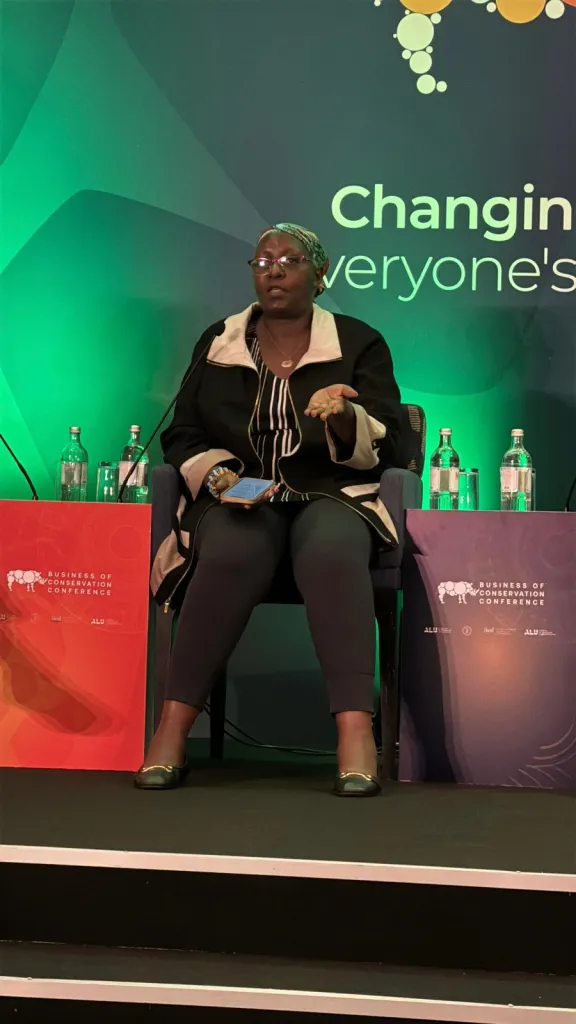
    Speaking during a panel discussion on biocredits with examples from Africa and elsewhere at the conference, Pauline Nantongo, Executive Director at ECOTRUST, shared how innovative financing tools such as biodiversity credits could support both conservation and community development.

    “Since we had different groups of people here, I would have liked to see people commit to partnering with us. Partnerships should tackle the challenges faced in the biocredits market to make the future of conservation meaningful. I would also have liked to see young professionals signing up to the African Leadership University, which offers an MBA in biocredits. I would also have liked to see journalists in the room committed to pursuing careers informed by biocredits,” she said.

    Pauline Nantongo- Executive Director at ECOTRUST Speaking during a panel discussion on “What are Bio credits ? With examples from Africa and elsewhere at the Business of Conservation Conference in Nairobi, Kenya.

    Nantongo explained that ECOTRUST had been working to change the narrative by ensuring communities remained owners and active participants in conservation projects.

    Using biodiversity credits, a new and innovative Payment for Ecosystem Services (PES) mechanism, ECOTRUST had been supporting communities to conserve and protect their forests and other natural resources while also earning income from sustainable businesses such as beekeeping, tree nurseries and other green enterprises. These activities were linked to conservation efforts that improved forest health and wildlife movement corridors.

    The approach had also been helping address human-wildlife conflict in areas within the Albertine Rift, where animals such as chimpanzees moved between fragmented forest corridors.

    Through community partnerships, ECOTRUST had been mapping wildlife movement routes and restoring forest corridor linkages that allowed animals to move safely while reducing conflicts with farmers.

    The organisation’s flagship Trees for Global Benefits (TGB) programme had already restored more than 30,000 hectares of land through forestry and agroforestry interventions on private land, linking farmers to benefits from carbon markets.

    According to Geoffrey Ozeera from Tengele CLA in Masindi, a community representative working with ECOTRUST Uganda, community voices were essential in shaping the future of conservation in Uganda.

    Geoffrey Ozeera, from Tengele CLA in Masindi, a community representative working with ECOTRUST Uganda speaking on a panel discussion on Indigenous peoples and local communities for bio credits: First place as nature custodians.

    “Communities were leading the implementation of biocredits by helping in monitoring and data collection processes. Individuals from the community were recruited to monitor biodiversity resources, for example the Bungako forest, using different methods such as electronic tools to collect data. Community groups also visited the forests monthly to observe biodiversity,” Ozeera said.

    ECOTRUST’s message remained clear: conservation could only succeed if the people who lived closest to nature benefited from protecting it. The Business of Conservation Conference continued to highlight similar solutions from across Africa, focusing on new partnerships, conservation finance and community-led conservation models.

About UGNEWS24

UGNEWS24 is a Uganda local news service, a product of SOLAVIA GROUP LIMITED, Reg. No. 80048169153974.

Registered office

Plot 2335, Buwambo-Katadde-Najjo Road,
Nansana Municipality, Wakiso District, Uganda
P.O. Box 214231, Kampala

© 2026 SOLAVIA GROUP LIMITED. All rights reserved.