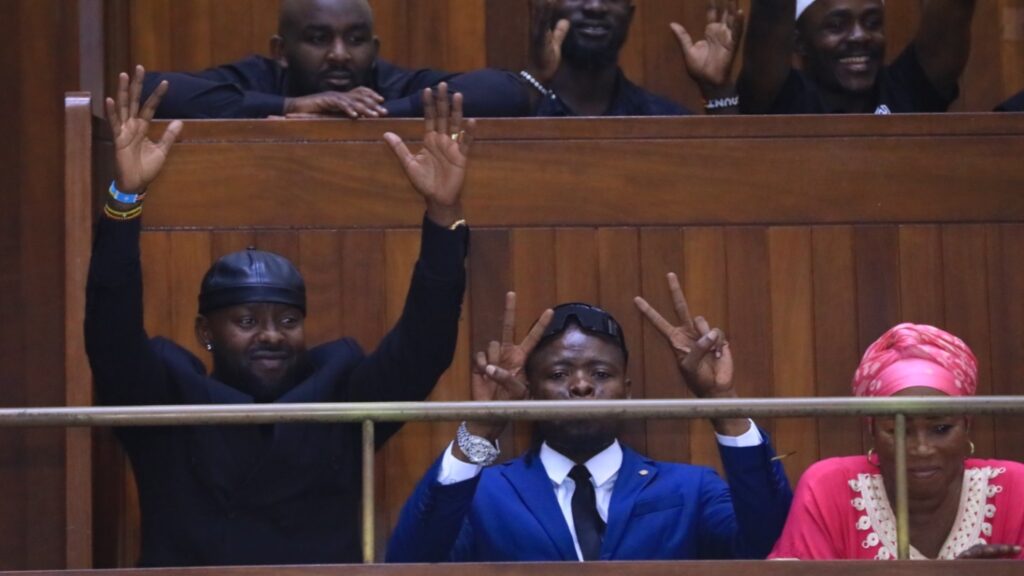
So, Kenzo thought he was out here solving the country’s copyright problems, he steps up to the mic, all confident, and drops this bomb about “neighbouring rights.” Only, his version of neighbouring rights had nothing to do with the SADC trade agreement, and everything to do with royalties from our neighbors Kenya, Tanzania, you know, the whole East African squad. Kenzo thought “neighbouring rights” was a trade deal between countries. Talk about thinking you are fixing things when you are actually making them worse. Classic Kenzo, though. After backpedaling and issuing a public apology, the damage was done. Bro had tried to take credit for copyright without even bothering to consult the experts who had done the heavy lifting. The irony is same guy who lobbied for the bill was now trending for getting copyright all wrong. This is peak Kenzo, people.
As the dust settled, Ugandans quickly realized that this law, which was supposed to be a victory, had more holes than a sieve. TV host Douglas Lwanga posted a thread on X, highlighting MPs’ concerns. One MP asked why radio stations should pay royalties when they were already “promoting” Ugandan music. Another threw shade at artists paying DJs for airplay. The panic spread like wildfire: What happens when the radio stations, tired of the extra paperwork and fees, stop playing Ugandan music altogether? And just like that, the dream of an artist-friendly law turned into a nightmare for up-and-coming musicians who hadn’t made it big yet. If you weren’t already a superstar, this bill was not about to make you one. Even the artists who backed the bill started to second-guess themselves. One viral post summed it up: Uganda musicians have scammed themselves in Parliament. The law looked great on paper, but the practicalities? Well, not so much. Bars and clubs were already plotting to ditch local music or pass the costs to customers.
And then, of course, enter the lawyers. The ones who actually read the fine print. Katabaazi Patrick, the lawyer and economist, gave the most balanced take: “The Copyright and Neighbouring Rights Bill is good for independent musicians and producers, but I’m worried about what happens next.” His fear? Uganda’s licensing agencies are still babies, and if they don’t offer affordable options for grassroots performers, this law could end up choking them instead of freeing them. Meanwhile, Silver Kayondo, the corporate lawyer, strolls into a discussion and casually drops, “I’m happy with my clients, like Spotify and Netflix…” And just like that, Uganda’s X erupted. “Netflix English” became the latest badge of honor half PhD, half vibes. The roast was on, with everyone reminding him that representing global giants is cool, but on Ugandan X, humility comes with a price. Kayondo tried to recover with a demand and supply defense, but by then, the roast had reached full flavor. Uganda wasn’t mad he has big clients, they were mad he sounded like he had invoice you for speaking Luganda.
Don’t want to miss out on any story? For updates on all Sqoop stories, follow this link on Telegram: https://t.me/Sqoop and Whatsapp: https://whatsapp.com/channel