On most nights, fandom lives in the noise, loud speakers, louder opinions, and the occasional social media war. But somewhere between the rhythm of a love song and the quiet reality of everyday life, a different kind of fan culture has been taking shape around Ugandan musician King Saha.
They call themselves Saha The Top King. And for them, being a fan is less about cheering from the side-line and more about showing up when it matters most.
“We are a team in good times and bad,” their administrator says, not like a slogan, but like a rule they live by. “If one of us is down, we all feel it. If one of us wins, we all celebrate,” says Alma King, the chairman of the group.
The group traces its identity back to Akamwanyi, one of King Saha’s most resonant songs. From it, they borrowed a line that became their mantra: even their dogs talk, a poetic way of saying “impact speaks for itself.” It’s not about being seen; it’s about being felt.
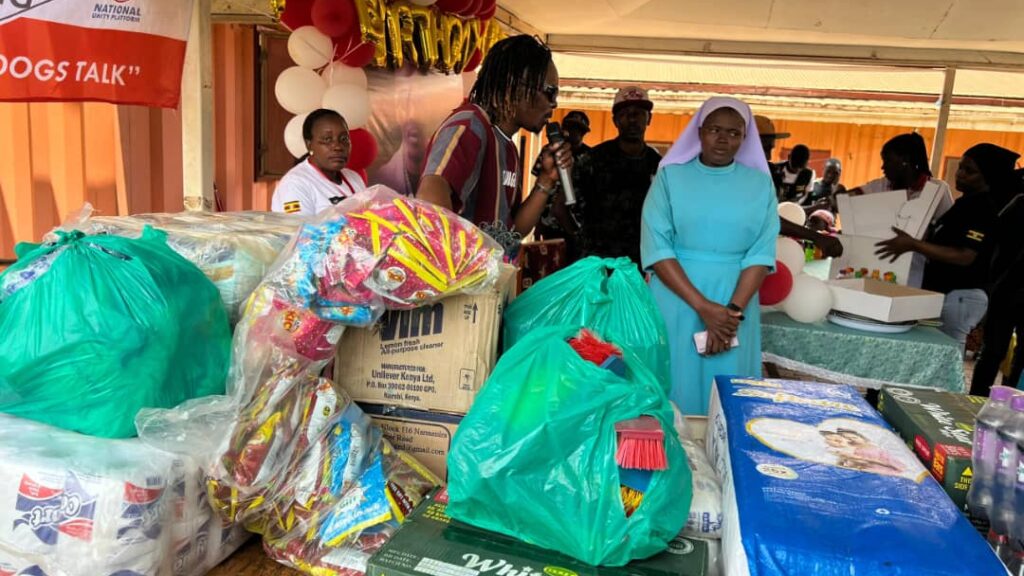
That belief came alive on King Saha’s birthday. While many fan groups might have stopped at cakes and curated Instagram posts, Saha The Top King chose a different path. They organized a charity drive to Kateyamba Home in Nalukolongo, a Catholic-run center that houses the elderly, people with physical disabilities, and individuals navigating mental health challenges.
The preparation was collective. Members contributed what they could, including foodstuffs, clothes, and basic supplies, and then showed up, not just to donate but to spend time. To sit. To listen. To share meals.

And as this was happening, King Saha, real name Manisul Ssemanda, arrived. There was no grand entrance, no performance, just an artist stepping into the space his music had quietly helped build. He moved from person to person, sharing moments, offering presence. Before leaving, he added one million shillings to support the home and promised to stay connected.
For the residents and the sisters who run the home, it was a gesture wrapped in humility. For the fans, it was something deeper, a confirmation that the values they had built around were real.
“The best way to honor him was to give back,” one member says. “His music heals us, so we chose to heal others.”
That instinct to extend music into action doesn’t end with one event, as on Eid, while many gathered with family, Saha The Top King moved into ghetto communities, serving meals and breaking fast with families often left out of such celebrations. It wasn’t organized for applause. It was done because, as the group puts it, music may unite us, but humanity keeps us together.
Inside the group, members talk about something rare: a system of care. When someone falls sick, contributions are made. When there’s a funeral, people show up. Job leads are shared. Small wins are celebrated like big ones.
“We stand together,” the admin says. “That’s our code.”
Still, they haven’t forgotten how to be fans. There are lively, competitive, sometimes chaotic football matches between their group and fans of other artists. It’s rivalry, but softened by laughter.
At the center of it all is King Saha, an artist whose music often leans into resilience, love, and survival.