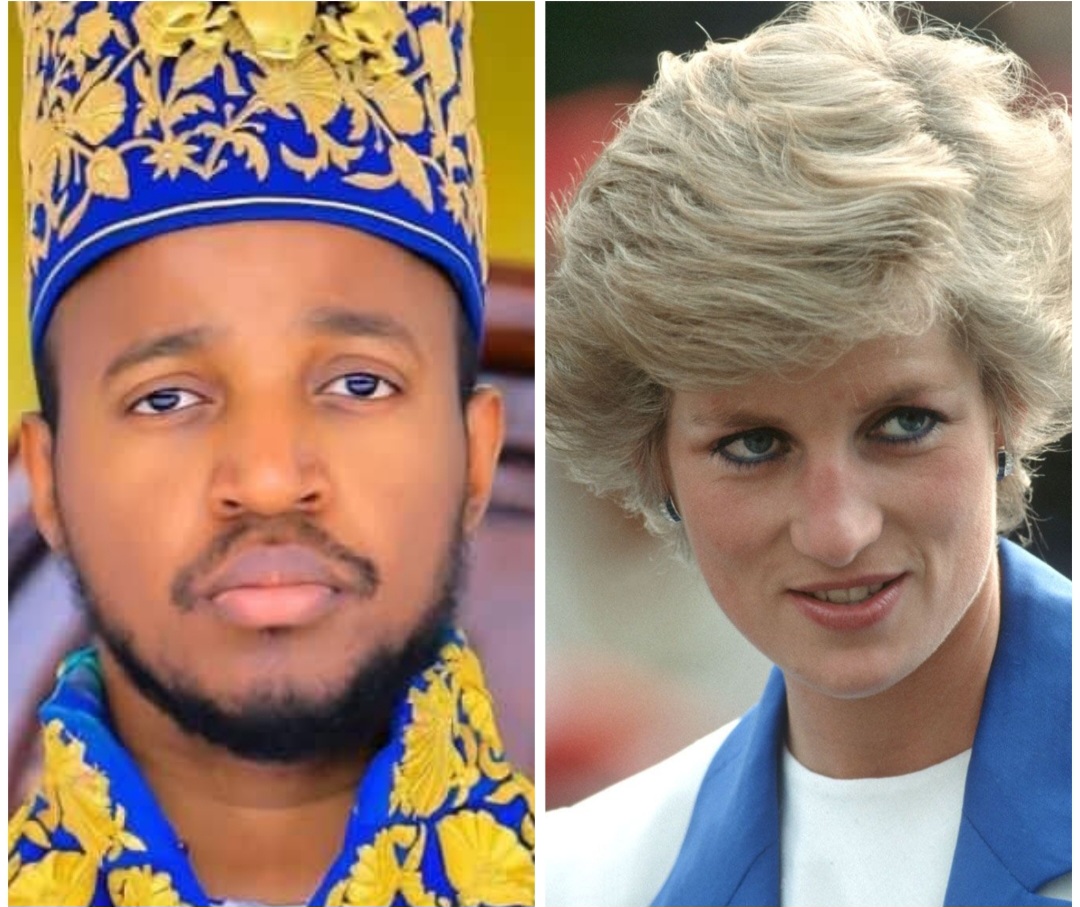
When Diana Spencer walked into Buckingham Palace as a shy twenty-year-old nursery teacher, the world did not expect a queen. When a three-and-a-half-year-old boy was woken up in Fort Portal in 1995 to inherit his father’s throne after the sudden passing of King Patrick Olimi Kaboyo, the world did not expect a king. Yet both became the most famous royals of their generations.
Princess Diana became a princess by marriage. King Oyo Nyimba Kabamba Iguru Rukidi IV became Omukama by blood and by tragedy. One ascended in Westminster Abbey before billions watching on television. The other ascended on the lap of his guardians because the crown was too big for his head. Both ascensions carried the same whisper: too young, too soft, too soon.
That whisper is what made them beloved.
What made Diana the People’s Princess and what made Oyo our People’s King was not the palaces they lived in, but the simplicity they chose. Diana refused the cold distance of royalty. She sat on hospital floors, held the hands of AIDS patients when the world was afraid to touch them, and walked through a minefield in Angola in a simple vest. Oyo refused the heavy curtain of the Karuziika Palace. He walked among his people in jeans, spoke to young people in their own language about HIV, about staying in school, about protecting the crater lakes and forests of Tooro. He understood that a kingdom is not the walls of a palace, but the lives of its people and the land that feeds them.
That is why he was not just a custodian of culture, but a great champion of protecting and preserving the environment. He knew that without Kibale, without the wetlands, without the trees he planted at every Empango, Tooro has no future. Diana protected people from the dangers hidden in the earth. Oyo protected the earth itself for the generations to come.
Their reigns teach the same powerful lesson: impact is not measured by age. Diana’s most influential work happened in her thirties. Oyo reigned for nearly thirty years, starting as a child, growing into a man before the eyes of his Kingdom. Because of his youth, his story traveled further than that of any of his forefathers. The world knew Tooro because it knew the boy king who became a man king. Guinness World Records called him the world’s youngest monarch, but Tooro called him Rukirabasaija.
That global reach has been clearest in death. Just as the world held vigils for Diana from London to New York, the Tooro diaspora has held memorial masses and prayers for Oyo across the world – from Dallas where he passed, to London, to Toronto, to Sydney. Young people who had never been to Fort Portal wept for a King they followed on social media. Elders who left Tooro decades ago lit candles for a grandson King. It proves he was not just Tooro’s King. He was a global and generational King – a bridge between the village in Kabarole and the world.
And that is his unmatched legacy. He made a traditional kingdom modern, relevant, and globally respected without ever betraying its customs. He proved that even the youngest can carry the oldest institution.
Today, September 12th, 2026, we bury him on what should have been his 31st coronation anniversary. A day meant for drums and celebration has become a day of tears. Just like Diana, he leaves us asking what more he would have done.
But a People’s Royal never truly dies. Diana still lives in every landmine cleared. King Oyo will live in every tree planted in his name, every memorial mass held in his honor from Fort Portal to the diaspora, every youth who stayed in school because he spoke, every forest in Tooro his people will now protect to honor him.
The world had its People’s Princess. Uganda, Tooro had its People’s King.
Omukama Atulize. Enkuba Etutire. Rukirabasaija Agende Na Mahano.
Do you have a story in your community or an opinion to share with us: Email us at Submit an Article