Author: admin

  • Crysto Panda Flags Copyright Knowledge Gap Among Artistes

    Crysto Panda Flags Copyright Knowledge Gap Among Artistes

    Ugandan artiste Crysto Panda has urged fellow musicians to educate themselves on copyright, warning that many still do not understand how it works.

    His remarks come as the industry welcomes the passing of the Copyright and Neighbouring Rights (Amendment) Bill, 2025 by Parliament, a move many creatives see as a major step forward.

    The bill now awaits assent from the President before it becomes law.

    Despite the progress, Crysto Panda stressed that many artistes may struggle to take full advantage of the protections and opportunities the new law will bring if they lack proper knowledge.

    Musicians need to first learn what copyright is because most of them do not know. Learn what it such that you know how and what you going to do with your music. We need to understand what copyright is, how it is going to help us and how and where do we earn.

  • Divide between artists and promoters threatens music industry success – Bajjo

    Divide between artists and promoters threatens music industry success – Bajjo

    Event promoters Bajjo and Abtex believe that the longstanding mistrust between artists and promoters has created a significant divide between the two parties. Coupled with the rising operational costs, the events industry has faced considerable challenges.

    According to Abbey Musinguzi, a.k.a Abtex, the costs of organising an event have skyrocketed in recent years, and yet revellers are not willing to pay a higher fee at the gate to access these events.

    “It has become very expensive. The cost for almost everything has tripled, from setting up a stage, paying for ADs, and paying the artists, yet our gate fees have not increased,” Abtex noted.

    Another renowned events promoter, Alfonso “Bajjo” Mukasa, there is a huge divide between promoters and artists caused by mistrust.

    Bajjo also states that most event organisers are operating in debt, and some of them have even gone bankrupt.

    Most promoters are broke and now use money lenders to survive, apart from Balaam (Barugahara). I also don’t organise events on borrowed money. I personally don’t organise if I can’t raise the capital.

    We nowadays incur so many expense starting from the venue booking, taxes, sound expenses, and artists’ booking fees…at the end of the day, you can only count losses and incurred debts.

    Promoters like Nobart events were affected by artists he helped, but they never recognised his efforts. He ended up as one of the most bankrupt promoters.

    There is also a war between artists and promoters these days. We no longer trust each other. Artists call us thieves, demoters, exploiters, and users.

    Bajjo has not completely given up on organising events, as he believes there can be an improvement if artists and promoters come to a mutual understanding and build trust amongst them again.

    “We shall only resume our jobs if we meet a corporate mutual understanding between artists and promoters,” he added.

    The post Divide between artists and promoters threatens music industry success – Bajjo appeared first on MBU.

  • “I paid my own dowry” – Kansiime opens up on love, illusion and letting go – Sqoop

    “I paid my own dowry” – Kansiime opens up on love, illusion and letting go – Sqoop

    Comedian Anne Kansiime has opened up about a deeply personal chapter in her life, one that did not follow the script she once believed in.

    Known for her humor and bold personality, Kansiime revealed a time when she found herself holding together a relationship that lacked the foundation to stand on its own. It was a period where her desire for marriage outweighed the reality in front of her.

    “I have never become a wife,” she admitted, a statement that carries both vulnerability and quiet strength.

    At the height of that relationship, Kansiime took a significant cultural step by introducing her partner to her family, a move that traditionally signals serious intentions toward marriage. Her family welcomed him, and like many Ugandan households, expectations were laid out, including the matter of dowry.

    But what followed was far from traditional.

    As the demands became overwhelming and her partner failed to step up, Kansiime made a decision that still surprises many. She chose to take control of the situation herself.

    “I paid my own dowry and convinced the whole world and the man himself that we were married,” she revealed in an interview with Wonder JR.

    For a moment, the illusion held. She had created the image of a complete union, convincing not just those around her, but also herself.

    However, reality eventually caught up.

    “He forgot about it, I forgot about it, and we continued with life,” she said, reflecting on how the symbolic act gradually lost meaning, fading into a relationship that never truly evolved into commitment.

    Her story sheds light on the pressure many women face around marriage, and the lengths one can go to in pursuit of that ideal. It is not just a revelation, but a reminder that sometimes, what we try to force into existence cannot sustain itself.

    In sharing her truth, Kansiime offers more than a personal confession. She opens up a conversation about love, expectations and the courage it takes to walk away from something that was never fully real.

    Don’t want to miss out on any story? For updates on all Sqoop stories, follow this link on Telegram: https://t.me/Sqoop and Whatsapp: https://whatsapp.com/channel

  • Bajjo Links Unrealistic Artiste Demands to Drop in Events

    Bajjo Links Unrealistic Artiste Demands to Drop in Events

    Events promoter Andrew Mukasa, popularly known as Bajjo, has called out what he describes as unrealistic demands from artistes, saying they are pushing promoters out of the business.

    Speaking on Daily Soup, Bajjo said many musicians now charge fees that do not match the returns promoters can realistically make from shows.

    You would call a musician to perform in Entebbe and offer 1 million, but they would ask for 7 million, which you cannot recover from the show. Promoters would end up in debt.

    He said such demands have left many promoters struggling to stay afloat, with some even losing assets after taking loans to fund events.

    Many money lenders have taken a lot of promoters’ money. Look at Nobat Events. He invested heavily in musicians, yet they thought he was exploiting them, while in reality he was not making profits.

    Drawing from his own experience, Bajjo said even carefully planned events can collapse and leave promoters with heavy losses.

    From my own experience, I organized an event for a TV station last year. It flopped, URA is still demanding taxes, and musicians are accusing me of taking their money.

    According to him, the growing gap between what promoters can offer and what artistes demand has made it increasingly difficult to organize viable events.

    He added that with promoters taking on most of the financial risk, many are now choosing to step back rather than continue operating at a loss.

  • How Uganda is spending Shs900 billion to prepare for AFCON 2027

    Uganda is ramping up preparations to successfully co-host the 2027 Africa Cup of Nations alongside Kenya and Tanzania, with the government outlining a wide-ranging plan focused on infrastructure, health, transport, and tourism.

    The tournament is expected to run from June 19 to July 18, 2027, and officials say the country is working within a revised budget of Shs900 billion—down from an earlier Shs2.4 trillion—to deliver key projects required by the Confederation of African Football (CAF).

    A major part of the preparations is improving healthcare services in host regions. The government has committed over Shs91 billion to upgrade facilities such as Hoima Regional Referral Hospital, Masindi General Hospital, and Buseruka Health Centre III. These upgrades are intended to ensure the country can handle emergencies and provide intensive care services during the tournament.

    Transport and accessibility are also a central focus. More than Shs213 billion has been allocated to upgrade critical road networks around key venues, including Hoima City Stadium and Nelson Mandela National Stadium. The works will cover nearly 50 kilometres of roads, alongside pedestrian walkways and street lighting to improve safety and movement for fans.

    In Hoima, efforts are underway to address gaps in hospitality infrastructure. The government has set aside over Shs100 billion to upgrade existing hotels in Hoima and Masindi, as well as construct a new facility near Kabalega International Airport. This follows concerns raised by CAF about the lack of high-end accommodation in the area.

    The airport itself is another priority. About Shs184.9 billion has been earmarked to build a passenger terminal and elevate Kabalega Airport to international status, a requirement for hosting continental matches. Authorities are working to ensure the facility is operational ahead of upcoming CAF inspections.

    Sports infrastructure is also being improved. The Federation of Uganda Football Associations (FUFA) is set to receive Shs17.7 billion to upgrade FUFA Kadiba Stadium into a training facility ahead of AFCON 2027. An additional Shs12.55 billion will support preparations for the Uganda Cranes as they gear up for the tournament.

    Shs56.2 billion will be allocated to Namboole Stadium for remodelling and upgrades in FY2026/2027, bringing the total allocation for Phase II development to Shs248.6 billion. The remaining funds are already available in the current financial year.

    Beyond stadiums, Uganda is investing in broader mobility and visibility. Plans include Shs23.3 billion for upgrading the Kampala commuter rail service to ease transport within the city, while Shs37.8 billion has been allocated to promote “Destination Uganda” globally in a bid to attract visitors.

    Officials insist the country remains on track despite earlier concerns about funding and timelines. Dr Dennis Mugimba, a senior official on the organising committee, has expressed confidence that Uganda will meet all requirements in time, emphasizing that the necessary resources are in place to deliver a successful tournament.

  • Lusswa Luwemba Says He Has No Problem with NUP After Exit

    Lusswa Luwemba Says He Has No Problem with NUP After Exit

    Ugandan political figure Muhammad Lusswa Luwemba has clarified his relationship with the National Unity Platform (NUP), insisting he has no personal conflict with his former party despite his departure.

    Lusswa, who previously belonged to NUP before joining the National Peasants Party (NPP), has recently drawn attention through his YouTube channel, where he hosts guests who often criticize his former party.

    Speaking to Sanyuka TV, he said his exit from NUP did not create bad blood between him and the party leadership.

    I do not have any problem with my former political party. I spoke to the Principal, Mr. Kyagulanyi Ssentamu, and he has no issue with me. He even promised to give me an interview when he appears on my channel.

    Addressing criticism surrounding the discussions on his platform, Lusswa maintained that he simply provides space for open dialogue.

    The people I host on my channel come to express their views freely, and I always remain neutral.

    He also weighed in on the political standing of Muhammad Nsereko within the Patriotic League of Uganda (PLU), dismissing his influence.

    That is a joker, and he adds no meaningful value to PLU.

    Looking ahead, Lusswa revealed his ambition to represent Uganda in the East African Legislative Assembly (EALA), expressing confidence in gaining cross-party support.

    I am looking forward to representing Uganda in the East African Legislative Assembly. Even though I belong to NPP, I believe there is hope that members from other political parties will support and vote for me.

    With his media platform growing and political ambitions expanding, Lusswa continues to position himself as a neutral voice while seeking a broader role in regional leadership.

  • Ann Kansiime Shares Moment She Realized Her First Marriage Was Over

    Ann Kansiime Shares Moment She Realized Her First Marriage Was Over

    Renowned Ugandan comedian Ann Kansiime has opened up about her first marriage, sharing how the experience shaped her view on self-worth and personal growth.

    In a candid interview, Kansiime revealed that her former partner did not take her comedy career seriously, often dismissing it as something casual rather than a profession she was deeply committed to.

    “He always thought I was just doing comedy,” she said. “He did not see the dedication and effort behind the laughs.”

    She explained that the disconnect between them became more evident over time, especially during moments that should have brought them closer.

    One such moment came during her birthday celebration, where her husband showed little interest in being part of the occasion despite being invited like everyone else.

    Instead, he chose to engage in activities she found confusing, a situation that made her reflect on the state of their relationship.

    That moment marked a turning point, as she began to realize she deserved more, both personally and professionally.

    Reflecting on her growth, Kansiime recalled being asked where she saw herself in five years, a question that forced her to confront a difficult truth.

    “Truth can hit you at any time,” she said, admitting that she did not see her then-husband as part of her future.

    Determined to take control of her life, she later initiated a serious conversation with him in the sitting room of a house she had built on her own.

    However, the response she received only confirmed her decision.

    “Not everything is comedy. You joke with life a lot; this is life,” he told her.

    In that moment, Kansiime says she understood that she needed better, not just in a partner, but in life as a whole.

    Her story reflects a journey of self-realization and courage, showing the importance of recognizing one’s worth and making difficult decisions when necessary.

    Today, Ann Kansiime continues to inspire many, both through her comedy and her personal story, proving that growth often begins with the courage to walk away.

  • The format of the modern NBA draft

    The format of the modern NBA draft

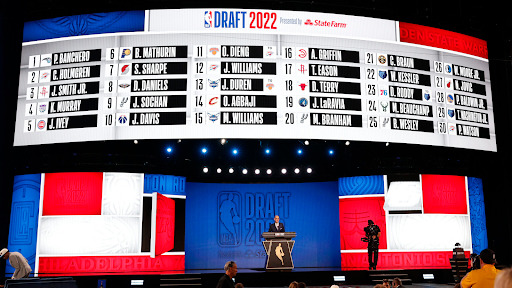
    The modern NBA Draft is a highly structured, 2-day event designed to promote competitive balance while giving teams access to new domestic and international talent. Punters also have the chance to make sport betting from 1xBet on players and teams who participate on the draft too.

    Since 1989, the draft has consisted of two rounds, with 30 picks per round, reflecting the league’s 30 franchises. This means that a total of 60 players are selected each year, although the exact number of picks can vary slightly due to forfeited selections or league penalties. Now, from 1xBet, you can also find the best sport betting options on the entire NBA as well.

    Lots of decisions made in two days

    In recent years, the NBA has shifted to a two-night format. The first round is held on the opening night, while the second round takes place on the following evening. This change was introduced to give teams additional time to evaluate options, negotiate trades, and reassess draft boards between rounds. League officials have stated that this format improves decision-making and increases the overall drama of the event. Another way to enjoy the draft is by deciding to download 1xBet – 1xbet.ug/en/mobile comes with bets related to the NBA too.

    Draft order is determined primarily by the NBA Draft Lottery, which applies to the 14 teams that failed to qualify for the playoffs. Since reforms implemented in 2019, the 3 teams with the worst regular-season records each have equal odds (14 percent) of winning the first pick. By visiting 1xBet, you can download the 1xBet application and use it to bet on all NBA teams too.

    How does the lottery work

    The lottery determines the first 4 selections, after which the remaining lottery teams pick in inverse order of their regular-season records. This system was designed to reduce incentives for teams to deliberately lose games, a practice known as “tanking.” At any moment you can 1xBet Uganda sign in – 1xbet.ug/en/user/login has bets on the best NBA players too.

    Other aspects to consider are:

    • once the lottery picks are set, the remaining non-playoff teams and all playoff teams select in reverse order of their regular-season finish;
    • the second round follows a similar structure but does not involve a lottery;
    • this means that picks are assigned strictly based on team records and any previously agreed-upon trades.

    Another key feature of the modern draft is the extensive trading of picks. Teams frequently trade current or future selections as part of larger roster-building strategies, meaning the team making a pick is not always the team that originally earned it. NBA fans can also visit 1xBet Uganda to sign in and then make a 1xBet bet on great players who have come to the draft.

    Disclaimer:

    1XBET is regulated by the Lotteries and Gaming Regulatory Board. Betting is addictive and can be psychologically harmful

    25+

    Do you have a story in your community or an opinion to share with us: Email us at Submit an Article
  • Offset Hospitalised After Shooting in Florida

    Offset Hospitalised After Shooting in Florida

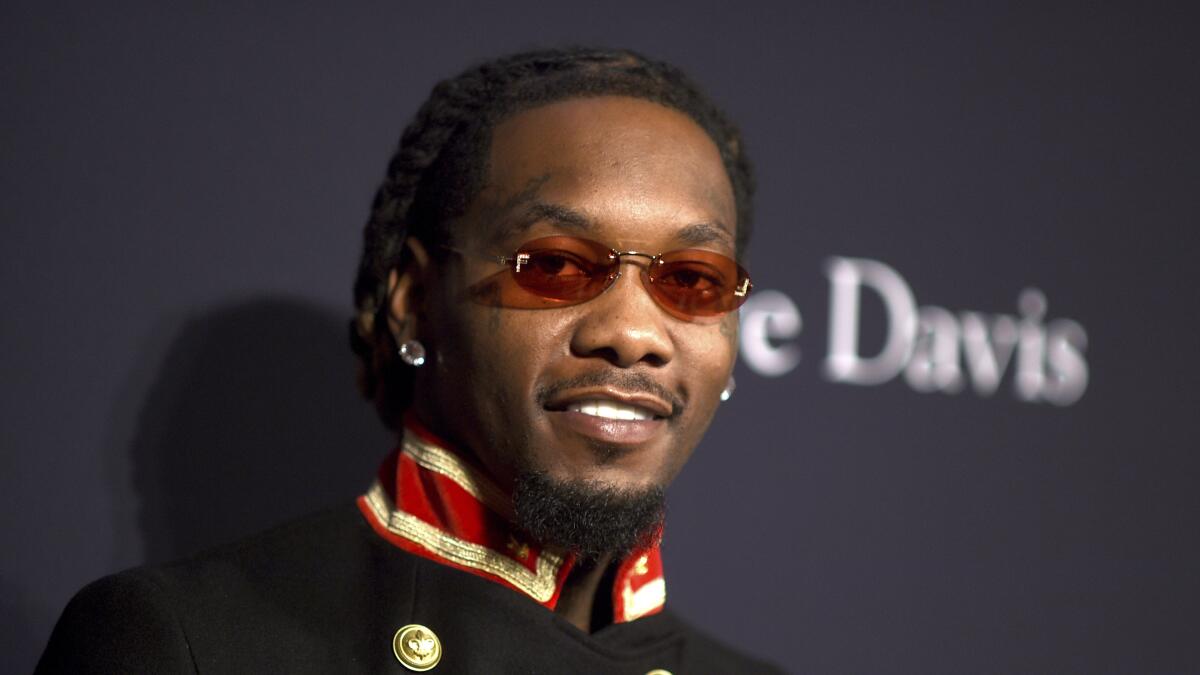
    American rapper Offset is recovering after a shooting incident outside a casino in Hollywood, Florida.

    The incident happened on April 6 at the Seminole Hard Rock Hotel & Casino, where the rapper had just interacted with fans moments before the situation escalated.

    Offset sustained non-life-threatening injuries, and medical teams rushed him to hospital. Reports say he is now in stable condition and recovering well.

    Videos shared online appear to show a chaotic scene shortly after the shooting, as security and police responded quickly.

    Authorities have confirmed that they detained suspects, and investigations are ongoing.

    Fans have since flooded social media with messages of support, expressing relief that the rapper is safe.

  • ROGERS WADADA: Reject the Protection of Sovereignty Bill, 2026, it is aimed at weakening Opposition Political parties, NGOs and Religious Institutions

    ROGERS WADADA: Reject the Protection of Sovereignty Bill, 2026, it is aimed at weakening Opposition Political parties, NGOs and Religious Institutions

    Uganda’s Protection of Sovereignty Bill (often referred to as the Protection of Sovereignty Bill 2026 is a proposed piece of legislation aimed at regulating foreign influence and funding. It has drawn significant criticism from civil society organizations, activists, and legal minds due to several contentious clauses aimed at shrinking civil space.

    The Bill according to its promoter is primarily rooted in the 1995 Constitution of the Republic of Uganda, specifically aiming to operationalize Article 1(1), which states that all power belongs to the people. Why do I think the promoters of the Bill invoked the wrong article of the constitution. While traditionally absolute, modern sovereignty often involves voluntary limitations.

    This bill is also running side by side with the NGO Funding Bill, 2026. The NGO Funding Bill allegedly sets out a range of policy goals, including reducing dependence on foreign funding, promoting literacy and social development, lowering operational costs for organizations, strengthening accountability, and safeguarding national sovereignty.

    How do we expect to protect our sovereignty with all the international laws, treaties, conventions, and global cooperation agreements we have signed. For the 2025/2026 financial year, the government planned for about, 13.41 trillion in total external financing, comprising both project loans and budget support, out of a total budget of 72.3 trillion Uganda shillings.

    With our bloated expenditure not supported by revenue collections, achieving sovereignty is a bluff. An old adage of “he who pays the piper calls the tune” comes in handy. We all know that the person or entity providing funding for an endeavor holds the power to control. It emphasizes that financial control gives one authority over decisions, actions, and directions.

    The concept of sovereignty is heavily influenced by the work of Jean Bodin, who is regarded as the “father” of the theory of sovereignty. Sovereignty is the supreme authority, power, and autonomy a state has to govern itself, its territory, and its inhabitants without external interference. It represents ultimate decision-making power, often codified in constitutions, and can refer to either national authority or individual self-determination. In Uganda however, sovereignty is a fallacy.

    It is a well within our knowledge that the government of Uganda cannot sustain itself without external funding. How come they want to restrict the operation of NGOs through controlled funding. Critics of the bill say the proposed law is designed to shrink civic space, silence opposition, and limit the independence of organizations that rely on foreign funding to operate optimally.

    Besides having been designed in bad faith, the bill provides for very high penalties and long prison sentences for persons found guilty of promoting foreign interests against Uganda, or acting as an unregistered “agent of a foreigner,” and that they can face up to 20 years in prison or fines of up to 2 billion Uganda shillings which money is not affordable.

    The foregoing sentence alone is vague in so far as it gives government an open cheque to take action against an individual even on mere suspicion as its definition of agent or foreigner is too broad. The bill applies to any person or organization “directly or indirectly supervised, directed, controlled, financed or subsidized by a foreign person or entity.

    Again, this definition is viewed as vague and covers many local NGOs, CBOs, and activists, bringing them under intense state scrutiny as it appears to target foreign funds and assets purchased or built using undisclosed external funders. This may appear as if it will only affect opposition political parties and civil society entities but may also affect religious institutions many of which are registered as NGOs and or companies limited by guarantee.

    The Bill threatens to severely restrict religious institutions, especially those relying on foreign funding for charity, education, or healthcare with risks of fines or closure for non-compliance. The bill is expected to face resistance, with critics viewing it as part of a repressive legal regime that stifles civic and religious space, even when the bill is tagged to protect national security.

    The bill further seeks to authorize the government to seize foreign funds or assets linked to violations. For example, funding obtained without proper approval or used for activities deemed against national interests. Again, the words “deemed against national interests” is yet another vague statement for the government to define according to its interest.

    Further, the government wants to use this bill to have exclusive monopoly to determine which foreign entities work with local NGOs even when the work they do is deemed critical. By doing this, organizations shall be restricted from receiving foreign funding for activities deemed to interfere with elections, government operations, or economic stability. This could cripple NGOs working on governance, human rights, and democracy in Uganda.

    The bill is also intended to give the Minister of Internal Affairs unlimited and Powers which are usually prone to abuse. If this bill is passed into law in its current form., the government will have discretionary power to approve or disapprove foreign funding, revoke registrations, and declare individuals or organizations as “foreign agents,” with minimal independent oversight.

    In an effort to shrink civil space, the Bill makes it mandatory for Political parties or NGOS to disclose every material detail about foreign funding and, in some cases, disclose personal information about employees within strict timelines. The legislation is also designed to make fundraising and political activities by Ugandans living abroad in support of local groups (“agents”) a prosecutable offense. This provision will create un necessary panic and fear.

    Critics, including civil society organizations, have raised concerns the bill as a tool for suppressing dissent and regulating NGOs, rather than solely protecting national sovereignty. The bill is being introduced to Parliament for consideration amidst questions regarding its impact on democracy and freedoms and the motive of the promoters. I can see numerous law petitions being filed in the constitutional court challenging the bill once passed into law.

    You can imagine that even before the bill is scrutinized, the NRM parliamentary caucus has already promised to support the passing of the draconian legislation into a law. I have no doubts in my mind that this piece will take away the sovereignty of the people and hand it over to government. I believe the bill is framed in bad faith and is unconstitutional as it infringes upon freedom of expression and association which rights are also guaranteed under the same constitution.

    In whichever name the law will be passed such as Sovereignty protection Act, Protection of National Sovereignty, National Security Act, Foreign Agent Act, Foreign Interference Countermeasures Act or even the protection of Sovereignty Act, the law is not called for. Issues of foreign financial inflows are already regulated by the Financial Intelligence Authority established under the Anti-Money Laundering Act.

    As a government agency, the Financial Intelligence Authority works to monitor, investigate, and prevent illicit financing, money laundering and terrorism financing by analyzing financial disclosures from accountable persons and disseminating intelligence to competent authorities. What more does the government want, what mischief do they want to cure?

    Wadada Rogers is a commentator on political, legal and social issues. wadroger@yahoo.ca

    Do you have a story in your community or an opinion to share with us: Email us at Submit an Article

About UGNEWS24

UGNEWS24 is a Uganda local news service, a product of SOLAVIA GROUP LIMITED, Reg. No. 80048169153974.

Registered office

Plot 2335, Buwambo-Katadde-Najjo Road,
Nansana Municipality, Wakiso District, Uganda
P.O. Box 214231, Kampala

© 2026 SOLAVIA GROUP LIMITED. All rights reserved.