Author: admin

  • How EACOP, a Smart Oil Pipeline system is Pumping Life into East Africa

    How EACOP, a Smart Oil Pipeline system is Pumping Life into East Africa

    By John B. Habumugisha

    Uganda’s aspiration to integrate into the global community dates back to the 1850’s – the era of early explorers, whose construction of railways and ports laid the foundation for this connection. Years later, much of the infrastructure they left behind still forms the backbone of African economies.
    With the construction of new engineering projects like the Standard Gauge Railways in Kenya and Tanzania, the suspended 3. 2km Kigingo – Busisi Bridge across Lake Victoria and the East African Crude Oil Pipeline (EACOP); we are witnessing a significant shift – East Africa is deliberately investing in a future, employing local resources to design, lead and execute these projects – building intellectual capacity and the operational strength to manage them for their shared prosperity.
    The East African Crude Oil Pipeline (EACOP) is one of Africa’s most technologically advanced infrastructure systems – a “smart pipeline”, recognized as one of the most innovative in the world. Designed with precision, safety, and sustainability in mind, the Project continues to make steady progress, with overall completion now over 80%.
    All 1,443 km of the pipeline has been produced and delivered, of which 1,4G0 km has been welded, and 800 km backfilled. Reflecting EACOP’s strong commitment to National Content in Uganda and Tanziana, Ugandans now represent 91% of the workforce (2,878 out of 3,154 employees), contributing to every stage of the Project’s development.
    So, what makes it so ‘smart’? This isn’t just a steel tube in the ground. This pipeline has a digital nervous system. Imagine fibre-optic cables running alongside the pipe, constantly ‘listening and feeling’. They can detect a temperature change or a vibration, pinpointing a potential leak within a few meters, instantly. This core feature of the pipeline is next-generation environmental monitoring
    At the heart of this system is the SCADA (Supervisory Control and Data Acquisition) network, the project’s “brain.” From central command centres, technicians can monitor pressure, flow rate, and the status of the 76 Main Line Block Valves (MLBVs) along the entire route, allowing for instant remote control and rapid isolation of any section. This is complemented by advanced construction techniques: 1,4G0km of pipe already welded using state-of-the-art methods, coated with Fusion Bonded Epoxy and polyurethane foam respectively for maximum corrosion resistance and thermal efficiency.
    The development of the Tilenga and Kingfisher upstream oil fields, which feed the pipeline, are massive projects. Crucially, the energy required to power these operations,

    and the pipeline’s Pump Stations have accelerated national power projects, adding significant megawatts to the national grid for public use. The EACOP will be largely powered by Uganda’s hydropower grid, potentially making it one of the lowest-carbon- footprint pipeline systems of its kind.

    Furthermore, the region has benefited from significant upgrades to logistical infrastructure. New and upgraded highways in the Albertine region are improving connectivity for communities far removed from the oil sector, unlocking new economic corridors.

    For me, however, the most profound infrastructure isn’t made of concrete or steel; it’s built by humans. Through the EACOP Academy and Universities partnerships, young locals/ nationals are being trained. Beyond creating pipeline workers, we’re creating welders, engineers, data analysts and project managers. Over 1,500 youth have already been trained, with hundreds more gaining international experience, thus building a skills base that will fuel every other sector for decades.

    So, imagine this: a farmer in Hoima sending fresh produce to markets faster on newly paved all-weather roads; a Ugandan engineer in Kampala monitoring a digital dashboard that spans two nations; a student from the EACOP Academy using their skills to build renewable energy plants in 2030+.

    That’s the future we’re actually building. – The roads, the power lines, the airports, and the skills. That’s the real legacy. That’s the permanent infrastructure.

    The true judgment of EACOP will come 10 to 20 years from now, when we see if we leveraged this project to build a smarter, more connected, and more self-reliant Uganda and East Africa. The pipeline moves oil, but its greater purpose is to propel a region forward. We are finally moving from being a source of raw materials to becoming masters of our own complex, smart technological destiny.

    The author is the Deputy MD of EACOP.

    Do you have a story in your community or an opinion to share with us: Email us at Submit an Article

  • Uganda’s 2026-2031 cabinet: From fishermen and fisherwomen (symbolism) to intellectualism and competence

    Uganda’s 2026-2031 cabinet: From fishermen and fisherwomen (symbolism) to intellectualism and competence

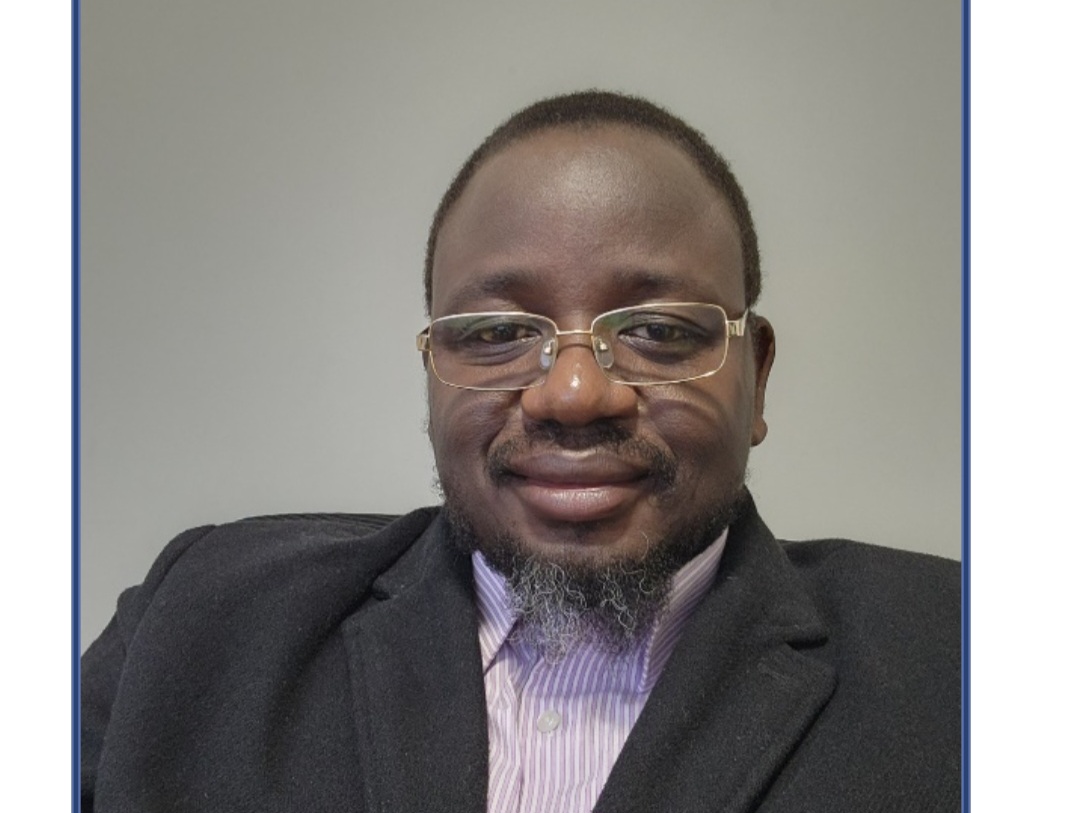
    By Samuel B Ariong, PhD 

    As Uganda approaches the swearing of the presidency, new parliament and the subsequent formation of a new cabinet, an important national conversation is beginning to take shape; what kind of leadership does the country need for the next phase of its development?

    This is not merely a political question. It is a governance question, and ultimately, a development imperative.

    The 2021–2026 cabinet, often colloquially described as the “fishermen and fisherwomen” cabinet, emerged from a particular political context following the devastations of Covid-19. It reflected an emphasis on grassroots representation, loyalty, and a desire to project inclusivity. In many respects, it served its purpose within that moment. However, as Uganda’s socio-economic landscape evolves, so too must the expectations placed on those entrusted with national leadership.

    Uganda today faces a convergence of complex and interrelated challenges. Youth unemployment remains persistently high, even as thousands of graduates enter the labour market each year. Fiscal pressures continue to mount, with public debt requiring careful and strategic management. Climate change is increasingly affecting agricultural productivity and rural livelihoods. Millions of Ugandans remain perpetually entrenched in cyclical poverty. The traffic congestion in Kampala pushes one to think whether the course content of Urban Planning degree in Makerere University needs re-development or we still have illiterate leaders like late Hajji Sebbagala running the city. At the same time, the demands on healthcare, education, and infrastructure systems continue to grow immensely. The crime rates remain significantly high, though Uganda Police has its own statistics that paint declining figures contrary to what millions of Ugandans face each day.

    These are not challenges that can be addressed through political instinct alone. They require technical understanding, policy coherence, and the ability to engage with evidence in a systematic way.

    This is where the composition of the next cabinet (2026- 2031) becomes incredibly decisive.

    Effective governance in the modern era depends on aligning responsibility with capability. Ministries are not symbolic offices; they are complex institutions that require leadership grounded in subject-matter understanding. Whether it is managing the national economy, reforming the health system, or navigating energy transitions, the quality of decision-making is directly influenced by the expertise brought to the table.

    This is not to suggest that national leadership should be the preserve of a narrow elite holding PhDs. Uganda’s strength lies in its diversity, and lived experience remains an fundamental component of effective representation. However, there is a meaningful distinction between inclusive leadership and the underutilisation of available expertise.

    A false dichotomy has too often shaped public discourse, the idea that leaders must choose between being relatable and being knowledgeable. In reality, the most effective leaders are those who combine both: an understanding of the lived realities of citizens, alongside the intellectual tools and prerequisites required to prescribe, design and implement plausible policy.

    Uganda is not lacking in talent. Across its universities, professional sectors, and diaspora communities, there exists a deep pool of individuals with expertise in economics, law, public health, engineering, environmental science, urban planning, criminology, education and public administration. Harnessing this capacity is not a luxury; it is a necessity to complement Yoweri Museveni’s childhood vision of socioeconomic transformation.

    The next cabinet presents an opportunity to do precisely that.

    It is an opportunity to move beyond appointments of fishermen and women driven primarily by political calculus, and towards a model that places greater emphasis on competence, preparedness, and accountability. It is an opportunity to strengthen public confidence in government institutions by ensuring that those who lead them are equipped to do so effectively.

    Importantly, this should not be framed as a rejection of the fishermen and women of 2021- 2026. The outgoing cabinet has played its modest role within a specific national context. Rather, it is about recognising that Uganda’s development trajectory now demands a different level of technical depth and policy sophistication.

    In a rapidly changing global environment, countries that succeed are those that adapt. They invest not only in infrastructure and institutions, but also in the quality of leadership that guides them.

    As for Uganda, the stakes are predominantly clear. The decisions made in the next five years will have lasting implications for economic stability, social development, and national resilience.

    As such, the composition of the 2026–2031 cabinet should be guided by a simple but consequential principle: the right people, with the right skills, in the right roles.

    That is not an abstract ideal. It is a practical prerequisite for effective governance.

    And it is one that Uganda can no longer afford to overlook.

    The author was recently appointed as an Associate Professor of poverty and policy.


    Do you have a story in your community or an opinion to share with us: Email us at Submit an Article

  • Kirabo Kisitu Confirms BBL, Says “I Own It Fully”

    Kirabo Kisitu Confirms BBL, Says “I Own It Fully”

    Ugandan socialite Kirabo Kisitu has confirmed that she underwent a Brazilian Butt Lift (BBL), addressing months of speculation about her appearance.

    Speaking during a recent appearance, Kisitu openly admitted to the procedure, saying the decision came from a personal place rather than public pressure.

    Yes, I did a BBL. I wanted to take away my insecurities. That was my choice, and I own it fully.

    She explained that the move was about improving her confidence, not chasing trends or trying to please critics.

    Kisitu also pushed back against the backlash, saying many of those criticizing her have their own insecurities.

    The same people talking about me also have insecurities. If they had the chance, many of them would fix what they do not like about themselves too.

    Despite the ongoing conversation around body enhancement, she remained firm, insisting the decision does not define her.

    People should stop making it a big deal. I did it, and that is okay. It does not define my worth it just helped me feel better in my own skin.

    Her remarks have fueled discussion online, with opinions divided over beauty standards and cosmetic procedures.

    For Kisitu, however, the focus remains on personal confidence and owning her choices.

  • Battle for Nalika Lane: Makerere Guild race turns messy as Kadondi, Karema clash over Street Jam venue – Sqoop

    Battle for Nalika Lane: Makerere Guild race turns messy as Kadondi, Karema clash over Street Jam venue – Sqoop

    A fresh battle has erupted between the two leading contenders in the Makerere University Guild Polls Gracious Kadondi, a National Unity Platform (NUP) party backed candidate and former Miss Uganda Hannah Karema Tumukunde over the venue of their upcoming street jam.

    The duo are fighting over Nalika lane, a venue they both announced will host their street jams starting 7Pm tomorrow ahead of the April 9 polls.

    Officials from the University led by the Chairperson of the 92nd Guild Electoral Commission, Maureen Owomugisha when contacted said the University will not allow this street jam to happen despite it being organised outside its premises.

    “In this entire process, we value the lives of students and anything that threatens peace won’t be tolerated. Nalika Lane is outside the University but we shall not allow the functions to take place because in addition to threatening peace it’s against the University policy of ban to open campaign,” she said.

    Ms Winfred Kabumbuli, the Dean of Students at Makerere University told the Monitor that the management is confident that the Guild Electoral Commission will do the right thing and prevent this pending catastrophe.

    “Students elected this Commission and as the management we have confidence in it if there is anything that requires us to come in, that will be done but for now the Commission is in charge of this election,” she said.

    The two rivals invited top Ugandan artistes to perform on their street jams. Kadondi who commands a formidable support has invited various artistes including; Manisul Ssemanda popularly known as King Saha, newly elected Nakawa Division Mayor Ali Bukens aka Nubian Lee, Nina Akankunda alias Nina Rose, Dax Vibes, Dax Katel, Kabako and others, while Karema lined up; Sheebah Karungi, B2C Entertainment, Suuna Ben, among others.

    The two separate posters released by the candidates and shared widely on social media platforms indicate that the street jam will take place tomorrow April 7, at 7:00pm at Nalika lane, which is Kikoni which houses various hostels in Kawempe Division.

    Mr Yudah Kaye, the Ag Secretary General of NUP Institutions, the party’s youth wing that manages institutions affairs told the Monitor that they were the first to book this venue but to their dismay they saw their rival advertising the same venue yesterday.

    “We fulfilled all the requirements and even wanted to put our stage at Dream World Hostel and we released the flyer announcing the street jam but to our dismay our rivals chose to do otherwise,” he said.

    He added, “We announced our event and it will go on as planned because the students are waiting for their artists to perform for them.”

    But Karema in a statement posted on her official X-platform also reiterated her readiness to host the street jam in that same place.

    “It has come to my attention that a malicious campaign is being run by certain individuals, attempting to sow division and confusion among us. For the record, as required by law, my team and I wrote to the Inspector General of Police (IGP) notifying him and seeking permission to host a series of campaign events in Kikoni. These included a Porridge night at MISH hostel, a STREET JAM at Douglas Villa and Nalika Lane,” the statement reads in part

    It adds, “All of these events were cleared by the authorities. Due to proper planning, the flyers for these events could not be released simultaneously. Unfortunately, some people took advantage of this delay and circulated a flyer announcing an event on the same day we had already booked one of the venues. I urge my opponent, who is focused on running a smear campaign and spreading hate speech, to respect the law and stop misleading the electorate. Respect for the law is a fundamental tenet of good leadership.”

    Emotions are high among the 13 contestants of the University students’ top seat as each candidate flanked with their supporters have been canvassing the campus to solicit for votes, ahead of the race that seeks to replace Churchill Ssentamu whose tenure was dissolved earlier this month.

    Although the race has attracted 13 candidates, the tight race is between two candidates, the National Unity Platform (NUP) backed Gracious Kadondi, and the 2023/24 Miss Uganda Hannah Karema Tumukunde.

    [email protected]

    Don’t want to miss out on any story? For updates on all Sqoop stories, follow this link on Telegram: https://t.me/Sqoop and Whatsapp: https://whatsapp.com/channel

  • Museveni orders on-site community trial for Ggaba murder suspect

    President Yoweri Museveni has ordered that the suspect in the recent Ggaba killings be tried within the community where the crime occurred, in a move aimed at ensuring residents directly witness justice being carried out.

    The directive was communicated by Principal Judge Jane Frances Abodo, who said the case should be handled using a mobile court and concluded quickly due to its public significance. She emphasized that although courts usually follow a “first in, first out” system, exceptional cases like this one can be prioritised.

    Uganda was left in shock last Thursday after Christopher Okello Onyum attacked children at Ggaba Early Childhood Development Programme, killing four toddlers aged between one and two years and injuring another.

    According to the Judiciary, the case will likely be handled through the newly introduced mobile court system, especially since Ggaba does not have a High Court capable of trying such a serious case. The approach will allow proceedings to take place near the scene of the crime.

    The mobile court framework was recently launched by Chief Justice Flavian Zeija under new legal guidelines issued in March 2026. The system allows judges to hear cases outside traditional courtrooms, including in public spaces and temporary setups, to make justice more accessible.

    Officials say the initiative is designed to speed up case handling, reduce backlog, and extend court services to hard-to-reach areas such as remote districts, islands, and refugee-hosting communities.

    While mobile courts have long been used in military justice, their application in civilian criminal cases is still uncommon. Authorities believe this case could set a precedent for handling high-profile crimes in communities.

  • Bajjo Says Overexposure Is Killing Demand for Artistes

    Bajjo Says Overexposure Is Killing Demand for Artistes

    Events promoter Andrew Mukasa, popularly known as Bajjo, has blamed the decline in live shows on a shift in how artistes present themselves.

    While appearing on Daily Soup, Bajjo said many artistes now focus more on constant online visibility than building demand for their music.

    This, he said, has reduced excitement around performances, making it harder for promoters to pull crowds.

    Musicians no longer focus on content. Many have turned into bloggers. From morning to evening, they are on TikTok Live.

    He added that when artistes remain constantly visible, audiences lose the sense of anticipation that once drove people to attend shows.

    Bajjo pointed to Ugandan DJ media personality Etania Mutoni, whose selective appearances helped her stand out during the Easter weekend.

    By not overexposing herself, Etania built curiosity and demand, which translated into strong turnout at her event.

    That is why someone like Etania appears less but drew a big crowd. Scarcity creates demand.

    Bajjo believes artistes need to strike a balance between staying visible and preserving their value, especially if events are to regain their appeal.

  • “It’s my first time getting a man who takes care of me,” Anne Kansiime shares when she had to pay her own dowry

    Ugandan comedienne Anne Kansiime has opened up about her love life, revealing that she is finally in a relationship where she feels fully supported.

    Speaking in a recent YouTube interview, Kansiime said her past relationships were very different, as she was the one carrying all the financial responsibility. She explained that she provided for her household and even owned the home, effectively acting as the main provider.

    She described her current relationship as a refreshing change, saying it is the first time she has been with a partner who takes care of her needs. According to Kansiime, her partner now supports her financially, something she says she is experiencing for the first time as she approaches 40.

    Kansiime also shared a deeply personal story from her past, revealing that she once paid her own dowry due to pressure from her family. She said her partner at the time failed to fulfill the traditional requirement despite being informed, prompting her to secretly step in and cover the cost herself. She admitted that the situation forced her to live a lie, which eventually took a toll on the relationship.

    The comedienne added that the relationship later faced more challenges, including struggles with starting a family, which contributed to its breakdown.

    Kansiime was previously married to Gerald Ojok for four years before their divorce in 2017. She later found love with musician Skylanta in 2018, and the two welcomed a child together. However, the relationship eventually came to an end.

  • DR Congo players gifted cars, land and cash bonuses after securing 2026 World Cup spot

    DR Congo players gifted cars, land and cash bonuses after securing 2026 World Cup spot

    The Democratic Republic of Congo national football team returned home to a hero’s welcome after sealing qualification for the 2026 FIFA World Cup—and were rewarded in a big way.

    In Kinshasa, thousands of fans lined the streets to celebrate the team’s historic achievement of ending a 52-year absence from the world’s biggest football stage. But the biggest moment came later at the People’s Palace, where President Félix Tshisekedi hosted the squad.

    During the ceremony, each player and member of the technical staff received a brand-new Jeep. The president also pledged additional rewards, including plots of land and substantial cash bonuses, in recognition of the team’s achievement.

    DR Congo secured their World Cup spot with a narrow 1–0 victory over Jamaica in the intercontinental playoff, thanks to a decisive goal from Axel Tuanzebe.

    Under former Uganda Cranes Head Coach Sébastien Desabre, the Leopards now turn their focus to the tournament, where they have been drawn in a challenging Group K alongside Portugal, Uzbekistan, and Colombia.

  • Iryn Namubiru Warns Artistes: Do Not Join Music for Money

    Iryn Namubiru Warns Artistes: Do Not Join Music for Money

    Ugandan music icon Iryn Namubiru has warned upcoming artistes against chasing quick fame and money, speaking candidly about the realities of the music industry.

    The multi-award-winning singer, born Irene Gladys Namubiru, launched her career in 1995 and still commands respect as one of Uganda’s most established voices.

    During an interview on KFM, she reflected on her journey, describing a path shaped by both highs and lows, lessons that now guide how she views success.

    With that experience, she urged young artistes to think beyond money, stressing that chasing quick rewards often leads to frustration.

    Do not go in it for money because you will be frustrated, and that is why you see so many artistes go into depression and start abusing drugs because they thought the moment they step in they will become stars, they will buy big cars, but it does not work that way.

    Building on that point, she highlighted the patience the industry demands, warning that early success can create a false sense of arrival.

    There is a lot of work behind that before you start earning. You can earn in the beginning because you did a song that went viral and you earn here and there, you amass some little wealth and think you have made it, but you have to remember that it can end anytime.

    That reality, she noted, often catches artistes off guard, especially when they fail to prepare for slow periods.

    Some artistes do not expect it, they do not even prepare for it until it hits them. And even those who do not get at all think it is horrible, they thought they were going to get rich.

    In the end, she placed emphasis on passion, urging artistes to stay grounded and build stability beyond music.

    First have the passion and the money can follow, and do not only rely on the music to live and survive.

    Her message delivers a clear reality check for anyone looking to break into the industry.

  • DP Boss Mao Heads to NRM’s Kyankwanzi Retreat as Speakership Race Looms

    DP Boss Mao Heads to NRM’s Kyankwanzi Retreat as Speakership Race Looms

    Kampala – Democratic Party (DP) President and Minister for Justice and Constitutional Affairs, Norbert Mao, has confirmed he will attend the ruling National Resistance Movement (NRM) Parliamentary Caucus Leaders’ Retreat at the National Leadership Institute (NALI) in Kyankwanzi District.

    The seven-day retreat, scheduled from April 7 to 15, is a key fixture on the NRM political calendar, bringing together ruling party legislators for ideological orientation and strategic planning.

    In a post on X (formerly Twitter), Mao wrote:
    “I confirm that I’ll be participating in the Leaders’ Retreat for the NRM Parliamentary Caucuses from 7th – 15th April, 2026 at the National Leadership Institute (NALI), Kyankwanzi District. I thank our sister party @NRMOnline for the kind invitation. #TUKOPAMOJA.”

    His confirmation comes on the eve of the retreat, traditionally viewed as an NRM-only gathering. President Yoweri Museveni is expected to address participants.

    Why This Matters: Strategy or Political Co-option?

    Mao’s attendance carries significant political implications in the context of Uganda’s post-2026 elections. The NRM enters the 12th Parliament with a commanding majority, while opposition parties — including the National Unity Platform (NUP) and a weakened DP — hold reduced influence.

    Mao, who won the Laroo-Pece Division parliamentary seat in Gulu City, is also serving in Cabinet under the 2022 DP-NRM Memorandum of Understanding (MoU), an arrangement that continues to draw criticism from opposition hardliners who view it as blurring the line between government and opposition.

    NRM Secretary General Richard Todwong recently described Mao as both a Cabinet minister and newly elected MP invited to the retreat, affirming that the MoU “still holds.”

    Speakership Calculations

    The timing of Mao’s attendance is politically sensitive. He has openly expressed interest in contesting for Speaker of the 12th Parliament — a race in which the NRM Central Executive Committee (CEC) has already indicated support for incumbent Speaker Anita Among.

    Despite earlier signals from the ruling party downplaying his chances, Mao’s invitation to the retreat — and potential opportunity to address the caucus — suggests he could be positioning himself to lobby NRM MPs directly.

    Political analysts note that Kyankwanzi retreats have historically been used to consolidate the party line, induct new legislators, and manage internal dissent. Mao’s presence may therefore be strategic — either as a platform to advance his speakership bid or as part of ongoing political rapprochement with the ruling establishment.

    Mixed Reactions, Deepening Opposition Dilemma

    Reaction to Mao’s decision has been sharply divided.

    Supporters argue that his participation reflects political maturity and a commitment to dialogue in a polarized environment. Critics, however, accuse him of eroding the DP’s independence, with some branding the party a “junior partner” to the NRM.

    Within opposition circles, concerns are growing that such engagements — alongside reports of possible participation by some NUP legislators in similar forums — could weaken parliamentary oversight and dilute the role of opposition politics.

    Broader Implications

    In a Parliament already dominated by the NRM, Mao’s high-profile engagement at an internal ruling party retreat risks reinforcing perceptions of political co-option rather than constructive engagement.

    For the DP — historically a strong opposition voice in central Uganda — the optics are particularly significant, raising questions about its ideological identity and future positioning.

    As the 12th Parliament prepares to convene, attention will turn to Kyankwanzi: whether Mao uses the platform to assert reformist positions, or whether the retreat ultimately underscores the NRM’s firm grip on Uganda’s political landscape.

    Watchdog Uganda will continue to follow developments from Kyankwanzi.

    Do you have a story in your community or an opinion to share with us: Email us at Submit an Article

About UGNEWS24

UGNEWS24 is a Uganda local news service, a product of SOLAVIA GROUP LIMITED, Reg. No. 80048169153974.

Registered office

Plot 2335, Buwambo-Katadde-Najjo Road,
Nansana Municipality, Wakiso District, Uganda
P.O. Box 214231, Kampala

© 2026 SOLAVIA GROUP LIMITED. All rights reserved.