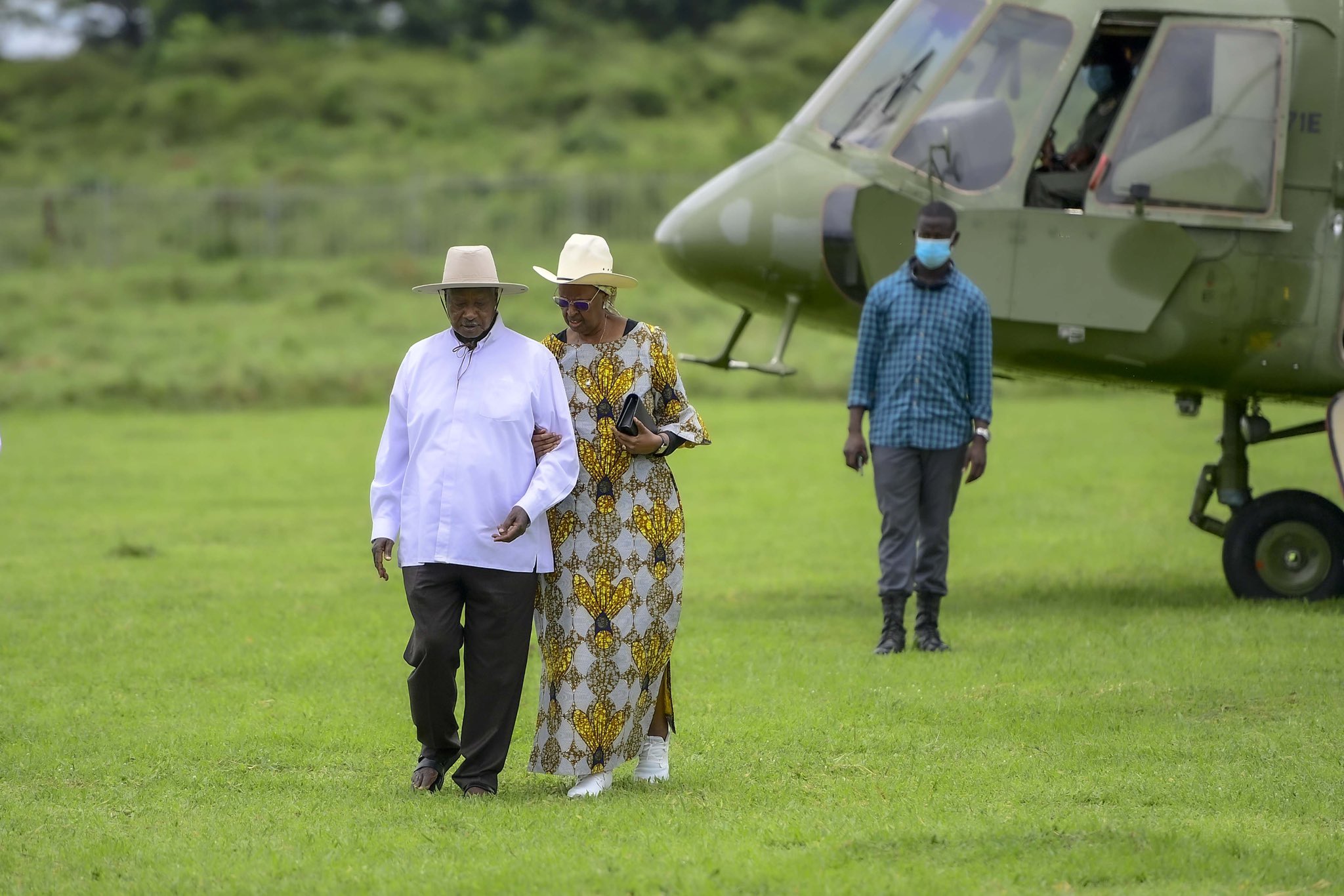
KAMPALA — President Yoweri Kaguta Museveni and First Lady Janet Museveni have issued a joint Easter message to Ugandans, breaking the silence with a brief but symbolic communication that has already stirred public attention.
Posting via his official X account early Sunday, Museveni wrote: “Maama Janet and I wish you a Happy Easter.” The message was accompanied by a stylised “Happy Resurrection Day!!” graphic addressed to “Fellow Countrymen, Countrywomen and Bazzukulu.”
The design leans heavily into scripture, spelling out the core Christian message—resurrection, victory over death, forgiveness of sins, and the promise of eternal life. It frames Easter as a turning point: from the despair of Good Friday to the triumph of new beginnings.
A prominent portrait of the President dominates the artwork, backed by familiar religious symbolism—the cross, a dove, and radiant clouds—before being formally signed off: “Yoweri K Museveni, PRESIDENT,” complete with the Ugandan flag emblem.
WHY THIS MESSAGE IS TURNING HEADS
This was no ordinary holiday greeting.
The joint sign-off comes at a time when Maama Janet’s reduced public appearances have fueled quiet but persistent speculation—both online and in political circles—about her health. By issuing a shared message, the First Family projects stability, cohesion, and continuity.
For many Ugandans, Maama Janet is more than First Lady—she is a moral voice and a central figure in education and faith-based initiatives. Her inclusion, even symbolically, sends a calculated reassurance: the First Family remains intact and present.
RELIGION, POLITICS, AND THE MOMENT
In a country where Christianity commands a dominant following, Easter is not just another date on the calendar—it is a moment of deep reflection, hope, and renewal.
And the timing is telling.
With citizens grappling with economic pressure, youth unemployment, and ongoing governance debates, a message anchored in resurrection and “new dawn” language is unlikely to be accidental. It taps directly into the emotional and spiritual realities of millions who lean on faith as a coping mechanism.
The joint message also reinforces the long-standing branding of the Museveni household as a pillar of Christian family values—an image that has been central to their political identity for decades.
REACTIONS
As expected, reactions have been split.
Supporters flooded timelines with prayers and Easter blessings. One thing is clear: for millions heading to church or gathering with family this Easter, the message serves its core purpose—an official nod from the country’s top leadership on one of the most sacred days in the Christian calendar.
Do you have a story in your community or an opinion to share with us: Email us at Submit an Article
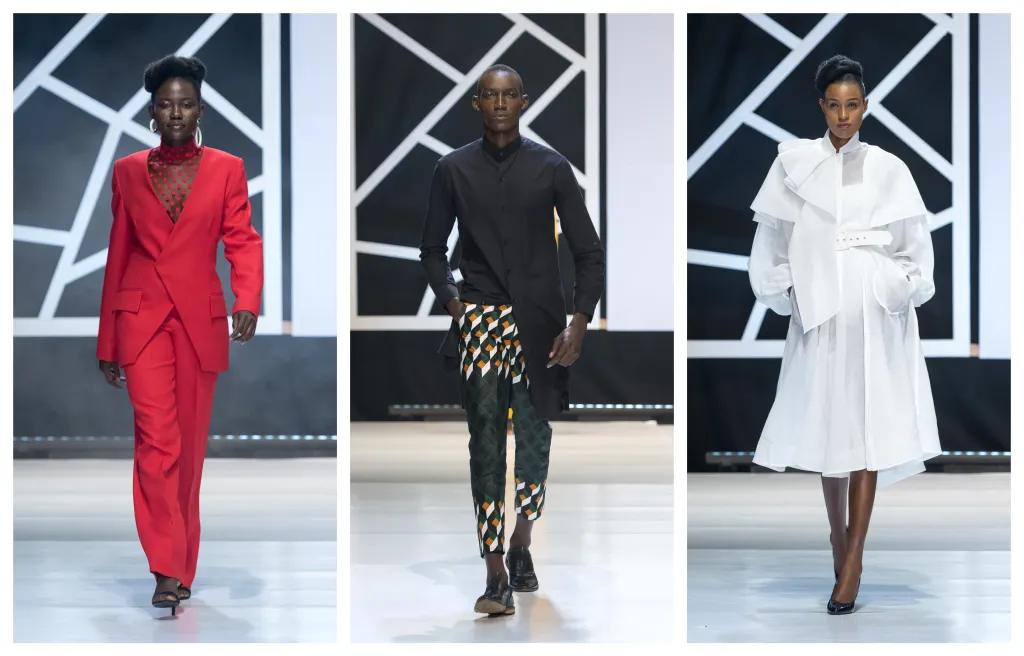
As Momentum builds for the return of Uganda International Fashion Week (UIFW) this June, organisers have officially launched a nationwide search for the next generation of runway stars through a model casting initiative dubbed #ModelsForImpact.
The casting call invites aspiring and professional models from across Uganda and the region to step forward and take part in what organisers describe as more than just a runway opportunity, but a platform for transformation within Africa’s growing creative economy.
Scheduled to take place tomorrow, Saturday, April 4, 2026, at the Makerere University Art Gallery, the casting will bring together fashion industry professionals in search of bold, confident, and driven individuals ready to shape the future of African fashion.
The call is open to young people, mainly women and girls aged 15–35, welcoming both fresh faces and experienced talent. In line with UIFW’s broader vision of inclusivity and opportunity creation, the casting also encourages participation from individuals of diverse backgrounds, including persons with disabilities and refugees.
According to organisers, the initiative is part of the wider vision of Uganda International Fashion Week 2026, which returns after a six-year hiatus with a renewed mission to strengthen Africa’s fashion ecosystem and empower young creatives.
Through Models for Impact, we are redefining the role of models, building a movement that nurtures individuals who create change, shape perception, and stand for something bigger than fashion.” Santa Anzo, founder Uganda International Fashion Week (UIFW)
Founded in 2003 by renowned fashion entrepreneur Santa Anzo, Uganda International Fashion Week has long been one of the continent’s most influential fashion platforms, connecting African designers and creatives to global opportunities.
This year’s edition will run from June 22–27, 2026, at the Kampala Serena Hotel and forms part of a broader Creative Economy Program (2026–2028) designed to equip thousands of young people with practical skills, mentorship, and access to markets within the fashion and creative industries.
The program, supported by the Mastercard Foundation and implemented in partnership with the International Trade Centre and Bayimba Foundation, aims to empower more than 9,800 youths aged 15–35, the majority of them women and girls, by opening up pathways for employment and entrepreneurship within the fashion value chain.
Organisers say the runway casting is an important gateway for young people looking to build careers in modelling and the broader fashion industry.
“This is more than a casting,” Santa Anzo noted. “It is an opportunity for young people to become part of a movement that is positioning fashion not only as an art form, but as a powerful driver of economic opportunity and cultural expression.”
Selected models will have the opportunity to walk alongside some of Africa’s leading designers during Uganda International Fashion Week, gaining valuable exposure, mentorship, and connections within the industry.
Interested participants are encouraged to pre-register online via fashionweek.uifwglobal.com to secure a slot, as spaces for the casting are limited.
The #Models4Impact call marks the beginning of an exciting journey for young creatives ready to take their first step onto one of Africa’s most influential fashion stages.
Rising Ugandan singer Aaronx has never hidden his feelings for Lydia Jazmine, often declaring his love in interviews and on social media.
Now, Lydia Jazmine has responded, making it clear she is aware of his admiration and that he expresses it just as openly in person.
Speaking on Galaxy TV, the singer said Aaronx remains consistent, telling her directly that he loves her whenever they meet.
Aaronx is my friend. I have met him a couple of times and everytime he finds me, the same way he says what he says on social media is the same way he tell me face to face that he loves so much. He does not hide it and I also love him so much. He is a cool person. He really loves me and I appreciate that. we even have a song coming soon. We are friends.
She described him as a close friend and appreciated his honesty, while also confirming they are working together on new music.
However, she stopped short of calling it a relationship, instead hinting that anything could happen in the future.
Relationships cannot be planned. You never know.
For now, the two remain friends, but their connection, both personal and musical, continues to draw attention.
Musician T Paul, while appearing on the NBS After5 show, weighed in on remarks previously made by Eddy Kenzo regarding how artists today compare to those from earlier generations in terms of wealth and assets.
Responding to the discussion, T Paul noted the difference in how audiences consumed music then versus now.
Artists in the past made money because people yearned to see them, but now people see us everywhere on the internet.
He explained that artists from earlier eras commanded immense value and respect, with some even regarded almost like prophets. Fans would eagerly anticipate rare appearances, making live performances highly profitable and exclusive.
In contrast, he noted that today’s artists are constantly visible on social media, often accessible to fans at any moment. While this boosts exposure, he argued that it also reduces the mystique and perceived value of artists.
According to him, the ease of access, where fans can watch artists from the comfort of their beds, has, in some ways, diluted the level of admiration and exclusivity that once defined the industry.
Artists in the past made money because people yearned to see them, but now people see us everywhere on the internet.- TPaul#NBSAfter5pic.twitter.com/xIEtbNqIzg
Singer Victor Ruz is recognized as one of Uganda’s gifted vocalists, celebrated for his smooth, soothing voice and emotionally rich melodies that easily captivate listeners.
During a recent interview, the singer was put on the spot with a tricky choice to choose between a rich sugar mummy and a beautiful 20-year-old; who would he prefer?
To the surprise of many, Victor Ruz confidently chose the sugar mummy. He explained that, in his experience, younger women tend to be more demanding, while older partners offer a calmer, more stable dynamic.
“A beautiful 20-year-old? No. Young girls are very stressful. A rich sugar mummy—yes.”
Beyond relationships, the conversation shifted to music. When asked which artist he would not want to redo his songs, Victor Ruz quickly mentioned Alien Skin.
According to him, Alien Skin’s music thrives on high-energy vibes, whereas his own artistry is deeply rooted in emotion and melody.
He further expressed doubt that Alien Skin could easily adapt to his softer, more expressive style.
“I wouldn’t prefer Alien Skin to redo any of my songs because his music style is for vibes, and I’m about emotions. I don’t think he can compose himself and sing sweet melodies the way I do.”
Victor Ruz’s remarks reflect both his strong sense of identity as an artist and his willingness to speak openly about his personal preferences.
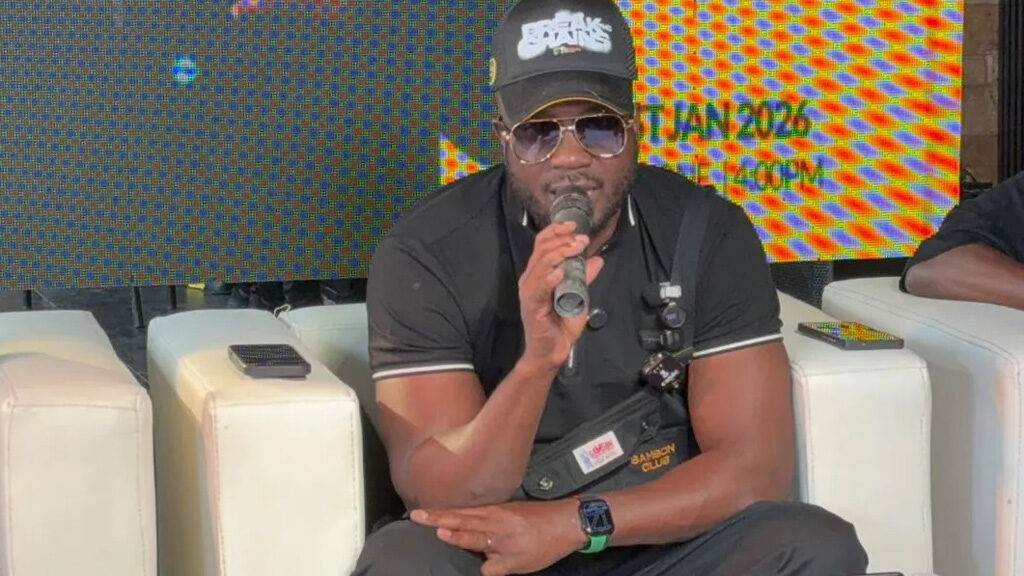
For the first time, Bebe Cool is opening up about the behind-the-scenes conversations that led to the formation of the Uganda National Musicians Federation and why he ultimately walked away.
Speaking during an interview on Vibe Life YouTube with Eddy Sendi and Jenkins Mukasa, the veteran artist painted a picture of a movement that began with hope, trust, and a phone call from Eddy Kenzo.
“I was at home when Kenzo called me,” Bebe Cool revealed. Kenzo, he says, had been in discussions with General Saleh about forming a unifying body for artists but wasn’t confident fellow musicians would listen to him.
Kenzo gave him a shortlist of influential names and asked him to help bridge the gap particularly with Sheebah Karungi and Saha.
Bebe Cool didn’t hesitate. He recalls organizing a meeting at Torino, where he personally spoke to the artists, selling them on what he believed was a powerful, long-overdue idea.
“I saw it as a great idea,” he said. “People like Sheebah had never belonged anywhere, and I thought this was the perfect thing.”
But somewhere between the idea and execution, things shifted.
For Bebe Cool, the turning point came during the federation’s registration process, a detail he now describes as a deal breaker.
“If you tell me you are going to register a federation that is owned individually by three names Eddy Kenzo, Sheebah Karungi… — then it becomes yours to own and yours to run,” he said.
That realization changed everything. What had started as a collective dream began to feel, in his eyes, like a private entity disguised as a public cause.
A storm is brewing at the Uganda National Council for Science and Technology as the Auditor General’s December 2025 report lays bare a trail of systemic failures, weak controls and shocking inefficiencies under the watch of Acting Executive Secretary Dr. David Serruka and the powerful Governing Council chaired by Prof. Rhoda Wanyenze.
The line ministry for the Uganda National Council for Science and Technology is the Ministry of Science, Technology and Innovation – Office of the President under Dr.Monica Musenero.
The Council, inaugurated in August 2024 and packed with some of the country’s top academic and technical minds, now finds itself under intense scrutiny as the audit exposes an institution struggling to deliver on its mandate despite heavy funding and strategic positioning at the heart of Uganda’s science and innovation agenda.
At the center of the unfolding drama is a pile of unpaid money, with the report revealing that “UNCST had outstanding receivables of UGX.2.11Bn at the end of the financial year,” raising immediate concerns about revenue collection and financial discipline. But this is just the tip of the iceberg.
Procurement, often a magnet for controversy, appears deeply compromised. The Auditor General found that the Council “did not indicate procurements reserved for registered Associations in its procurement plan as required by the PPDA guidelines,” effectively sidestepping established rules. Worse still, out of 26 planned procurements worth UGX.15.28Bn, two procurements worth UGX.12.98Bn were not implemented by the end of the financial year, a staggering gap that points to planning paralysis.
The irregularities deepen with revelations that five procurements conducted under the request for quotation method had shortlists below the required minimum, while seven bidders were shortlisted despite not being on the prequalified list. In six procurements worth UGX.1.12Bn, the Council outright failed to comply with evaluation criteria, raising red flags about fairness, transparency and value for money.
Even when contracts were awarded, execution dragged painfully. The report notes that “on average, there were contract performance delays of 98 days in two (2) procurements worth UGX.85.49Mn,” signaling inefficiencies that could derail critical projects.
Meanwhile, millions worth of equipment lies idle. In a revelation that has stunned observers, the Auditor General states that the Council had “112 engineering machinery/equipment that had not been effectively utilized during the year.” In a country pushing for industrialization and skills development, such underutilization is being viewed as a glaring waste of resources.
The chaos extends to asset management, with the Council operating without a formal policy and lacking documented procedures to monitor utilization. Even basic record-keeping is in disarray, as UNCST “did not have maintenance logs for other assets like computers, printers, generators other than vehicles and heavy equipment and machinery,” leaving critical infrastructure exposed to neglect and breakdown.
On the strategic front, the picture is equally grim. During the implementation of its strategic plan, the Council realized UGX.13.8Bn out of a total budget of UGX.155Bn, resulting in massive underfunding. To make matters worse, the audit found that targets in the strategic plan were not even properly quantified, and some assessed performance indicators differed from those originally set, throwing the entire planning framework into question.
Even as a new strategic plan for 2025/26–2029/30 sits awaiting approval, the current one appears to have been implemented without clear benchmarks, leaving observers wondering how performance was measured in the first place.
Funding gaps continue to haunt the institution. Out of a Government of Uganda budget of UGX.28.16Bn approved by the Governing Council, only UGX.12.3Bn was appropriated by Parliament, creating an underfunding of UGX.15.86Bn. Development partner funding also fell short, with only UGX.1.37Bn received out of UGX.3.84Bn expected, deepening the financial strain.
Ironically, the Council exceeded its own revenue target, collecting UGX.1.147Bn against a budget of UGX.1.0Bn, but this lone bright spot is overshadowed by widespread implementation failures. Out of 22 planned outputs worth UGX.2.9Bn, only 13 were fully implemented, six were partially achieved and three were not implemented at all.
Oversight mechanisms appear virtually absent. The Auditor General observed that UNCST “did not have an annualized M&E framework and there were no specific strategic plan M&E reports,” meaning there was no structured way to track progress or evaluate impact.
Even in high-profile projects, the cracks are evident. The National Science Technology Engineering and Innovation Skills Enhancement Project (NSTEI-SEP), a five-year initiative partly funded by a loan from China’s Exim Bank, achieved full donor disbursement of USD 84.63 million, with USD 78.63 million utilized. However, UGX.13.94Bn of government counterpart funding remained unutilized, raising questions about absorption capacity.
At the Technology Innovation Business and Incubation Centre (TIBIC), the situation is equally troubling. The report highlights the absence of “an approved policy and legal framework to guide the management of innovators,” alongside missing guidelines to operationalize the multimedia centre, effectively leaving innovation support structures in limbo.
Key policy gaps persist across the board. There is no approved occupational skills development and capacity enhancement policy, and the Council lacks any formal coordination framework or partnership agreements with universities, technical institutions or private sector players—an astonishing gap for a body meant to drive national innovation.
Even basic store management has collapsed into disorder. The audit exposes “several weaknesses in stores management including failure by the requester and issuer to sign spare parts requests, inadequate spare parts issuance documentation, lack of stock cards/bins, inadequate physical access controls, and failure to do end of year stock taking,” a catalogue of lapses that opens the door to loss, theft and abuse.
As if the audit findings were not explosive enough, an IGG petition dated 16th February 2026 has added fuel to the fire, alleging chaos in the transition of the NSTEI-SEP project into a new entity dubbed EDIC under the Science, Technology and Innovation Secretariat in the Office of the President. The petition raises alarm over what it describes as an “arbitrary transition process to the non existent entity named EDIC,” and claims of irregular staffing, questionable procurements and lack of oversight.
It further alleges that project structures and facilities worth millions of dollars, including state-of-the-art engineering hubs and over 300 pieces of machinery, are being mismanaged during the transition, with concerns about illegal recruitment, unpaid staff and questionable financial transactions.
As pressure mounts, the spotlight is now firmly on Serruka, Wanyenze and the entire Governing Council to explain how an institution entrusted with driving Uganda’s science, technology and innovation agenda could sink into such widespread dysfunction. With billions underperforming, systems missing and oversight gaps glaring, the question echoing across accountability circles is simple: who will fix the mess—and who will answer for it?
KAMPALA— Government is tightening the noose on Uganda’s booming entertainment industry, proposing a new 6% tax on performance fees for musicians, comedians, actors and all public performers.
The measure, tucked inside the Income Tax (Amendment) Bill, 2026, was tabled in Parliament this week by State Minister for Finance Henry Musasizi.
If passed, the tax will kick in July 2026, marking a major shift in how artists’ earnings are tracked—and taxed.
How the tax will hit
Forget chasing artists after concerts—government is going straight for the source.
Under the proposal:
Event promoters will deduct 6% from every Ugandan performer’s agreed fee
The money goes directly to the Uganda Revenue Authority (URA)
Artists walk away with 94% of their pay
Foreign performers won’t be spared either—they face a steeper 15% withholding tax.
Musasizi didn’t mince words:
“When you are doing your concerts or shows… we want to take 6% of that income because you are earning.”
Not a new tax—just a harder one
Officials insist this isn’t a fresh tax—it’s enforcement.
For years, entertainers were supposed to declare and pay income tax, but enforcement has been patchy in a sector dominated by cash deals, under-the-table payments and weak record-keeping.
Now, government is flipping the script—forcing compliance at the point of payment.
Why now?
Simple: money.
The entertainment industry has exploded—sold-out concerts, big endorsement deals, and rising gate collections—but tax returns from the sector have remained suspiciously thin.
By dragging promoters into the process, government aims to:
Plug revenue leaks
Formalise the creative economy
Force high-earning artists into the tax bracket
The move also comes hot on the heels of reforms aimed at strengthening royalty collection for musicians, signaling a broader push to regulate the industry.
Mixed reactions on the ground
The proposal has already sparked debate:
Supporters say it’s long overdue—top artists have been “eating big” while dodging taxes
Hardliners argue 6% is too soft, pushing for 10–20%
Critics warn it could suffocate upcoming artists struggling with small gigs and high production costs
Others are asking: why now, when URA has previously taxed concerts at entry points?
For now, artists themselves are largely silent—but behind the scenes, the industry is watching nervously.
What next?
The bill heads for full parliamentary scrutiny, where it could face amendments—or political resistance.
If passed:
Promoters who fail to deduct the tax will face penalties
Artists can claim the 6% as a tax credit when filing annual returns—meaning it’s not double taxation, just early collection
Bottom line
Government is no longer trusting the system—it’s enforcing it.
And for Uganda’s entertainers, the message is clear: the era of cash-and-carry, tax-free shows is coming to an end.
Do you have a story in your community or an opinion to share with us: Email us at Submit an Article
Speke Resort and Commonwealth Resort Munyonyo, one of Uganda’s largest luxury resorts, is hosting a vibrant, family-friendly entertainment experience this Good Friday across its expansive lakeside grounds.
At the Nyanja/Lake Terrace, a dedicated leisure area within the resort, guests are enjoying a relaxed outdoor setting by the lake, complete with a variety of activities for both children and adults. The space has been turned into a lively hub designed for family fun and relaxation.
This evening’s programme includes a live band performance, alongside attractions such as pony rides, a kids’ movie night, bonfire sessions with marshmallows, and an interactive petting zoo—offering a full family outing in one location.
Elsewhere within the resort, Lake Grill is hosting a more energetic experience, featuring DJs, additional children’s activities, and access to the petting zoo. Entry to this section is priced at Shs5,000 per person, making it an affordable option for those looking to kick off the weekend in style.
Looking ahead to Easter Sunday, the resort has introduced a special accommodation offer, with Deluxe rooms going for $139 (about Shs516,000). The rate is inclusive of taxes and offered on a full-board basis, covering breakfast, lunch, and dinner. Guests will also enjoy access to the Easter Sunday brunch, as well as facilities such as the swimming pool, gym, steam, and sauna.
Beyond accommodation, the five-star resort has lined up a range of Easter Sunday experiences across its venues, including Pool Pavilion Restaurant, Nyanja/Lake Terrace, Lake Grill, and Vikings Bar.
At Pool Pavilion Restaurant, a Bubbly Brunch will run from midday to 4pm, featuring a live band, Easter egg hunt, kids’ activities, petting zoo visits, a meet-and-greet with the Easter Bunny, and a live DJ. The experience is priced at Shs200,000 for adults and Shs100,000 for children.
Nyanja/Lake Terrace will host a kids’ movie night, petting zoo visits, bonfire sessions, and acrobatic performances between 1pm and 4pm.
At Lake Grill, guests can enjoy a kids’ carnival, acrobatic shows, a live DJ, and petting zoo access for just Shs5,000 per person.
Meanwhile, Vikings Bar will offer a cocktail happy hour experience, showcasing expertly crafted drinks by some of Kampala’s top mixologists.
While speaking on Radio 4, the singer, born Joan Namugerwa, said the industry lacks support.
According to her, this lack of support shows in everyday interactions, from ignoring each other to failing to promote one another’s work.
Just for us to be united. If Jowy Landa releases a song, her fellow musicians should help push it. Why do we dislike each other? Do you know that as musicians, we even bypass each other? You release a song and someone you call a friend cannot even repost it on TikTok unless you beg them. Some musicians do not even greet each other at shows.
To highlight the difference, she pointed to international artistes as an example of how support should work.
You will see artistes like Ayra Starr working with Tyla and Tems, and they push each other. They even do challenges for each other. You are not going to lose anything when you light another candle.
She also praised Kenzo for trying to unite musicians, even though some have not embraced the effort.
That is why Kenzo is a good person. He has tried to unite musicians, but there are still some who do not want. I do not understand it.
In the end, she called for more love and unity among artistes.
What are we gaining from that? We need to love each other.
About UGNEWS24
UGNEWS24 is a Uganda local news service, a product of
SOLAVIA GROUP LIMITED,
Reg. No. 80048169153974.