Author: admin

  • Boda Boda Rider Nabbed After Failed Panga Robbery in Kampala

    Boda Boda Rider Nabbed After Failed Panga Robbery in Kampala

    Kampala police have arrested Mwanda Alex, 30, after an attempted robbery in Kibumbiro Zone, Lubaga Division.

    Racheal Kawala, the KMP spokesperson says that Mwanda, a boda boda rider from Nabbingo, Wakiso, allegedly teamed up with two accomplices to steal a motorcycle in the early hours of 25 March 2026. The group reportedly diverted from the main road and threatened the rider with a panga.

    The victim’s loud alarm drew the attention of passersby, and police on foot patrol swooped in, arresting Mwanda on the spot. He was found with the weapon, while his two partners fled.

    She notes that police are now hunting for the remaining suspects.

  • Most Ugandan Female Artistes Sing From a Male Perspective — A Pass

    Most Ugandan Female Artistes Sing From a Male Perspective — A Pass

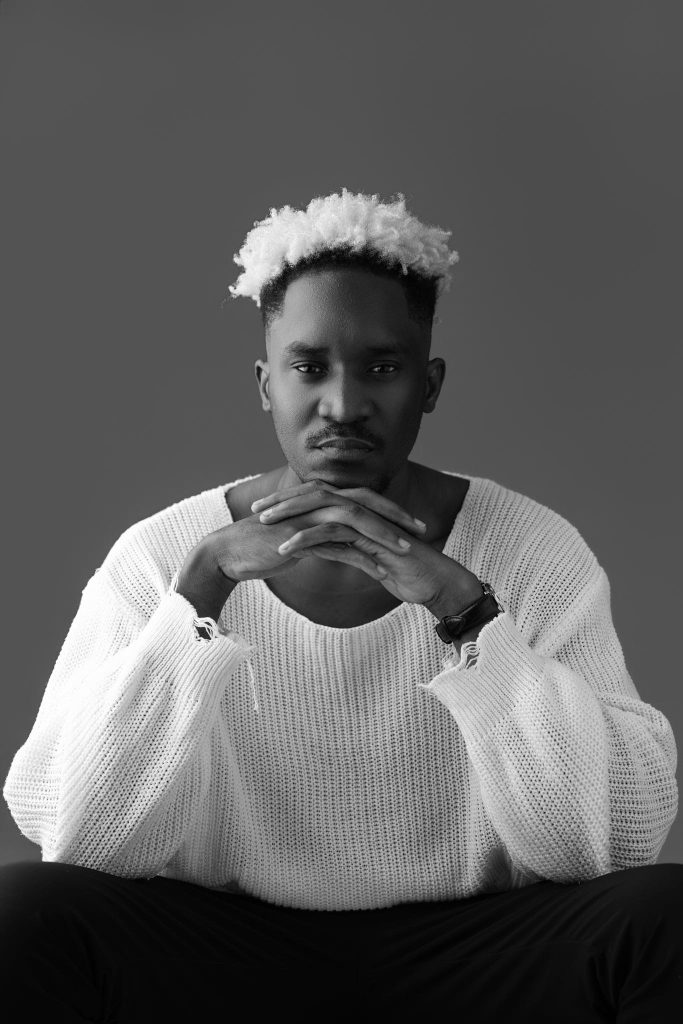
    A Pass says the issue of few female songwriters in Uganda goes deeper than numbers.

    The singer, real name Alexander Bagonza, believes it shows up directly in the music female artistes release.

    In an interview with Galaxy TV, he explains that many women perform songs that male writers shape, which affects the voice behind the music.

    In many cases, this pushes the songs toward male perspectives, even when women perform them, leaving less room for women’s own thoughts and experiences.

    That gap, he says, affects authenticity and how relatable the music feels from a female point of view.

    The majority of Ugandan female musicians sing songs from a male perspective. Most of the Ugandan music done by women suits men more because it is written by men for women to sing. Which is very difficult, because if it were women writing, then you can get the authenticity that comes from women and what they think.

    His comments align with singer-songwriter Dokta Brain’s view that female musicians rely more on songwriters than their male counterparts, with most of those songwriters being male.

  • ENG. ASIIMWE JONARD: The Helmsman of History: President Yoweri Kaguta Museveni and the Strategic Imperative of the East African Community’s Destiny!

    ENG. ASIIMWE JONARD: The Helmsman of History: President Yoweri Kaguta Museveni and the Strategic Imperative of the East African Community’s Destiny!

    The election of Yoweri Kaguta Museveni on March 7, 2026 as Chairperson of the East African Community (EAC) is not merely another diplomatic milestone in the calendar of regional politics; it is a moment layered with historical resonance, intellectual continuity, and a profound continental expectation that refuses to be silenced by the passage of time. For those of us who have meticulously watched the ideological evolution of East Africa and the persistent, often agonizing quest for African unity, this moment carries a significance that stretches far beyond the cold dry protocols of ceremonial succession. It is, in every sense, the convergence of history and conviction-the entrusting of a regional project to a statesman who has consistently, for over five decades, argued that Africa’s liberation will ultimately depend on unity, productive integration, and strategic sovereignty. Permit me, as the National Vice Chairperson of the National Resistance Movement (NRM) for the Western Region, to convey my heartfelt, spirit-filled congratulations to His Excellency President Museveni upon assuming this weight of responsibility. This moment is not only a triumph for our beloved Uganda but a clarion call for the entire East African region, whose destiny increasingly lies in the strength of cooperation rather than the brittle nature of fragmentation. It is deeply personal for many of us who have grown intellectually and politically under the ideological shade of the NRM revolution, which has consistently anchored its pillars in patriotism, Pan-Africanism, socio-economic transformation, and democracy.
    At a juncture where the global order is being aggressively reshaped by powerful regional blocs most notably the European Union (EU), the Association of Southeast Asian Nations (ASEAN, established in 1967), and the Southern Common Market (MERCOSUR, the Mercado Común del Sur, established by the Treaty of Asunción in 1991); the East African Community stands as Africa’s most ambitious experiment in sovereignty-sharing. The legal and institutional foundation of our Community rests upon the Treaty for the Establishment of the East African Community, signed in 1999 and entering into force on July 7, 2000.

    Article 5 of that Treaty is the North Star of our integration; it articulates the central objective as the development of policies and programs aimed at widening and deepening cooperation among Partner States. It envisages a logical, irreversible progression: a Customs Union, a Common Market, a Monetary Union, and ultimately, a Political Federation. Article 7 further demands “political will” and “mutual trust” as operational principles. Yet, as the President often reminds us with his characteristic sagacity, laws without an ideological “soul” are but dry parchment. In Uganda, our commitment is domesticated under Article 123 of the 1995 Constitution and the subsequent Objective No. XXVIII of the National Objectives and Directive Principles of State Policy, which commands the State to promote regional and pan-African cooperation. President Museveni has not just “conducted” foreign policy; he has breathed the fire of life into these statutes, transforming a legal mandate into a civilizational mission for the Black Man.

    Few leaders on the continent have reflected as deeply or as consistently on the structural bottlenecks of Africa as President Museveni. Long before the 1999 rebirth of the EAC, he had already laid the intellectual bedrock for integration in his seminal works. In Sowing the Mustard Seed (1997), he chronicles the intellectual journey of a liberation struggle that realized early on that “independence” without economic muscle is a facade. He argues with surgical precision that colonialism deliberately balkanized Africa into dozens of small, economically unviable territories. These artificial divisions, he notes, condemned African economies to the “heresy” of exporting raw materials while importing finished goods effectively exporting jobs and wealth. In his philosophical treatise, What is Africa’s Problem? (1992), he challenges the simplistic Western narrative that Africa’s failure is merely a matter of bad “management.” Instead, he situates the struggle within a broader structural context: historical fragmentation and the absence of a large internal market capable of sustaining industrial production. He writes extensively on the EAC, viewing it not just as a trade club, but as a “strategic security” necessity. For Museveni, integration is the antidote to the “marginalization of the African people.” This reflects the haunting warning of Frantz Fanon in The Wretched of the Earth (1961), who noted that “Each generation must, out of relative obscurity, discover its mission, fulfill it, or betray it.” President Museveni has discovered his mission in the architectural design of a unified African powerhouse.

    This intellectual framework places East Africa in a strategic position that is almost divine in its potential. Museveni emphasizes that we possess historical commercial linkages, common transport corridors, and the linguistic glue of Kiswahili. Under his leadership, the EAC has expanded from the original three members to a powerhouse of eight, including the Democratic Republic of Congo (DRC) and Somalia. This creates a market of over 300 million people a demographic dividend that, if harnessed, rivals the major economic blocs of the world. The numbers speak for themselves: intra-regional trade has surged from $2.7 billion in 2005 to over $10 billion today. Uganda, under the President’s guidance, pushed for the Common External Tariff (CET) under Article 75 of the Treaty, which was refined in 2022 to a four-tier structure to protect local manufacturing. This is the “gravity model” of economics in practice where proximity and reduced barriers create a self-sustaining cycle of wealth. We are moving from a collection of “beggar nations” to a formidable economic space that can finally negotiate as a peer within the African Continental Free Trade Area (AfCFTA), established by the Kigali Agreement in 2018. Museveni views the AfCFTA not as a replacement for the EAC, but as a broader canvas where a unified East Africa can project its industrial strength. By leveraging the AfCFTA’s elimination of tariffs on 90% of goods, a Museveni-led EAC can transform from a regional player into a global industrial hub, utilizing the “Rules of Origin” provisions to ensure that African products not just transshipped foreign goods dominate our shelves.

    However, markets cannot flourish where the soil is soaked in blood. President Museveni’s most significant contribution to the region is his role as a guarantor of stability; the “invisible infrastructure” of trade. He understands the “security-development nexus” better than any contemporary scholar. When the world looked away, the Uganda People’s Defence Forces (UPDF), acting on his Pan-African conviction, ventured into Somalia under AMISOM (now ATMIS) to battle the darkness of Al-Shabaab. In South Sudan, Uganda’s intervention prevented a potential genocide and stabilized a neighbour whose collapse would have derailed the entire Northern Corridor. Most recently, the UPDF’s entry into the DRC, not just for Operation Shujaa against the ADF, but to intellectually and physically construct over 1,200 kilometers of roads is a masterstroke of integration. These roads are the arteries of the Common Market. They facilitate the movement of goods from Mpondwe to Beni and Butembo, proving that the UPDF is an army of construction as much as it is an army of liberation. This reflects the spirit of Article 124 of the EAC Treaty, which calls for regional peace and security as a prerequisite for social and economic development. This is the “strategic depth” Museveni discusses in his lectures; the ability to secure the neighbourhood is the only way to secure the household.

    The President’s leadership echoes the deep-seated wisdom of Pan-African giants. It resonates with Kwame Nkrumah’s 1963 plea in Africa Must Unite, where he warned that “if we do not unite, we shall be sold to our former colonial master’s piece by piece.” It aligns with the “Dependency Theory” of scholars like Samir Amin in Unequal Development (1973) who argued that the periphery must delink (or “disconnect”) from the global capitalist center, rather than integrate further into it. Museveni has moved these theories from the mahogany tables of academia to the dusty roads of the border posts. Under his stewardship, the East African Crude Oil Pipeline (EACOP) and the Standard Gauge Railway (SGR) are being pursued not as national trophies, but as regional utilities. He is the bridge between the radical Pan-Africanism of the 1960s and the pragmatic, market-driven integration of the 21st century. He is the man who looks at a map of Africa and sees not borders, but potential industrial hubs and shared power grids. He understands that the African continent, as noted in the Lagos Plan of Action (1980), can only survive through self-reliance and the creation of regional economic communities (RECs).

    As he takes the chair, the weight of the “Ultimate Pillar”-the Political Federation looms large. The 2013 Monetary Union Protocol (EAMU) requires us to harmonize fiscal and monetary policies, targeting a single currency. This requires a leader with the “strategic patience” Museveni described in his writings. We face challenges: non-tariff barriers (NTBs), infrastructure gaps, and the “principle of subsidiarity” sometimes being misused to slow progress.

    But with the Helmsman of History at the wheel, we have a leader who does not panic in a storm. He understands that integration is a marathon, not a sprint. He has shown that a unified East Africa can command respect from the EU, China, and the USA. He is currently championing the EAC Vision 2050, which aims to transform the region into an upper-middle-income bloc. In congratulating him, we are reaffirming our belief that Africa’s destiny is not written in the capitals of the West, but in the heart of the Great Lakes.

    This mandate is a call to solve the “paradox of plenty” where East Africa is rich in resources but poor in pocket. By implementing the EAC Industrialization Strategy (2012-2032), the President is steering us toward a future where we process our own minerals from the gold of Tanzania and DRC to the oil of Uganda and the gas of Mozambique (our neighbours in the SADC bloc). The President’s insistence on “Value Addition” is the practical application of Walter Rodney’s thesis in How Europe Underdeveloped Africa (1972). We are no longer willing to be the world’s plantation. Under Museveni’s chairmanship, we expect a robust push for the Tripartite Free Trade Area (TFTA), linking the EAC, SADC, and COMESA, creating a seamless market from Cairo to Cape Town. This is the intellectual sagacity of a man who realizes that a fragmented Africa is a playground for neo-colonial interests, but a united Africa is a global giant.

    The East African Community was born from a dream of dignity; under President Museveni, it is becoming a reality of power. His leadership is the “vanguard” of the African Renaissance. He has consistently championed the Continental Education Strategy for Africa (CESA) to ensure our youth are skilled for the 4th Industrial Revolution, ensuring that integration is not just for the elite in suits, but for the boda-boda rider in Kampala, the fisherman in Kisumu, and the farmer in Gitega. We are moving toward a “State of East Africa,” a geopolitical entity that will be the 4th largest nation in the world by population. There is no one more qualified to guide us into that future than the man who has spent his life unsowing the seeds of our past failures and planting the mustard seed of our collective greatness. We stand with the Helmsman, ready to fulfill our generational mission.

    The writer is the National Vice Chairperson NRM Western Region, and CEO Jonard Conglomerate Investments Ltd.

    princeasiimwe12@gmail.com

    Do you have a story in your community or an opinion to share with us: Email us at Submit an Article

  • “He Said He Would Kill Himself” – Molly Katanga Recounts Chilling Night in Court

    “He Said He Would Kill Himself” – Molly Katanga Recounts Chilling Night in Court

    KAMPALA – There were emotional scenes in the High Court on Thursday as Molly Katanga, widow of slain businessman Henry Katanga, opened her defence with a chilling account of the events leading to her husband’s death.

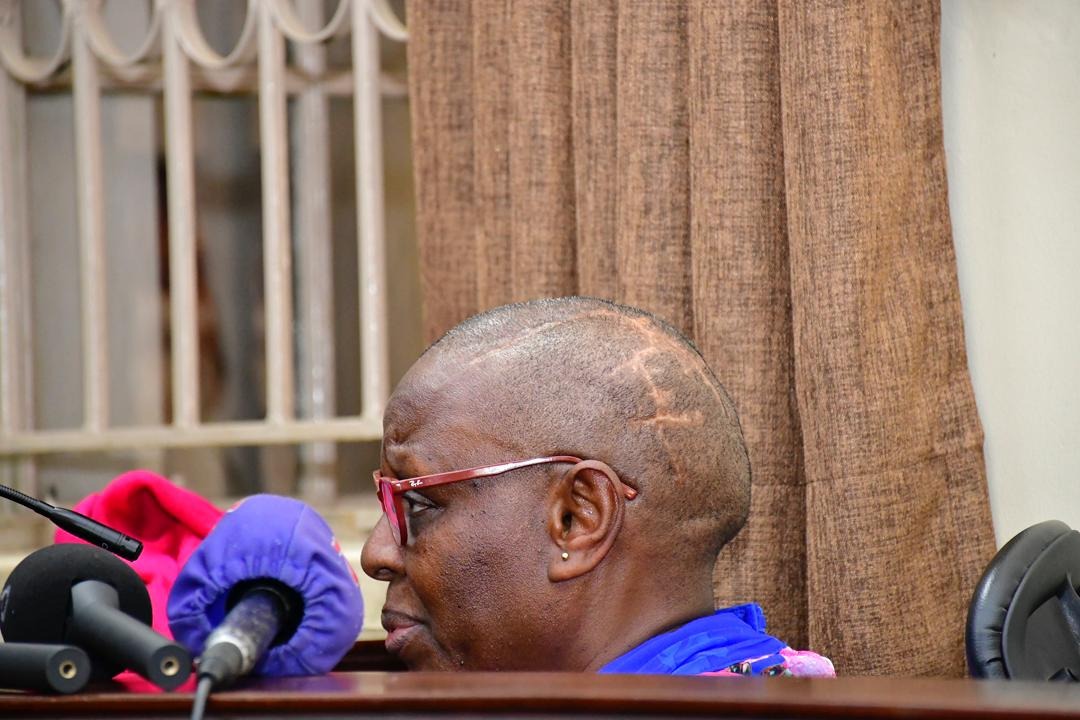
    Appearing before Justice Comfort Kania, Molly, seated in the dock with a pink veil covering her scarred head, firmly denied accusations that she murdered her husband.

    “I did not kill my husband,” she told court, adding that she does not know how to use a gun and has no knowledge of its operation.

    Molly described her 35-year marriage to the late Katanga as peaceful, noting that he was an introverted and gentle man. However, she revealed that in the months leading to his death in November 2023, he had become increasingly stressed due to financial pressures stemming from his money-lending business.

    According to her testimony, one of the major sources of stress was unpaid debt, particularly from the late businessman Apollo Nyegamehe, commonly known as Aponye, who reportedly owed Katanga about Shs1.5 billion at the time of his death in a 2023 road crash.

    “I remember the day Aponye died. Henry told me, ‘It is like I have lost everything—my heart and everything I have worked for,’” Molly recounted.

    She told court that her husband often complained about clients failing to repay loans, describing the situation as overwhelming and depressing.

    On the night before his death, Molly said Katanga returned home visibly distressed, lamenting about his business struggles and declaring he was done with the trade.

    “I am done with this business, it is stressing me, I am depressed,” she quoted him as saying.

    She later retired to the prayer room, leaving him seated in the dining area. After about an hour, she returned, bid him goodnight, and went to bed. Katanga later joined her but remained restless throughout the night.

    The following morning, Molly narrated a terrifying ordeal that left her severely injured.

    She told court that while in the bathroom, Katanga attacked her, repeatedly hitting her with a baton as she tried to shield herself.

    “He continued beating me as I asked, ‘What has happened?’ I tried to protect myself, but he dragged me and kept hitting me on the head,” she said.

    Molly sustained serious injuries, including fractures in her hands and deep cuts on her head, which she displayed in court.

    “What you see on my head is after reconstruction. My hands were broken, and I still suffer dizziness, headaches, and loss of balance,” she said.

    She further testified that during the attack, Katanga momentarily stopped and uttered words that have since formed the core of her defence.

    “He said, ‘I am going to kill myself now.’ At that moment, I heard a loud sound, followed by immediate silence,” she told court in a low tone.

    Molly maintains that her husband’s actions were out of character and believes he may have suffered a mental breakdown triggered by overwhelming financial stress.

    She also revealed that weeks before his death, Katanga had complained of persistent headaches linked to stress but declined medical treatment, insisting that medication could not solve what he described as “just stress.”

    With the trial now entering a critical phase, the court is expected to closely examine whether the circumstances described by Molly could point to suicide or support the prosecution’s case of murder.

    The case continues.

    Do you have a story in your community or an opinion to share with us: Email us at Submit an Article

  • A Pass Reveals How He Handles Explicit Messages From Fans

    A Pass Reveals How He Handles Explicit Messages From Fans

    Ugandan singer A Pass has shared how he deals with one of the more awkward sides of fame, unsolicited explicit messages from fans.

    For many artistes, fan attention goes beyond the stage and spills into private messages, where the lines can easily blur.

    Speaking to Galaxy TV, A Pass revealed that he regularly receives explicit content from fans, even when he has not asked for it.

    Many people send me things, like nudes, when I have not asked for them, which is okay.

    According to him, the surprise usually comes after opening what seems like a normal message.

    You open a message in your inbox thinking someone is appreciating your song, but instead you see other things.

    Rather than react harshly, A Pass says he stays calm and takes it lightly, even when caught off guard.

    He simply laughs it off, appreciates what he sees, and moves on.

    How do I do it? I just laugh… I cannot abuse you and I cannot air them to embarrass you, but I will laugh because you are a fan and maybe you think that is how to express your appreciation to me. Yes, I will see and say to myself, “Okay, you look good,” then leave it at that and do other things. I may not engage, but I can appreciate.

  • Transport Ministry revamps Traffic Penalty System to curb errors and address public outcry

    The Ministry of Works and Transport is redesigning its automated traffic penalty system after widespread complaints from motorists, promising a fairer and more accurate approach while keeping a strong focus on reducing speeding.

    The Express Penalty Scheme, which relies on cameras to detect speeding and red-light violations, had been put on hold after drivers raised concerns about being issued multiple fines for the same offence and confusion over how the system operates legally. Officials now say those concerns are guiding a major overhaul.

    According to Winstone Katushabe, Commissioner for Road Safety, the revised system is being shaped by lessons learned during the suspension period. He noted that speeding remains one of the biggest contributors to road crashes, making it a key target in the new plan.

    A major change will be the introduction of strictly enforced 30 km/h speed limits in high-risk areas such as near schools, hospitals, markets and places of worship. Robert Kisakye, a senior licensing officer at the ministry, explained that earlier proposals had wrongly suggested applying the limit across entire roads. The updated approach now focuses only on zones where pedestrians are most vulnerable.

    The government is also addressing some of the issues that led to public frustration. These include reviewing how long motorists are given to pay fines and clearly defining responsibility when a vehicle is driven by someone other than its owner. Previously, conflicting timelines—ranging from 28 days to just 72 hours—had caused confusion.

    On the technical side, improvements are being made to eliminate duplicate penalties and strengthen coordination between the ministry and the police. The upgraded system is currently being tested using government vehicles before a phased rollout begins in the Greater Kampala Metropolitan Area.

    To make the system more transparent, authorities will install visible warning signs ahead of camera locations so that drivers are aware before reaching enforcement points.

    The overhaul comes at a time when Uganda is grappling with rising road accidents. In 2024 alone, more than 25,000 crashes were recorded, with an estimated 5,000 to 6,000 fatalities each year—many linked to speeding and reckless driving.

    The ministry will continue gathering feedback from stakeholders in cities such as Jinja, Gulu and Mbarara before presenting its final recommendations to Cabinet.

  • Uncle Chumi Rejects Copyright and Refuses to Learn About It

    Uncle Chumi Rejects Copyright and Refuses to Learn About It

    Uncle Chumi stood out at a high profile dinner hosted by Justice Minister Norbert Mao, but not for the reasons many expected.

    The event, held in Lubowa, brought together creatives to mark progress on the Copyright and Neighbouring Rights (Amendment) Bill, 2025, which Parliament passed but still awaits presidential assent.

    While many attendees focused on what the bill could mean for the industry, Chumi took a different approach.

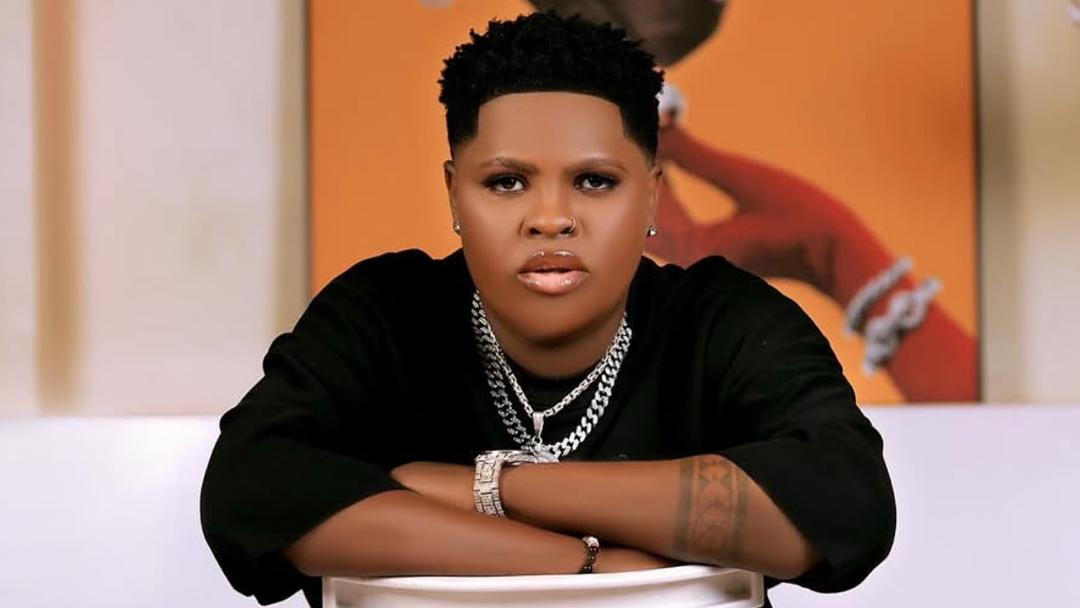
    In her usual humorous style, the controversial singer admitted she does not understand copyright, and said some fellow artistes are in the same position.

    I do not understand it. Even Lil Pazo, Chance Nalubega, and Hajj Haruna. They all do not know it.

    While she could easily learn about it, the “Gwokute Gwobba” hitmaker made it clear she has no interest in doing so.

    I do not want to understand it. It is not that we are going to support everything that comes. Personally, I do not want it.

    When asked why she attended an event centered on the copyright bill, she gave a very blunt answer.

    I came to eat food.

  • Uganda Airlines gets Shs422 billion boost for 10 new aircraft to expand fleet and stabilise operations

    The government has set aside Shs422.26 billion to expand Uganda Airlines’ fleet, in a move aimed at boosting its operations and restoring stability to its route network.

    The funding, drawn from a supplementary budget approved earlier this year, will go towards acquiring 10 new aircraft. Officials say the expansion is critical for strengthening the airline’s capacity, especially as it seeks to grow its presence on long-haul routes.

    In recent months, the national carrier has struggled with a limited fleet, a challenge that has disrupted schedules and forced the suspension of some international flights. With only a few aircraft in operation, routine maintenance and unexpected technical issues have had a major impact on its ability to maintain consistent services.

    The pressure became more evident when the airline had to temporarily lease a Boeing Dreamliner from Ethiopian Airlines to keep its long-distance routes running—highlighting the urgent need for more planes.

    According to the Ministry of Finance, the funds were secured through borrowing and are reflected in its latest economic performance report. The report shows that government borrowing in February rose to Shs1.22 trillion, higher than the planned Shs985.85 billion, largely due to increased spending commitments.

    Part of this spending included payments towards the aircraft purchase, alongside rising interest costs linked to domestic borrowing.

    Despite these financial pressures, the fleet expansion is seen as a necessary step for Uganda Airlines to remain competitive. The airline has been targeting key destinations in Europe, Asia and the Middle East, but its small fleet has limited how often it can fly and how quickly it can grow.

    With the planned additions, the government hopes the airline will operate more reliably, expand its routes, and better compete in the international aviation market.

  • 1xBet to strengthen its leadership position in Africa at Africa Gaming Expo

    1xBet to strengthen its leadership position in Africa at Africa Gaming Expo

    The global betting company 1xBet will take part in the prestigious iGaming exhibition, the Africa Gaming Expo, which will be held at Chief Yesufu Abiodun Road, Oniru, in Lagos, Nigeria, from March 24 to 27. The brand will present new ideas regarding the digital transformation of its products and create a welcoming environment for business activities.

    The Africa Gaming Expo is one of the region’s key iGaming events, attended by leading industry experts, representatives of regulatory bodies, and CEOs of international companies. Forum guests can look forward to panel discussions, keynote speeches, and productive networking to exchange contacts and build promising deals.

    Last year, this prestigious forum welcomed over 7,300 delegates, including more than 90 speakers. Africa is one of the fastest-growing markets with a high level of business activity. That is why the scale of AGE 2026 has expanded greatly.

    The 1xBet booth (A01) will serve as the event’s main hub for business connections, where the brand’s team will foster a comfortable atmosphere for open dialogue and idea exchange. There will also be a mini-bar serving refreshing cocktails and delicious coffee. 1xBet is also proud to be a sponsor of the Opening Cocktail Ceremony, reinforcing its commitment to creating exceptional networking opportunities at AGE 2026.

    1xBet partners and all AGE 2026 participants can look forward to interactive entertainment, including a giveaway from the company – an Apple iPhone 17 Pro, scheduled for March 25 at 4:00 P.M.

    For 1xBet, Africa is a strategically important region, and participation in regional industry events provides the brand with a unique opportunity to deepen its understanding of the local market context and strengthen its leadership position.  

    The 1xBet team is here to share valuable insights and expertise that will help you fully unlock the potential of this rapidly growing region. You can do this by joining the 1xPartners program, which has been in the market for over 10 years and has brought together more than 500,000 partners from over 150 countries.

    Contact your 1xBet manager and make an appointment! See you at AGE Africa 2026.

  • Kampala gears up for The Big Meeting this Sunday

    Kampala gears up for The Big Meeting this Sunday

    There are parties, and then there are rituals. In Kampala, The Big Meeting has quietly become the latter, a monthly gathering that feels less like an event and more like a city-wide agreement on how to properly close a chapter.

    This Sunday, March 29, Thrones Bar and Lounge once again opens its doors for what has become widely regarded as the city’s best daytime party. Curated by The Singleton, The Big Meeting returns with all the elements that have made it a staple on Kampala’s social calendar, music, flavor, expression, and that unmistakable Elit energy.

    It starts early, 11am to be precise, and stretches deep into the evening, blurring the lines between brunch and nightlife. And perhaps what makes it even more irresistible is this: there’s no entry fee. In a city that loves a good plan, The Big Meeting remains the only free brunch that delivers this kind of experience at scale.

    But of course, it’s never just about showing up.

    At the heart of The Big Meeting is participation. Guests don’t simply sip cocktails, they make them. The “do-it-yourself” cocktail experience has become a defining feature of the gathering, with partygoers stepping behind the bar, apron on, to create their own blends using The Singleton’s smooth single malt whisky. It’s equal parts fun and discovery; a chance to craft something personal, something reflective of your own taste.

    Around this, the experience builds.

    Great food makes the rounds, conversations flow easily, and Kampala’s signature sense of style shows up in full force, from laid-back brunch fits to bold, statement looks that turn the venue into a living, breathing mood board.

    Simon Lapyem, the brand manager of The Singleton, says The Big Meeting continues to be about giving people a space to express themselves freely. “The Big Meeting is more than just a party; it’s an experience where people can explore, create and truly make the moment their own. With The Singleton, we want every guest to feel like their drink, just like their experience, is uniquely theirs,” he says.

    Then comes the music.

    This Sunday’s lineup brings together a dynamic mix of selectors who understand exactly what The Big Meeting demands. DJ Nova, Em That Guy, Kamali, and DJ Big E are all set to take control of the decks, guiding the crowd from easy daytime grooves into high-energy evening sounds.

    It’s a musical journey that mirrors the spirit of the event itself, fluid, expressive, and impossible to box into one genre. Whether it’s soulful selections under the afternoon sun or pulsating beats as the night settles in, the DJs are the thread that ties it all together.

    And if past editions are anything to go by, the crowd will meet them halfway.

    Because The Big Meeting isn’t just about what’s planned, it’s about what unfolds. The spontaneous dance circles, the strangers who become friends over a shared cocktail, the laughter that lingers long after the music dips.

    It’s Kampala in its element.

About UGNEWS24

UGNEWS24 is a Uganda local news service, a product of SOLAVIA GROUP LIMITED, Reg. No. 80048169153974.

Registered office

Plot 2335, Buwambo-Katadde-Najjo Road,
Nansana Municipality, Wakiso District, Uganda
P.O. Box 214231, Kampala

© 2026 SOLAVIA GROUP LIMITED. All rights reserved.