Author: admin

  • A Pass Questions Media Ability to Pay All Artistes

    A Pass Questions Media Ability to Pay All Artistes

    A Pass has weighed in on the ongoing copyright debate, saying media houses alone cannot carry the burden of paying artistes.

    Appearing on Sanyuka TV’s Morning Xpress, the “Buwooma” singer, real name Alexander Bagonza, stressed that the government must step in if the industry is to fully benefit from copyright reforms.

    I do not think media houses have the power or ability to pay all artistes. They need support from the government. That is how it works in other countries.

    A Pass explained that his conversations with distributors and record label owners abroad showed how governments support structured systems that ensure artists earn from their work.

    He also pointed to the need for stronger local content promotion, arguing that Ugandan music must dominate airwaves if artists are to see real financial gains.

    We need to play more Ugandan music, and it should comprise about 90% of what is played for us to truly benefit.

    His remarks add momentum to the ongoing discussion around how Uganda can implement copyright reforms in a way that delivers real value to creatives.

  • A Pass Calls for Ugandan-Owned Streaming Platforms

    A Pass Calls for Ugandan-Owned Streaming Platforms

    Ugandan musician A Pass has called on the local music industry to invest in homegrown streaming platforms, saying this could unlock better earnings for artists and build a stronger music business.

    Speaking during an interview on Sanyuka TV, A Pass urged musicians to reduce reliance on foreign platforms like Spotify and iTunes.

    He argued that local solutions would give artists more control over pricing and distribution.

    One of the best things that can ever happen to the Ugandan music industry is to have our own iTunes or Spotify, where an artiste can decide how much to sell their music depending on how willing fans are to pay.

    His remarks come at a time when conversations around ownership and revenue continue to shape the industry, especially following the approval of the Copyright and Neighbouring Rights (Amendment) Bill 2025.

    A Pass pointed to the need for Ugandan-focused platforms that connect directly with local audiences and keep more value within the industry.

    He also referenced global stars like Jay-Z as examples of how structured systems and ownership can transform music markets.

    We have to find a way to sell our music to Ugandans.

    With platforms like Ugatunes on AfroMobile already making early attempts, A Pass believes the next step lies in fully embracing local digital ecosystems to give Ugandan artistes greater control over their work and income.

  • Judiciary Wants Magistrates to Handle Cases Up to Shs200 Million to Cut High Court Backlog

    Judiciary Wants Magistrates to Handle Cases Up to Shs200 Million to Cut High Court Backlog

    The Judiciary of Uganda has backed government plans to expand the powers of magistrates’ courts, saying the move could massively reduce the growing backlog of cases at the High Court.

    Appearing before the Parliament of Uganda Legal and Parliamentary Affairs Committee, Acting Chief Registrar Lamunu Pamella Ocaya revealed that nearly 34,481 cases currently pending before the High Court could be transferred to Magistrates’ Courts if the proposed amendments are passed.

    According to Judiciary statistics presented to Parliament, the High Court had 70,186 pending cases as of December 2025, including 21,317 backlog cases representing 30.37 percent of the total caseload.

    Lamunu explained that almost half of these cases that account for 49.13 percent qualify for transfer to magistrates’ courts, including 11,040 backlog cases.

    If the transfers are implemented, the High Court caseload would drop to 35,705 pending cases and 10,277 backlog cases, easing pressure on judges.

    The proposal is contained in the Magistrates Courts Amendment Bill, 2026 which was tabled in Parliament by Norbert Mao.

    Government wants to increase the pecuniary jurisdiction of Magistrates from Shs20 million to Shs50 million, while Chief Magistrates would handle cases worth up to Shs100 million.

    In Clause 10 of The Magistrates Courts Amendment Bill, 2026, Government is seeking to amend Section 206 of the Principal Act, by increasing the pecuniary jurisdiction of the Magistrates from the current UGX20Million to (UGX50 Million), while pecuniary jurisdiction for Chief Magistrates is proposed to increase to UGX100Million from the current UGX50Million.

    However, the Judiciary says the proposed figures are still too low.

    Lamunu proposed that the jurisdiction of Chief Magistrates be increased to Shs200 million, while Magistrates should handle civil disputes worth up to Shs100 million.

    She said the changes are necessary to reflect inflation and ensure that more civil cases are handled at lower courts rather than being pushed to the High Court.

    “Due to inflation and changes in the value of money, the current limits are too low and cases that should be handled at the magistrates’ courts end up in the High Court, thereby causing backlog,” Lamunu explained.

    She also suggested that the power to revise the financial limits should be given to the Justice Minister through statutory instruments rather than requiring Parliament to amend the law every time.

  • Jealous Man Stabs Ex-girlfriend’s Boyfriend Dead

    Jealous Man Stabs Ex-girlfriend’s Boyfriend Dead

    Drama turned deadly in Wakiso when a jealous lover allegedly stabbed his rival to death during a midnight confrontation.

    Police at Matuga Police Station are holding Masawa Joan over the brutal killing of Kiyinji Vincent, 30, a resident of Kiti B Cell in Kasangati Town Council.

    The deadly incident happened at about 1am on March 23, 2026 at the rented house of a woman identified as Nanfuka Joan.

    Investigations indicate that Masaba had previously been in a relationship with Nnafuka before they broke up.

    However, Nanfuka later started dating the deceased, something police believe may have triggered the deadly confrontation.

    Police say the suspect stormed Nanfuka’s home knowing that the deceased was spending the night there.

    When he knocked, Kiyinji opened the door and that is when things quickly turned violent.

    The two reportedly started arguing before a fight broke out.

    During the scuffle, Masaba allegedly pulled out a knife and stabbed the victim.

    The victim collapsed with fatal injuries.

    Masaba was later arrested and is currently detained as detectives investigate the circumstances surrounding the shocking killing.

  • Dr. Ayub Mukisa: Uganda Is Producing More PhDs—But Where Is Their Impact?

    Dr. Ayub Mukisa: Uganda Is Producing More PhDs—But Where Is Their Impact?

    Uganda is producing an increasing number of PhD graduates each year, driven by the expansion of universities and a growing emphasis on higher education. While this trend signals progress in academic capacity, it also exposes a critical gap: the limited translation of doctoral knowledge into tangible societal impact.

    In a May 10, 2024 article in The Observer, John Musinguzi, citing Prof. Barnabas Nawangwe, highlights how China’s over 3,000 universities drive development through research and innovation led by master’s and PhD graduates. These efforts have contributed to industrial growth, job creation, and poverty reduction. In contrast, Uganda, with over 2,500 PhD holders, has yet to demonstrate comparable outcomes. This raises a pressing question: where is the impact of Uganda’s highly trained scholars?

    Discussions with PhD holders reveal a complex reality. Many acknowledge that their contribution to national development remains limited, often constrained by the need for personal survival within a narrow job market. Others point to systemic challenges, including weak links between academia and industry, limited funding for applied research, and institutional incentives that prioritize academic publication over practical impact.

    Ideally, a PhD equips individuals to conduct independent research, drive innovation, and inform policy. In Uganda’s context, this expertise should be central to addressing persistent challenges such as poverty, unemployment, governance deficits, and poor service delivery. Yet much of the research produced remains theoretical, confined to academic journals, and disconnected from local development needs.

    PhD Graduation at Makerere

    Moreover, there is a noticeable reluctance among some highly trained professionals to engage with rural and underserved regions, where their expertise could be most transformative. Areas such as Karamoja and West Nile continue to face acute development challenges that require context-specific, research-driven solutions.

    To address this disconnect, Uganda must rethink the purpose and structure of doctoral training. Universities should prioritize problem-solving research aligned with national development priorities.

    Equally important is strengthening collaboration between academia, government, the private sector, and civil society to ensure that research informs policy and practice.

    Ultimately, the value of a PhD should not be measured by academic credentials alone, but by its contribution to solving real societal problems. Without this shift, Uganda risks producing highly educated individuals whose potential remains largely untapped.

    Ayub Mukisa, PhD
    Executive Director, Karamoja Anti-Corruption Coalition (KACC)
    Email: ayubmukisa@gmail.com

    Do you have a story in your community or an opinion to share with us: Email us at Submit an Article

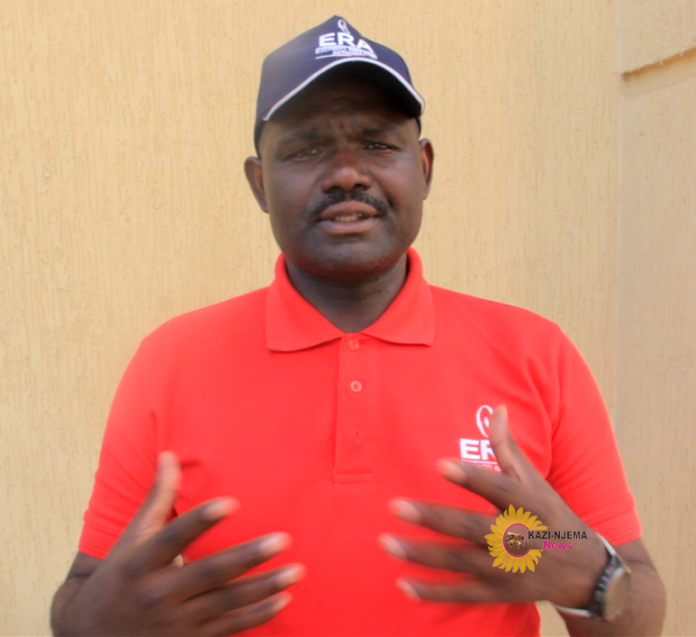
  • IBRAHIM KASITA: The Social Pulse: How Uganda’s Public Amenities Tariff Powers Hospitals, Lights Streets, and Sustains Essential Services

    IBRAHIM KASITA: The Social Pulse: How Uganda’s Public Amenities Tariff Powers Hospitals, Lights Streets, and Sustains Essential Services

    THE SOCIAL PULSE: Decoding the Role of the Public Amenities Tariff in Uganda’s Development, writes Ibrahim Kasita.

    As the sun sets over the skylines of Kampala, Gulu, Fort Portal, Hoima, Soroti, Mbale, Jinja, Arua, and Mbarara, thousands of streetlights flicker to life, illuminating the nation’s arteries and heartbeat. Meanwhile, in the sterile wards of public health facilities, life-saving oxygen concentrators and neonatal incubators hum with steady precision. These services form the invisible scaffolding of modern life—and in Uganda, their sustainability hinges on a specific, often overlooked line in the national electricity tariff schedule: Code 50—Public Amenities.

    The Public Amenities tariff category was created by the Electricity Regulatory Authority (ERA) in January 2025. In the first quarter of 2026, ERA has maintained a strategic pricing cushion for users under this category. While the standard domestic rate for 2026 hovers around UGX 756.2 per unit, Public Amenities—which include public not-for-profit and government-funded health facilities under the Ministry of Health (such as national referral hospitals, regional referral hospitals, specialised hospitals, and Health Centre IVs), as well as street lighting provided by cities, municipalities, and town councils—benefit from a preferential rate of UGX 360 per kilowatt-hour (kWh). This tariff is designed to ensure that the cost of essential public services does not overwhelm taxpayers or strain the budgets of health facilities and local governments.

    The Health Lifeline: Powering Mulago and Beyond

    For the Ministry of Health and administrators of public hospitals, electricity is the difference between life and death. Modern healthcare delivery is highly energy-intensive—from maintaining the national vaccine cold chain to powering theatre lights and diagnostic imaging machines such as CT scans and MRIs. The demand is constant and non-negotiable.

    “Every time the power tariff for public amenities is held steady, it directly protects the operational budget of a hospital,” explains a senior medical professional. “If our national and regional referral hospitals were charged at standard commercial rates, the cost of medical oxygen alone would skyrocket, potentially forcing facilities to choose between lighting wards and running laboratories.”

    The Public Amenities tariff allows hospitals like Mulago and other public not-for-profit health facilities under the Ministry of Health to operate high-tech equipment without the fear of crippling electricity bills. This preferential rate reinforces the principle that the “right to health” must be supported by the “right to affordable energy.”

    Urban Governance: Lighting the Way for Cities, Municipalities, and Towns

    Beyond hospital walls, the Public Amenities tariff is the lifeblood of urban security and economic activity. For city authorities such as Kampala Capital City Authority (KCCA), as well as leaders of Uganda’s newer cities—Jinja, Mbale, and Arua—and various municipalities and towns, the cost of maintaining street lighting has long been a challenge.

    Following the 2025 transition, when the Uganda Electricity Distribution Company Limited (UEDCL) assumed control of the national distribution network, renewed focus has been placed on “Smart City” initiatives. The preferential tariff enables local governments to keep streetlights on longer—an intervention widely associated with reduced petty crime and improved urban safety.

    “A well-lit street is a safe street for commerce,” says Premola Nanka, a night-market vendor in Rubaare. “The fact that the town council can afford to keep these lights on until dawn allows us to run our businesses at night. That is the real ‘power’ of a social tariff.”

    Subsidy vs. Sustainability

    However, the Public Amenities tariff presents a classic regulatory dilemma. ERA must walk a fine line: keeping rates low enough to support essential social services while ensuring the electricity sub-sector remains financially viable.

    If the tariff is set too low, the distributor (UEDCL) may struggle to maintain the transformers and distribution lines serving these public services. If set too high, the financial burden on town clerks and the Ministry of Health increases, risking “dark” hospitals and unlit streets.

    The Road Ahead

    As Uganda advances further into the Fourth National Development Plan (NDP IV), the role of the Electricity Regulatory Authority has evolved from that of a mere price setter to a strategic development partner.

    The Public Amenities tariff reflects a broader philosophy: that electricity is not merely a commodity to be sold for profit, but a public good to be managed for societal benefit. In the 2026 energy landscape, while heavy industries dominate headlines with US 5-cent power, it is the quiet stability of the Public Amenities tariff that helps keep hospitals running, streets safe, and the nation’s social fabric intact.

    As ERA continues to monitor sector performance in the post-Umeme era, the priority remains clear: ensuring that “Power to the People” truly includes the essential services that enable society to function and thrive.

    …….

    Mr Ibrahim Kasita works with ERA.

    Do you have a story in your community or an opinion to share with us: Email us at Submit an Article

  • Spice Diana urges women to embrace natural beauty – Sqoop

    Spice Diana urges women to embrace natural beauty – Sqoop

    Ugandan singer Spice Diana has opened up about her relationship with makeup, revealing that while it is part of her brand as an artist, it is not something she personally enjoys.

    Speaking during an appearance on NTV Uganda’s Bold Women show, the singer admitted that she prefers a more natural look in her everyday life.

    “I’m not really into makeup. Anyone who knows me well can tell that I’m more comfortable without it, but I use it because my work demands it,” she said, noting that she feels most at ease with just a touch of lip gloss.

    Beyond her personal preference, Spice Diana used the platform to encourage women to embrace their natural selves and resist the pressure created by online standards.

    “You need to feel comfortable in your own skin. There’s a lot of online bullying, but you shouldn’t let it change who you are,” she said.

    The singer warned that depending too much on makeup can affect confidence, urging women to build self-esteem from within.

    “At the end of the day, you will always be yourself, so it’s better to accept and love that. It doesn’t have to be complicated—you’ll appreciate it more,” she added.

    She also emphasized that pleasing everyone is impossible, encouraging women to focus on their own happiness instead.

    “If you rely too much on makeup, it can lower your self-esteem. You can’t satisfy everyone, so choose what truly makes you happy,” she said.

    Her message adds to the growing conversation around self-image and confidence, especially in an era where social media continues to shape beauty standards.

    https://www.youtube.com/watch?v=WzgBxuGQ6Ww

    Don’t want to miss out on any story? For updates on all Sqoop stories, follow this link on Telegram: https://t.me/Sqoop and Whatsapp: https://whatsapp.com/channel

  • Spice Diana’s strategy for avoiding sex predators in male-dominated industry

    Spice Diana’s strategy for avoiding sex predators in male-dominated industry

    According to Spice Diana, being friendly and drawing boundaries early with new people in her life helped her avoid sex predators in the industry.

    Spice Diana says that at the time she considered music as her career, the industry was marred by sex predators who always asked for sex in return for their services.

    She states that she was aware of the nature of the industry, and she was smart enough to avoid such scenarios, using her natural skill of friend-zoning people and drawing boundaries as soon as she made new friends in her life.

    When I started to sing as a teenager, the industry was dominated by mostly males, and everybody wanted to take a piece of me. They promise you stuff, and you would be told that you have to sleep with a deejay and make them happy to make it up there. It would piss me off. I stood my ground. With time, the males around me started referring to me as a very selfish person.’

    What saved me mostly is that I am so good at making friends. It’s a talent that I have. I know how to make people happy by just being around them, and I keep them as friends. I would draw boundaries, and people would understand and appreciate it.

    The post Spice Diana’s strategy for avoiding sex predators in male-dominated industry appeared first on MBU.

  • Alien Skin Rejects Copyright Law, Says He Protects His Own Music

    Alien Skin Rejects Copyright Law, Says He Protects His Own Music

    Ugandan musician Alien Skin has stepped into the ongoing copyright conversation, but he is taking a very different stance from many of his peers.

    As discussions around copyright enforcement, fair airplay, and artistes’ earnings continue across the industry, the “Sitya Danger” hitmaker has made it clear he does not align with the broader push.

    In an interview with Sanyuka Uncut, he said he prefers to handle his music matters personally and does not rely on industry systems to protect his work.

    Many songs I sang were just to prove myself. I can give it out or even delete it. There isn’t better ownership than that.

    He also expressed confidence in his ability to guard his music and suggested that his style makes it hard for others to copy or misuse his work.

    Alien Skin further distanced himself from the ongoing discussions and made it clear he does not want to take part in the wider copyright debate shaping the industry.

    Do not involve my music in your copyright things…. I have my own copyright, and if it is infringed upon, I can deal with you on my own. I do not need lawyers.

    His remarks add a different voice to the conversation, as many artistes push for stronger systems and collective action to protect their rights.

  • Branded and Banished: The Reality of Ghana’s Witch Camps

    Branded and Banished: The Reality of Ghana’s Witch Camps

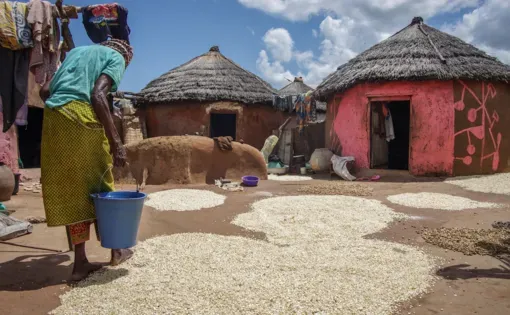
    In northern Ghana, a quiet crisis continues to shape the lives of many women, most of them elderly and vulnerable.

    Accused of witchcraft, they are forced to leave their homes and settle in isolated communities widely known as witch camps.

    These accusations often grow from fear, superstition, or unresolved tensions within families and villages.

    In many cases, a sudden illness, death, or misfortune is enough to place blame on a woman, even without evidence.

    A new exhibition titled “Ghana: Branded for Life” is now bringing these hidden stories into focus.

    Instead of being spoken for, the women are sharing their own experiences. Many speak of losing everything, from their homes to their families, over claims they continue to deny.

    Life in the camps is marked by long periods of isolation. Some women spend years there, cut off from the communities they once belonged to.

    The stigma attached to the accusations makes returning home difficult, and in many cases, impossible.

    Despite these challenges, many have found ways to support each other and build a sense of community. Their strength stands out in the face of rejection and hardship.

    The issue goes beyond one country. It raises wider concerns about belief systems, gender inequality, and the need to protect those most at risk.

    For the women at the center of these stories, saying “I’m not a witch” is more than a response. It is a way of reclaiming their identity after it has been taken from them.

About UGNEWS24

UGNEWS24 is a Uganda local news service, a product of SOLAVIA GROUP LIMITED, Reg. No. 80048169153974.

Registered office

Plot 2335, Buwambo-Katadde-Najjo Road,
Nansana Municipality, Wakiso District, Uganda
P.O. Box 214231, Kampala

© 2026 SOLAVIA GROUP LIMITED. All rights reserved.