Author: admin

  • BWANIKA JOSEPH: Are Bobi Wine’s critics ready to offer real solutions to Uganda’s challenges?

    BWANIKA JOSEPH: Are Bobi Wine’s critics ready to offer real solutions to Uganda’s challenges?

    Uganda’s political conversation is increasingly defined by sharp bombastic and personalized attacks, with National Unity Platform Leader H.E Bobi Wine often at the Centre of it. Yet under the noise lies a deeper concern, the steady weathering of meaningful, policy driven debate.

    At a time when the country faces complex national challenges, the focus on personalities over substance raises serious questions about the intentions and credibility of some critics.

    Criticism is not only expected but necessary. Leaders must be questioned, and their ideas tested against alternatives.

    However, for such criticism to contribute to national progress, it must rise above individual targeting and instead offer solutions grounded in principle and national interest.

    Unfortunately, much of what dominates Uganda’s political discourse today falls short of this standard.

    A section of the public particularly the youth, is increasingly skeptical of critics who appear inconsistent in both political alignment and personal responsibility. Leadership, after all, begins with accountability.

    When individuals who have struggled to demonstrate consistency in their own obligations seek to position themselves as moral authorities on national matters, their credibility is inevitably questioned.

    This is not an attack on individuals, but a reflection of a broader truth, trust in leadership is built on example.

    More troubling, however, is the cost of this misplaced focus. While political actors trade accusations, Uganda continues to grapple with urgent and unresolved challenges. Youth unemployment remains widespread, limiting opportunities and fueling frustration among a generation that should be driving the country’s Economic growth.

    The healthcare system continues to strain under inadequate funding, limited infrastructure, and unequal access, leaving many citizens vulnerable.

    Equally pressing is the question of leadership transition a subject that remains sensitive yet unavoidable. A stable and transparent transition of power is a cornerstone of any democratic society. In Uganda, however, uncertainty around this issue continues to cast a long shadow over governance and national stability.

    Without open and honest engagement on leadership transition, the country is prolonging political tensions.

    Corruption and nepotism further compound these challenges. Persistent reports of public resources being mismanaged or directed along lines of patronage have weakened public confidence in state institutions.

    For many Ugandans, the effects are not abstract they are felt in underfunded schools, overstretched hospitals, and limited economic opportunities.

    Addressing corruption requires the mouthpiece to speak out rather than concentrating on the condemnation of Bobi Wine’s every move.

    Amid these realities, the continued focus on attacking Bobi Wine as an individual appears increasingly misplaced. If his critics genuinely care about Uganda’s future, then the responsibility lies with them to elevate the conversation.

    What policies do they propose to address unemployment? How will they strengthen healthcare delivery? What is their vision for a credible and peaceful leadership transition? And how do they intend to dismantle entrenched systems of corruption and nepotism?

    Beyond criticism, there is also a broader call to action for members of other opposition political parties. Uganda’s challenges demand unity of purpose, clarity of vision, and principled leadership.

    It is no longer sufficient to operate in fragmented spaces defined by rivalry and self-interest. The moment calls for reflection and a recommitment to a collective national cause one that prioritizes the welfare of citizens over political positioning.

    Uganda’s political space is entering a defining moment. The weight of sustained attacks, propaganda, and opportunistic criticism is increasingly being tested against a resilient and politically conscious population.

    What some people dismiss as mere popularity around Bobi Wine has, over time, evolved into something far more significant a generational awakening.

    The most enduring response to his critics has not been weathering, but influence. A new wave of politically aware Ugandan youth has emerged, inspired to question, organize, and participate in shaping their country’s future. In this sense, the struggle is no longer centred on one individual, but on a broader movement of citizens determined to redefine leadership and accountability.

    As this momentum grows, those who rely solely on attacks and propaganda may find themselves confronting a reality they underestimated for a long time, an idea whose time has come. And if that is the case, then Uganda may well be witnessing not the end of a political contest between NRM and NUP, but the beginning of a deeper, more transformative national journey.

    The author is a social development specialist and CEO Bridge your mind Centre.

    Email: bwani.jose@gmail.com

  • KAGENYI LUKKA: The Paradigm Shift: How New Public Management Reforms Have Revolutionized Public Service Delivery in Uganda

    KAGENYI LUKKA: The Paradigm Shift: How New Public Management Reforms Have Revolutionized Public Service Delivery in Uganda

    The traditional public administration model, characterized by bureaucratic tendencies and red tape, has long been criticized for hindering efficiency and effectiveness in public service delivery. In response, the New Public Management (NPM) reforms emerged, emphasizing market-oriented approaches, decentralization, and customer-centricity. This article examines how African countries, including Uganda, have adopted NPM doctrines, such as projectized management and contracts, to improve public service delivery. Focusing on Uganda’s experience, we demonstrate how these reforms have led to significant gains in efficiency and effectiveness

    The traditional public administration model, rooted in Weberian bureaucracy, has been criticized for its rigidity, inefficiency, and lack of responsiveness to citizens’ needs (Hood, 1991). The model’s emphasis on hierarchy, rules, and procedures often leads to red tape, slowing down decision-making and service delivery. In contrast, the New Public Management (NPM) paradigm, introduced in the 1980s, seeks to address these shortcomings by incorporating private sector practices and market-oriented approaches (Osborne & Gaebler, 1992).

    _Traditional Public Administration: A Legacy of Inefficiency_

    The traditional public administration model, prevalent in many African countries, including Uganda, is characterized by:
    – Hierarchical structures and centralized decision-making
    – Emphasis on rules, procedures, and regulations
    – Bureaucratic tendencies and red tape
    – Lack of customer focus and responsiveness

    These characteristics often lead to inefficiencies, delays, and poor service delivery. For instance, in Uganda, the traditional model resulted in:
    – Lengthy procurement processes
    – Inefficient resource allocation
    – Limited citizen participation and engagement
    – Poor accountability and transparency

    _The Advent of New Public Management Reforms_

    In response to these challenges, African countries, including Uganda, began adopting NPM reforms in the 1990s. The NPM paradigm emphasizes:
    – Decentralization and devolution of power
    – Market-oriented approaches and competition
    – Customer-centricity and responsiveness
    – Results-based management and accountability
    – Projectized management and contracts

    Uganda’s New Public Management reforms, initiated in the 1990s, aimed to improve public service delivery, enhance accountability, and promote economic growth. Key initiatives included:
    – Decentralization and local government reforms
    – Public-private partnerships (PPPs)
    – Results-based management and performance contracts
    – Projectized management and contracting

    _Adoption of NPM Doctrines in Uganda_

    Uganda’s NPM reforms have led to significant improvements in public service delivery. For example:
    – The introduction of results-based management has improved accountability and performance in sectors like health and education (World Bank, 2018).
    – Public-private partnerships have enhanced infrastructure development, such as roads and energy (Uganda Ministry of Finance, 2020).
    – Projectized management has improved project implementation and procurement efficiency (Uganda Procurement Authority, 2020).

    _Projectized Management and Contracts_

    Projectized management involves managing projects as temporary, goal-oriented endeavors with clear objectives, timelines, and budgets. In Uganda, this approach has:
    – Enhanced project planning and execution
    – Improved procurement efficiency
    – Increased accountability and transparency

    Contracts, a key component of NPM, have:
    – Introduced competition and market discipline
    – Improved service quality and responsiveness, and performance monitoring

    _Impact of New Public Management Reforms on Public Service Delivery in Uganda_

    Uganda’s NPM reforms have led to significant improvements in public service delivery, including:
    – Improved access to healthcare and education services (Uganda Bureau of Statistics, 2020)
    – Enhanced infrastructure development, such as roads and energy (Uganda Ministry of Finance, 2020)
    – Increased citizen participation and engagement (World Bank, 2018)
    – Improved accountability and transparency (Uganda Anti-Corruption Commission, 2020)

    The adoption of NPM reforms, including projectized management and contracts, has transformed public service delivery in Uganda. By embracing market-oriented approaches, decentralization, and customer-centricity, Uganda has improved efficiency, effectiveness, and responsiveness to citizens’ needs. As African countries continue to navigate development challenges, the NPM paradigm offers valuable lessons for enhancing public service delivery and promoting economic growth.

    Much as these reforms have impacted positively on public service delivery in Uganda through efficiency and effectiveness, the government of Uganda through the Ministry of Public Service and that of Finance should adopt the following recommendations to improve service delivery and curtail bureaucratic tendencies often characterized at the centre:
    – Strengthen institutional capacity for New Public Management implementation
    – Enhance citizen participation and engagement
    – Foster public-private partnerships for sustainable development
    – Continuously monitor and evaluate New Public Management reforms for improvement.

    Additionally, Uganda’s NPM reforms were further reinforced by the Structural Adjustment Programs (SAPs) introduced by the World Bank in 1988, which aimed to promote economic liberalization and reduce the role of the state in the economy. Key components of the SAPs included:

    Demobilisation: The reduction of the size of the military and paramilitary forces to reduce government expenditure and redirect resources to social sectors.

    Retrenchment: The downsizing of the public service to reduce the wage bill and improve efficiency.

    Privatisation: The transfer of state-owned enterprises to private ownership to improve efficiency and increase competition.

    Liberalization: The removal of government controls and regulations to promote market-oriented approaches and increase competition.

    These reforms have contributed to Uganda’s economic growth and improved public service delivery.

    The writer is the Deputy RCC Kampala City- Kawempe Division, studied Public Administration and Management, a strategic management specialist, and a member of Rotary club of Kasangati.

    Do you have a story in your community or an opinion to share with us: Email us at Submit an Article

  • Jazz Maestro Isaiah Katumwa Releases Reflective New Track “New Days”

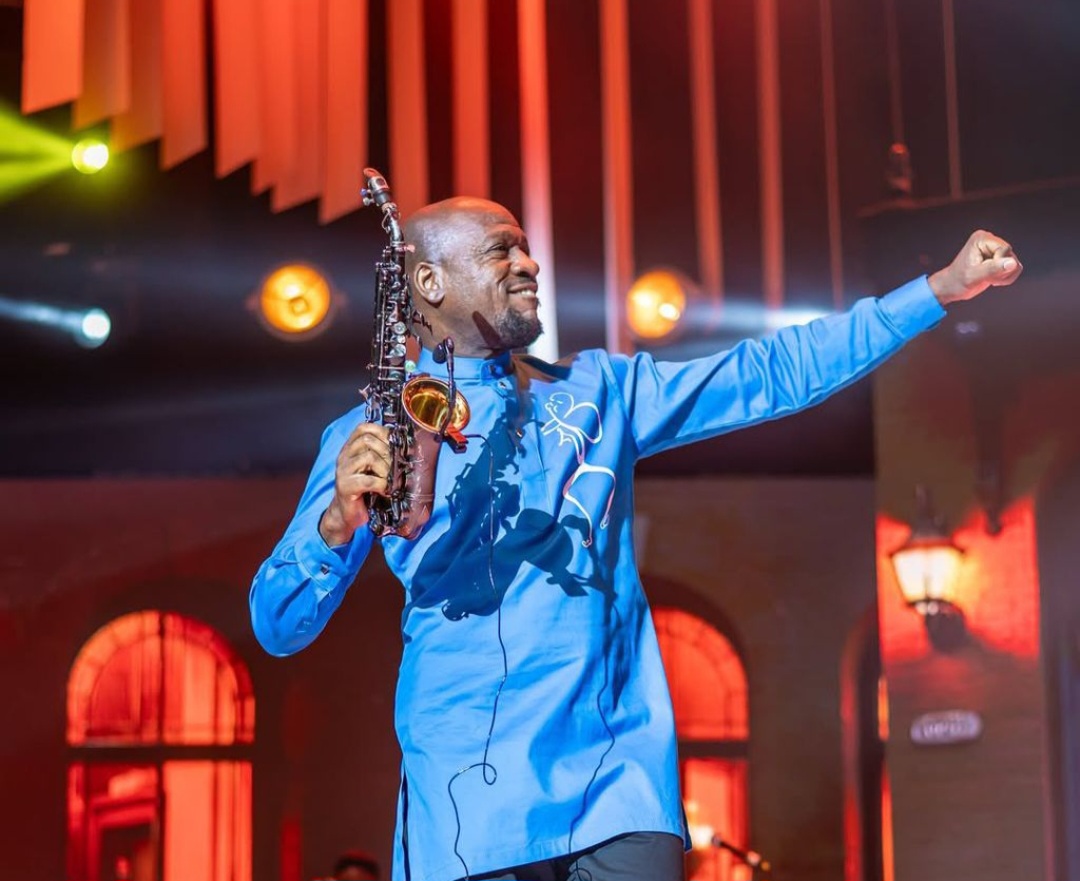
    Jazz Maestro Isaiah Katumwa Releases Reflective New Track “New Days”

    At the gentle edge of silence, where reflection meets renewal, Isaiah Katumwa returns with “New Days,” an African smooth jazz offering that breathes like dawn—soft, deliberate, and full of quiet promise.

    To Isaiah this new single titled “New Days,” signals a fresh creative phase in his career, like the first light of dawn stretching across a once-quiet horizon.

    In an interview with this website, the celebrated saxophonist described the release as a deeply intentional body of work, shaped by time, silence and rediscovery.

    “New Days is more than a song, it is a declaration,” he said.

    “Carried by warm saxophone melodies that rise and settle like a steady breath, the track unfolds over rich harmonies and an optimistic groove that leans gently into the listener. Each note feels measured, unhurried, allowing the music to speak with clarity and emotional depth,” he said.
    Reflecting his signature sound of simplistic writing and melodic hooks, “New Days” embodies Katumwa’s distinctive style—smooth yet soulful, refined yet intimate—while opening space for reflection on renewal, faith and forward movement.

    The composition explores the quiet strength found in starting again. It traces the emotional journey of fresh beginnings, second chances and the resolve to step confidently into a new chapter, even after uncertainty. In many ways, the song mirrors the artist’s own path—one shaped by experience, pause and reawakening.

    Katumwa explains that the release marks more than just a return to recording and performance. It represents a reemergence into what he describes as a new season of clarity, vision and global connection, like a seasoned musician discovering new textures within familiar scales.

    “This release comes from a place of clarity,” he noted, emphasising that the intention is not only to create music, but to communicate meaning through sound.

    For three decades, Katumwa has remained one of Uganda’s most respected jazz instrumentalists, his saxophone often carrying narratives that transcend language. His ability to blend contemporary jazz structures with African rhythmic identity has distinguished him both locally and internationally, positioning his work within a broader global conversation.

    Beyond performance, he has contributed to the growth of jazz in Uganda through initiatives such as Jazz With Isaiah, hosting jazz festivals that have brought together local and international artists, creating a meeting point where cultures, sounds and stories converge. Through such efforts, Katumwa has not only sustained a niche genre but also nurtured a community of listeners and emerging instrumentalists.

    Observers say his consistency and discipline have enabled him to maintain relevance in an industry largely driven by vocal and mainstream genres. Rather than compete with prevailing trends, Katumwa has continued to refine his voice—allowing the saxophone to remain central, expressive and unfiltered.

    With “New Days,” that voice returns with renewed purpose.

    The track carries a delicate balance—hope without naivety, growth without forgetting the path that led there. It acknowledges the weight of the journey while choosing to lean into possibility. There is a quiet confidence in its composition, an assurance that comes not from urgency, but from understanding.

    As both a performer and cultural ambassador, Katumwa continues to represent Uganda with a sound that travels across borders while remaining rooted in African identity. His music bridges continents, yet remains grounded—like a melody that journeys far but never loses its origin.

    With anticipation building ahead of the release, Katumwa says the message behind the single is both simple and timely.
    It is, he explains, an invitation—to listen again, to begin again, and to move forward with intention.

    In “New Days,” the saxophone does not rush. It lingers, it breathes, it speaks—carrying with it the quiet promise that every ending, if listened to closely, contains the first note of a beginning.

    The single “New Days” is now available for streaming on platforms including Spotify and YouTube.

    Do you have a story in your community or an opinion to share with us: Email us at Submit an Article

  • Uganda secures slots in 2026 TEF Programme, each beneficiary to receive Shs19 million boost

    Uganda secures slots in 2026 TEF Programme, each beneficiary to receive Shs19 million boost

    Uganda has secured a place among the beneficiaries of the 2026 Tony Elumelu Foundation (TEF) Entrepreneurship Programme, with 12 entrepreneurs named in the first group of winners.

    The announcement was made at an event in Abuja, Nigeria, where 1,951 entrepreneurs were unveiled as part of a larger group of 3,200 Africans set to receive support this year. The beneficiaries were selected from more than 260,000 applications submitted across 54 countries, highlighting the programme’s competitiveness.

    TEF says the 2026 beneficiaries will be released in phases to ensure wider reach and impact across sectors. The first group includes 1,951 entrepreneurs, while upcoming batches will feature 100 participants under the Waste Management Programme, 100 under Rwanda’s Aguka Programme, and 1,049 women entrepreneurs under the Women for Africa initiative. More Ugandans are expected to appear in the later groups.

    From L-R CEO of the The Tony Elumelu Foundation, Founder Tony Elumelu CFR and cofounder Dr. Awele Elumelu.

    Each successful applicant will receive a USD 5,000 (about Shs19 million) non-refundable seed grant, along with business training, mentorship, and access to a continent-wide network aimed at helping businesses grow and create jobs.

    Although Uganda’s presence in the programme reflects ongoing participation in Africa’s entrepreneurship space, it also points to the need for stronger competition in future application rounds.

    Women make up 51 per cent of this year’s selected entrepreneurs, slightly higher than men at 49 per cent, underlining TEF’s focus on gender inclusion.

    Speaking at the launch, TEF founder Tony Elumelu said entrepreneurship remains key to transforming Africa’s economies and tackling youth unemployment, calling for a supportive environment to help businesses thrive.

    From L-R Oge Elumelu, Founder Tony Elumelu CFR and cofounder Dr. Awele Elumelu.

    Co-founder Awele Vivian Elumelu urged applicants who were not selected to stay persistent and reapply in future cycles.

    The TEF Entrepreneurship Programme is one of Africa’s leading initiatives supporting small businesses through funding, training, and mentorship. Applications for the next intake are open until the end of March 2026.

  • State House Comptroller Barekye opens patriotism development course at Kitebi SS

    State House Comptroller Barekye opens patriotism development course at Kitebi SS

    The State House Comptroller, Ms. Jane Barekye yesterday officially launched the Patriotism Development course at Kitebi Secondary School.

    Ms. Barekye who also delivered a lecture of opportunity to the students, was warmly received by the Assistant Commissioner in charge of training at the National Secretariat for Patriotism Corps (NSPC) , Captain Richard Owaruhanga, Course Coordinator, Mr. Job Titus Seku, and Mr. Muhammed Kamulegeya, the Head teacher of Kitebi SS and Patriotism Coordinator for Rubaga Division.

    In her address, Ms. Barekye thanked all stakeholders who contributed to the success of the event.

    She gave a brief background on why President Yoweri Kaguta Museveni initiated the patriotism program, now under the stewardship of Commissioner Hellen Seku, whom she described as a hardworking leader.

    Ms. Barekye urged students to prioritize their studies so that Uganda can have competent future leaders and professionals.

    She emphasized that a true patriot does not repeat classes and encouraged them to aim high.

    “You can be anything you desire to be when you focus on your studies,” she said.

    Ms. Barekye further cautioned students against engaging in immoral behaviors, such as homosexuality, and advised them to avoid groups that promote such vices.

    “Choose friends who are disciplined, hard working, and have good character,” she said.

    The State House Comptroller advised students to avoid divisive political groups and refrain from insulting others over politics.

    She reminded students that patriotism also involves self-care, maintaining good hygiene and presenting themselves well.

    Ms. Barekye expressed pride in the potential of the girl child, citing national leaders such as the Prime Minister Rt. Hon. Robinah Nabbanja and Speaker of Parliament,Rt. Hon. Anita Among.

    She also thanked President Museveni and the First Lady, Maama Janet Kataaha Museveni, for the Universal Primary and Secondary Education (UPE and USE) initiatives, noting that many learners, including herself, have benefited from these programs.

    On the other hand, Ms. Barekye informed students about the Presidential Skilling Hubs project, which supports learners who may not proceed to higher levels of education due to grades or financial challenges.

    “The hubs offer free training in carpentry, hairdressing, fashion, engineering, and more, and even provide start‑up capital upon completion,” she noted.

    She emphasized that the skilling certificate offered under the hubs program is equivalent to a senior four certificate and can be used for further studies in tertiary institutions.

    On his part, Mr. Kamulegeya thanked the Commissioner for NSPC, Ms. Seku for extending the patriotism program to Kitebi SS, noting that over 3,000 students would participate in the training. He highlighted the school’s large enrollment, including over 1,000 Senior One students and 460 Senior Five students.

    Captain Owaruhanga expressed gratitude to the Chief Patron of Patriotism, President Museveni, for his visionary leadership.

    He thanked Ms. Barekye for accepting to preside over the function and for supporting the program. He further appreciated Commissioner Seku for her commitment to strengthening patriotism among the youth, as well as the team from NSPC and the instructors on the ground.

    He also briefed the Comptroller on the topics to be covered during the course.


    Do you have a story in your community or an opinion to share with us: Email us at Submit an Article

  • Tusker Lite Mt Rwenzori Marathon gains early momentum through Kilimanjaro Marathon engagement in Tanzania

    Tusker Lite Mt Rwenzori Marathon gains early momentum through Kilimanjaro Marathon engagement in Tanzania

    Months before race day, the Tusker Lite Mt Rwenzori Marathon is already making its presence felt beyond borders. On March 21, a day before the Kilimanjaro Marathon, hundreds of runners, mostly Ugandans, took part in a shake up run through Moshi, turning heads and building excitement for the August 22 race in Kasese, Uganda.

    The event was organized by the Tusker Lite Mt Rwenzori Marathon team, with support from the Ugandan Consulate in Arusha and the Uganda High Commission in Dar es Salaam. By showing up in Moshi, the Rwenzori organizers were introducing the race to runners who usually compete in Tanzania, giving them a taste of what’s coming in Uganda later this year.

    Shake-up runs are becoming a key part of the Tusker Lite Mt Rwenzori Marathon, having been introduced during last year’s fourth edition in Kasese. The concept has since grown into an important way of building early excitement and connecting with runners ahead of the main race.

    Amos Wekesa, CEO of Equator Hikes and lead organizer of the marathon, said the idea was to connect with runners early and encourage regional participation.

    “The Kilimanjaro Marathon has been around for over 20 years and has built a strong following. We want to give those same runners a reason to come to Kasese in August,” Amos Wekesa said. “Last year we had some Tanzanians take part in the Tusker Lite Mt Rwenzori Marathon, and this year we expect even more, not just from here but across the world.”

    Anne Katusiime, Head of the Ugandan Consulate in Arusha, also welcomed the runners and highlighted the growing cross-border interest.

    “It’s exciting to see Ugandans running in Tanzania and sharing the Tusker Lite Mt Rwenzori Marathon experience with the region. We believe Tanzanian runners will join us in Kasese in August,” she said.

    The Moshi shake-up run also gave runners a chance to register early for the race. Registration is live via rwenzorimarathon.com

    Speaking following Moshi developments, Sandra Againe, the Tusker Lite Brand Manager at Uganda Breweries Limited, said this year’s Marathon marks a significant step up for the event following its recent international recognition.

    “This will be a whole different proposition, as it comes after the event was included in the World Athletics Calendar and attained Label Race status. This edition promises more impact, greater global participation, and is set to cement the event’s position on the international running calendar,” she said.

    Meanwhile, Kenyan athlete William Morwabe claimed victory in the full 42km marathon, finishing in 2:18:52, as Kenyan runners dominated the longer distance. Tanzanian athletes excelled in the 21km Yas Half-Marathon, showing strong performances on home soil.

    Looking ahead, the Tusker Lite Mt Rwenzori Marathon team will hold another shake-up run on April 10, 2026, at Camps Bay Tidal Pool in Cape Town, South Africa, on the eve of the Sanlam Cape Town Marathon. The event will feature running legend Eliud Kipchoge as part of Eliud’s Running World, a series of seven marathons across all continents aimed at inspiring communities through running.

  • A Pass calls for homegrown streaming services to empower Ugandan artists

    A Pass calls for homegrown streaming services to empower Ugandan artists

    Musician A Pass has called for a transformative shift in the country’s music industry, arguing that the creation of locally owned streaming platforms could be key to its growth and sustainability.

    A Pass, born Alexander Bagonza, believes Ugandan artists must move away from overreliance on foreign digital services such as Spotify and iTunes, and instead invest in homegrown solutions tailored to the local market.

    According to him, such platforms would empower artists to directly determine the value of their work by setting their own prices for projects like Extended Plays (EPs) and albums, based on what their fans are willing to pay.

    “One of the best things that can ever happen to the Ugandan music industry is to have our own iTunes or Spotify, where an artist can decide the amount of money they want to sell their music, like an EP or an album, depending on how willing your fans are to pay for your music.”

    His remarks come in the wake of the recently approved Copyright and Neighbouring Rights (Amendment) Bill 2025 by Parliament, a development that has sparked excitement among many musicians who see it as a step toward stronger protection of their intellectual property.

    A Pass emphasized that beyond legal reforms, the industry must prioritize building its own digital infrastructure.

    He pointed to international artists such as Jay-Z as examples of how ownership and structured distribution systems have helped reduce conflicts and create more stable music markets abroad.

    “That’s what we have to fight for. The majority of the artists from overseas, like Jay-Z and others, you can never hear them engaged in the bickering like ours here. They’re selling their music. We have to find a way to sell our music to Ugandans.”

    @sanyukatvug

    Artists want a fair share based on the effort they put in.- APass SanyukaMorningXpress SanyukaUpdates

    ♬ original sound – Sanyuka TV – Sanyuka TV

    The post A Pass calls for homegrown streaming services to empower Ugandan artists appeared first on MBU.

  • Johnnie Walker Afro Exchange: Inside the Platform Connecting Africa’s Creative Voices

    Johnnie Walker Afro Exchange: Inside the Platform Connecting Africa’s Creative Voices

    Imagine a space where Africa’s musicians, fashion designers, artists and digital storytellers meet to network, collaborate, and ultimately innovate together. Imagine the kind of ideas and cultural movements that could emerge from such a meeting of creative minds!

    That is the thinking behind the Johnnie Walker Afro Exchange: a pan-African cultural platform powered by Johnnie Walker, designed to bring together creatives across the continent’s most vibrant industries, which include music, fashion, art, and digital storytelling.

    At its simplest, Afro Exchange is about connection. However, for the continent’s creative economy, it represents something bigger: a structured space where African creators can network, collaborate and push the boundaries of culture together.

    A Meeting Point for Africa’s Creatives

    Across Africa, creative industries are thriving. Musicians are topping global charts. Designers are showcasing their work at international fashion weeks and runway shows. Artists are exhibiting in major galleries worldwide, and digital storytellers are reaching audiences far beyond the continent.

    Yet many creators still operate in silos within their own countries. The Johnnie Walker Afro Exchange aims to bridge that gap.

    The platform spotlights artists and innovators shaping Africa’s cultural identity, while giving them opportunities to interact, exchange ideas, as well as a foundation to build projects that cut across borders.

    The initiative first connected creative communities in Lagos and Johannesburg, showcasing the continent’s creative diversity through cultural events. that combined music, fashion, art and digital storytelling. The concept has since expanded across the continent, with Uganda becoming one of the latest hubs in the growing Afro Exchange movement.

    Culture as Collaboration

    Unlike a typical event, Afro Exchange is designed as a cultural ecosystem. Its experiences range from creative summits to immersive showcases, bringing together musicians, designers, artists and digital storytellers, to explore how African creativity can be elevated through collaboration.

    For Christine Kyokunda, the Brand Manager for Johnnie Walker East Africa, the platform reflects a deeper commitment to supporting Africa’s creative economy.

    “Afro Exchange represents a powerful shift in how we engage with culture as a brand. We are investing in voices and stories that are driving the Afro-cultural movement forward- the creatives. This is a cultural bridge that celebrates Africa’s bold creators and gives them space to connect and influence the future of creativity on the continent,” she said.

    The initiative also draws inspiration from the brand’s global Keep Walking philosophy, which encourages progress and forward movement, values that resonate strongly with Africa’s new generation of creatives.

    Voices Shaping the Movement

    Across the continent, creatives are increasingly embracing platforms that encourage collaboration rather than competition.

    Ugandan fashion icon Santa Anzo believes spaces like Afro Exchange are essential for nurturing authentic African creativity.

    During a panel discussion at the Afro Exchange Creative Summit, which took place last December, Anzo emphasised the importance of purpose-driven identity in fashion, encouraging young designers to focus on building lasting cultural impact rather than chasing trends.

    Music is also central to the Afro Exchange vision. Ugandan artists such as Joshua Baraka represent a generation of musicians whose ambitions stretch well beyond national stages.

    In one of his submissions at the Afro Exchange Creative Summit, Baraka joked about a hard truth- that success in music must come with hardship.

    “There is a saying that a good artist is a broke artist, but wait until you are writing a song in Ibiza,” he said, drawing laughter from fellow creatives while at the Summit.

    A Cultural Takeover

    The next major chapter of the Afro Exchange platform is set to unfold on April 12, when Kampala hosts its first-ever Afro Exchange Takeover, an immersive celebration of African culture.

    The experience will feature live performances and immersive installations blending fashion, music, art, and digital storytelling; all while bringing together talents from Uganda and South Africa, in what organisers describe as a Kampala-Johannesburg creative fusion.

    For many observers, initiatives like the Afro Exchange signal a broader shift in Africa’s cultural landscape. Creative industries are increasingly recognised not only as entertainment sectors, but also as powerful drivers of identity, economic growth and global influence.

    The industry’s value chain spans music, film, fashion, gaming, digital content and design. According to Africa Global Connect Consultancy, the continent could account for up to 10% of global exports of creative goods by 2030, valued at about $200 billion – roughly 4% of the continent’s GDP.

    By connecting creative communities across borders, the Johnnie Walker Afro Exchange aims to position African creators at the centre of this growth, ensuring that the continent’s stories are not only told – but told together.

  • Police arrest 78 suspects over traffic jam robberies on Northern Bypass

    Police have arrested at least 78 suspected criminals following a surge in robberies targeting motorists along the Kampala Northern Bypass.

    The crackdown comes after numerous complaints from drivers who reported being attacked while stuck in heavy traffic, particularly between Busega and Bwaise. Authorities say the congestion—caused by ongoing road works on the Namungoona–Bwaise section—has created the perfect conditions for gangs to strike.

    The repairs, launched by the Ministry of Works and Transport in February, led to the partial closure of the road, resulting in long traffic jams that have left motorists stranded for hours. Criminal groups are said to have taken advantage of the situation, smashing car windows and stealing valuables from trapped passengers.

    In one reported case, a businesswoman was attacked in Busega and lost a laptop bag containing Shs 5.34 million, two mobile phones worth Shs 1.3 million, and personal documents.

    Deputy Police spokesperson Diana Nandawula said the suspects were arrested during weekend operations targeting known hotspots, including the Bwaise–Busega stretch and Masanafu. She confirmed that the suspects are currently being held at Natete Police Station as investigations continue.

    Security operations have also been extended to the Busega–Kyengera swamp area along the Kampala–Masaka road, where similar criminal activity has been reported.

  • Four injured in explosion at scrap workshop after dropped object detonates

    Four people are receiving treatment after an object they were handling exploded at a scrap workshop in Mbale City.

    The incident happened on 17 March 2026 as workers were offloading scrap metal. According to police, the group accidentally dropped an unfamiliar metal object, which detonated on impact and left them injured.

    All four victims were rushed to Mbale Regional Referral Hospital, where they remain under medical care.

    A police bomb squad later visited the scene and collected fragments believed to be from the explosive device. The materials have been taken for detailed analysis to determine exactly what caused the blast.

    Authorities have urged the public, especially scrap dealers, to be cautious when handling unknown items and to report any suspicious objects to security agencies to help prevent similar incidents.

About UGNEWS24

UGNEWS24 is a Uganda local news service, a product of SOLAVIA GROUP LIMITED, Reg. No. 80048169153974.

Registered office

Plot 2335, Buwambo-Katadde-Najjo Road,
Nansana Municipality, Wakiso District, Uganda
P.O. Box 214231, Kampala

© 2026 SOLAVIA GROUP LIMITED. All rights reserved.