A Pass has explained why he would not change anything about the music industry, even if he had the power to do so.
During a chat on KFM, the singer, real name Alexander Bagonza, said he does not see himself as someone who can decide how other artistes should work, which is why he focuses on his own approach.
I would change myself. I would not change the industry. I am not the industry. I am A Pass. We can sit here and talk about the industry, but I do not have the power to tell other artistes what to do. I can only do my part, and if they see that is the direction and they can buy into it, well and good.
He pointed to his recent concert as an example of that approach in action.
“A Pass Live in Concert,” held on January 31, 2025, at the Kampala Serena Hotel, stood out for its sound, production, and overall experience.
What stood out to him, however, was not the show itself, but what came after it.
Look at a very simple example of my concert, I have not even gotten five artistes asking me how I did it. In the whole country, not even five, and I had the best concert ever. So it shows you that people do not care. So you think I should care about people who do not care?
That absence of interest, A Pass said, is exactly why he does not try to influence how others work.
I do not waste time. I do my job, they do their job as well. It is as simple as that. Those who want to be inspired, be inspired. If you do not want to be inspired, do not be.
He keeps his focus on his own work and leaves others to decide what they take from it.
Dancehall singer Kapeke has apologized to his fans for storming off the stage midway through his performance at the Roast and Rhyme festival on Sunday.
One of the most anticipated singers on the evening, Kapeke, whose real name is Derrick Nsubuga, had stepped onto the stage with excitement as the crowd cheered him on.
However, he cut his performance short while performing his hit song Kaba, after a glitch that seems to have been caused by the deejay.
He immediately walked off the stage alongside his team of dancers, management, and bouncers and exited the venue, leaving the revelers confused.
Kapeke’s act has been criticised by netizens who believe there was a better way to deal with the situation and continue with the performance, as fans had already shown their eagerness to watch him perform.
Via TikTok, Kapeke on Monday morning issued an apology to his fans. He revealed that the mishap was caused by “bad sound,” and promised to do better next time.
Sorry, my people, for not performing to your expectations coz of bad sound. Next time better.
A section of netizens, however, has defended his actions, noting that no artist can continue performing well after such bad sound that he experienced.
Many years ago, I parted ways with the game of football, of course not as a player but a supporter. I was becoming hypertensive because of Arsenal, an English team which had no business with me. That is why I do not support any team anywhere in the world. The game is like a missed, it has no space on my calendar.
However, a friend asked me to say something about the recent Confederation of African Football decision in which Senegal was stripped of its 2025-2026 African Cup of Nations (AFCON) in favour of Morocco. They relied on Articles 82, 83 and 84 of the Confederation of African Football (CAF) regulations hence a serious dent on the game of football.
The decision was labeled by Senegal as “unjust” and “grossly unlawful,” triggering an appeal to the Court of Arbitration for Sport (CAS). While critics call it a high-handed, unprecedented, and “political” move, proponents argue it is a rigid enforcement of the Rules against Senegal’s temporary walk-off. We do not know who trust as far as this issue is concerned.
Some Moroccan players including Achraf Hakimi have stood in solidarity with Senegal saying the Trophy and all that come with it should remain with the Senegalese. Some Moroccans have asserted that their complaint to CAF was not to be declared winners but to expose AFCON for their high appetite for quick dirty money.
Let us separate sentiments from the reality aware that many Ugandans are making noise not because the decision was unfair but because as a country, our football record with the Maghreb region has been very bad. For this reason, many of us are not looking at this controversy objectively, a temptation that I am trying to avoid in my analysis.
This year’s Africa Cup of Nations final was a football match played on 18 January 2026 at the Prince Moulay Abdellah Stadium in Rabat, Morocco. It determined the winners of 2025-2026 AFCON, the 35th edition of the biennial African Tournament organized by CAF, and was between Senegal’s Lions of Teranga and the hosts Atlas Lions of Morocco.
First forward, it is not disputed that Senegal walked off the pitch without permission from the referee in protest of both a disallowed goal and detrimental Video Assistant Referee (VAR) decision in stoppage time. However, they later returned to the pitch after 17 minutes on the request of Sadio Mane, and played out the match originally to a 1–0 win after extra time.
After the match, the Moroccan filed a complaint walk off resulting in CAF launching a disciplinary investigation. On 17 March 2026, the CAF Appeal Board made a finding that Senegal’s behaviour before the match ended constituted a match forfeiture. The result was overturned, awarding Morocco a 3-0 victory and the 2025/2026 AFCON title.
I want to ask a question that may not need an answer, what punishment has been handed to AFCON organizers and the Referee, what would happen if Morrocco had won the match, would the Moroccans have complained if they had a three-goal advantage and what would CAF do on realizing that Morrocco’s victory was a “fruit of a poisonous tree”
The Senegalese government has condemned the ruling, calling it an “unjustified attempt at dispossession” and a “manifestly erroneous interpretation of regulations” hence their appeal to the Court of Arbitration for Sports. Without offending the sub judice rule, let us analyze CAF’s decision in light of what took place on and off the pitch.
Anyone who has played football knows it for a fact that the referee’s decision is final and can only be upheld, or overturned by the same referee while on the pitch. This position is clearly captured in the CAF regulations stating that the referee’s decision is final and aligns well with the FIFA’s rules governing the game of football.
While the rules of the Game state that a referee’s decision regarding facts connected with play is final, this applies strictly to decisions made during the match within the framework of the rules. Exceptions exist where a decision can be changed on the field, overturned by technology, or reviewed post-match due to administrative or disciplinary protocols.
The 2026 AFCON final highlighted this conflict, where a referee allowed a match to continue (making the result final), but the CAF Appeals Board later overturned it to a 3-0 forfeiture, setting a precedent that boardroom decisions can override on-field results. In summary, while the referee is the final authority on the pitch, CAF disciplinary committees retain the authority to retroactively deem a match a forfeit due to disciplinary violations.
I will draw our attention to Article 82 of the CAF African Cap of Nations Regulations which stipulates that if a team refuses to play or leaves the pitch before full-time without the referee’s authorization, it is considered a loser and is eliminated from the competition. This regulation often leads to a 3-0 forfeiture when combined with Article 84.
The key point to note when interpreting Article 82 and 84 of the Regulations is that it covers teams that “withdraw from a match, fail to report, or abandon the pitch without permission”. For starters, Senegal did not withdraw from the march, it did not fail to report but abandoned the pitch without permission, thereby offending the rules. Important to note also is that some of the Senegalese players remained on the pitch.
By the CAF decision, walking off, even if players return later, can still result in a forfeiture. The question however is that can that CAF decision stand given the peculiar circumstances of the 2025-2026 AFCON final game, I respectfully believe the answer is a no. This could have been a misinterpretation of the rules or the art work of corruption.
When players walk off or abandon the game whichever way you look at it, the referee is expected to make a decision in line with Articles 82, 83 and 84 but where he fails or refuses, the Moroccan players should have refused to play demanding for their three goals and on refusal forward their grievance to CAF for consideration. Am told the committee was not constituted and that competence of the could also become an issue.
Otherwise, what happened at the AFCON finals was absolutely against CAF Regulations but amounted to condonation which in my view is a valid excuse not to overturn the results. What happened is defined in law and anywhere in the world as condonation which is the voluntary forgiveness or overlooking of a wrongdoer’s actions, implying acceptance and a decision not to punish or act against the misconduct.
It often serves as a legal defense, for actions and or inactions that have been overlooked. In law, this requires knowledge of the facts, forgiveness, and sometimes restoration of rights. Otherwise, how do you explain a situation where Senegal breaches the Regulations, then they come back on the pitch, the referee ignores the illegality, the Moroccan players accept to play and then turn around to complaint afterwards.
In all fairness, the Moroccans ratified every action or inaction that took place or did not take place on that day and must be bound by their ignorance for not taking advantage of Sections 82, 83 and 84 of the very clear CAF Regulations. Both teams together with AFCON and the Referee unknowingly connived to breach the rules and therefore the status quo at final while should be left to stand in favour of Senegal.
Wadada Rogers is a commentator on political, legal and social issues. wadroger@yahoo.ca
Do you have a story in your community or an opinion to share with us: Email us at Submit an Article
KAMPALA – Ugandan passport holders can now access 64 destinations visa-free or with visa-on-arrival, according to the latest Henley Passport Index (March 2026 edition). This places Uganda at 69th position (tied with Armenia and Mongolia) out of 199 passports worldwide – its best global ranking in more than 10 years.
The authoritative Henley Passport Index, which tracks mobility to 227 destinations using exclusive IATA data, shows Uganda maintaining upward momentum despite a minor adjustment in access points from 66 earlier in the year. In the March 2026 global ranking PDF, Uganda sits just behind Rwanda (67th, 66 destinations), Tunisia and Benin (both 68th, 65), and ahead of Mongolia (tied) and Zambia (70th, 63).
For context: – Top of the index: Singapore remains No. 1 with access to 192 destinations, followed by Japan (187) and a three-way tie for third (South Korea, UAE, and Sweden at 186). – Regional peers (East Africa): Kenya continues to lead the pack regionally (around 68th–69th range in earlier 2026 data), while Uganda outperforms Burundi (86th) and other neighbours in the Great Lakes region.
This milestone echoes January 2026 reports that hailed the passport’s “best performance in a decade.” Historical data shows steady gains: 72nd in 2025, 73rd in 2024, 78th in 2023, and as low as 81st in 2021. Analysts attribute the long-term progress to improved diplomatic engagements, stronger regional integration within the East African Community (EAC), and targeted bilateral visa arrangements.
The Arton Capital Passport Index (alternative real-time tracker) currently ranks Uganda even slightly higher at 67th with a mobility score of 71 (34 visa-free + 33 visa-on-arrival + 4 eTA).
What This Means for Ordinary Ugandans Greater ease of travel within Africa and parts of Asia opens doors for business, tourism, education, and family visits without the hassle (and cost) of prior visas. However, major economic powerhouses in Europe and North America remain largely visa-required, limiting opportunities for trade, investment, and skilled migration.
Watchdog Uganda notes: While this ranking reflects positive diplomatic work by the Ministry of Foreign Affairs, it also underscores unfinished business. Uganda still lags behind several EAC partners, and reciprocal visa waivers could be accelerated through deeper African Union and bilateral deals. As global mobility increasingly drives economic growth, every additional visa-free destination translates into real opportunities for Ugandan entrepreneurs and workers.
The Henley Index has been updated monthly for nearly two decades and remains the global benchmark for passport power. Uganda’s gradual climb is encouraging – but sustaining and accelerating this progress will require continued strategic diplomacy and policy focus on international mobility.
Do you have a story in your community or an opinion to share with us: Email us at Submit an Article
David Lutalo has addressed criticism that followed his recent TikTok Live session, where he openly shared a contact number for show bookings.
The incident happened on Saturday, when Lutalo read out a business number to viewers who expressed interest in booking him for performances. However, the move quickly sparked backlash online, with some netizens arguing that an artist of his stature shouldn’t be publicly sharing contact details, suggesting it made him appear desperate or lacking gigs.
But Lutalo has firmly pushed back against those claims, saying his actions were widely misunderstood.
Speaking in an interview with Allan Cruz on Cruz Xclusive, the singer explained that sharing booking contacts is something artists have always done, long before the rise of social media platforms like TikTok.
We used to read our numbers even way before, except that there was no TikTok back then. There were radios and TVs.
He added that one of the main reasons he continues to share his official booking number is to combat fraud. According to him, some individuals have been impersonating him and providing fake contacts to people looking to book him for events.
There are many people who scam using my name. There was someone I used to work with who gives out his number when people inquire about me, so I have to keep reading out my business number so that people know the right one.
To emphasize his point, Lutalo even repeated the number during the interview, making it clear that he wants fans and promoters to have direct access to verified booking information.
He also clarified that the number he shared is not his personal contact, but rather his manager’s line. Lutalo maintained that he was simply responding to a fan’s request during the live session.
Someone asked for it on live saying they wanted to book me and asked how they can do it, so what was I supposed to do? I gave out my manager’s number, that’s not my personal number. It’s also my right to give out mine if I wanted to.
Media personality Etania Mutoni has addressed critics who frequently body shame her over her appearance, particularly her lips, making it clear that such comments do not get under her skin.
Speaking on a podcast, Etania revealed that she finds it puzzling when people attempt to use her physical features as insults. According to her, pointing out that she has big lips is simply stating the obvious, not something that can hurt her feelings.
It puzzles me how someone comes into my comment section and says, ‘look at the big lips,’ and in my mind I’m like, ‘obviously. So whenever someone tells me I have big lips, I just reply ‘facts’ because they are telling facts.
Etania emphasized that truth, no matter how blunt, doesn’t offend her. Instead, she says it’s false accusations that would actually bother her.
She gave an example, noting that if someone calls her a bad singer, she wouldn’t take offense because she openly admits that singing isn’t her strength.
However, she draws the line at what she considers untrue claims, like questioning her skills as a DJ. In such cases, she says she’s quick to respond and defend her craft.
Lies are what hurt, not the truth. If someone says I’m a bad DJ, that’s a lie, and I will respond.
Etania also advised people to be selective about whose opinions they take seriously. While acknowledging that everyone is entitled to their views, she stressed that not all opinions should carry weight.
Everyone is entitled to their opinion, but you shouldn’t take opinions from everyone. Some people can’t advise me, who are they, and what have they achieved in life?
Former Vision Group CEO Robert Kabushenga has shared how Bukedde TV grew from a small, bold idea into one of Uganda’s most popular television stations—starting with just about Shs700 million (roughly $185,000).
In an interview with YouTuber Kasuku, Kabushenga said the station’s breakthrough success was largely driven by three key personalities: DJ Shiru, VJ Jingo, and VJ Junior.
Kabushenga explained that the idea for Bukedde TV came to him during a night out at Club Silk. While in the VIP section, he noticed a unique setup where music played by the DJ was perfectly matched with visuals on TV screens around the club.
“I realised the DJ wasn’t just playing music—the visuals were in sync. It was something different and exciting,” he recalled.
Wanting to understand more, he approached the club’s owner, Stephen Kavuma, who pointed him to DJ Shiru as the mind behind the concept. Kabushenga quickly reached out and brought him on board.
With only three computers and minimal equipment, the team began building what would become Bukedde TV. Early programming focused on music and entertainment, with a smart 5PM slot targeting people returning home from work—a move that quickly attracted viewers.
Kabushenga added that the station’s popularity skyrocketed after introducing translated movies, led by VJ Jingo and VJ Junior.
“That’s when everything changed. The audience connected instantly, and the station just took off,” he said.
Launched in 2008, Bukedde TV stood out by focusing on local language content and relatable entertainment—an approach that helped it win over a wide Ugandan audience and cement its place in the media industry.
Police in Nsangi have arrested four suspects linked to a wave of phone and bag snatching along the Kampala–Masaka Highway, especially in the Busega–Kyengera swamp stretch.
The arrests follow a robbery reported on 17 March 2026 at Kyengera Police Station by a businesswoman from Namagoma Kisozi in Kyengera Town Council, Wakiso District. She told police that thugs stole her laptop bag containing Shs5.34 million, two smartphones worth Shs1.3 million, and her National Identity Card.
Acting on intelligence, a police task team conducted an operation on 20 March 2026 targeting suspected hideouts in the Busega swamp. The operation led to the arrest of four suspects and the recovery of 22 mobile phones—20 iPhones and two Tecno devices—from a makeshift structure in the swamp.
The suspects have been identified as Muwesi John (33), Mbazanyi Saka (25), Kabuka Stephen (23), all residents of Busega and Nateete, and a 17-year-old male from Busega.
All four are in custody as police prepare to take them to court. Authorities say efforts are ongoing to identify the owners of the recovered phones and to track down other members of the gang.
A disturbing new report from the Uganda Bureau of Statistics has lifted the lid on a growing but largely ignored national crisis — the silent disappearance of fathers from Ugandan households, leaving millions of children vulnerable, abandoned, and struggling to survive.
The findings, released this week in Kampala, paint a grim picture of a country where fatherhood is increasingly becoming a missing link in the family structure.
According to the report on Orphans and other Vulnerable Children (OVC), Uganda currently has a staggering 2.9 million orphans, with a significant number having lost their fathers — a trend that experts warn could have long-term social and economic consequences.
“This is not just data. This is a national alarm,” a social policy analyst said. “We are watching a generation grow up without fathers, and the implications are huge.”
The numbers tell a chilling story.
At least 6.2% of children surveyed had lost their fathers, compared to 3% who had lost their mothers, clearly showing that fathers are dying at nearly double the rate of mothers. Meanwhile, 4% of children have lost both parents, while 13% have lost one parent, pushing many into vulnerability.
“This confirms what many communities have been quietly experiencing,” the analyst added. “Fathers are disappearing — through death — at a worrying rate.”
Even more concerning is the number of children living in uncertainty.
Thousands of children — over 60,000 — do not even know whether their fathers are alive, a statistic that underscores not just death, but absence, broken families, and lack of connection.
“How do you grow up not knowing if your father is alive?” one child welfare advocate asked. “That is trauma in itself.”
The report breaks down the crisis further, revealing that orphanhood is more severe in rural areas than in urban centres. In rural Uganda, 6.3% of children have lost their fathers, slightly higher than the 6% recorded in urban areas. Similarly, children who have lost both parents are more in rural areas at 4.5%, compared to 3.5% in urban settings.
“This tells you where the burden is heaviest,” an expert noted. “Rural communities are carrying the biggest share of this crisis.”
The data also shows a worrying pattern — the older children get, the more likely they are to have lost their fathers. This suggests a continuous and increasing loss of male parental figures as children grow.
“It’s like a ticking clock,” the analyst explained. “The longer a child grows, the higher the chances the father is no longer there.”
The report categorizes children into those without fathers only, without mothers only, those who have lost both parents, and those with one or both parents dead. Across both boys and girls, the trend remains consistent — father loss is higher.
In some cases, the situation is even more complex. Among children whose parental status is unknown, thousands fall into troubling categories — those whose mothers are dead but father’s status is unknown, those whose fathers are alive but mothers’ status is unknown, and even those who do not know the status of either parent.
“This is more than death — it’s disconnection,” a child rights activist said. “We are seeing a breakdown in family tracking and support systems.”
While the report stops short of explaining why more fathers are dying, experts point to a mix of factors — risky lifestyles, occupational hazards, limited health-seeking behavior among men, and social pressures that keep men away from healthcare services.
“Men tend to delay going to hospital,” a public health expert explained. “By the time they seek help, it is often too late.”
The findings now raise urgent questions for policymakers.
What is killing Uganda’s fathers? Why are men more vulnerable? And what happens to a nation where millions of children grow up without paternal support?
“This is a silent crisis because it is not talked about enough,” the expert warned. “But if ignored, it will shape the future of this country in ways we are not prepared for.”
As Uganda grapples with this emerging reality, one thing is clear — behind the statistics are millions of children growing up with gaps that no numbers can fully explain.
And unless urgent action is taken, the absence of fathers may soon become one of the country’s most defining — and devastating — social challenges.
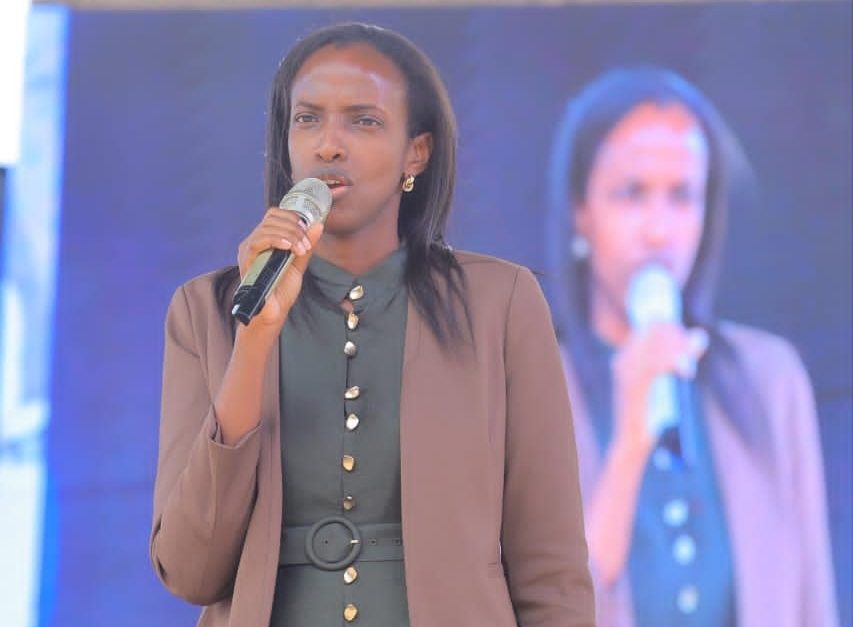
Kampala – The Chief Operations Manager of Uganda National Oil Company (UNOC) has advised the young generation in Uganda to choose a core discipline, Health, Safety, and Environment, and then add a digital tool; the combination will make them highly employable.
Samantha made the remarks while representing UNOC as the keynote speaker at the 7th National Career Guidance Day, held on Friday, 20th March, at Kololo Ceremonial Grounds in Kampala. She highlighted UNOC’s role in building national expertise and long-term value across the oil and gas sector, adding that as an institution, their mandate is to manage Uganda’s commercial interests in petroleum.
She noted that one of their greatest responsibilities is preparing Ugandans, especially the youth, to participate in and ultimately lead this transformation sector.
“I hereby advise you, the youth: Choose a core discipline, HSE, and add a digital tool. That combination makes you highly employable,” Samantha said.
According to Samantha, UNOC supports structured career entry through graduate training and internship programs, providing exposure to project delivery, commercial negotiations, refinery and pipeline planning, ESG compliance, and operations management.
She explained that these initiatives ensure that, beyond technical trades, Uganda is developing talent pipelines for managers, engineers, geoscientists, economists, and future sector leaders.
“As a shareholder on behalf of the government in the ongoing development and pipeline projects, UNOC collaborates with JV partners to maximize national participation,” she added.
Samantha reminded the youth that TotalEnergies’ (Tilenga) Talent Pipelines – Tilenga Academy is training 200 youth in operations, production, mechanical, electrical, and instrumentation over a 2.5-year pathway. The first cohort completed international OPITO-aligned certification in France, Malaysia, and Oman.
Over USD 200,000 in software and hardware donations has been given to universities. USD 12M has been invested in supplier skilling, and approximately USD 36M has been spent procuring from host community suppliers.
CNOOC (Kingfisher) Vocational Strengthening has a strong emphasis on coded welding, upstream operations, and HSE, with CNOOC supporting 781 trainees at UPIK in 2025.
Regarding welding certification pathways (3G/6G), Samantha informed the youth that, with support jointly from UNOC, CNOOC, and industry partners, there is a transition to hydropower-powered rigs, reducing emissions and exposing trainees to modern operational standards.
In EACOP, midstream Vocational and Livelihood Empowerment, EACOP Academy has trained 141 trainees (25% women) in operations, instrumentation, mechanical, and electrical disciplines. Over 527 households have been trained in enterprise development with starter kits across five districts.
She highlighted the types of training and who they target: technical and vocational pathways delivered through UPIK, UT colleges, and accredited TVET centers, including HSE (INSP, ECITB), rigging and scaffolding, coded welding (3G/6G), NDT/QC inspection, lifting operations, and electrical and instrumentation production operations.
Additionally, the Ministry of Education and Sports has listed over 145 public TVET institutions aligned with these pathways, targeting youth aged 18-28, aligned with Academy recruitment models.
University and Professional Pathways have strengthened petroleum geoscience and engineering through advanced digital platforms donated to universities. International placements across TotalEnergies and CNOOC affiliates have provided exposure to operations in Africa, Europe, Asia, and the U.S. UNOC’s graduate training continues to build commercial, regulatory, and operational talent.
Samantha tipped them on the skills most in demand today, including HSE and Process Safety (IHSP/ECITB/OPITO), welding and fabrication (3G/6G), NDT, QA/QC, electrical and instrumentation (EACOP heat-tracing, commissioning), mechanical maintenance and rotating equipment, lifting operations and heavy machinery, and digital petroleum workflows (Petrel, Techlog, Eclipse, Petromod).
The opportunities on the horizon include Tilenga entering production readiness, with new roles for OPITO-certified Ugandans. EACOP commissioning will expand operational, maintenance, and control-room opportunities. Supplier growth through IEC and regional partnerships will allow SMEs to scale into long-term operations. UNOC’s growth into midstream and downstream (refining, storage, trading) will create additional technical, commercial, and operations careers.
The 7th National Career Guidance Day was attended by several government agencies, private institutions, universities, and schools. Under the theme “The Future of Work: Surviving in the AI Era,” the event was officiated by Hon. Dr. Joyce Moriku Kaducu, the State Minister for Primary Education, on behalf of the First Lady, Janet Kataha Museveni, the State Minister for Education and Sports. The Chief Guest was Rt. Hon. Robinah Nabbanja, on behalf of President Museveni.
About UGNEWS24
UGNEWS24 is a Uganda local news service, a product of
SOLAVIA GROUP LIMITED,
Reg. No. 80048169153974.