Author: admin

  • Makerere University Is Offering Masters Scholarships — Here Is Everything You Need To Know Before The April 17 Deadline

    Makerere University Is Offering Masters Scholarships — Here Is Everything You Need To Know Before The April 17 Deadline

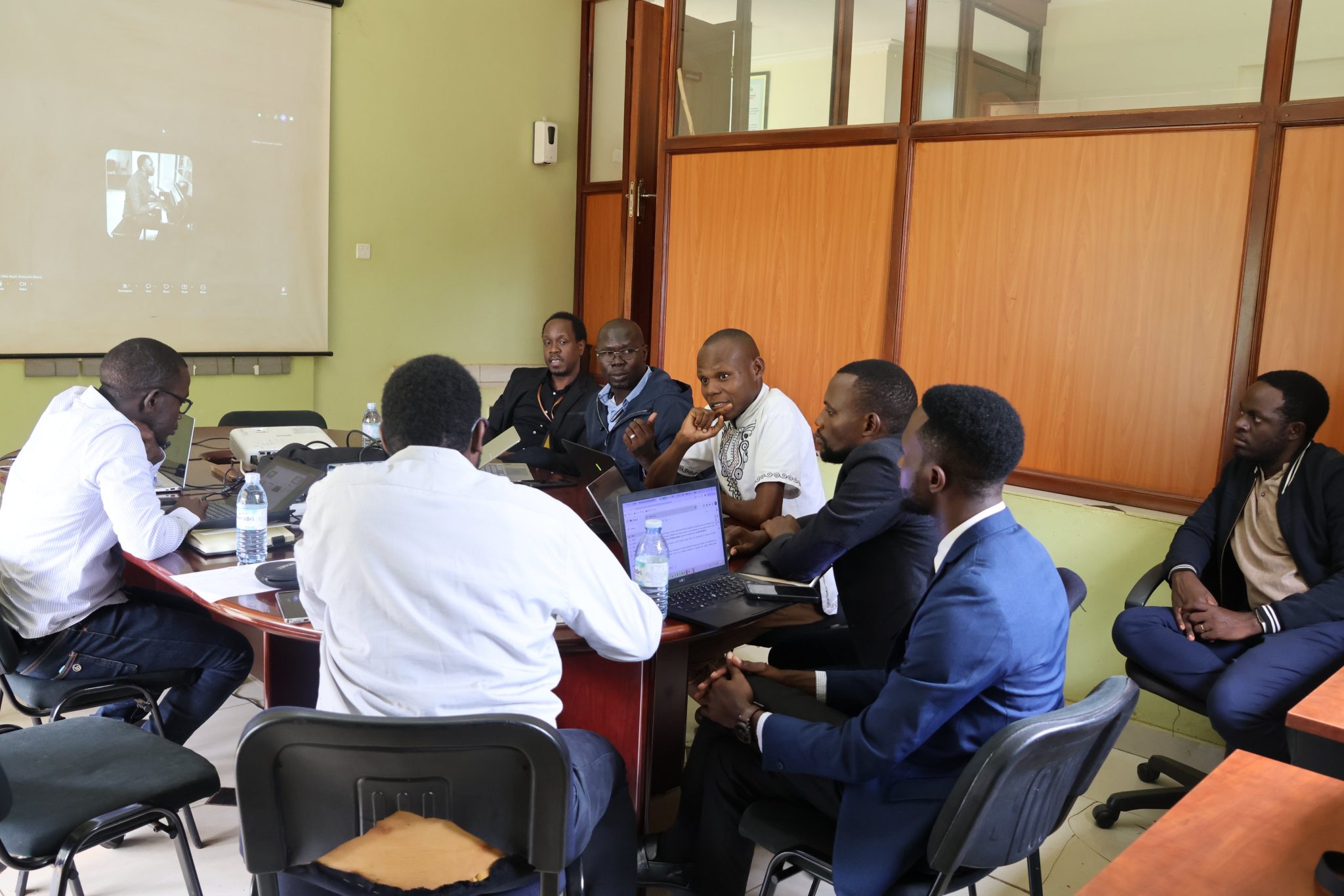
    If you are currently pursuing a Master’s degree at Makerere University School of Public Health and your Semester One results were strong, there is a scholarship opportunity you cannot afford to scroll past.
    The Centre for Prevention of Trauma, Injury, and Disability (CTRIAD) at Makerere University School of Public Health (MakSPH) has opened applications for its 2025/2026 tuition scholarship — and two candidates will be selected.
    The deadline is April 17, 2026 at 11:59 pm.

    Which Programmes Qualify?

    ADVERTISEMENT

    The scholarship covers tuition for students enrolled in any of the following Master’s programmes at MakSPH:
    Master of Public Health (MPH) Full-Time, Master of Environmental and Occupational Health (MEOH), Master of Biostatistics (MBIO), Master of Health Services Research (MHSR), Master of Public Disaster Management (MDM), Master of Public Health Monitoring and Evaluation (MPH-M&E), and Master of Health Informatics (MHI).

    Do You Qualify?

    To be eligible, you must meet all of the following conditions. You must be formally registered at Makerere University School of Public Health under one of the programmes listed above. You must have Normal Progress — meaning no retakes — in Semester Two of Year One for the 2025/2026 academic year. You must have a Cumulative Grade Point Average (CGPA) of 4.0 or above in Semester One of Year One. You must be a Ugandan citizen. And critically, you must have a demonstrated interest in research touching on areas such as drowning prevention, road safety, emergency trauma care, injuries from animal attacks, violence prevention, disability and rehabilitation, and sports injuries. CTRIAD notes that candidates who can link any of these research areas to climate change will have an added advantage.

    What You Need To Apply

    Putting together your application requires five things. A one-page application letter addressed to the Dean of Makerere University School of Public Health. An up-to-date curriculum vitae. A research concept note of not more than five pages. Two letters of recommendation, with at least one coming from an academic supervisor — both must include functioning email addresses and daytime phone numbers. And a copy of your provisional results for Semester One of Year One, confirming you meet the minimum CGPA requirement.

    Important Note For Previous Applicants

    If you applied before, your earlier submission will not be considered automatically. CTRIAD has specifically requested that all previous applicants reapply using the new online application form to align with the revised application process. Do not assume your old application is still in the running — reapply.

    Why This Matters

    Postgraduate education in Uganda is expensive, and financial constraints remain one of the biggest reasons Master’s and PhD students struggle to complete their programmes on time. Scholarships like this one — targeting students already performing well and showing promise in public health research — are rare and genuinely life-changing.

    CTRIAD’s focus areas are also increasingly urgent. Road accidents, drowning, sports injuries, disability, and violence-related trauma are public health challenges that Uganda continues to grapple with. The scholars selected through this programme will not just benefit personally — they will be positioned to contribute meaningfully to solving problems that affect millions of Ugandans.
    Two slots. One deadline. April 17, 2026.
    If you qualify, apply.
  • You Passed UACE 2025 — But That Might Not Be Enough: How Better Results Are About To Make University Admission Harder Than Ever

    You Passed UACE 2025 — But That Might Not Be Enough: How Better Results Are About To Make University Admission Harder Than Ever

    Here is the uncomfortable truth about Uganda’s best-ever UACE results: the better everyone performed, the harder it is going to be for you to get into the university course you want.
    That is the quiet warning university officials are sending to the 133,291 candidates who scored the minimum two principal passes required for undergraduate admission in the 2025 Uganda Advanced Certificate of Education exams — results released by the Uganda National Examinations Board (UNEB) last Friday.
    Yes, you qualified. But so did tens of thousands more people than last year. And the number of university slots has not grown at the same pace.

    The Numbers Tell The Story

    ADVERTISEMENT

    Of the 165,172 candidates who sat the 2025 UACE exams, a striking 133,291 — that is 68.6 percent — met the minimum entry requirement of two principal passes for university. That figure represents a 3.1 percent jump from the 92,273 who qualified the previous year.
    Breaking it down further, UNEB data shows that 68,906 candidates (41.7 percent) secured three principal passes, up from 54,334 (38.6 percent) in 2024. Another 44,385 candidates (26.9 percent) got two principal passes, compared to 37,935 in 2024. An impressive 98.9 percent of all candidates qualified for the UACE certificate.
    UNEB Executive Secretary Daniel Odongo described the performance as consistent with a broader trend of improvement and a significant increase in the number of students who sat the examination this year. He noted that an extra 21,018 university places would need to be made available to absorb the additional qualifying candidates.
    For diploma-level programmes at tertiary institutions — where one principal pass and two subsidiaries are considered — the qualifying pool widens even further, with 145,129 candidates (87.9 percent) eligible.

    Better Results, Tighter Cut-Off Points

    For students eyeing competitive programmes like Law, Medicine, and Engineering, the improved national performance comes with a catch.
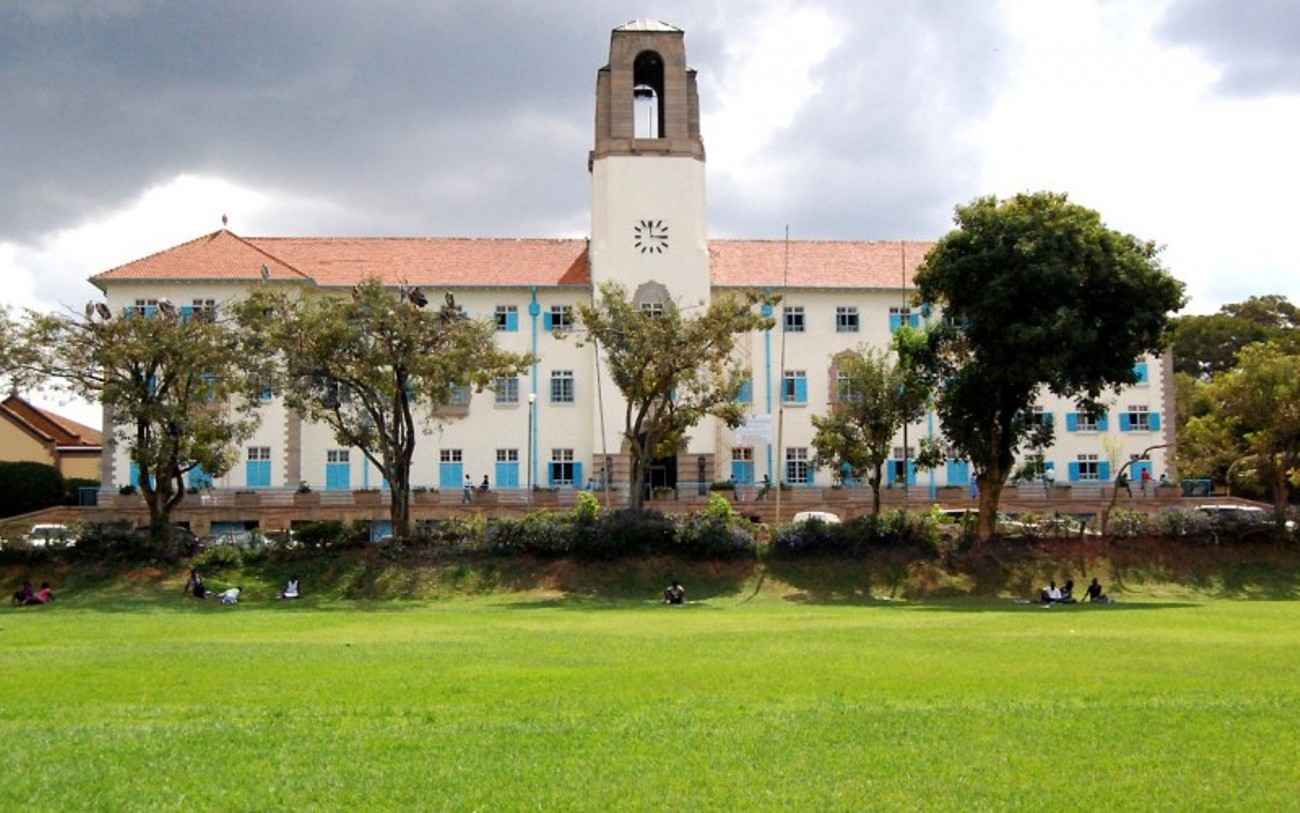
    Makerere University Academic Registrar Prof Mukadasi Buyinza did not mince words. Cut-off points, he explained, will inevitably rise because more qualified students are competing for the same limited number of slots.
    “We look at how many have applied, and we usually have a limit per programme. If the thread cuts you out, you are not admitted,” he said.
    He also moved to clear up a concern that had been circulating in the media, clarifying that Makerere is not reducing its admissions intake as had been reported. “We are maintaining the usual figure,” he said — which stands at approximately 14,000 students admitted annually.
    What is changing, however, is the postgraduate landscape. Makerere’s current total student population sits at around 35,000, including roughly 5,000 postgraduate students. The university’s strategic plan targets doubling Masters and PhD students to about 10,000 by 2030, with postgraduate enrolment expected to hit at least 30 percent of the total student population.
    “Our target is to strengthen research output and churn out more specialists who can drive Uganda’s development,” Prof Buyinza added.

    Miss Makerere? There Are Other Options

    For the many candidates who will not make Makerere’s cut-off points despite qualifying, officials are pointing to Uganda’s growing network of public universities as a safety net.
    With 12 public universities now operating across the country — including Gulu, Mbarara, Busitema, Muni, and Kyambogo — there are more options than ever before for students who miss out on their first-choice institution.
    Busitema University’s Public Relations Officer, Ms Peace Karungi, explained the dynamic clearly. “Usually, the cut-off points are determined solely by two factors: the students’ performance that year and the capacity of an institution. If the performance was better, it automatically means the cut-off points will be tight,” she said.
    In short — a good year for students nationally is a competitive year for every individual student.

    If you are among the 133,291 who qualified for university this year, congratulations — your result is genuinely worth celebrating. But as you prepare to apply, here is what you need to keep in mind:
    The cut-off points for competitive programmes at top public universities will almost certainly be higher than last year. Apply strategically. Consider your programme choices carefully. And do not rule out other public universities — they are growing, they are accredited, and they may well offer the same degree that Makerere does.
    The results were better. The competition just got stiffer. Plan accordingly.

  • URSB LAUNCHES 39TH TECHNOLOGY AND INNOVATION SUPPORT CENTRE AT ST. JOSEPH’S COLLEGE OMBACI

    URSB LAUNCHES 39TH TECHNOLOGY AND INNOVATION SUPPORT CENTRE AT ST. JOSEPH’S COLLEGE OMBACI

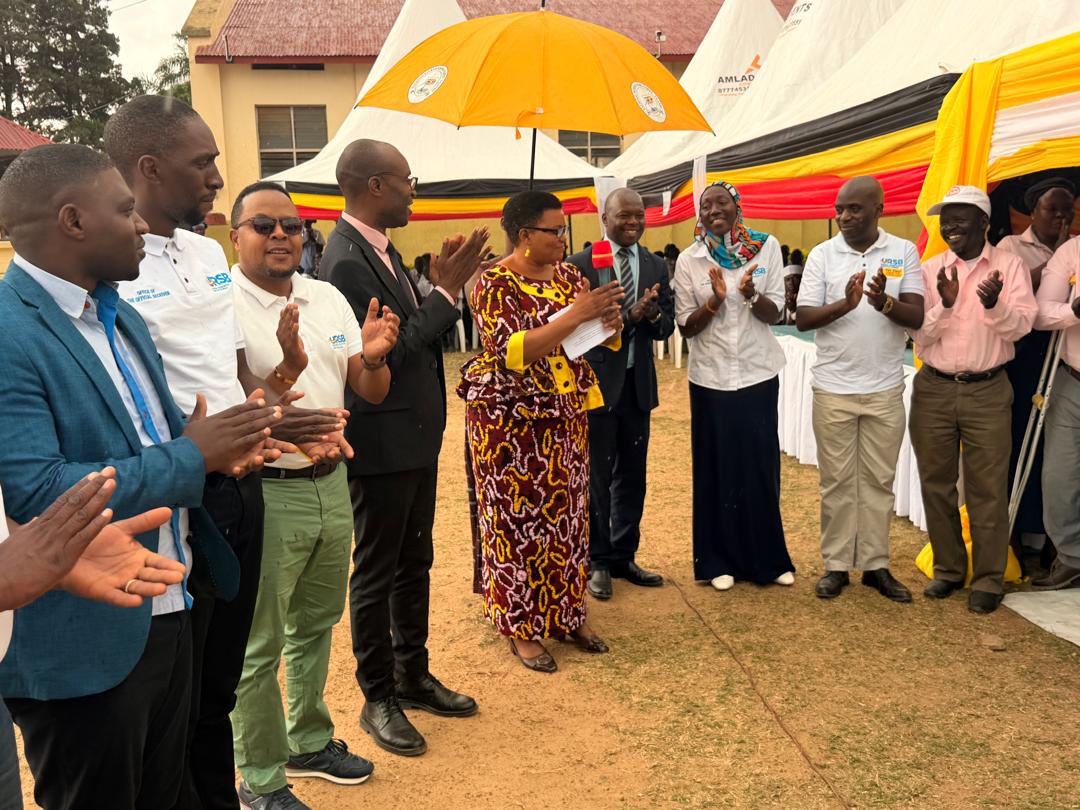
    The Uganda Registration Services Bureau (URSB) has today launched its 39th Technology and Innovation Support Centre (TISC) at St. Joseph’s College Ombaci, marking a significant milestone in promoting innovation and intellectual property (IP) awareness among young people in Uganda.

    Founded in the 1940s as a technical school, the institution has evolved into a hub for nurturing practical skills, research, and innovation. Its strong innovation culture is reflected in achievements such as emerging among the top performers in the National Science and Innovation Competitions and developing solutions including an automatic fire detector and renewable energy innovations.

    The newly established centre becomes the third secondary school-based TISC in Uganda, following similar initiatives at Comboni College Lira and Dr. Obote College Boroboro. The expansion reflects URSB’s commitment to nurturing innovation at an early stage through its IP in Schools initiative.

    The centre was officially opened by the Resident City Commissioner of Arua, Betty Otekat Akello, who commended URSB for extending innovation support services to schools.

    “This initiative is timely and transformative. By equipping students with knowledge on innovation and intellectual property, we are preparing a generation that can create solutions, protect their ideas, and contribute meaningfully to national development,” she said.

    URSB was represented by the Assistant Commissioner for Patents and Industrial Designs, James Tonny Lubwama, who emphasised the importance of integrating intellectual property into education.

    “The establishment of this TISC is a strategic step towards empowering young innovators with access to information, tools, and guidance needed to transform ideas into protected and commercially viable innovations. We are taking intellectual property closer to where innovation begins, our schools,” he noted.

    Speaking on behalf of the school, Headmaster Charles Ondoga welcomed the initiative and reaffirmed the school’s commitment to innovation and research.

    “St. Joseph’s College Ombaci has a long tradition of nurturing practical skills and innovation. This centre will greatly enhance our students’ ability to research, create, and protect their ideas, positioning them for future success,” he said.

    Technology and Innovation Support Centres provide access to high-quality technical information, intellectual property resources, and innovation support services. They play a critical role in helping students, researchers, and innovators develop, protect, and commercialise their ideas.

    Through the continued rollout of TISCs across the country, URSB is strengthening Uganda’s innovation ecosystem and contributing to the development of a knowledge-based economy driven by creativity, research, and intellectual property protection. The initiative also complements the Bureau’s IP in Schools program geared towards enhancing young learner’s understanding of intellectual property aspects and creation of ground-breaking innovations.

    Do you have a story in your community or an opinion to share with us: Email us at Submit an Article

  • Next Radio Holds Day-Long Auditions for The Next Big Voice Talent Search

    Next Radio Holds Day-Long Auditions for The Next Big Voice Talent Search

    Next Radio 106.1 FM today held day-long live auditions for The Next Big Voice at Next Media Park, following the close of online submissions on March 18, during which aspiring presenters submitted demo videos via social media.

    The auditions started in the morning and ran until about 8 PM, with selected contestants showcasing their talent before a panel featuring comedian Patrick Salvado Idringi, media personality Cleopatra Koheirwe, and media trainer Mich Egwang.

    The judges focused on confidence, originality, storytelling ability, and a strong on-air presence.

    Throughout the day, the venue maintained a high-energy atmosphere as contestants took turns on the mic, with surprise moments that included a brief appearance by Next Media Group CEO Kin Kariisa, who interacted with participants.

    The talent search was also streamed live on NBS Plus via the AfroMobile platform, allowing audiences to follow the performances and the judges’ feedback in real time.

    The initiative aims to discover bold new voices to join Uganda’s radio industry, with anticipation continuing to build around who will eventually emerge as The Next Big Voice.

  • I Believe In Bobi Wine’s New Uganda Dream – Liam Voice

    I Believe In Bobi Wine’s New Uganda Dream – Liam Voice

    singer Liam Voice has voiced strong support for Robert Kyagulanyi and his vision of a “New Uganda.”

    Speaking in an interview with a local television station, Liam Voice clarified that his belief is rooted more in the ideas championed by Bobi Wine rather than the individual himself.

    “I believe in Bobi Wine’s dream of a New Uganda and his ideas. Bobi Wine the person may not take up leadership very soon, but his ideas and dream will keep moving even in his absence,” he said.

    The singer emphasized that the message of a country that works for everyone has already spread widely among Ugandans.

    According to him, even if Bobi Wine is not at the forefront at some point, the ideals he represents will continue to inspire many across the nation.

    Liam Voice’s remarks add to the growing list of artists publicly aligning themselves with the “New Uganda” vision, which continues to shape conversations both in entertainment and political spaces.

  • Kawempe Hospital cuts maternal deaths by over 100

    Kawempe Hospital cuts maternal deaths by over 100

    Maternal deaths annually recorded at Kawempe National Referral Hospital have been slashed over the past three years from 200 to 60, Members of Parliament have been told. 

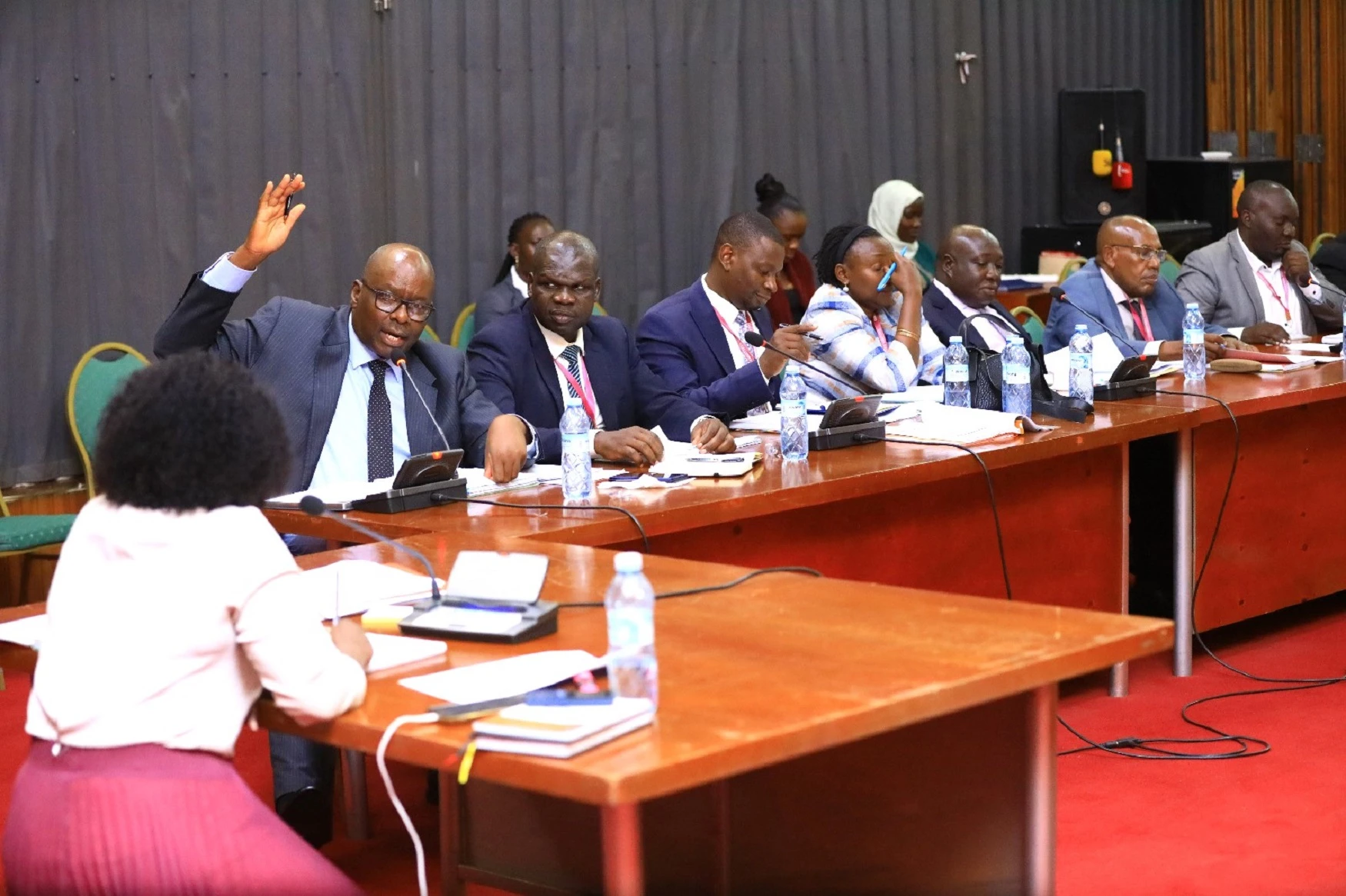
    The revelation was made by the hospital’s Executive Director, Dr Emmanuel Byaruhanga, while appearing before the Public Accounts Committee (Central Government) of Parliament on Wednesday, 18 March 2026.

    His remarks followed probing by MPs on whether patients receive free services at the health facility.
    Byaruhanga told the MPs that services at the hospital were generally offered free of charge, except for radiology that includes x-ray, ultrasound, CT scan and MRI services, whose charges constitute the hospital’s non-tax revenue.

    The only charge levied on c-section operations, Byaruhanga clarified,  is done at the hospital’s six-bed private wing at Shs2.5 million.

    Committee chairperson, Hon. Gorreth Namugga, questioned the charges levied on expectant mothers who go through the caesarean section mode of delivery.

    “Can a woman walk into Kawempe Hospital and find the c-section operation free? The women out there need to know this and they must be sensitised so that they do not pay for what is supposed to be at zero cost,” Namugga said.

    Hon. Hope Nakazibwe (NUP, Mubende District Woman Representative) put the hospital administration to task on whether items like mama kits are offered without a cost to mothers expecting to deliver from the hospital.
    “Is there an instance where the theatre or the hospital itself runs out of some of the health supplies and they have to charge patients who come for either an operation or any other medical service?” Nakazibwe asked.

    Kalungu West County MP, Hon. Joseph Ssewungu, alluded to the many  pharmacies situated around the hospital, which he said patients are often referred to buy essential medicines for treatment.

    “Doctor, confirm to this committee that a patient will come to Kawempe (hospital) and get all those services without spending a single penny. When you move around Mulago hospital, you will notice that it is surrounded by pharmacies. Why is that? it is business,” Ssewungu noted.

    “All services in Kawempe (hospital) are 100 per cent free except for radiology. I have heard of patients who were charged but this is not official. Several times we follow up with these patients, but they cannot give us the information,” he said.

    He added: “There are pharmacies around the hospital, but this is totally out of our control. There is even a mini hospital about one kilometre from the hospital, but this is out of my control. I think they are registered by KCCA.” 

    The hospital team appeared before the Committee to answer queries arising from the Auditor General’s report for the financial year ending 30 June 2025.

  • TRAGIC! M7’s Trusted SFC Commando Dies in Prime @ Nakasero Hospital

    TRAGIC! M7’s Trusted SFC Commando Dies in Prime @ Nakasero Hospital

    Grief and shock have engulfed the elite Special Forces Command (SFC) and the nation following the sudden death of Herbert Kunda, a highly trained and trusted VVIP protection officer attached to President Museveni.

    Kunda, described by colleagues as calm, suave and razor-sharp, reportedly breathed his last Today-Thursday March 19 at Nakasero Hospital, sending waves of sorrow through Uganda’s top security circles and his home district of Kazo District.

    Sources within the SFC say the fallen officer was not just another guard — he was a key pillar in the President’s close protection unit, a role reserved for only the most disciplined, loyal and highly skilled operatives.

    “He has gone in his prime,” a grieving relative revealed, struggling to hold back tears. “At a national level, Herbert has been a strong pillar in VVIP close protection of the President. We as SFC have lost immensely.”

    Inside the tight-knit circles of Uganda’s elite security, Kunda was known as a dependable mind — a man whose judgment could be trusted in high-stakes situations where a split-second decision could mean life or death.

    Beyond the uniform, however, lies an even deeper loss.

    At home, Kunda was a devoted family man, described as responsible, big-hearted and fiercely loyal. Those close to him paint a picture of a man who carried both strength and warmth — equally capable of handling pressure and lifting spirits with his sharp sense of humour.

    RIP Kunda

    “He was someone you could rely on for anything,” the family source added. “Very loyal to his leaders, committed, and always present for his people.”

    His untimely death now leaves a painful void — in the barracks, in the corridors of power, and in the hearts of those who knew him personally.

    As tributes continue to pour in, one thing is clear: Uganda has not just lost a soldier, but a protector, a confidant, and a man whose quiet strength helped safeguard the nation’s highest office.

    He is survived by his immediate family, now left shattered by the sudden loss.

    Funeral arrangements are yet to be announced.

    Rest in peace, Soldier!


    About Post Author

  • Emtee Unreachable Following Emotional Live, Concern Grows

    Emtee Unreachable Following Emotional Live, Concern Grows

    South African rapper Emtee, real name Mthembeni Ndevu, has sparked concern after sharing an emotional moment online.

    He appeared distressed during a recent livestream and opened up about personal and financial struggles affecting his life.

    Soon after, his longtime collaborator Black Tears revealed that he cannot reach him, which raised more worry among fans.

    The producer shared his concern and confirmed that repeated attempts to contact Emtee have failed.

    During the livestream, Emtee spoke about unpaid royalties linked to his album Logan. He also addressed personal challenges involving his home and family.

    Fans quickly reacted and shared messages of support after watching the clip.

    With no update from the rapper, concern continues to grow as many hope he reconnects and gets the help he needs.

  • Busoga Will Shine With or Without Alien Skin — Rachael Magoola

    Busoga Will Shine With or Without Alien Skin — Rachael Magoola

    Alien Skin may have walked away from Busoga Region, but Rachael Magoola says the region will keep shining without him.

    The former Bugweri District Woman Member of Parliament brushed off concerns about his absence, insisting Eastern Uganda’s music scene does not depend on one artiste.

    She pointed to the region’s deep pool of talent and said the momentum will not slow down anytime soon.

    As much as Alien Skin has his influence, the Eastern Region cannot be stopped from shining. We have many talented artists who can still represent us well.

    Magoola even highlighted rising star Acidic Vokoz as one of the names carrying the torch, saying new talent continues to push the sound forward.

    Her remarks come after Alien Skin, real name Patrick Mulwana, drew a hard line on performing in Busoga.

    During an interview on Sanyuka Uncut, the singer expressed frustration with how people treat him in the region and made his position clear.

    He said he will not perform there again, even if promoters put one billion shillings on the table.

  • URA ASYCUDA System to Go Dark Briefly Amid Ongoing Efforts to Improve Digital Services

    URA ASYCUDA System to Go Dark Briefly Amid Ongoing Efforts to Improve Digital Services

    The Uganda Revenue Authority (URA) has announced a scheduled system upgrade that will temporarily affect its Automated System For Customs Data (ASYCUDA World) platform, a critical backbone of Uganda’s customs and trade operations.

    According to a public notice, the system will be unavailable on 20th March 2026 from 12:00AM to 6:00AM as the authority undertakes an upgrade on the underlying SOClass technology framework.

    URA says the maintenance is intended to improve performance and user experience, noting that the release will deliver “a refreshed experience, critical bug fixes, and enhanced performance designed to make it easier for you to access and manage your tasks within the application.”

    During the six-hour downtime, users will not be able to carry out core functions on the ASYCUDA World system, including capturing declarations, warehousing processes, assessments, exports, and other related services. The authority also cautioned that systems dependent on ASYCUDA data will be affected during this period.

    “We apologize for this interruption and any associated inconveniences to you and sincerely appreciate your patience as we aim to bring a simplified tax experience near you,” URA said in its statement.

    ASYCUDAWorld is not just another government platform—it is a sophisticated, web-based customs management system that powers Uganda’s import, export, and transit processes. It enables electronic, paperless declaration processing, significantly reducing the time and cost of clearing goods while improving efficiency across the trade chain.

    The system supports the full customs cycle, including cargo manifests, customs declarations, accounting, and risk management, and is configured to operate within the East African Community Single Customs Territory framework, streamlining trade along the Northern Corridor.

    Its remote accessibility allows clearing agents to process transactions from anywhere with an internet connection, while its integration with agencies such as the Uganda National Bureau of Standards (UNBS) and the National Drug Authority (NDA) enables faster inspections and approvals for imported goods.

    To access the system, users must be formally registered and authorised by URA, with technical requirements including stable internet connectivity and compatible system configurations.

    While the upgrade has been presented as a routine enhancement, it comes at a time when the authority’s wider digital infrastructure is reportedly under increasing pressure.

    In recent months, insiders have reportedly pointed to growing operational strain following the exit of software experts linked to Tata Consultancy Services (TCS), the global firm that designed and supported the Integrated Tax Administration System (ITAS).

    The ITAS platform, built at a cost of about $11.5 million, has long been central to managing key tax streams such as Income Tax, VAT, and Withholding Tax.

    However, sources within the authority say that after the departure of Tata specialists, internal teams have had to reportedly shoulder increased responsibility in maintaining and troubleshooting complex systems.

    Reports suggest that technical challenges and reconciliation pressures have since increased, with some staff reportedly working extended hours to keep systems running efficiently.

    Users are also reportedly beginning to notice occasional disruptions. Some taxpayers and clearing agents have reported delays in system responsiveness and updates.

    Industry observers note that such challenges are not uncommon when large-scale digital systems transition between support structures, especially where specialised technical expertise is required.

    While some unverified claims have circulated about tensions during the transition period and concerns over replacement arrangements, these remain unconfirmed and should be treated cautiously.

    Insiders allege that the decision to terminate the foreign support team was driven by cost concerns, with officials reportedly deeming the arrangement “too expensive.” However, critics within the authority argue that the move may have created more problems than it solved.

    The transition has not been without controversy.

    Unverified claims from inside URA suggest that tensions ran high during the handover period, with allegations that a senior official threatened to shoot a member of the foreign support staff during a dispute over system access. While this claim could not be independently confirmed, insiders say it contributed to an already tense environment.

    Further controversy surrounds reports that the outgoing team is to be replaced by a local firm allegedly linked to powerful figures within the authority. Critics claim the new handlers may lack the technical depth required to manage such a complex system.

    Against this backdrop, tonight’s planned downtime is being closely watched by observers who see it as more than just routine maintenance.

    At the same time, URA continues to emphasise its commitment to modernising tax administration and improving service delivery, with upgrades like this one forming part of broader efforts to strengthen system performance and reliability.

    Industry watchers warn that modern tax systems like ITAS and ASYCUDA depend heavily on specialised expertise to remain stable and efficient. Without consistent technical support, even minor upgrades can carry significant risks.

    For URA, the stakes are high. The authority’s digital platforms are central to revenue collection and national financing, meaning any prolonged disruptions could have ripple effects across the economy.

    For now, the focus remains on the scheduled upgrade, with URA urging users to plan accordingly as it works to enhance one of the country’s most critical trade and revenue systems.

    As Uganda’s customs and tax ecosystem becomes increasingly digital, the effectiveness of such upgrades will be closely watched, with businesses and stakeholders hoping for smoother, faster, and more reliable services once the system is back online.


    About Post Author

About UGNEWS24

UGNEWS24 is a Uganda local news service, a product of SOLAVIA GROUP LIMITED, Reg. No. 80048169153974.

Registered office

Plot 2335, Buwambo-Katadde-Najjo Road,
Nansana Municipality, Wakiso District, Uganda
P.O. Box 214231, Kampala

© 2026 SOLAVIA GROUP LIMITED. All rights reserved.