Author: admin

  • Meet Hannah Karema Tumukunde former Miss Uganda vying for Makerere Guild Presidency

    Meet Hannah Karema Tumukunde former Miss Uganda vying for Makerere Guild Presidency

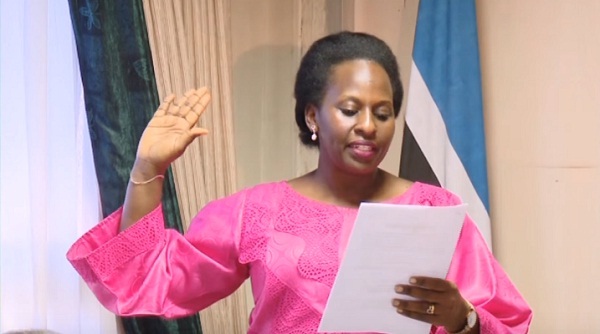
    Former Miss Uganda Hannah Karema Tumukunde has officially joined the race for Guild President at Makerere University, setting the stage for what is shaping up to be one of the most competitive student elections in recent years.

    The 2023–2024 beauty queen, who represented Uganda at the Miss World competition in India and emerged as Miss World Africa 1st Runner-Up, announced her bid with a bold message to students.

    ADVERTISEMENT

    “History at Makerere University has never been written by spectators. It’s written by those who stand up…” she posted.
    “Today, I step forward not just to run for Guild President, but to stand for every student who believes Makerere can be more.”

    Currently pursuing a Bachelor’s degree in Social Sciences, Karema says her journey through pageantry exposed her to real-life challenges affecting young people, inspiring her to step into leadership.

    Her campaign is already gaining attention across campus, with many students curious to see whether her national profile and advocacy experience can translate into student political success.

    What she’s promising

    Karema’s manifesto focuses on key student concerns, including:

    • Fairer tuition policies
    • Increased support for government-sponsored students
    • Protection of campus political freedoms
    • Addressing academic challenges faced by students

    According to the university roadmap, the guild election process kicked off on March 2, 2026, with voting expected to be conducted end of March.

    The inauguration date for the next guild president will be announced after results are confirmed.

    With her entry, Karema adds star power to an already heated contest, bringing a mix of influence, visibility, and ambition into Makerere’s political arena.

    Whether the former beauty queen can turn popularity into votes now lies in the hands of the student electorate—but one thing is certain: all eyes are on this race.
  • Africa’s Postal Sector Must Embrace Digital Shift, Says UCC ED Nyombi Thembo

    Africa’s Postal Sector Must Embrace Digital Shift, Says UCC ED Nyombi Thembo

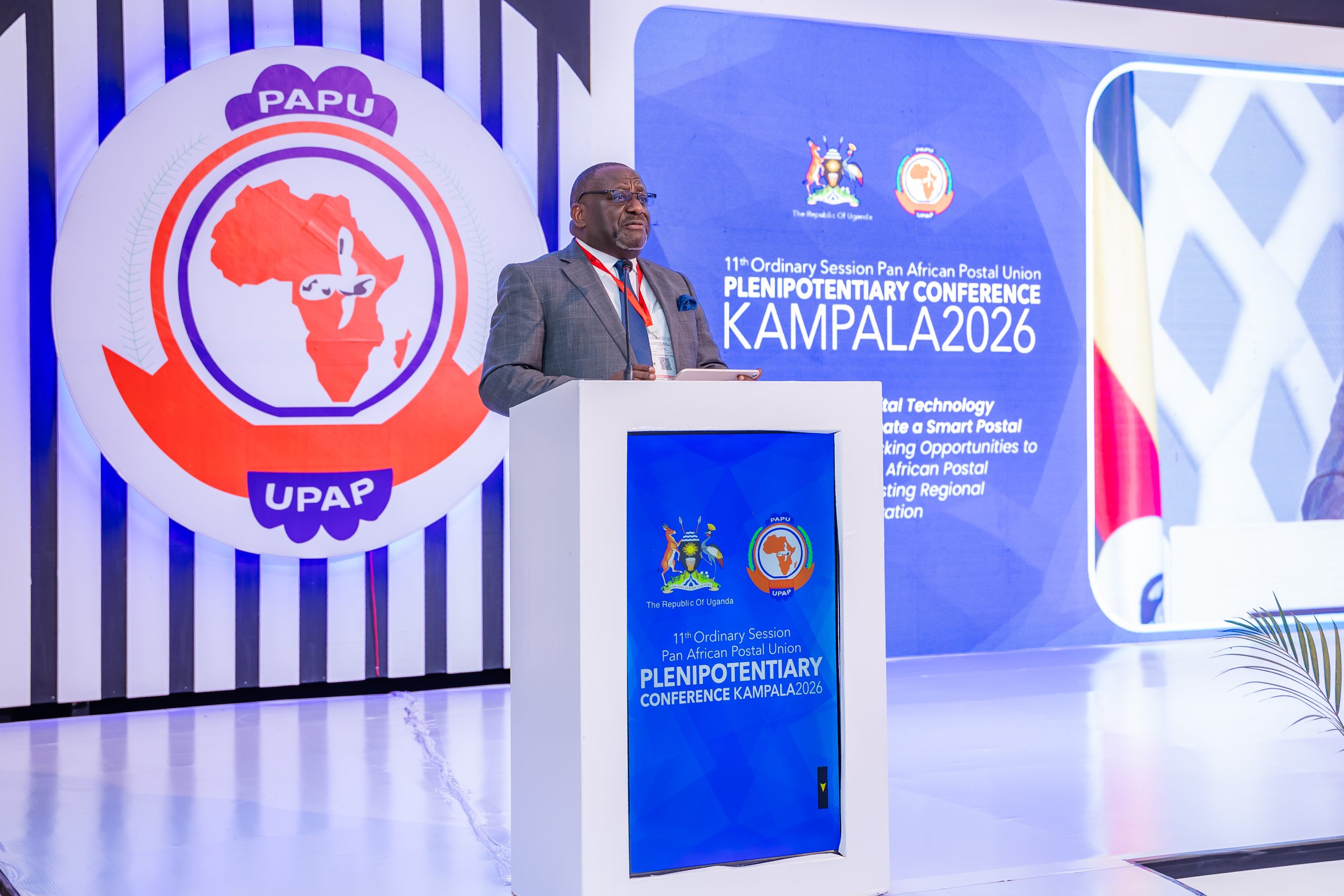
    Africa’s postal sector must urgently integrate digital technologies to remain relevant in an era defined by e-commerce and rapid technological advancement, the Executive Director of the Uganda Communications Commission (UCC), Nyombi Thembo, has said.

    Thembo made the remarks while opening the Technical Committee Sessions of the 11th Ordinary Session of the Pan African Postal Union (PAPU) Plenipotentiary Conference in Kampala, where delegates from across the continent have convened to discuss the future of postal and courier services.

    ADVERTISEMENT

    He noted that the global postal industry is undergoing a profound transformation driven by digital platforms, logistics innovation, and the expansion of online trade. While traditional mail services have declined due to the rise of digital communication, Thembo emphasized that the surge in e-commerce has created new demand for efficient, reliable, and technology-enabled delivery systems.

    “A decade or so ago, many predicted the decline of postal services because people had stopped writing letters. What they did not anticipate was the rise of e-commerce—an economic revolution that now depends more than ever on efficient, reliable, and technology-enabled delivery networks,” he said.

    According to Thembo, the evolving landscape presents both opportunities and challenges for Africa. He observed that although the decline in traditional mail is inevitable, the rapid growth of digital trade and cross-border logistics has positioned the postal sector as a critical enabler of economic activity.

    He stressed that postal operators must reposition themselves beyond their conventional role, adopting digital tools and data-driven systems to support modern logistics and last-mile delivery. In doing so, he said, they can play a central role in facilitating commerce and connecting businesses to markets.

    The conference is expected to examine key issues such as the digitisation of postal services, improvement of logistics efficiency, modernisation of regulatory frameworks, and strengthening interoperability between postal networks across African countries. Thembo noted that these discussions are essential in aligning Africa’s systems with global standards and frameworks.

    In Uganda, the Uganda Communications Commission is already implementing initiatives aimed at modernising the sector. Thembo revealed that efforts are underway to integrate postal infrastructure with digital financial services, a move intended to expand access to secure and affordable transactions, particularly in underserved areas.

    He added that the future of the sector will depend on forward-looking regulation that supports innovation and regional collaboration. Efficient postal and courier systems, he noted, will be critical in supporting Africa’s broader economic ambitions, including trade under continental frameworks.

    However, Thembo cautioned that achieving this transformation will require addressing persistent challenges such as inadequate infrastructure, fragmented addressing systems, and limited coordination across borders. He called for harmonisation of operational standards and greater cooperation among African countries to unlock the sector’s full potential.

    “The future of the postal sector lies in its ability to integrate digital technologies into traditional delivery systems,” he said, urging stakeholders to embrace change and position the industry at the heart of Africa’s digital economy.

    The PAPU Plenipotentiary Conference in Kampala will run until March 28, 2026, and is expected to produce policy directions aimed at strengthening collaboration and accelerating the modernisation of postal services across the continent.

  • Anger Spreads in Ibanda as Residents Reject Election Outcome

    Anger Spreads in Ibanda as Residents Reject Election Outcome

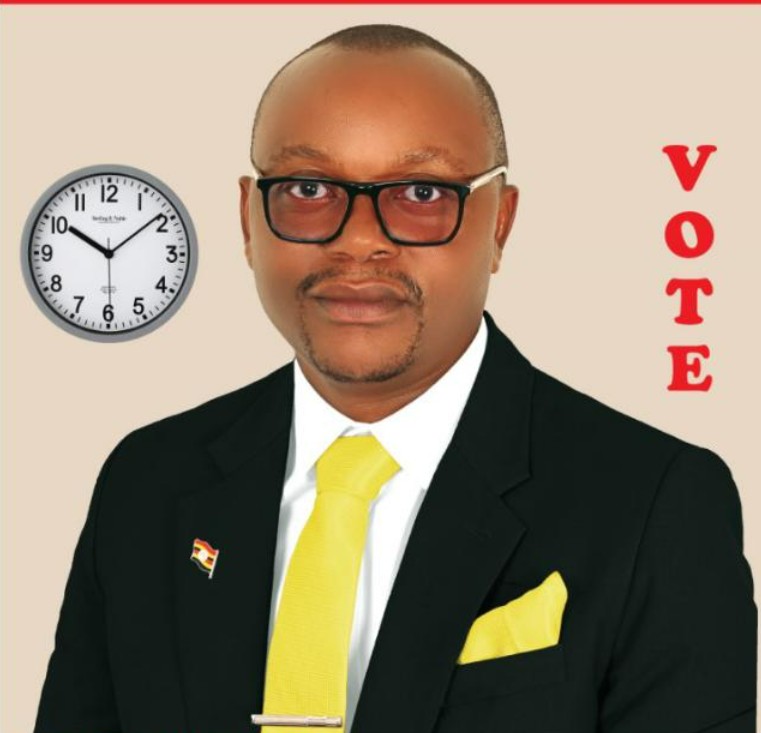
    Anger and frustration continue to grow in Ibanda Municipality following the announcement that Peter Agaba had won the parliamentary election with 14,279 votes, defeating independent challenger Innocent Mwine Bakamuhara, who obtained 12,904 votes.

    For many residents, the narrow margin has only intensified suspicions that the final tally may not reflect what happened on polling day.

    ADVERTISEMENT

    Several voters claim that results announced at individual polling stations indicated strong support for Bakamuhara in key areas including Bufunda, Kagongo, and Bisheshe divisions.

    But according to Bakamuhara’s supporters, the most significant discrepancies appeared in Kashangura Ward, where they believe a large portion of his votes were removed during the final declaration.

    These claims have sparked heated debates across the municipality, with many voters openly questioning the integrity of the electoral process.

    The controversy has been compounded by the role of local political actors, particularly Jovrine Kaliisa, whose alleged remarks during the campaign have resurfaced.

    Some residents claim Kaliisa had earlier told voters that Bakamuhara would never be declared winner regardless of how many votes he received.

    The allegations have intensified frustration among voters and created a perception that the election was predetermined.

    In one incident illustrating the growing anger, a family reportedly rejected a condolence contribution of 50,000 shillings sent by Kaliisa after losing a relative.

    Community members say the rejection reflected the depth of resentment many residents feel following the election.

    Meanwhile, Bakamuhara has indicated that he is exploring legal options to challenge the outcome, noting that his supporters are urging him to reclaim what they believe was their victory.

    As the debate continues, Ibanda Municipality remains deeply divided over the legitimacy of the election.

  • Jamal Says Today’s Musicians Have It Easier Than His Generation

    Jamal Says Today’s Musicians Have It Easier Than His Generation

    Veteran Ugandan singer Jamal Wasswa believes today’s generation of artistes has it far easier in the music industry than those who came before them.

    During a sit down with M.E Media UG, Jamal pointed to platforms like TikTok and other social media tools as examples of how artistes now promote their music.

    He noted that things were very different in his era, when artistes often moved from place to place carrying CDs and convincing DJs to play their songs.

    The new generation has not struggled with music. You cannot convince me that they are struggling, especially with platforms like TikTok. In our era, music was like home delivery, door to door. You had to move with your song on a CD to every venue, and sometimes the CD could even break along the way.

    His remarks come amid a long standing debate within the music industry about whether modern artistes have it easier breaking into the business compared to earlier generations.

    Many young musicians argue that competition today is tougher because of the large number of artistes and constant online visibility.

    Veterans, however, point to social media and streaming platforms as tools that have made music promotion much easier.

  • Constitutional Court nullifies controversial Computer Misuse Act

    The Constitutional Court of Uganda has struck down key parts of the Computer Misuse Act, ruling that Parliament passed the law in violation of constitutional requirements, making it legally invalid.

    The decision follows a petition by civil society groups including Unwanted Witness Uganda, African Centre for Media Excellence and the Uganda Editors’ Guild, alongside individual applicants.

    At the centre of the case was the Computer Misuse (Amendment) Act, 2022, introduced by former Kampala Central MP Muhammad Nsereko. The amendments were passed amid strong criticism from journalists, activists and opposition figures who warned they would restrict free expression, especially online.

    While the original law targeted cybercrime such as hacking and electronic fraud, the 2022 changes expanded it to include offences like “offensive communication,” “hate speech,” and the spread of “malicious information.” Critics argued these terms were too vague and gave authorities wide powers to target dissent, particularly on social media.

    Over time, the law was used to arrest and prosecute several Ugandans, including activists, government critics and content creators, some of whom were jailed over posts authorities considered offensive or misleading.

    In its ruling, the court found that Parliament passed several sections of the law without the required quorum, rendering them unconstitutional.

    The nullified provisions include those criminalising unauthorised access to data, sharing information about children, sending unsolicited or “malicious” information, and so-called misuse of social media.

    The court also struck down Sections 162 and 163 of the Penal Code Act, which dealt with criminal libel, on grounds that they were vague and open to abuse.

    Legal experts say the judgment could have far-reaching implications, as convictions secured under the invalidated provisions may no longer stand.

    The petitioners had argued that the law was rushed through Parliament without proper scrutiny, undermining constitutional safeguards and democratic lawmaking.

  • Meet Hannah Karema Tumukunde former Miss Uganda vying for Makerere Guild Presidency

    Meet Hannah Karema Tumukunde former Miss Uganda vying for Makerere Guild Presidency

    Former Miss Uganda Hannah Karema Tumukunde has officially joined the race for Guild President at Makerere University, setting the stage for what is shaping up to be one of the most competitive student elections in recent years.

    The 2023–2024 beauty queen, who represented Uganda at the Miss World competition in India and emerged as Miss World Africa 1st Runner-Up, announced her bid with a bold message to students.

    ADVERTISEMENT

    “History at Makerere University has never been written by spectators. It’s written by those who stand up…” she posted.
    “Today, I step forward not just to run for Guild President, but to stand for every student who believes Makerere can be more.”

    Currently pursuing a Bachelor’s degree in Social Sciences, Karema says her journey through pageantry exposed her to real-life challenges affecting young people, inspiring her to step into leadership.

    Her campaign is already gaining attention across campus, with many students curious to see whether her national profile and advocacy experience can translate into student political success.

    What she’s promising

    Karema’s manifesto focuses on key student concerns, including:

    • Fairer tuition policies
    • Increased support for government-sponsored students
    • Protection of campus political freedoms
    • Addressing academic challenges faced by students

    According to the university roadmap, the guild election process kicked off on March 2, 2026, with voting expected to be conducted end of March.

    The inauguration date for the next guild president will be announced after results are confirmed.

    With her entry, Karema adds star power to an already heated contest, bringing a mix of influence, visibility, and ambition into Makerere’s political arena.

    Whether the former beauty queen can turn popularity into votes now lies in the hands of the student electorate—but one thing is certain: all eyes are on this race.
  • Dokta Brain Announces 98-Song Project To Support Young Artistes

    Dokta Brain Announces 98-Song Project To Support Young Artistes

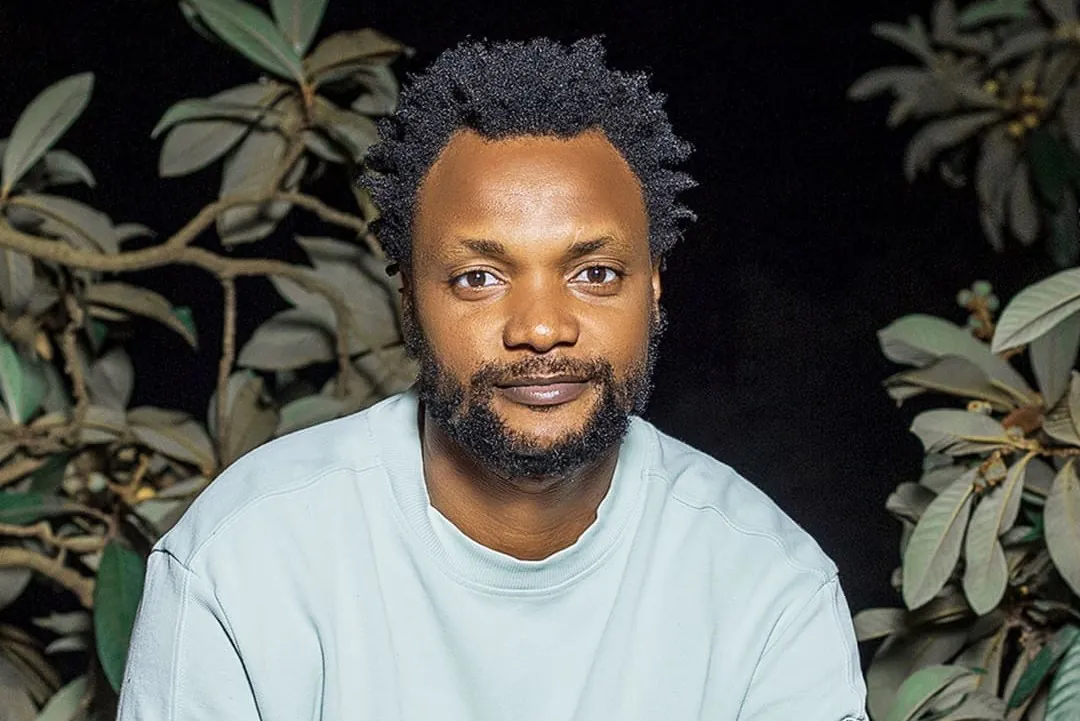
    Celebrated Ugandan singer and songwriter Dokta Brain has revealed a new project aimed at supporting young artistes in the music industry.

    He shared details of the initiative during an appearance on KFM while discussing his latest music and upcoming plans.

    The project, titled 7:14, will feature 14 young artistes, each recording seven songs written by him, creating a 98-song catalogue.

    We have a project of 14 young artistes. I am going to write seven songs for each of the artistes. The mission is to put them in a position where they are signable. I would like to elevate vocalists to a level where they can be signed by a global label or any potential label.

    Dokta Brain said the idea came from seeing many talented singers who need professional songwriting support but cannot always afford it.

    Many artistes cannot afford me, but they do need me. I felt the calling. So it is a 98-piece body of work. It is going to be called 7:14. Seven tracks for each of the 14 artistes.

    Through the project, he hopes to help promising vocalists build strong music catalogues that can attract record labels and open doors to bigger opportunities in the industry.

  • Dr.Kezaabu’s Porn Committee Grounded as Cash Dries Up

    Dr.Kezaabu’s Porn Committee Grounded as Cash Dries Up

    A damning report from the Auditor General has blown the lid off a crisis inside the Directorate of Ethics and Integrity (DEI), exposing a cash-strapped institution drowning in unpaid bills, stalled procurement, and a crippled Pornography Control Committee that has gone silent without funding.

    At the heart of the expose is a staggering UGX 398,077,549 in unpaid obligations for goods and services already consumed—money the Directorate simply does not have. In what reads like a financial paradox, the DEI was allocated a mere UGX 10,700,000, just 3 percent of what is needed, to clear the debt.

    The report paints a picture of an institution barely keeping its head above water, with basic operations grinding under the weight of unpaid bills. The implications are severe: service providers left hanging, credibility dented, and critical programmes stalled.

    But the financial strain is only the beginning.

    In a shocking revelation, the report shows that out of a planned procurement budget of UGX 3.9 billion for the 2024/2025 financial year, only UGX 884 million worth of contracts were actually awarded. That translates to a dismal implementation rate of just 22.1 percent, raising serious questions about planning, execution, and internal efficiency.

    Even more explosive is what the report uncovers about the controversial Pornography Control Committee (PCC), a body mandated to police one of the country’s most sensitive moral frontiers.

    The committee, chaired by Annet Kezaabu, appears to be operating in a vacuum.

    “I noted that the Pornography Control Committee (PCC) did not produce an annual report to the minister on the performance of their functions within six months after the end of the financial year,” the Auditor General states bluntly.

    That silence is not by accident—it is by design, or rather, by neglect.

    “The Directorate failed to budget for the activities of the Committee,” the report adds, effectively confirming that the PCC has been left stranded without the financial muscle to carry out its mandate.

    This is a committee tasked with sweeping responsibilities: “taking all necessary measures to ensure the early detection and prohibition of pornography,” “ensuring perpetrators are apprehended and prosecuted,” and even “collecting and destroying pornographic materials with the assistance of Police.”

    It is also supposed to educate the public, rehabilitate affected individuals and communities, and spearhead the development of protective software to block pornographic content on electronic devices.

    But with no budget, those mandates risk becoming nothing more than ink on paper.

    Critics say this raises a disturbing question: how can a committee charged with safeguarding public morality operate without a single shilling allocated to its work?

    The report further exposes cracks in the broader accountability system under the DEI. While the Leadership Code Tribunal managed to conclude 30 out of 39 cases filed in the 2024/2025 financial year—a 77 percent completion rate—nine cases, representing 23 percent, remain unresolved.

    Though the tribunal’s performance shows some progress, the backlog signals lingering inefficiencies in enforcing accountability among public officials.

    Taken together, the findings point to an institution struggling on multiple fronts—financially constrained, operationally sluggish, and strategically adrift.

    For now, the Pornography Control Committee remains in limbo—no funds, no report, and no clear direction—while the public is left wondering whether the guardians of morality have themselves been abandoned.


    GOT A HOT STORY? EMAIL: redpeppertips@gmail.com WITH AS MUCH EVIDENCE AS POSSIBLE.

    SOURCE PROTECTION/CONFIDENTIALITY IS OUR NO.1 PRIORITY.

    About Post Author

  • Love, Vibes, and Drama as Hello Mr. Right Returns for Season Three

    Love, Vibes, and Drama as Hello Mr. Right Returns for Season Three

    Uganda’s ultimate dating reality show Hello Mr. Right returned to television screens on Sunday night, premiering its third season with a new cast, fresh twists and the promise of drama, romance and unpredictable connections.

    Powered by V&A Sherry and production of StarTimes broadcast on Makula Kika TV every Sunday at 8pm, the show’s latest season arrives at a time when audiences are increasingly embracing locally produced reality television that blends entertainment, lifestyle and relatable personalities.

    Sunday’s premiere episode introduced viewers to a new group of contestants stepping onto the stage in search of love. Each participant brought their own mix of confidence, curiosity and romantic ambition as they prepared to navigate a format where every interaction can change the course of the game.

    As the tradition dictates, the 12 ladies on the podium choose a ‘Mr. Right’, who comes with a relative, or friend who is put in the observation room to help guide his decision to choose a Miss Right from the bevy of ladies.

     “Hello Mr. Right has continued to grow its audience over time. This new season will keep viewers hooked because of the unpredictable moments,” said Klaire Komakech, Director Business Development at StarTimes. “We have also introduced innovations that will elevate the viewing experience, and we are grateful to our partners V&A Sherry, Vaseline and China town for making this possible,” Klaire added.

    From the outset, the episode delivered the familiar mix of light-hearted conversation, playful tension and bold personalities that has helped the show build a loyal following.

    Participants exchanged first glances, flirtatious remarks and the occasional awkward moment, early signs of the emotional rollercoaster that often defines the journey toward finding a match.

    For the partner brands involved in the show, the program also offers a chance to connect with audiences in a setting built around shared moments.

    Hello Mr. Right captures youthful and vibrant energy that resonates strongly with audiences who enjoy watching people connect,” said Rochart Kaweesa, Brand Manager for V&A. “Being part of the show allows us to engage with consumers in a natural setting, celebrating moments of fun, friendship and connection that mirror the spirit of the program,” he added.

    If the premiere episode is any indication, season three is already laying the groundwork for memorable moments, from subtle rivalries and unexpected connections to the nervous excitement of first conversations.

    Speaking about the show, Henry Arinaitwe aka Mr. Henrie one of the hosts of Hello Mr. Right, said this season is one people should look out for.

    “What viewers see on stage is real emotion,” Mr. Henrie said. “People walk in confident, but the moment they start interacting, everything changes. That’s where the fun, the nerves and the unexpected connections happen,” he concluded.

    As the weeks unfold, viewers should expect plot twists, dramatic rejections and the unfolding of unique love stories, all set against the backdrop of a show that continues to carve out its place in Uganda’s growing reality television landscape.

    For now, the stage has been set, the contestants have taken their places and audiences have settled in for another season of flirtation, surprises and the unpredictable pursuit of love.

About UGNEWS24

UGNEWS24 is a Uganda local news service, a product of SOLAVIA GROUP LIMITED, Reg. No. 80048169153974.

Registered office

Plot 2335, Buwambo-Katadde-Najjo Road,
Nansana Municipality, Wakiso District, Uganda
P.O. Box 214231, Kampala

© 2026 SOLAVIA GROUP LIMITED. All rights reserved.