Author: admin

  • Buchaman tells Bobi Wine to hang up the struggle

    Buchaman tells Bobi Wine to hang up the struggle

    Drama is brewing after self-styled Ghetto President, Buchaman dropped a bombshell message to opposition firebrand, Bobi Wine.

    In a candid interview with Galaxy TV’s Rewind team, Buchaman bluntly advised the National Unity Platform boss to step away from the political battlefield and start enjoying the fruits of his past struggles.

    According to the outspoken singer-turned-political commentator, Bobi Wine has already played his part in Uganda’s opposition story and it might be time to pass the microphone to the next generation.

    “Bobi Wine should quit the struggle and do other things. He should train different people, the youths to take over from him,” Buchaman declared.

    But Buchaman didn’t stop there. In remarks that are already stirring debate in political and entertainment circles, he urged the opposition leader to prioritize family life over political battles.

    “He has kids who deserve to feel his love,” Buchaman said. “He should consider retirement at this moment and enjoy life.”

    The “Ghetto President” even painted a picture of what that retirement could look like: quiet reflection and relaxation at Bobi Wine’s lakeside home in Busabala.

    Buchaman insists the struggle should not end but the leadership should evolve. His suggestion? Bobi Wine transitions into a mentor role, grooming younger activists to continue pushing for political change.

  • Man arrested after allegedly trying to smuggle over 2,000 queen ants

    A 27-year-old Chinese national has been arrested in Kenya after authorities allegedly discovered more than 2,000 live queen ants hidden in his luggage at the airport.

    The suspect, identified as Zhang Kequn, was intercepted on Tuesday, 10 March at Jomo Kenyatta International Airport as he prepared to board a flight back to China.

    According to investigators from the Kenya Wildlife Service, officials searching his bags discovered 2,238 live ants, most of them queen garden ants, carefully packed for transport.

    Authorities say some of the insects were stored in test tubes, while around 300 were concealed inside rolls of tissue paper hidden in the suspect’s luggage.

    Officials believe the ants were being smuggled for shipment to China, where certain rare insects are highly valued by collectors and breeders.

    Investigators also revealed that Zhang had previously evaded arrest last year during an operation that dismantled a suspected ant trafficking network.

    Reports indicate that the latest incident comes almost a year after another smuggling attempt was stopped at the same airport. In that case, two Belgian nationals, a Vietnamese national and a Kenyan citizen were arrested after authorities recovered about 5,000 giant African harvester ants that were also destined for China.

  • Hamis Kiggundu taken to court over Owino Market demolition

    Kampala businessman Hamis Kiggundu has been taken to court over allegations of illegally demolishing buildings and grabbing land in Nakivubo, in a case that also names Deputy Speaker Thomas Tayebwa among the defendants.

    The lawsuit was filed by Moses Namatiti through Namex Ministries Limited, accusing Kiggundu of orchestrating the demolition of property the company says it has occupied and developed for nearly two decades. Other parties listed in the suit include the Kampala District Land Board, Kampala Capital City Authority, and Kiham Enterprises Uganda Limited.

    According to court documents, the dispute dates back to 2007 when Namex Ministries says it partnered with Nakivubo Settlement Primary School to construct sanitation facilities for pupils, teachers, and nearby residents. As part of the arrangement, the company says it was also permitted to develop commercial structures—including shops, offices, and public sanitation facilities—on the western side of the school land near St. Balikuddembe Market.

    The project was reportedly approved by the former Kampala City Council, which provided architectural plans, design drawings, and a bill of quantities before authorising construction to begin.

    Namex Ministries claims it completed four-storey buildings on the land and continued using them until 7 March 2026, when Kiggundu allegedly deployed security personnel and heavy machinery to demolish the structures and remove goods from the premises.

    In the suit, the company further accuses the Kampala District Land Board of irregularly issuing a land title for the disputed property to Tayebwa, arguing that the land had already been developed and occupied by Namex for years. It claims the plot was therefore not available for allocation and wants the title declared invalid.

    Namex Ministries is asking court to declare it the rightful owner of Plot 22A on Nakivubo Road, cancel Tayebwa’s land title, and order Kiggundu to pay Shs5 billion in compensation for losses caused by the demolition.

    Court documents show that all the defendants have been directed to file their defence within 15 days after receiving the summons. Failure to respond within the given timeframe could allow the case to proceed and judgment to be issued in their absence.

    Responding to the matter, Tayebwa said he lawfully acquired a lease for the Nakivubo land in 2018 through official procedures.

    “I applied through the normal process available to any Ugandan, followed the required steps, and paid all the necessary fees,” he explained.

    The Deputy Speaker added that after he submitted development plans, Kampala Capital City Authority later informed him that the land was required for strategic public use.

    “KCCA offered to compensate me for the land, which I accepted. They took possession of it about three years ago,” Tayebwa said.

    The court case comes shortly after four individuals accused of carrying out the demolition without approval from the city authorities were arrested and remanded to Luzira Prison.

  • UCC,MultiChoice Uganda kickoff regional film competitions

    UCC,MultiChoice Uganda kickoff regional film competitions

    MultiChoice Uganda in partnership with the Uganda Communications Commission (UCC) has launched the fourth edition of the Regional Film Competitions and capacity building workshops aimed at empowering emerging filmmakers across the country.

    This year’s competitions happening under the theme “Transformation; The Power of Local Stories”, began in Soroti for the Eastern Region, bringing together aspiring filmmakers for a week-long intensive workshop focused on strengthening creative and technical skills.

    During the training sessions, participants were trained in storytelling and directing fundamentals, script writing, acting basics, cinematography, contract handling, and essential film making etiquette. The workshops were designed to not only improve technical competence, but also to help filmmakers transform authentic local experiences into compelling stories that can reach wider audiences.

    Speaking about the competitions, Rinaldi Jamugisa, the PR and Communications Manager of MultiChoice Uganda said the initiative reflects the company’s commitment to nurturing Uganda’s creative talent and amplifying authentic Ugandan narratives.

    “Uganda has an abundance of powerful stories rooted in communities, cultures and everyday experiences. Through these regional competitions we are equipping filmmakers with the skills and platforms they need to tell those stories in ways that resonate locally and internationally,” he said.

    The winners of the Regional Film Competitions for Eastern Region.

    These competitions and workshops are part of the 13th edition of the Uganda Film Festival, an annual event established in 2013 by UCC to promote, develop and celebrate Uganda’s film industry.

    Speaking on behalf of the Executive Director of UCC, Eng. Alfred Bogere, the Director of Engineering and Communications Infrastructure noted that through the Regional Film Competitions, UCC seeks to decentralize opportunities and ensure that young creatives across the country have access to platforms that nurture their talent.

    “As both a regulator and promoter of the communications sector, UCC recognizes the creative industry as a key economic driver. That is why we continue to invest in initiatives like the content development support programmes, the regional competitions and capacity building programs,” he said.

    Eng. Bogere urged young filmmakers to start from where they are, collaborate with others, continue learning and use feedback constructively and most importantly tell authentic Ugandan stories.

    The competitions culminated into the Eastern Region Awards Gala where outstanding productions were recognized for excellence across several categories. Filmmakers with stories that wowed the judges took home cash prizes, MultiChoice Uganda hampers, trophies and certificates.

    The jury consisted of renowned filmmakers James Bagyenzi, Matt Bish, Doreen Mirembe and Nathan Magoola who evaluated the stories based on creativity, storytelling, technical quality and impact.

    Among the evening’s top winners, Borrowed Womb won Best Film. Emmanuel Walugugala won Best Actor for his role in At Sixteen while Shanita Nalyongo won Best Actress for the same film. Mercy Ajau Ajibo won Best Student for Walls, Code earned Best Smartphone Film, Abdul Bakyekose won Best Original Soundtrack and At Sixteen also received the Best Community Impactful Film accolade.

    Receiving the award for the Best Film, Zakaria Shinali Inyende, Director of Borrowed Womb appreciated UCC and Multichoice Uganda for creating platforms through which filmmakers can showcase their work. “This win has given me hope that very soon my films are going to be showcased to wider audiences. I can see my journey to Pearl Magic now,” Inyende said.

    Following the Eastern region launch in Soroti, the competitions going to continue across the country with in Luwero (Central region), Arua (Northern region) and Hoima (Western region).

    “We want to appreciate UCC for taking these filmmaker engagements and competitions to the regions. In so doing, they are ensuring that talent from every corner of the country has an opportunity to grow, be recognized and contribute to the future of Uganda’s film industry and industry peers like us are grateful for the opportunity to partner with them,” Jamugisa concluded.

  • DR. SAMUEL B. ARIONG: Beyond the Fishermen: Lessons from Uganda’s 2021–2026 Cabinet

    DR. SAMUEL B. ARIONG: Beyond the Fishermen: Lessons from Uganda’s 2021–2026 Cabinet

    At the inaugural address of the new cabinet in 2021, President Yoweri Museveni, he offered a metaphor that was both colourful and memorable. He told the nation that he had selected “fishermen and women” to run the government; people who, like those who cast their nets on Uganda’s lakes and rivers, understand patience, persistence, and the discipline required to secure a good catch. The imagery was intended to communicate pragmatism: a team capable of navigating complex challenges and delivering Uganda’s long-promised socioeconomic transformation.

    Five years later, as the 2021–2026 cabinet approaches to an end of its tenure, the metaphor invites an unavoidable question: what exactly has the nation caught? What have these fishermen and women achieved to complement efforts of socioeconomic transformation – the president’s overarching vision for Uganda?

    Government reports highlight notable progress. Roads have expanded, electricity generation has grown, and industrial parks have taken root in several parts of the country. Uganda has also navigated a turbulent global economic environment marked by the aftershocks of the COVID-19 pandemic, rising commodity prices, and disruptions in global trade. In these respects, the government can point to measurable achievements.

    Nevertheless, the public memory of this cabinet will not be defined only by infrastructure projects or economic indicators. It will also be remembered for controversies that raised uncomfortable questions about accountability, priorities, and the integrity of those entrusted with public office.

    The earliest and most damaging episode was the Karamoja iron sheets saga (Karachuna). Thousands of iron sheets procured by government to support vulnerable communities in the Karamoja sub-region were allegedly diverted to senior politicians and officials who were never meant to receive them. What should have been a straightforward intervention to assist one of Uganda’s most marginalized regions instead became a national scandal.

    The symbolism could hardly have been worse. At a time when the government was speaking of inclusive development and poverty reduction, basic relief materials meant for struggling communities were reportedly ending up in the homes of powerful figures to roof houses for pigs and goats; Parliamentary inquiries, public outrage, and official investigations followed, sadly, the episode left a deep dent in public confidence.

    Beyond that scandal, several flagship initiatives have struggled to deliver the sweeping results initially promised. The Parish Development Model (PDM), launched with great fanfare as the engine that would lift millions of households from subsistence into the money economy, has produced mixed results. In some areas, beneficiaries have received funds and begun small-scale investments. In others, delays, bureaucratic hurdles, limited technical guidance, and concerns about transparency in the selection of beneficiaries. The recent revelations by the Office Auditor General paint a very concerning picture of the implementation of the PDM. These challenges have slowed the pace at which the program can realistically deliver the transformative impact originally envisioned by the President.

    The idea behind the PDM remains sound: push development closer to the grassroots and empower communities to shape their own economic destinies. Yet a good idea poorly implemented risks becoming another entry in Uganda’s long list of promising policies whose impact falls short of expectations.

    Questions have also arisen over the compensation of so-called cooperatives destroyed during the post-independence wars. Government programs designed to compensate cooperatives for historical losses were meant to revive the cooperative movement and correct past injustices. Instead, allegations emerged that fictitious or poorly verified entities may have benefited from public funds. Such claims once again highlighted weaknesses in verification systems and financial oversight from the Fishermen and women Cabinet.

    Taken together, these episodes point to a broader governance challenge that extends beyond any single minister. Uganda has never lacked ambitious policies or grand development visions. The real test has always been implementation, ensuring that public resources reach their intended beneficiaries and that accountability mechanisms function effectively.

    To be fair, the cabinet did preside over tangible progress in several sectors. Major road projects have improved connectivity. Energy generation capacity has expanded significantly, strengthening the country’s ability to support industrial growth. Industrial parks and regional trade initiatives are gradually positioning Uganda within a more competitive regional economic landscape.

    Nonetheless, for many ordinary citizens, particularly millions in rural communities, the pace of socioeconomic transformation still feels painfully slow and sluggish. Youth unemployment remains high, household incomes remain fragile, and corruption scandals continue to persist predictably, effectively eroding trust in public institutions.

    Consequently, “fishermen and women” metaphor now deserves a deeper and detailed reflection. Fishing requires skill, endurance, and knowledge of the waters. But it also requires discipline and integrity. A successful expedition should deliver food for the entire village; not just a select few on the boat.

    As the country prepares for the inauguration of a new cabinet in the coming months, the moment offers an opportunity to rethink how leadership teams are assembled and composed. Uganda’s development challenges are becoming more complex and deeply intertwined: managing energy transitions, strengthening industrial policy, addressing climate pressures, modernizing agriculture, and navigating a rapidly changing global economy, while cyclical poverty defines lives of millions.

    These tasks require not only political instinct and grassroots experience or rewarding political losers, but also deep technical expertise (technical knowledge).

    Uganda is fortunate to possess a large pool of intellectual talent within its universities and research institutions. Economists, scientists, engineers, agricultural specialists, and public policy scholars have spent decades studying the very problems government seeks to address. Yet this expertise is often underrepresented at the highest levels of executive decision-making.

    The next cabinet would benefit greatly from a stronger presence of such intellectual leadership, particularly members of the academics, including professors and researchers who bring analytical rigor and evidence-based thinking (empiricism) to policy design and implementation. Their presence would not replace political experience; rather, it would complement it.

    A modern government must combine the wisdom of those who understand the grassroots with the insight of those who study systems, data, and long-term development strategies. Fishermen know where the fish might be, however, navigators with maps, charts, and scientific knowledge can help ensure the boat does not drift off course.

    The lesson from the 2021–2026 cabinet is therefore not that fishermen cannot govern. It is that governing a modern and transforming state requires more than one set of skills. Thanks for the recent appointments in Bank of Uganda and the Judiciary.

    As Uganda prepares to cast its nets again, the country needs a crew that includes both experienced fishermen and women as well as a few seasoned navigators from the world of ideas (knowledge). Only then can the nation hope to land the full harvest of the socioeconomic transformation it has pursued for so long.

    Dr. Samuel B. Ariong (PhD) is an academic, researcher, and development policy scholar.


    Do you have a story in your community or an opinion to share with us: Email us at Submit an Article

  • NEW YORK: Uganda government officials, development partners commit to advance sustainable and inclusive coffee sector

    NEW YORK: Uganda government officials, development partners commit to advance sustainable and inclusive coffee sector

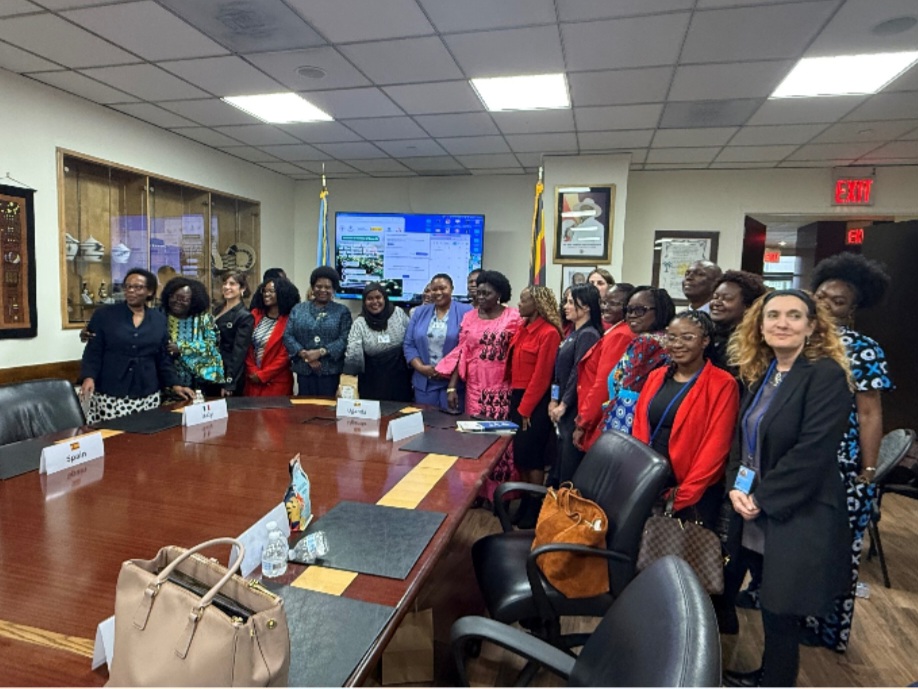
    A high-level event at the sidelines of the 70th session of the Commission on the Status of Women, was convened on March 11, 2026, at the Permanent Mission of the Republic of Uganda to the United Nations in New York, United States of America.

    The event which ran under the theme: “Women and Youth at the Center of Sustainable and Inclusive Coffee Value Chains, with a Focus on Africa”, brought together policymakers, development partners and private investors to explore the role of women and youth in the sustainable and inclusive coffee value chains, particularly across Africa.

    The discussion highlighted the central role that women and young people continuously play across the coffee sector from cultivation and processing to trade, innovation and entrepreneurship.

    Despite women and youth forming the backbone of the sector, persistent structural barriers continue to limit their full participation and economic potential.

    The Ugandan delegation comprised Rt. Hon. Rukia Isanga Nakadama-Third Deputy Prime Minister and Minister without Portfolio; Hon. Betty Amongi- Minister of Gender, Labour and Social Development, Hon. Babirye Milly Babalanda- Minister for the Presidency, Hon. Sarah Opendi, Hajjati Zaminah Malole- Secretary of the Presidential Awards Committee, the Ms. Celia Nabeta-Minister Counsellor- Ms. Catherine Nassuna- Under Secretary at the Ministry of Water and Environment and Ms. Angella Nakafeero, Commissioner at the Ministry of Gender, Labour and Social Development, among other senior government officials and civil society representatives.

    The event also featured a panel of experts and representatives from international organizations, including UN Women, as well as partner governments from Kenya, Ethiopia, Italy, Austria and Spain.

    Panelists shared perspectives on the policy, social and economic reforms needed to strengthen women’s leadership and youth participation within agricultural value chains.

    Rt. Hon. Nakadama, in her closing remarks commended the panelists and participants for the rich and forward-looking discussion.

    She reaffirmed that empowering women and youth within coffee value chains is not only a matter of equity, but also a strategic pathway to sustainable economic transformation.

    The Third Deputy Prime Minister further reflected on the global commitments under the Beijing Declaration and Platform for Action and emphasised the need to advance women’s economic empowerment and participation in decision-making through strengthening collaboration among governments, coffee industry, development partners and local communities which is essential in ensuring that the coffee sector delivers inclusive growth and resilient livelihoods across Africa.

    Central to the discussion was the need for deliberate policy and institutional reforms that translate commitments on gender equality into concrete opportunities for producers and entrepreneurs at the local level.

    Participants underscored the importance of strengthening gender-responsive laws and policies in agricultural and trade sectors, particularly those relating to land ownership and access to productive resources.

    Social norms and structural inequalities continue to limit women’s access to finance, markets, and decision-making roles. The youth face barriers in accessing capital, technology and training required to build viable enterprises within the coffee industry as well.

    The conversation also underscored the growing urgency of addressing the intersection between gender equality, climate change and agricultural sustainability.

    Representatives from the United Nations Industrial Development Organization(UNIDO) highlighted the gender climate nexus and the disproportionate impact of climate variability on women farmers who are heavily engaged in production and post-harvest processes.

    Expanding access to climate-smart technologies, financial tools and targeted skills development programs was identified as critical to strengthening resilience across coffee-producing communities.

    According to insights shared by the International Coffee Organization (ICO), the average age of a farmer in Africa is approximately 54 years signalling an urgent need to attract younger generations to agriculture.

    Investments in youth entrepreneurship, digital innovation, and agricultural skills development were highlighted as key drivers of sector renewal. Panelists also emphasized the importance of improved data systems that capture and make visible contributions of women across the coffee value chain, enabling more evidence-based policymaking and investment decisions.

    The importance of coffee to the national economy of Uganda was also highlighted.

    Coffee remains one of Uganda’s leading export commodities and a major source of income for millions of smallholder farmers, supporting rural livelihoods and contributing significantly to foreign exchange earnings, thus a need for ensuring meaningful exclusivity and participation of women and youth.

    Initiatives such as the Presidential Advisory Committee on Exports and Industrial Development (PACEID), operating under the Office of the President, are actively boosting Uganda’s coffee sector by promoting value addition and direct exportation of coffee to international markets. PACEID’s work aims to enhance Uganda’s export capacity by supporting agro-industrialization and expanding opportunities for all in strategic sectors.

    The discussions concluded with a shared commitment among participants to advancing sustainable and inclusive coffee sectors that contribute to economic empowerment, gender equality and resilient rural livelihoods across Africa.

    Do you have a story in your community or an opinion to share with us: Email us at Submit an Article

  • When is Karole Kasita’s Concert, How Much Will it Cost and Where Will it be Held?

    When is Karole Kasita’s Concert, How Much Will it Cost and Where Will it be Held?

    Karole Kasita, real name Carol Namulindwa, is set to hold her concert in May – an event that the self-styled Mamacita plans to unleash her raw and unfiltered version. Here is what you need to know about his concert:

    When will Karole Kasita’s concert be held?

    Dubbed ‘Karole Kasita: The Power Within‘, the highly anticipated music showcase will be held on the 29th of May 2026.

    Where will Karole Kasita’s concert be hosted?

    Karole Kasita’s ‘The Power Within’ concert will be held at the Kampala Serena Hotel. Gates will be opened as early as 4 PM, and it will end at midnight.

    How much will Karole Kasita’s concert cost?

    Tickets are already on sale at Ugx150,000, and Ugx3,000,00 for a VIP Table, which includes a whiskey bottle and a food platter. You can purchase your tickets early enough via +256703353839 or +256774089372.

    Which artists are expected to perform at Karole Kasita’s concert

    The performance lineup is yet to be released, but the singer has received massive support from many key industry players, including fellow artists, media personalities, and content creators, among others – all who are expected to attend the concert in person.

    The post When is Karole Kasita’s Concert, How Much Will it Cost and Where Will it be Held? appeared first on MBU.

  • Why Etania Mutoni’s partner Joshua Baraka will DJ daytime at her upcoming show

    Why Etania Mutoni’s partner Joshua Baraka will DJ daytime at her upcoming show

    Media personality and entertainer Etania Mutoni, popularly known as Life of the Party, is preparing for her upcoming show at Lugogo Hockey Grounds in a few weeks.

    As part of the preparations, Mutoni has revealed a lineup of entertainers who will perform and keep revelers entertained during the event.

    Among the performers she confirmed is her partner, singer Joshua Baraka. Interestingly, she disclosed that Baraka will not appear as a musician but will instead perform as a DJ.

    Etania Mutoni explained that Baraka will play his DJ set during the daytime, noting that he is still an upcoming DJ, and upcoming acts usually perform earlier as curtain-raisers before the more established performers take the main stage.

    She also hinted that she will soon release her Extended Play (EP) album, marking a start to her music career.

    Speaking about the criticism she has received, Mutoni said some people used to mock her for playing only Amapiano music and claimed she did not know how to DJ properly. However, she believes people now understand her effort.

    Some people used to insult me because I only played Amapiano, and others said I just dance and don’t know how to DJ. But I think they now understand because my hard work has paid off.

    Etania also revealed that social media does not give her depression because she avoids reading negative comments.

    She added that she is currently in a happy place, although she admitted that she has gone through difficult experiences in her life that once pushed her into depression.

    The post Why Etania Mutoni’s partner Joshua Baraka will DJ daytime at her upcoming show appeared first on MBU.

  • LMS Hub Kampala aims to create regional music hub, sets sights to Kenya & Tanzania

    LMS Hub Kampala aims to create regional music hub, sets sights to Kenya & Tanzania

    With the increasing competition in the music industry, several Ugandan businessmen and investors in the music industry are now looking toward expanding to Kenya and Tanzania.

    Reputable music labels, managements, and personalities, including Swangz Avenue, Fenon Records, and Talent Africa Group, have already established bases in the other East African countries.

    And now, Julius Kayiira Bologna of LMS Hub Kampala has decided to join the chain.

    The LMS Hub Kampala deals in music recording, commercial advertising, videography, photography, mixing, and mastering.

    It has been a massive force behind the success of music projects like Nze Alina by Feffe Bussi and All Stars, and most of Dokta Brain’s recent music.

    LMS Hub Kampala boss Julius Kayiira Bologna reveals that his goals include creating a music hub that solves the problems and challenges that most Ugandans creatives face when creating music with foreign artists.

    “As we all know, studios are expensive. I think that’s a great problem solver right there, and the best we can do is embrace it and find the befitting solutions,” Bologna said.

    He plans to expand to Kenya and enable both industries to collaborate positively, all for the development of the regional music business.

    The post LMS Hub Kampala aims to create regional music hub, sets sights to Kenya & Tanzania appeared first on MBU.

  • You Won’t Benefit From the Shs110M DJ Fund – DJ Nimrod Warns Critics

    You Won’t Benefit From the Shs110M DJ Fund – DJ Nimrod Warns Critics

    The president of the DJs Association, DJ Nimrod, has warned fellow DJs who have been criticizing him that they should not expect to benefit from the Shs110 million fund recently secured to support DJs through their SACCO.

    According to Nimrod, the money was obtained through the Uganda National Musicians Federation (UNMF) and is meant to support DJs by allowing them to borrow funds through a SACCO scheme and return them with a small interest to grow their creative businesses.

    However, Nimrod made it clear that those who have been abusing him or questioning his leadership over the years will not be prioritized.

    He revealed that the funds have already been deposited on the association’s account, which he oversees, and will be managed together with the SACCO leadership.

    “Have they ever done a show? Have they been abroad before? I don’t know those ones abusing me,” Nimrod said while responding to critics.

    For years, some DJs have accused Nimrod of mishandling relief funds that were given to creatives during the COVID-19 lockdowns in Uganda, allegations he has repeatedly denied.

    In a surprising revelation, Nimrod also said he plans to take Shs1 million from the fund to appreciate his mother for raising him.

    “I have got Shs110 million for the DJs and I’m going to give Shs1 million to my mother to thank her for giving birth to me. The rest of the money will be handled together with the treasurer and we see how to distribute it among fellow DJs,” he said.

    He added that all DJs were invited to meetings where the SACCO plans were discussed, arguing that those who failed to attend should not blame him for missing out on the opportunity.

    According to Nimrod, the funds are meant for DJs under the federation, with priority going to those officially registered with the DJs Association.

    “The money is entitled to every DJ but mostly to those that are registered in our association which is under the federation,” he explained.

About UGNEWS24

UGNEWS24 is a Uganda local news service, a product of SOLAVIA GROUP LIMITED, Reg. No. 80048169153974.

Registered office

Plot 2335, Buwambo-Katadde-Najjo Road,
Nansana Municipality, Wakiso District, Uganda
P.O. Box 214231, Kampala

© 2026 SOLAVIA GROUP LIMITED. All rights reserved.