Author: admin

  • The 21-Mile Lesson: Why IRAN War Changes Everything

    The 21-Mile Lesson: Why IRAN War Changes Everything

    By Robert Kiyosaki

    There’s a narrow strip of water you’ve probably never thought about. At its narrowest point, it’s just 21 nautical miles wide—about the distance of a morning commute.

    Yet through that 21-mile gap flows the lifeblood of our global economy:

    • 20% of the world’s oil. Every single day.
    • 20% of global liquefied natural gas
    • 30% of the planet’s fertilizer exports
    • 30% of Europe’s jet fuel supply

    20.9 million barrels of oil per day.

    That’s the Strait of Hormuz. And the current conflict in Iran has exposed something most of us never fully understood: our world isn’t a collection of separate economies. It’s one economy, pretending to be many.

    Who Actually Depends on This Waterway?

    Let’s start with who sends their wealth through these waters:

    • Saudi Arabia: 37% of its exports
    • Iraq: 23%
    • UAE: 13%
    • Iran: 11%
    • Kuwait: 10%

    Five countries. 94% of all oil moving through Hormuz.

    Now here’s where it gets interesting—watch where it goes:

    • China: 38% of all Hormuz oil
    • India: 15%
    • South Korea: 12%
    • Japan: 11%

    84% of all Hormuz oil flows to Asia.

    Think about that for a moment. Four Asian economies—China, India, Japan, South Korea—are absorbing the hardest economic shock from a war they didn’t vote for, didn’t start, and aren’t fighting.

    The Dominoes Begin to Fall

    Japan’s Ticking Clock

    Japan imports 90% of its energy. When oil crossed $100, the Nikkei dropped more than 5% in a single day. Japan maintains a 150-day oil reserve—but every day that passes without resolution brings them closer to the edge.

    South Korea’s 2008 Flashback

    The KOSPI suffered its biggest single-day crash since the 2008 financial crisis. Down 12% in one day. Circuit breakers triggered for the first time in seventeen years. All because of a war they had nothing to do with.

    Europe’s Gas Crisis

    Natural gas prices nearly doubled in 48 hours after Iran struck Qatar’s gas facilities. Why? Because 20% of global LNG flows from Qatar through Hormuz to Europe. Now shipping companies are rerouting vessels around the Cape of Good Hope—adding 15 to 20 extra days between Asia and Europe.

    Every extra day = higher shipping costs = more expensive goods = inflation at your grocery store.

    India’s Triple Vulnerability

    India imports 2.5 million barrels per day through Hormuz. Its LNG plants run on Persian Gulf gas. And the fertilizer that grows food for hundreds of millions—much of it comes through that same 21-mile strait.

    The Truth About Oil: It’s Also Your Dinner

    Here’s what most people miss: oil isn’t just fuel. It’s food.

    The Gulf produces massive quantities of nitrogen fertilizer—urea, ammonia, phosphates. Qatar, Saudi Arabia, UAE and Bahrain together produce 15 million metric tonnes of fertilizer every year. About one-third of ALL global fertilizer exports move through Hormuz.

    According to Bloomberg, nitrogen fertilizer underpins roughly half of global food production. No fertilizer means:

    • Wheat yields fall
    • Corn yields fall
    • Rice yields fall

    A Cornell agricultural economist put it plainly: “Fertilizer prices were already high, and farmers were already pinched. This will hurt.”

    The numbers back him up:

    • Urea prices jumped from $516 to $683 per metric ton in five days
    • Wheat hit a near two-year high
    • Palm oil surged 10%
    • Soybeans and corn climbed steadily

    A farmer in Iowa captured the absurdity perfectly: “If nitrogen doesn’t come down, we might switch more acres to beans.” Not because of anything he did. Because a war started on the other side of the world.

    Follow the Chain

    Iran war → Hormuz disruption → fertilizer shipments blocked → farmers reduce applications → harvests fall → food prices rise → central banks raise rates → borrowing costs increase → economic growth slows → you pay more for everything.

    That chain starts in a 21-mile strait. It ends in your shopping cart.

    When Insurance Becomes a Weapon

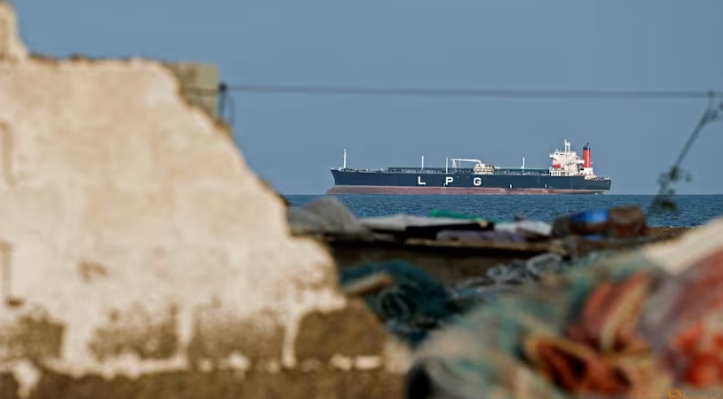
    Right now, 150 ships are stranded around Hormuz. Insurance companies—who have never cancelled Gulf coverage in modern history—are now withdrawing war risk coverage.

    Hapag-Lloyd, one of the world’s largest shipping companies, introduced a $1,500 per container war surcharge. Overnight. CMA CGM followed with a $3,000 emergency surcharge for Gulf cargo.

    Here’s the brutal logic: Ships can’t get insurance. Ships won’t sail without insurance. Banks won’t finance ships without insurance. The Strait isn’t formally closed. It doesn’t have to be. Insurance withdrawal accomplishes what a physical blockade would.

    Dubai’s Jebel Ali—the largest port in the Middle East—suspended operations after an aerial interception caused a fire. Meanwhile, Emirates, Etihad, and Qatar Airways together handle 13% of global air freight capacity. All three are grounded or severely disrupted. Twenty thousand flights cancelled since February 28th. Over a million passengers stranded.

    What My Rich Dad Taught Me

    Years ago, my rich dad told me something I’ve never forgotten: “The global economy is not a collection of separate countries. It’s one economy pretending to be many.”

    The proof is right in front of us.

    A war involving three countries is:

    • Crashing stock markets in Japan and South Korea
    • Doubling natural gas prices in Germany
    • Raising corn costs for farmers in Iowa
    • Blocking fertilizer to Brazil—the world’s largest soybean exporter
    • Spiking inflation in the Philippines, India, and sub-Saharan Africa
    • Stranding 150 ships in the world’s most important waterway
    • Cancelling 20,000 flights
    • Adding 20 extra days to Asia-Europe shipping routes

    One war. One strait. Twenty-one miles wide. And the whole world is paying for it.

    The Real Lesson in Financial Literacy

    Most people will blame the gas pump. They’ll blame their grocery bill. They’ll blame the airline. They won’t trace it back to the source.

    But financial literacy isn’t just about stocks and real estate. It’s about understanding how the world ACTUALLY works. How money moves. How energy flows. How a war in a place you can barely find on a map can raise the price of bread on your table.

    This is the world we live in. One economy. One system. And right now, that system is under serious stress.

    The question isn’t whether you’re connected to that 21-mile strait. You are. The question is whether you’ll understand the connection before the next shock hits—or after.


    About Post Author

  • Parliament Demands Answers on Missing Election Machines and Flood Cash

    Parliament Demands Answers on Missing Election Machines and Flood Cash

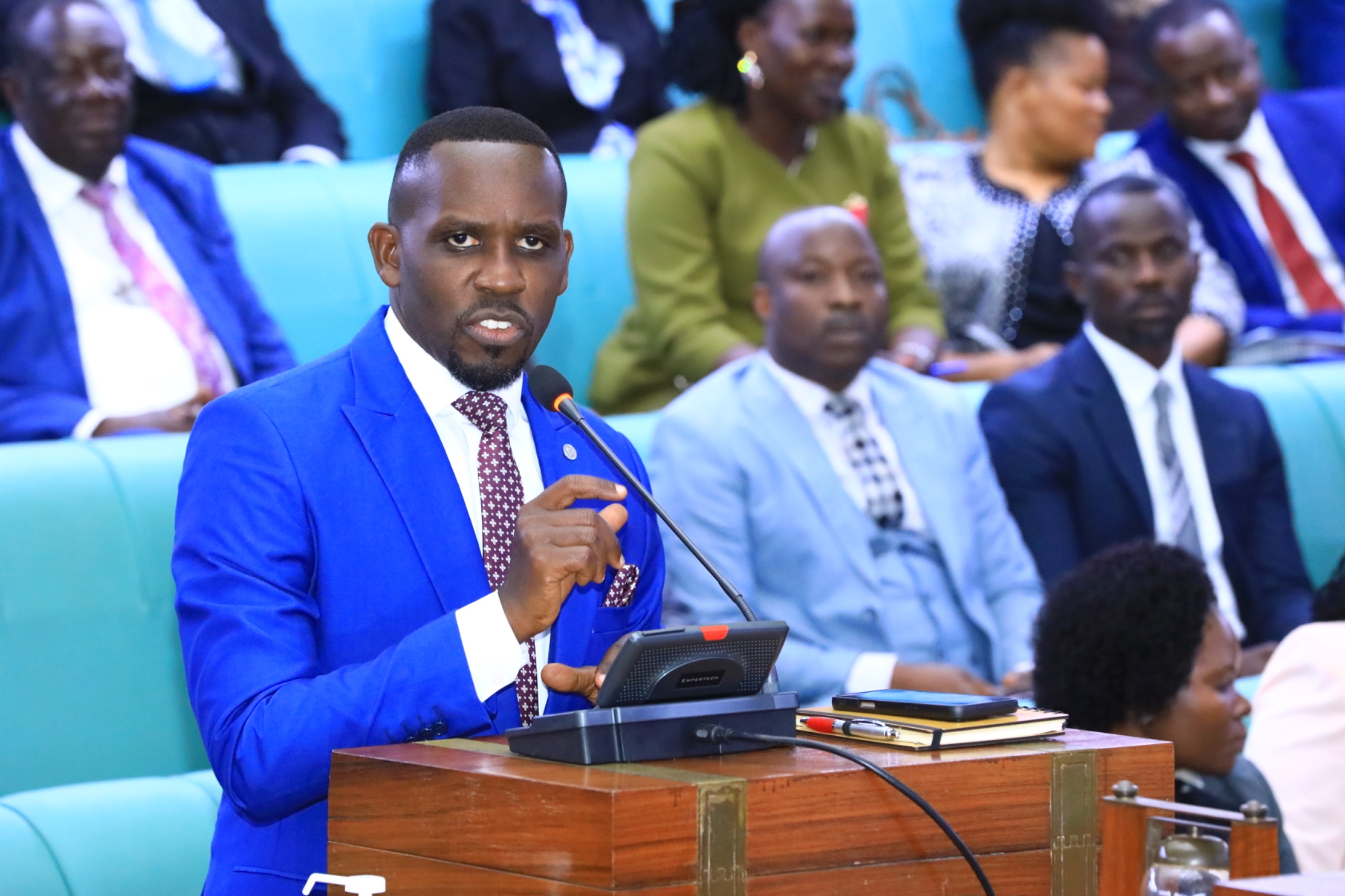
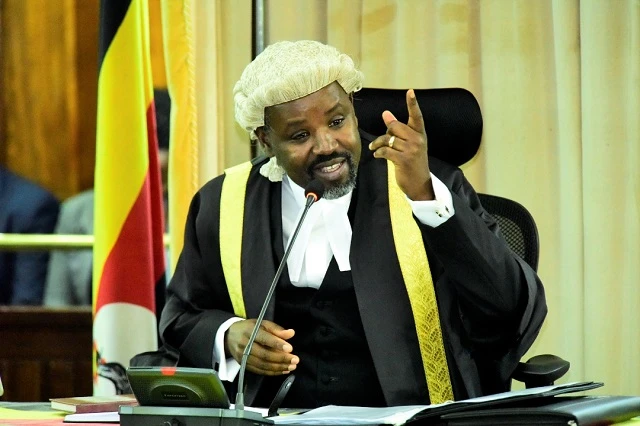
    Parliament on Thursday resumed its sittings with the Speaker Anita Among presiding, as the Leader of the Opposition in Parliament Joel Ssenyonyi raised a series of matters of national importance, demanding government accountability on election technology, compensation of traders affected by floods, and pending payments to victims of past disasters.

    While addressing the House, Ssenyonyi questioned the failure to deploy biometric voter verification kits (BVVKs) during the recently concluded elections despite Parliament having appropriated large sums of money for the technology.

    He reminded the House that Parliament approved hundreds of billions of shillings to facilitate the electoral process, including funds meant to procure the machines, train electoral officials on how to use them, and design ballot papers compatible with the biometric verification system.

    Ssenyonyi warned that if the matter remains unexplained, Parliament risks being perceived as complicit in the misuse of public funds.

    “This House appropriated plenty of money, billions upon billions of shillings, to be used in the election. We appropriated nearly Shs400 billion. Part of that money was meant to train those who would operate these machines, and the ballot papers were also designed to be compatible with the scanning system,” he said.

    He added that the biometric machines had been presented to the public as a key safeguard against election malpractice.

    “We were told these machines would be the answer to vote rigging and all the drama that comes with our elections, which affects both sides. In fact, during the elections I saw some colleagues on the NRM side also complaining about vote rigging,” Ssenyonyi told the House.

    The Opposition leader reminded Parliament that the Deputy Speaker had earlier directed the Minister of Justice and Constitutional Affairs Norbert Mao to present a detailed statement explaining the status and usage of the machines.

    He urged that the directive be followed up to ensure accountability.

    “It would be a good reminder for that statement to come to this House since the House already directed as such,” he said.

    Ssenyonyi also raised concerns over government delays in compensating traders affected by the devastating floods that struck Kampala on October 31 last year, destroying goods worth billions of shillings.

    According to him, government publicly committed to compensate affected businesspeople to the tune of Shs20 billion, but many traders say they have never received the promised payments.

    “These business persons up to date ask whether government lied to them. Recently we saw another situation of heavy flooding, and the same people say they have lost more merchandise even before the first promise of compensation has been fulfilled,” Ssenyonyi said.

    He urged government to clarify whether it intends to honor the pledge or if the commitment was merely political reassurance.

    “Government needs to clearly tell these traders whether they intend to compensate them or not, instead of making promises that may not be fulfilled,” he added.

    Ssenyonyi further called for a comprehensive national plan to address flooding, pointing to poor drainage systems and unregulated urban development as major contributors to the recurring disasters.

    “When is government going to present a comprehensive plan to address the flooding situation in our country? Poor planning and poor drainage continue to worsen the problem, especially with the numerous buildings coming up,” he said.

    The Opposition leader warned that continuous compensation without addressing the root causes of flooding would only lead to repeated financial losses.

    He also raised the issue of victims of the 2024 garbage slide disaster in Kiteezi, where more than 35 people died, saying many affected families still claim they have not received compensation promised by government.

    “When the Kiteezi situation happened in August 2024 and over 35 people died, government promised to compensate the victims. Up to today the victims still say they have not received that compensation. What happened? Was it another lie?” he asked.

    In response to the concerns about the biometric voter verification machines, Justice Minister Norbert Mao informed the House that a statement addressing the issue had already been prepared.

    Speaker Anita Among directed that the minister table the statement before Parliament next week.

    Similarly, the Speaker instructed Kampala Minister Minsa Kabanda to present a detailed statement to the House on Tuesday next week, explaining the status of compensation for traders affected by floods and outlining government’s response to the recurring disasters in the city.

  • Women MPs Must Rise: Uganda Cannot Survive on Broken Systems

    Women MPs Must Rise: Uganda Cannot Survive on Broken Systems

    By Mwebesa Moses Nyakakoni Rukindo

    As Uganda celebrated International Women’s Day with speeches, flowers and colorful ceremonies, millions of ordinary women across Uganda were still battling the same old struggles — dirty water, broken hospitals, dangerous roads and a system many feel has forgotten them.

    Behind the celebrations lies a painful truth: for many Ugandan mothers, survival is still a daily fight.

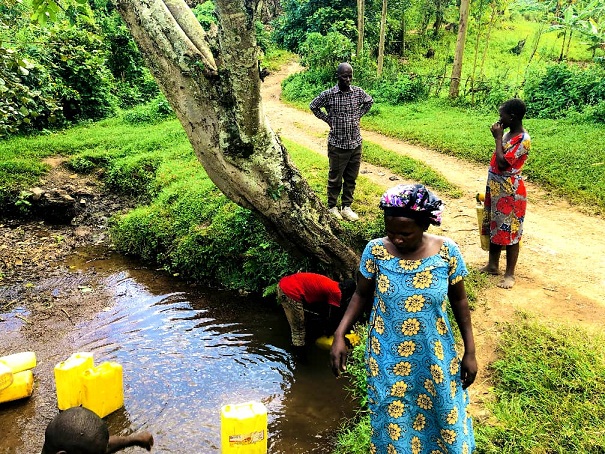
    In villages and trading centres, women still wake up before sunrise to walk long distances in search of water, often scooping it from muddy streams shared with animals. In government hospitals, mothers sit on benches for hours only to be told there is no medicine, no doctor, or no equipment.

    Meanwhile, families continue to lose loved ones on pothole-ridden roads, and frustrated job seekers whisper stories of vacancies quietly sold to the highest bidder.

    So the question many citizens are asking is simple: where is the money going?

    Every year, government releases billions of shillings for public services — from healthcare and infrastructure to poverty alleviation programs like the Parish Development Model (PDM). On paper, these initiatives promise transformation. On the ground, many communities say they see little change.

    Instead, stories of mismanagement, weak oversight and questionable financial dealings continue to surface.

    This is where the country’s women legislators must step forward.

    Women Members of Parliament have long presented themselves as champions of families, mothers and vulnerable communities. Now is the moment to prove it. The struggles Ugandan women face daily are not abstract statistics — they are lived realities demanding action.

    Women MPs must push harder for transparency in government spending, stronger oversight of public projects, and tougher accountability for officials who mishandle public resources.

    But this is not a fight for women alone.

    Male MPs must also rise to the challenge. Accountability is not a gender battle; it is a national responsibility. Uganda cannot move forward if leaders remain silent while systems meant to serve citizens continue to malfunction.

    The cries of ordinary Ugandans are growing louder.

    The woman fetching dirty water from a swamp is crying.
    The patient turned away from a hospital is crying.
    The family mourning a loved one lost on a dangerous road is crying.
    The youth whose job was sold before the interview is crying.

    Uganda cannot afford to ignore these voices any longer.

    If leaders truly want to honour women beyond speeches and celebrations, then they must start by fixing the systems that make women suffer the most.

    Flowers fade after a day. Accountability lasts a generation.

    Ugandans are watching.

    Mwebesa Moses Nyakakoni Rukindo
    Mbarara City South
    Uganda

    +256-772-970-845

    About Post Author

  • Woman Stabs Ex-Boyfriend with Broken Plate After Midnight Fight

    Woman Stabs Ex-Boyfriend with Broken Plate After Midnight Fight

    A late-night love dispute has turned deadly in Rubaga Division, after a woman allegedly stabbed her former boyfriend to death during a violent fight inside her rented room.

    The suspect, Nantongo Hadijjah, 32, is currently detained at Natete Police Station following the fatal incident that happened in Wakaliga Zone B in the early hours of Thursday.

    The deceased has been identified as Ssebugwawo Mike, a 43-year-old mechanic and resident of Wakaliga Zone in Rubaga Division.

    According to police, the deadly drama unfolded at around 2:00 AM after the deceased reportedly went to Nantongo’s residence following several unanswered phone calls.

    Preliminary police findings indicate that the couple had been in a romantic relationship but had allegedly separated about two months ago.

    However, trouble reportedly erupted when Ssebugwawo arrived at the woman’s house and allegedly found the door locked while another man was inside the room.

    Investigators say the deceased allegedly forced his way into the room, sparking a violent confrontation.

    During the heated fight, Nantongo allegedly grabbed a sharp broken clay plate and stabbed the mechanic in the chest.

    The wound proved fatal.

    Police officers later arrived at the scene and arrested the suspect, who remains in custody as investigations continue.

    Police spokesperson Rachael Kawala confirmed the incident and condemned acts of domestic violence.

    Authorities have urged members of the public experiencing domestic conflicts to seek help and report cases of abuse before situations escalate into deadly violence.

  • Makerere Promotes Dr. William Tayeebwa to Associate Professor

    Makerere Promotes Dr. William Tayeebwa to Associate Professor

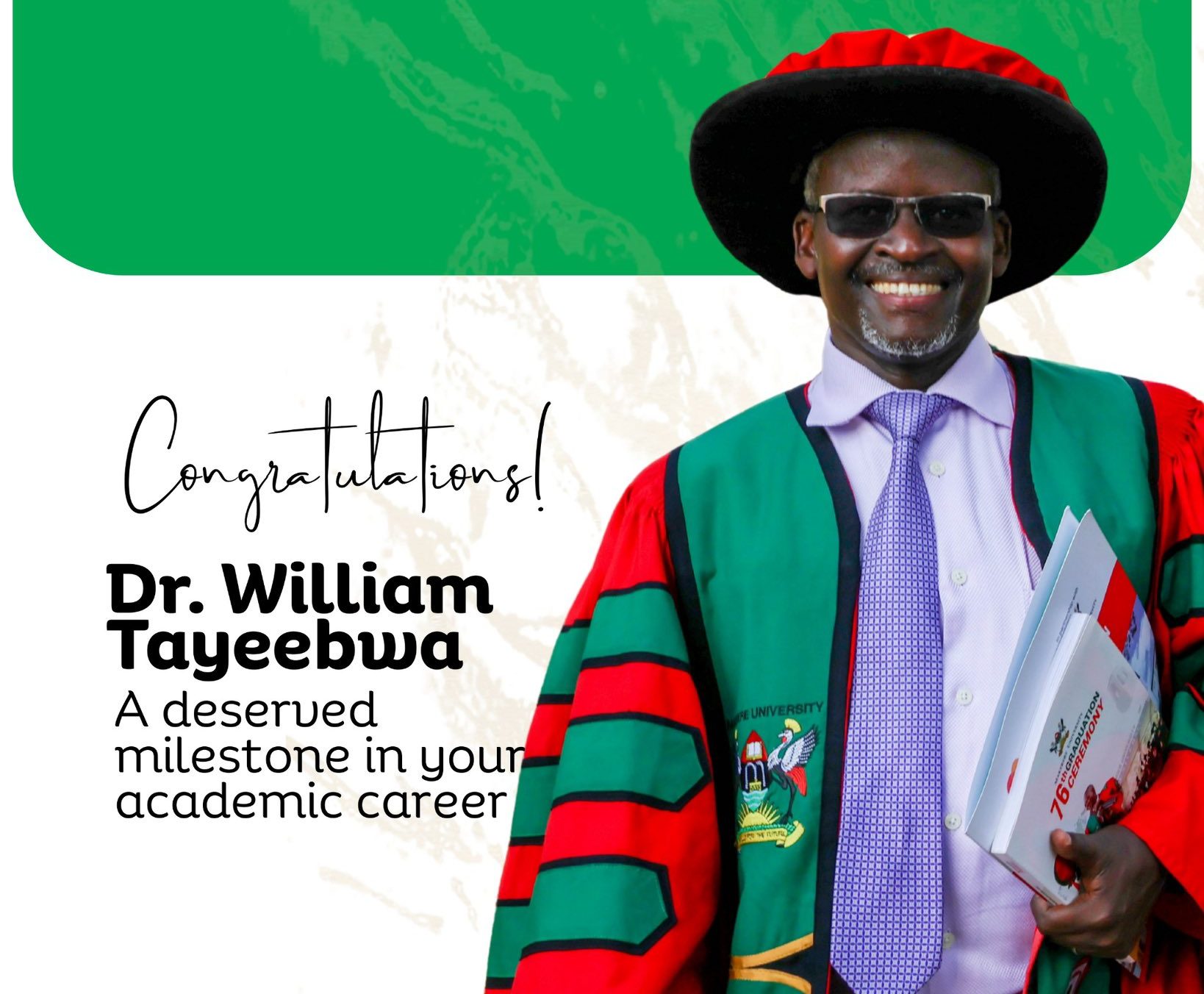
    Makerere University has promoted veteran media scholar William Tayeebwa to the rank of Associate Professor, marking a significant milestone in his long academic career in journalism and communication.

    The promotion was announced by the university’s Department of Journalism and Communication, which congratulated the scholar for what it described as “a deserved milestone in your academic career.”

    ADVERTISEMENT

    A Veteran of Journalism Education

    Assoc. Prof. Tayeebwa is a senior lecturer and media scholar who has spent more than two decades teaching and researching at Makerere University. He joined the university as a lecturer in 2000, shortly after graduating with a Bachelor of Mass Communication from the same institution.

    Over the years, he has taught both undergraduate and postgraduate courses in areas such as media theory, development communication, environmental journalism, investigative reporting, research methods, and media ethics.

    He also previously served as Head of the Department of Journalism and Communication, a position he held for about six years, helping shape the direction of one of the oldest journalism training programs in East Africa.

    Academic Journey

    Tayeebwa’s academic journey spans several international institutions. He holds:

    PhD in Communication from Concordia University in Montreal, Canada

    MPhil in Media Studies from University of Oslo in Norway

    Bachelor of Mass Communication from Makerere University

    His doctoral research focused on the role of radio and journalism in promoting reconciliation during conflicts, particularly during Uganda’s war with the Lord’s Resistance Army.

    Research and Global Collaborations

    Throughout his career, Tayeebwa has built a reputation as a researcher in peace journalism and media accountability. His work explores the intersection between media, peacebuilding, conflict resolution, environment, and development communication.

    He has participated in several international research collaborations and fellowships, including projects supported by the European Commission and global academic networks studying media coverage of migration and conflict.

    Tayeebwa has also contributed to global publications such as “The Global Handbook of Media Accountability” and the book “Journalism in Conflict and Post-Conflict Conditions.”

    Career in Journalism

    Before entering full-time academia, Tayeebwa worked as a journalist for several media houses including Daily Monitor and New Vision, where he covered regional conflicts and major national stories.

    His experience in professional journalism later influenced his academic work, where he advocates for conflict-sensitive reporting and peace-oriented journalism practices.

    Leadership in Academic Publishing

    Beyond teaching and research, Tayeebwa has also been active in scholarly publishing. He serves as Chief Managing Editor of Makerere University Press, where he has supported the publication of academic research and books produced by the university.

    He has also been involved in efforts to revive and strengthen Makerere’s academic journals to improve the global visibility of African scholarship.

    A Career Dedicated to Journalism Education

    Colleagues describe Tayeebwa as a passionate educator who is committed to preparing the next generation of journalists.

    “I love teaching because of the interactions with dynamic students whom you see transforming into amazing professionals,” he once said when reflecting on his career in academia.

    His promotion to Associate Professor now places him among the senior academic ranks at Makerere University and reflects his years of research, teaching, publishing, and leadership in journalism education.

  • Ava Peace has never been my bestfriend- Jowy Landa

    Ava Peace has never been my bestfriend- Jowy Landa

    Jowy Landa has finally addressed the swirling rumours about her relationship with fellow artist Ava Peace and according to her, fans may have been reading far too much into things.

    During a lively appearance on Galaxy TV, the singer shut down long-standing speculation that she and Ava Peace were once inseparable friends who later had a dramatic fallout.

    According to Jowy, the truth is far less dramatic.

    “I have no problem with her but we are family someone you did a song with,” she explained, making it clear their bond was mainly professional.

    In a moment that caught viewers by surprise, the show hosts pushed Jowy to prove there was no bad blood by calling Ava Peace live on air.

    At first, the singer looked hesitant and questioned why such a call was necessary during the broadcast. But after a bit of persuasion, she eventually dialed the number, seemingly putting the rumours to rest in front of the cameras.

    https://www.youtube.com/watch?v=W5qonwm6Zy8

    Jowy insisted the public had simply confused a working relationship with a deep friendship.

    “We are just friends, not besties because besties are always together, but for us we aren’t,” she said.

    She also revealed that the person she once considered her closest friend in the industry was Nandor Love, though their bond shifted as both artists became increasingly busy chasing their careers.

    These days, however, the singer says her real best friend is much closer to home.

    “These days my best friend is my mother,” she added.

    Jowy also brushed off critics who still label her an “upcoming artist.”

    The confident performer insists the numbers tell a different story.

    “I make money. I make millions every week. There’s nothing that can pull me down,” she declared.

  • Mechanical Engineering Graduate Working as Security Guard in Qatar Sparks Debate Online

    Mechanical Engineering Graduate Working as Security Guard in Qatar Sparks Debate Online

    A social media post by a mechanical engineering graduate working as a security guard abroad has ignited conversation online about the realities facing many educated young people in today’s job market.

    In a post shared on X (formerly Twitter), Oloo Vicent revealed that despite holding a Bachelor’s degree in Mechanical Engineering, he currently works as a security guard in Qatar.

    ADVERTISEMENT

    “I have a Bachelor’s degree in Mechanical Engineering. I am 28. I currently work as a security guard in Qatar,” he wrote.

    The 28-year-old explained that every day he reflects on how different his life turned out from what he expected after graduating.

    “Every morning I put on my uniform and think about the version of me that graduated thinking the world was waiting,” he said.

    A Reality Many Graduates Face

    Oloo’s post struck a chord with many social media users, particularly young graduates who say they face similar challenges in finding jobs that match their qualifications.

    He added a sobering reflection that resonated with thousands online:

    “Nobody tells you that sometimes the world is not waiting. You just have to keep showing up anyway.”

    The post quickly gained attention, drawing thousands of views and sparking discussion about graduate unemployment, underemployment, and the tough job market faced by many young professionals.

    Choosing to Keep Going

    Despite the disappointment, Oloo said he has learned to accept where life has taken him for now.

    Responding to one user who encouraged him to save and return to his profession, he admitted that life forced him to rethink his starting point.

    “Starting from anywhere is something I had to make peace with. I used to think my starting point was the degree. Turns out it was this uniform,” he wrote.

    He added that life sometimes forces people to begin from a more humble place than they had planned.

    Conversation on Graduate Opportunities

    The story has reignited broader conversations about the gap between university education and employment opportunities, especially in developing countries where many graduates end up seeking work abroad.

    For many readers online, Oloo’s message carried both a warning and a lesson in resilience — that success may not come immediately after graduation, but persistence remains key.

    As one commenter put it: “Life is a cycle… the beauty of it is you can start from anywhere.”

  • Besigye Lawyers Clash with Judge Over ‘Secret Witnesses’

    Besigye Lawyers Clash with Judge Over ‘Secret Witnesses’

    Tension erupted in court as lawyers representing opposition figure Kizza Besigye and his co-accused Obeid Lutale protested what they described as “preferential treatment” for prosecutors in the ongoing criminal case.

    The defence team, led by Kenyan senior counsel Martha Karua, said they were shocked when they arrived in court expecting the judge to schedule the next stages of the case, only to discover that the prosecution had already filed a fresh application seeking permission not to disclose the identity of six key witnesses.

    According to Karua, the application was filed only a day earlier but had already been fixed for hearing by Justice Andrew Baguma.

    Even more surprising to the defence, Karua said, was that they had not yet been served with the application before it was scheduled for hearing.

    One of the defence lawyers, Erias Lukwago, reportedly received the documents late in the evening after 6:30 pm ,leaving most lawyers unaware that such an application even existed.

    “We protested because what is now coming out is that the prosecution are receiving preferential treatment by the court,” Karua told journalists outside court.

    She argued that justice must not only be done but must be seen to be done, accusing the court of fixing prosecution applications at what she called “supersonic speed.”

    Karua noted that the defence team has filed more than six applications, including several bail requests, but none of them have been fixed for hearing in the same manner.

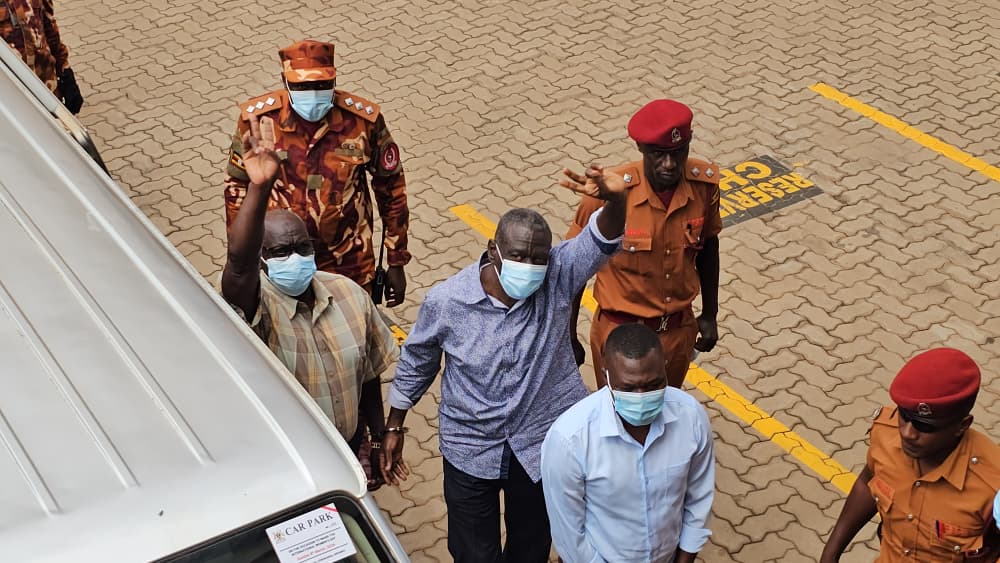
    Despite the protest, the judge allowed the process to continue and ordered that the accused persons be personally served with the prosecution’s application by March 26th before he can rule on the application.

    Defence lawyers later visited the accused in the holding cells to ensure they received the documents.

    Karua explained that the defence team must first obtain instructions from their clients before responding to the application.

    The lawyers will now consult with the accused persons, including at Luzira Prison, before returning to court.

    Karua also explained that prosecutors failing to disclose evidence and witnesses required for the defence to prepare its case is unfair

    Karua argued that withholding the identity of a witnesses undermines the rights of the accused.

    “The accused persons must know the case before the court so that they can respond,” she said.

    “If you are told that a phantom is giving evidence against you, how will you know whether you have ever met that person?”she added

    The defence insists that the prosecution’s actions are delaying the progress of the trial, contrary to what authorities have suggested publicly.The matter is expected to resume on March 31, when the court will assess whether all parties have complied with the timelines.

    During the previous court session on February 24, Justice Baguma directed the prosecution to provide all evidence by March 3. This evidence was expected to include: Witness statements, Audio and video, recordings, Forensic reports, Other documentary evidence. However, the defence says this has also not happened

  • Mitchell Hall Students Reject NUP Guild Primaries Results, Cite Gross Irregularities

    Mitchell Hall Students Reject NUP Guild Primaries Results, Cite Gross Irregularities

    Students from Mitchell Hall at Makerere University have formally rejected the results of the National Unity Platform (NUP) presidential flag bearer primaries for the upcoming 92nd Guild Presidential elections, citing widespread irregularities in the electoral process.

    In a strongly worded statement issued by the Mitchellex Solidarity leadership, the students denounced the primaries that were held on March 9, 2026 at the National Unity Platform headquarters in Kavule, arguing that the process failed to meet standards of free, fair, and transparent elections.

    ADVERTISEMENT

    “The process was unfortunately marred by gross irregularities, inconsistencies, and violations of electoral standards, which render the outcome illegitimate,” the statement reads.

    Vote Numbers Questioned

    One of the major concerns raised by the group is the discrepancy between the number of registered voters and votes cast.

    According to the statement, the official voter register indicated 1,195 registered voters, yet 1,230 votes were declared, raising suspicions of possible ballot stuffing and manipulation of results.

    “Such an anomaly raises serious concerns about ballot stuffing and manipulation of results, thereby undermining the credibility of the entire electoral process,” the students said.

    The students said such inconsistencies undermine the credibility of the election outcome.

    Allegations of Bias

    Mitchell Hall leaders also accused some individuals who managed the electoral process of having close links to one of the candidates, Kadondi Gracious, who was declared the winner of the primaries.

    They specifically mentioned Simon Wandukwa Gyabi, the chairperson of the NUP Makerere Chapter, claiming that his alleged alignment with the candidate’s camp created a conflict of interest and compromised neutrality.

    The statement argued that such involvement violates provisions in the NUP constitution regarding conflict of interest and leadership conduct.

    Claims of Voter Disenfranchisement

    Students also alleged that several individuals who had registered electronically were missing from the physical voting register, preventing them from voting.

    At the same time, the group claimed that some people were allowed to vote without proper verification or without appearing on the official voter list.

    Violence and Intimidation

    The statement further alleged that the voting process was characterised by violence, intimidation and harassment, reportedly carried out by individuals described as party foot soldiers.

    According to the students, some voters were assaulted, threatened or blocked from accessing the polling area, which they say violated the constitutional right to participate in political processes.

    Poor Organisation at Polling Area

    The students also criticised the organisation of the voting process, citing:

    overcrowding at the polling area

    lack of orderly queues

    failure to separate voters from the voting zone

    selective access to voting facilitated by partisan officials

    They said these conditions failed to meet basic electoral standards expected in a credible election.

    Students Reject Results

    Following these concerns, the Mitchellex Solidarity leadership announced several resolutions, including:

    Formally denouncing the election results declared by NUP

    Rejecting the legitimacy of the primary election process

    Distancing themselves from NUP political activities within Mitchell Hall and Makerere University

    The group also called for respect for democratic principles, saying student leadership must arise from credible, peaceful and transparent electoral processes that reflect the true will of the voters.

    The statement comes amid growing political tension within Makerere University as students prepare for the 92nd Guild Presidential elections, one of the most closely watched student political contests in the country.

  • Tayebwa Distances Himself From Nakivubo Demolition

    Tayebwa Distances Himself From Nakivubo Demolition

    The Deputy Speaker of Parliament of Uganda, Thomas Tayebwa, has distanced himself from the demolition exercise that took place last Saturday on disputed land in the Nakivubo area.

    In a statement issued on March 12, 2026, Tayebwa condemned the demolition and expressed sympathy to people whose property was destroyed.

    “I hope the Kampala Capital City Authority and the police are investigating the matter so that whoever is responsible is held accountable,” Tayebwa said.

    He confirmed that he once obtained a lease for a plot in Nakivubo but clarified that the process was done legally and long before he became Deputy Speaker.

    According to Tayebwa, he acquired the 25-year lease for Plot 22A through the Kampala District Land Board on May 1, 2012, and later registered it in April 2018.

    However, he explained that KCCA later reclaimed the land, promising to offer him alternative land or compensation.

    “Ugandans need to know that I no longer own any property at Nakivubo, and I don’t even have any interest there,” Tayebwa said in an interview with New Vision.

    He added that when KCCA approached him about taking back the land, he accepted on condition that the authority either allocate him another plot of similar value or compensate him.

    The demolition in question took place around St. Balikuddembe Market, commonly known as Owino Market, where some reports had linked Tayebwa to the affected land.

    However, Daniel Nuweabiine, spokesperson of KCCA, explained that the authority reclaimed the land because it was urgently needed for another public purpose.

    He said KCCA intends to fulfill its promise of offering Tayebwa an alternative plot or compensation once the relevant committee completes its discussions.

About UGNEWS24

UGNEWS24 is a Uganda local news service, a product of SOLAVIA GROUP LIMITED, Reg. No. 80048169153974.

Registered office

Plot 2335, Buwambo-Katadde-Najjo Road,
Nansana Municipality, Wakiso District, Uganda
P.O. Box 214231, Kampala

© 2026 SOLAVIA GROUP LIMITED. All rights reserved.