Author: admin

  • MTN Uganda profit climbs to Shs 678.8bn as Data, Fintech drive

    MTN Uganda profit climbs to Shs 678.8bn as Data, Fintech drive

    MTN Uganda has reported strong financial results for the year ended December 31, 2025, reflecting growing demand for connectivity and digital financial services as Uganda’s digital economy continues to expand.

    Service revenue increased 13.4% to Shs3.6 trillion, supported by rising internet usage and higher volumes of mobile money transactions. Earnings before interest, tax, depreciation and amortisation (EBITDA) rose 17% to Shs1.9 trillion, reflecting operational efficiencies alongside continued investment in network expansion.

    Profit after tax grew 5.8% to Shs678.8 billion, although the figure was affected by a Shs110.9 billion one-off tax settlement with the Uganda Revenue Authority earlier in the year. Excluding the settlement, underlying profit increased 23.1% to Shs789.7 billion, highlighting the strength of the company’s core digital services business.

    Growth during the year was largely driven by rising internet adoption as businesses, schools and households increasingly rely on digital platforms. Data revenue increased 28.8% to Shs1 trillion, making it the company’s fastest-growing segment. The number of active data users grew 18.6% to 12 million, while the total subscriber base increased 10% to 24.2 million, highlighting the growing importance of reliable connectivity across the country.

    Mobile money services also continued to play a central role in Uganda’s digital economy. Fintech revenue increased 17.3% to Shs1.1 trillion, supported by 14.7 million active users on the platform. During the year, customers carried out 5 billion transactions worth Shs195.5 trillion, underlining the scale of digital payments, savings and lending services across the economy. MTN Uganda’s mobile money ecosystem now supports more than 241,000 agents and 114,800 merchants, enabling businesses in both urban and rural areas to accept digital payments and serve customers more efficiently.

    To support the country’s growing demand for connectivity, MTN Uganda invested Shs549.4 billion in network infrastructure during the year, expanding 4G population coverage to 88.6% while continuing the rollout of 5G services in key urban areas. The company says continued investment in network infrastructure remains central to enabling digital inclusion and economic participation, guided by its belief that everybody deserves the benefits of a modern connected world.

    MTN Uganda Chief Executive Officer Sylvia Mulinge said the company remains focused on strengthening connectivity and expanding digital services across the country.

    “Reliable connectivity is the foundation of a modern digital economy. Our continued investment in network infrastructure is about ensuring that individuals, businesses and communities across Uganda can access the opportunities created by a connected world,” she said.

    Beyond its operational performance, MTN Uganda continues to make a significant contribution to the national economy. In 2025, the company contributed Shs1.5 trillion in direct and indirect taxes to government. Through the MTN Foundation, it also invested Shs5.1 billion in community projects supporting education, healthcare and digital inclusion, reaching more than 22,400 beneficiaries.

    The Board has proposed a final dividend of Shs8.25 per share, bringing the total dividend for the year to Shs28.75 per share, equivalent to Shs643.7 billion returned to shareholders. MTN Uganda remains the largest listed company on the Uganda Securities Exchange, reflecting investor confidence in its long-term growth strategy and role in the country’s digital transformation. Looking ahead, the company expects demand for connectivity and digital services to continue rising as more Ugandans adopt internet services and digital financial platforms. MTN Uganda maintains its medium-term outlook of upper-teens service revenue growth while sustaining EBITDA margins above 50%, supported by continued investment in network capacity and digital platforms – https://www.youtube.com/watch?v=eT1X9bTTH6A&t=30s

  • UNEB releases 2025 UACE results, female candidates outperform male counterparts

    UNEB releases 2025 UACE results, female candidates outperform male counterparts

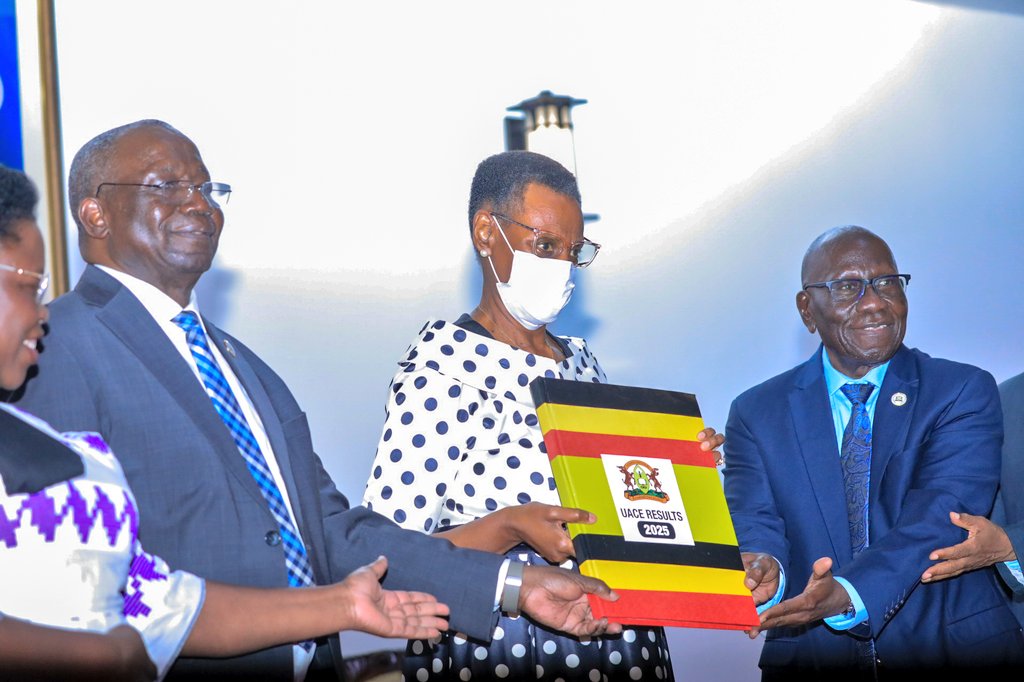
    The Uganda National Examinations Board (UNEB) has today released the 2025 Uganda Advanced Certificate of Education (UACE) exam results.

    The event was officiated by the First Lady and Minister of Education and Sports, Janet Kataaha Museveni at State Lodge, Nakasero.

    The UNEB Executive Director, Mr. Dan Odongo said a total of 166,400 candidates registered for the 2025 UACE examination, compared to 141,996 candidates in 2024, representing an increase of 24,404 candidates (17.2%).

    Of those registered, Mr. Odongo noted that 72,764 (43.7%) were females and 93,636 (56.3%) were males.

    “The number of examination centres for UACE increased by 197 (8.7%), from 2,255 in 2024 to 2,452 in 2025.
    The number of candidates who appeared for the examination was 165,172, compared to 140,884 in 2024, reflecting an increase of 24,288 candidates (17.2%). Of those who sat the examination, 72,374 (43.8%) were females and 92,798 (56.2%) were males,” he said.

    “At this level, the number of female candidates has consistently remained significantly lower than that of male candidates.”

    Mr. Odongo also revealed that proportionally, female candidates outperformed their male counterparts at the principal level pass (A–E) in most Humanities subjects, as well as in Mathematics, Physics, General Paper, Subsidiary Mathematics, and Subsidiary ICT.

    “However, at the top level of A passes, male candidates scored higher than females in Mathematics and Sciences.
    Female entries in Sciences and Mathematics remain lower than those of males, reflecting the overall trend of fewer female candidates compared to males.”

    Prof. Celestino Obua, UNEB Chairperson said this year, the board assessed a total of 1,402,434 candidates for certification across the three national examinations.

    “Primary Leaving Examination (PLE), Uganda Certificate of Education (UCE), and Uganda Advanced Certificate of Education (UACE). This represents an increase from 1,294,731 candidates in 2024,” he said.

    “Specifically, UACE candidature increased by 17.2%, rising from 141,996 candidates in 2024 to 166,400 in 2025, as will be detailed in the Release Statement.”

    He further noted that the board continues to observe sustained growth in candidature at the UACE level, reflecting expanded access to post-O’ Level education and growing public confidence in the credibility of national assessments.

    “As candidature expands, the board remains mindful of its responsibility to safeguard standards, ensure comparability over time, and maintain fairness in assessment,” Prof. Obua stated.

    “While statistical fluctuations may arise as the candidate population widens, the integrity of grading standards has been maintained. Additionally, the proportion of candidates who registered but did not sit for the examinations has continued to decline, signaling improved completion rates and strengthened supervision at the school level.”

    Prof. Obua also disclosed that female candidates have continued to perform commendably better than their male counterparts, maintaining stronger performance grades at several subject levels in the Humanities and demonstrating lower overall failure proportions.

    “This trend affirms the positive impact of continued investment in girl-child education.However, subject clustering remains gendered, with a higher concentration of female candidates in the Humanities than in the Sciences. The Board observes that broader participation of both male and female candidates in Science subjects will enhance equity and balance across future professional fields.”

    Do you have a story in your community or an opinion to share with us: Email us at Submit an Article

  • Anita Among’s Birthday Gesture to Mao Sparks Political Chatter Ahead of Speakership Race

    Anita Among’s Birthday Gesture to Mao Sparks Political Chatter Ahead of Speakership Race

    In Uganda’s high-stakes political arena, where alliances shift as quickly as campaign slogans, Speaker Anita Annet Among has ignited fresh conversation with a simple yet symbolic gesture – a public birthday message to one of her most outspoken critics, Justice and Constitutional Affairs Minister Norbert Mao.

    The Speaker on Thursday shared a warm birthday message to Mao, describing him as “my brother” and wishing him many more years of good health. The message, accompanied by a smiling photo, quickly caught the attention of political watchers, given the recent tensions between the two leaders over the leadership of Parliament.

    “Happy birthday, my brother, Ladit Hon Norbert Mao,” Among posted, drawing reactions from MPs and political observers alike.

    Mao, who turned 59, responded in an equally warm tone, thanking the Speaker and referring to her as “dear sister” and “Madam Speaker.” In a light-hearted response, he described himself as “59 years bold,” a phrase that quickly circulated on social media.

    The exchange has generated discussion within political circles, particularly as it comes at a time when speculation continues to swirl around the leadership contest for the Speakership in the upcoming 12th Parliament.

    Over the past months, Mao has been seen by some observers as positioning himself as an alternative voice on parliamentary leadership, occasionally offering sharp criticism of the current administration of the House. The public birthday exchange with Among, however, projected a tone of cordiality that many analysts say reflects the complex and often fluid relationships within Uganda’s political class.

    Political analysts say such gestures, though seemingly simple, often carry symbolic significance in Uganda’s consensus-driven political environment where personal relationships and public messaging play a major role in shaping alliances.

    Meanwhile, Speaker Among is widely believed to have secured significant backing within the ruling establishment. The Central Executive Committee (CEC) of the National Resistance Movement (NRM) reportedly endorsed her for another term as Speaker, alongside Deputy Speaker Thomas Tayebwa.

    The endorsement from the ruling party’s top decision-making organ is seen by many insiders as a strong signal of support from the party leadership headed by President Yoweri Kaguta Museveni.

    Support has also reportedly come from the Patriotic League of Uganda (PLU), a political pressure group associated with Gen Muhoozi Kainerugaba, which has previously encouraged its members and supporters in Parliament to back Among and Tayebwa for the top parliamentary offices.

    Behind the scenes, political consultations are said to be ongoing among various power centres within the political establishment. Sources familiar with the matter say Among has been engaging different stakeholders as part of efforts to consolidate support ahead of the parliamentary vote.

    Among was also recently seen paying a courtesy call to Gen Salim Saleh, a senior government figure and influential political actor. Observers note that Saleh has historically maintained strong networks across Uganda’s political spectrum, including in northern Uganda where Mao commands significant political influence.

    Such engagements, analysts say, are typical in Uganda’s political culture where dialogue and negotiation often shape the outcome of key leadership positions.

    While the race for the Speakership has not officially opened, political insiders believe the coming weeks could determine the balance of power in the next Parliament. The Speakership remains one of the most influential positions in Uganda’s governance structure, overseeing parliamentary business and shaping the legislative agenda.

    For now, the birthday exchange between Among and Mao has offered a rare moment of political warmth in what is expected to be a competitive contest.

    Whether the gesture signals deeper political rapprochement or simply reflects parliamentary camaraderie remains to be seen. What is clear, however, is that the political chessboard ahead of the next Parliament is already taking shape – with alliances, consultations and strategic messaging all playing their part.

    Do you have a story in your community or an opinion to share with us: Email us at Submit an Article

  • Dutch Missionary Famke ‘Nakimuli’ Wildeman Dies Suddenly in Mukono at 48

    Dutch Missionary Famke ‘Nakimuli’ Wildeman Dies Suddenly in Mukono at 48

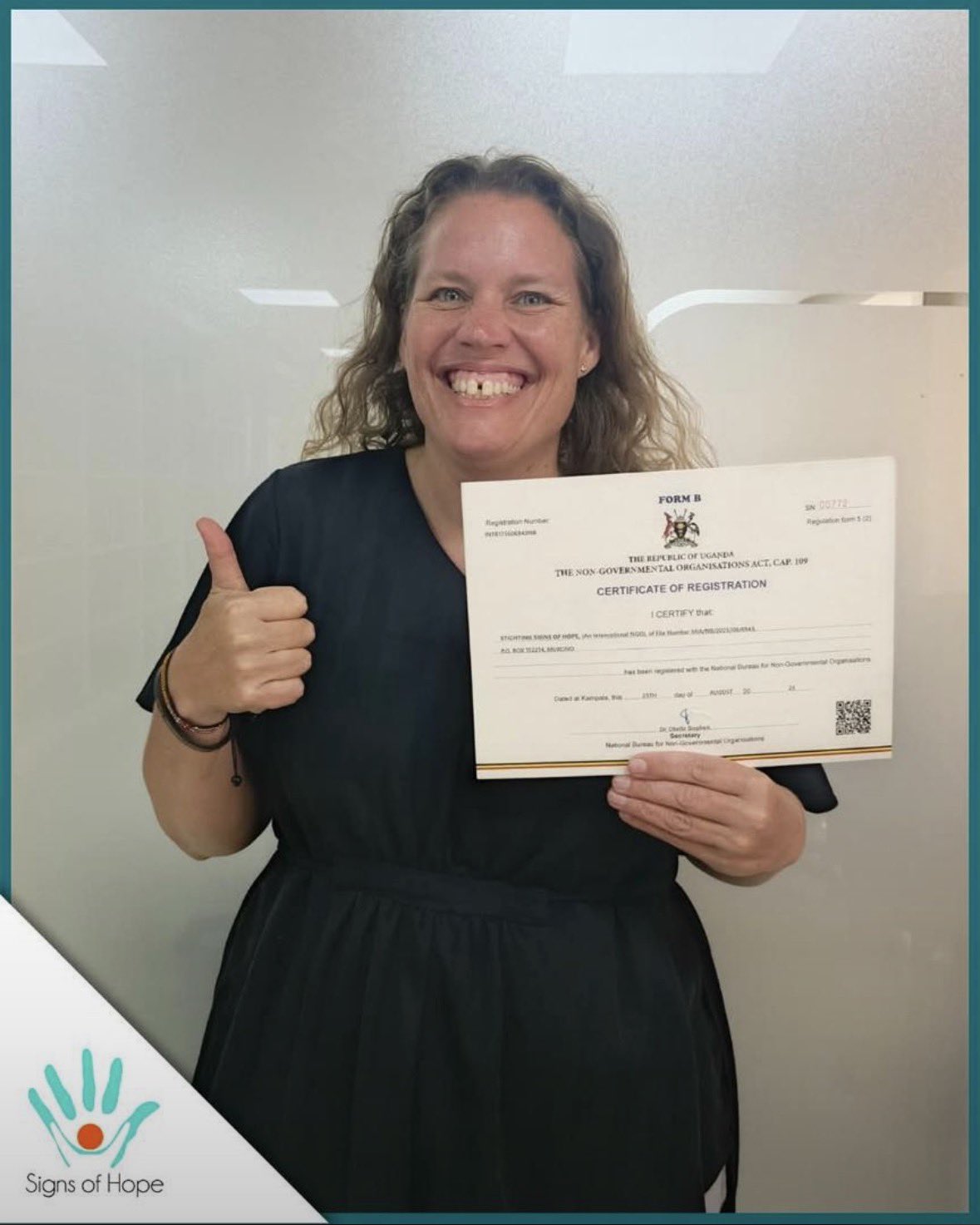
    Mukono, Uganda – The Ugandan and Dutch communities are mourning the sudden death of Dutch missionary Famke “Nakimuli” Wildeman, founder of the charity organisation Signs of Hope, who passed away on March 12, 2026, after reportedly developing breathing complications linked to pneumonia.

    Wildeman, 48, had reportedly complained of breathing difficulties a day earlier before her condition deteriorated rapidly. Friends, colleagues and members of the church community gathered for an evening vigil at the Oketcho family home in Mukono following news of her passing.

    Originally from the Netherlands and trained as a professional Dutch Sign Language interpreter, Wildeman moved to Uganda around 2017 as a missionary. Over time, she immersed herself deeply in Ugandan culture and community life, adopting the Luganda name “Nakimuli,” meaning “flower,” and embracing local customs.

    Friends say she often described Uganda’s lively atmosphere as “kavuyo,” a word she used affectionately to refer to the country’s vibrant and unpredictable energy.

    Lawyer and activist Godwin Toko, who recently met her, described her as a warm and passionate individual who quickly connected with Ugandans.

    “She introduced herself as ‘Nakimuli’, and we immediately connected. She loved our friendly Ugandans, the weather and the people. She gave hope to many,” Toko said.

    Through her organisation Signs of Hope, Wildeman dedicated much of her work to supporting deaf and special-needs children. The foundation focused on sign language education, sponsorship of school fees and remedial teaching for learners with hearing impairments.

    Working closely with her Ugandan colleague Dorothy at the Hand in Hand Uganda Special Needs Education Centre in Mukono, Wildeman helped expand literacy and vocabulary among deaf pupils using visual teaching materials she personally developed. In 2024 alone, the programme supported at least 15 children individually.

    The centre currently serves about 120 pupils, the majority of whom are deaf.

    Before her work in Mukono, Wildeman also taught at the Uganda School for the Deaf in Ntinda alongside Dorothy, where they sponsored the education of 28 children from disadvantaged families.

    In 2022, she announced plans to establish a dedicated boarding school for deaf and vulnerable children on land acquired in Mukono. The project envisioned a fully equipped campus with classrooms, dormitories, a dining hall, gardens and sports facilities.

    According to her earlier plans, the school was expected to begin with about 30 pupils and eventually accommodate up to 140 learners, addressing the challenges many families face in supporting children with disabilities.

    Wildeman often highlighted the economic realities affecting many families in rural Uganda.

    “Some parents earn less than one euro a day. They have to work just to survive,” she once noted while explaining the motivation behind the project.

    Construction activities, including drilling a water source on the land, continued into 2025 as part of preparations for the school.

    Beyond her charity work, Wildeman was an active member of Watoto Church, where she regularly volunteered in Mukono and Bweyogerere congregations. Church members remember her for her warm personality, constant smile and willingness to help others.

    “She had the heartiest hug and the warmest smile,” one church member wrote in tribute.

    The Uganda National Association of Sign Language Interpreters also recognised her contribution to the development and promotion of sign language interpretation in Uganda.

    Tributes have continued to pour in on social media from colleagues, students and members of the wider community who say her work changed many lives.

    Wildeman’s legacy remains closely tied to the children and communities she served, particularly in Mukono where she spent much of her missionary work.

    Friends and colleagues say efforts are underway to ensure the continuation of her initiatives, including the planned special-needs school she had envisioned.

    Famke “Nakimuli” Wildeman is survived by her extended family and the many Ugandan children and communities whose lives she touched during her years of service.

    Do you have a story in your community or an opinion to share with us: Email us at Submit an Article

  • MARCH 13, 2026: EAST AFRICA SECURITY & POLITICAL INTELLIGENCE BRIEF

    MARCH 13, 2026: EAST AFRICA SECURITY & POLITICAL INTELLIGENCE BRIEF

    MARCH 13, 2026: EAST AFRICA SECURITY & POLITICAL INTELLIGENCE BRIEF: Regional Stability Watch: Security, Politics and Strategic Developments


    Uganda: Museveni Intensifies Political Consultations Ahead of Electoral Reforms

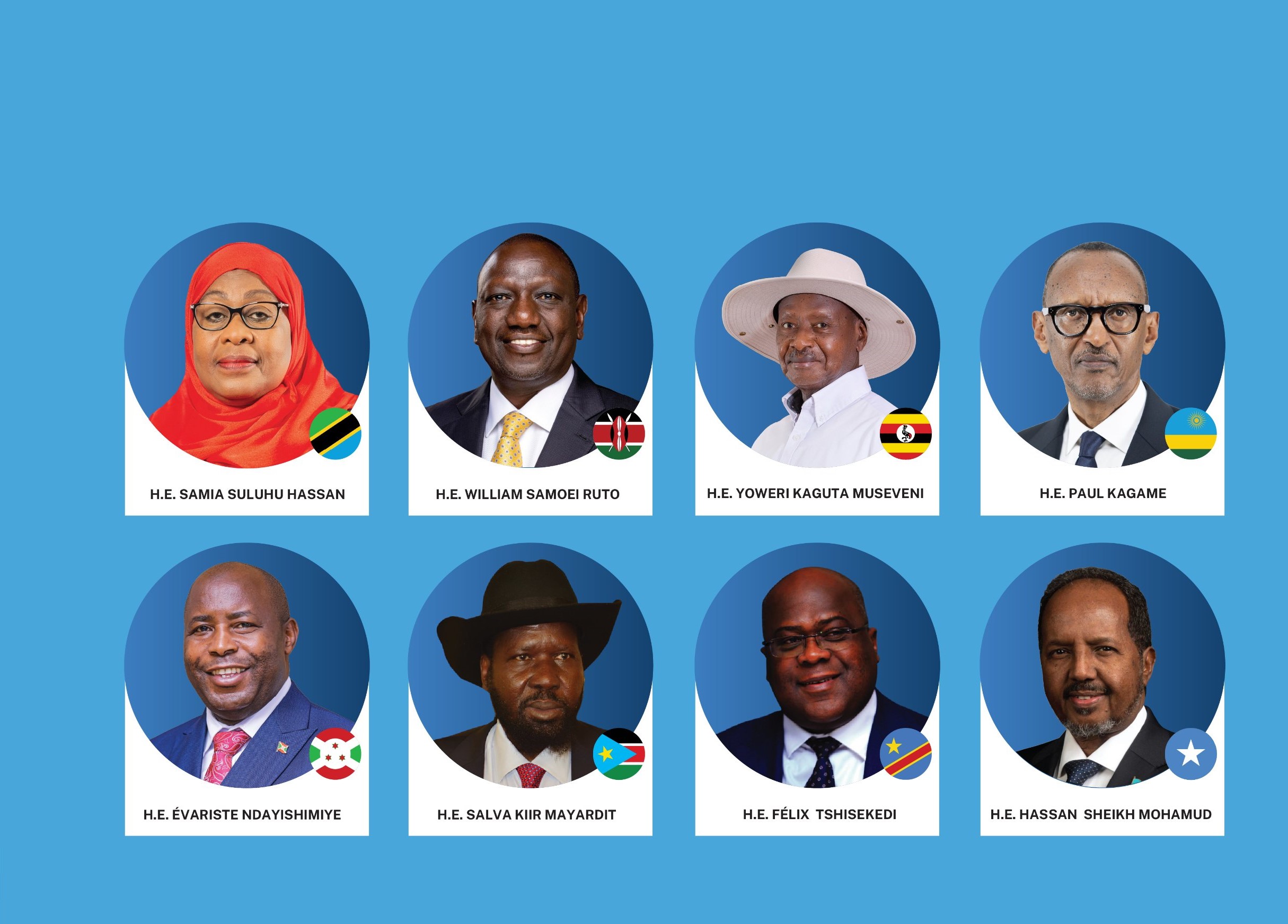
    President Yoweri Kaguta Museveni has intensified consultations with senior leaders of the ruling National Resistance Movement (NRM) as discussions on electoral reforms and internal party organization gain momentum. Political insiders say the meetings are aimed at strengthening grassroots structures while addressing internal disagreements that emerged during recent party primaries and local political contests. Observers note that Museveni has increasingly emphasized the importance of maintaining discipline and unity within the ruling party. The consultations also focus on improving mobilization through government poverty alleviation programs such as the Parish Development Model. Analysts believe the discussions could shape the party’s broader political strategy as Uganda continues to experience a dynamic and increasingly competitive political environment.

    Rwanda: Kigali Expands Regional Security Cooperation

    The government of Rwanda has reaffirmed its commitment to strengthening regional security cooperation with neighboring countries as tensions continue to affect parts of the Great Lakes Region. Officials in Kigali say intelligence sharing and coordinated security operations remain essential in countering armed groups operating along border areas. Rwanda has also emphasized the importance of regional diplomatic engagement in addressing long-standing security concerns in eastern Democratic Republic of the Congo. Security analysts note that Rwanda continues to prioritize border surveillance and counter-insurgency preparedness as instability in the region evolves. The government maintains that stability and economic development across the Great Lakes region depend on sustained cooperation between regional governments and international partners.

    Kenya: Ruto Administration Faces Growing Opposition Pressure

    Political pressure on the administration of President William Ruto has intensified following renewed criticism from opposition leaders over economic management and governance reforms. Leaders aligned with opposition figure the late Raila Odinga have called for broader national dialogue on the rising cost of living and electoral reforms. The political tensions come amid ongoing debates in the Parliament of Kenya over fiscal policies and government spending priorities. Analysts say Kenya’s political environment remains polarized, with both government and opposition factions mobilizing supporters ahead of future political contests. Despite the tensions, security agencies report that the situation remains largely stable, although authorities continue to monitor potential protest activity in major urban centers including Nairobi.

    Tanzania: Government Strengthens Security Along Northern Borders

    Authorities in Tanzania have increased security deployments along sections of the northern border amid regional concerns related to cross-border crime and migration flows. Officials under President Samia Suluhu Hassan say the operations are designed to improve border monitoring and prevent trafficking networks from exploiting porous border areas. Security agencies have intensified patrols and surveillance operations in collaboration with local authorities. Analysts say Tanzania continues to emphasize stability and internal security as key pillars of its governance agenda. The government has also expanded cooperation with neighboring states to combat smuggling, wildlife trafficking, and other transnational criminal activities that affect regional economic security.

    DRC: Fighting Continues in Eastern Congo as Diplomatic Efforts Intensify

    Armed clashes continue in parts of eastern Democratic Republic of the Congo, particularly in areas of North Kivu Province, where government forces have been battling rebel groups including the M23 rebel group. The conflict has displaced thousands of civilians and raised humanitarian concerns across the region. Regional leaders under the East African Community and African Union frameworks continue diplomatic efforts aimed at restoring stability and facilitating dialogue between the parties involved. Security analysts say the situation remains volatile despite ongoing negotiations. The conflict in eastern Congo continues to have significant implications for regional security, trade routes, and humanitarian operations across the Great Lakes region.

    South Sudan: Peace Implementation Faces Renewed Challenges

    Implementation of the peace agreement in South Sudan continues to face challenges as political leaders work to finalize key transitional governance arrangements. President Salva Kiir and opposition leader Riek Machar remain central figures in negotiations aimed at stabilizing the fragile coalition government. International observers say delays in security sector reforms and political restructuring have slowed progress toward lasting peace. The Intergovernmental Authority on Development (IGAD) continues to facilitate dialogue between the rival factions. Analysts warn that prolonged delays in implementing the peace roadmap could undermine stability and increase the risk of renewed tensions in the world’s youngest nation.

    Somalia: Counter-Terrorism Operations Target Al-Shabaab Networks

    Security forces in Somalia have intensified counter-terrorism operations targeting militant networks linked to Al-Shabaab. The operations, supported by international partners, aim to dismantle insurgent strongholds in rural areas and disrupt financial networks that sustain militant activities. Officials say recent offensives have led to the capture of strategic territories previously controlled by insurgents. However, analysts caution that the militant group retains the capability to launch asymmetric attacks, particularly in urban areas such as Mogadishu. Somalia’s government continues to emphasize the importance of sustained military pressure combined with political stabilization efforts to weaken extremist networks across the country.


    Regional Outlook: Security Cooperation Increasing Across East Africa

    Security cooperation among East African states has increased significantly as governments respond to shared challenges including terrorism, armed insurgencies, and cross-border crime. Regional frameworks under the East African Community and the African Union continue to facilitate intelligence sharing and coordinated operations. Analysts say the evolving security environment has pushed governments to adopt more collaborative strategies, particularly in border management and counter-terrorism. Increased diplomatic engagement between regional leaders also reflects recognition that security threats often transcend national boundaries. Observers believe stronger institutional cooperation will remain essential in maintaining stability and supporting economic integration efforts across East Africa.


    Do you have a story in your community or an opinion to share with us: Email us at Submit an Article

  • Captain Morgan Muck Pit Melon Splash hits major towns with nationwide tasting tour

    Captain Morgan Muck Pit Melon Splash hits major towns with nationwide tasting tour

    The newly launched Captain Morgan Muck Pit Melon Splash is quickly making waves beyond Kampala, bringing its bold tropical flavour to different parts of the country through a nationwide experience tour.

    After its vibrant introduction to the party scene, the flavoured rum has been taken directly to consumers through a series of tasting events across major towns. The tour kicked off last week at Masaka Sports Club before heading west and north, giving revelers in Mbarara, Kabale, and Gulu the chance to sample and mix the new rum variant.

    The tour will continue across the country and is expected to conclude on 19 March in Jinja at Galaxy Auto Spa.

    At each stop, the tasting experiences have been complemented by energetic entertainment from some of the region’s top DJs and hosts, creating lively party atmospheres that reflect the bold character of the drink.

    Wycliff Tulinawe, the UBL Innovations Project Manager, explained that the new flavoured rum was created to offer consumers a more exciting and memorable party experience.

    “The new Captain Morgan Muck Pit is a game changer. We are reimagining the party experience to better reflect our consumer whose party choices are bold and audacious,” he concluded.

    To enhance the experience, certified mixologists have also introduced a specially curated rum-infused menu. Consumers can enjoy the drink neat or in a variety of cocktails blended with natural garnishes such as mint and fruits, giving the rum a refreshing twist that can only truly be appreciated after tasting it.

    The tour continues with upcoming stops at Capital One in Arua on 12 March, Vintage Palace Gardens in Hoima on 13 March, Oceans Lounge in Fort Portal on 14 March, Snap Lounge in Mbale on 18 March, before wrapping up at Galaxy Auto Spa in Jinja on 19 March.

    Captain Morgan Muck Pit Melon Splash combines the signature Captain Morgan spice with a tropical melon twist, created to “muck up the ordinary” and bring a fresh vibe to the party scene.

    With an alcohol content of 37.5% ABV, it can be enjoyed with a mixer of choice or used as a base for fruit punches. The drink is currently available on the market at a recommended retail price of Shs36,000.

  • UNEB: 68.6% of UACE 2025 candidates eligible for university entry

    The Uganda National Examinations Board has released the 2025 Uganda Advanced Certificate of Education (UACE) results, showing an overall improvement in performance and a rise in the number of students qualifying for university admission.

    While announcing the results on Friday, 13 March, UNEB reported that 68.6 percent of candidates obtained the minimum requirement for admission to degree programmes at universities. This means 113,291 students scored at least two Principal passes, the standard qualification for university entry. The figure marks an increase from 92,273 candidates (65.5 percent) who qualified in 2024.

    The number of students sitting for the examination also rose significantly. A total of 166,400 candidates registered for the 2025 UACE exams, up from 141,996 in 2024. Among them were 72,764 females (43.7 percent) and 93,636 males (56.3 percent).

    Education officials say the higher number of qualifying candidates could require universities to expand available spaces by more than 21,000 to accommodate the increased demand for admission.

    When the criteria used by other tertiary institutions is considered—where students need at least one Principal pass and two Subsidiary passes—about 145,129 candidates, representing 87.9 percent, qualify for diploma-level programmes in institutions such as technical and vocational colleges.

    The results also show improved performance in several subjects, particularly Mathematics, Chemistry, Agriculture, Geography, Economics, Biology, and Literature in English.

    According to UNEB statistics, 41.7 percent of candidates obtained three Principal passes, while 26.9 percent secured two Principal passes and 19.3 percent earned one Principal pass. Another 11 percent attained a Subsidiary pass, while only 1.1 percent failed to qualify for the UACE certificate.

    The results further indicate that female candidates performed better proportionally in many subjects and levels, especially in Humanities, Mathematics, General Paper, and Information and Communication Technology. However, male candidates still dominated the top “A” grades in Mathematics and other science subjects, largely due to higher male enrolment in STEM disciplines.

    Participation from students with special needs was also recorded. A total of 540 candidates under Special Needs Education sat the examinations, with male and female numbers nearly equal. Most of them successfully obtained Principal or Subsidiary passes.

    The examinations also included candidates from Luzira Upper Prison, where 70 inmates registered for the exams and 68 eventually sat for them. More than 90 percent of these candidates qualified for the UACE certificate.

    Despite the overall improvement, UNEB noted that students still face challenges in applying scientific knowledge practically and demonstrating strong analytical and evaluative skills in Humanities subjects.

    Cases of examination malpractice remained relatively low. UNEB recorded 351 suspected cases across 47 examination centres, representing just 0.2 percent of all candidates. Investigations are ongoing, and results for those implicated will remain withheld until the process is completed.

    Schools can already access the results through their examination centre portals, while printed copies will be available at UNEB offices in Kyambogo next week. Candidates can also check their individual results by sending an SMS with the word “UACE” followed by their index number to 6600 using either MTN Uganda or Airtel Uganda networks.

  • Enid Mirembe speaks out after breakup with Apostle Jonathan Nalebo

    Enid Mirembe speaks out after breakup with Apostle Jonathan Nalebo

    Enid Mirembe, the former partner of Jonathan Nalebo, has finally spoken out about their breakup, saying she has no regrets about the decision she made.

    Breaking her silence on the matter, Enid Mirembe revealed that she is at peace with how events unfolded and remains confident that ending the relationship was the right step for her.

    “Whatever decision I made, I’m glad I made it. If a letter came out, it’s okay, but the decision I made, I made it, and I am happy,” she said.

    Nalebo had earlier confirmed the end of their relationship through posts on his social media platforms, making the breakup public.

    However, Mirembe explained that she did not feel the need to publicly justify the separation.

    Instead, she chose to remain focused on her personal growth and mental well-being, emphasizing the importance of maintaining a clear and sober mind while pursuing her life goals.

    Mirembe also encouraged women to remain strong during difficult moments in their relationships, advising that sometimes silence can be the best response after ending a partnership.

    “You should always stay strong, and we have to keep working as women. When you decide to end an affair with your partner, it’s best to stay quiet about it. You don’t come and justify it.”

    Her remarks mark the first time she has publicly addressed the breakup since it was announced.

    The post Enid Mirembe speaks out after breakup with Apostle Jonathan Nalebo appeared first on MBU.

  • Creative Freedom: Why A Pass built his own studio

    Creative Freedom: Why A Pass built his own studio

    A Pass has opened up about why he decided to build his own recording studio instead of continuing to rely on other studios for sessions.

    Speaking about his journey, the artist revealed that the decision was influenced by the struggles he faced earlier in his career when he had to travel to other people’s studios just to record music.

    A Pass explained that at the time he was still living at home and often had to ask his mother for money to facilitate his trips to the studio. Even after making the journey, getting a session was not always guaranteed.

    I always thought about it because I used to go to other people’s studios. You have to travel there, you beg your mum for money to go to the place because I was still home, you plead for a session.

    Because he was already familiar with computers, A Pass began paying attention to how music was being recorded and produced in studios. Once he learned how to record himself, he quickly realised that owning a personal studio would give him more creative freedom.

    The singer eventually set up his own studio, which he named Game Over Where Tomorrow Was Yesterday, name he says symbolises being ahead of his time.

    According to A Pass, having his own studio has made the creative process far easier and more convenient, allowing him to record music whenever inspiration strikes.

    He noted that traveling to a studio can sometimes ruin the mood needed to create music, especially when distractions and frustrations arise along the way.

    Just imagine if the studio is somewhere else, then you’re driving there and you find people on the way who just frustrate you. You reach the studio when your mood is already gone and the vibe has changed.

    With his own studio space, however, the process is much smoother.

    But when you’re within the space and an idea comes, you just execute.

    @nrgradioug

    “I built this studio at home because I was tired of traveling to other studios and paying for sessions.” – @A Pass #NRGRadioUG | #NRGBreakFastClubUG

    ♬ original sound – 106.5 NRG Radio UG

    The post Creative Freedom: Why A Pass built his own studio appeared first on MBU.

  • Rickman Manrick clears the air on relationship with influencer Gia Nina – Sqoop

    Rickman Manrick clears the air on relationship with influencer Gia Nina – Sqoop

    Ugandan singer Rickman Manrick has confirmed that he is in a relationship with social media influencer and dancer Gia Nina.

    Speculation about the pair’s relationship had been circulating online after the two shared several posts on social media that hinted at a close connection, leaving fans questioning whether they were officially together.

    During a recent phone interview, Rickman put the rumors to rest, confirming that Gia Nina is indeed his girlfriend.

    “We are dating, that’s my girlfriend,” the singer said.

    The singer revealed that the relationship is still relatively new, noting that they have been dating for about four months.

    Rickman openly described Gia Nina as his partner, effectively clearing the air on the speculation that had been building among fans on social media.

    The confirmation comes after weeks of online discussions sparked by the pair’s frequent appearances together and affectionate posts that suggested their bond was more than friendship.

    Don’t want to miss out on any story? For updates on all Sqoop stories, follow this link on Telegram: https://t.me/Sqoop

About UGNEWS24

UGNEWS24 is a Uganda local news service, a product of SOLAVIA GROUP LIMITED, Reg. No. 80048169153974.

Registered office

Plot 2335, Buwambo-Katadde-Najjo Road,
Nansana Municipality, Wakiso District, Uganda
P.O. Box 214231, Kampala

© 2026 SOLAVIA GROUP LIMITED. All rights reserved.