The “Understand” hitmaker said the genre risks losing its essence as more artistes chase quick money instead of focusing on quality and creativity.
He noted that many musicians now treat music casually, without investing the time and effort needed to improve their sound.
According to Omah Lay, this shift is already affecting how Afrobeats connects with audiences, particularly outside Africa.
He expressed concern that the next generation may inherit these lower standards, making it harder to maintain the genre’s global impact.
While he acknowledged that Afrobeats continues to grow worldwide, he urged artistes to raise their standards and protect the culture through better music.
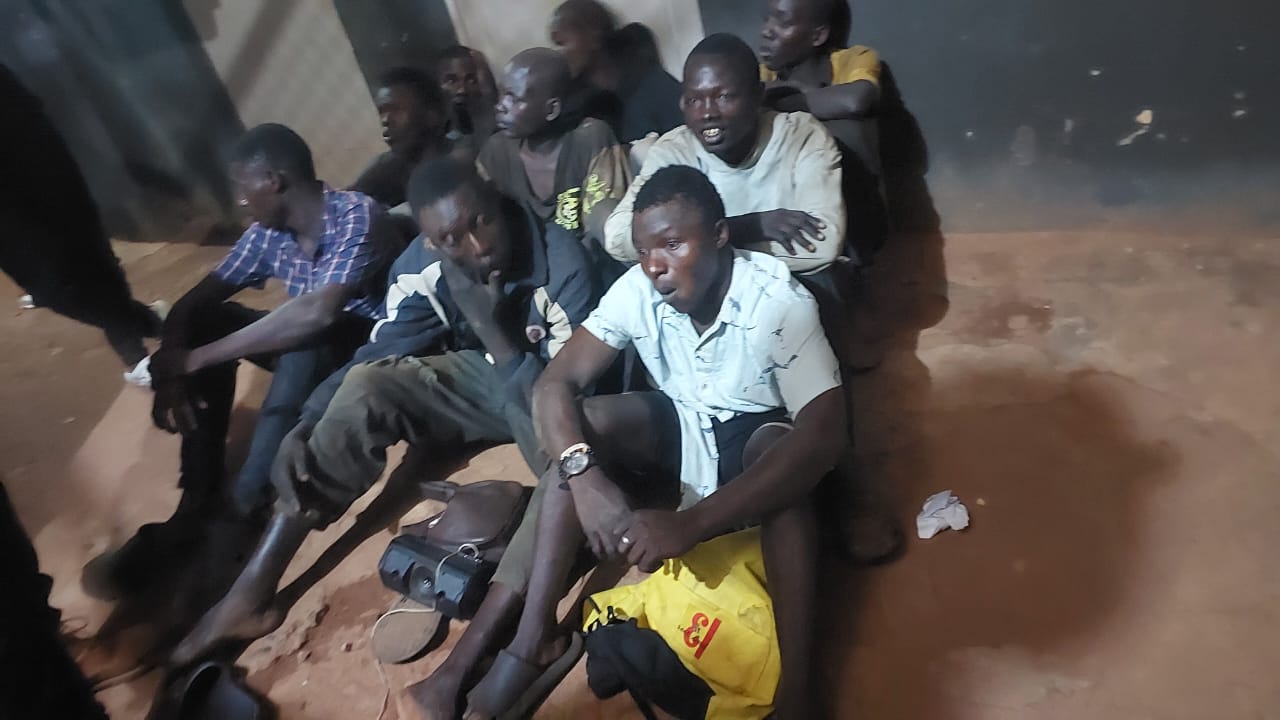
Kampala Metropolitan Police carried out another massive overnight crackdown, arresting 100 suspects across the city.
This is in a bid to ensure safe and secure Easter celebrations.
According to Racheal Kawala, the KMP police spokesperson, the operations ran from 8:30pm to 3:00am on April 1 2026, covering multiple high-risk areas in Entebbe, Mukono, Old Kampala, Katwe, and Kira.
In Entebbe, police conducted operations in Kasenyi and Nakiwogo, arresting 23 suspects, while in Mukono, operations in Kawoola, Katoogo, Takajjunge, and Kubiri led to the arrest of 36 suspects. Old Kampala Police targeted the New Taxi Park and Kakajo, apprehending 24 suspects, and at Katwe Division, operations in St Augustine Zone resulted in 14 arrests. In Kira Division, covering Mulawa, Kitukutwe, and Kiwologoma, police arrested 11 suspects.
During the operations, officers recovered dry marijuana leaves, rolled sticks, fresh plant materials, and other exhibits, which are now part of ongoing investigations. All suspects are currently in police custody pending court proceedings.
Ever wondered what your favourite personalities are like when the cameras are off and the ring lights go dim? In this edition, we step into the world of Icy Sonie, and it is as unfiltered as it is entertaining.
Born Sonia Anena, Icy Sonie is quick to laugh about her softer side, admitting that while she considers herself funny, that charm might be reserved for those closest to her. “To my family and friends,” she says. “The rest of the world? That is still up for debate.”
Fresh off the reality TV reunion, she teases unseen drama from behind the scenes but keeps her cards close to her chest. “Let’s just say my lawyer might need to be present if I spill everything,” she jokes, hinting at moments viewers never got to witness.
But beyond the TV persona, Icy’s story has layers.
The name “Icy” itself traces back to a heartbreak from her high school days. “I became Icy because of someone’s son,” she reveals. “I was so young, and that heartbreak turned my heart icy.” It is a moment that clearly left a mark, shaping not just her identity, but her outlook on love.
And speaking of love, she does not sugarcoat her views on modern dating.
“Dating might actually be harder than getting into heaven,” she says bluntly, describing a landscape where selfishness often overshadows loyalty. In her view, heartbreak is not limited to a certain type of man either. “Anywhere you see men? Run for your life,” she adds with a laugh that carries more truth than humor.
When it comes to relationships, one thing is clear. She is not in the business of fixing anyone. “When did I become Bob the Builder?” she quips. “I physically convulse at the thought.”
Away from matters of the heart, Icy Sonie fully embraces the soft life. Her philosophy is simple and unapologetic: “I see it, I like it, I want it, I get it.” Whether broke or not, she admits it is a habit she refuses to negotiate.
Still, she is not without self-awareness. Reflecting on one controversial moment from the show, she recalls a comment directed at a fellow cast member that she instantly regretted. “The moment I said it, I knew I was in trouble,” she admits, acknowledging how quickly things can spiral in the public eye.
Through it all, Icy Sonie remains a blend of humor, honesty and unpredictability. An Acholi girl at heart, she hints at cultural nuances only a few would fully grasp, adding another layer to her identity.
Hon. Robert Kyagulanyi a.k.a Bobi Wine is in exile in the USA, where he is meeting some leaders, lobbying them to sanction the top leadership in Uganda. To wit President Yoweri Museveni and the Chief of Defence Forces, Gen. Muhoozi Kainerugaba. In his view, these two denied him victory in the January 2026 General Elections.
Kyagulanyi left Uganda, after the January 2026 General Elections, claiming he was running away from possible arrest. However, government still denies that it had any intentions of arresting him.
Poor Kyagulanyi; like Gen. David Sejusa before him, Kizza Besigye, Col. Samson Mande, the late Col. Anthony Kyakabale, Maj. Herbert Itongwa and others, who after political disagreements with President Museveni, ran to the West and tried to wow the leadership in those capitals to stop any cooperation with President Museveni but were roundly rejected. What followed was frustration and isolation in those freezing capitals. They finally thought of making peace with President Museveni and they came back to Uganda. All of them are now free men enjoying their country.
The West that these people run to, after political defeat, are not fools. These countries have better intelligence networks in Uganda and in the region that give them thorough reports of what is happening in Uganda. Mere rhetorical statements that Museveni is a dictator, who does not want to live with the Opposition cannot be believed. These people have their own intelligence that tells them exactly what Uganda and who President Museveni is. Therefore, any skewing of stories from Uganda, trying to biase leaders in the Western capitals will certainly fall flat. Without a doubt, they will rely most on their own intelligence than reports from disgraced political actors.
In fact, from what is has been gathered is that most of the people Kyagulanyi has met so far, is that they are telling him to explore avenues of dialoguing with the leadership of the NRM. And this, of course, does not require the intervention of the Mzungu (White person) in the USA or any other Western capital. Uganda has enough eminent persons to handle that. Kyagulanyi is yet to be more frustrated, because in the near future even the chance they are offering to meet him will be no more. He will be making phone calls that will go unanswered. Or else, he will be answered with rude remarks.
The earlier Kyagulanyi realises that the only way to rediscover his political struggles is by engaging Ugandans and not the Western world. He needs to return and do critical evaluation of methods of work. He has to pose critical questions, to his party colleagues, on why the party performed the way it performed. He inevitably must engage those he is opposed to, especially the ruling NRM in general and President Museveni in particular.
This fallacy that engaging President Museveni is betraying the Opposition is totally wrong. Unfortunately, that perception has been created and those that have fallen for it are making irredeemable political mistakes. To the contrary, the Opposition that engaging President Museveni are making strong bargains in favour of Ugandans.
Life in exile is described as an “exasperating,” “poisonous,” and a “terrible to experience” existence, characterized by an unhealable rift between an individual and their home country. It is a state of profound alienation, often involving involuntary displacement, where individuals feel cut off from their secure, familiar surroundings and forced into a foreign, often hostile, environment.
Whatever disagreements Kyagulanyi could be having with Yoweri Museveni, the two can talk it over and a working relationship can be forged. Political disagreements can only be resolved by the two politicians. The West, where we tend to run looking for powerful godfathers, are not competent enough to appreciate our issues and be able to amicably resolve them.
Kyagulanyi will be given audience on a few media platforms, but that can only be for a few months. What will then follow will be a total media blackout, because he will be having nothing new to tell the world. Then boredom will kick in. Feelings of isolation and loneliness will grow in volumes, which is not good for his mental health.
Exiles often experience deep feelings of abandonment, loneliness, and fear, feeling disconnected from both their past and present reality. The exiled person may feel that their life has stopped or that time is being measured, only from the moment the exile began, leading to a nostalgic, often stagnant existence.
There is a traumatic realization that “there is no return to the familiar,” forcing the creation of a new, often uncomfortable life. Exiles frequently face a “powerlessness” and loss of control, struggling with new, unfamiliar rules, or even visa and travel restrictions.
The feeling of being “cut off” or a stranger, even without moving, caused by trauma, divorce or estrangement. Often used in religious contexts, this describes feeling like a stranger in one’s own country or culture, a feeling of not belonging because of different values or beliefs. The earlier he returns to Uganda, the better for Kyagulanyi and his family.
The writer works with Uganda Media Centre
Do you have a story in your community or an opinion to share with us: Email us at Submit an Article
Last night- Holy Thursday, the first ever La Sunday party, one of the biggest celebrations from Ivory Coast and West Africa, was successfully delivered to Kampala, at Silo 15.
The La Sunday party, largely considered one of the wildest parties in Africa, was brought to East Africa’s party destination by La Vie events management and global luxury tequila- Don Julio.
Although the party is arranged to happen on Sundays, looks like Ugandans couldn’t wait till Sunday, and the organisers listened!
Well, Ugandans’ love for a good is a widely known secret, so when the whispers on social media were confirmed to be true, gregarious people wasted no time.
The party was slated to kick off at 3pm, and Ugandans still turned up.
They showed up in bouncy wigs, two pieces, sneakers, kitten heels, stilettos, neat braids, and mini dresses. They paused for photos at the Don Julio canvas, which featured the signature arch of a man in a ‘Sombrero’ (it is a hat, by the way!).
Deejays- Ames, Ssesse, Melvyn DJ, Vanns, and Don Julio influencer- DJ Dash, among others, ensured revelers never had a dull moment, as they dropped sets that had them dancing and singing along.
Global luxury tequila brand- Don Julio, the event’s main sponsor, ensured revelers had the best tequila offerings for the Easter holidays.
From the infinity cocktail offerings that were served in Stanely like ‘Infinity Cups’, to the bottle serves, everyone had something that fit their pallet and mood.
“By now, everyone knows that a premium affair is always complete with Don Julio as a partner,” said Judie Nandekya, Senior Brand Manager, Tequila and Rum East Africa. “We are all about premium celebrations, especially those in culture. We are both glad and proud to welcome and deliver La Sunday to Kampala’s gregarious people. This is a natural fit, because it is a premium culture party that has made a name across the continent. We welcome La Sunday to East Africa’s party central, and we promise to keep delivering more of such experiences to our consumers,” she added.
When the visiting deejays- Mask On and Black Charles, locked in behind the decks, Silo 15 seemed to have turned into a hangout in Abidjan for a moment. Mask On took over and dropped a percussive bomb- a Coupé-Décalé snare, that cracked electronic sound lovers open, followed by a rush of Amapiano log drums, then a sudden reckless swerve into Baile funk or Gqom. The crowd was up in arms, waving the La Sunday flag, gasping and laughing as the beats switched.
Then Black Charles laid the foundation with deep, unhurried grooves that felt like a soulful house, a ghost of Old Zouglou, the warm crackle of vintage hip-hop vinyl, all building a patient, swaying tension.
Together, they traded control like a secret conversation. Charles pulled you into a dreamy, swaying trance. Mask On jolted you awake with a bassline that rearranged your ribs. Somehow, both of them landed on the same ecstatic truth, your feet no longer belonged to you, but to the music and the dance floor.
It was cold outside, but within the walls of Silo 15, it felt like it was one of those sweltering days of January that make you sweat buckets. This heat, though, was that nice kind of heat that reminds you to always be down for a good time.
Next time, do not miss a Don Julio La Sunday, because it is the party to be at.
Azawi has shared her vision for the Ugandan music industry, revealing what she would prioritize if she were elected president of all Ugandan musicians.
In a one-on-one conversation, she mentioned that her first move would be to subsidise the industry. According to her, the cost of operating within the music space is too high, and reducing key expenses would make it easier for creatives to thrive.
She also noted the need for performance grounds and creator hubs, pointing to Kenya as an example where artists, actors, writers, and other creatives have designated spaces to nurture and showcase their talent.
Azawi further noted that she would push for partnerships with streaming platforms. She explained that she would engage them in discussions to explore the possibility of creating a dedicated Ugandan slot where local music can be easily accessed and streamed.
In addition, she stressed the importance of making internet access more affordable so that streaming becomes accessible to a wider audience.
On governance, she did not hold back her criticism of Uganda’s current leadership, expressing frustration with what she described as a disconnect between leaders and modern realities.
They’re all old and they don’t understand these things.
She went on to question the priorities of elected officials, suggesting that many focus more on personal gain than public service.
If you’re out there and you think that the people you have voted for are going to serve you. I feel so sorry for you. Before they satisfy their personal interests, they won’t think about any of you.
When Uganda’s entertainment industry turned its eyes to Parliament in anticipation of the amended copyright law, many saw a moment of triumph, a long-awaited win for artistes hungry for better pay and protection.
But for Bebe Cool, the excitement felt misplaced. The veteran musician has dismissed the wave of optimism that followed artists’ appearance before lawmakers, arguing that most of those present didn’t fully understand what they were celebrating.
“The reason I did not appear in Parliament is because 99 percent of whoever was there does not know what copyright is,” he said.
According to him, the issue isn’t just about artists showing up; it’s about showing up informed. He believes many failed that test.
“They did not know what was in the old law and didn’t do any research about the new one,” he added, suggesting that attendance was driven more by expectation than preparation.
To Bebe Cool, the scenes that followed—cheers, excitement, and declarations of a brighter financial future—felt premature. In his view, copyright is being dangerously misunderstood as a quick cash scheme rather than a structured system that requires knowledge, discipline, and organization.
“They went there and jubilated,” he said. “I have been hearing some artists say that they are going to get rich because of copyright.”
On March 17, 2026, Parliament passed the bill, setting the stage for what many have described as a turning point in how creatives earn from their work, pending the president’s signature.
Among the artists that attended the proceedings were Eddy Kenzo, Jose Chameleone, Lilian Mbabazi, Allan Toniks, Levixone, Fik Fameica, Sheebah Karungi, Nina Roz, Coco Finger, and Pallaso, among others.
A damning Auditor General’s 2025 report has ripped the lid off a tangled web of financial exposure, administrative lapses and shocking oversights at the Cotton Development Organisation, leaving the legacy of long-serving former Managing Director Jolly K. Sabune under intense scrutiny as billions hang in the balance.
The auditor review, covering the six-month period from 1st July to December 2024, followed RAPEX reforms, which saw CDO sent back to the mother Ministry of Agriculture, Animal Industry and Fisheries.
But instead of a smooth transition, what emerges is a story of unfinished business, loose ends and glaring accountability gaps.
At the heart of the audit storm is a massive revolving fund for cotton value addition, first approved in the 2014/2015 financial year. The Auditor General notes that “To date, UGX.28Bn has been invested in this fund and used to maintain buffer stock.” Yet despite this heavy investment, the situation on the ground raises more questions than answers. At the time of closure, CDO was sitting on buffer stock worth UGX.7.73Bn and cash of UGX.5.045Bn parked on a buffer stock account in DFCU Bank, even as billions remained tied up elsewhere.
In a jaw-dropping revelation, the report states that “At the time of closure, M/s Fine Spinners, one of the beneficiaries from the buffer stock, owed CDO repayments for buffer stock worth UGX.15.15Bn which is locked up in semi-finished, finished goods and credit lines authorised by MoFPED over the last four (4) years.” The staggering amount, effectively frozen in production chains and credit arrangements, has triggered alarm over recovery prospects and oversight failures.
Land management at CDO reads like a script straight out of a governance nightmare. While the organisation officially owns three parcels of land, the Auditor General found that one prime piece in Buruli, Masindi Municipality is lying idle and unfenced, exposed to encroachment and misuse. But the real shocker comes in the discovery that “CDO owns an additional seven (7) pieces of land measuring 5,605.5 Hectares in Mubende and Masindi districts that were not disclosed in the assets register, hand over report and financial statements, due to the fact that management was not aware of the land.” Incredibly, thousands of hectares simply slipped through the cracks, unknown to those entrusted with managing them.
Financial constraints also cast a long shadow over operations. Out of an approved budget of UGX.5.08Bn, only UGX.2.63Bn was released for the six-month period, leaving a shortfall of UGX.2.45Bn that directly affected implementation of activities. Despite this, the report acknowledges that eleven outputs tied to eight activities worth UGX.2.63Bn were fully implemented, a rare bright spot in an otherwise troubling assessment.
The human cost of the transition is equally glaring. The Auditor General observed that “30 employees of CDO were terminated and therefore entitled to compensation of UGX.881.91Mn. UGX.806.24Mn was paid leaving an unpaid balance of UGX.75.67Mn.”
Even more controversially, “Contrary to the RAPEX guidelines, eight (8) former staff of CDO who were subsequently absorbed by MAAIF were paid terminal benefits amounting to UGX.50.08Mn,” raising red flags about compliance with reform guidelines.
Meanwhile, another absorbed staff member claimed UGX.65.59Mn in terminal benefits but was left unpaid, further exposing inconsistencies in handling staff entitlements.
The transition to the Ministry of Agriculture has itself been anything but seamless. Although eight key functions were officially mainstreamed, the report reveals that some remain unimplemented due to staffing gaps. The consequences are already being felt, with “delays by the Ministry to implement seven (7) key activities in the production, marketing, ginning, seed processing, and classing of cotton,” all critical to a successful cotton season.
At the Pajule processing plant, the situation bordered on crisis, with all key staff laid off and yet to be replaced even as the harvest season kicked off in August 2025.
Further exposing weak safeguards, the Auditor General flagged that CDO installed key equipment at the cotton seed processing station in Kasese ginnery owned by Nyakatonzi Growers Cooperative Union Limited, but “there was no formal agreement between CDO and NGCUL to ensure that the equipment is protected against loss and other risks.” In essence, valuable government equipment was deployed without binding protections, leaving it vulnerable.
Even in accountability follow-ups, progress appears sluggish. The report notes that CDO “fully implemented four (4) recommendations and partially implemented two (2) recommendations” from earlier Auditor General findings, suggesting a pattern of incomplete corrective action.
As the RAPEX reforms continue to reshape government agencies, the CDO case now stands as a stark warning of what can go wrong when oversight weakens and transitions are poorly managed. With billions tied up, land unaccounted for, staff grievances unresolved and critical functions lagging, pressure is mounting on those in charge to explain how such glaring gaps were allowed to persist—and who will ultimately take responsibility for the mess left behind by Sabune.
By Press time, I was not clear whether she was retained by MAAIF or shown exit but RedPepper will keep you updated.
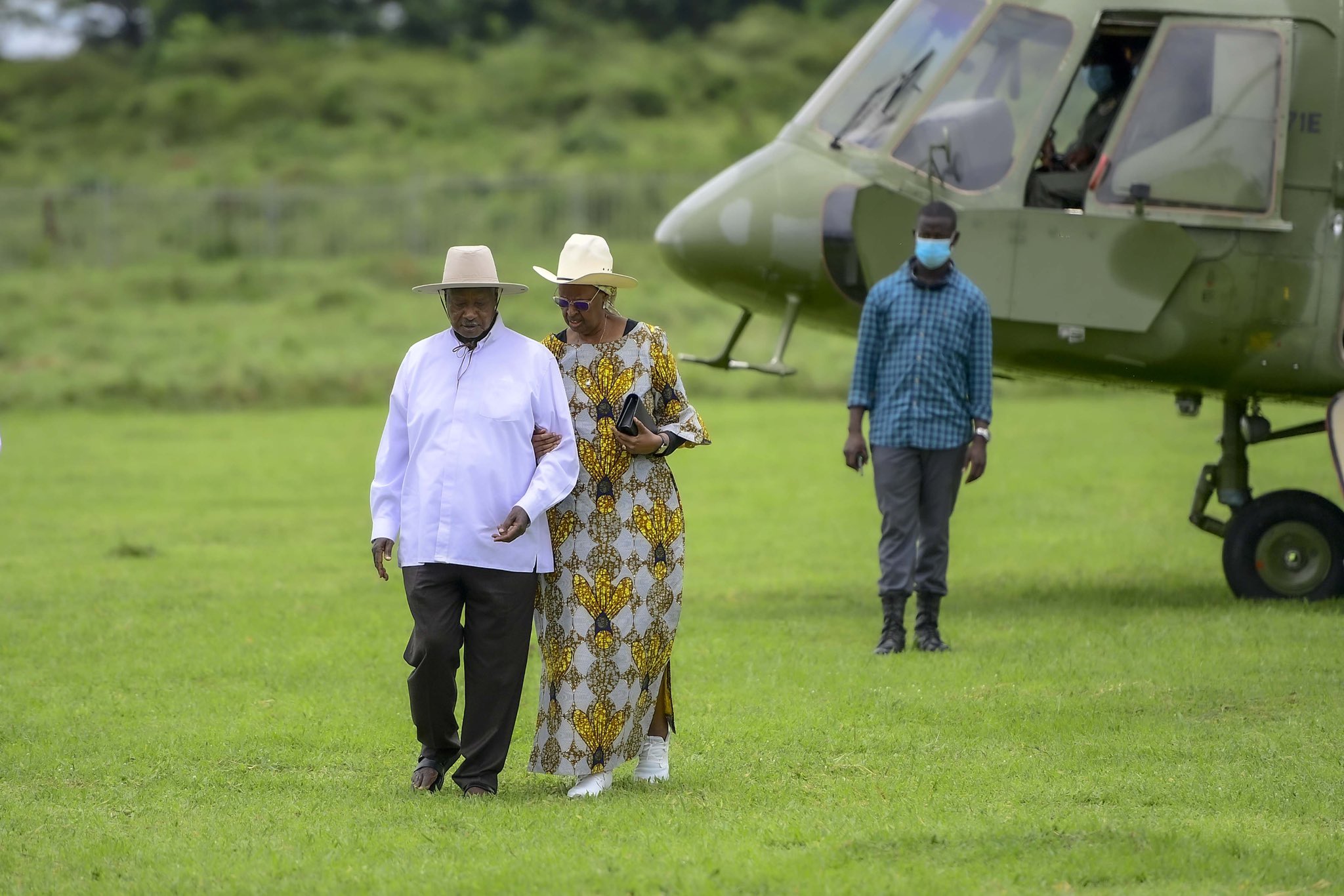
KAMPALA — President Yoweri Kaguta Museveni and First Lady Janet Museveni have issued a joint Easter message to Ugandans, breaking the silence with a brief but symbolic communication that has already stirred public attention.
Posting via his official X account early Sunday, Museveni wrote: “Maama Janet and I wish you a Happy Easter.” The message was accompanied by a stylised “Happy Resurrection Day!!” graphic addressed to “Fellow Countrymen, Countrywomen and Bazzukulu.”
The design leans heavily into scripture, spelling out the core Christian message—resurrection, victory over death, forgiveness of sins, and the promise of eternal life. It frames Easter as a turning point: from the despair of Good Friday to the triumph of new beginnings.
A prominent portrait of the President dominates the artwork, backed by familiar religious symbolism—the cross, a dove, and radiant clouds—before being formally signed off: “Yoweri K Museveni, PRESIDENT,” complete with the Ugandan flag emblem.
WHY THIS MESSAGE IS TURNING HEADS
This was no ordinary holiday greeting.
The joint sign-off comes at a time when Maama Janet’s reduced public appearances have fueled quiet but persistent speculation—both online and in political circles—about her health. By issuing a shared message, the First Family projects stability, cohesion, and continuity.
For many Ugandans, Maama Janet is more than First Lady—she is a moral voice and a central figure in education and faith-based initiatives. Her inclusion, even symbolically, sends a calculated reassurance: the First Family remains intact and present.
RELIGION, POLITICS, AND THE MOMENT
In a country where Christianity commands a dominant following, Easter is not just another date on the calendar—it is a moment of deep reflection, hope, and renewal.
And the timing is telling.
With citizens grappling with economic pressure, youth unemployment, and ongoing governance debates, a message anchored in resurrection and “new dawn” language is unlikely to be accidental. It taps directly into the emotional and spiritual realities of millions who lean on faith as a coping mechanism.
The joint message also reinforces the long-standing branding of the Museveni household as a pillar of Christian family values—an image that has been central to their political identity for decades.
REACTIONS
As expected, reactions have been split.
Supporters flooded timelines with prayers and Easter blessings. One thing is clear: for millions heading to church or gathering with family this Easter, the message serves its core purpose—an official nod from the country’s top leadership on one of the most sacred days in the Christian calendar.
Do you have a story in your community or an opinion to share with us: Email us at Submit an Article
About UGNEWS24
UGNEWS24 is a Uganda local news service, a product of
SOLAVIA GROUP LIMITED,
Reg. No. 80048169153974.