Category: News

  • IBRAHIM E. KASITA: Uganda’s lifeline tariff sparks inclusive growth

    IBRAHIM E. KASITA: Uganda’s lifeline tariff sparks inclusive growth

    Uganda’s push for inclusive development has received a major boost with the Electricity Regulatory Authority (ERA) maintaining the lifeline tariff at UGX 250 per kilowatt-hour (kWh), a move aimed at protecting the country’s most vulnerable electricity consumers.

    The lifeline tariff—also known as the social tariff—applies to the first 15 units (kWh) consumed monthly by qualifying domestic users. It remains a key pillar in government’s broader strategy to eliminate energy poverty and ensure that the gains from increased power generation, including the integration of the 600MW Karuma Hydropower Plant, reach households at the grassroots.

    Bridging the Electricity Access Gap

    Supported by the World Bank-funded Electricity Access Scale-up Project (EASP), the programme is steadily transforming lives across Uganda.

    For years, many households were locked out of electricity due to high connection fees and unaffordable tariffs. Today, with free connections for eligible users and the subsidised UGX 250 rate, that barrier is steadily being dismantled.

    “We have families who used to spend more on kerosene and candles in a week than they now spend on electricity for a whole month,” says Betty Nabaasa, a community leader in Kyegegwa District.

    “Affordable power means children can study safely at night without inhaling toxic fumes, and women feel more secure in well-lit homes,” she adds.

    Confronting Energy Poverty

    Despite steady grid expansion, affordability remains the biggest challenge to last-mile connectivity. As of January 2026, ERA’s tariff structure is deliberately designed to cushion low-income households during Uganda’s transition to a modern, industrial economy.

    With the standard domestic tariff for consumption beyond the lifeline block standing at UGX 756.2 per unit, the UGX 250 rate represents a significant 69% subsidy—making basic electricity use attainable for even the poorest households.

    This aligns with Uganda’s commitment to Sustainable Development Goal 7 (SDG 7), which calls for universal access to affordable, reliable, and sustainable energy.

    Lighting Up Livelihoods

    The impact of the lifeline tariff extends beyond homes into local economies, especially in rural and peri-urban areas.

    Affordable electricity is already transforming livelihoods:

    • Education: Students can now study beyond daylight hours, improving academic performance.
    • Health: Reduced reliance on kerosene lamps is lowering indoor air pollution and respiratory illnesses.
    • Small Businesses: Low-cost electricity is enabling micro-enterprises to operate more efficiently.

    “For example, a tailor can use the first 15 units to run lighting and basic appliances, making their workspace more productive and attractive to customers,” Nabaasa explains.

    Advancing Energy Equity

    By balancing affordability with sector sustainability, the government is laying the foundation for a more equitable energy landscape.

    The lifeline tariff is not merely a subsidy—it is a strategic investment in human capital and socio-economic transformation.

    Uganda cannot achieve middle-income status while leaving vulnerable communities in the dark. Ensuring equitable access to electricity is central to that ambition.

    A Lifeline for the Future

    As Uganda progresses through 2026, the lifeline tariff stands out as a practical demonstration of pro-people policy in action.

    It is more than just a pricing mechanism—it is a tool for empowerment, a pathway out of poverty, and a clear signal that access to electricity is not a privilege, but a right for all Ugandans.

    The author serves at the Electricity Regulatory Authority (ERA).

    Do you have a story in your community or an opinion to share with us: Email us at Submit an Article

  • IBRAHIM KASITA: ERA – The Mastermind Behind Your Light

    IBRAHIM KASITA: ERA – The Mastermind Behind Your Light

    Once upon a time, in a beautiful and naturally endowed Uganda, there was a big dream: to harness the power of the mighty River Nile and the heat of the sun to light up every home, hospital, and factory.

    But building this “World of Light” is a long and expensive journey. It is not just about generating power; it’s about moving it across mountains and valleys until it reaches the very last house on the hill—what we call the “Last Mile.”

    To make this journey successful, a “Master Architect” was established: the Electricity Regulatory Authority (ERA). Its role is to ensure that investors feel safe enough to build the system, while also ensuring that you, the citizen, are protected every step of the way.

    The Three Steps of the Journey

    ERA oversees three groups of “builders” who work together in a massive relay race to deliver power to you:

    • The Generators (The Source): These are the experts who build massive dams like Karuma and solar farms. They create the electricity.
    • The Transmitters (The Superhighway): Power from dams is too strong for direct household use. It travels on giant towers across the country—this is the “superhighway” of electricity.
    • The Deliverers (The Local Roads & The Last Mile): Finally, power is stepped down into smaller wires on wooden poles. The final connection from the pole to your house meter is the Last Mile Connection.

    Without ERA acting as the referee, these three groups might not work together efficiently, and the light might never reach your front door.

    The Architect’s Toolbox: Why It Matters to YOU

    To keep this journey running smoothly, ERA uses several key tools. Here is how they work—and the “So What?”—the real impact on your daily life:

    1. The Golden License (Vetting)
    ERA verifies the credibility and financial capacity of every company before allowing them to operate on the power grid.
    The So What? This is your safety net. It keeps out bogus companies and ensures only qualified experts handle electricity infrastructure, preventing dangerous or poorly built lines.

    2. The Balance Scale (Tariff Setting)
    Companies want higher profits; consumers want lower costs. ERA balances these interests to set a fair price.
    The So What? This is your price shield. It ensures your monthly bill remains fair while allowing companies to maintain infrastructure.

    3. The Quality Ruler (Performance Standards)
    ERA measures how often power outages occur and how quickly faults are fixed.
    The So What? This is your quality guarantee. It ensures reliable electricity and protects your appliances from damage due to unstable voltage.

    4. The Budget Guard (Investment Approvals)
    Companies must seek ERA’s approval before making major investments.
    The So What? This is your cost saver. It prevents unnecessary spending that could otherwise lead to higher electricity bills.

    5. The Clear Glass (Uniform Accounting)
    ERA requires transparency in financial reporting from all electricity companies.
    The So What? This is your transparency guard. It prevents companies from hiding profits or inflating costs to justify price increases.

    6. The People’s Whistle (Consumer Affairs)
    Consumers can report unfair treatment, billing errors, or delays in connection.
    The So What? This is your voice. It ensures even the smallest consumer can be heard and protected.

    7. The Crystal Ball (Research, Forecasting & Advisory)
    ERA studies future electricity demand and advises the government on planning.
    The So What? This is your future security. It prevents power shortages and ensures Uganda keeps up with growing demand.

    8. The Power Border Post (Imports & Exports Regulation)
    ERA regulates electricity trade with neighboring countries like Kenya, Rwanda, and Tanzania.
    The So What? This is your national income booster. Surplus power earns revenue, while shortages are covered through imports.

    9. The Efficiency Engine (Promotion of Competition)
    ERA encourages efficiency and competition within the energy sector.
    The So What? This is your value for money. Efficiency reduces waste and helps keep tariffs lower over time.

    10. The Nature Shield (Environmental Oversight)
    ERA works with environmental bodies like NEMA to ensure sustainable energy development.
    The So What? This is your health and heritage guard. It protects natural resources for future generations.

    11. The Peacemaker (Land & Right-of-Way Disputes)
    ERA helps resolve disputes when power infrastructure passes through private land.
    The So What? This is your justice tool. It ensures fair compensation and prevents project delays due to conflicts.

    The Result: A Bright and Sustainable Future

    Because ERA acts as both the architect and the navigator, a win-win environment is created. Investors feel secure because the rules are clear. The government makes informed decisions based on expert advice.

    Most importantly, the citizen is protected—because every wire, every shilling, and every tree is accounted for.

    The journey from the Nile to your light switch is long. But with ERA in charge, the path is stable, the price is fair, and the future of Uganda remains bright.

    Do you have a story in your community or an opinion to share with us: Email us at Submit an Article

  • Omah Lay Hints at Return to Christianity

    Omah Lay Hints at Return to Christianity

    Omah Lay is once again at the center of discussion, this time over his religious stance.

    Fans have reacted after the singer posted about returning to the Bible, a move that contrasts with his earlier suggestion of converting to Islam.

    In the post, he explained that he enjoyed reading the Quran but now connects more with the Bible.

    Back to the Bible. I enjoyed reading the Quran but I relate more to this.

    The message has fueled speculation that the Nigerian singer may have gone back to Christianity, with reactions continuing to build online.

  • Eddy Kenzo Turns Down A Pass Music Battle Challenge

    Eddy Kenzo Turns Down A Pass Music Battle Challenge

    Eddy Kenzo has shut down talk of a musical battle with A Pass, making it clear he does not see any real rivalry between them.

    The singer and Uganda National Musicians Federation (UNMF) president dismissed the idea during an interview on BBS TV, saying their recent exchanges on social media are not as serious as some fans think.

    According to him, the back and forth is more playful than confrontational.

    A Pass is my man and we have worked on many skits together. It is just that we have taken a long time without seeing each other but he is my man. We have our stories right from way back in Makindye. I know him and when you see us throw shots at each other, do not take it seriously. We joke a lot.

    The exchanges began after a fan claimed A Pass is more intelligent than Kenzo, a comment that sparked reactions online.

    Kenzo responded sarcastically, agreeing with the remark and joking that A Pass could even be wiser and wealthier than him.

    The moment quickly drew in both fan bases, with debates building around the two artistes.

    At the height of it, A Pass suggested a music battle to settle the tension.

    Kenzo, however, brushed off the idea, saying he has no need for a battle to prove himself.

  • DR. OPUL JOSEPH : Will the 8 resolutions of the 7th Annual Higher Education Conference in Gulu become medicine to poverty, unemployment and will they land on fertile or rocky soil of higher education institutions?

    DR. OPUL JOSEPH : Will the 8 resolutions of the 7th Annual Higher Education Conference in Gulu become medicine to poverty, unemployment and will they land on fertile or rocky soil of higher education institutions?

    Open Letter to Ministers of Education: Hon. Janet Kataaha Museveni

    Minister of Education and Sports (MoES), State Ministers: Hon. Dr. John C. Muyingo (Higher Education), Hon. Dr. Joyce Moriku Kaducu (Primary Education), and Hon. Peter Ogwang (Sports).

    Honourable Ministers,

    Like a healer standing before a patient long afflicted by the stubborn diseases of poverty and unemployment, the 7th Annual Higher Education Conference in Gulu prescribed eight bold remedies. They were not ordinary resolutions; they were, in many ways, a pharmacy of hope, a carefully written prescription that promises to restore life to a struggling body. Yet as the elders say, “Medicine does not heal the patient who refuses to swallow it.” The question that lingers like the evening mist over the Nile is this: Will these resolutions become medicine that cures, or ink that fades? Will they fall on fertile soil or shatter upon the rocks of institutional rigidity?

    I attended the conference remotely , Let me begin with gratitude. I commend Hon. Norbert Mao, who graced the occasion as chief guest, and your esteemed offices even in abstentious. I honour the intellectual stewardship of Prof. Joy C. Kwesiga and Prof. Mary J. N. Okwakol, alongside the entire staff of National Council for Higher Education, MoES, academia, industry leaders, and development partners. The conference was not merely an event it was a forge where ideas were hammered into possibility.

    And yet, Honourable Minister, possibility is not destiny.

    The eight resolutions: establishing a national research fund, aligning curricula to CBET, strengthening industry partnerships, building innovation hubs, promoting intellectual property frameworks, and advancing gender inclusion are like seeds of a mighty forest. But as every farmer in Acholi knows, “Seeds do not fear the soil; they fear neglect.” Without the right ecosystem, even the most promising seed withers.

    Our higher education institutions today resemble beautiful granaries with no harvest inside. They are rich in theory but poor in transformation. The current governance structure where Senate is the supreme academic organ, Faculty Board meetings, Departments, the Deputy Vice-Chancellor for Academic Affairs (DVC-AA) guards academic orthodoxy, and the Academic Registrar and faculty assistant Academic registrars manage compliance creates a system that is excellent at producing transcripts but hesitant at producing transformation. It is like a well-built engine that has never been started. Are lecturers’ mindsets marinated enough for new Competence-Based Education and Training (CBET) curriculum above all, there is still mystery between Competency and competence, this looks obvious but needs clear dissection.

    Can such a structure carry the weight of innovation? Can a system designed for instruction suddenly become a cradle for invention? “You cannot use the same key to open every door,” says the proverb. If we continue to measure success by examinations rather than enterprise, we may end up, as the saying goes, counting leaves while ignoring the fruit.

    Honourable Minister, my expectations may appear ambitious, but they are rooted in the lived realities of our youth and aligned with the mission of Quality Education Consultancy Ltd(QECL) and OPUL Skilling Foundation Africa (OSFA),-“Innovative Skilling as Medicine to Extreme Poverty.” If these resolutions are to truly heal, they must speak the language of impact. We must begin to ask uncomfortable but necessary questions: How many student and lecturer startups are being incubated? How many survive beyond infancy? How many jobs are created not promised, but created? How many communities are lifted from poverty through university-led innovation?
    Without such metrics, we are like a man measuring the shadow of a tree instead of tasting its fruit.

    Furthermore, the silence of the resolutions on Uganda’s Tenfold Growth Strategy is like a drumbeat missing in a dance. The vision to grow Uganda’s economy from 50 billion to 500 billion dollars by 2040 is not a distant dream it is a call to action. And higher education must be its engine, not its passenger. The ATMS sectors: Agro industrialization, tourism, minerals, and science and technology must not remain policy poetry; they must become laboratories of practice within our universities.

    But here lies the heart of the matter: structure determines destiny. If we are to turn rocky soil into fertile ground, then reform must go deeper than policy, it must touch the architecture of our institutions.

    The Senate, Quality Assurance, Timetable, and Examinations Committee, faculty boards, departments among others must evolve from being merely a guardian of academic standards into a council of innovation and societal impact, where innovative entrepreneurship, research is judged not only by excelling in exams and publication but by transformation. The title DVC-AA must give way to a more purposeful identity-Deputy Vice-Chancellor for Education, Research and Innovation because names, like seeds, carry intention. Likewise, the Academic Registrar should become an Education and Innovation Registrar, shifting focus from record-keeping to opportunity-making.

    More radically, we must rethink time itself within the university. Translate 40% marks of course work to 50% be spent in research, innovation, and innovative entrepreneurship, real-world problem-solving. Let the lecture hall not be the final destination but the starting point. Let universities become workshops of ideas, factories of solutions, and gardens of enterprise.

    Many Universities currently lack baseline data or don’t have at all on business startups, acceleration activities, and innovations among students admitted to their institutions, yet this information could be easily captured through the Academic Management Information System (ACMIS) during the application process for new students. The system could include provisions to determine whether incoming students have established business startups, participated in acceleration programs, developed innovations, or contributed to job creation and revenue generation. This is particularly important given that the Competency-Based Curriculum (CBC) fosters such skills from O-level through A-level and into university. At present, however, ACMIS largely focuses on admissions, enrollment, registration, fee payments, and results, with no clear provision for capturing data on startups, innovations, acceleration, job creation, or revenue generation.

    From the great universities of the world to the vibrant ecosystems of Silicon Valley, one lesson rings clear: innovation thrives where freedom meets funding, and ideas meet industry. Students are not passive recipients; they are creators, disruptors, builders. Professors are not just lecturers; they are mentors, co-founders, and visionaries. Intellectual property is not shelved; it is commercialized. Failure is not punished; it is refined. In such ecosystems, universities do not wait for jobs they create them.

    Honourable Minister, if we establish innovation hubs without autonomy, they will become rooms with computers but no creativity. If we create research funds without access, they will become wells whose water no one can draw. If we align curricula without changing culture, we will simply rearrange the furniture in a burning house.

    And yet, there is hope immense, undeniable hope.

    For Uganda stands at a crossroads where demography meets destiny. Our youthful population is not a burden; it is a sleeping giant. The eight resolutions are the alarm clock. But will we wake up?

    Let me end with a simple poetic reflection:
    The seed is ready,
    The rain has come,
    The hands are many,
    But will we become?
    Will soil be turned,
    Or left to lie?
    Will dreams take root,
    Or simply die?

    As our elders remind us, “He who has diarrhea knows the direction of the toilet even without being shown.” Let our universities embrace innovation before frustration becomes our teacher.

    I call upon the Ministry of Education and Sports, National Council for Higher Education, National Curriculum Development Centre, Vice Chancellors, and all local and international partners to urgently translate the eight resolutions of the 7th Annual Higher Education Conference into binding, funded, and time-bound institutional reforms by embedding Competence-Based Education and Training into all programs, restructuring university governance to prioritize innovation and enterprise, mandating that at least half of learning time is dedicated to real-world problem-solving and startup development, integrating innovation and employment tracking into academic data systems, and tying public and partner financing to measurable outcomes such as jobs created, startups sustained, and communities transformed because without decisive leadership, accountability frameworks, and a shift from certification to creation, these resolutions risk becoming symbolic declarations on rocky institutional ground rather than the practical medicine needed to cure Uganda’s poverty and unemployment crisis.

    Honourable Ministers, the spear has been sharpened. The bow is drawn. The target is clear.

    May we not miss.

    Yours in the service of transformative education and national renewal.

    Dr. Opul Joseph, PhD
    Lecturer, Gulu University & Chief, Kitgum Campus
    Director, Quality Education Consultancy Ltd (QECL)
    CEO, OPUL Skilling Foundation Africa (OSFA)
    President Elect Rotary Club of Soroti Central and Life Member of Uganda Red Cross Society (URSC)
    ceo@opulskillingfpundationafrica.org/regionaldirector@qualityeducationconsultancylimited.com
    +256-772-999346/+256-752-999346


    Do you have a story in your community or an opinion to share with us: Email us at Submit an Article

  • Fik Gaza Cuts Ties With Alien Skin, Cautions Him Over Busoga Remarks

    Fik Gaza Cuts Ties With Alien Skin, Cautions Him Over Busoga Remarks

    Fik Gaza has confirmed to Sanyuka Uncut that he has parted ways with Fangone Forest boss Alien Skin.

    Real name Shafiq Jjingo, the dancehall and ragga artiste, says the decision is personal, adding that he walks away on good terms.

    I left him in peace and I am happy.

    He also addressed the ongoing controversy surrounding Alien Skin’s remarks about Busoga.

    Fik Gaza said such comments are not helpful, especially for an artiste who depends on public support.

    Alien attacking the Basoga is not nice since he needs them to support music.

    His remarks come as Alien Skin continues to face criticism over his statements about Busoga.

  • Ambassador Nsambu Questions Credibility of Uganda’s Security Cameras After Brother’s Fatal Crash

    Ambassador Nsambu Questions Credibility of Uganda’s Security Cameras After Brother’s Fatal Crash

    Uganda’s Ambassador to Algeria and the Maghreb region, H.E. John Chrysostom Alintuma Nsambu, has raised serious concerns over the effectiveness of the country’s security camera system following the tragic death of his elder brother in a hit-and-run accident.

    Ambassador Nsambu made the remarks on Wednesday while laying his brother, Ssenteza Francis, to rest at their ancestral home in Nkuke Village, Buwunga Sub-county, Masaka District. The deceased was knocked dead at Kirumba–Ssaza Junction along the Masaka–Mbarara Highway.

    Speaking with visible grief, Nsambu questioned why security cameras installed along major highways failed to identify the driver responsible for the fatal crash.

    “At the very spot where my brother was knocked, there is what appears to be a camera, but it is not functioning. Even the nearby cameras along the highway are not working. It is deeply painful that we cannot trace the person who caused his death,” he said.

    The Ambassador revealed that during his tenure as State Minister for ICT in 2008, he had proposed the establishment of a national traffic control center to monitor movement across the country’s road network.

    However, the initiative stalled due to financial constraints despite gaining interest from the President.

    Nsambu further disclosed that as soon as he was appointed as Uganda’s Ambassador to Algeria, he lobbied for support from the Algerian government to fund the installation of roadside surveillance cameras in Uganda.

    “The Algerian government was willing to provide a grant worth approximately $7 billion for this project. Joint mapping was even conducted by Algerian and Ugandan police. However, the offer was sidelined, and instead, some officials pursued their own interests, resulting in the procurement of substandard cameras that are now non-functional,” he stated.

    In an emotional appeal, Nsambu tasked the State Minister for Trade, Industry and Cooperatives, Hon. Fredrick Gume Ngobi, who represented the government at the burial, to raise the matter before Cabinet.

    “My brother should be the last victim of such negligence. Relevant authorities must explain why these cameras are merely dummies. This culture of shoddy work and corruption in critical national projects must stop,” he added.

    Also speaking at the burial on behalf of the Buganda Kingdom, Buddu County Chief Pokino Jude Muleke expressed concern over the increasing number of fatal accidents along the Masaka–Mbarara Highway, particularly between Nyendo and Kijjabwemi.

    “We have repeatedly raised concerns about this stretch, but no action has been taken. There are several cameras at Ssaza, yet they do not help in tracking criminals. This issue must be urgently addressed at the national level,” Muleke said.

    In response, Hon. Fredrick Ngobi acknowledged the concerns raised and pledged to present the matter to Cabinet for urgent consideration.

    “This is a serious issue of National importance. I will ensure that it is brought before Cabinet so that appropriate action is taken as soon as possible,” he said.

    According to local reports, at least ten people lose their lives annually due to speeding vehicles along the Nyendo–Kijjabwemi stretch of the Masaka–Mbarara Highway. Residents continue to fault the responsible authorities for failing to implement adequate safety measures, including functional surveillance systems and traffic calming interventions.

    Do you have a story in your community or an opinion to share with us: Email us at Submit an Article

  • Kyambogo University Marks International Women’s Day With Urgent Call To Close Gap Between Legal Frameworks And Real Justice For Women

    Kyambogo University Marks International Women’s Day With Urgent Call To Close Gap Between Legal Frameworks And Real Justice For Women

    Event Opens With Moment Of Silence For Female Student Recently Killed By Husband As Speakers Demand Accountability, Action, And Inclusive Gender Reform

    What was meant to be a celebration carried the weight of grief from its very first moments.

    ADVERTISEMENT

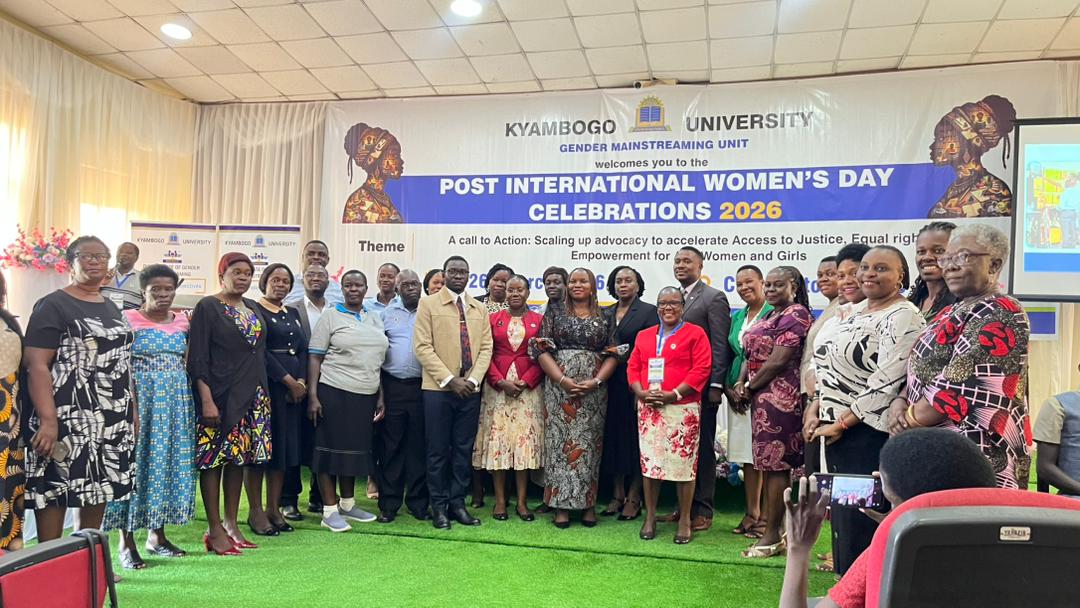
    Kyambogo University’s Post International Women’s Day commemorations, held on March 26, 2026, opened with a moment of silence for a female student recently killed by her husband — a sobering reminder that the theme of the day, “A Call to Action: Scaling Up Advocacy to Accelerate Access to Justice, Equal Rights and Empowerment for ALL Women and Girls,” was not merely aspirational language. For some women and girls in Uganda, it is a matter of life and death.

    The event, organised by the university’s Directorate of Gender Mainstreaming, brought together students, academics, legal experts, and university leadership for what became a frank, wide-ranging, and at times uncomfortable conversation about the state of women’s rights in Uganda — and the distance between the legal protections that exist on paper and the reality that women and girls continue to live.

    The welcoming remarks from Kyambogo University Guild President Emmanuel Andama struck a note that would echo through several subsequent contributions. While commending the university administration and the Directorate of Gender Mainstreaming for providing a platform for women’s empowerment, Andama raised an argument that is frequently overlooked in gender conversations.

    “As we are empowering women, we should empower men who are the counterparts — and if not taken care of, then the girl child will be violated,” he told attendees.

    The argument — that sustainable women’s empowerment requires the simultaneous engagement and development of men — set up a recurring theme of the day: that gender justice is not a zero-sum competition between women and men, but a structural challenge that requires the participation of everyone.

    Dr. Deborah Nakalyowa, Head of the Directorate of Gender Mainstreaming at Kyambogo University, was clear-eyed about the challenge at the heart of the event’s theme.

    “Rights become a promise that will never arrive if justice has not prevailed,” she said — a statement that captured in a single sentence the frustration driving much of the day’s discourse.

    Her remarks emphasised that the celebration was not self-congratulatory. It was a deliberate effort to confront the challenges that women and girls continue to face across all dimensions of their lives, and to demand concrete progress rather than continued acknowledgement of a problem without resolution.

    Counsel Norah Matovu brought a practitioner’s perspective to the proceedings, offering a candid assessment of Uganda’s legal and policy landscape on women’s rights — one that acknowledged genuine progress while refusing to paper over persistent failures.

    She noted that a range of instruments and frameworks have been adopted to address the violation of women’s rights, and that the legal framework protecting and actualising those rights has improved in meaningful ways. But she was equally direct about what those improvements have not yet delivered.

    “Accountability — how do we ensure that those who have the power and authority use it well for the benefit of us all?” she asked. “We need to be proactive.”

    Cultural norms, she observed, remain among the most stubborn barriers to women’s empowerment — limitations that legal frameworks alone cannot dismantle. Her message, however, was not defeatist.

    “We cannot give up. The door has been opened to improve the status of women. Each one of us has a role to play — being solution finders in order to make a difference. We need to stay persistent and committed for a perfect change,” Counsel Matovu said.

    The guest speaker, Dr. Daniel R. Ruhweza, Senior Lecturer at Makerere University School of Law, delivered what was perhaps the most analytically detailed contribution of the day — a presentation titled “Reconceptualising Justice: A Trivalent, Distributive and Inclusive Approach to Gender Equality in Uganda’s Education Institutions.”

    His data painted a picture of a gender landscape in higher education that is more complex than simple narratives of female disadvantage suggest. Women currently account for 43.1 percent of public university intake — a figure that reflects decades of deliberate affirmative action policy. Yet female enrolment in STEM programmes stands at only 28.7 percent, revealing that access to university does not automatically translate into access to the most economically and professionally powerful disciplines.

    More provocatively, Dr. Ruhweza flagged declining male enrolment in humanities and social sciences as a dimension of the gender picture that current reform frameworks have largely failed to address. His argument, grounded in what he described as Fresher’s Trivalent Model, proposed that genuine gender justice must be applied bidirectionally — addressing redistribution, recognition, and representation for all genders across all disciplines.

    He identified resource disparity and institutional culture as the primary reasons current reforms have proven insufficient, and put forward five policy recommendations: gender responsive budgeting, a male student support framework, a pregnancy and parenting protocol for institutions, same-position return monitoring for female students who take academic breaks, and a unified gender monitoring system across institutions.

    He closed with a formulation that drew considerable attention from the audience. “Justice is not a process, not a status. Epistemological democratisation must encompass the standpoints of all who are structurally excluded.”

    Representing the Vice Chancellor, Chief Guest Owekitibwa Dr. Prosperous Nankindu, Senior Lecturer in the Department of Languages and Communication within Kyambogo’s Faculty of Arts and Humanities, acknowledged directly what many institutions are reluctant to admit: having the legal framework in place is not the same as living by it.

    “We have the legal framework, but the practice is different — and difficult,” she said.

    She encouraged attendees to expand their thinking about what investment in women actually means in practice, arguing that when women are given the tools and resources they need, they are capable of driving economic development at every level of society. She called for the deliberate dismantling of structural barriers, the consistent advancement of women’s rights across all levels of society, and the active evolution of male counterparts as partners rather than bystanders in the gender equality project.

    Her message aligned with the day’s consistent thread: that the language of women’s empowerment, however well-intentioned, must be backed by structural change, institutional accountability, and the courage to confront cultural norms that legal frameworks alone cannot reach.

    But for all the data, the policy recommendations, and the calls to action, it was the moment of silence at the beginning of the event that arguably said the most.

    A student. A woman. Recently killed by her husband.

    In a room gathered to celebrate progress on women’s rights, that fact needed no analysis, no framework, and no policy recommendation. It needed only to be acknowledged — and to remind everyone present of exactly why this conversation cannot be allowed to remain only a conversation.

  • Powering Profits: Uganda Unveils Investor-Ready Electricity Strategy to Boost Industrial Growth

    Powering Profits: Uganda Unveils Investor-Ready Electricity Strategy to Boost Industrial Growth

    BY IBRAHIM KASITA

    KAMPALA – Uganda’s Electricity Supply Industry (ESI) has assured global investors of a reliable, stable, and growth-oriented power sector, positioning itself as a key driver of the country’s industrial transformation.

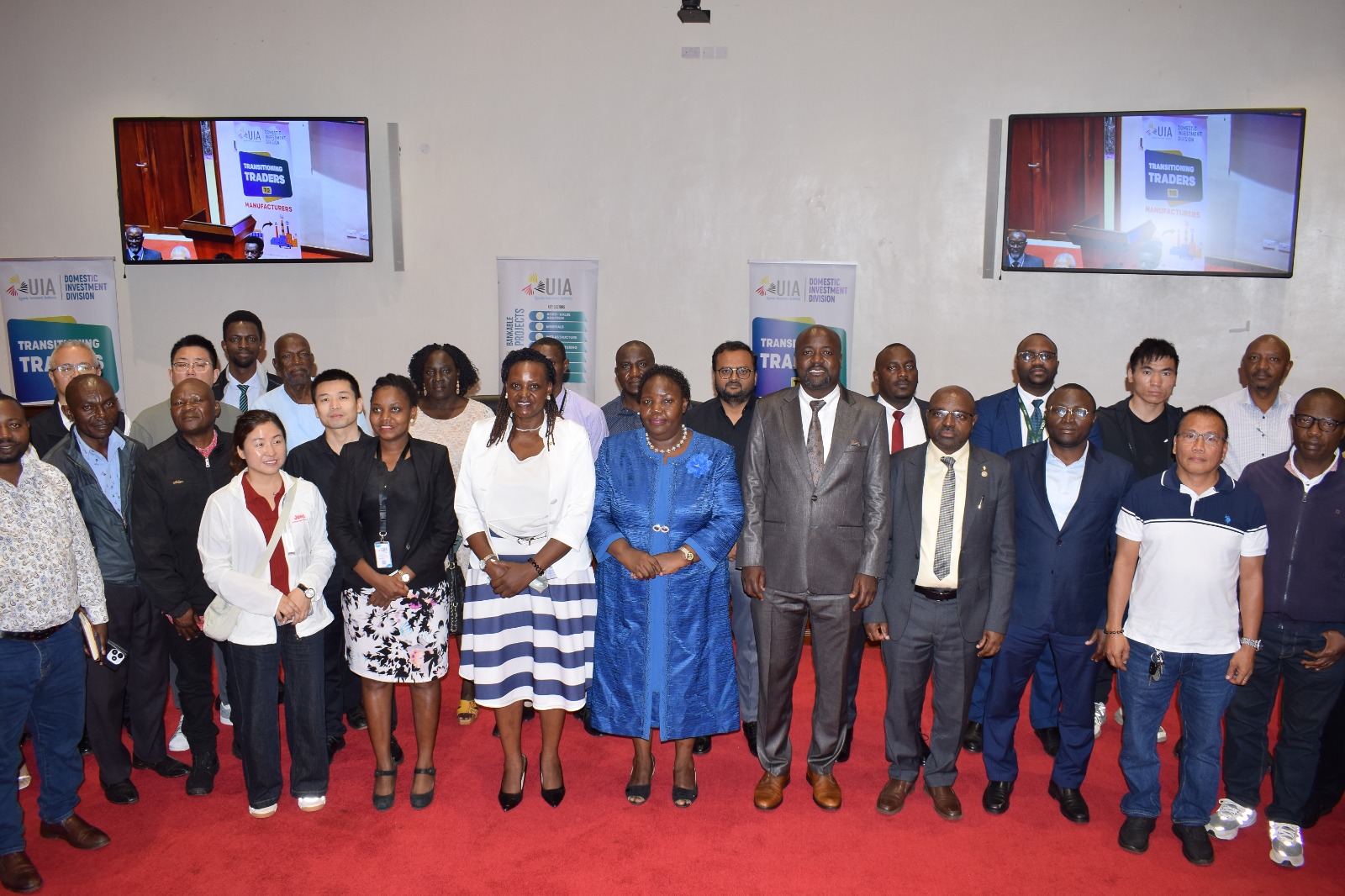
    During a high-level engagement held at the Uganda Investment Authority (UIA) One-Stop Centre, energy sector players and investors forged a strategic alliance aimed at strengthening confidence in Uganda’s electricity supply.

    The meeting, convened by the Uganda Investment Authority (UIA), brought together key institutions including the Ministry of Energy and Mineral Development (MEMD), Uganda Electricity Generation Company Limited (UEGCL), Uganda Electricity Transmission Company Limited (UETCL), and Uganda Electricity Distribution Company Limited (UEDCL).

    Together, they outlined a coordinated infrastructure roadmap designed to move Uganda beyond basic electricity access to ensuring consistent reliability for industrial users.

    Energy as the Engine of Growth

    Speaking at the meeting, Eng. Ziria Tibalwa Waako, Chief Executive Officer of the Electricity Regulatory Authority (ERA), underscored the central role of energy in Uganda’s economic agenda.

    “Energy is the heartbeat of our industrialisation drive. Manufacturers consume 70% of our total electricity demand, making them our most valued partners. Your success is our success,” she said.

    She reassured investors of ERA’s commitment to maintaining a predictable regulatory environment that safeguards investments while protecting consumers.

    Shift to Quality and Reliability

    Acknowledging past inefficiencies, Tibalwa emphasized that the sector is prioritising service quality and reliability.

    “We recognise that service delivery has not always met expectations. However, we are taking deliberate steps to improve. Our approach is anchored on continuous improvement,” she noted.

    She cited key milestones, including the operational stability of Namanve transmission substations and the successful integration of power from the Karuma Hydropower Plant into the national grid—moves aimed at meeting rising demand driven by initiatives such as the Parish Development Model (PDM) and Uganda’s Tenfold Growth Strategy.

    Predictability Key for Investors

    Mr. Peter Muramira, UIA Deputy Executive Director for Business Development Services, stressed that beyond affordability, investors prioritise stability and predictability.

    “Investors are looking for certainty. Ensuring that ‘Made in Uganda’ products remain competitive starts with affordable and reliable electricity,” Muramira said.

    He added that UIA stands ready to leverage its convening power to swiftly resolve any investment bottlenecks.

    Growing Investor Confidence

    Participants expressed satisfaction with the transparency demonstrated by sector leaders and the clarity of the government’s energy roadmap.

    The meeting concluded on a high note, with renewed investor confidence in Uganda’s ability to provide dependable electricity to power industrial growth.

    “The Ugandan energy sector has the will—and where there is will, there is a way. We are committed to powering your ambitions and Uganda’s future,” Tibalwa affirmed.

    Do you have a story in your community or an opinion to share with us: Email us at Submit an Article

  • CAF flags major gaps as Uganda races to ready stadiums for AFCON 2027

    Uganda is facing a tight race against time to get its stadiums ready for the 2027 Africa Cup of Nations, after the Confederation of African Football (CAF) flagged serious shortcomings in both infrastructure and operations.

    A recent CAF inspection reveals that, as of February 2026, none of the country’s proposed venues meets the required Category 4 standard—the level needed to host AFCON matches. This puts immediate pressure on authorities to speed up upgrades and fix critical gaps.

    The spotlight is firmly on two key venues: Hoima City Stadium and Mandela National Stadium in Namboole.

    Hoima City Stadium may be structurally complete, but CAF says it is far from ready to host a major tournament. Inspectors identified poor crowd control systems, with no proper separation between VIPs, media and ordinary fans. The dressing rooms fall below standard, media facilities are inadequate, and there is limited working space for match operations. Even the positioning of team benches was criticised for blocking spectators’ views.

    CAF emphasises that the stadium now needs major operational redesign—not just construction—to meet international requirements.

    The situation at Mandela National Stadium is even more demanding. CAF has called for significant reconstruction works, including partial demolition of the West Stand, expansion of key sections and a full roof overhaul. However, the proposed 15-month timeline for these works is already out of sync with AFCON 2027 deadlines, raising concerns about whether the venue will be ready in time.

    With deadlines looming, CAF has set August 2026 as a decisive checkpoint to evaluate Uganda’s progress.

    By then, Hoima is expected to have resolved its crowd flow issues, upgraded dressing rooms, improved media areas, relocated the mixed zone and fixed visibility problems in the stands.

    For Namboole, officials must present a clear and revised upgrade plan, identify contractors and begin visible construction works. Improvements to hospitality sections and media infrastructure will also be required.

    CAF will not only assess match venues but also training facilities. At least 80 percent of designated training sites must be complete, with proper lighting, functional dressing rooms and fully equipped technical areas.

    Beyond the stadiums, Uganda still has major logistical hurdles to clear. Authorities must demonstrate that Hoima Airport can handle international traffic, ensure there is enough high-end hotel accommodation—including a minimum of five five-star hotels—and show progress on the Kampala–Hoima road network.

    Medical preparedness is another key requirement, with emergency response systems and referral hospitals expected to be fully operational.

    CAF says detailed technical reports have already been shared, and the next few months will be critical in determining whether Uganda can meet the standards needed to host the continental tournament.

About UGNEWS24

UGNEWS24 is a Uganda local news service, a product of SOLAVIA GROUP LIMITED, Reg. No. 80048169153974.

Registered office

Plot 2335, Buwambo-Katadde-Najjo Road,
Nansana Municipality, Wakiso District, Uganda
P.O. Box 214231, Kampala

© 2026 SOLAVIA GROUP LIMITED. All rights reserved.