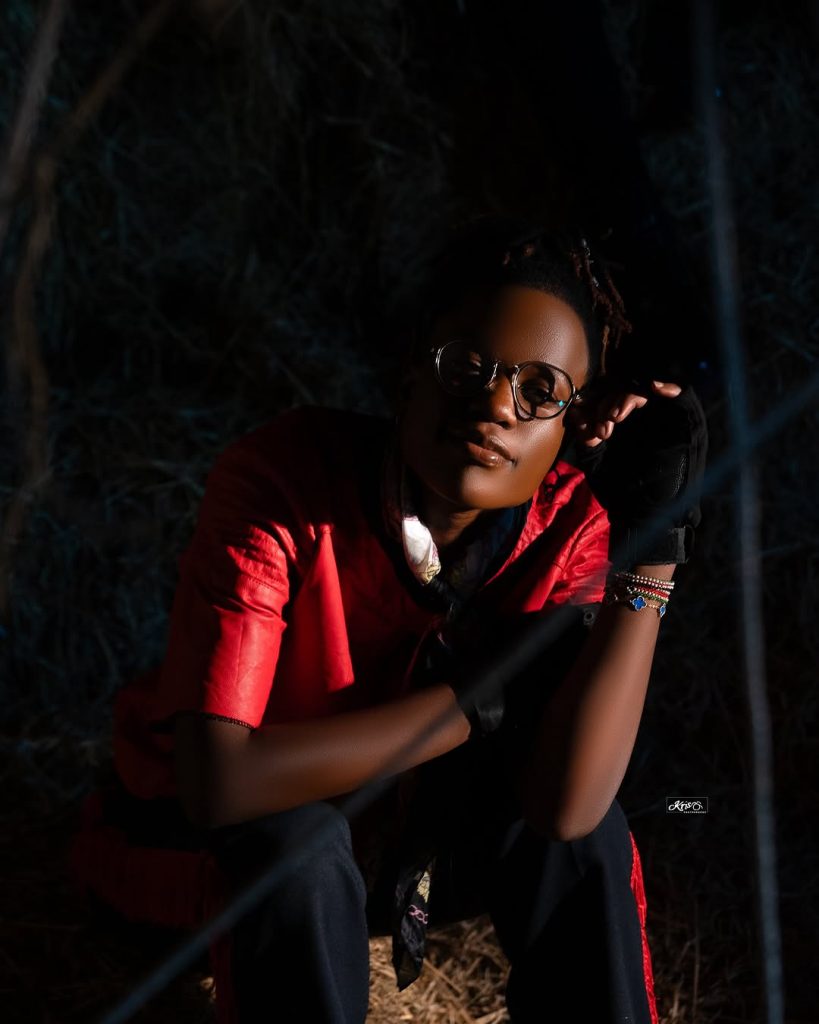
In their new song titled ‘Siwabula’, talented duo Kataleya and Kandle continue to showcase their versatility as they tap into a different style of music.
3 months ago, Kataleya and Kandle showcased resilience and trust in their craft when they dropped their Amateur music project after finding new management.
They now continue to feed their fans with new stuff, with a new song, ‘Siwabula’. The new song, which was produced by Brian Beats/Ope, suits the local music market perfectly.
MP Bisaso Urges Prioritisation of Kassanda Electrification, Especially Mining Areas
KASSANDA – Kassanda County South Member of Parliament Abdul Bisaso has pressed the Ministry of Energy and Mineral Development to urgently fast-track rural electrification in his constituency, warning that severe power deficits are choking economic growth in key mining hubs.
Raising the matter on the floor of Parliament during a debate on the government’s rural electrification roadmap, the National Resistance Movement (NRM) lawmaker expressed dismay that critical energy infrastructure remains dormant while vast swathes of the district sit in darkness.
Bisaso highlighted a glaring instance of stalled government infrastructure: a long-completed power transmission line connecting Kassanda to Karwana that has gathered dust for nearly a decade without being energized.
“Whereas many places in Kassanda South don’t have power, there is already a line built by the government from Kassanda to Karwana,” Bisaso told the House. “It has sat uncommissioned for the last seven years and beyond.”
Beyond general domestic power needs, the legislator underscored the immense industrial importance of Kassanda’s natural resources. The district hosts some of Uganda’s largest mineral deposits and active mining grounds, yet artisanal and commercial operators continue to face power constraints that limit productivity and suppress output.
Connecting the mining sector to the national grid, Bisaso argued, would yield direct fiscal dividends for the central government through expanded industrialization and enhanced tax revenues.
“Power is essential in mining operations, and mining generates substantial revenue for the government,” Bisaso emphasized. “I request that the Minister prioritises the mining zones of Kassanda so that the government can earn more revenue.”
Bisaso’s appeal came during the 18th sitting of the 1st meeting of the 1st session of the 12th Parliament of Uganda, chaired by the Speaker.
Rural electrification remains a core pillar of Uganda’s national development strategy aimed at accelerating agro-processing, industrial value addition, and local job creation. However, project execution delays and uncommissioned transmission lines continue to draw sharp criticism from rural legislators who argue that incomplete grid extensions leave high-potential economic hubs stranded without reliable energy.
As Parliament pushes for accountability in the energy sector, Kassanda leaders remain firm: commissioning the Karwana power line and extending grid access to mineral-rich areas must move from ministerial statements to immediate execution on the ground.
Do you have a story in your community or an opinion to share with us: Email us at Submit an Article
Kampala Parents School pupil Bracha Anganire Barnabas has been crowned Mini Miss Universe 2026 after representing Uganda at the international children’s pageant.
Barnabas earned the opportunity to compete internationally after winning the Little Miss Universe Uganda 2026 competition through a public voting contest.
According to results published by Africa Votes, which hosted the Ugandan voting contest, Barnabas received 23,193 votes, accounting for 18.34 per cent of the 126,490 votes cast.
She finished 1,343 votes ahead of the runner-up, Nasali Melisa, who secured 21,850 votes, while Ayebare Shiloh came third with 20,232 votes.
Barnabas emerged victorious from a field of 30 contestants who participated in the Ugandan competition, which ran from 7 May to 23 May, with the grand finale held on 23 May.
Her international victory came after she competed against young contestants representing different countries.
Pageant news platform Pageant Trend announced Barnabas as the winner of the Mini Miss Universe 2026 title and identified her as Uganda’s representative.
The Little Miss Universe initiative focuses on identifying and mentoring young girls, helping them build confidence and providing platforms to showcase their talents.
This is to make it easier and more affordable to experience Vinka’s highly anticipated live concert together.
Known for her electrifying performances and hits including Malaika, Chips Na Ketchup and Bailando, Vinka is set to deliver an unforgettable night of music, dance and entertainment.
Concert Details:
Date: Friday, August 21, 2026
Venue: Lugogo Cricket Oval
Gates Open: 3:00 PM
Get your tickets via *165*20# or momoticketing.com
It is a dark and painful time for comedian Shawa, real name Shaufaruh Ssali, following the heartbreaking loss of his beloved sister.
Shawa shared the devastating news with his followers on TikTok, posting a tribute to his late sister with the emotional caption: “We shall forever miss you, my beloved sister.”
The comedian did not disclose details about the cause of her death or provide information regarding funeral arrangements.
News of the loss has attracted an outpouring of sympathy from Shawa’s large following, with fans flooding the comment section with messages of condolence and comfort as he and his family come to terms with the heartbreaking loss.
KAMPALA — Justice and Constitutional Affairs Minister Norbert Mao has thrown his weight behind the Uganda Registration Services Bureau (URSB), insisting that the government agency’s impressive record of performance should not be overshadowed by the ongoing investigations involving some of its top officials.
In a strongly worded statement issued on Tuesday, August 18, 2026, Mao said the URSB remains one of Uganda’s best-performing government agencies and a regional benchmark, while assuring its Board and Management that the institution must continue operating normally as investigations proceed.
The Minister also revealed that he will seek an opportunity for the URSB Board and Management to meet President Yoweri Museveni and present their side of the story, particularly because some of the decisions taken against senior officials were made before the Board and Management had been given an opportunity to be heard.
The move sets the stage for a potentially significant engagement between the President and the leadership of an institution that has been at the centre of Uganda’s business registration, intellectual property, company regulation and anti-money laundering systems.
Mao said his meeting with the URSB Board and Top Management on August 18 was aimed at briefing them about measures he had taken following a directive from President Museveni contained in a July 24, 2026 letter.
But rather than allowing the controversy to paralyse the institution, Mao said the meeting resolved that the Board and Management should cooperate fully with investigators while simultaneously protecting institutional stability, boosting staff morale and ensuring that thousands of Ugandans who depend on URSB services are not inconvenienced.
“I assured the meeting that, as the line Minister, I will ensure that we strengthen the internal governance structures of the URSB so that lawful decisions of the Board are not undermined or disrupted,” Mao said.
The Minister’s intervention comes after five senior URSB officials were sent on mandatory leave to facilitate ongoing investigations.
Those affected are Registrar General Mercy K. Kainobwisho, Deputy Registrar General Alex Anganya, Commissioner ICT and Innovation Arthur Kwesiga, Commissioner Registration Services Gilbert Agaba and Assistant Commissioner Registration Services Walid Kule.
Mao stressed that the decision was taken in line with the President’s directive and after consultation with the URSB Board Chairman.
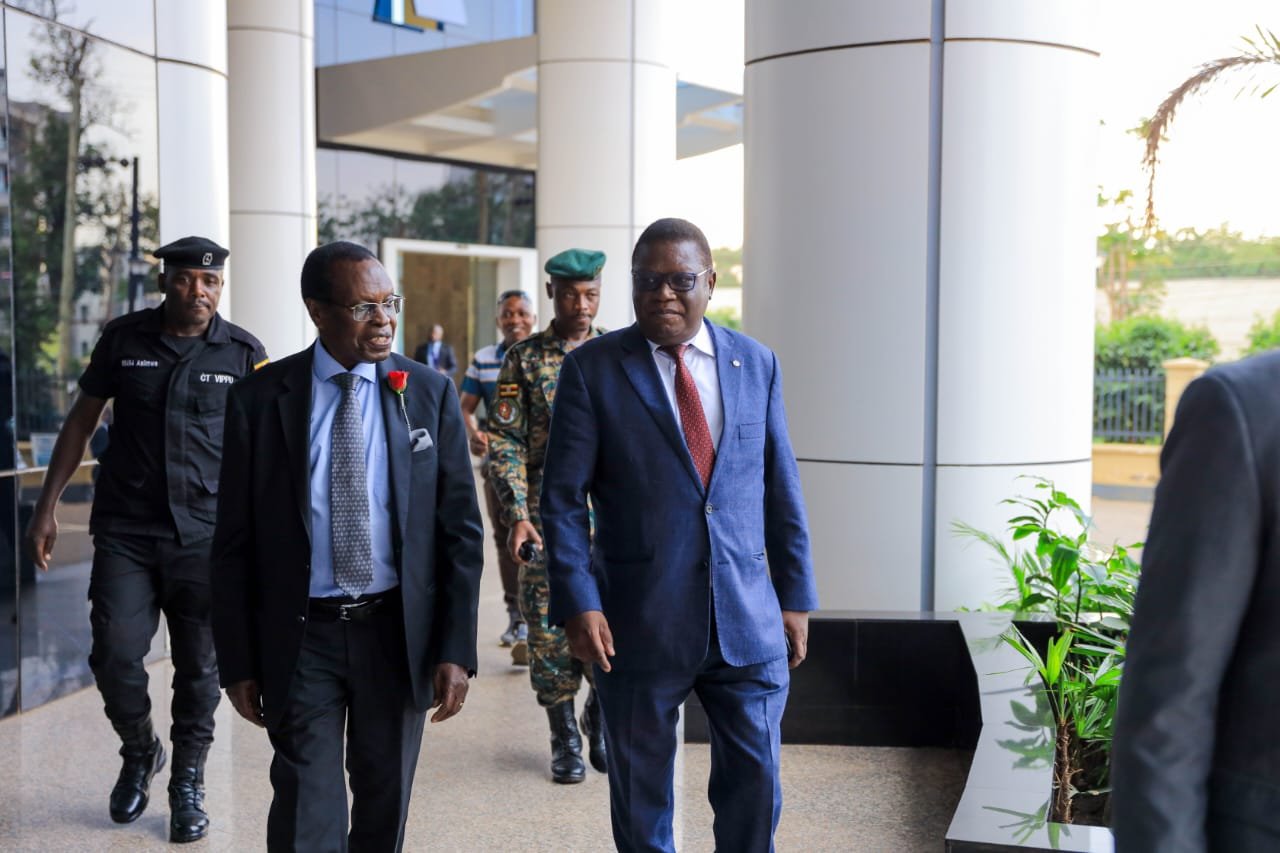
Mao being welcomed by URSB board chair Amb Butagira at the Agency’s headquarters on Tuesday
He also made it clear that the mandatory leave is intended to protect the integrity of the investigations and will remain in force until the investigations are completed.
The Minister, however, struck a positive tone about the affected institution and its officials, emphasising that URSB’s achievements over the years cannot simply be wished away because of the current developments.
According to Mao, URSB has established itself as one of the best-performing government agencies in Uganda and across the region, with its systems attracting interest from other countries seeking to replicate its successes.
He pointed to a four-day benchmarking visit by then Malawi Minister of Justice Titus Edward Songiso Mvalo in April 2025 as evidence of the agency’s regional standing.
The Malawi delegation visited URSB to study its systems and operations, while Uganda’s continued engagement with Malawi has now created an opportunity for URSB to export its expertise to the neighbouring country.
Mao said he held a bilateral meeting in July this year with Malawi’s current Minister of Justice and Constitutional Affairs, Charles Mhango, on the sidelines of the 68th Series of Meetings of the Assemblies of the Member States of the World Intellectual Property Organization in Geneva, Switzerland.
Following that engagement, URSB is expected to send a team to Malawi to support the growth of the Companies, Registrations and Intellectual Property Centre, which was established after the earlier benchmarking visit and officially launched in June this year.
For Mao, such developments demonstrate the level of confidence that other countries have placed in URSB’s systems and expertise.
The Minister also highlighted the agency’s recent achievement of the ISO 9001:2015 Quality Management System certification in March 2026.
The certification, he said, recognised URSB’s adherence to high standards in transparent public service delivery, efficiency and client satisfaction.
Under the leadership and technical teams currently facing the investigations, URSB has worked to make business registration faster and more efficient while improving the experience of clients seeking government services.
The agency has also been central to Uganda’s efforts to strengthen intellectual property protection and ensure that creatives benefit fairly from their work.
Mao revealed that the Copyright Management System, developed following a Presidential directive, is soon expected to be launched.
The newly established Copyright Department at URSB will be tasked with strengthening enforcement against infringement of intellectual property rights and helping Uganda’s creative industry get better value from its work.
But perhaps one of URSB’s biggest contributions has been in Uganda’s battle to strengthen its anti-money laundering framework.
Mao recalled that when Uganda was placed on the Financial Action Task Force grey list because of weaknesses in its anti-money laundering systems, URSB was at the forefront of efforts to address the shortcomings.
The agency worked with other government institutions to update laws relating to companies and partnerships and ensured that beneficial ownership information could be accessed and monitored through the Financial Intelligence Authority.
Those efforts contributed to Uganda being removed from the FATF grey list on February 23, 2024.
Mao warned, however, that leaving the grey list does not mean the work is over.
Uganda must continue strengthening its compliance systems, particularly with a regional peer review by the Eastern and Southern Africa Anti-Money Laundering Group expected in the future.
The Minister said URSB therefore remains a critical institution in protecting the integrity of Uganda’s corporate sector and financial system.
He noted that the services provided by URSB are directly linked to business activity, industrialisation and Uganda’s wider socio-economic transformation.
It is against this background that Mao raised concerns about the importance of allowing statutory bodies and their Boards to independently exercise their oversight and disciplinary responsibilities in accordance with established procedures.
He argued that good governance requires institutional processes to be respected and that appeals should ordinarily be considered after the process upon which an appeal is based has been completed.
The Minister’s position appears aimed at protecting both institutional governance and the integrity of URSB as investigations continue.
Mao said he remains confident that URSB’s record of performance and impact will ultimately speak for itself.
“I’m confident that the URSB’s record of performance and impact will ultimately exonerate it as an institution,” he said.
Mao being welcomed by URSB board chair Amb Butagira at the Agency’s headquarters on Tuesday
He nevertheless acknowledged the reputational risks that the current controversy could create for the agency, particularly because decisions affecting the Board and Management were taken without first giving them an opportunity to present their side of the story.
It is this concern that has prompted the Minister to seek a meeting between the URSB leadership and President Museveni.
Mao said the proposed meeting would give the Board and Management an opportunity to tell their side of the story directly to the President and address any reputational risks facing the institution.
The Minister’s approach also sends a reassuring message to URSB staff and clients who may be concerned that the controversy could disrupt the agency’s operations.
He stressed that URSB must continue performing its statutory duties even as the investigations proceed.
The Board and Management have consequently been directed to fully cooperate with investigators, preserve and avail all institutional records and support all competent state authorities involved in the investigations.
At the same time, they have been instructed to ensure uninterrupted delivery of URSB’s statutory services.
For an institution responsible for business registration, intellectual property, company records and other critical services, the message is clear: investigations will proceed, but government services must not grind to a halt.
The developments also put the spotlight on the delicate balance between accountability and institutional stability, particularly in a government agency whose systems are relied upon by businesses, investors, creatives and other Ugandans every day.
Mao’s statement therefore seeks to draw a distinction between the ongoing investigations involving individual officials and the broader performance and reputation of URSB as an institution.
Rather than treating the investigations as a verdict, the Minister has emphasised cooperation, due process, institutional continuity and the opportunity for the affected leadership to be heard.
As the probe continues, URSB’s Board and Management are expected to remain available to investigators while keeping the agency’s systems running.
And with Mao preparing to seek an audience with President Museveni, the leadership of URSB could soon have an opportunity to place its account of events directly before the Head of State.
For now, the Minister has backed the institution’s record, urged its officials to cooperate with investigators and promised to work to strengthen its internal governance structures.
The message from the Justice Ministry is therefore one of accountability without institutional paralysis — and investigation without prematurely writing off an agency that has earned regional recognition for its work.
QUESTIONS OVER ATTORNEY GENERAL’S ROUTE TO STATE HOUSE
Mao’s August 18 statement now provides a crucial missing piece of the chronology.
The Minister says that after President Museveni’s July 24 letter, he convened a meeting of the Senior Top Management of the Ministry on August 12.
Present were the Attorney General, Permanent Secretary, Solicitor General and Deputy Solicitor General.
Mao says the meeting discussed the URSB matter and the circumstances under which the Attorney General had escalated it to the President.
The Attorney General explained how the matter had come to his attention from a senior URSB staff member and how he subsequently escalated it to State House.
But Mao says he only received the President’s July 24 letter on August 5.
This chronology has left questions within administrative and governance circles.
If URSB falls under the Ministry of Justice and Constitutional Affairs, and Mao is the responsible political head, why was the Attorney General able to escalate the matter to the President before first consulting or briefing the Minister?
Why was the Minister not part of the initial decision to take the dispute to State House?
Was the normal chain of communication within the Justice Ministry followed?
And why was the President not given the benefit of the Ministry’s institutional position before the matter was escalated?
These questions do not undermine the legitimacy of the investigations.
Nor do they suggest that allegations should be ignored.
They go to a much narrower but important issue of institutional protocol and coordination.
Mao himself has now made clear that the ministry supports cooperation with investigators.
But he also believes that the URSB Board and Management deserve an opportunity to tell their side of the story to the President.
THE AGABA STORY BEHIND THE STORM
At the centre of the original dispute is Gilbert Agaba, the Commissioner for Business Registration, whose relationship with URSB management had deteriorated over a period of time before his allegations eventually reached the Attorney General.
Documents and internal briefs seen by Red Pepper indicate that the current crisis did not begin with the presidential directive.
It began as an internal management dispute involving questions about Agaba’s leadership, supervision, communication, teamwork and compliance with management decisions.
According to an internal brief, URSB management had received repeated complaints concerning Agaba’s leadership and working relationships within the Business Registration Department.
The concerns reportedly involved departmental coordination, staff relations, supervision and service delivery.
The issues were also said to have roots in an earlier period when Agaba served as Commissioner for Intellectual Property, where similar concerns about teamwork and cohesion had reportedly been raised.
His subsequent posting to Business Registration was therefore viewed as an opportunity to strengthen leadership within the department.
However, according to management, the situation did not improve.
Among the concerns raised were alleged prolonged absences from duty, inadequate availability to provide leadership to the department, weak supervision and coordination of staff and failure to convene regular departmental meetings.
There were also complaints concerning communication between Agaba and his immediate subordinates.
Management further accused him of failing to implement and report back on assigned management decisions.
The cumulative effect, according to the internal brief, was growing concern about teamwork, cohesion, planning, accountability and service delivery.
Then came the allegation that would eventually become central to the disciplinary process — insubordination against institutional leadership.
MANAGEMENT FIRST TRIED TO FIX IT
Importantly, the dispute was not immediately sent outside URSB.
According to management’s account, several attempts were made internally to resolve the situation.
The Deputy Registrar General responsible for Registries and the Deputy Registrar General responsible for Finance and Administration reportedly intervened.
Agaba was counselled and guided on improving communication, supervision and his working relationship with staff.
Practical measures were proposed to restore normal operations within the department.
But management says the interventions did not resolve the problems.
The Registrar General, Mercy Kainobwisho, subsequently intervened personally.
A meeting was convened in an effort to resolve the impasse.
Agaba was directed to engage his departmental team and agree on clear working arrangements covering supervision, communication, accountability and service delivery.
He was also required to submit the agreed arrangements within a specified period.
According to management, this was not done.
The corrective measures were allegedly not implemented, forcing the matter into the formal disciplinary process under the URSB Human Resource Manual and applicable administrative procedures.
That disciplinary process would later become the launching pad for a much bigger battle.
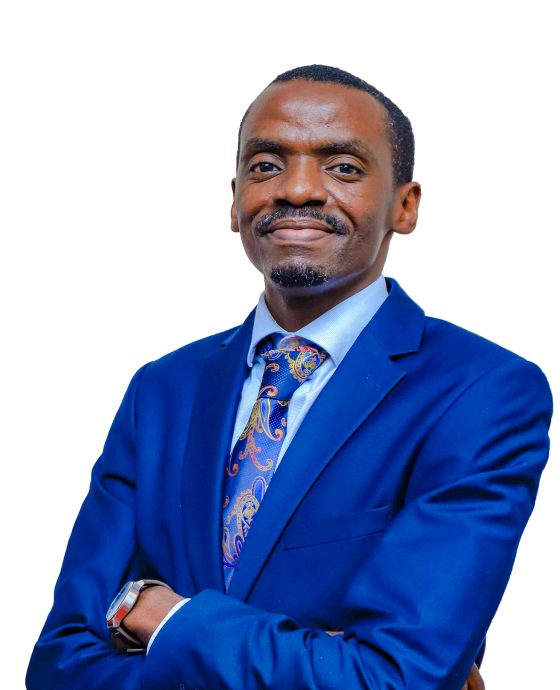
Gilbert Agaba, the Commissioner for Business Registration
AGABA TAKES THE FIGHT OUTSIDE
As the internal dispute continued, Agaba raised allegations against the institution’s management.
He reportedly first brought the matter to the attention of URSB Board Chairman Ambassador Francis Butagira.
He later referred substantially similar allegations to external institutions, including the Economic Crimes Division of the Uganda Police Force and the Office of the Attorney General.
The allegations included claims of criminal conduct, corruption and misuse of institutional resources.
The URSB Board responded by constituting an Investigation Committee to examine the matter.
The committee was expected to consider both sides — Agaba’s allegations and the management concerns regarding his conduct, leadership and governance.
But before the internal processes could bring the matter to a conclusion, the dispute moved into much higher territory.
THE BOARD CONFRONTS AGABA
On June 8, 2026, Agaba was invited to respond to allegations relating to leadership and governance challenges within the Business Registration Department.
The matter subsequently reached an extraordinary meeting of the URSB Board on July 15.
The Board made findings that were later communicated to Agaba through a warning letter.
Among the findings was that there was inadequate teamwork and cohesion within the Business Registration Department.
The Board pointed to the entire 2025/26 financial year, during which the department reportedly did not hold a departmental meeting or retreat for planning and performance evaluation.
The Board attributed the situation largely to what it considered inadequate leadership, teamwork and cohesion.
It also noted that similar concerns had previously arisen during Agaba’s tenure in the Intellectual Property Department.
Another finding was that Agaba had allegedly failed to implement and report back on management decisions assigned to him.
The Board treated that conduct as insubordination under Section 7.2.4(b)(viii) of the URSB Human Resource Manual.
But another allegation raised the temperature considerably.
According to the Board’s findings, Agaba allegedly referred to the Registrar General as a “criminal” and accused the Registrar General of being in charge of a “criminal enterprise” within URSB.
The Board treated the alleged language as contrary to the same provisions of the Human Resource Manual.
NO FIRING — A CHANCE TO REFORM
Despite the findings, the Board did not immediately recommend Agaba’s dismissal.
Instead, it opted for corrective and progressive measures.
Agaba was directed to submit a written apology to management within five days of receiving the warning.
He was also placed on a proposed 12-month Performance Improvement Plan, under the direct supervision of the Deputy Registrar General responsible for Finance and Administration.
The objective was to improve his leadership and governance approach while restoring professional working relations.
In other words, the Board’s action was presented as an opportunity for correction rather than an immediate termination.
But Agaba rejected the findings and sanctions.
Instead, he pursued the allegations he had raised against the institution through external channels.
That is when the dispute took a dramatic turn.
ENTER ATTORNEY GENERAL MAYANJA
Agaba’s complaints eventually landed before Attorney General Dr Sam Mayanja.
Mayanja then escalated the matter to President Museveni.
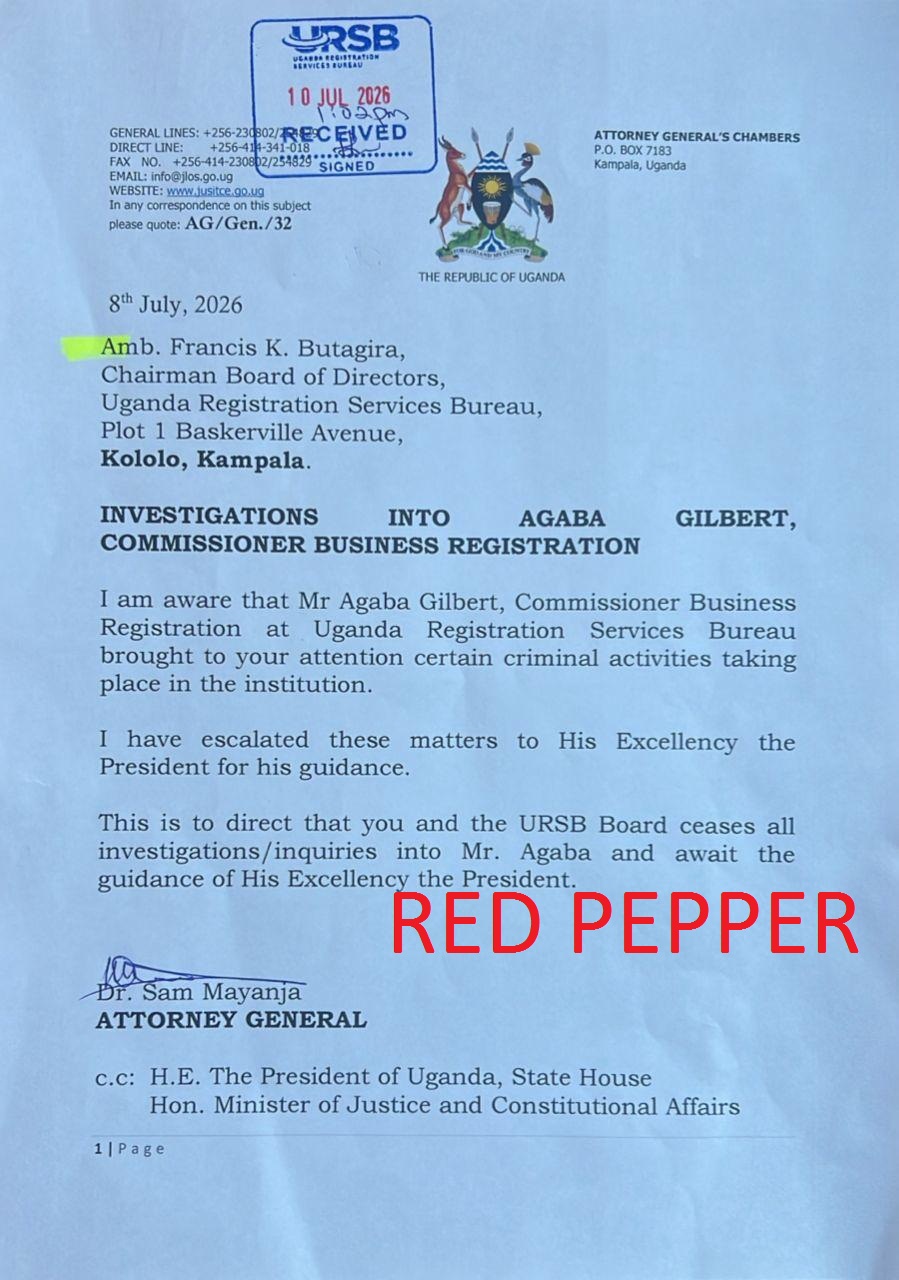
A July 8, 2026 letter from the Attorney General to URSB Board Chairman Ambassador Francis Butagira provides an important link in the chain of events.
The letter, titled “Investigations into Agaba Gilbert, Commissioner Business Registration,” acknowledged that Agaba had brought to the Attorney General’s attention allegations of criminal activities allegedly taking place at URSB.
Mayanja said he had escalated the matters to President Museveni for guidance.
He subsequently directed the URSB Board to stop its own investigations and inquiries into Agaba and await guidance from the President.
The instruction stated:
“This is to direct that you and the URSB Board ceases all investigations/inquiries into Mr. Agaba and await the guidance of His Excellency the President.”
The letter was copied to President Museveni and Minister Norbert Mao.
And this is where the protocol question becomes unavoidable.
WHY WAS MAO NOT CONSULTED FIRST?
Mao’s August 18 statement now provides a crucial missing piece of the chronology.
The Minister says that after President Museveni’s July 24 letter, he convened a meeting of the Senior Top Management of the Ministry on August 12.
Present were the Attorney General, Permanent Secretary, Solicitor General and Deputy Solicitor General.
Mao says the meeting discussed the URSB matter and the circumstances under which the Attorney General had escalated it to the President.
The Attorney General explained how the matter had come to his attention from a senior URSB staff member and how he subsequently escalated it to State House.
But Mao says he only received the President’s July 24 letter on August 5.
This chronology has left questions within administrative and governance circles.
If URSB falls under the Ministry of Justice and Constitutional Affairs, and Mao is the responsible political head, why was the Attorney General able to escalate the matter to the President before first consulting or briefing the Minister?
Why was the Minister not part of the initial decision to take the dispute to State House?
Was the normal chain of communication within the Justice Ministry followed?
And was the President given the benefit of the Ministry’s institutional position before the matter was escalated?
These questions do not undermine the legitimacy of the investigations.
Nor do they suggest that allegations should be ignored.
They go to a much narrower but important issue of institutional protocol and coordination.
Mao himself has now made clear that the ministry supports cooperation with investigators.
But he also believes that the URSB Board and Management deserve an opportunity to tell their side of the story.
M7’S DIRECTIVE WIDENS THE BATTLE
On July 24, President Museveni issued a directive to Mao concerning allegations of embezzlement of government funds, abuse of office, maladministration, money laundering and institutional mismanagement at URSB.
The President directed that senior officials step aside pending investigations.
The officials affected include Registrar General Mercy Kainobwisho, Deputy Registrar General Alex Anganya, Commissioner ICT and Innovation Arthur Kwesiga, Commissioner Registration Services Gilbert Agaba and Assistant Commissioner Registration Services Walid Kule.
The order represented a dramatic widening of the original dispute.
What began with allegations involving one Commissioner had now become a broader investigation touching the leadership and operations of the Bureau.
And importantly, the allegations remain allegations under investigation, not findings of guilt.
GOT A HOT STORY? LET US KNOW!
Got breaking news, explosive secrets, or hard evidence?
Uganda’s higher education system is quietly heading into one of its biggest overhauls in years, and the National Council for Higher Education (NCHE) has just started the real work of pulling it off.
The Council has begun assessing about 700 university programmes that have been reworked to fit the new competence-based education and training (CBET) system, ahead of a planned rollout for the 2027/2028 academic year. Of those 700, 322 (46 percent) fall under STEM while 378 (54 percent) are humanities programmes, out of more than 4,000 programmes currently offered across Uganda’s university system, meaning this first batch is still a small slice of what eventually needs reviewing.
ADVERTISEMENT
NCHE has put together a team of 50 assessors, made up of senior lecturers and professors, to scrutinise the submissions. Deputy Executive Director Dr Alex Mugisha Kagume said institutions have already received guidelines on how to realign their programmes and have started submitting revised versions for review. The push traces back to a directive from First Lady and Education Minister Janet Museveni last year, requiring all higher education institutions to fully switch to the competence-based curriculum approach.
Here’s the part students should pay attention to: under CBET, universities must prove their class sizes, equipment, facilities and staffing can actually support the number of students they want to admit onto a programme. Dr Kagume was clear this isn’t a blanket cut to admissions, but where an institution’s resources fall short, the numbers it’s allowed to enrol on that specific programme could shrink. Programmes won’t need to look identical across universities either, as long as each one can demonstrate it produces the required competencies.
Internships are also getting an overhaul. Where many programmes currently send students out once, CBET will require two internship placements during a degree, alongside a bigger shift toward practical, hands-on learning over straight lecture-hall content. Dr Vincent Ssembatya, NCHE’s director of Quality Assurance and Accreditation, said learning under the new system can happen well beyond a classroom, in industries, on farms, or in facilities institutions set up themselves, with technicians and industry professionals brought in to help train students directly.
Professional programmes like medicine, pharmacy and engineering will be assessed jointly with their respective professional bodies, and NCHE says it will keep monitoring institutions even after accreditation to make sure facilities and staffing don’t quietly slide backward.
With 60 universities currently accredited and roughly 4,000 programmes still to work through, NCHE admits it isn’t yet certain every institution will be fully compliant before the 2027/2028 intake. For prospective students eyeing a 2027 admission, the programme and university you pick this cycle might look a little different by the time you actually enrol.
Nandor Love is not asking for a man with deep pockets.
The Ugandan singer, whose real name is Nantume Dorcus Tendo, says money does not matter much to her because people can work for it and God provides the blessings.
There is, however, one small condition.
Money is not important because God is the one who blesses us with it. We just look for it and work to earn it. It is not that important, but he should not be very broke.
So, while she is not chasing wealth, Nandor Love would still like a partner who can take care of himself financially.
She is just as relaxed about physical appearance.
Height and skin complexion do not feature on her checklist, and when asked what kind of man she would choose, she had a simple answer:
Some artists entertain us. Some educate us. Some challenge us to think differently. And then there are those rare artists who become part of the history of their art form.
Alex Mukulu was one of those rare artists.
Uganda has lost a giant — a legendary artiste, writer, director, actor, broadcaster, mentor and cultural thinker whose contribution to Ugandan theatre, radio and popular culture will remain with us for generations.
Alex was a master of the abstract and the authentic. His art was never merely about telling a story. It was about making audiences look deeper, question what they saw and discover meaning beyond the obvious. He understood the power of symbolism and used it with extraordinary precision.
His work could be humorous, painful, musical, political, philosophical and deeply Ugandan — sometimes all at once.
I first encountered Alex when I accompanied my sister to a rehearsal around Mengo. What I saw was unlike anything I had expected. There were no people simply “playing”. There were military drills, commands, discipline and an extraordinary commitment to the craft. There was creative dance, music and serious drama.
The group was preparing for a tour with Impact International, which would take them to Vienna, Austria, Italy and other parts of Europe. It was then that I began to understand the scale of Alex’s artistic vision.
One performance, in particular, has stayed with me. It featured an abstract representation of a leader whose ears became progressively smaller as he gained power. The symbolism was striking. It was impossible not to think about how leaders can become increasingly disconnected from the voices of the people they govern.
The image has remained with me for years.
I would later encounter Alex in different settings — including during the writing of a concept for Vision Group at his home — and hear stories about his work during Cease Fire and about moments when his intentions as an artist were misunderstood.
If there was one thing you could say about Alex, it was that he knew exactly what he wanted to say and how to say it. He was not afraid to confront bad habits, social contradictions or uncomfortable truths. He understood that an artist’s responsibility is sometimes to hold up a mirror to society, even when society does not like the reflection.
Through works such as Wounds of Africa, 30 Years of Bananas, Guest of Honour, Radio Mambo Bado and Samson and Delilah, Alex demonstrated what Ugandan theatre could become when creativity was married to discipline, originality and a deep understanding of people.
His plays were also alive with music. Music was not simply an accompaniment to his stories; it was part of the language through which he communicated. Even in his early days, when he formed a band, one could see the breadth of his artistic imagination. He was an artiste who refused to be confined to a single box.
But Alex Mukulu’s artistry did not end on the stage.
He also found a powerful voice on radio, where many Ugandans came to know another side of his genius. As Kalekyezi on Simba FM, he brought a distinctive personality and authenticity to Ugandan football commentary.
He did not simply commentate on football. He gave it colour, character and theatre. Through his voice, the game became an experience.
Perhaps, however, one of Alex’s greatest legacies was not only what he created, but the people he shaped.
He was known to be strict. Very strict. But his strictness came from conviction. He demanded excellence because he believed artists could do better. He mentored and influenced generations of performers, among them accomplished artistes such as Phillip Luswata and Eron Ntuulo Matovu.
For many young artists, Alex was not always the easiest teacher. But he was the kind of teacher whose lessons stayed with you.
He believed in discipline. He believed in authenticity. He believed in preparation. Above all, he believed that art mattered.
What makes his legacy even more remarkable is that, despite the stature he had earned over decades, he understood that art must create space for the next generation.
We saw this in his willingness to share the stage with younger people, including during his appearances on Bukedde TV, particularly on Yolesa Ekitone alongside Diana Nabatanzi, and more recently in Cease Fire.
He could have remained distant, protected by the reputation he had built over decades. Instead, he continued to engage, perform and create alongside younger artistes.
That is the mark of a true master.
A master does not only leave behind great works. A master leaves behind people.
Alex Mukulu leaves behind ideas, performances, characters, songs, laughter, lessons, arguments, memories and, most importantly, an artistic language that many Ugandan performers will continue to speak.
His work reminded us that theatre can be entertaining without losing its depth; that comedy can carry serious truths; that symbolism can speak where ordinary words fail; and that authenticity is perhaps the most powerful tool an artist can possess.
Today, we mourn the man. But we also celebrate the artist.
We celebrate the director who demanded that a story be told properly.
We celebrate the writer who saw Uganda through a unique lens.
We celebrate the performer who could command a stage.
We celebrate the broadcaster whose voice brought football alive.
We celebrate the musician and lover of great sound.
We celebrate the mentor who pushed others to become better.
And we celebrate the cultural giant who gave Ugandan art a distinctive voice.
Alex Mukulu was not simply part of Uganda’s artistic history. He helped write it.
His passing leaves a silence that will be difficult to fill. But perhaps the greatest tribute we can give him is not simply to mourn him. It is to continue the work: to demand excellence, to be authentic, to tell our own stories, to mentor those coming behind us, to respect the craft and never to be afraid of art that makes people think.
For generations to come, when the story of Ugandan theatre and broadcasting is told, the name Alex Mukulu will stand among the greats.
The master has taken his final bow.
But his art will keep speaking.
Rest in power, Alex Mukulu, Muzzukulu wa Kabangala.
You gave Uganda your voice.
Uganda will remember your voice.
Don’t want to miss out on any story? For updates on all Sqoop stories, follow this link on Telegram: https://t.me/Sqoop
Mirinda Uganda has partnered with Glovo to launch “Mirinda Send a Smile,” a new consumer experience aimed at delivering 2,000 smiles to people across Kampala over four weeks.
The initiative is part of Mirinda’s “Sip a Mirinda, Spread the Smile” campaign and is designed to turn the brand’s message of happiness into a real-life experience by giving Ugandans an opportunity to surprise friends, family members and loved ones with unexpected gestures of joy.
ADVERTISEMENT
Mirinda launched the global “Sip a Mirinda, Spread the Smile” platform in November 2025, with Uganda among the first markets to activate the campaign.
The platform is built around the idea that life can be busy, stressful and unpredictable, encouraging people to create small moments of happiness for themselves and those around them.
Through Send a Smile, Mirinda is taking the idea further by allowing consumers to actively brighten someone else’s day.
The experience is open to Kampala residents who want to surprise someone who could use a little encouragement — whether they are dealing with work pressure, school stress, having a difficult day or simply deserve a surprise.
To participate, consumers can message Mirinda Uganda on WhatsApp at +256 791 131 122.
They then nominate a friend or loved one and place an order through Glovo, including a personalised message for the recipient.
Glovo delivers the surprise package, which includes a Mirinda, the personal message and an additional gift, at no cost to the recipient.
The campaign is expected to create thousands of spontaneous moments of happiness across Kampala while demonstrating how digital platforms can be used to facilitate personal experiences.
‘We want Mirinda to be that trigger for a smile’
Pearl Kitimbo, Brand Manager for Mirinda at Crown Beverages Limited, said the initiative was designed to make spreading happiness simple and accessible.
“Mirinda has always been about bringing colour, energy and fun into people’s lives. With Send a Smile, we wanted to take that a step further and give people a simple way to brighten someone else’s day.”
Kitimbo said the campaign recognises the pressures many people experience in their daily lives and the impact that a small, unexpected gesture can have.
“Whether you are stuck in traffic, coming out of a long day at work or dealing with the pressures of school, sometimes a small unexpected gesture can completely change your mood. We want Mirinda to be that trigger for a smile.”
Glovo expands beyond conventional deliveries
The partnership also brings together two brands focused on convenience, digital engagement and everyday consumer experiences.
Clifford Mugerwa, Senior Brand Ads Analyst at Glovo Uganda, said the partnership demonstrates how delivery platforms can be used for more than food and grocery deliveries.
“Glovo is thrilled to partner with Mirinda to power the ‘World’s First Smile Delivery Service’. At Glovo, our mission goes beyond delivering food and groceries; this campaign proves our platform’s ability to deliver emotional connection, surprise, and joy directly to doorsteps.”
By combining Mirinda’s proposition around fun and happiness with Glovo’s delivery infrastructure, the campaign allows consumers to turn a simple thought or message into a physical experience delivered directly to someone’s doorstep.
Rather than simply asking audiences to engage with a campaign message, Send a Smile gives consumers a direct way to participate by creating an experience for another person.
Mirinda is now calling on Kampala residents to nominate friends, colleagues, family members and loved ones who deserve a surprise and take part in the four-week campaign.
The initiative carries a simple proposition: one message, one free delivery and one smile at a time.
About UGNEWS24
UGNEWS24 is a Uganda local news service, a product of
SOLAVIA GROUP LIMITED,
Reg. No. 80048169153974.