Blog

  • Ray G is currently Uganda’s most expensive musician – Abitex – Sqoop

    Ray G is currently Uganda’s most expensive musician – Abitex – Sqoop

    Ray G’s growing influence on Uganda’s music scene appears to be coming with a hefty price tag, with veteran events promoter Abitex Promotions naming the Western Uganda star as the country’s most expensive musician at the moment.

    The promoter made the claim shortly after Ray G’s massive concert at Kololo Independence Grounds over the weekend, a show that pulled a sizeable crowd from different parts of the country and earned praise from fans who attended.

    But according to Abitex, he was not always convinced that Ray G was worth the kind of money he was asking for.

    The promoter revealed during a radio interview that Ray G initially approached him with a proposal to organise his concert. After agreeing to meet and discuss the possibility, Abitex said he was stunned when the singer revealed his expected fee.

    The figure, he admitted, was far beyond what he had anticipated.

    Abitex said his immediate reaction was to reject the deal, believing Ray G had simply asked for too much money.

    Rather than completely dismissing the singer, however, he said he went home and began looking at Ray G’s recent journey and the numbers surrounding his shows.

    He considered several moments in the singer’s career, including his highly publicised clash with Azawi, his Lugogo Cricket Oval concert, performances and events in Western Uganda, as well as the developments around Kakyeka and Nkuka.

    “I looked at what Ray G had been doing, from the Azawi clash to Lugogo Cricket Oval, Kakyeka Stadium and what happened at Nkuka. I realised there was something about this artist,” he said.

    That assessment changed his mind.

    Abitex eventually contacted Ray G again and agreed to the fee he had initially considered excessive, choosing instead to bet on the singer’s ability to deliver a commercially successful show.

    “He knew my strategy, and when we agreed, I started doing my job and he also started doing his job,” he said.

    Although he didn’t disclose  the actual figure Ray G charged, he said the amount remains a private agreement between the promoter and the singer’s management.

    He was, however, willing to put Ray G’s current market value into perspective, boldly declaring him the most expensive musician in Uganda.

    @mamelomediaug Abitex On Ray G After His Concert At Kololo Airstrip Reaction #foryoupage???? #trending #mamelomediaug #trendingvideo #viralvideo ? BWALIKUJJUKILA MUKAMA ELLY CHFY LYRICS – ???? ???? ??????

    Don’t want to miss out on any story? For updates on all Sqoop stories, follow this link on Telegram: https://t.me/Sqoop

  • When millennials dressed the part and danced back in time – Sqoop

    When millennials dressed the part and danced back in time – Sqoop

    For once, Kampala’s millennials actually followed the dress code

    For a generation known to treat dress codes as friendly suggestions, Kampala’s millennials made an unusually serious commitment to white and khaki on Saturday.

    Canary Gardens was awash with the two colours as thousands turned up for the Baileys and Tusker Cider Millennials Picnic, filling the venue and leaving the parking lot struggling to accommodate the afternoon crowd.

    Even before entering, it was clear the event had struck a chord. Cars filled the parking area while a long queue snaked outside the entrance, growing steadily as more revellers arrived.

    But the real attraction was not simply another Saturday party.

    For many of those gathered, the afternoon offered a return to the music that soundtracked their younger years: school dances, university romances, first heartbreaks and the carefree period before adulthood came with bills, responsibilities and considerably less free time.

    The playlist understood the assignment.

    DJ after DJ stayed within the musical territory that had brought the crowd together, resisting the temptation to chase the latest viral hit. MC Kats repeatedly reminded revellers that this was one Kampala party where Amapiano had been deliberately left off the menu.

    The crowd seemed perfectly happy with that arrangement.

    The Millennials Picnic tapped into a nostalgia culture that has been steadily growing in Kampala, where events such as Old School RnB Brunch and Strictly Soul have built audiences around familiar sounds and memories. But by taking the experience outdoors, the picnic turned that nostalgia into a broader social experience.

    And there was plenty to keep the crowd engaged beyond the DJs.

    Kenneth Mugabi and Naava Grey brought a different texture to the afternoon with semi-acoustic performances that stripped their music down without losing its emotional pull.

    Naava Grey reached into a catalogue many Ugandan music lovers know by heart, performing favourites including Sokalami, Ninga Omuloge and Nteredde. The biggest response, however, came when she joined Mugabi for Owuwo, prompting a noticeable surge in energy across the grounds.

    Mugabi, meanwhile, took the audience on a carefully selected trip through his catalogue. He drew largely from his second album, while also revisiting some material from his debut through a series of mashups.

    He opened with Muvubuka before moving into the more romantic territory of Nkwegomba, Kibunomu, Wamanyiza, Under Wraps and eventually Naki.

    The audience quickly turned into an unofficial backing choir.

    Women raised their Baileys glasses as they sang along, with some managing the lyrics better than others and a few abandoning both lyrics and melody altogether. Nobody seemed particularly concerned about getting it right.

    The point was participation.

    That perhaps captured the spirit of the entire picnic. It was less about watching performers from a distance and more about sharing an afternoon built around familiar music, old memories and the people who lived through them together.

    Food, drinks, fashion and conversation filled the spaces between performances, while the white and khaki dress code gave the grounds the feel of a giant reunion.

    By sunset, the crowd had danced, sung, eaten, sampled cocktails and debated the playlist with the confidence of people who believed their teenage years produced better music.

    For one afternoon, at least, Kampala’s millennials got to be young again.

    Don’t want to miss out on any story? For updates on all Sqoop stories, follow this link on Telegram: https://t.me/Sqoop

  • Kakalabanda returns to the stage as dance meets Uganda’s boarding school folklore – Sqoop

    Kakalabanda returns to the stage as dance meets Uganda’s boarding school folklore – Sqoop

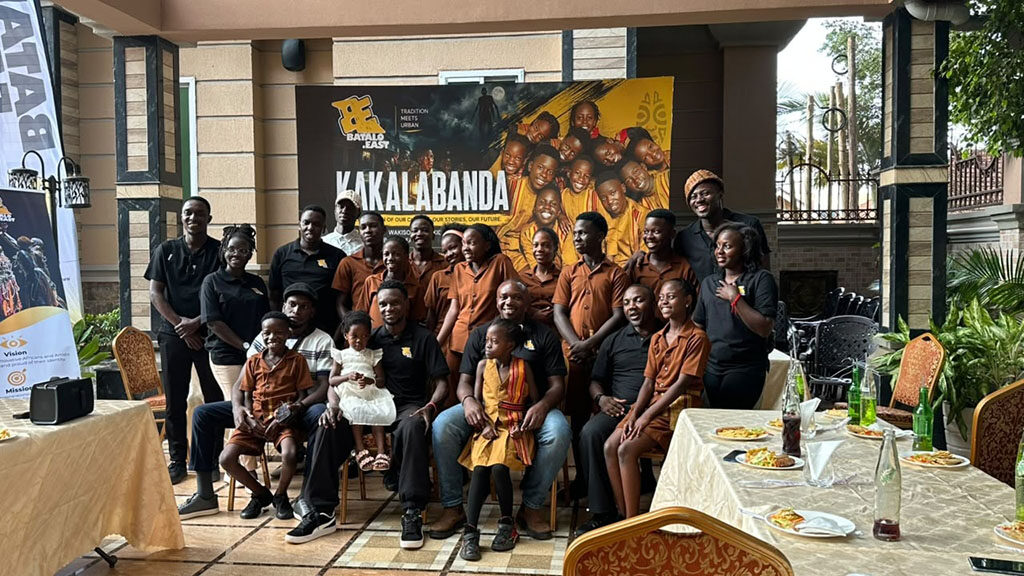
    A story that once sent shivers through boarding school dormitories in central Uganda is making its way to the stage as Batalo East and Wakiso Dance Kids team up for a new dance theatre production, Kakalabanda.

    The one-hour production will premiere at the National Theatre in Kampala on September 9, 2026, before heading to Kavumba Recreation Centre in Wakiso on September 12. Both shows will start at 7:30pm, with tickets going for Shs30,000.

    Inspired by the old Kakalabanda tradition, the production takes audiences back to an era when stories of a mysterious creature moving through school dormitories were common.

    Also known as Nkalabanda, the figure was portrayed in different ways, often as a ghostly or skeletal creature that appeared at night to frighten students. Stories included claims that it could steal belongings or cut students’ hair and nails, while some former students remember tales of learners being attacked in their dormitories.

    Rather than simply retelling those frightening accounts, the production uses them as a starting point to examine Uganda’s changing school culture and the experiences of young people today.

    Albert Mubiru, the production director at Batalo East, said the project is part of the company’s broader effort to keep traditional art and storytelling relevant to younger generations.

    Batalo East was founded by young artists in 2013 and has since brought together traditional dance, contemporary and urban styles, theatre and other forms of creative expression.

    “We want to pass this kind of art to the next generation for purposes of sustainability, and this explains why we chose Wakiso Dance Kids,” Mubiru said.

    The collaboration also allows the production to place young dancers at the centre of a story that belongs largely to an older generation.

    Davis Elisha Ssebulime, the head of artistic at Batalo East, said the stories surrounding Kakalabanda carried lessons that went beyond the fear they created.

    “There were hidden meanings in those stories. These stories shaped discipline and behaviour among the young people,” he said.

    Ssebulime said revisiting such stories can also help older and younger generations have conversations about the challenges facing children today.

    “How can we the old generation support the young people today? Through this production, the communities can take action. This way, we will be closing the inter-generational gap using art, music, dance and storytelling,” he said.

    The production is choreographed by hip-hop dancer, visual artist and mentor Elvis “Levy” Elaso, who said the performers are ready to present a show that goes beyond entertainment.

    Elaso said the school setting has allowed the creative team to weave contemporary social issues into the performance, including the emotional struggles experienced by some learners.

    “As an artist who likes to address social issues, we are blending in so many other things. Lately we have heard of so many stories at schools, some learners are depressed to the point of taking their own lives; there are many unanswered questions about what is happening in schools,” he said.

    He promised audiences a production that moves through different moods, combining humour, fear and sadness.

    “We shall take you through different emotions; it will be funny, terrifying, sad, everything is in the production,” Elaso said.

    For Wakiso Dance Kids founder and manager David Mubiru, the project is also an opportunity for the young performers to work with a company whose work they have admired.

    “We are thrilled to be working with Batalo East. We are pleased for this opportunity because we had picked interest in their work. This is a dream come true,” he said.

    Under the theme “A celebration of our culture, our stories, our future,” Kakalabanda” blends traditional dance, urban movement and theatre to revisit an old Ugandan story while asking what it can teach a new generation.

    Don’t want to miss out on any story? For updates on all Sqoop stories, follow this link on Telegram: https://t.me/Sqoop

  • CHAN: Micho names Uganda Cranes provisional squad

    CHAN: Micho names Uganda Cranes provisional squad

    Micho named a squad of 35 players that will embark on preparations for the biennial tournament slated to take place between 13th January to 4th February next year in Algeria.

    It should be noted that the tournament features national teams consisting of players currently playing in their respective domestic leagues.

    While naming the squad, the coach confirmed the team will enter residential camp on Wednesday in Kisasi and have a pre tournament in Algeria early next year.

    “We have maintained the core of the team that played the Qualifier matches against Tanzania. We have had the first round of the league running and this helps to put the players in good shape,” he started.

    Full Provisional Squad

    Goalkeepers

    Nafian Alionzi (URA FC), Mathias Muwanga (Onduparaka FC), Emmanuel Kalyowa (BUL FC), Joel Mutakubwa (Gaddafi FC), Jack Komakech (Vipers SC)

    Defenders

    Ashiraf Mandela (Vipers SC), James Begisa (URA FC), Grant Matsiko (Wakiso Giants FC), Derrick Ndahiro (URA FC), Isa Mubiru (Vipers SC), Arthur Kiggundu (Express FC), Hillary Mukundane (Vipers SC), Kenneth Ssemakula(SC Villa), Geofrey Wasswa (KCCA FC), Filbert Obenchan (KCCA FC), Gift Fred (SC Villa), Bright Vuni (Arua Hill SC)

    Midfielders

    Siraje Ssentamu (Vipers SC), Marvin Joseph Youngman (Vipers SC), Saidi Kyeyune (URA FC), Hussein Ssenoga (Express FC), Abdu Karim Watambala(Vipers SC), Moses Waiswa (KCCA FC)

    Forwards

    Milton Karisa (Vipers SC), Ibrahim Orit (Vipers SC), Travis Mutyaba (SC Villa), Moses Aliro (Wakiso Giants FC), Kagawa Ssenoga (KCCA FC), Rogers Kassim Mato (KCCA FC), Bright Anukani (Vipers SC), Ibrahim Kasule (Wakiso Giants FC), Titus Ssematimba (Wakiso Giants), Frank Ssebufu (Wakiso Giants FC), Najib Yiga (Vipers SC), Cromwell Rwothomio (Vipers SC).

  • American Investor Lisa Hughes to establish financial literacy, develop entrepreneurial skills for women

    American Investor Lisa Hughes to establish financial literacy, develop entrepreneurial skills for women

    American investor Lisa Stark Hughes is set to boost financial literacy and develop entrepreneurial skills among the women in Uganda by setting up a skills development centre in the country.

    Lisa who last visited Uganda in 2020, returned to the country to explore more investment opportunities.

    At the meeting held at the Office of the Prime Minister in Kampala, Lisa noted that her decision to return to Uganda to establish several investments is premised on the caring actions of President Museveni and his desire to create lasting change and opportunities for Ugandan citizens.

    “Unlike many politicians, it is obvious that the President is looking at the bigger picture and wants to create lasting change here in Uganda. President Museveni’s focus on skilling and opportunity is available for any Ugandan citizen that is desirous to improve their lives.” Lisa said.

    In an effort to increase the opportunity for skilling and business entrepreneurship training, Lisa intends to open up a skilling centre in Uganda.

    According to Lisa, her goal is to improve the lives of families as a whole and to create better and brighter futures for generations of Ugandans.

    “It is important that we create programmes that work for the unique and wonderful culture here in Uganda,” she said.

    Uganda has a wonderful culture and heritage. It is important that it is held sacred as progress happens,” Lisa added.

    Lisa said being self-employed is an honourable and empowering profession that creates endless opportunities for growth, adding: “For mothers, it also creates flexibility so they can be available to their children and have a lasting and loving impact on generations to come”.

    In her remarks, Deputy Prime Minister Rukia Nakadama appreciated the initiative saying it will benefit Ugandan women and their families but most importantly strengthen the country’s economy.

    Nakadama said women are at the heart of every family in Uganda and that it is important that they are skilled and able to help support their families.

    “Often, women have received university degrees or skilling certificates, but are unable to find employment and they end up working for others in their field. They often find themselves taking employment in an area that is not their dream or their preference,” she said.

    “This skilling centre plans on providing not only vocational skills but also financial literacy and startup capital planning,” Nakadama added.

    Through Lisa’s programme, women will receive skilling, business entrepreneurship training and financial literacy training. By the end of her programme, they will also have the startup capital needed to begin their own business.

    “With this programme, families will be more prosperous and children will be able to go to school, taxes are paid directly to the URA, and all of Uganda will benefit from this programme,” Nakadama said.

    When asked why she chose Uganda for the programme, Lisa said she was interested in President Museveni’s focus and dedication to improving the lives of women and creating opportunities for them in Uganda.

    “It is touching to see a President that is so saddened by the trouble and hardship that his citizens have when they go outside of Uganda to find work. His Excellency works so hard to find ways to keep them safe. I understand why he feels the most desirable answer is to create opportunities here at home in Uganda” Lisa said.

    She was also impressed that many high positions in government are held by women which she said shows that women are valued in Uganda.

    About Post Author

  • Next Media’s Isaac Ndamagye laid to rest – Sqoop

    Next Media’s Isaac Ndamagye laid to rest – Sqoop

    Next Media Services employee Isaac Ndamagye, who lost his life in last week’s fatal road accident, has been laid to rest at his ancestral home in Zirobwe.

    Family members, friends, colleagues, and mourners gathered on Monday to pay their final respects as the media personality was buried.

    Ndamagye was among the victims of the tragic crash that claimed the lives of two Next Media employees and left entertainment presenter Brian Macona nursing critical injuries.

    The emotional send-off was attended by colleagues from Next Media, who remembered Ndamagye for his dedication, professionalism, and warmth.

    His burial comes as Uganda’s media fraternity continues to mourn the devastating loss while praying for Macona’s recovery.

    Ndamagye’s death has left a deep void among his family, friends, and colleagues, who described him as a committed professional whose contribution to the media industry will be greatly missed.

    Don’t want to miss out on any story? For updates on all Sqoop stories, follow this link on Telegram: https://t.me/Sqoop

  • Abitex claims Ray G is currently Uganda’s most expensive musician – Sqoop

    Ray G’s growing influence on Uganda’s music scene appears to be coming with a hefty price tag, with veteran events promoter Abitex Promotions naming the Western Uganda star as the country’s most expensive musician at the moment.

    The promoter made the claim shortly after Ray G’s massive concert at Kololo Independence Grounds over the weekend, a show that pulled a sizeable crowd from different parts of the country and earned praise from fans who attended.

    But according to Abitex, he was not always convinced that Ray G was worth the kind of money he was asking for.

    The promoter revealed during a radio interview that Ray G initially approached him with a proposal to organise his concert. After agreeing to meet and discuss the possibility, Abitex said he was stunned when the singer revealed his expected fee.

    The figure, he admitted, was far beyond what he had anticipated.

    Abitex said his immediate reaction was to reject the deal, believing Ray G had simply asked for too much money.

    Rather than completely dismissing the singer, however, he said he went home and began looking at Ray G’s recent journey and the numbers surrounding his shows.

    He considered several moments in the singer’s career, including his highly publicised clash with Azawi, his Lugogo Cricket Oval concert, performances and events in Western Uganda, as well as the developments around Kakyeka and Nkuka.

    “I looked at what Ray G had been doing, from the Azawi clash to Lugogo Cricket Oval, Kakyeka Stadium and what happened at Nkuka. I realised there was something about this artist,” he said.

    That assessment changed his mind.

    Abitex eventually contacted Ray G again and agreed to the fee he had initially considered excessive, choosing instead to bet on the singer’s ability to deliver a commercially successful show.

    “He knew my strategy, and when we agreed, I started doing my job and he also started doing his job,” he said.

    Although he didn’t disclose  the actual figure Ray G charged, he said the amount remains a private agreement between the promoter and the singer’s management.

    He was, however, willing to put Ray G’s current market value into perspective, boldly declaring him the most expensive musician in Uganda.

    @mamelomediaug Abitex On Ray G After His Concert At Kololo Airstrip Reaction #foryoupage???? #trending #mamelomediaug #trendingvideo #viralvideo ? BWALIKUJJUKILA MUKAMA ELLY CHFY LYRICS – ???? ???? ??????

    Don’t want to miss out on any story? For updates on all Sqoop stories, follow this link on Telegram: https://t.me/Sqoop

  • Police Foil Armed Robbery Attempt at Masindi Fuel Station, Arrest One Suspect

    Police Foil Armed Robbery Attempt at Masindi Fuel Station, Arrest One Suspect

    The Uganda Police Force has foiled an attempted armed robbery at Gaz Petro Station in Central Division, Masindi Municipality, Masindi District, and arrested one suspect in connection with the incident.

    According to a statement issued by police on Monday, the incident occurred at around midnight when two armed suspects, travelling on a motorcycle registration number UGG 529P, allegedly attacked a security guard deployed at the fuel station.

    The suspects were reportedly armed with a pump-action shotgun and a knife and attempted to overpower the guard, disarm him and rob the station.

    Preliminary investigations indicate that the suspects first tried to lure the guard into repositioning their motorcycle, allegedly as part of a plan to attack him. They later held him at gunpoint, leading to a struggle in which the guard sustained injuries while resisting the attackers.

    Police said a patrol team responded swiftly after receiving information about the incident and intervened, successfully stopping the robbery attempt.

    The injured security guard was rescued, while one of the suspects, identified as Odoma Ronald, 43, was arrested at the scene.

    Police recovered a pump-action firearm, a knife and the motorcycle registration number UGG 529P, which is believed to have been used during the attempted robbery.

    The force said efforts are ongoing to trace and arrest the second suspect, who escaped and remains at large.

    “Investigations into the incident are ongoing,” police said.

    The Uganda Police Force commended the security guard for his vigilance and bravery in resisting the attackers, as well as the police officers who responded promptly and prevented the crime.

    Police have also urged members of the public, security personnel and business operators to remain alert and report any suspicious persons, movements or activities to the nearest police station.

    The incident comes amid continued police efforts to combat violent crime and strengthen security across the country through rapid response and community cooperation.

    Do you have a story in your community or an opinion to share with us: Email us at Submit an Article

  • Why President Museveni’s Vision for Poverty Alarms and Aligns with Oscar Mutebi’s Grassroots Agenda in Rural Masaka

    Why President Museveni’s Vision for Poverty Alarms and Aligns with Oscar Mutebi’s Grassroots Agenda in Rural Masaka

    By Brian Mugenyi

    MASAKA, UGANDA — Uganda’s poverty rate has declined to 16% during President Yoweri Museveni’s current term. Marking this progress, the President recently convened a 10-day retreat at the National Leadership Institute in Kyankwanzi, bringing together local government leaders, Permanent Secretaries, Ministers, and public service managers.

    Central to the retreat’s agenda was a renewed emphasis on grassroots poverty eradication—a vision that strongly resonates with community leaders in Masaka, including youth mobiliser Oscar Mutebi.

    Every generation is presented with a defining opportunity. For Masaka District, that opportunity is taking shape through technology, skills development, and a growing local movement aimed at transforming the area into a model center for socio-economic progress.

    Civic energy was recently on display in Kyanamukaka Town Council, where newly elected Mayor Hon. Zaina Nakidde took her oath of office before hundreds of cheering residents, youth leaders, traders, and government mobilisers gathered under the afternoon sun.

    Beyond celebrating a new political term, residents viewed the ceremony as a symbol of unity and renewed hope for development in one of Greater Masaka’s steadily growing urban hubs. From the early morning hours, motorcycle taxis ferried villagers as women in traditional gomesi and youths in vibrant attire gathered to welcome what many describe as a new era of leadership.

    As the old African proverb reminds us: “When spider webs unite, they can tie up a lion.”

    Within this context of civic engagement, local development discussions are increasingly aligning with President Museveni’s long-standing national agenda for poverty eradication, wealth creation, and socio-economic transformation. For decades, the administration has maintained that sustainable development requires moving households from subsistence farming into the formal money economy through commercial agriculture, industrialisation, skills acquisition, and mindset transformation.

    This commitment was reinforced in the FY2025/26 National Budget, themed “Full Monetization of Uganda’s Economy through Commercial Agriculture, Industrialization, Expanding and Broadening Services, Digital Transformation and Market Access.” Allocating approximately Shs72.4 trillion, the budget prioritises key drivers of economic growth:

    • Human Capital Development: Received 26.1% of the national budget—the largest allocation among all sectors—focusing on health, education, and skills.

    • Agro-Industrialisation: Allocated 4.2% to strengthen value chains and household income.

    • Economic Growth Metrics: Sectoral growth reflects positive momentum, led by industry (7.0%), agriculture (6.6%), and services (5.4%). Agriculture alone contributes roughly 26.2% of national GDP.

    It is within this national framework that Oscar Mutebi’s grassroots initiatives are gaining momentum across the Central Region. Observers note that Mutebi’s vision closely mirrors the national strategy, emphasizing that sustainable prosperity cannot be achieved through consumption or aid alone, but through production, value addition, and enterprise.

    “Masaka has the potential to become a model district in Uganda,” Mutebi noted during a recent engagement with local youth groups. “But that future depends on our willingness to work hard, embrace innovation, and support initiatives that uplift our people.”

    At the intersection of national policy and local action is coffee production. Uganda exports over six million 60-kilogram bags of coffee annually, generating nearly USD 1 billion in revenue. While national strategy identifies coffee as a primary crop for lifting rural households out of poverty, farmers in Masaka still face challenges, including limited processing infrastructure, fluctuating market prices, and inadequate access to modern farming technologies.

    Mutebi emphasizes that overcoming these bottlenecks requires stronger execution at the local level. “Uganda produces vast amounts of coffee,” he observed. “To maximize household benefits, our farmers must participate directly in value addition, adopt modern techniques, and connect to high-value markets.”

    This approach aligns with government funding mechanisms—such as the Parish Development Model (PDM), Emyooga, Operation Wealth Creation, and Uganda Development Bank financing—designed to increase productivity and provide affordable capital to rural entrepreneurs.

    Beyond agriculture, Mutebi advocates for expanding digital literacy and vocational training:

    • Information & Communication Technology (ICT): Collaborating with national bodies like the Uganda Communications Commission (UCC) to expand internet access and digital tools in rural schools.

    • Vocational & Technical Skills: Promoting practical training in agro-processing, electrical installation, carpentry, welding, and mechanics to curb youth unemployment.

    • Mindset Transformation: Encouraging communities to take active ownership of their economic progress rather than relying solely on government interventions.

    As Uganda progresses toward its Vision 2040 goals, Masaka District stands out for its fertile land, strategic location, and dynamic population. Achieving lasting socio-economic transformation will ultimately depend on seamlessly connecting national policy with grassroots leadership—ensuring that local efforts like Mutebi’s complement the broader national movement toward household wealth creation.

  • Ssekandi’s Road Home: How a Former VP’s Legacy is Still Driving Kyanamukaka

    Ssekandi’s Road Home: How a Former VP’s Legacy is Still Driving Kyanamukaka

    KYANAMUKAKA, MASAKA — On a chilly Tuesday afternoon, the Kingdom Kampala office of former Vice President Edward Kiwanuka Ssekandi feels like a quiet sanctuary of Uganda’s political history.

    Portraits of President Yoweri Kaguta Museveni anchor the room, commemorating a political partnership forged over decades. Nearby, photographs of Ssekandi’s grandson and close aide, Oscar Mutebi, tell a more intimate story of family, continuity, and public service. While high security surrounds the former Vice President, behind these formal doors lies a story rooted far from the capital—a deep, ongoing attachment to Kyanamukaka, the rural community that nurtured his rise.

    Ssekandi’s journey has stretched from the village to Parliament, from the Speaker’s chair to State House. Yet for Kyanamukaka, the impact of that journey is still unfolding.

    Where the Road Becomes the Story

    For three decades, residents of Kyanamukaka navigated roads that severely limited rural mobility. Dry seasons blanketed villages in thick dust, while heavy rains rendered key routes impassable. Farmers struggled to move produce, traders faced exorbitant transport costs, students trudged through mud, and patients suffered dangerous delays seeking medical care.

    Today, ongoing road construction linking communities like Sserinya, Baale, Bulegeya, Kamuzinda, and Kanoni is reshaping the local economy. According to Oscar Mutebi, who serves as a Private Secretary in State House while managing daily duties at Ssekandi’s office, the infrastructure push is long overdue.

    “Kyanamukaka is known across the country because of him,” Mutebi reflects.

    For long-suffering residents, the new tarmac represents far more than engineering—it represents opportunity. In a rural economy, a usable road is the critical first link in a chain that connects farm production to market trade, trade to household income, and income to community welfare.

    Nakidde: “Development Must Reach the People”

    Kyanamukaka Town Council Mayor Zaina Nakidde, a National Resistance Movement (NRM) cadre, has welcomed the infrastructure drive while emphasizing that the community’s ambitions must extend further.

    “Healthcare, education, sanitation, youth empowerment, and women’s participation must grow alongside physical infrastructure,” Nakidde notes. “We thank our elder and mentor, His Excellency Edward Ssekandi, for championing this road and supporting local healthcare.”

    Her core argument is straightforward: a modern road offers little value if those living beside it cannot access essential public services. Ever since local governance shifted to the NRM under her leadership, Kyanamukaka has steadily evolved into an emerging urban hub within Greater Masaka, leading local leaders to lobby aggressively for further state support.

    “That growth brings opportunity, but also responsibility,” Nakidde adds, noting that during a recent site visit with Mutebi, she appealed for direct support to refurbish the town council premises and secure administrative resources.

    Mutebi and the Responsibility of a New Generation

    Among those stepping into this evolving chapter is Oscar Mutebi. Increasingly visible in grassroots mobilization across Greater Masaka, Mutebi’s message centers on practical development, service delivery, and unity.

    For Mutebi, his grandfather’s legacy is not merely a list of high-ranking titles, but a repository of institutional wisdom that can mentor a new wave of local leaders. The relationship between the elder statesman and his grandson symbolizes a broader generational shift: Ssekandi represents the cadre that guided Uganda’s modern institutional transformation, while Mutebi represents the youth now tasked with carrying that progress forward.

    From Kyanamukaka to the Center of Power

    Ssekandi’s political resume is uniquely vast. Having served as a Member of Parliament, Speaker of Parliament (2001–2011), and Vice President of Uganda (2011–2021), he spent decades at the epicenter of the nation’s legislative and executive power.

    Supporters often refer to him as a “living encyclopedia of state matters.” Yet, political history alone cannot sustain a rural community. Leadership must ultimately be measured against the daily realities of ordinary citizens.

    The Farmer Needs More Than a Harvest

    Local businessman Stephen Kawonawo views infrastructure strictly through the lens of economic survival. Greater Masaka remains an agricultural powerhouse driven by coffee, bananas, dairy, and livestock. However, a rich harvest sitting idle in a village does not generate wealth.

    “A farmer needs access to the road just as much as access to fertile soil,” notes local farmer Paul Kawonawo, echoing the sentiment that reliable transport directly reduces the costly barriers between rural producers and urban buyers.

    The Legacy Beyond Titles

    Ssekandi’s political trajectory will be interpreted in various ways across Uganda’s democratic history. But in Kyanamukaka, the truest evaluation comes from everyday life: a mother reaching a health facility in time, a child attending a well-equipped school, a farmer selling crops at a fair price, and a young person finding local employment.

    Back in Ssekandi’s Kampala office, the framed portraits remain static on the wall. But outside, Kyanamukaka itself forms a living portrait—one of emerging roads, expanding businesses, and a town council planning for tomorrow.

    The story of Ssekandi’s road home reveals a fundamental truth: the journey of a statesman may eventually rest in the history books, but the aspirations of his people move continuously forward.

    Do you have a story in your community or an opinion to share with us: Email us at Submit an Article

About UGNEWS24

UGNEWS24 is a Uganda local news service, a product of SOLAVIA GROUP LIMITED, Reg. No. 80048169153974.

Registered office

Plot 2335, Buwambo-Katadde-Najjo Road,
Nansana Municipality, Wakiso District, Uganda
P.O. Box 214231, Kampala

© 2026 SOLAVIA GROUP LIMITED. All rights reserved.