Blog

  • EDRINE BENESA: Inside Museveni’s Flawless Foreign Policy Rivals Have Failed to Defeat in 40 Years

    EDRINE BENESA: Inside Museveni’s Flawless Foreign Policy Rivals Have Failed to Defeat in 40 Years


    From the moment Yoweri Kaguta Museveni strode into Kampala on January 29, 1986, declaring before Parliament that “This is not a mere change of guard. It is a fundamental change,” foreign policy became the invisible scaffolding upon which the National Resistance Movement (NRM) would build its longevity. For forty years, Museveni’s mastery of diplomacy, his audacious interventions, and his ability to weave Uganda into the fabric of regional and global politics have ensured that the NRM’s grip on power has remained unbroken. The story of Uganda’s foreign policy under Museveni is not simply about treaties and summits; it is about survival, consolidation, and the art of turning external engagements into domestic legitimacy.

    Museveni’s genius lay in recognizing early that Uganda’s fragile economy and fractured society could not sustain his revolution without external lifelines. In the late 1980s, he courted the World Bank and the International Monetary Fund, embracing structural adjustment programs that brought in donor inflows. Between 1987 and 1992, Uganda’s GDP growth averaged above 6%, a remarkable turnaround from the chaos of Amin and Obote. Western diplomats, dazzled by Museveni’s rhetoric of democracy and stability, opened their coffers. In 1987, at the Organization of African Unity (OAU) summit in Addis Ababa, Museveni thundered: “Africa must liberate itself from dependency, but we cannot do so without discipline and partnership.” That partnership translated into billions in aid, which not only rebuilt Uganda’s economy but also gave Museveni the sheen of international credibility.

    Yet foreign policy was never just about economics. It was about security — and Museveni wielded Uganda’s military might as both sword and shield. In the early 1990s, Uganda became a sanctuary for liberation movements. Fighters from the African National Congress (ANC) and SWAPO found training grounds in Ugandan camps. Testimonies from cadres like Ronnie Kasrils of the ANC recall Museveni’s Uganda as a “crucial rear base” for the anti-apartheid struggle. This solidarity elevated Museveni as a pan-African statesman, a man whose revolution was not confined to Uganda but resonated across the continent.

    The Betty Bigombe peace talks of 1993–1994 with the Lord’s Resistance Army (LRA) revealed another dimension of foreign policy: the art of appearing as a peacemaker. Bigombe, Museveni’s trusted emissary, met Joseph Kony in the jungles of Kitgum, negotiating ceasefires that briefly held. Though the talks collapsed, the image of Uganda as a government willing to dialogue with rebels softened Museveni’s authoritarian edges in the eyes of donors. It was a calculated performance — one that kept aid flowing and criticism muted.

    By the late 1990s, Museveni’s foreign policy turned outward with ferocity. In 1996, Uganda intervened in Zaire (later the Democratic Republic of Congo), supporting Laurent-Désiré Kabila’s march to Kinshasa. When Kabila later turned against his allies, Uganda plunged into the Second Congo War (1998–2003), deploying thousands of troops deep into Congolese territory. Towns like Kisangani became battlegrounds where Ugandan forces clashed with Rwandan allies over control of diamond mines. The war was bloody, condemned by the United Nations, and culminated in the International Court of Justice (ICJ) ruling against Uganda in 2005 for plundering Congo’s resources. Yet domestically, Museveni spun these interventions as necessary to protect Uganda’s borders from insurgents. The narrative of “defensive offense” bolstered his image as the guardian of national security, silencing dissent at home.

    The Rwandan genocide of 1994 and its aftermath further showcased Museveni’s strategic brilliance. His close ties with the Rwandan Patriotic Front (RPF), led by Paul Kagame, positioned Uganda as midwife to Rwanda’s new order. Ugandan soil became the staging ground for Kagame’s forces, and when the genocide ended, Museveni basked in the glow of having aided Rwanda’s rebirth. This alliance not only secured Uganda’s western frontier but also cemented Museveni’s stature as a regional kingmaker.

    In the 2000s, Museveni reinvented Uganda as a security provider for the West. The turning point came in 2007, when Uganda became the first country to deploy troops to Somalia under the African Union Mission in Somalia (AMISOM). Mogadishu was a graveyard of interventions, yet Museveni sent his soldiers into its war-torn streets. In a speech to Parliament, he declared: “If we do not help Somalia, the cancer of terrorism will spread across Africa. Uganda must act, not watch.” The West applauded. Washington and Brussels funneled military aid into Kampala, transforming Uganda into a linchpin in the global war on terror. Each Ugandan casualty in Mogadishu translated into political capital for Museveni, who leveraged his role as a frontline ally to deflect criticism of his domestic repression.

    The South Sudan crisis of 2013 offered another stage. When civil war erupted between President Salva Kiir and Riek Machar, Museveni swiftly deployed Ugandan troops to Juba, propping up Kiir’s government. Critics saw it as meddling; Museveni framed it as preventing genocide. His intervention secured Uganda’s northern frontier and reinforced his image as indispensable to regional stability.

    Foreign policy also became Museveni’s shield against Western pressure on democracy. When donors threatened to cut aid over corruption or human rights abuses, Museveni reminded them of Uganda’s sacrifices in Somalia and South Sudan. In 2014, as Western capitals criticized Uganda’s controversial anti-homosexuality law, Museveni retorted: “We are not your puppets. Uganda fights terrorism for Africa and the world. Do not lecture us on values.” The message was clear: Uganda’s strategic utility outweighed its democratic deficits.

    Key individuals played roles in this grand design. Sam Kutesa, Uganda’s long-serving Foreign Minister, became the architect of Uganda’s diplomatic maneuvers, culminating in his election as President of the UN General Assembly in 2014. Figures like Betty Bigombe, Amama Mbabazi, and later Henry Okello Oryem carried Museveni’s messages abroad, ensuring that Uganda’s narrative remained consistent: a nation of stability, a partner in security, a bulwark against chaos.

    The places where Museveni’s foreign policy unfolded are etched into history: Addis Ababa, where he thundered at OAU summits; Kampala, where donor conferences sealed Uganda’s economic revival; Kisangani, where Ugandan troops clashed with Rwandans; Mogadishu, where Ugandan soldiers bled for Africa’s security; Juba, where Uganda’s intervention tilted the balance of war. Each location tells a story of a leader who understood that geography was destiny, and that Uganda’s survival depended on projecting power beyond its borders.

    Quotes punctuate this saga like drumbeats. “This is not a mere change of guard. It is a fundamental change” (1986). “Africa must liberate itself from dependency” (1987). “Uganda must act, not watch” (2007). “We are not your puppets” (2014). Each phrase was not just rhetoric; it was a weapon, wielded to secure legitimacy at home and respect abroad.

    The significance of these events lies in their cumulative effect: foreign policy became the lifeline of the NRM’s rule. Aid inflows rebuilt Uganda’s economy, interventions projected Museveni as a regional strongman, and security partnerships shielded him from Western censure. Every foreign policy maneuver fed back into domestic consolidation. By presenting himself as indispensable — to Africa, to the West, to regional stability — Museveni ensured that his regime could not be easily challenged.

    Forty years on, the NRM’s survival is inseparable from Museveni’s flawless foreign policy. It is a tale of audacity and calculation, of wars fought abroad to secure peace at home, of aid courted to silence critics, of alliances forged to outmaneuver rivals. Museveni turned Uganda into a paradox: a small nation with outsized influence, a fragile democracy sustained by external lifelines, a regime whose longevity rests not only on the barrel of the gun but on the art of diplomacy.

    In the grand theatre of African politics, Museveni’s foreign policy has been both stage and script, actor and director. It is the reason why, since 1986, the NRM has remained unshaken. And as Museveni himself once declared, “Power is not taken by chance. It is taken by design.” His design was foreign policy — flawless, ruthless, and enduring.


    The writer is the Deputy Resident City Commissioner for Nakawa Division.

    Do you have a story in your community or an opinion to share with us: Email us at Submit an Article

  • Johnnie Walker Uganda Open returns with world class golf, and Afro Exchange Experience

    Johnnie Walker Uganda Open returns with world class golf, and Afro Exchange Experience

    The Uganda Golf Union, in partnership with Johnnie Walker Uganda, has officially launched the 2026 Johnnie Walker Uganda Open Golf Championship, setting the stage for a month of world-class competition and elevated experiences that extend beyond the fairways into culture, fashion, music and contemporary lifestyle.

    The tournament was launched with a putting challenge on the 18th hole, where partners took to the green to test their putting skills, with successful putts setting the tone for the championship ahead.

    The championship, which has received a Shs 650m sponsorship and execution package from Johnnie Walker, will take place from August 13th to September 5th, 2026, at the Uganda Golf Club in Kampala.

    The tournament will bring together professional, amateur, senior and female golfers from Uganda, across East Africa, and the continent. The month-long championship will showcase some of the region’s finest golfing talent while celebrating the rich heritage, competitive spirit and continued growth of the sport.

    The tournament will tee off with the Johnnie Walker Ladies Open, that will run from this Thursday- August 13th–15th, and will feature a special Johnnie Walker She Walks Experience to celebrate the women in golf. The platform aims to inspire, empower, and spotlight female talent within the sport. The Ladies Open is recognised as a World Amateur Golf Ranking (WAGR) event and will attract leading female golfers from across the region and the continent.

    The championship will continue with the Seniors Open from August 21st – 22nd, followed by the Amateur Open- from August 25th–28th, before culminating into the highly anticipated Professionals Open, that will run from September 2nd–5th, bringing together top professional golfers from Uganda, East Africa and beyond, to compete for the coveted 2026 championship title.

    Speaking at the launch, Christine Kyokunda, the Johnnie Walker East Africa Brand Manager, said that while competition remains at the heart of the championship, Johnnie Walker will add a new dimension to the off-course programme- through its Afro Exchange Experience, that will be centred around the 19th hole experiences. She noted that the platform will create spaces where golf intersects with Africa’s contemporary expressions of music, fashion and art.

    Christine Kyokunda, the Johnnie Walker East Africa Brand Manager, speaking at the press briefing.

    “Johnnie Walker has always been about progress, ambition and celebrating those who continue to move themselves and their communities forward. The Uganda Open is a powerful expression of that spirit. It brings together talent, ambition and connection through a sport that continues to grow across the continent. Through our partnership, we are looking to elevate the experience around the tournament, creating moments that extend beyond the course and bring golf into conversation with the culture, creativity and contemporary lifestyle of Africa,” she said.

    The concept reflects Johnnie Walker’s belief that modern luxury is defined not only by the occasions we celebrate, but also by the experiences we share and the connections we create. Through Afro Exchange, the brand will bring together different creative worlds around the Uganda Open, offering a fresh perspective on the tournament beyond the course.

    The Johnnie Walker Uganda Open also continues to play an important role in the growth of golf in Uganda and the wider region, bringing together professionals, amateurs, seniors, women and emerging talent while providing opportunities to compete, develop and build connections across the region.

    Christine Kyokunda, the Johnnie Walker East Africa Brand Manager (2L), Uganda Golf Union President, Dr Jackson Were (C), Tournament Director Paul Rukundo (2R), and other stakeholders display a dummy cheque after the press briefing.

    To complement Johnnie Walker’s presence at the tournament, Uganda Breweries Limited will also have its premium beer portfolio, including White Cap, Tusker Malt, Tusker Lite, among others, as part of the championship experience.

    Speaking at the launch, Edward Kimathi, Commercial Director at Uganda Breweries Limited, said the company’s continued investment in the Uganda Open reflects its commitment to partnerships that create meaningful experiences while contributing to the growth of sport and the wider community.

    “At Uganda Breweries, we believe the strongest partnerships are those that create value beyond the sponsorship itself. Our continued investment in the Johnnie Walker Uganda Open is about supporting a platform that brings together talent, ambition and opportunity, while creating an experience that Ugandans and visitors can connect with. Through the Shs 650 million sponsorship and execution package, we are proud to support both the championship and the experiences around it, as we continue to invest in platforms that showcase Ugandan excellence and bring people together,” Kimathi said.

    Uganda Golf Union (UGU) President- Jackson Were, highlighted the significance of the Uganda Open in the development of the sport and Uganda’s growing reputation as a golfing destination.

    Uganda Golf Union President, Dr Jackson Were (2R) pictured after the putting challenge, moments before he made his remarks.

    “The Uganda Open continues to hold an important place in the history and development of golf in Uganda and the region. It provides an important platform for golfers at different stages of their careers to compete, connect and grow. We are proud to welcome players from across East Africa and the continent and look forward to another successful championship that will showcase the quality of golf Uganda has to offer.”

    The 2026 Johnnie Walker Uganda Open Tournament Director (TD), also the UGU Vice President – Paul Charles Rukundo, stated that they expect full courses on each outing.

    “Registration is already open via https://registration.golf-uganda.com/ and we have already received entries from golfers from different countries. This year, we are also looking at the tournament as an opportunity to show what is possible when strong competition is matched by a strong experience. We want players and spectators to leave with a greater appreciation of the tournament, the sport and the standard of golf that Uganda can deliver,” Rukundo said.

    Tournament stakeholders share a photo moment after the launch of the 2026 Johnnie Walker Uganda Open Golf Championship.

    Absa Bank, sponsors of the Pro-Am event, held on the eve of the professionals event, are also back as part of the 2026 sponsors. Billy Bisanga, Head of Client and Digital Marketing at Absa Bank, said that they will continue the tradition of taking winners- both Pros and amateurs, of the Pro-Am event for the Magical Open in Nairobi.

    “Through the Absa Pro-Am, amateur and professional golfers compete alongside each other, with a pathway to international exposure through the Magical Kenya Open on the DP World Tour. Over the past six years, more than 60 Ugandan golfers have benefited from this experience, gaining valuable exposure and insights that support their development. We are proud to continue investing in a platform that gives Ugandan golfers the opportunity to compete at a higher level.”

    As the countdown begins, golf enthusiasts, corporate partners and fans, are invited to experience a championship where tradition meets modern culture, where every swing represents ambition, every round creates connection, and every moment moves the game forward.

    This year’s Johnnie Walker Uganda Golf Open is supported by ABSA, MTN MOMO, Aquafina, Pepsi, Case Clinic, Medisell, Rose Foam, Pearl Marina, and NBS Sport.

  • Gen. Katumba Wamala retires after 47 years of military service

    Gen. Katumba Wamala retires after 47 years of military service

    General Edward Katumba Wamala has officially retired from military service after 47 years in uniform, marking the end of a long career he says was defined by passion, dedication, commitment and love for Uganda.

    Katumba, who also serves as Minister of Public Service in the Ugandan cabinet, made the remarks during his farewell party at his home in Kikandwa, Kasawo, Mukono District, where he reflected on his military journey and some of the most difficult moments of his career.

    Katumba wamala

    Among the deeply personal experiences he spoke about was the 2021 assassination attempt in which unknown assailants opened fire on his vehicle along the Kisaasi–Kyanja road.

    The attack claimed the life of his daughter, Brenda Nantongo, and his driver, Haruna Kayondo, while Katumba survived with serious injuries.

    Reflecting on the incident, Katumba said he would have found it particularly painful to die in such a manner after surviving numerous military operations and wars involving heavy weapons.

    “It was going to hurt me a lot to be gunned down by a serial killer on the road, yet I had survived many operations and wars in the bush that involved big machine guns and other weapons.”

    Katumba recalled one of his experiences in South Sudan, where he said he and his colleagues survived an ambush by rebels while fighting Joseph Kony’s forces.

    “One time we were in South Sudan fighting Joseph Kony, and the rebels made an ambush on us, but we managed to survive. I would have felt bad as a general to be killed by a terrorist on the road. I would have rather died in the war.”

    The retired general also expressed gratitude to President Yoweri Museveni for giving him opportunities to serve and exposing him to different challenges throughout his military career.

    “I thank God that my boss, President Museveni, saw my importance and usefulness. He gave me exposure and many challenges.”

    Katumba officially completed his 47 years of military service on July 31, 2026, bringing to an end a career that began in 1979.

    Reflecting on his retirement, he described his years in uniform as a privilege and expressed gratitude to God, his fellow soldiers, the Uganda People’s Defence Forces (UPDF) and Ugandans for allowing him to serve the country.

    On 31 July 2026, I completed 47 years of military service to my country, a journey I undertook with dedication, commitment and love for Uganda. Forty-seven years in uniform. Forty-seven years of service to Uganda.

    As I close this chapter, I do so with deep gratitude to God, my comrades, the UPDF and the people of Uganda for the privilege to serve. A lifetime in service. A country forever in my heart.

    The post Gen. Katumba Wamala retires after 47 years of military service appeared first on MBU.

  • Vinka speaks: Depression, stage fright, and building a tough skin

    Vinka speaks: Depression, stage fright, and building a tough skin

    Singer and songwriter Vinka, real name Veronica Nakiyingi Luggya, has opened up about battling stress and depression early in her music career.

    She explained that harsh criticism from social media users took a toll on her mental well-being.

    The singer said that when she had just entered the music industry, she struggled with negative comments from people who constantly criticized and belittled her online.

    “When I had just started doing music, I went through stress and depression because of the words that were being spoken against me. But as I kept growing, I developed a tough skin and got used to people’s words.”

    Vinka also reflected on her first experience performing on stage, saying she made her debut with her song Level at Nsambya Girls’ School.

    “My first time on stage was with a song called Level at Nsambya Girls. It was okay because it was a school event, so I didn’t find it difficult.”

    Despite her years in the industry, Vinka admitted that she still experiences stage fright before performances. However, she said the anxiety usually disappears once the music starts playing.

    Even on stage, I get stage fright, but it changes when the music starts. I don’t know what happens, but I just get into the mood. Every time I take the stage, I get stage fright depending on the event, and my heart races, but eventually I get comfortable and do my thing.

    The singer believes she has grown significantly since the early days of her career, particularly in her vocals, confidence and branding.

    “I’ve matured as an artist, voice-wise and in terms of branding. If I had fears back then, now I’m a bit more solid, but I’m still hungry for more success.”

    Vinka further encouraged upcoming artists not to allow negative comments from individuals on social media to define their worth or determine how they view themselves.

    At the start, I faced challenges from people on social media who abused me and those who overlooked me and went on to criticize me.

    To rising artists, even when you face those challenges, that doesn’t mean one person’s opinion is how everyone sees you.

    Some people make negative comments about others just to satisfy something within themselves.

    The post Vinka speaks: Depression, stage fright, and building a tough skin appeared first on MBU.

  • Chris Obore, six others committed to High Court over alleged Shs26.8 billion embezzlement

    Indicted Parliament’s Director of Communications and Public Affairs, Chris Ariko Obore, and six other officials have been committed to the High Court to face charges over the alleged mismanagement and embezzlement of Shs26.8 billion in parliamentary funds.

    Grade One Magistrate Esther Asiimwe committed the seven suspects after the Inspectorate of Government (IG) informed court that investigations into the case had been completed and the prosecution was ready to proceed.

    The other accused are Parliament’s Director of Human Resource Daniel Adilo, Executive Secretary in the Office of the Speaker Leonard Okema, Principal Research Officer Rajab Kaaya Ssemalulu, Principal Protocol Officer Okwi Emmanuel Emuron, Capacity Development Officer Vincent Otebata and Methods Mureebe, Chief Executive Officer of the Uganda Parliamentary Cooperative Savings and Credit Society (Parliamentary Sacco).

    State Attorney Daisy Acio, the supervisor of prosecutions at the IG, told court that the investigation had been concluded and the accused were ready to face the charges before the High Court.

    Acio also said Stella Itute, who had previously been listed as the sixth accused, had been removed from the charge sheet after investigators established that she was at large. She will be charged separately if arrested.

    The seven officials will face nine charges linked to the alleged handling of funds allocated for parliamentary donations, corporate social responsibility (CSR) activities and stakeholder engagements between 2023 and May 2026.

    The charges include causing financial loss, embezzlement and money laundering.

    According to the prosecution, Obore allegedly received Shs5.2531 billion for donations and CSR activities but failed to implement the activities or return the money to Parliament.

    Adilo is accused of receiving Shs14.11075 billion, while Okema allegedly received Shs3.8 billion for similar activities. The prosecution claims that neither official implemented the activities or accounted for the funds.

    Ssemalulu is alleged to have received Shs1.870108 billion, while Emuron allegedly received Shs1.105 billion for donations and CSR activities that were reportedly never carried out.

    Otebata faces a separate allegation involving Shs502.534 million that was meant to cover fuel, subsistence allowances and transport refunds for external participants attending a stakeholder engagement in the central region.

    The prosecution alleges that the engagement never took place and that the money was not returned to Parliament.

    The IG alleges that the seven officials collectively received Shs26.805892 billion for parliamentary donations, CSR programmes and stakeholder engagements but failed to carry out the activities or account for the funds.

    Prosecutors further allege that the actions of the accused caused the government a financial loss equivalent to the funds in question.

    Obore also faces a separate charge relating to Shs2.578 billion that he allegedly received to manage parliamentary donations and CSR activities.

    According to the prosecution, Obore knowingly submitted false accountabilities for the money.

    The case will now proceed to the High Court for further hearing.

  • GOLD FRAUD! How Indian-British Investor Singh Satbinder Lost Sh1.6Bn to Alleged Scammer Abdul Nasur Ikuns, City Law Firm in Fake Gold Deal

    GOLD FRAUD! How Indian-British Investor Singh Satbinder Lost Sh1.6Bn to Alleged Scammer Abdul Nasur Ikuns, City Law Firm in Fake Gold Deal

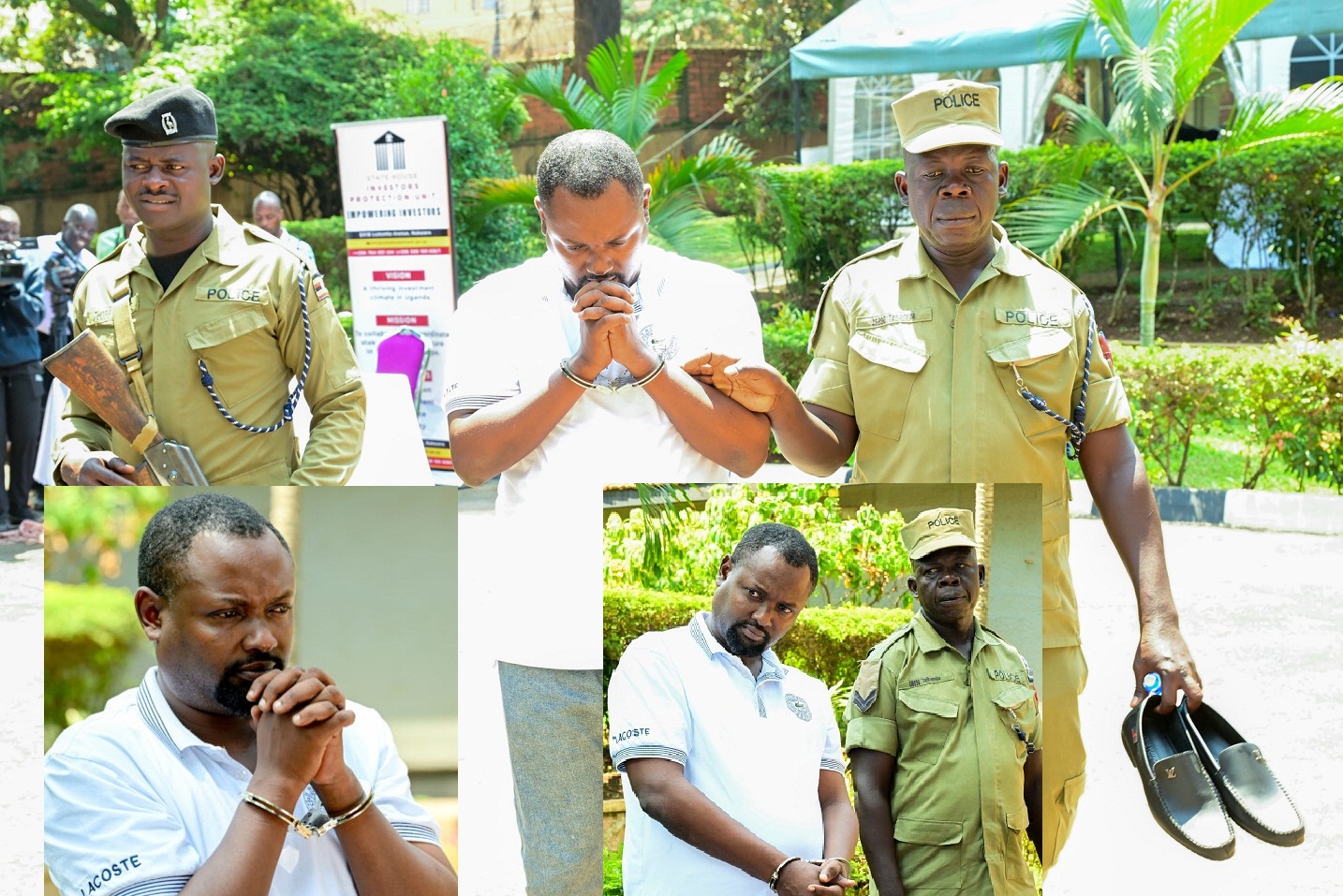
    City law firm, 20kg gold promise, Kenya trip and alleged SFC documents emerge as investigators probe Abdul Nasur Ikuns

    KAMPALA – A glamorous gold deal has turned into a Shs1.62 billion nightmare for an Indian-British investor after he was allegedly conned into financing what investigators now suspect was a fake gold export transaction.

    The Police Mineral Protection Unit, working with the State House Investors Protection Unit (SHIPU) and other security agencies, has opened investigations into the alleged gold fraud involving US$450,000 (about Shs1.62 billion).

    The investor has been identified as Singh Satbinder, an Indian-British national who allegedly travelled to Uganda and neighbouring countries after being promised a lucrative gold supply deal.

    According to preliminary findings released by SHIPU, Satbinder was allegedly lured into the gold export business with promises of access to thousands of kilograms of gold.

    The deal that allegedly hooked him involved 20 kilograms of gold.

    But instead of striking gold, the investor allegedly lost hundreds of thousands of dollars.

    Investigators say Satbinder paid US$450,000 (about Shs1.62 billion) through a combination of bank transfers and cash payments.

    Receipts were allegedly issued by the suspects as the transaction progressed.

    The investigation has now taken an interesting turn after authorities established that part of the alleged transaction was processed through a Kampala law firm , which investigators say acted as the suspects’ legal representative.

    The names of the Kampala-based law firm and its lawyers are known to RedPepper but are being withheld pending independent verification of their alleged connection to the transaction.

    The name of the law firm has been withheld as investigations continue.

    THE 20KG GOLD PROMISE

    According to SHIPU, Satbinder was allegedly promised a supply of 20kg of gold after being introduced to the purported gold business.

    The investor reportedly made payments as arrangements for the transaction progressed.

    But investigators say the alleged fraudsters repeatedly moved him around as they continued creating expectations that the gold deal was about to be completed.

    Abdul Nasir Ikuna (center) being investigated as a key suspect in the US$450,000 gold fraud involving an Indian-British investor Mr. Singh Satbinder. The investor was allegedly deceived into financing a fake gold export deal since 2024 through promises of thousands of kilograms of gold

    Satbinder was reportedly invited several times to Uganda and neighbouring countries, including Kenya, supposedly to finalise the transaction.

    On one occasion, investigators say the investor travelled to Kenya after facilitating arrangements for a meeting, only to allegedly be abandoned by the people he expected to meet.

    The alleged scam did not end there.

    Investigators say meetings were also scheduled in Germany, with authorities now suspecting that the international movements may have been intended to delay completion of the deal while creating an appearance of legitimacy and confidence.

    THE GOLD FINALLY APPEARS

    After the prolonged negotiations and payments, Satbinder eventually signed contractual documents and was presented with what was purported to be 20 kilograms of gold.

    But the investor reportedly became suspicious.

    Upon further verification, the consignment allegedly failed to correspond with the gold that had been agreed upon in the transaction.

    That is when the alleged multimillion-shilling deal turned into a criminal complaint.

    The investor sought the intervention of Ugandan authorities, triggering investigations by the Mineral Protection Unit, SHIPU and other security agencies.

    SFC LETTERHEAD BOMBSHELL

    Investigators are also digging into allegations that forged documents bearing the letterhead of the Special Forces Command (SFC) were allegedly used to give the transaction an appearance of government knowledge, backing or approval.

    If established, investigators say the use of such documents could have serious consequences beyond the alleged financial loss.

    Authorities warn that fraudulent schemes involving government identities or institutions can damage investor confidence and tarnish Uganda’s reputation as an investment destination.

    The probe is therefore not only focused on the missing Shs1.62 billion, but also on who allegedly created the documents, how they were used and whether other people participated in the scheme.

    ABDUL NASUR IN THE SPOTLIGHT

    One of the people at the centre of the investigation is Abdul Nasur Ikuns, who is currently assisting investigators as inquiries continue.

    Security agencies are working to establish the full circumstances surrounding the alleged transaction, identify other individuals who may have been involved and trace money or other proceeds potentially linked to the suspected crime.

    Investigators are also examining the role of the various intermediaries and documentation used throughout the transaction.

    SHIPU WARNING TO INVESTORS

    SHIPU has reiterated its commitment to protecting both local and foreign investors from fraudulent schemes capable of undermining Uganda’s investment environment.

    The Unit has urged investors interested in minerals and gold deals to conduct thorough due diligence before committing their money.

    Investors have been advised to verify mineral licences and other documentation directly with relevant government authorities and seek guidance from recognised regulatory agencies before entering into transactions.

    The warning comes at a time when Uganda is seeking to attract more international capital into its mineral sector.

    Authorities say fraudulent gold deals can hurt not only individual investors but also Uganda’s broader investment reputation.

    For Satbinder, what began as a promised 20kg gold opportunity has instead become a Shs1.62 billion investigation involving international trips, a Kampala law firm, alleged fake documents and a suspect now assisting police.

    Investigations are still ongoing.

    Authorities say they will release further information as the probe progresses.


    GOT A HOT STORY? LET US KNOW!

    Got breaking news, explosive secrets, or hard evidence?

    Email us: redpeppertips@gmail.com

    We accept tips, documents, videos, photos, and recordings—the more evidence you have, the better.

    CONFIDENTIALITY IS OUR TOP PRIORITY. SOURCES ARE ALWAYS PROTECTED!

    About Post Author

  • A Pass Reflects on the Legacy He Wants to Leave Behind

    A Pass Reflects on the Legacy He Wants to Leave Behind

    A Pass wants people to remember the person behind the music.

    During a TikTok Live session, the Ugandan singer, real name Alexander Bagonza, reflected on his legacy and said his confidence, outspoken nature and authenticity will define how people remember him.

    People will remember me for being me. For being confident and outspoken.

    He also wants his career to leave a mark on the people who have followed his music.

    A Pass pointed to Turn Up D’ Vibe, his collaboration with Ykee Benda, where he sings about people who make a difference and remain in the memories of others.

    We once existed and will always be talked about and remembered like those that made a difference.

    He says he already sees that impact in the way people respond to his work.

    I feel like people remember me for making a difference and impacting their lives in so many ways.

    His music could keep that connection alive long after his time in the spotlight ends.

    A Pass believes listeners will continue to play his songs, connect with his message and discover his work even when he is no longer around.

    For him, the goal goes beyond making hit songs. He wants to leave behind something people can remember.

  • Five New Hot Ugandan Music Videos feat. Sheebah, Chozen Blood, Ritah Danchall, Chozen Blood

    Five New Hot Ugandan Music Videos feat. Sheebah, Chozen Blood, Ritah Danchall, Chozen Blood

    Sheebah, Ritah Danchall, and Chozen Blood, among other artists, have released new visuals for their music projects this week, and we look at them in this piece.

    • Stress Killer – Sheebah

    Sheebah’s body is tea, and you won’t miss the memo in the visuals of her new song dubbed ‘Stress Killer ‘, which was directed by Edrine Paul. The song oozes the typical kindandali vibes the Swagg Mama has mastered over the decades.

    • Solo – Ritah Danchall feat. Kid Dee

    Produced by Ronnie Da Don, Ritah Danchall’s new song ‘Solo’ is your typical dance tune. Featuring Kid Dee, the visuals to the lingala track feature some of the best dancers, with Ritah’s choreography and reptile play catching the eye.

    After a couple of trial-and-error projects, Ritah Danchall seems to have finally landed a prospective banger, and it has potential to rock the airwaves across the continent. Check out the visuals.

    • Otya – Laika

    Laika’s ‘Otya’, an Andre on the beat-produced song, is a beautifully written love song that seeks to find how your partner loves to receive your love to make the relationship better.

    • Kikette – Chozen Blood feat. Fik Gaza

    Very few saw this music link-up coming, but it is one we might love as the vocal-rich Chozen Blood and the rough Fik Gaza unite on ‘Kikette’.

    • Delu – Trouble Maker

    Rwenzori’s rising star Trouble Maker is the freshest face on this list, and in his new song ‘Delu’, he promises to become a regular of consistency as it falls by his side. Watch the visuals:

    The post Five New Hot Ugandan Music Videos feat. Sheebah, Chozen Blood, Ritah Danchall, Chozen Blood appeared first on MBU.

  • PARLIAMENT CASH HEIST! Overwhelming Evidence Emerge As Obore, 6 Others Sent To High Court Over Sh26.8bn

    PARLIAMENT CASH HEIST! Overwhelming Evidence Emerge As Obore, 6 Others Sent To High Court Over Sh26.8bn

    Seven former senior officials of Parliament have been committed to the High Court Anti-Corruption Division for trial for alleged emblezzlement of nearly billion shillings in Parliamentary funds.

    The accused were on Monday committed by Grade One Magistrate Esther Asiimwe following the completion of investigations by the Inspectorate of Government.

    State Attorney Daisy Acio, Supervisor of Prosecutions at the Office of the IGG informed the Court about the completion of investigations and also the decision to drop Stella Itute the Supervisor Sargent at Arms from the indictment pending her arrest as she remains at large.

    Those committed therefore  are former Parliament Director of Communications and Public Affairs Chris Ariko Obore, former Director of Human Resource Daniel  Adilo, former Executive Secretary in the Office of the Speaker  Leornard Okema former Principal Research Officer Rajab Kaaya Ssemalulu, former Principal Protocol Officer Okwi Emmanuel Emuron, former Capacity Development Officer  Vincent  Otebata  and  Methods Mureebe the Chief Executive Officer of the Uganda Parliamentary Cooperative Savings and Credit Society Limited, commonly known as Parliamentary SACCO.

    The accused have been committed to face a string of nine charges arising from the handling of funds meant for donations, Corporate Social Responsibility activities and stakeholder engagements of Parliament between 2023 and May 2026. These charges include causing financial loss, embezzlement and money laundering all of which are triable by the High Court.

    According to the summary of the evidence presented by the Inspectorate of Government, the prosecution will seek to prove that Obore, who served as Director of Communications and Public Affairs at Parliament during the period in question, received a total of 5.2531 billion Shillings for donations and Corporate Social Responsibility activities but neither implemented the activities nor returned the money to Parliament.

    Adilo, who was Director of Human Resource, is alleged to have received 14.11075 billion Shillings and Okema, who served as Executive Secretary in the Office of the Speaker, allegedly received 3.8billion Shillings for the same purposes but did not implement the activities nor refund the money.

    The prosecution further alleges that Rajab Kaaya Ssemalulu, who served as Principal Research Officer, received 1.870108 billion Shillings, while Okwi, who served as Principal Protocol Officer, allegedly received 1.105 billion Shillings meant for the donations and Corporate social responsibility activities but didn’t do anything or refund the monies.

    On the other hand, Otebata who served as Capacity Development Officer, is separately accused of receiving 502.534 million Shillings meant for fuel, subsistence allowances and transport refunds for external participants in a central-region stakeholder engagement exercise. The prosecution alleges that the activity was not implemented and the money was not returned to Parliament.

    The Inspectorate of Government alleges that collectively, the six Parliament officials received 26.805, 892 billion Shillings for donations, Corporate Social Responsibility and engagement activities of Parliament but failed to implement the activities, knowing or having reason to believe that their actions would cause financial loss to the Government of Uganda.The prosecution further alleges that the actions indeed caused financial loss of 26.805892 billion Shillings to the Government.

    Obore is also facing a separate allegation relating to 2.578 billion Shillings which he was allegedly charged with managing for donations and Corporate Social Responsibility activities at Parliament.

    The prosecution alleges that Obore knowingly furnished false accountabilities for the money.

    The case also brings the Parliamentary SACCO into the alleged transactions, with its Chief Executive Officer, Mureebe accused of assisting some of the Parliament officials to benefit from what the prosecution describes as proceeds of crime disguised as personal loans or savings.

    According to the prosecution, Mureebe allegedly assisted all his co accused to benefit from the alleged proceeds.

    The five Parliament officials are further accused of jointly acquiring, possessing, using and administering 10.497742 billion Shillings disguised as personal loans or savings through the Parliamentary SACCO, knowing at the time of receipt that the money was proceeds of crime.

    The prosecution case summary indicates that the alleged transactions took place while the accused were holding their respective positions at Parliament and the Parliamentary SACCO.

    Meanwhile, prosecutors have dropped Stella Itute, who was formerly listed as A6, from the charge sheet and she is not included in the indictment committed to High Court. During the proceedings, lawyer Asuman  Basalirwa, who was representing Itute, told court that he had lost contact with her.

    Prosecutors subsequently informed court that Itute had been removed from the charge sheet and was no longer part of the indictment. However, Itute remains a person being sought by investigators.

    The prosecution says it has completed its investigations and will rely on evidence from a wide range of institutions and alleged beneficiaries to prove the case before the High Court.

    Among the institutions from which witnesses are expected are the Parliamentary Commission, Parliament of Uganda, Uganda Parliamentary Cooperative Savings and Credit Society, Bank of Uganda, Ministry of Finance, Planning and Economic Development, Centenary Bank, Absa Bank, DFCU Bank, Stanbic Bank, Cairo Bank Uganda Limited and the Inspectorate of Government.

    The prosecution will also call witnesses from the Directorate of Government Analytical Laboratory and the Uganda Police Force.

    Other witnesses are expected to include alleged beneficiaries of the Parliamentary donations and Corporate Social Responsibility programmes from several districts across the country.The districts listed in the prosecution case summary include Bukedea, Ngora, Kumi, Serere, Pallisa, Mbale, Kole, Kitgum, Amuru, Agago, Amudat, Amuria, Katakwi, Gulu, Moroto, Mukono, Buikwe, Rakai, Arua, Koboko, Yumbe, Moyo, Adjumani, Madi Okollo, Soroti and Kapelebyong, among others.

    The prosecution also says that it will rely on documentary evidence to support its allegations.

    This includes employment records for the accused persons, approved budgets for the Parliamentary Commission Vote 104 for the financial years 2022/2023 to 2025/2026, requisitions that doubled as payment vouchers and accountability documents attached to some of the payment vouchers.

    The prosecution will also produce personal loan agreements between the accused persons and the Parliamentary SACCO.

    Other financial evidence includes the Bank of Uganda statement for the Parliamentary Commission Operations Account, the Parliamentary SACCO account held at Cairo Bank, IFMS payment registers for the Parliamentary Commission for the financial years 2022/2023 to 2025/2026 and the payment register for Parliament’s Treasury Single Account.

    The prosecution has further listed bank statements of the accused persons from DFCU Bank, Absa Bank, Cairo Bank and Stanbic Bank, as well as bank inspection orders and waste cheques from the respective financial institutions.

    The state also says Correspondence from the Clerk to Parliament and loan documents from the Parliamentary SACCO will also be tendered in Court as  evidence.

    The case file further contains a request dated June 19, 2026, a letter dated July 20, 2026 from CPA Sarah Magoola of the Inspectorate of Government to Fredrick Oketch, Manager at the Inspectorate’s Anti-Corruption Directorate, concerning an audit report into donations and Corporate Social Responsibility expenditure of the Speaker of the 11th Parliament.

    The prosecution will also rely on the audit report covering the period 2023 to 2026, as well as a second volume specifically addressing alleged false accounting and misappropriation by Mr Obore.

    An expert opinion from a forensic document examiner of the Uganda Police Force is also expected to form part of the prosecution evidence, following a request made by the IG on June 26, 2026.

    The evidence signed by IGG Lady Justice Aisha Naluzze Batala also lists accountability documents allegedly presented by Obore as part of the evidence the Inspectorate intends to adduce before the High Court to show how he allegedly did a falsified account.

    The Inspectorate of Government says it will contend at trial that the accused persons have no valid defence or lawful excuse to the charges and will ask the High Court to convict them after the prosecution has presented its evidence.

    The committal by the magistrate now clears the way for the case to proceed to the High Court Anti-Corruption Division, where the prosecution will have to prove the allegations against each accused person beyond reasonable doubt.

    Meanwhile Judge Michael Elubu is expected to decide on the bail applications for the accused persons on September 9th 2026.

    Until then, all the accused persons will remain in Luzira prison.


    GOT A HOT STORY? LET US KNOW!

    Got breaking news, explosive secrets, or hard evidence?

    Email us: redpeppertips@gmail.com

    We accept tips, documents, videos, photos, and recordings—the more evidence you have, the better.

    CONFIDENTIALITY IS OUR TOP PRIORITY. SOURCES ARE ALWAYS PROTECTED!

    About Post Author

  • DIRTY MONEY! Nakasero-Based MK-Cash Point Staff Nabbed Sneaking Sh6bn Into Uganda At Congo Border

    DIRTY MONEY! Nakasero-Based MK-Cash Point Staff Nabbed Sneaking Sh6bn Into Uganda At Congo Border

    A Congolese national working as a cashier for a Ugandan money remittance company has been committed to the High Court Anti-Corruption Division for trial over allegations that he brought about USD1.6 million (about Shs5.9 billion) into Uganda without declaring the cash to authorities.

    Samuel Muhindo Musyenene was on Monday committed for trial by Grade One Magistrate Esther Asiimwe after Chief State Attorney Jonathan Muwaganya told court that investigations into the money laundering case had been completed.

    According to the indictment filed by the Office of the Director of Public Prosecutions (ODPP), Muhindo allegedly entered Uganda with the money on July 4, 2026, through Kikorongo-Mpondwe in Kasese District without declaring it to the Uganda Revenue Authority as required by law.

    The prosecution alleges that the USD1,596,250 exceeded the statutory threshold of 1,500 currency points, above which cross-border currency must be declared. Muhindo, a Congolese national residing and working in Uganda, is employed as a cashier by MK Cash Express Limited, a money remittance company operating as MK-Cash Point at Nakasero Complex in Kampala.

    According to the prosecution, the company facilitates the transfer or transportation of money between Uganda and the Democratic Republic of Congo (DRC), serving mainly business clients from the DRC. The prosecution alleges that on July 4, security agencies conducting an operation in the Kikorongo-Mpondwe area to prevent Congolese nationals from travelling further into Uganda stopped a bus carrying several Congolese nationals, including Muhindo.

    The passengers were taken to Kikorongo Police Station as arrangements were made for their return to the DRC. It was at the police station, according to the prosecution, that Muhindo disclosed that two bags in his possession contained USD1,596,250. The money was subsequently verified and exhibited by authorities. When questioned about how the money had entered Uganda, Muhindo allegedly failed to provide proof that it had been declared at the point of entry.

    The prosecution says Muhindo was therefore suspected of violating mandatory currency reporting requirements under Part III of the Anti-Money Laundering Act. On July 5, Muhindo’s co-worker and supervisor, Joachim Kakule Kagheri, reportedly travelled from Kampala to Kasese to follow up on him. Kakule was also arrested, and the two were later transferred to Kampala to facilitate further investigations.

    A joint team of investigators from several security agencies was subsequently constituted to establish the source of the money, its intended purpose and how it had been brought into Uganda. According to the prosecution, investigations established that Muhindo, with assistance from unidentified colleagues on the DRC side, had been used by the company to transport money into Uganda on behalf of several Congolese business people.

    Investigators also established, according to the prosecution, that neither Muhindo nor his colleagues had declared the money despite its alleged value exceeding the mandatory reporting threshold. However, the prosecution’s case summary states that investigators did not link Muhindo, the money or his company to any subversive activities in Uganda. The prosecution also says investigators verified the identities of several business people who claimed ownership of the money.

    Despite this, the prosecution maintains that Muhindo’s alleged failure to declare the cash constituted a breach of Uganda’s anti-money laundering requirements. Muwaganya, appearing for the DPP, consequently committed Muhindo to the High Court Anti-Corruption Division for trial, where the prosecution intends to present evidence to prove the allegations. The prosecution says it will argue that Muhindo has no valid defence to the charge and will ask the High Court to convict him.

    The indictment and case summary were signed in Kampala on Monday, August 10, 2026, by Muwaganya on behalf of the Director of Public Prosecutions. Muhindo will remain on remand at Luzira Prison pending the High Court’s scheduling of the case for trial or consideration of his bail application.


    GOT A HOT STORY? LET US KNOW!

    Got breaking news, explosive secrets, or hard evidence?

    Email us: redpeppertips@gmail.com

    We accept tips, documents, videos, photos, and recordings—the more evidence you have, the better.

    CONFIDENTIALITY IS OUR TOP PRIORITY. SOURCES ARE ALWAYS PROTECTED!

    About Post Author

About UGNEWS24

UGNEWS24 is a Uganda local news service, a product of SOLAVIA GROUP LIMITED, Reg. No. 80048169153974.

Registered office

Plot 2335, Buwambo-Katadde-Najjo Road,
Nansana Municipality, Wakiso District, Uganda
P.O. Box 214231, Kampala

© 2026 SOLAVIA GROUP LIMITED. All rights reserved.