Blog

  • Ugandan Cadet Named Most Outstanding in Training at Sandhurst

    Ugandan Cadet Named Most Outstanding in Training at Sandhurst

    Ugandan officer cadet Andrew Bakira Ruyondo has won the International Sword at the Royal Military Academy Sandhurst, an award presented to the outstanding international officer cadet at the academy’s Sovereign’s Parade.

    A photograph from the ceremony shows Ruyondo in ceremonial uniform standing with family members beneath Sandhurst’s “International Sword” honours board, where his name, listed as A. Bakira, Uganda, now appears among previous recipients from countries including Bangladesh, Thailand, Saudi Arabia, Slovenia, Singapore, Bahrain, and the United Arab Emirates.

    The International Sword, also referred to by the British Army as the Overseas Sword, is among the major honours presented during Sandhurst’s Sovereign’s Parade to international cadets. Previous Sandhurst ceremonies have described the recipient as the international officer cadet judged by the Commandant to have performed the strongest overall during training.

    Part Of A Notable Graduating Cohort

    Ruyondo graduated alongside Ruhamya Kainerugaba, son of Chief of Defence Forces Gen. Muhoozi Kainerugaba, with both among the international and British cadets completing Sandhurst’s officer-training programme, which covers military leadership, field training, tactics, and physical development.

    Their graduation continues the UPDF’s long-standing practice of sending selected officer cadets to overseas military academies for training, with Ruyondo’s International Sword win marking a notable individual achievement for Uganda within this year’s international cohort.

    ADVERTISEMENT

  • DFCU’s Crane Bank customer boom turns into legal liability as London trial looms

    DFCU’s Crane Bank customer boom turns into legal liability as London trial looms

    Kampala — DFCU Bank is confronting an unexpected backlash from the very growth story it once celebrated after taking over selected assets and liabilities of Crane Bank nearly a decade ago.

    Customer numbers that the bank highlighted to show its expanded reach and market strength are now under scrutiny in a high-stakes lawsuit before the English High Court. The case, brought by parties linked to former Crane Bank owner Sudhir Ruparelia, challenges the legality and value of the 2017 transfer and seeks damages reported at more than £170 million (approximately Shs840 billion).

    In the years after the Bank of Uganda placed Crane Bank under statutory management in 2016 and declared it insolvent, DFCU presented the acquisition as a transformative deal. The enlarged customer base, branch network and deposit franchise became central to the bank’s public messaging. These figures helped position DFCU as a bigger player in Uganda’s banking sector, capable of attracting more deposits, loans and digital services.

    That narrative has shifted. What once served as proof of commercial success is now relevant to questions of what DFCU actually acquired, its true economic value, and whether representations about the scale of the business were accurate. Claimants argue that Crane Bank was not insolvent in the manner alleged and that the transfer process was unlawful. DFCU rejects the claims and is mounting a robust defence.

    The financial cost is already visible. In a profit warning issued through the Uganda Securities Exchange on 30 July 2026, DFCU indicated that unaudited results for the six months to 30 June are expected to show a loss compared with the same period the previous year. The bank cited substantial legal expenses from the London proceedings as the main reason. It stressed that the projected loss does not reflect weakness in core banking operations, yet the irony is clear: the institution that grew larger by absorbing parts of Crane Bank is now absorbing heavy costs to defend that same transaction.

    The litigation has a long procedural history. The English High Court initially dismissed the claim on jurisdictional grounds in 2022. The Court of Appeal revived it in July 2023, clearing the way for a full trial. That trial is scheduled to open in London in October 2026 and is expected to last about three months. Judges will examine the circumstances of the takeover, the transfer of assets and liabilities, and the alleged losses suffered by former shareholders.

    Customer numbers carry particular weight in banking. They signal scale, market penetration and future revenue potential. Figures once used to reassure shareholders and attract clients can, in a courtroom, become evidence in assessing commercial benefit and potential damages. Any discrepancies in how those numbers were presented at different stages could attract further attention.

    The dispute has moved far beyond a historical argument over a bank that exited Uganda’s financial landscape in 2016. It is now generating measurable costs for DFCU while forcing a re-examination of the growth story the bank once told. Whether those customer figures ultimately support the value of the acquisition or highlight what was at stake remains a question for the English High Court.

    Do you have a story in your community or an opinion to share with us: Email us at Submit an Article

  • President Museveni orders crackdown on health sector absenteeism, PDM corruption

    President Museveni orders crackdown on health sector absenteeism, PDM corruption

    President Yoweri Kaguta Museveni has ordered a fresh crackdown on corruption, absenteeism, and drug shortages in public health facilities, warning that government workers who fail to serve citizens will be replaced by younger professionals.

    Addressing members of the National Resistance Movement (NRM) Parliamentary Caucus on Friday, August 7, 2026 at Speke Resort Munyonyo in Kampala, President Museveni, who is also the National Chairman of the ruling party, said he had picked several concerns from the electorate during his recent countrywide campaigns that require immediate government attention.

    The President singled out the health sector, corruption, the Parish Development Model (PDM), crime, local government staffing, cancer, and other non-communicable diseases among the issues that must be addressed by the government and legislators.

    “I wanted to use this opportunity to tell you what I’m picking on the ground,” President Museveni told the legislators, recalling the old newspaper Gambuuze, whose name roughly translates to “ask me about the news.”

    He said health service delivery had emerged as a major concern during his interactions with citizens, particularly the shortage of medicines at public health facilities and reports of patients being directed to private drug shops and pharmacies to buy medicines.

    “Health needs to be addressed. There’s some corruption in the health centers. You don’t find drugs there. Is it because there are no drugs or they’re being stolen?” President Museveni asked.

    He said the matter would be discussed by Cabinet, promising to personally follow up on reports of medicine shortages and possible theft.

    “In health facilities you find that there are no drugs, and people are being told to go and buy from outside in drug shops and pharmacies. This one must stop. I’m going to check,” he said.

    The President also raised concern over absenteeism among health workers, particularly doctors who are expected to be serving in government facilities but are allegedly absent from their stations.

    He said the government had enough qualified young medical professionals who could be recruited to fill positions occupied by workers who do not report for duty.

    According to President Museveni, the government should not continue retaining health workers who are unwilling to perform their duties when qualified young professionals remain unemployed.

    “We shall reach a point and chase away those who don’t want to work and replace them with young ones,” he said.

    The President said improving health service delivery was critical because illness not only affects individual families but also reduces productivity.

    “The last time I was sick with malaria was in the bush. Sickness is lost contribution time,” he said.

    The President also expressed concern over the increasing burden of cancer and diabetes in Uganda, saying the government needed to investigate the causes and strengthen preventive measures.

    He noted that infectious diseases such as Guinea worm, measles, and polio had been significantly controlled but said non-communicable diseases were increasingly becoming a major challenge.

    The President said he frequently receives requests from Ugandans seeking assistance to travel abroad, particularly to India, for cancer treatment.

    “People are contacting me to go to India for treatment. What is causing the cancer? Why are cancers so much now? Why is it so rampant?” he asked.

    President Museveni recalled his earlier concerns about the relationship between fungal contamination and liver cancer and said he had previously taken measures concerning shelled groundnuts.

    “I’m going to make proposals to the Cabinet because cancers and diabetes are becoming too much,” he said.

    On corruption, the NRM National Chairman commended some officials of the government whom he said were taking action against corruption at the local level.

    He specifically cited Minister for Local Government Balaam Barugahara and his junior Justine Nameere for their efforts in fighting corruption.

    “I’m glad some members are doing some work — like Balaam Barugahara and Nameere,” President Museveni said.

    He linked some of the resentment among citizens at the local level to alleged theft and diversion of PDM funds by local leaders and other officials.

    “Apparently, this local corruption where you have the LCs or some of the leaders taking the PDM money, that’s how you get local resentment,” he said.

    President Museveni told MPs that their newly acquired political positions gave them an opportunity to listen to citizens and expose corruption in their constituencies. He urged legislators to become outspoken leaders rather than remain silent in the face of wrongdoing.

    “Therefore, now that you are elected, it will be very easy for people to tell you. If you want to be a good leader, be a durable leader, not a seasonal leader. I want you to be good leaders. Speak out,” he said.

    President Museveni warned that keeping quiet about corruption would not help either the government or the population.

    “If you think that keeping quiet is good, it will not help at all. I would really like to mobilize you people to fight corruption without fear, and you will be very popular among the population,” he said.

    The President also directed Prime Minister Robinah Nabbanja to instruct Minister Balaam Barugahara to investigate allegations of theft and corruption involving PDM funds in a number of districts.

    President Museveni cited Pakwach, Maracha, Iganga, and Buwambo among the areas where he said allegations of PDM fund theft or misuse had been raised.

    He recalled that during his campaign visit to Maracha, a political rally effectively turned into a discussion about PDM.

    “In Maracha, when I went to campaign, the rally turned into a PDM meeting,” he said.

    The President, however, singled out Kasese District for praise, saying he had received reports that PDM was performing well there.

    “Where I heard PDM was doing well was in Kasese,” President Museveni said.

    He described PDM as a potentially transformative program for households if properly implemented.

    “PDM is a game changer for your people,” he told the MPs.

    The President urged legislators and local leaders to monitor the program, expose diversion, and ensure that beneficiaries receive the intended support.

    The President also raised concern over alleged corruption in the recruitment of local government workers. He said he had received reports that government jobs were allegedly being sold to applicants, citing a case in Kibale where, according to information given to him, a government job was allegedly being offered for Shs10 million.

    “Then you come to the local government. The selling of local government jobs. They told me in Kibale a government job was going for 10 million shillings,” President Museveni said, urging MPs to monitor recruitment processes and ensure that government employment is based on merit rather than the ability to pay.

    The President also criticised what he described as excessive focus on the creation of new districts, cities, and political positions at the expense of programs designed to increase household incomes.

    He said the government should concentrate on strategic priorities, particularly irrigation, which he described as a “lifesaver” in the fight against poverty.

    “I have been telling you—seek ye first the kingdom of heaven, and the rest will be added unto you. I have been telling you about irrigation to get out of poverty, but people are just minding about new districts, cities, salaries, etc., because they want leadership positions,” President Museveni said.

    He cited a proposal to divide Ntungamo District into three districts, saying the motivation, according to his account, was partly linked to the desire of individuals to create additional political positions.

    “For example, they wanted to split Ntungamo into three districts because some people wanted to become women members of Parliament,” he said.

    President Museveni told MPs to focus on what he described as the country’s core development priorities, including defense and security, roads, railway infrastructure, schools, and irrigation.

    The President further called on local government leaders and Members of Parliament to work closely with security agencies to combat crime in their respective areas. He said criminality should not be allowed to undermine development and called for cooperation between political leaders and security institutions.

    NRM caucus adopts 11 resolutions:

    Following the President’s address, the NRM Parliamentary Caucus adopted 11 resolutions outlining its commitment to supporting government programs and strengthening discipline within the ruling party. The resolutions were presented by Government Chief Whip, Dr. Jane Ruth Aceng.

    The caucus resolved to support strategic government programs in priority areas, including defense, security, railways, roads, irrigation, health, and education.

    It also resolved to continue supporting the fight against corruption across all sectors of government as part of efforts to promote Uganda’s socio-economic transformation.

    On elections, the caucus resolved to support discipline and integrity in electoral processes, both within the party and nationally, and to desist from all forms of electoral malpractice.

    The legislators also pledged continued support for the ongoing and forthcoming local council and women’s council elections.

    The caucus further reaffirmed its commitment to the financial contributions agreed upon by the Central Executive Committee.

    Under the resolution, MPs are expected to contribute Shs250,000 monthly, comprising Shs150,000 to the NRM Party and Shs100,000 to the NRM Parliamentary Caucus, beginning June 2026.

    The caucus also welcomed independent MPs who support the NRM into the parliamentary caucus.

    On PDM, the legislators resolved to continue supporting the program, enhance its uptake and visibility, and strengthen follow-up in cases involving diversion, theft and corruption.

    The legislators also resolved to study the issue of school fees in public schools and make proposals on how the government can address the challenge.

    They further pledged to support value addition, internal markets, and regional integration.

    The final resolution was to support the candidature of Ambassador Olara Otunnu for the position of Secretary-General of the United Nations.

    Earlier, Dr. Aceng thanked members of the NRM Parliamentary Caucus for what she described as their commitment, discipline, and patriotism since the beginning of the 12th Parliament.

    Dr. Aceng also thanked NRM legislators and independent MPs aligned with the caucus for supporting two Bills that President Museveni had returned to Parliament for reconsideration. These were the Tax Amendment Bill and the Excise Duty Bill.

    “By supporting the guidance you gave, the caucus once again demonstrated its commitment to advancing government business and protecting the interests of our country under your able leadership,” she told President Museveni.

    Dr. Aceng also commended MPs for supporting a motion authorising the deployment of the Uganda People’s Defence Forces to the Gaza Strip for a peacekeeping mission.

    She said the decision demonstrated that MPs could put national interests above partisan considerations when called upon to make critical decisions.

    “I also wish to thank members for supporting the motion authorising the deployment of the Uganda People’s Defense Forces to the Gaza Strip for a peacekeeping mission at yesterday’s sitting,” she said.

    Dr. Aceng said Uganda remained proud of the contribution of its armed forces to regional and international peace and security.


    Do you have a story in your community or an opinion to share with us: Email us at Submit an Article

  • Kenzo pledges Shs5m towards house for late SC Villa captain David Owori’s mother – Sqoop

    Kenzo pledges Shs5m towards house for late SC Villa captain David Owori’s mother – Sqoop

    Singer Eddy Kenzo has pledged Shs5m towards building a house for the mother of late SC Villa captain David Owori, calling on fellow artistes, friends and well-wishers to join him in supporting the footballer’s family.

    Kenzo made the pledge during Owori’s vigil in Nsambya, where mourners gathered to pay their final respects to the defender, whose death has sent shockwaves through Uganda’s football fraternity.

    Rather than limiting his tribute to words of condolence, the singer said he wanted to help transform discussions about supporting Owori’s family into a tangible project.

    “I have started with Shs5 million. My friend Gravity can also help us, my friend Ham, Papi and anyone else. Together we can achieve this dream,” Kenzo said.

    He expressed confidence that, with collective effort, at least Shs20 million could be raised to construct a house for Owori’s mother.

    “I will also sit with Hajji Mandera because he is my friend so that we find a solution. We shall make it and we will have this money,” he added.

    Owori captained SC Villa, one of Uganda’s most successful football clubs, and was widely respected for his leadership on and off the pitch. His death has drawn tributes from teammates, football administrators, supporters and members of the wider sporting community.

    Kenzo said providing a home for Owori’s mother would be a lasting way of honouring the late footballer’s memory while offering practical support to his family.

    His appeal has now shifted attention from mourning to fundraising, with hopes that more contributors will come on board to help realise the proposed housing project.

    Don’t want to miss out on any story? For updates on all Sqoop stories, follow this link on Telegram: https://t.me/Sqoop

  • Championing Inclusion: Victoria University VC Dr. Lawrence Muganga Pledges Full Support for PwD, Aspiring Lawyer Joviah Nabwuma

    Championing Inclusion: Victoria University VC Dr. Lawrence Muganga Pledges Full Support for PwD, Aspiring Lawyer Joviah Nabwuma

    In a powerful demonstration of compassionate leadership and educational reform, Victoria University Vice Chancellor Dr. Lawrence Muganga has publicly spotlighted Ms. Joviah Nabwuma, an ambitious law student whose determination is redefining boundaries in higher education.

    In a heartfelt public message shared on X, Dr. Muganga recounted his inspiring encounter with Nabwuma, who uses a wheelchair, detailing her bold vision to practice law both nationally and internationally.

    “It was a privilege to meet her and hear about her aspirations,” Dr. Muganga shared. “Joviah, you have my word. We will walk this journey with you, trusting God every step of the way.”

    An accompanying video captured a warm, candid exchange between the university helm and Nabwuma—a moment filled with shared smiles, encouraging words, and a concrete promise of institutional backing.

                      THE NUMBERS BEHIND THE BARRIER
      ┌─────────────────────────────────────────────────────────────┐
      │ 56.6%   Youth with disabilities (18–30) not in employment,  │
      │         education, or training (NEET) in Uganda             │
      │                                                             │
      │ 0.6%    Secondary students with identified special needs    │
      │                                                             │
      │ <1.0%   Estimated representation in tertiary institutions    │
      └─────────────────────────────────────────────────────────────┘
    

    Breaking the Gridlock of Exclusion

    Nabwuma’s journey unfolds against a backdrop of severe systemic drop-offs for Persons with Disabilities (PWDs) in Uganda. While primary education attempts baseline inclusion, access collapses at higher levels.

    • The Educational Funnel: National data indicates that special needs learners make up roughly 2.0% of primary school enrollment. By secondary school, that figure plummets to just 0.6%. In tertiary institutions, data remains painfully scarce, though historical estimates place PWD participation below 1%.

    • The Livelihood Crisis: According to recent census figures, 56.6% of youth with disabilities aged 18–30 are Not in Employment, Education, or Training (NEET)—a figure that rises to 61.5% among young women. Furthermore, PWDs account for a disproportionate share of formal sector exclusion, with only ~1.3% employed in formal work environments.

    Against these statistics, Nabwuma stands out not as a statistic of limitation, but as a beacon of leadership.

    A Community United in Praise

    Those within Nabwuma’s circle describe her as a brilliant, charismatic force. Victoria University Guild President Mugarura Isaiah Ndebwoha commended her intellect, describing her as a “super bright young lady” whose presence on campus continues to make a lasting impact. Longtime acquaintances echo this sentiment, noting her growth into an articulate, sharp-minded advocate.

    For Dr. Muganga, featuring Nabwuma is more than a gesture of goodwill; it reflects his overarching mission to humanize higher education. Since taking office at Victoria University, Muganga has championed an experiential, student-first approach designed to dismantle physical, social, and structural barriers.

    A Movement Beyond the Campus Gates

    The momentum surrounding Nabwuma’s journey has resonated across the wider civil society and education sectors. Echoing the Vice Chancellor’s commitment, advocacy platform SPACE Uganda highlighted the broader significance of her milestone in a public message:

    “Joviah Nabwuma’s story reminds us that when we choose inclusion over barriers and invest in education, lives are transformed. Every child deserves the opportunity to dream, learn, and thrive.”

    By publicly guaranteeing institutional backing for Nabwuma’s legal ambitions, Victoria University delivers an urgent message to the broader academic landscape: true excellence cannot exist without genuine inclusion, and genius must never be constrained by physical circumstance.

  • NO SACRED COWS: Balam, Nameere and Kumumanya’s New Frontline Against Local Government Graft

    NO SACRED COWS: Balam, Nameere and Kumumanya’s New Frontline Against Local Government Graft

    By Brian Mugenyi

    KAMPALA, UGANDA — When a government officer entrusted with public resources is accused of gross negligence, abuse of office or financial impropriety, the consequences are no longer expected to stop at the office door.

    In Uganda’s local governments, a new institutional message is taking shape: public service must come with accountability.

    That message has gained fresh momentum under the Ministry of Local Government, where State Minister Balam Barugahara and Hon. Justine Nameere have been part of the wider political conversation on integrity, service delivery and responsible leadership, while Permanent Secretary Ben Kumumanya has strengthened the administrative machinery for confronting malpractice.

    The latest action in Mbale City offers a glimpse into that changing culture.

    A Ministry of Local Government communication dated 22 July 2026 directed the interdiction of four officials to pave the way for investigations by the State House Anti-Corruption Unit and other relevant government agencies. The officers named were Eng. Kasaata Edson, Principal Civil Engineer; Mr. Wandera, Principal Health Officer responsible for Environmental Health; Eng. Wanasolo Anthony, Physical Civil Engineer; and Mr. Fred Nambafu, Senior Physical Planner.


    The Ministry cited allegations including gross negligence of duty, abuse of office, mismanagement of public resources and possible financial impropriety, saying the conduct had compromised service delivery in the district including at Imperial Royale hotel for corruption directive for President Museveni among Resident City Commissioners and GISOs to mention but a few.

    The action was taken under the Public Service Standing Orders, 2021, and was framed as an investigative measure rather than a declaration of guilt.

    THE KUMUMANYA TEST

    For Kumumanya, the wider battle is bigger than Mbale.

    It is about rebuilding confidence in decentralised government institutions.

    Uganda’s local government system is designed to bring services closer to citizens. But when recruitment, procurement, planning or financial management is compromised, decentralisation can lose the very purpose for which it was created.

    A road can remain unfinished.

    A health facility can lack essential services.

    A school project can stall.

    A qualified young person can lose a job opportunity.

    And taxpayers ultimately pay the price.

    This explains why Kumumanya’s administrative interventions have increasingly focused on institutional systems rather than isolated accusations.

    THE WAR ON JOB SELLING

    One of the clearest examples is the Ministry’s 3 July 2026 circular warning Chief Administrative Officers and City and Municipal Town Clerks about continuing complaints and investigations concerning corruption and abuse of office in local-government recruitment.

    The Ministry said such practices had compromised the effective functioning of District and City Service Commissions and undermined the objectives of decentralised governance.

    Kumumanya directed local leaders to support action against service commission members found wanting and to hold technical officers involved in malpractice accountable under public service laws and regulations.

    He further directed that monthly reports on recruitment processes be prepared and submitted to relevant government institutions.

    Most importantly, the Ministry ordered that advertisements for public-service jobs carry a “Corruption Free Statement”.

    The message is blunt: recruitment into the public service is free.

    Anyone demanding money from a job applicant is acting outside the law and should be reported to relevant authorities, including the Inspectorate of Government, State House Anti-Corruption Unit, RDCs and the Ministry of Local Government.

    BALAM AND NAMEERE: THE POLITICAL REFORM MESSAGE

    For State Minister Balam Barugahara and Hon. Justine Nameere, the institutional reforms provide a political foundation for a broader campaign for accountable leadership.

    The challenge is not simply to arrest or interdict officials.

    It is to create public institutions in which corruption becomes increasingly difficult to organise, conceal or normalise.

    That requires political leadership, professional civil servants, effective oversight and citizens willing to report wrongdoing.

    The Ministry’s approach also recognises that accountability must operate within the law. Interdiction creates room for investigation; it is not itself a conviction.

    FROM MBale TO THE REST OF UGANDA

    The Mbale case therefore carries a message far beyond Eastern Uganda.

    Across the country, citizens judge government by what they can see: functioning roads, medicines in health centres, classrooms, clean towns, reliable water and transparent recruitment.

    Institutional reform matters because public service is ultimately about people.

    When a public officer performs, an entire community benefits.

    When public resources are mismanaged, an entire community suffers.

    That is why the Ministry’s renewed emphasis on accountability is increasingly being viewed as part of Uganda’s broader struggle to make decentralisation deliver its promise.

    THE BIGGER TEST

    The fight against corruption cannot be won through circulars alone.

    It requires enforcement, monitoring, transparent recruitment, strong audit systems, professional leadership and citizens who refuse to participate in bribery.

    But the recent actions send an important signal.

    There are no permanent offices beyond scrutiny.

    There are no public resources without accountability.

    And there should be no sacred cows when public service is compromised.

    For Uganda’s local governments, that may be the beginning of a new chapter—one in which institutional reform is measured not by the number of warnings issued, but by whether ordinary citizens finally receive the services they were promised.

    The real test is simple: when public money is released, does it reach the people?

    Do you have a story in your community or an opinion to share with us: Email us at Submit an Article

  • Lightning Deaths Rise as ACLENet and Local Governments Strengthen Community Protection Across Uganda

    Lightning Deaths Rise as ACLENet and Local Governments Strengthen Community Protection Across Uganda

    As Uganda enters the peak of second-rainy season, communities across the country are once again grappling with one of nature’s deadliest yet least understood disasters, lightning. From schools and churches to homes and open fields, lightning strikes continue to claim lives, injure dozens of people, and destroy property, highlighting the urgent need for stronger public education, community preparedness, and investment in lightning protection.

    Within just the past few months, several tragic incidents have been reported across different regions of Uganda, underscoring the country’s continued vulnerability to lightning-related disasters.

    The latest tragedy occurred in Oleba Town Council, Maracha District, where lightning struck a grass-thatched house between 3:00 a.m. and 4:00 a.m., killing six members of the same family. The victims included 37-year-old Amandu Geoffrey, his wife Enyaru Harriet, 31, and their four young children: Desire Patience, 9; Lekuru Jovia, 7; Ayikoru Blessing, 5; and one-year-old Martha Gelida. Maracha District Police Commander Mr. Taban Swaib confirmed that police responded to the scene shortly after the incident.

    Earlier this year, lightning killed Senior Six student Akona Isaac at Atapara Secondary School in Oyam District. Weeks before that, on February 17, lightning struck Global View Nursery and Primary School in Kamdini Sub-county, Oyam District, killing 26-year-old teacher Joseph Ebwanga while critically injuring 18 pupils and three fellow teachers.

    These incidents, along with several others, follow previous mass casualty events, including the November 2024 lightning strike during a church service in Lamwo District that killed 14 people and injured 34 others. In another incident in Nebbi District, dozens of pupils were struck by lightning during a school event.

    According to information cited by the World Meteorological Organization, Uganda records some of the world’s highest rates of lightning-related fatalities, particularly in rural communities where homes, schools, and public buildings often lack certified lightning protection systems.

    While lightning cannot be prevented, Jane Kisha, Communications Director at the African Centres for Lightning Education Network (ACLENet), said deaths, injuries, and property damage can be significantly reduced through the installation of proper lightning protection systems, increased public awareness, and improved community preparedness.

    Kisha said ACLENet, Uganda’s only non-profit organization solely dedicated to reducing deaths, injuries, and property damage caused by lightning, is working closely with local governments and other key stakeholders to implement interventions aimed at preventing lightning-related deaths and injuries. She explained that the organization combines scientific research, community education, the installation of lightning protection systems, technical investigations, and capacity-building initiatives to reduce lightning risks across the country.

    On 4th August, ACLENet conducted a community sensitization and education programme in Tororo District, one of Uganda’s known lightning hotspots. During the visit, the team held awareness sessions at Rock View Primary School before paying a courtesy call on the Resident District Commissioner.

    Through the RDC’s office, the district pledged support for ACLENet’s awareness campaign by providing free radio airtime on two local radio stations to educate communities on lightning safety. Aidah Kiden, Ass. RDC Tororo District acknowledged that repeated lightning incidents continue to affect families in the region and welcomed the organization’s collaboration with local government to strengthen disaster preparedness.

    MoU’s with Local Governments

    The partnership builds on a Memorandum of Understanding signed between ACLENet and Tororo District, alongside similar agreements with Kiryandongo and Bushenyi districts, to expand lightning protection interventions and public education. The organization also collaborates with local governments in Lamwo, Moyo, Kalangala, Kisoro, Kyankwanzi, and several other districts to improve community resilience against lightning disasters.

    Public education remains at the centre of ACLENet’s approach. Through school visits, community dialogues, media programmes, and stakeholder engagements, the organization sensitizes and educates communities on the science of lightning, practical safety measures, and the importance of seeking safe shelter during storms. The programme also addresses widespread myths and misconceptions that often prevent people from adopting scientifically proven safety practices.

    This year alone, awareness activities have reached parents, teachers, pupils, farmers, fishermen, herders, and others whose livelihoods require spending long hours outdoors. Educational sessions have been conducted at Nkurungiro Primary School in Kisoro District, Bumanyi Primary and Mulabana Primary School in Kalangala District, Runyanya Primary School in Kiryandongo District, Global View Nursery and Primary School and Atapara Secondary School in Oyam District, as well as Rock View Primary School in Tororo District.

    During the Tororo engagement, learners and teachers actively questioned experts about how lightning forms, why certain places are struck, and how people can protect themselves. ACLENet educationists and technical experts Isaac Tumuhimbise and Godwin Atwiiner explained the science behind lightning, discussed methods of detection and protection, and encouraged communities to safeguard installed lightning protection systems from vandalism. School administrators committed themselves to maintaining the systems installed to protect learners and staff.

    Beyond awareness campaigns, ACLENet has installed lightning protection systems in nine schools across Uganda, including Runyanya Primary School in Kiryandongo District, Buramba Primary School in Bushenyi District, Nkurungiro Primary School in Kisoro District, Shone Primary School in Kyankwanzi District, Palabek Secondary School in Lamwo District, Rock View Primary School in Tororo District, Mongoyo Primary School, Mulabana Primary School, and Bumangi Primary School in Kalangala District.

    According to the organization, these installations have helped create safer learning environments for more than 21,000 learners and teachers. ACLENet has also established 11 Lightning Safety Clubs in schools to promote continuous awareness among students and surrounding communities.

    Data collection and Research are another pillar of the organization’s work. For more than a decade, ACLENet has investigated major lightning-related disasters to establish their causes, assess the effectiveness of protection systems, and recommend improvements for public safety.

    One of the most significant investigations was conducted in partnership with the Office of the Prime Minister following the 2024 Palabek Refugee Settlement disaster in Lamwo District, where 14 people died and 34 others were injured during a prayer gathering. Other investigations have examined incidents at Mongoyo Primary School in Yumbe, Ayivu Village in Arua, and Oweko Primary School in Nebbi. Findings from these investigations have contributed to one of Africa’s largest lightning incident databases and informed disaster risk reduction planning.

    The organization says collaboration with government institutions is essential for reducing lightning fatalities. Its key partners include the Ministry of Education and Sports, the Office of the Prime Minister, district local governments, schools, engineers, journalists, community leaders, religious institutions, and development partners. Through these partnerships, ACLENet promotes internationally recognized lightning protection standards while strengthening community preparedness across Uganda.

    Looking ahead, ACLENet plans to continue expanding both its education and protection programmes. On August 24, 2026, the organization will conduct lightning risk surveys at Atapara Secondary School and Global View Nursery and Primary School in Oyam District. Atapara Secondary School has been identified as the next beneficiary for the installation of a lightning protection system. Additional schools in Lira and Amolatar districts are also being considered for future interventions.

    Recognising the critical role of accurate reporting in disaster risk reduction, ACLENet will also train 15 journalists in September 2026 on data journalism, investigative reporting, science communication, and solutions journalism to improve public understanding of lightning risks and promote evidence-based reporting.

    As thunderstorms continue across Uganda, experts emphasize that lightning should not be viewed as an unavoidable tragedy. They argue that combining scientific education, stronger partnerships between local governments and civil society, community awareness, and professionally installed lightning protection systems can save lives.

    For many communities living in Uganda’s lightning-prone districts, these partnerships represent more than awareness campaigns—they offer practical solutions that can protect schools, homes, places of worship, and public institutions from one of the country’s most pe

    rsistent natural hazards.

    Do you have a story in your community or an opinion to share with us: Email us at Submit an Article

  • NSSF introduces Smart Card loyalty programme to grow membership

    NSSF introduces Smart Card loyalty programme to grow membership

    By Moses Oketayot


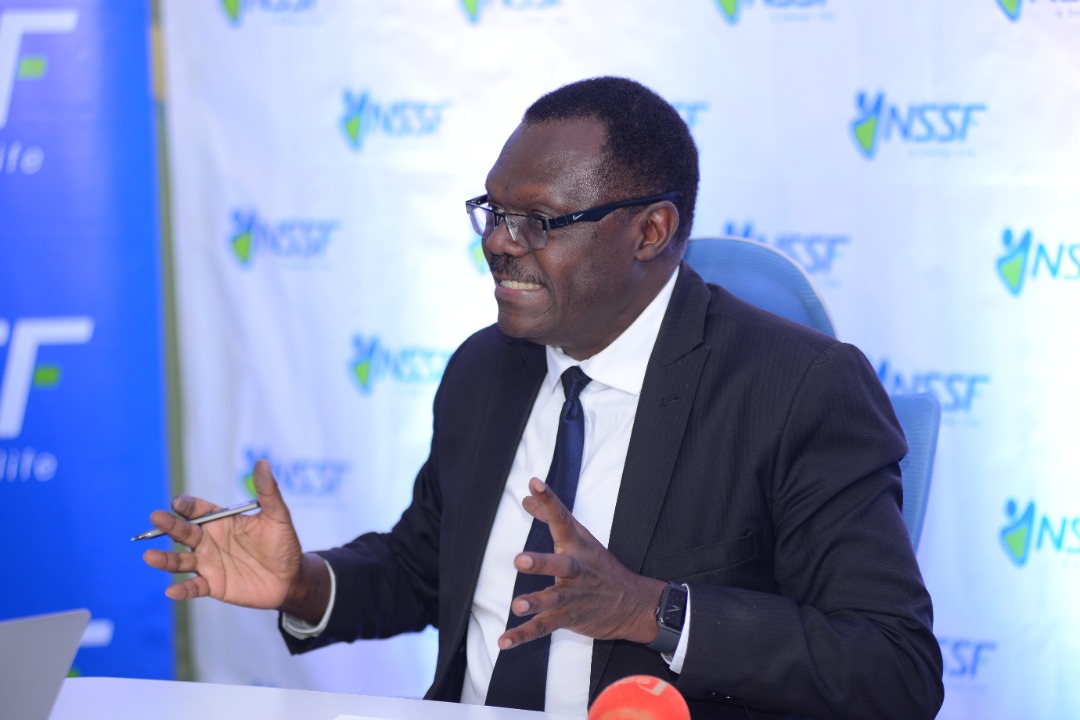
    Kampala: The National Social Security Fund (NSSF), in partnership with various companies, on Wednesday officially unveiled a loyalty programme where their members can access discounts on selected goods and services through theNSSF smart card.

    The initiative is one of the major features of the NSSF Smart card, a three-in-one social security card that embeds NSSF functionality and bank functionality in addition to the Loyalty program. This is in partnership with Visa, a global payments technology company, and Centenary Bank.

    NSSF deputy MD PatricK Ayota stressing a point on Wednesday

    Speaking at the launch of the program, the NSSF Ag. Managing Director Patrick Ayota said that the initiative was informed by Fund’s desire to be more relevant to the members.

    “A 2019 Post-Retirement survey we did showed that 60% of the benefits paid out to members had been allocated to house improvement/ construction and land. We therefore wanted to create more value for members by giving them an opportunity to acquire desirable assets at a subsidized rate before they retired, so that they can invest their retirement savings in more profitable ventures,” Ayota said.

    “It is an opportunity for our members to save money on desired purchases by getting cheaper but quality options from our partners. “He added.

    In addition, Ayota said that the Loyalty program was also an opportunity for the Fund to grow its membership. “Since the launch of the smart card six months ago, we have about 10,000 applications for the smart card with active usage standing at 60.7%. In addition, the LoyaltyProgram has been the major driver of these enrollments which is a clear indication that the programme has the potential to attract new members to the Fund through the various discounted offers from our partners,” Ayota said.

    There are currently nine merchants enlisted on the loyalty program from the real estate, construction, technology and hospitality industries.

    These include Uganda Clays and Uganda Baati in the construction sector, Appliance Worldand Elite Digital solutions in the technology industry, Fakhruddin Properties Limited, Universal multipurpose Enterprise limited, Buildnet Construction Materials and Hardware Limited, Emerald Consult and Estates Developer, Trinity Trusted Estates developers and Bakhaima Investments Limited in the real estate sector.

    The loyalty programme targets at least 50 merchants from various sectors.

    To join the NSSF Loyalty Programme, one has to first enroll for the NSSF Smart Card at the Workers House and Centenary Bank branches countrywide.

     Members can thereafter present their valid NSSF smart card to the participating merchants under this program at any of their selling locations to purchase discounted products or services.

    “We have started working on a system where the product discounts will automatically be activated when the smart card is swiped at any merchants’ point of sell machine for easier transactions,” Ayota explained.

    The current participating merchants can be found on https://www.nssfug.org/smartcard/ and various media channels.

    About Post Author

  • ERA, Stakeholders Discuss the Electricity Supply Industry Local Content

    ERA, Stakeholders Discuss the Electricity Supply Industry Local Content

    The Electricity Regulatory Authority(ERA) , a government agency that regulates, licenses, and supervises the generation, transmission, distribution, sale, export, and importation of electrical energy in Uganda has on Wednesday 10 November 2022 held the Electricity Supply Industry Local Content Forum 2022 under the theme; “Enhancing Local Content in Uganda’s Electricity Supply Industry for Social-Economic Transformation”.

    In  partnership with the Public Procurement and Disposal of Public Assets Authority (PPDA) and the National Bureau of Standards (UNBS), ERA held the Forum at Mestil Hotel Kampala to create a platform for stakeholders to interact and exchange ideas, views, and experiences on how to enhance Local Content in the Electricity Supply Industry, document challenges and opportunities of increasing Local content in the Electricity Supply Industry as well as provide updates on the progress of the Electricity Supply Industry.

    Speaking at the Forum, the State Minister for Energy, Hon. Sidronius Okaasai said that the Forum was organized at the right time when the government is promoting the buying and using of products manufactured in Uganda under the BUBU Policy.

    He, however, noted that there is a need to manufacture high quality products for the electricity infrastructure as poor-quality products will frustrate government efforts to ensure efficiency, quality of service, access, and affordability of Electricity services.

    ‘’The Ministry of Energy and Mineral Development will continue to work with other stakeholders, such as the Ministry of Trade, to ensure that standards are enforced and adhered to by local manufacturers. He commended ERA and other stakeholders for organizing the Forum’’, noted Hon. Okaasai.

    The ERA Board Chairperson, Dr. Sarah Wasagali Kanaabi, emphasized that ERA believes in and supports the use of high-quality locally manufactured equipment installed on the electricity network. She applauded His Excellency of the Republic of Uganda, Yoweri Kaguta Museveni, for always supporting and prioritizing the Electricity sub-Sector, which has enabled the creation of a conducive regulatory environment that is a benchmark on the whole continent of Africa.

    The ERA CEO, Eng. Ziria Tibalwa Waako noted that ERA is in the process of documenting manufacturers of equipment needed in the Electricity sub-Sector. She further indicated that ERA targets to have Local content guidelines to guide the entire process of acquiring locally manufactured electricity infrastructure equipment from manufacturers. She urged manufacturers to provide all the necessary information to ERA.

    The Forum was attended by a wide range of local manufacturers and licensees who applauded ERA, PPDA, and UNBS for organizing the Forum and pledged to cooperate and provide all the necessary information needed.

    About Post Author

  • UGANDA’S SHS6.5BN NAGOYA PROJECT STUMBLES! Investigation Flags Unspent Billions, Slow Implementation & Lack of Plan To Protect Gains As Closure Looms

    UGANDA’S SHS6.5BN NAGOYA PROJECT STUMBLES! Investigation Flags Unspent Billions, Slow Implementation & Lack of Plan To Protect Gains As Closure Looms

    KAMPALA – The future of a major government project aimed at protecting Uganda’s genetic resources and ensuring communities benefit from the country’s biodiversity wealth is hanging in the balance after a report raised concerns over funding gaps, slow implementation, unspent funds and lack of sustainability plans ahead of its closure.

    The Auditor General’s report for the period ended 31st December 2024 on the Institutional Capacity Strengthening for Implementation of the Nagoya Protocol on Access to Genetic Resources and Benefit Sharing in Uganda (ABS) Project reveals that millions of dollars meant to strengthen Uganda’s capacity under the international biodiversity agreement remain either unavailable, unspent or tied to activities yet to be achieved.

    The project, implemented by the National Environment Management Authority (NEMA) with support from the Global Environment Facility (GEF) and partner institutions including Makerere University, received an unqualified audit opinion, but the Auditor General pointed out several issues that could threaten the sustainability of the gains made once donor support ends.

    The Auditor General revealed that the total cumulative disbursements to the project stood at USD 1,746,612 (approximately Shs6.5 billion) against the expected USD 2,560,842 (approximately Shs9.5 billion), creating a shortfall of USD 814,230 (approximately Shs3 billion), representing 32 percent.

    The audit further established that implementation of planned activities was behind schedule.

    The Auditor General sampled 54 activities worth USD 1,523,605 (approximately Shs5.7 billion) and found that targets for only 19 activities worth USD 498,432 (approximately Shs1.9 billion) had been fully achieved.

    However, targets for the remaining 35 activities worth USD 1,025,173 (approximately Shs3.8 billion) had not yet been achieved.

    The financial performance of the project also raised concerns.

    According to the report, the project had an approved budget of USD 993,626 (approximately Shs3.7 billion) as at 31st December 2024, out of which USD 892,375 (approximately Shs3.3 billion) from the donor had been released.

    This resulted into a funding shortfall of USD 101,251 (approximately Shs377 million), representing 90 percent budget performance.

    The total amount available for spending was USD 893,109 (approximately Shs3.3 billion), including rolled-over unspent funds.

    However, despite the availability of resources, the project failed to utilise all the money.

    The Auditor General found that only USD 670,102 (approximately Shs2.5 billion) had been spent, leaving an unspent balance of USD 223,007 (approximately Shs830 million).

    The unspent funds were still held on the project bank account number 003500088400014 at Bank of Uganda, resulting in an absorption level of 75 percent.

    The Auditor General expressed concern over the future of the project after establishing that its closure date is nearing, but management had not provided evidence of sustainability measures to ensure the achievements made during the project lifespan would continue after donor funding ends.

    The project, which started in 2023, is a four-year initiative designed to strengthen Uganda’s institutional capacity to implement the Nagoya Protocol on Access to Genetic Resources and Benefit Sharing (ABS).

    The Nagoya Protocol, adopted in 2010 under the Convention on Biological Diversity (CBD), provides a framework for countries to benefit from the utilisation of genetic resources within their jurisdiction while ensuring conservation and fair sharing of benefits arising from their use.

    Uganda ratified the Convention on Biological Diversity on 8th September 1993, recognising the importance of its rich biodiversity in supporting wealth creation, national development, sustainable development goals and improving livelihoods of indigenous people and local communities.

    The ABS project was established because without adequate institutional capacity, Uganda risks failing to fully benefit from access to and utilisation of its genetic resources.

    The project focuses on strengthening the national regulatory and institutional framework for ABS, building government capacity to implement and enforce compliance with the Nagoya Protocol, developing professionals trained in ABS issues, strengthening ABS management at local government and community level, and increasing public awareness.

    A key part of the project is being implemented by Makerere University, which is responsible for training and producing professionals with knowledge of ABS under the Nagoya Protocol.

    The project is hosted in the Department of Plant Sciences, Microbiology and Biotechnology in the School of Biosciences at the College of Natural Sciences (CoNAS).

    The project is led by Dr. Katuura Esther, Principal Investigator and senior researcher at Makerere University, who is spearheading efforts to strengthen Uganda’s capacity under the Nagoya Protocol for Access to Genetic Resources and Benefit Sharing.

    NEMA is the executing agency working alongside the Uganda National Council for Science and Technology (UNCST) and other state and non-state partners including the Uganda Wildlife Authority (UWA), National Forestry Authority (NFA), Plant Genetic Resources Centre (PGRC), National Forestry Resources Research Institute (NaFORRI), National Chemotherapeutic Research Institute (NCRI), GIZ ABS Capacity Development Initiative, Karamoja Women Cultural Group (KWCG) and the United Organization for Batwa Development in Uganda (UOBDU).

    The Auditor General’s findings raise questions on whether the project will achieve all its intended objectives before its planned closure and whether Uganda will sustain the institutional capacity built under the Nagoya Protocol after donor funding comes to an end.


    GOT A HOT STORY? LET US KNOW!

    Got breaking news, explosive secrets, or hard evidence?

    Email us: redpeppertips@gmail.com

    We accept tips, documents, videos, photos, and recordings—the more evidence you have, the better.

    CONFIDENTIALITY IS OUR TOP PRIORITY. SOURCES ARE ALWAYS PROTECTED!

    About Post Author

About UGNEWS24

UGNEWS24 is a Uganda local news service, a product of SOLAVIA GROUP LIMITED, Reg. No. 80048169153974.

Registered office

Plot 2335, Buwambo-Katadde-Najjo Road,
Nansana Municipality, Wakiso District, Uganda
P.O. Box 214231, Kampala

© 2026 SOLAVIA GROUP LIMITED. All rights reserved.