Blog

  • The Renaissance of Uganda’s Western Acoustic: How Ray-G’s Vernacular Masterclass Redefined Uganda’s Cultural Cartography

    The Renaissance of Uganda’s Western Acoustic: How Ray-G’s Vernacular Masterclass Redefined Uganda’s Cultural Cartography

    By Atwemereireho Alex

    [email protected]

    To understand the cultural phenomenon of Reagan Muhairwe, known across East Africa as Ray-G, one must first examine the historical geography of Uganda’s creative industry. For over three decades following the political and socio-economic stabilization of the late twentieth century, the nation’s popular music economy operated under an unwritten law of linguistic hegemony. Kampala, the capital city, functioned as both the gatekeeper and the solitary forge of artistic legitimacy. To achieve national dominance, artists from the peripheral regions were tacitly required to abandon their native dialects in favour of Luganda or heavily Westernized Afro-pop templates. This socio-linguistic convergence created a monoculture that, while commercially lucrative, systematically disenfranchised the rich sonic traditions of the country’s regional hinterlands.

    It is within this historical context of linguistic margin versus central metropolis that Ray-G’s trajectory must be situated not merely as a triumph of individual artistic talent, but as an audacious counter-hegemonic act of cultural preservation and aesthetic democratization. Emerging from Ishaka, Bushenyi in Southwestern Uganda, Muhairwe did not seek permission from the establishment to sing in Runyankole. Instead, he elevated his indigenous mother tongue into a medium of sophisticated, universal pop poetry. When he made his first decisive waves with “Amarari” in 2014, his breakthrough single that announced his arrival by establishing Runyankole as a prime vessel for modern Afro-R&B pop storytelling followed by a relentless series of compositions that merged traditional Runyakitara vocal ornamentations with contemporary Afro-R&B production, he did something structurally unprecedented. He proved that regional authenticity was not a commercial limitation, but an untapped reservoir of global artistic distinction.

    The mechanics of Ray-G’s music lie in his rare ability to bridge the sacred and the profane, the ancestral and the modern. His signature vocal delivery carries the cadence of the ekyevugo (traditional praise poetry), stripped of performative archaicness and infused with a sleek, contemporary soulfulness. His expansive discography operates as a living archive where the linguistic nuances, spiritual worldviews, and emotional depth of the Ankole region are meticulously preserved. Consider foundational romantic masterpieces like “Rukundo”, where love is expressed through deep Banyankole metaphors of pastoral reverence, commitment, and vulnerability, or “Ninkwesiga”, a soul-stirring ballad anchored in themes of unconditional trust, faith, and emotional fidelity. In reflective tracks such as “Ow’eishe”, which celebrates ancestral identity and pride in one’s lineage, and “Checkmate”, a strategic pop anthem showcasing his lyrical dexterity, Ray-G constructs an intricate acoustic palette. His historic crossover collaboration “Omusheshe” (featuring Spice Diana) shattered regional barriers by blending central urban pop with western acoustic charm to dominate national airwaves. He further expanded this sonic range with “Make a Way (Mpigiza)”, an uplifting anthem detailing the struggle to carve out space against structural odds, and “Eizooba”, a poetic ode comparing love to the warmth and brilliance of the morning sun.

    His exploration of human connection deepens across compositions like “Ringaaniza”, a melodic call for emotional harmony and equity in relationships, and “Weena”, an intimate love song highlighting total devotion to a chosen partner. He honors family bonds in “Omwerere”, a tender lullaby and tribute to the nurture of young life, while “Mugore” serves as a quintessential wedding anthem celebrating the beauty, grace, and cultural dignity of a bride. Modern romantic sensibilities shine through in “Falling”, an R&B-infused ballad capturing the exhilarating sensation of romance, and “You & Me”, a cross-cultural love ballad seamlessly fusing English and Runyankole into universal pop poetry. Ray-G’s spirit of self-determination comes alive in “My Rules”, a defiant declaration of artistic independence setting his own terms in the industry, while “Enyena 100” delivers a playful, high-energy groove utilizing traditional livestock metaphors to express immense worth. Tracks like “Kunu” bring captivating energy built on rhythmic guitar riffs and infectious regional hookcraft, complemented by “Manvuli”, an evocative piece exploring shelter and sanctuary for a loved one. His spiritual depth is anchored by “Humura”, a comforting song of solace offering reassurance during trial, “Yahweh (God)”, a devout expression of praise acknowledging divine grace behind his journey, and “Jubilate”, a joyous, danceable celebration of triumph. Together with “Noteera (Okuba)”, a deeply emotional composition addressing vulnerability and heart-bound dedication, and “Yoya”, a passionate song of deep desire driven by visceral guitar work, his discography stands as a monumental cultural archive.

    Beyond aesthetics, the data of his career trajectory provides incontrovertible proof of a seismic shift in Uganda’s live music economy. For years, skeptics inside Kampala’s talent agencies argued that non-Luganda artists could never pull massive crowds outside their home districts. Ray-G methodically dismantled this myth. In September 2019, his 10-year anniversary show in Mbarara City drew record-breaking crowds that filled venue spaces to capacity. Fast-forward to May 2024, when he breached the central fortress by holding a triumphant, heavily attended concert at the iconic Lugogo Cricket Oval in Kampala. By November 1st, 2025, when over 20,000 ticket-holding fans flooded Kakyeka Stadium in Mbarara amidst torrential downpours to witness his performance, it became clear that his listener base was no longer just a fan club; it had matured into a cultural movement of historic proportions.

    This intellectual and artistic evolution is finding its definitive expression in the monumental showcase centering around Friday, August 7th, 2026, at the Kololo Independence Grounds in Kampala. The choice of venue is deeply symbolic. Kololo is not merely an open space; it is the national ceremonial altar, historically reserved for state functions, political transformations, and legendary musical heavyweights such as Jose Chameleone, Bebe Cool, and Eddy Kenzo. For an artist who built his entire foundation on Runyankole lyrics to take over Kololo under major national promotion—such as the backing of Abtex Promotions—is marking the definitive, unequivocal collapse of Kampala’s linguistic monopoly. The August 2026 Kololo concert is standing as an enduring institutional endorsement of regional art taking center stage on the national mantle.

    Critics who attempt to frame Ray-G’s success strictly through the lens of tribal pride miss the deeper, universal mechanics of his songwriting. Art does not achieve cross-cultural resonance because audiences understand every literal word; it resonates when the emotional frequency is undeniable. When Ray-G strums his acoustic guitar and belts out melodies in songs like “Eizooba” or “Yoya”, the listener in Gulu, Nairobi, London, or Kampala experiences a visceral sense of truth that transcends linguistic translation. He communicates human longing, heartbreak, hope, and resilience with an authenticity that forces the listener to honour the culture from which those feelings spring.

    Furthermore, Ray-G’s economic and cultural legacy extends far beyond his own discography. By establishing a viable, high-value music empire rooted in Western Uganda, he pioneered a sustainable blueprint for regional artists across the continent. Emerging talents such as T-Paul, Omega 256, and dozens of young producers and instrumentalists across the region now operate in an ecosystem whose gates were battered open by Muhairwe’s persistence. He proved that an artist does not need to abandon their rural roots or linguistic heritage to command seven-figure performance fees, corporate endorsements, and stadium-sized audiences. He decentralized creative capital, turning Mbarara into a secondary capital of Ugandan pop culture.

    As the international music community turns its eyes toward Africa, frequently focusing on the dominant outputs of Nigerian Afrobeats or South African Amapiano, scholars and musicologists must pay closer attention to indigenous East African sub-genres. Ray-G represents the vanguard of an authentic African acoustic renaissance. His work asserts that modernity does not require westernization, nor does national appeal require cultural erasure.

    As the lights illuminate the expanse of Kololo Grounds around the milestone of Friday, August 7th, 2026, the roar of the crowd is not merely celebrating a pop star performing his hit songs. It is signifying a historic coronation, a testament to a boy from Bushenyi who picked up an acoustic guitar, refused to alter his voice, and in doing so, permanently redrew the cultural, economic, and artistic map of East African music. Ray-G has achieved what only the rarest of cultural figures accomplish: he turned his mother tongue into a national treasure and his heritage into a global masterpiece.

    The writer is a lawyer, researcher and governance analyst (LLM-Natural Resources Law-Kampala International University).


    Do you have a story in your community or an opinion to share with us: Email us at Submit an Article

  • MUNI FAILS THE TEST! Report Flags Stalled Sh18bn Project, Low Research Output, Debts, Fees, Procurement Mess & Planning Failures

    MUNI FAILS THE TEST! Report Flags Stalled Sh18bn Project, Low Research Output, Debts, Fees, Procurement Mess & Planning Failures

    Muni University has come under intense scrutiny after the Auditor General uncovered a string of financial, procurement and management weaknesses despite issuing the institution with an unqualified audit opinion for the Financial Year 2024/2025.

    The audit paints a picture of an institution grappling with unpaid debts, revenue shortfalls, procurement irregularities, delayed projects, idle assets and poor implementation of its strategic plan.

    One of the most alarming findings is that the university accumulated domestic arrears amounting to UGX 904 million, contrary to the government’s commitment control system, raising concerns over its financial discipline and ability to meet obligations as they fall due.

    The Auditor General also established that the university failed to meet its Non-Tax Revenue (NTR) targets. Out of the expected UGX 4.893 billion, only UGX 4.162 billion had been collected by the end of the financial year, leaving a UGX 731 million (13%) shortfall.

    The report further notes that the university’s receivables increased by UGX 228 million (34%) during the year due to failure to enforce its fees payment policy, exposing weaknesses in revenue collection and debt recovery.

    Procurement management also came under fire. The Auditor General found that three procurements worth UGX 308 million were undertaken without carrying out mandatory market surveys as required under procurement regulations.

    Although the university had planned procurements worth UGX 7.443 billion during the financial year, contracts worth only UGX 6.373 billion were awarded, translating into an implementation rate of 85 percent.

    The audit also identified procurement worth UGX 72 million that was conducted using the direct procurement method without justification, contrary to procurement regulations.

    In another irregularity, the university shortlisted two bidders for procurements worth UGX 149 million even though they were neither on the university’s prequalified suppliers list nor on the PPDA list of approved suppliers.

    Competition in procurement was equally weak. The Auditor General observed a low bidder turnout for five procurements valued at UGX 3.282 billion, a situation that may have limited value for money and competitiveness.

    Implementation of development projects was also found wanting. Two contracts worth UGX 17.959 billion experienced delays ranging from one and a half months to as long as 56 months, raising concerns over project management and service delivery.

    The university’s long-term planning also suffered major setbacks. While implementation of its five-year strategic plan was estimated to cost UGX 210.842 billion, only UGX 147.676 billion was released during the planning period, creating a funding gap of UGX 63.166 billion, equivalent to 30 percent of the required resources.

    As a result, the institution was able to fully achieve only one out of the five planned strategic interventions, significantly affecting delivery of its development objectives.

    The Auditor General further established that assets worth UGX 545 million were either idle or underutilized, denying the university full value from investments already made.

    To make matters worse, the university did not have an approved asset management policy or documented procedures for monitoring the utilization of non-current assets, exposing public property to the risk of poor management and inefficient use.

    The Auditor General also raised concerns over research productivity at Muni University, revealing that only 38 out of 107 staff members (36%) published research during the period under review. The finding points to low research output at the institution, despite research being one of the core mandates of a public university.

    The findings are expected to attract scrutiny from Parliament’s accountability committees, which will require the university’s management to explain the financial and operational weaknesses and outline measures being taken to strengthen governance, improve revenue collection, tighten procurement processes and enhance implementation of strategic plans.


    GOT A HOT STORY? LET US KNOW!

    Got breaking news, explosive secrets, or hard evidence?

    Email us: redpeppertips@gmail.com

    We accept tips, documents, videos, photos, and recordings—the more evidence you have, the better.

    CONFIDENTIALITY IS OUR TOP PRIORITY. SOURCES ARE ALWAYS PROTECTED!

    About Post Author

  • Health Minister Baryomunsi Visits Dr. Besigye at Mulago, Wishes Him Quick Recovery

    Health Minister Baryomunsi Visits Dr. Besigye at Mulago, Wishes Him Quick Recovery

    The Minister of Health, Dr. Chris Baryomunsi, on Friday visited Dr. Kiiza Besigye at Mulago National Referral Hospital, where he is currently receiving medical treatment.

    In a statement shared on his X account after the visit, Dr. Baryomunsi said he found Dr. Besigye steadily recovering and extended his best wishes for a full and speedy recovery.

    “I paid a visit to Dr. Kiiza Besigye today morning at Mulago Hospital, where he is hospitalised. He is steadily recuperating and I wished him quick recovery,” the minister said.

    Dr. Baryomunsi also commended the medical team at the national referral hospital for their dedication and professionalism in caring for the patient.

    “I thank the team of medical workers that are attending to him,” he added.

    The minister’s visit comes as Dr. Besigye continues to receive treatment under the care of specialists at Mulago National Referral Hospital. No further details regarding his condition were disclosed.

    Do you have a story in your community or an opinion to share with us: Email us at Submit an Article

  • SH34BN PENALTY, DELAYED ROADS & SAFETY DEFECTS! Investigation Expose Mwondha’s World Bank Funded Multi-Billion North Eastern Road Corridor NERAMP Project Failures

    SH34BN PENALTY, DELAYED ROADS & SAFETY DEFECTS! Investigation Expose Mwondha’s World Bank Funded Multi-Billion North Eastern Road Corridor NERAMP Project Failures

    KAMPALA – The Auditor General has exposed major implementation failures, delayed road works, safety defects, unspent millions of dollars and costly financing penalties under the North Eastern Road Corridor Asset Management Project (NERAMP), piling pressure on officials who supervised one of Uganda’s biggest World Bank-funded road projects.

    The project, which was initially supervised by the Uganda National Roads Authority (UNRA) before oversight shifted to the Ministry of Works and Transport following the merger of UNRA into the ministry, was implemented with technical support from the World Bank. Ivan Emmanuel Mwondha, the Senior Transport Specialist at the World Bank Uganda, served as the project’s focal person and team leader.

    Approved by the World Bank Board in April 2014 at a cost of USD243.8 million (about Shs890 billion), the project was intended to rehabilitate and maintain the 340-kilometre Tororo–Mbale–Soroti–Lira–Kamdini road corridor, reduce transport costs, improve road safety and preserve road assets through performance-based contracts.

    However, according to the Auditor General’s report for the year ended 30 June 2025, implementation lagged badly despite billions of shillings being committed to the project.

    The audit shows that out of the approved IDA financing of USD243.8 million, only USD207.3 million had been disbursed, leaving an undisbursed balance of USD36.5 million.

    To make matters worse, depreciation of the Special Drawing Rights (SDR) against the US dollar reduced the value of the remaining financing, leaving only USD5.3 million available for withdrawal by 29 September 2025.

    Government counterpart funding also fell short.

    Out of the expected USD11.2 million contribution from the Government of Uganda, only USD5.5 million had been released by 30 June 2025, leaving USD5.7 million outstanding.

    The delays proved costly.

    The Auditor General found that implementation delays attracted commitment charges amounting to USD9.5 million (SDR5.9 million) on the undisbursed credit.

    At prevailing exchange rates, the commitment charges translate to approximately Shs34.7 billion, money paid because project funds remained undisbursed while implementation stalled.

    Despite project receipts of USD48.3 million during the 2024/25 financial year against an approved budget of USD46.1 million, representing 105 percent budget performance, spending remained low.

    Out of total available funds of USD71.9 million, only USD44.8 million was spent, leaving USD27.1 million unutilised.

    The Auditor General also found that the project continued to experience significant implementation delays.

    On the 150.8-kilometre Tororo–Mbale–Soroti section, only minimal rehabilitation works had been completed.

    Although the 189.4-kilometre Soroti–Lira–Kamdini road recorded better progress, with asphalt, base and sub-base layers reaching 99 percent, 99.7 percent and 99.7 percent respectively on Lot 2B, several planned improvement works remained incomplete.

    For Lot 1A and Lot 1B, revised work programmes showed that several activities would extend beyond the IDA credit expiry date of 31 December 2025.

    On Lot 2, only Lot 2B pavement works had been completed by September 2025, while several improvement works still stood at zero percent progress as of 30 June 2025.

    The audit further exposed serious deficiencies in completed works.

    Auditors found blocked drainage channels, missing road signs, worn-out road markings, unsafe overtaking lane applications on sharp bends, inadequate speed calming measures in high-risk areas, damaged inlet kerbs, damaged inspection chambers and inadequate environmental, social, health and safety conditions at Ngetta Quarry.

    The project’s objective was to reduce transport costs, improve road safety and sustainably preserve road infrastructure along the Tororo–Kamdini corridor through cost-effective asset management contracts.

    World Bank records indicate the project officially closed on 31 December 2025, with Ivan Emmanuel Mwondha serving as the World Bank’s Senior Transport Specialist and project focal person during its implementation.

    The Auditor General’s findings now raise difficult questions over why a flagship infrastructure project backed by nearly USD244 million accumulated Shs34.7 billion in delay penalties, left USD27.1 million unspent, failed to complete critical road works before the financing deadline and continued to exhibit safety and construction defects despite years of implementation under the supervision of UNRA, the Ministry of Works and Transport and the World Bank project team.


    GOT A HOT STORY? LET US KNOW!

    Got breaking news, explosive secrets, or hard evidence?

    Email us: redpeppertips@gmail.com

    We accept tips, documents, videos, photos, and recordings—the more evidence you have, the better.

    CONFIDENTIALITY IS OUR TOP PRIORITY. SOURCES ARE ALWAYS PROTECTED!

    About Post Author

  • KABALE VARSITY EXPOSED! Probe Uncovers Sh22.2Bn Land Risk, 75% Staff Gaps, Research Crisis & Procurement Failures

    KABALE VARSITY EXPOSED! Probe Uncovers Sh22.2Bn Land Risk, 75% Staff Gaps, Research Crisis & Procurement Failures

    KABALE – Kabale University is under the spotlight after the Auditor General exposed a catalogue of operational, procurement, staffing and planning failures that have left billions of shillings worth of public assets exposed, critical vacancies unfilled and key development programmes only partially implemented.

    The Auditor General’s report for the financial year ended December 2025 paints the picture of a university grappling with severe human resource shortages, weak procurement planning, underfunded strategic programmes and declining research output despite continued government investment.

    One of the biggest concerns raised by the Auditor General is the university’s staffing crisis.

    Out of an approved establishment of 2,068 positions, only 516 posts, representing 25 percent, had been filled, leaving 1,543 positions, or 75 percent, vacant across both academic and administrative departments.

    The staffing gap raises concerns over the institution’s capacity to effectively deliver teaching, research and administrative services.

    The audit also questioned the university’s management of outstanding receivables.

    Kabale University reported receivables worth Shs603.8 million, of which Shs409.1 million accrued during the 2024/2025 financial year, while Shs194.7 million relates to unpaid student balances accumulated between 2018 and 2024, indicating that significant debts have remained outstanding for several years.

    The procurement function also came under scrutiny.

    The Auditor General found that although the university initiated a procurement worth Shs106.3 million for implementation in the following financial year, management failed to prepare the mandatory multi-year procurement plan.

    The report further reveals that although the university was required to reserve Shs2.72 billion, equivalent to 15 percent, for registered associations, only Shs184.2 million, representing just one percent, was actually awarded.

    Implementation of the annual procurement plan also fell short.

    Out of planned procurements worth Shs18.1 billion during the financial year, contracts worth only Shs12.36 billion, representing 67 percent, were awarded.

    The Auditor General further established that two obsolete university assets had been recommended for disposal but were never included in the institution’s 2024/2025 procurement and disposal plan, leaving questions over delayed disposal of redundant government property.

    Planning weaknesses were also flagged.

    A comparison between the university’s Strategic Plan cost estimates and actual funding for the period 2020/21 to 2024/25 revealed a 37.5 percent funding gap, significantly affecting implementation of planned activities.

    To make matters worse, auditors established that by 1 July 2025, Kabale University had still not finalised a new Strategic Plan aligned to the Fourth National Development Plan (NDP IV), meaning the institution entered a new planning cycle without an updated strategic framework.

    The Auditor General also questioned the pace of implementation of university programmes funded through the non-payroll budget.

    Out of Shs8.33 billion assessed under non-payroll expenditure, only 17 outputs worth Shs2.01 billion were fully implemented, while 21 outputs valued at Shs6.33 billion were only partially implemented.

    One of the most alarming findings concerns university land worth Shs22.24 billion.

    The Auditor General found that land at the Main Campus and Nyabikoni, valued at Shs22.24 billion, remains unfenced, exposing the public property to potential encroachment, illegal occupation or loss.

    The audit also exposed a worrying decline in academic research.

    Among eight public universities reviewed, only Makerere University and Mbarara University recorded satisfactory research participation.

    At Kabale University, only 28 out of 320 academic staff, representing just nine percent, published research during the period under review, highlighting low participation in one of the university’s core mandates.

    The Auditor General attributed the poor research performance across the affected universities to inadequate mentoring structures, limited training in proposal development and weak incentives for junior researchers.

    The report further examined The Political Economy of Food System Governance Around Lake Victoria Project, implemented by Kabale University for the period ended 31 December 2024.

    Auditors found that the project received only DDK 103,275.6, representing 32 percent of its approved budget of DDK 327,130, leaving a funding shortfall of DDK 223,854.36. Using an approximate exchange rate of 1 Danish Krone (DKK) ≈ Shs580, the shortfall is equivalent to roughly Shs130 million, significantly constraining planned project activities.

    The Auditor General’s findings now pile pressure on Kabale University’s management to explain how an institution entrusted with billions of shillings in public resources continues to operate with three-quarters of its approved workforce vacant, billions in planned activities only partially delivered, critical procurement requirements ignored, valuable government land left exposed without a fence and research output remaining far below expected levels.


    GOT A HOT STORY? LET US KNOW!

    Got breaking news, explosive secrets, or hard evidence?

    Email us: redpeppertips@gmail.com

    We accept tips, documents, videos, photos, and recordings—the more evidence you have, the better.

    CONFIDENTIALITY IS OUR TOP PRIORITY. SOURCES ARE ALWAYS PROTECTED!

    About Post Author

  • LIRA UNIVERSITY MESS! Probe Exposes Sh14Bn Failures as VC, Council Boss Power War Deepens

    LIRA UNIVERSITY MESS! Probe Exposes Sh14Bn Failures as VC, Council Boss Power War Deepens

    LIRA – Lira University’s top bosses are under fresh scrutiny after the Auditor General uncovered a trail of financial, procurement, planning and performance failures worth billions of shillings, even as the institution is being torn apart by an ugly leadership war that has forced the Office of the Attorney General to intervene.

    The Auditor General’s report for the financial year ended December 2025 paints a troubling picture of an institution struggling with weak planning, poor budget implementation, procurement irregularities, declining revenue performance and limited research output despite receiving billions of taxpayers’ money.

    The findings come barely months before an unprecedented power struggle exploded into public view between Vice Chancellor Prof. Dr. Jasper Ogwal Okeng and University Council Chairperson David Geoffrey Opiokello, exposing deep divisions at the institution over who should run the university.

    According to the Auditor General, the university diverted UGX 147 million from the current year’s budget to settle domestic arrears that had not been budgeted for, raising questions over adherence to approved budget allocations.

    The audit also established that receivables amounting to UGX 980 million included UGX 260 million dating as far back as 2016, suggesting the university had failed for years to recover outstanding funds.

    The procurement function also came under fire after the Auditor General found that although the university had planned procurements worth UGX 3.1 billion, contracts worth only UGX 2.44 billion were awarded, representing an implementation rate of just 79 percent.

    Even more troubling, auditors established that the university failed to prepare a multi-year procurement plan for the construction of its Administration Block, despite awarding the project at a contract price of UGX 13.82 billion.

    Planning failures stretched beyond procurement.

    The Auditor General found that by 1 July 2025, the university had still not finalised a new draft Strategic Plan aligned to the Fourth National Development Plan (NDP IV), leaving the institution operating without an updated strategic roadmap at the commencement of the planning period.

    Implementation of government-funded programmes also fell far below expectations.

    Out of 10 planned outputs worth UGX 14.3 billion, auditors found that only five outputs valued at UGX 2.5 billion were fully implemented, while the remaining five outputs worth UGX 11.8 billion were only partially implemented.

    Revenue generation also failed to meet expectations.

    The university had projected to collect UGX 7.5 billion in Non-Tax Revenue (NTR) from tuition, functional fees and other services but managed to realise only UGX 4.8 billion, leaving a UGX 2.7 billion shortfall, equivalent to 36 percent of the target.

    The Auditor General further highlighted poor academic research performance, revealing that participation by academic staff remained extremely low.

    At Lira University, only 22 out of 116 academic staff, representing just 19 percent, published research during the period under review.

    The report attributes the weak research culture to inadequate mentoring structures, limited training in proposal development and weak incentives for junior researchers.

    The audit findings now add another layer of pressure to an institution already engulfed in one of the most bitter leadership battles ever witnessed at a public university.

    On 3 August 2026, the Office of the Attorney General dispatched a high-powered delegation led by Deputy Solicitor General Charles Ouma to Lira University for a crisis meeting with top management over what officials described as “pertinent university issues.”

    The meeting brought together Vice Chancellor Prof. Dr. Jasper Ogwal Okeng, University Council Chairperson David Geoffrey Opiokello, Appointments Board Chairperson Onyik Bosco and other senior university officials.

    The intervention followed an extraordinary exchange of letters between the Vice Chancellor and the University Council.

    In a letter dated 27 July 2026, the University Council questioned why Prof. Ogwal-Okeng had resumed office earlier than expected after sick leave, whether his leave had been lawful, whether he had obtained medical clearance before returning to work and why he allegedly reversed several Council resolutions made during his absence.

    The Council also questioned decisions concerning the Deputy Vice Chancellor (Academic Affairs), who had been assigned to perform the functions of the Vice Chancellor during the period of absence.

    Instead of backing down, Prof. Ogwal-Okeng responded in a strongly worded letter dated 31 July 2026, accusing Council Chairperson David Geoffrey Opiokello of unlawfully interfering in the day-to-day management of the university.

    The Vice Chancellor reminded the Council Chairperson that under Section 31(1)(i) of the Universities and Other Tertiary Institutions Act, the Vice Chancellor is the university’s chief academic, administrative and financial officer with exclusive responsibility for managing the institution’s daily affairs.

    He accused Opiokello of bypassing the Office of the Vice Chancellor by issuing operational directives directly to university staff and acting beyond the powers granted to him by law.

    Prof. Ogwal-Okeng further directed that all future operational communication be routed through the Office of the Vice Chancellor and warned staff against implementing what he described as unlawful instructions issued outside established university procedures.

    In perhaps the most explosive part of his response, the Vice Chancellor bluntly told the Council Chairperson that if he could not operate within the legal framework governing public universities, “the most responsible action for you is to resign.”

    The explosive correspondence was copied to the Chancellor, the Minister of Education and Sports, the Attorney General, the Permanent Secretary in the Ministry of Education, members of the University Council, the University Senate, the Academic Registrar and the University’s Legal Department, exposing the extent of the internal divisions.

    With the Auditor General exposing billions in planning, procurement, implementation and revenue shortcomings while the institution’s top leaders battle openly over authority, serious questions are now emerging over whether the leadership entrusted with steering Lira University has been focused on fixing the institution’s operational weaknesses or consumed by a power struggle that continues to overshadow the university’s core mandate.


    GOT A HOT STORY? LET US KNOW!

    Got breaking news, explosive secrets, or hard evidence?

    Email us: redpeppertips@gmail.com

    We accept tips, documents, videos, photos, and recordings—the more evidence you have, the better.

    CONFIDENTIALITY IS OUR TOP PRIORITY. SOURCES ARE ALWAYS PROTECTED!

    About Post Author

  • Uganda Breweries celebrates 80 years with special World Beer Day deals

    Uganda Breweries celebrates 80 years with special World Beer Day deals

    To mark the World Beer Day, Uganda Breweries Limited (UBL) is inviting Ugandans to enjoy a special World Beer Day offer at participating bars and outlets nationwide.

    Friends can buy five selected UBL beers, across the portfolio featuring Bell Lager, Guinness, Tusker, White Cap, and Pilsner, for the price of four.

    Adding to the excitement, mystery shoppers will visit outlets across the country to surprise consumers enjoying UBL brands with exclusive gifts and rewards.

    After a week of chasing deadlines and keeping the country moving, World Beer Day provides a timely reminder to pause and celebrate shared connections. Beer has long played an integral role in how Ugandans gather, turning ordinary Friday meet-ups into memorable moments.

    At the heart of this celebration is “Tunyuke, Lunaku lwa Beer.” Tunyuke is a familiar Luganda expression capturing that universal end-of-day moment when work stops, tools go down, and it is time to relax.

    UBL is tapping into this daily ritual to honor the nation’s hard work with well-earned leisure, because in Uganda, the real celebration doesn’t start until you’ve clocked out. 

    World Beer Day allows us to recognize both our consumers and the hospitality ecosystem that brings people together.

    Beyond offering Ugandans a reason to pause and catch up, this celebration directly supports our local retail partners and kafundas by driving excitement and foot traffic back into neighborhood businesses after a productive week.

    Elizabeth Mutamuliza, Marketing Manager Beer at UBL

    Whether heading to a local bar, meeting colleagues, or stopping by a neighborhood shop, this Friday is an open invitation to kunyuka.

    Step away from the desk, the boda, the counter, or the garden, and gather at the nearest outlet to toast the day responsibly.

    As UBL marks 80 years of brewing excellence, this World Beer Day stands as a tribute to eight decades of bringing Ugandans together.

    Tunyuke. Lunaku lwa Beer.

    Drink Responsibly. Not for persons under the age of 18. Please drink and celebrate responsibly, designate a sober driver or use a safe ride home.

    The post Uganda Breweries celebrates 80 years with special World Beer Day deals appeared first on MBU.

  • TV REVOLUTION! MTN Launches MTNTV With 60 Live TV Channels, 53 Radio Stations, Movies & Sports

    TV REVOLUTION! MTN Launches MTNTV With 60 Live TV Channels, 53 Radio Stations, Movies & Sports

    MTN Uganda has officially launched MTNTV, a digital entertainment platform designed to transform how Ugandans discover, access and enjoy content. The platform brings together local and international television, radio, movies, sports, news and on-demand entertainment in one convenient streaming experience, reinforcing MTN’s ambition to become Uganda’s leading digital lifestyle provider.

    Available on smartphones, tablets, smart TVs and web browsers, MTNTV offers customers access to more than 60 live television channels, 53 radio stations, movies, TV series, children’s programming, sports, exclusive African originals and content from Ugandan creators, giving customers the freedom to watch what they want, whenever and wherever they choose.

    Speaking at the launch on Friday, 7th August , 2026 in Kampala, Sylvia Mulinge, Chief Executive Officer of MTN Uganda, said the platform reflects the company’s continued commitment to delivering innovative digital services that respond to changing customer needs.

    “At MTN, we believe connectivity should unlock opportunities, experiences and possibilities. As our customers embrace digital lifestyles, they are looking for more than access to the internet. They want quality entertainment, trusted information and content that reflects who they are. MTNTV delivers exactly that, while creating greater value for our customers and supporting the continued growth of Uganda’s creative economy.”

    She added that the platform provides a new opportunity for Ugandan broadcasters, filmmakers, musicians and content creators to reach wider audiences through a single digital platform.

    “Today, we are not simply launching a streaming platform. We are taking another step in MTN’s evolution as a technology company, delivering digital experiences that connect people not just to each other, but to opportunities, creativity and the content they love.”

    L-R Kevin Kaija, Sylvia Mulinge and Fred Otunnu during the MTN TV Launch

    MTNTV has been developed in partnership with Afromobile, combining MTN Uganda’s extensive digital reach with Afromobile’s expertise in content aggregation and streaming technology to create a seamless viewing experience.

    Kevin Kaija, General Manager of Afromobile, said the partnership demonstrates the power of collaboration in strengthening Africa’s digital content ecosystem.

    “MTNTV is more than a streaming platform. It is a gateway for African stories, creators and broadcasters to reach wider audiences through world-class technology. Together with MTN Uganda, we are making quality entertainment more accessible while supporting the continued growth of Uganda’s creative industry.”

    The launch was officiated by Fred Otunnu, Director of Corporate Affairs at the Uganda Communications Commission, who welcomed initiatives that advance Uganda’s digital transformation agenda while promoting locally relevant content.

    “The future of Uganda’s digital economy will be shaped not only by the networks we build, but by the digital services, local content and innovations that those networks enable. We welcome initiatives such as MTNTV that empower creators, expand consumer choice and contribute to building an inclusive and vibrant digital ecosystem.”

    UCC’s Fred Otunnu hailed MTN TV for championing digitalisation and local content

    MTNTV offers both Freemium and Premium viewing options. MTN customers with an active data bundle can enjoy a wide selection of free content, while Premium subscribers can unlock the full catalogue through affordable daily, weekly and monthly subscriptions. Premium users can also download selected content for offline viewing, stream across up to three devices simultaneously and personalise their viewing experience across multiple profiles.

    The launch of MTNTV marks another milestone in MTN Uganda’s strategy to build a comprehensive digital ecosystem that combines connectivity, fintech and digital services to enrich customers’ everyday lives while creating new opportunities for Uganda’s growing creative industry.

    As part of the launch, MTNTV also announced its sponsorship of King Saha’s Tondeka e’ Kololo concert, scheduled for 14 August 2026. The concert will be streamed live on MTNTV and made available afterwards as video-on-demand, underscoring the platform’s commitment to bringing Ugandans closer to the country’s biggest entertainment experiences while supporting local artists.


    About Post Author

  • ANKOLE PLU WARNS MUHOOZI CRITICS! Mobilisers Told to ‘Fire Back Peacefully’ as Leaders Condemn Attacks on Gen. Kainerugaba

    ANKOLE PLU WARNS MUHOOZI CRITICS! Mobilisers Told to ‘Fire Back Peacefully’ as Leaders Condemn Attacks on Gen. Kainerugaba

    By Amos Tayebwa

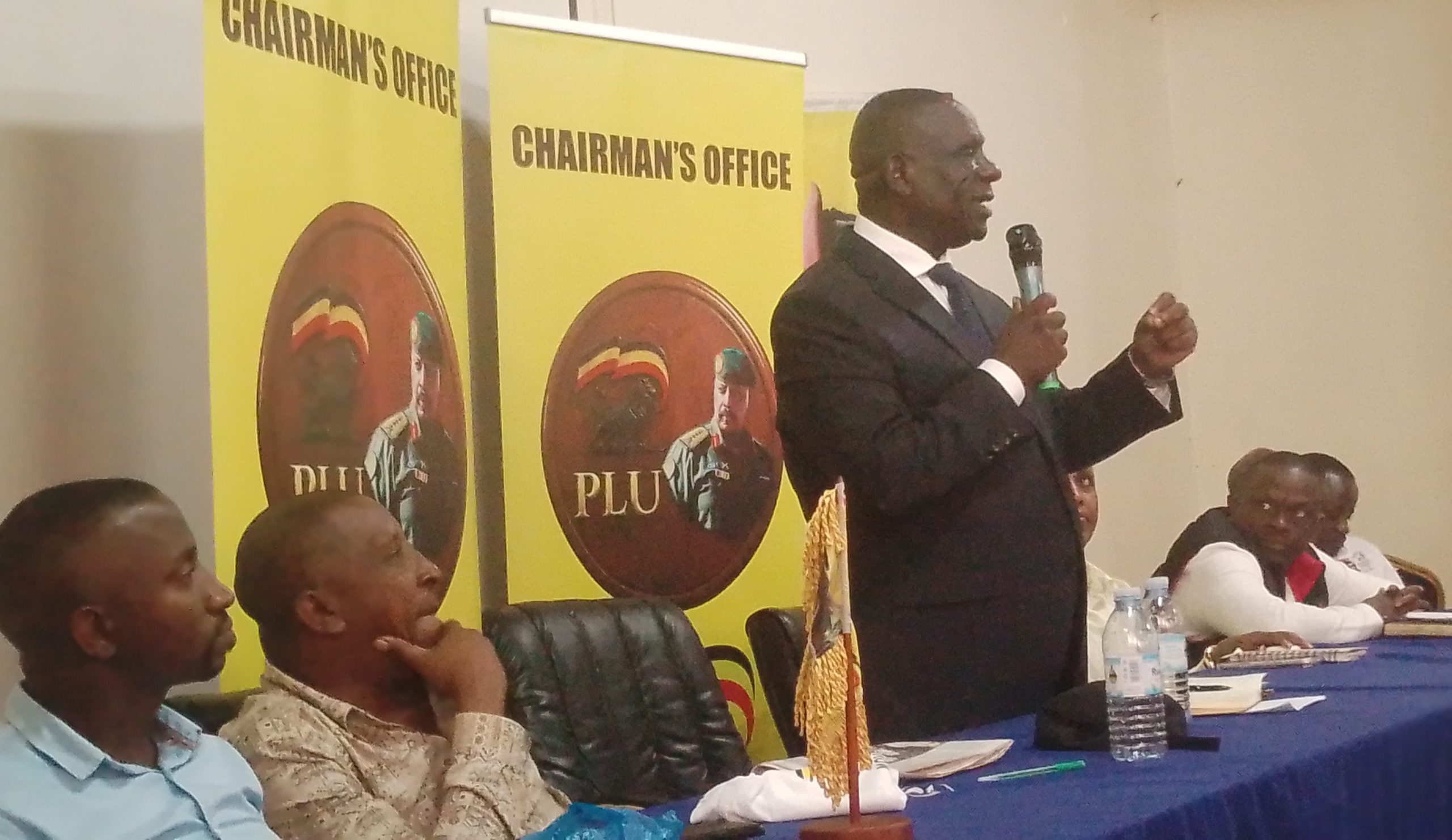
    MBARARA – Patriotic League of Uganda (PLU) leaders from the Ankole sub-region have condemned what they described as growing disrespect and attacks against their national chairman, Gen. Muhoozi Kainerugaba, urging supporters to remain disciplined while responding firmly—but peacefully—to critics of the First Son and other leaders of the pressure group.

    The call was made during a meeting held at Pelican Hotel in Mbarara on Wednesday, August 5, 2026, where PLU leaders met regional mobilisers and members of the media to discuss mobilisation strategies and the future direction of the movement.

    Ankole PLU Coordinator Polly Katwiire accused some social media users and sections of the public of abusing digital platforms to insult and undermine Gen. Kainerugaba, whom he described as a leader of the next generation.

    Katwiire, who also serves as Assistant Resident City Commissioner (RCC) for Mbarara City, said PLU members have endured sustained attacks from political opponents who continue to spread falsehoods about the movement and its leadership.

    He urged supporters to remain focused on promoting PLU’s message while defending their leader through lawful and peaceful means.

    “This time we are in a struggle and we have many enemies who are fighting us and our leader Gen. Kainerugaba, but I want to ask our supporters to remain disciplined. Let us spread information that promotes our leader Gen. Kainerugaba. But still do not allow anybody to attack our leader. If one tries it, especially our enemies, as mobilisers or supporters you have to fire back—but peacefully. Don’t be violent. Our mission is to promote PLU and our leader,” Katwiire said.

    PLU Director of Mobilisation and Igara East MP Michael Mawanda Malanga also called for discipline and unity among the movement’s supporters, saying mobilisation efforts should focus on inspiring Ugandans rather than personal interests.

    Michael Mawanda and the rest of PLU Coordinators

    Mawanda said the pressure group had embarked on a journey to achieve its objectives and set an ambitious membership target of more than six million supporters.

    “We have started the journey to build our main objectives and aim, so let us be focused and minimise the excitement. We want over six million people as members and we shall make it,” he said.

    He cautioned mobilisers against being driven by money and instead urged them to identify challenges affecting their communities so they can be addressed through socio-economic transformation programmes.

    Mbarara City Woman MP Charity Kibaju pledged her full support to Gen. Kainerugaba, particularly in the fight against corruption in Mbarara City and across Uganda.

    Kibaju said she would back Gen. Kainerugaba should he decide to contest for the presidency, provided that the fight against corruption remains at the centre of his agenda.

    Several regional coordinators attended the meeting, including former Isingiro RDC Herbert Muhangi, former Fort Portal RDC Steven Asiimwe, aspiring Western Youth MP Bruce Mugisha, and other PLU mobilisers from across the Ankole sub-region.


    GOT A HOT STORY? LET US KNOW!

    Got breaking news, explosive secrets, or hard evidence?

    Email us: redpeppertips@gmail.com

    We accept tips, documents, videos, photos, and recordings—the more evidence you have, the better.

    CONFIDENTIALITY IS OUR TOP PRIORITY. SOURCES ARE ALWAYS PROTECTED!

    About Post Author

  • King Michael defends tent concert choice despite social media criticism

    King Michael defends tent concert choice despite social media criticism

    King Michael has defended his decision to stage his recent concert in a tent outside Serena Hotel instead of using the venue’s traditional conference hall, insisting the event was a success despite criticism.

    The singer revealed that the outdoor setup was a deliberate choice after he was advised that ongoing construction near the hall would make access and parking difficult for guests. He explained that rather than risk inconveniencing fans, he opted for the open-air arrangement.

    While many social media users questioned the turnout and claimed the concert failed to attract a large crowd, King Michael says the event met all his expectations.

    We ashamed our critics and everything went according to plan. I focused much on the tables and they were 60, and people were like 500. The choice was mine to hold it outside because they advised me that it wasn’t convenient to park because the side under construction was blocking access to the hall, so we held it outside. What matters is that I went back home with money with no debts.

    He added that he is not bothered by critics, saying they are wasting their time because he is satisfied with the outcome of the concert.

    Riding on what he believes is renewed momentum, King Michael says he is now one of the trending artists in the country and is planning more performances in Mbale and other towns. After completing the shows, he intends to take a holiday in Zanzibar before travelling to Canada.

    @galaxytv_ug

    King Micheal Responds To Critics Over Coronation Venue Choice! #JikonkoneRewind

    ♬ original sound – Galaxy TV 𝐉𝐢𝐤𝐨𝐧𝐤𝐨𝐧𝐞!

    The post King Michael defends tent concert choice despite social media criticism appeared first on MBU.

About UGNEWS24

UGNEWS24 is a Uganda local news service, a product of SOLAVIA GROUP LIMITED, Reg. No. 80048169153974.

Registered office

Plot 2335, Buwambo-Katadde-Najjo Road,
Nansana Municipality, Wakiso District, Uganda
P.O. Box 214231, Kampala

© 2026 SOLAVIA GROUP LIMITED. All rights reserved.