Blog

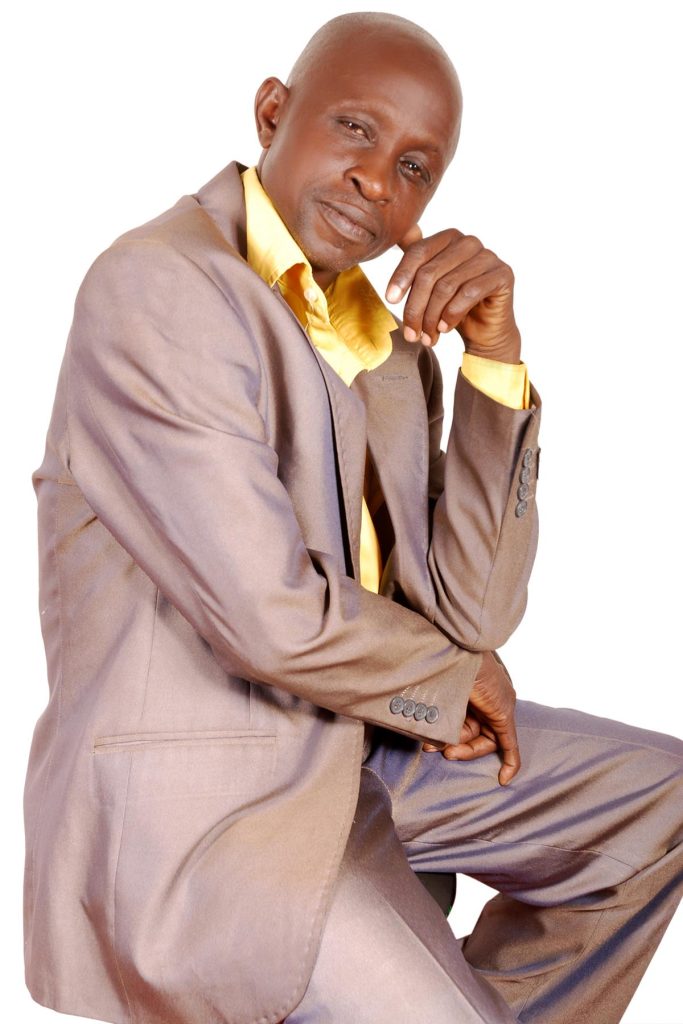
  • Willy Mukabya Promises Fans an Unforgettable Performance at Ataakulaba Akunyooma Concert

    Willy Mukabya Promises Fans an Unforgettable Performance at Ataakulaba Akunyooma Concert

    As Willy Mukabya prepares for the Ataakulaba Akunyooma Concert at Sheraton Kampala Hotel, the veteran musician says fans should expect the same performer who once lit up stages across Uganda.

    Mukabya insists his passion for entertaining has not faded, even if some people no longer associate him with the success he enjoyed at the peak of his career.

    He says anyone who questions his ability should come and experience the performance firsthand.

    People see me now and think I am nothing, but what they do not know is that I was bad in my days. Let all of them come to Sheraton today and see what they missed in the old days.

    Mukabya also believes the continued popularity of Ndowoza Napapa Nyoo reflects the lasting appeal of music created with longevity in mind.

    The song has recently gained renewed attention on TikTok, where users continue to create dance challenge videos around it.

    For Mukabya, that revival reinforces the approach he has followed throughout his career.

    I do not do music that lasts for a short time. I make music that even my grandchildren will listen to in the future.

    Mukabya will join a lineup of Kadongo Kamu legends at the Ataakulaba Akunyooma Concert on July 31.

    Organised by Balunywa Promotions, the event celebrates Uganda’s rich storytelling tradition through classic Kadongo Kamu performances.

  • Da Agent Explains Why He Took a Romantic Turn on ‘Daddy’

    Da Agent Explains Why He Took a Romantic Turn on ‘Daddy’

    Da Agent says the reception to Daddy has convinced him that the song is becoming one of Uganda’s biggest hits.

    Rather than existing as just a TikTok trend, the LugaFlow rapper believes the track has found its way into everyday life, with many people who are not active on the platform embracing it as well.

    Speaking on Sanyuka TV, he said:

    The song is already on the ground. People know it—not only those on TikTok, but also people who are not on TikTok.

    The success of Daddy did not happen by chance.

    Da Agent intentionally moved away from the high-energy style that defined songs like Tewepima Nange and Ngalo Ngalo.

    Instead, he opted for a slower, more romantic approach that he believed would connect better with women.

    You cannot vibe a girl or a woman with styles like ‘Ngalo Ngalo.’ You have to slow it down a bit and be romantic for the feelings to arise.

  • AYA Group: Driving Uganda’s Socio-Economic Transformation and Africa’s Industrial Future

    AYA Group: Driving Uganda’s Socio-Economic Transformation and Africa’s Industrial Future

    In every generation, a few companies do more than build businesses—they help build nations. AYA Group, founded by visionary entrepreneur Mohammed Hamid, has become one of Uganda’s leading home-grown conglomerates, playing a transformative role in industrialization, employment creation, infrastructure development, hospitality, logistics, and regional trade.

    From a modest beginning, AYA Group has grown into a diversified multinational enterprise with operations across Uganda, Kenya, Tanzania, Rwanda, Burundi, South Sudan, and the Democratic Republic of the Congo, alongside international businesses in Dubai, United Arab Emirates, and New York, United States. Today, the Group stands as a symbol of African entrepreneurship, innovation, and long-term investment.

    Transforming Uganda Through Industrialization:

    AYA Group has consistently invested in industries that create lasting value for Uganda’s economy. Through subsidiaries such as Aya Mills, Aya Bakery, and Aya Biscuits, the Group has strengthened Uganda’s manufacturing sector by producing high-quality food products locally.

    These investments have:

    * Reduced dependence on imported food products.
    * Added value to Uganda’s agricultural produce.
    * Created stable markets for farmers.
    * Strengthened national food security.
    * Generated thousands of direct and indirect employment opportunities.

    By integrating agriculture with manufacturing, AYA Group has helped transform Uganda from a consumer market into a producer of high-quality manufactured goods.

    Creating Employment and Developing Human Capital:

    One of AYA Group’s greatest contributions is its investment in people.

    Across its businesses, the Group has created employment opportunities for thousands of Ugandans in manufacturing, hospitality, transport, logistics, construction, mining, real estate, and administration.

    Beyond employment, AYA Group has invested heavily in training young professionals, empowering local talent with practical skills, leadership experience, and career development opportunities.

    Every job created supports families, stimulates local businesses, and contributes to national economic growth.

    Transforming Uganda’s Hospitality Industry

    AYA Group redefined Uganda’s tourism and hospitality sector through the development of the iconic Pearl of Africa Hotel, now operating as WorldHotels Luxury Kampala.

    Constructed at an investment of approximately US$300 million, the hotel is one of East Africa’s premier luxury hospitality destinations.

    The development has:

    * Elevated Uganda’s international hospitality standards.
    * Enhanced Kampala’s capacity to host global conferences and major events.
    * Increased tourism investment.
    * Created hundreds of direct and indirect jobs.
    * Strengthened Uganda’s international image as an investment and tourism destination.

    The hotel continues to contribute significantly to the country’s tourism and meetings, incentives, conferences, and exhibitions (MICE) industry.

    Strengthening Regional Trade and Logistics:

    Through Fifi Transport Limited, AYA Group operates a modern fleet of cargo trucks connecting Uganda with regional markets.

    The company’s logistics network facilitates the efficient movement of agricultural commodities, manufactured products, and commercial goods across East Africa.

    Combined with Pan Afric Commodities Limited, which trades agricultural produce, the Group has become an important link between farmers, manufacturers, exporters, and international markets.

    These investments improve regional trade, reduce transport costs, and strengthen East Africa’s economic integration.

    Investing Across Strategic Sectors

    AYA Group has strategically diversified into industries that drive long-term national development, including:

    * Food Processing
    * Flour Milling
    * Bakery & Confectionery
    * Hospitality
    * Real Estate Development
    * Transportation & Logistics
    * Commodity Trading
    * Mining
    * International Trade
    * Property Development
    * Investments

    This diversification enhances economic resilience while contributing to Uganda’s industrial growth.

    Giving Back Through the Aya Foundation

    Economic success has been matched by a strong commitment to social responsibility.

    Through the Aya Foundation Limited, the Group supports vulnerable children requiring expensive specialized medical treatment that would otherwise be beyond the reach of many families.

    The Foundation has positively impacted numerous lives by providing hope, healthcare, and opportunities for children facing life-threatening illnesses.

    Its work reflects AYA Group’s belief that business success should translate into meaningful social impact.

    A Home-Grown African Success Story

    AYA Group represents what is possible when African entrepreneurs invest confidently in Africa.

    Its investments have demonstrated that local enterprises can successfully undertake projects of international scale while creating sustainable employment, strengthening domestic industries, and contributing to national development.

    The Group’s continued expansion across Africa reflects Uganda’s growing capacity to produce companies capable of competing on the global stage.

    Partnership with Government for National Development

    During the launch of the landmark hotel development, Chairman Mohammed Hamid publicly acknowledged the Government of Uganda for creating an enabling investment environment that encourages private-sector growth.

    This partnership between government and private enterprise illustrates how collaboration can accelerate economic transformation and national prosperity.

    Looking Ahead:

    As Uganda advances toward middle-income status and Africa accelerates industrialization under the African Continental Free Trade Area (AfCFTA), AYA Group is well positioned to remain a key driver of regional economic development.

    Its continued investments in manufacturing, hospitality, logistics, infrastructure, and international trade are expected to generate even greater employment, expand exports, strengthen regional integration, and improve the quality of life for millions of Africans.

    AYA Group is more than a business conglomerate—it is a catalyst for economic transformation, a champion of African enterprise, and a lasting symbol of Uganda’s ambition, resilience, and progress.

    Do you have a story in your community or an opinion to share with us: Email us at Submit an Article

  • END OF AN ERROR! IGG Orders Chris Obore’s Interdiction

    END OF AN ERROR! IGG Orders Chris Obore’s Interdiction

    KAMPALA: Parliament’s corridors of power have been rocked after the Inspector General of Government (IGG), Lady Justice Naluzze Aisha Batala, ordered the immediate interdiction of seven senior officials, including longtime Director of Communications and Public Affairs Chris Obore, over corruption charges currently before the Anti-Corruption Court.

    The dramatic directive, Friday, July 31, instructs the Clerk to Parliament, Adolf Mwesige, to immediately suspend the officials from duty pending the final determination of the criminal case against them.

    Besides Obore, those affected are Director of Human Resource Daniel Adilo, Principal Research Officer Rajab Kaaya Ssemalulu, Principal Protocol Officer Emmanuel Emuron Okwi, Capacity Development Officer Vincent Otebata, Executive Secretary in the Office of the Speaker Leonard Okema, and Office Supervisor in the Office of the Sergeant-at-Arms Stella Itute.

    The seven officials are currently on remand at Luzira Prison after appearing before the Anti-Corruption Court on July 1, 2026, where they were charged with embezzlement and causing financial loss contrary to the Anti-Corruption Act. They have not been convicted, and the criminal proceedings are ongoing.

    In her directive, the IGG invoked powers under Article 230 of the Constitution and Section 13(6) of the Inspectorate of Government Act, arguing that public interest requires the officials to step aside while the case is heard.

    According to the IGG, allowing the accused officials to continue exercising the powers and functions of their offices during the trial would be contrary to the public interest and could undermine confidence in public institutions.

    The move marks one of the most significant actions yet in the ongoing anti-corruption crackdown targeting senior public officials and sends a strong signal that the Inspectorate of Government intends to pursue accountability at the highest levels of public service.

    With seven senior Parliament officials now out of office and facing criminal proceedings, attention shifts to the Anti-Corruption Court, where the fate of some of Parliament’s most influential administrators will be decided.


    GOT A HOT STORY? LET US KNOW!

    Got breaking news, explosive secrets, or hard evidence?

    Email us: redpeppertips@gmail.com

    We accept tips, documents, videos, photos, and recordings—the more evidence you have, the better.

    CONFIDENTIALITY IS OUR TOP PRIORITY. SOURCES ARE ALWAYS PROTECTED!

    About Post Author

  • JASON MUGIZI: The Disenfranchised Parish: Why the LC2 Electoral College Must Fall

    JASON MUGIZI: The Disenfranchised Parish: Why the LC2 Electoral College Must Fall

    A fundamental doctrine of democratic constitutionalism dictates that public offices vested with identical sovereign mandates must derive their authority from uniform mechanisms of legitimacy. In any constitutional order premised on the rule of law, a legislative framework cannot arbitrarily fragment the franchise across different tiers of local government without fracturing the integrity of the whole system.

    Yet under Uganda’s decentralized framework, governed by the Local Governments Act, a striking statutory contradiction persists. While local leaders at the LC1 (Village), LC3 (Sub-County/Division), and LC5 (District/City) levels as well as their corresponding councilors are elevated through direct universal adult suffrage, the Parish Local Council (LC2) leadership is chosen through an indirect electoral college composed strictly of LC1 executive committee members. This arrangement creates an untenable structural inconsistency that disenfranchises the broader electorate, violates constitutional principles of equality, and erodes grassroots democratic governance.

    The constitutional illegitimacy of the LC2 electoral college is rooted in its conflict with the overarching architecture of the 1995 Constitution of Uganda. Under Article 176, the Constitution explicitly commands that the local government system shall be based on democratically elected councils on the basis of universal adult suffrage. To carve out the administrative parish tier and subject it to a delegated, indirect vote while surrounding levels operate under direct universal suffrage violates the core principle of legislative coherence.

    Indeed, there is no qualitative distinction in constitutional mandate between an LC1 Chairperson overseeing a village, an LC2 Chairperson overseeing a parish, and an LC3 Chairperson overseeing a sub-county. All three function as executive heads of administrative units empowered to manage public affairs, resolve local disputes, and oversee government programs. To assign vastly different criteria for conferring legitimacy upon leaders exercising parallel administrative functions creates an arbitrary legal hierarchy.

    This dichotomy directly violates Article 21 of the Constitution, which guarantees that all persons are equal before and under the law, prohibiting discrimination in political participation. When citizens in a parish are granted direct ballots for LC1, LC3, and LC5 positions but are stripped of their vote at the LC2 level, the law creates a class of citizens who are arbitrarily disenfranchised from electing their direct administrative overseers.

    Filtering the parish franchise through an executive delegate pool infringes upon additional core constitutional protections. Article 1(1) affirms that all power belongs to the people, to be exercised in accordance with the Constitution. By interposing an electoral college, the law forces citizens to surrender their sovereign choice to a proxy delegate pool without express delegation, diluting popular consent. Furthermore, Article 59(1) establishes the constitutional right of every adult citizen to vote in public elections, while Article 38(1) secures the right to participate in government affairs through freely chosen representatives. A leader chosen by a handful of village executives cannot be said to be “freely chosen” by the universal electorate of that parish.

    This statutory dissonance closely mirrors the concerns addressed in landmark constitutional jurisprudence. In Rubaramira Ruranga v. Electoral Commission & Attorney General (Constitutional Petition No. 21 of 2006), the Constitutional Court emphasized that local government electoral processes cannot rely on contradictory mechanisms that undermine competitive democracy and basic electoral rights. Similarly, in Kasozi Robinson v. Attorney General (Constitutional Petition No. 37 of 2010), the court scrutinized indirect electoral systems, noting that delegate structures are inherently prone to distortion, elite manipulation, and accountability gaps unless strictly supported by an explicit constitutional mandate.

    The reality on the ground highlights an undeniable paradox: a parish resident directly elects their village leader, sub-county chairperson, district governor, local councilors, and Member of Parliament, yet is legally barred from casting a ballot for the parish leader who directly administers public services, local security, and socio-economic transformation frameworks like the Parish Development Model (PDM).

    To eliminate this constitutional friction and restore democratic integrity to local governance, Parliament must enact corrective legislation to amend the Local Governments Act. The provisions prescribing electoral colleges for LC2 executive committees should be repealed and substituted with clauses mandating direct universal adult suffrage by secret ballot, placing LC2 elections on equal statutory footing with all other local government tiers.

    A constitutional republic cannot maintain contradictory standards for conferring democratic authority upon leaders holding equivalent public mandates. By confining the election of LC2 chairpersons to an indirect electoral college while reserving universal adult suffrage for surrounding levels, Uganda’s statutory scheme perpetuates an unjustified democratic deficit. Rectifying this through targeted legislative amendment is not merely a matter of administrative alignment; it is a fundamental constitutional obligation to uphold the equal dignity of the franchise and ensure that power truly derives from the consent of the governed.

    The author is a lawyer and a lecturer for the information management and practice

    Do you have a story in your community or an opinion to share with us: Email us at Submit an Article

  • Brig. Gen. John Mango Baraza Takes Over as SFC Chief of Staff 

    Brig. Gen. John Mango Baraza Takes Over as SFC Chief of Staff 

    Brigadier General John Mango Baraza has officially assumed office as the Chief of Staff (COS) of the Special Forces Command (SFC), succeeding Brigadier General Paul Wanyera Namawa, who is set to attend a National Defence Course at Kimaka in Jinja.

    The handover ceremony was presided over by the Deputy Commander of the Special Forces Command, Brigadier General Asaph Mweteise Nyakikuru, at the SFC Headquarters in Entebbe on Thursday 30th, July, 2026.

    Brig. Gen. Namawa, the pioneer Chief of Staff of the SFC, assumed the position on August 23, 2024, following the establishment of the office under the UPDF Establishment 2021. The office is responsible for overseeing the control and administration of the Special Forces Command.

    Presenting his handover report, Brig. Gen. Namawa highlighted the office’s structure, mandate, achievements, ongoing projects, planned initiatives, and recommendations for his successor. He noted that his tenure oversaw the completion and advancement of key infrastructure projects, including accommodation units, office blocks, health centres, training school dormitories, cookhouses, stores, and the renovation of existing facilities.

    He expressed gratitude to the UPDF leadership for entrusting him with the responsibility of serving as the first SFC Chief of Staff. He also thanked the Commander of the Special Forces Command, Major General David Mugisha, for his guidance and unwavering support, and commended the Chief of Defence Forces, Gen. Muhoozi Kainerugaba for his leadership.

    Brig. Gen. Namawa further conveyed appreciation to the Commander-in-Chief, H.E. Gen. Yoweri Kaguta Museveni, for his continued guidance in building a professional and capable army.

    In his remarks, Brig. Gen. Baraza accepted the responsibility with gratitude and pledged to work closely with the SFC leadership and personnel to further strengthen the command. He called for teamwork, cooperation, and dedication from all officers and staff.

    Prior to his appointment, Brig. Gen. Baraza served as the Director of Human Resource Management (DHRM)- SFC. He handed over that office to Colonel Night Ikiriza, who previously served as Deputy Director of Human Resource Management and Head of Administration.

    Presiding over the ceremony, Brig. Gen. Nyakikuru praised Brig. Gen. Namawa for laying a firm institutional foundation for the Chief of Staff’s office and commended his exemplary leadership and achievements during his tenure. He congratulated him upon his selection for the prestigious National Defence Course and wished him success in his studies.

    Welcoming Brig. Gen. Baraza to his new role, Brig. Gen. Nyakikuru encouraged him to build on the progress already made, consult his predecessor whenever necessary, and continue fostering teamwork, professionalism, and commitment in advancing the mission of the Special Forces Command.

    The ceremony also marked the handover of several key appointments across the Special Forces Command:

    Director Political Commissar: Col. Gilbert Owamagyezi took over from Col. Moses Musinguzi.

    Commander, 16 Service Brigade: Lt. Col. Frank Murema took over from Col. RR Tugume.

    Commander, 2 Protective Agents Brigade: Lt. Col. Sam Kabweera took over from Col. B. Matsiko.

    Commandant, VVIP Training School, Sera Kasenyi: Maj. AK Mugabi took over from Lt. Col. SB Mucunguzi.

    Commanding Officer, 6 Infantry Battalion: Maj. RR Mutungi took over from Lt. Col. Sam Kabweera.

    Commandant, Fort Samora Machel Training School, Waza: Maj. A. Nsobya took over from Lt. Col. E. Beyendera.

    Deputy Director of Operations: Lt. Col. AC Kaawe took over from Lt. Col. Frank Murema.

    Commander, 804 Motorised Infantry Brigade: Lt. Col. Justus Kakonge took over from Lt. Col. Moses Maiku.

    Director of Personnel Policy: Col. PM Lokut took over from Maj. James Turinawe.

    Commanding Officer, 2 Infantry Battalion: Maj. Fred Mugabi took over from Maj. M. Abaho.

    Administration, Directorate of Operations: Lt. Col. M. Muyanda took over from Maj. Matumba.

    Public Information Officer (PIO), SFC: Capt. J. Kabandize took over from Maj. JD Omara.

    Chief Instructor, Fort Samora Machel Training School, Waza: Capt. G. Chandiga took over from Maj. A. Nsobya.

    Intelligence Officer, Nakasero: Lt. SM Tumusiime took over from Capt. J. Kabandize.

    The changes form part of the Special Forces Command’s ongoing leadership transition aimed at strengthening command, administration, and operational effectiveness across its formations.

    Do you have a story in your community or an opinion to share with us: Email us at Submit an Article

  • Bien says his Uganda music remarks were taken out of context – Sqoop

    Bien says his Uganda music remarks were taken out of context – Sqoop

    Kenyan singer and former Sauti Sol frontman Bien-Aimé Baraza has broken his silence following the backlash sparked by his recent comments about Uganda’s music industry, insisting that his views were taken out of context.

    The award-winning musician took to social media to clarify that his intention was never to belittle Ugandan artists or undermine the country’s music industry.

    “A few comments I made on a recent podcast are being shared without the full context,” Bien wrote.

    He explained that the viral snippets circulating online did not accurately represent the broader conversation during the interview.

    “I want to be clear: my intention was to share my perspective, not to disrespect Ugandan music or the artists who continue to shape and grow it,” he added.

    Bien also accused some blogs of selectively quoting his remarks to fit what he described as a divisive narrative.

    Responding to a post by Galaxy FM Uganda, he questioned where he had ever claimed that Ugandan artists were “comfortable serving the local market” at the expense of international growth.

    “This statement is false. At what point did I speak of Ugandan artists as comfortable serving the local market and that coming at a cost? The video is there. Telling half-truths to suit your divisive narrative,” he wrote.

    The singer further pointed to his long-standing collaborations with Ugandan musicians as evidence of his admiration for the country’s music industry.

    According to Bien, his relationship with Ugandan artists dates back several years, including touring Europe with Joshua Baraka before the latter’s collaboration with a Kenyan artist and working with him on one of his breakthrough songs.

    “My track record in collaborating with Ugandans speaks for itself. I toured Europe with Joshua Baraka even before he toured with a Kenyan artist. I collaborated with him on his first breakout single,” he stated.

    Bien concluded by thanking those who had taken time to watch the full podcast instead of relying on short clips, reiterating his respect for Uganda’s music fraternity.

    “If you’ve only seen the blogs or short clips, they don’t reflect the full conversation. I appreciate everyone who has taken the time to listen to what I actually said. Much love and respect to the music community.”

    Don’t want to miss out on any story? For updates on all Sqoop stories, follow this link on Telegram: https://t.me/Sqoop

  • Selecta Jeff Challenges Young DJs to Stop Chasing Veteran Approval

    Selecta Jeff Challenges Young DJs to Stop Chasing Veteran Approval

    Ugandan DJ and music curator Selecta Jeff has urged young DJs to stop forcing themselves to play old school music simply to win approval from veteran DJs.

    Sharing his thoughts on X, Jeff said many upcoming DJs drift away from the genres they enjoy because they feel pressured to prove themselves to more experienced colleagues.

    Instead of chasing validation, he encouraged them to embrace the music that best matches their strengths.

    Young DJs, please stop forcing yourselves to play OldSkool to impress fellow DJs (Especially Veteran DJs).. if it ain’t your thing, don’t sweat it.

    Jeff said there is nothing wrong with sticking to genres such as afrobeats, new school r&b, hip-hop, amapiano, and dancehall if that is where a DJ feels most confident.

    He also pointed out that some genres demand a different level of technical ability.

    For him, old school hip-hop is one of them because it calls for more than simply selecting the right songs.

    There are some genres that come with a little bit extra skill set.

    Jeff added that scratching remains an important part of performing old school hip-hop, and he expects DJs who choose that lane to demonstrate those skills behind the decks.

    Personally, I don’t rate a DJ that plays OldSkool HipHop & Can’t perform a few scratch patterns.. I mean, this ain’t Amapiano Bro.. Put your fingers to work..

    While encouraging young DJs to keep developing their craft, Selecta Jeff maintained that authenticity matters more than trying to impress fellow DJs by playing music that does not suit them.

  • Davido Claims He Is the Only Billionaire’s Child to Build His Own Fortune

    Davido Claims He Is the Only Billionaire’s Child to Build His Own Fortune

    Davido believes his journey to stardom sets him apart from every other billionaire’s child.

    The Nigerian Afrobeats star has claimed that no billionaire heir, either in Africa or anywhere else in the world, has built a personal brand and fortune the way he has despite growing up in immense wealth.

    Davido made the bold statement during a recent episode of The Vibe Podcast, where he reflected on the obstacles he faced after deciding to pursue music.

    According to the singer, his family background worked against him in the early days of his career because many people preferred artists with “grass-to-grace” stories.

    He said some critics dismissed his talent simply because he came from a wealthy family.

    Even with those challenges, Davido said he stayed focused and built a career that speaks for itself.

    Not to brag, but which other billionaire’s child do you know, not just in Africa but in the world, that has made a name for himself and also made a lot of money? You can’t name one apart from me.

    Davido is the son of Nigerian billionaire businessman Adedeji Tajudeen Adeleke, whose business empire spans power generation, real estate, logistics and education.

    The singer has often acknowledged the privileges that came with his upbringing, but he has repeatedly argued that success in the music industry required far more than financial backing.

    He says he earned his place through hit records, consistent performances and years of hard work.

    Today, Davido ranks among Africa’s biggest music stars, with multiple chart-topping songs, sold-out concerts and collaborations with some of the world’s biggest artists.

  • Ayra Starr and Tems Take Their Global Rise to Hollywood

    Ayra Starr and Tems Take Their Global Rise to Hollywood

    Ayra Starr and Tems are making their mark beyond music.

    The Nigerian stars have joined Children of Blood and Bone, one of Hollywood’s most anticipated fantasy films.

    Paramount Pictures announced their involvement as it unveiled the movie’s first trailer.

    Ayra Starr will make her Hollywood acting debut in the film, while Tems will oversee the soundtrack as its executive producer.

    Their latest achievement places them alongside Hollywood heavyweights including Viola Davis, Idris Elba, Regina King, Cynthia Erivo, Chiwetel Ejiofor, Damson Idris, Lashana Lynch, Thuso Mbedu, and Amandla Stenberg.

    The film adapts Tomi Adeyemi’s bestselling novel, a story that has earned worldwide acclaim for its African-inspired fantasy world.

    Ayra Starr’s move into acting and Tems’ growing role behind the scenes underline how African artists continue to expand their influence across the global entertainment industry.

    Children of Blood and Bone will open in cinemas and IMAX on January 15, 2027.

About UGNEWS24

UGNEWS24 is a Uganda local news service, a product of SOLAVIA GROUP LIMITED, Reg. No. 80048169153974.

Registered office

Plot 2335, Buwambo-Katadde-Najjo Road,
Nansana Municipality, Wakiso District, Uganda
P.O. Box 214231, Kampala

© 2026 SOLAVIA GROUP LIMITED. All rights reserved.