Blog

  • WINDFALL! UK Mining Firm Blencowe Strike Shs4.7Trn Graphite Jackpot in Kitgum, Putting Uganda at the Heart of the Global EV Battery Industry

    WINDFALL! UK Mining Firm Blencowe Strike Shs4.7Trn Graphite Jackpot in Kitgum, Putting Uganda at the Heart of the Global EV Battery Industry

    Thousands of residents in Kitgum and neighbouring districts could benefit from increased employment, business opportunities and infrastructure development after London-listed mining company Blencowe Resources raised the value of its Orom-Cross Graphite Project to US$1.254 billion (about Shs4.7 trillion) following an updated Definitive Feasibility Study.

    The Orom-Cross Graphite Project is a major potential world-class graphite deposit located in the Kitgum District of northern Uganda, managed by Blencowe Resources. It holds an estimated 2 to 3 billion tons of total graphite content near the surface, aiming to become Uganda’s first commercial graphite mine with targeted production beginning around 2027.

    The revised valuation strengthens the commercial prospects of the graphite mine in Orom East Sub-county and is expected to improve the project’s ability to attract financing ahead of construction and production, which is targeted to begin in 2027.

    Prepared by Australian engineering firm CPC Engineering, the updated feasibility study increased the project’s post-tax Net Present Value by 15% compared to the original study of December 2025.

    According to Blencowe’s July 2026 project report, the mine is expected to generate US$4.466 billion in post-tax cash flow over its lifespan while maintaining its capital requirement at US$170 million. The study projects average annual production of 108,000 tonnes of graphite concentrate and annual EBITDA of US$333 million.

    Blencowe attributed the stronger financial outlook to expanded graphite resources, improved mine planning, downstream processing, new offtake agreements and demand for graphite outside China.

    “Project now significantly de-risked,” the company said, noting that the updated study incorporates revised prices, increased reserves, new products and updated operating costs.

    The revised valuation follows a significant increase in the project’s mineral inventory. JORC-compliant graphite resources have increased by 168 per cent to 64.3 million tonnes grading 6.04 per cent Total Graphitic Carbon (TGC), while mineable reserves have risen by 47 per cent to 23.08 million tonnes grading 5.18 per cent TGC after the 2025 drilling programme.

    The company also announced discovery of two new high-grade deposits, Beehive and Iyan. Only 2% of the licence area is so far explored, leaving considerable potential for further resource expansion.

    Dan Michael Komakech, Communications and Public Relations Officer at Consolidated Africa Resources Limited (CARL), which is implementing the project in Uganda, said the latest drilling confirmed the deposit is substantially larger than previously estimated.

    “The latest drilling campaigns show that the deposit is massive,” Komakech. “Geologists estimate the resource to be between two and three billion tonnes.”

    He added that deeper drilling had shown the high-quality graphite extends well beyond the initial exploration depth, increasing confidence in the project’s long-term commercial viability.  As part of its value-addition strategy, Blencowe plans to process graphite in Uganda instead of exporting raw concentrate. A beneficiation plant will be built at Orom before a Spheronised Purified Graphite (SPG) processing plant is established in Angagura Sub-county, Pader District, to produce battery-grade graphite for lithium-ion batteries.

    The company said local processing will significantly increase the value of Uganda’s graphite exports while positioning the country among the first producers of spherical purified graphite outside China.

    The project has also attracted international support.

    The United States International Development Finance Corporation has provided a US$5 million technical assistance grant and retains first rights to provide debt financing for mine development, while the European Union-backed SAFELOOP programme has selected Orom-Cross as its exclusive supplier of natural flake graphite for next-generation electric vehicle batteries.

    Beyond its commercial potential, the company says the project will deliver direct benefits to surrounding communities through employment, local procurement, infrastructure development, education scholarships and continued engagement with residents.

    Komakech said the company began by helping local landowners formalise their land rights through the Lochomu Communal Landowners Association before signing surface rights agreements to access the mining area.

    “Before you access the resource, you have to pass through someone’s land. What we did was empower the community by helping them acquire a land title in their own names under the Lochomu Communal Landowners Association,” he said.

    He added that environmental and social impact studies found no households would require resettlement because there are no permanent settlements within the mining licence area.

    The company has also opened access roads across the 2,073-hectare mining licence area and connected the project to two electricity transmission lines through support from the Ministry of Energy and Mineral Development.

    In neighbouring Angagura Sub-county, Pader District, local landowners have already sold 100 acres to the company for the planned SPG processing plant. Komakech said the company paid US$70,000 for the land, with surveys already underway ahead of environmental assessments and construction.

    George Odong, a resident of Kitgum Municipality, has appealed to the project’s developers and the government to prioritise residents for employment and business opportunities as the Orom-Cross Graphite Mine prepares to begin production in 2027.

    Odong said the multi-billion-dollar investment would only have a meaningful impact if it created jobs for communities hosting the project.

    “We have lived with this project throughout the exploration phase. Now that production is nearing, our expectation is that our children and other residents will be given priority for employment,” he said.

    Rose Akello, a caterer at Kitgum Main Market, urged the company to reserve procurement opportunities for local suppliers, including transporters, food vendors and other small businesses.

    She said the company should begin informing communities about available jobs and contracts and explain how residents can apply.

    “It would be unfair to recruit cooks from another district when there are women living nearby who are capable of doing the same work,” Akello said. “Local people should be the first to benefit.”

    She warned that if residents are excluded from jobs and procurement contracts, the economic benefits of the project would largely bypass the host communities.

    The Orom-Cross Graphite Project, developed by Blencowe Resources through CARL, covers approximately 2,073 hectares in Akurumor Parish, Orom East Sub-county.

    Geological studies estimate the deposit contains between two and three billion tonnes of graphite, enough to support mining for more than 50 years and position Uganda as a key supplier of graphite for the global electric vehicle battery industry.


    GOT A HOT STORY? LET US KNOW!

    Got breaking news, explosive secrets, or hard evidence?

    Email us: redpeppertips@gmail.com

    We accept tips, documents, videos, photos, and recordings—the more evidence you have, the better.

    CONFIDENTIALITY IS OUR TOP PRIORITY. SOURCES ARE ALWAYS PROTECTED!

    About Post Author

  • Gen. Muhoozi Returns Home After Two-Day Visit to Kigali

    Gen. Muhoozi Returns Home After Two-Day Visit to Kigali

    Uganda’s Chief of Defence Forces and Senior Presidential Advisor for Special Operations, Gen. Muhoozi Kainerugaba, yesterday returned home after wrapping up a two-day working visit to Kigali, Rwanda.

    The visit was headlined by a meeting with Rwandan President Paul Kagame, where the two discussed ways to deepen cooperation between Uganda and Rwanda, with particular focus on regional peace, security and strengthening ties between the neighbouring countries.

    Gen. Kainerugaba’s visits to Rwanda have become a familiar feature of the improving relationship between Kampala and Kigali. In recent years, his engagements with President Kagame have played a significant role in rebuilding trust after a period of strained diplomatic relations that disrupted trade and cross-border movement.

    Those efforts were publicly acknowledged by President Kagame during a visit to Uganda, when he praised Gen. Kainerugaba’s contribution to restoring relations between the two countries.

    “Great generals are not those who fight and win wars, but those who win peace,” President Kagame remarked, describing the Ugandan army chief’s role in helping mend ties.

    Beyond high-level diplomatic meetings, Gen. Kainerugaba also took time to explore some of Kigali’s ongoing development projects. He toured the King Faisal Hospital Expansion Project, visited Nyandungu Eco Park and the Parklane Estate residential development, accompanied by Kigali City Mayor Sam Dusengiyumva.

    Sports development also featured on his itinerary. Gen. Kainerugaba met NBA Africa CEO Clare Akamanzi to discuss opportunities for growing basketball in Uganda. Among the ideas explored was the establishment of a Junior NBA League in partnership with Uganda’s Ministry of Education and Sports, aimed at nurturing young talent across the country.

    As his visit concluded, Gen. Kainerugaba was seen off at Kigali International Airport by Rwanda Defence Force Chief of Defence Staff Gen. Mubarakh Muganga. He was joined by RDF Republican Guard Commander Maj. Gen. Willy Rwagasana and Uganda’s Defence Attaché to Rwanda, Col. Ezekiel Matsiko, marking the end of a visit that underscored the continued warmth in relations between the two countries.

    Do you have a story in your community or an opinion to share with us: Email us at Submit an Article

  • IGG Steps Up Probe Into Alleged Busega–Mpigi Expressway Fund Mismanagement

    IGG Steps Up Probe Into Alleged Busega–Mpigi Expressway Fund Mismanagement

    The Inspector General of Government (IGG), Lady Justice Naluzze Aisha Batala, yesterday visited the Busega–Mpigi Expressway project as investigations into alleged misuse of funds allocated to the multi-billion-shilling road project gather pace.

    The site inspection forms part of the Inspectorate’s efforts to verify what has been completed on the ground and collect evidence to support an ongoing investigation into allegations surrounding funds meant for the 23-kilometre expressway and its 20 kilometres of access roads.

    Speaking during the visit, Lady Justice Naluzze said the team was assessing the current state of the project, including the reasons behind changes made to its original design.

    “We came to establish what exists on the ground, including the basis for the redesign of the project. The findings from this inspection will provide critical evidence to support our ongoing investigations. We are also keen to understand the factors that led to the project’s cost escalating from UGX 600 billion to UGX 1.3 trillion, so that we can determine whether the increase was justified and in the public interest,” she said.

    She revealed that the inspection had already uncovered new leads that could broaden the scope of the investigation.

    Accompanied by technical officers from the Ministry of Works and Transport, the IGG said the emerging findings would help investigators gain a clearer understanding of what caused delays to the project and whether there were irregularities in its planning, redesign and implementation.

    The Inspectorate is also seeking to establish whether any public officials altered the project’s designs or processes for personal benefit, with a view to ensuring that anyone found culpable is held accountable under the law.

    Among those who accompanied the IGG were Director of Project, Risk Monitoring and Control Annet Twine, Director of Legal Affairs Hilda Talibba, Assistant Director of Public Relations Hajjat Munira Ali, and other officials from the Inspectorate.

    The inspection comes just weeks after the Ministry of Works and Transport implemented an IGG directive issued on 1 July 2026, suspending two engineers, Edwin Raymond Kiyaga and Dickens Ahimbisibwe, over allegations linked to the alleged embezzlement of funds earmarked for the construction of the Busega–Mpigi Expressway and its access roads.

    Do you have a story in your community or an opinion to share with us: Email us at Submit an Article

  • BEN KUMUMANYA: Local Council I and II Leadership: The Foundation of Participatory Democracy, Political Accountability and Community Development in Uganda

    BEN KUMUMANYA: Local Council I and II Leadership: The Foundation of Participatory Democracy, Political Accountability and Community Development in Uganda

    The Local Council I (LC I) and Local Council II (LC II) structures remain the bedrock of Uganda’s decentralised system of governance. Since the introduction of decentralisation, Government has deliberately brought leadership and decision-making closer to the people, enabling communities to actively participate in identifying priorities, monitoring public services and holding leaders accountable.

    This commitment to citizen participation has been demonstrated through the bold engagement of communities during recent visits by Ministers of Local Government to the Bugisu Sub-region, where citizens openly exposed corrupt practices, highlighted service delivery challenges and demanded greater accountability in the management of public resources.

    As Uganda prepares for the Village (LC I) and Parish/Ward (LC II) elections, citizens have another opportunity to strengthen this democratic foundation by electing leaders of integrity, competence and commitment to public service.

    The Ministry of Local Government continues to champion decentralisation as an effective approach to promoting good governance, accountability, inclusive development and citizen participation. Through decentralisation, communities become active partners in development rather than passive beneficiaries of government programmes.

    The LC I and LC II Executive Committees are designed to ensure that every aspect of community life is represented through dedicated office bearers, including the Chairperson, Vice Chairperson, General Secretary, Secretary for Finance, Secretary for Defence and Security, Secretary for Production and Environmental Protection, Secretary for Information, Education and Communication, Secretary for Youth Affairs, Secretary for Persons with Disabilities and Secretary for Women Affairs, as provided for under the Local Governments Act.

    This structure ensures that residents know where to seek assistance on specific community matters while promoting inclusive, accessible and responsive local governance.

    The LC I Executive Committee plays a central role in village administration by implementing council decisions, convening meetings, mobilising citizens to participate in government programmes, maintaining law and order, promoting sanitation and environmental protection, identifying vulnerable households for government interventions, safeguarding public property and monitoring service delivery.

    The Committee also serves as the vital link between communities and higher levels of Local Government by communicating local priorities, challenges and development needs.

    LC I and LC II leaders occupy a unique position because they are the closest elected leaders to the people. Their understanding of community realities enables them to respond quickly to local concerns while ensuring that government programmes reach the intended beneficiaries.

    Their responsibilities extend beyond administration to mobilising communities to participate in national development initiatives such as the Parish Development Model (PDM), Emyooga, immunisation campaigns, environmental conservation and community sanitation programmes.

    These leaders also play a crucial role in maintaining peace, security and social harmony. Working closely with security agencies and residents, they identify emerging security concerns, resolve neighbourhood disputes and promote peaceful coexistence.

    One of their most valuable responsibilities is resolving disputes involving land boundaries, family matters, domestic conflicts and other community disagreements before they escalate into lengthy and costly court processes. Through mediation and reconciliation, Local Councils strengthen social cohesion while reducing pressure on the formal justice system.

    Equally important is their role in promoting transparency and accountability. As Government intensifies efforts to eliminate corruption, communities must recognise that the fight against corruption begins at the grassroots.

    Honest and vigilant Local Council leaders help safeguard public resources by verifying beneficiaries of government programmes, monitoring public projects and reporting cases of corruption, abuse of office and poor service delivery.

    The courage demonstrated by communities in exposing corruption during recent ministerial visits illustrates the important partnership between citizens and Government in strengthening accountability and protecting public resources.

    The forthcoming LC I and LC II elections therefore present an opportunity for communities to elect leaders who place public interest above personal gain.

    Citizens should carefully assess the character, honesty, commitment and track record of those seeking office. Communities deserve leaders who are approachable, accountable, hardworking and committed to serving all citizens without discrimination.

    Such leadership strengthens public trust and creates an environment where development programmes can succeed.

    Decentralisation is founded on the principle that decisions affecting communities are best made with the active participation of those communities.

    Through elected Local Councils, citizens influence local priorities, participate in planning processes and contribute to monitoring government performance. This participatory approach strengthens democratic governance while enhancing community ownership of development initiatives.

    The Ministry of Local Government remains committed to strengthening Local Councils through continuous policy support, capacity building and collaboration with other government institutions.

    Strong Local Councils translate into stronger Local Governments, improved service delivery, greater accountability and more responsive governance.

    As Ugandans prepare to elect their next LC I and LC II leaders, every eligible voter has an important civic responsibility.

    Participating in these elections is not simply about choosing individuals to occupy leadership positions; it is about shaping the future of our communities. Every vote contributes to strengthening decentralisation, promoting peace and security, improving accountability and accelerating socio-economic transformation.

    The Ministry of Local Government therefore encourages all eligible citizens to participate actively in the electoral process by offering themselves for leadership where qualified and by voting peacefully and responsibly.

    Together, through strong Local Councils and effective decentralisation, Uganda will continue to deepen democratic governance, improve service delivery and build resilient communities that drive sustainable and inclusive national development.

    The strength of our nation begins at the village and parish level, where citizens and their elected leaders work hand in hand to transform communities and realise Uganda’s development aspirations.


    The Author Mr. Ben Kumumanya is the Permanent Secretary, Ministry of Local Government living the dream as the encyclopedia of local government in Uganda and ahead of LC1 elections on Tuesday, he argues approximately 45 million people to cast their votes in favor of leaders with integrity, honest and visionary leaders in a peaceful environment and harmony.


    Do you have a story in your community or an opinion to share with us: Email us at Submit an Article

  • Busia’s Political Test: Can Barbara Nekesa’s Grassroots Machine Convert Development Gains into Electoral Power?

    Busia’s Political Test: Can Barbara Nekesa’s Grassroots Machine Convert Development Gains into Electoral Power?

    By Brian Mugenyi

    [email protected]

    BUSIA MUNICIPALITY — In a district where more than 400,000 people depend on government services, agriculture, trade and community development programmes, a political question is taking shape ahead of the Local Council One (LC1) elections:

    Can years of grassroots mobilisation, combined with visible government development achievements, translate into electoral confidence for the National Resistance Movement (NRM) in Busia?

    At the centre of this political test is Ambassador Barbara Nekesa Oundo, the National Treasurer of the National Resistance Movement (NRM) Party Secretariat, and one of the party’s most influential grassroots mobilisers in the Bukedi sub-region.

    For years, Nekesa has built political networks across Busia, engaging communities, strengthening party structures and championing the implementation of government programmes under the leadership of President Yoweri Kaguta Museveni.

    Now, the district has produced one of the most notable grassroots political outcomes in eastern Uganda, with 105 LC1 chairperson candidates declared unopposed — a development observers say reflects strong organisation, local consensus and the strength of village-level structures.

    For Nekesa, the figures represent more than an electoral statistic.

    They represent what she describes as years of connecting citizens with government programmes and ensuring communities understand and benefit from President Museveni’s development agenda.

    “I want to appreciate His Excellency President Yoweri Kaguta Museveni for his continued commitment to transforming the lives of Ugandans. His vision has always been about taking development to the grassroots, where ordinary citizens can feel the impact of government programmes,” Ambassador Nekesa said.

    She added:

    “The roads being constructed, the investment in health services and programmes such as the Parish Development Model show the President’s determination to ensure that no community is left behind. As leaders, our responsibility is to mobilise our people to embrace these opportunities and use them to improve their livelihoods.”

    Nekesa says the foundation of the NRM has always been its grassroots approach, where leaders maintain direct contact with citizens and understand their challenges.

    “President Museveni has always emphasised that development must reach the people. The village is where people live, where they work and where they need services. That is why grassroots mobilisation remains very important,” she said.

    She added:

    “Our work as NRM leaders is to mobilise, sensitise and support our people so that they can benefit from the programmes brought by government under the leadership of President Museveni.”

    The LC1 elections remain one of Uganda’s most important grassroots democratic exercises because village leaders serve as the closest representatives of government to citizens.

    Electoral Commission Chairperson Justice Simon Byabakama Mugenyi has consistently emphasised that LC1 leaders are the foundation of Uganda’s governance system because they are closest to communities.

    Justice Byabakama has noted that village leaders play a critical role in promoting accountability, resolving community disputes, supporting peaceful coexistence and ensuring government programmes reach intended beneficiaries.

    In Busia, the nomination results have attracted attention because of the high number of unopposed candidates spread across different communities.

    Busime Sub-county recorded the highest number with 16 candidates, followed by Masaba with 14 and Buhehe with 12.

    Other areas that registered notable numbers included Buteba with seven, Buyanga and Majanji with six each, Eastern Division and Dabani with five each, and Masafu Town Council with five.

    Lumino, Lumino–Majanji Town Council, Bulumbi and Busitema each recorded four unopposed candidates.

    Western Division and Namungodi Town Council registered three each, while Lunyo and Masafu recorded two each.

    Tiira Town Council, Sikuda and Masinya each recorded one unopposed LC1 chairperson.

    While the LC1 election figures have generated political debate, Busia’s story is also shaped by government investments that have transformed infrastructure, service delivery and economic activity.

    According to the Uganda Bureau of Statistics (UBOS), Busia remains one of the important population centres in eastern Uganda, with a growing population that continues to increase demand for roads, healthcare, education and economic opportunities.

    The district’s strategic location along the Uganda-Kenya border has also made it a major commercial hub, connecting traders, farmers and businesses across the region.

    Mr. Moses Mangeni, the Busia District Communication Officer, says government investment in roads and social services has improved livelihoods and strengthened access to opportunities.

    “Government investment in roads and social services has improved movement, trade and access to government programmes. These developments are making a difference in the lives of our people,” Mangeni said.

    Among the visible infrastructure developments are upgraded roads within Busia Municipality, including roads serving North A, North B, Central Division, Dabani and surrounding communities.

    The improvements have strengthened connectivity in the border municipality, which remains one of Uganda’s busiest commercial gateways to Kenya.

    Busia Municipality Town Clerk Mr. Katunda Mukulu says infrastructure development has become a major driver of economic growth by helping farmers, traders and small businesses access markets.

    “Busia is a growing municipality with many people depending on its services. The development programmes being implemented by government are helping improve the lives of our people and supporting economic activities,” Mukulu said.

    He added:

    “The improved roads have enabled our people to move their agricultural products to markets more easily. Beneficiaries of the Parish Development Model are using these roads to transport their produce and access business centres.”

    According to Mukulu, improved connectivity has strengthened Busia’s position as a commercial centre by reducing transport challenges and improving movement of goods and services.

    “I am happy with the Government of Uganda for constructing these roads. As a border municipality, this investment is rewarding our people by supporting trade, movement of goods and economic growth,” he said.

    Beyond roads, healthcare remains one of the strongest indicators through which citizens measure government performance.

    According to Dr. Odor, a health official in Busia, the district has continued expanding access to healthcare through a network of health facilities serving communities across the district.

    Dr. Odor says Busia has 33 health facilities, including government and private facilities, providing maternal healthcare, immunisation, outpatient treatment, disease prevention and other essential services.

    He says continued investment in healthcare has reduced the distance many residents travel to seek medical attention and strengthened primary healthcare delivery.

    “The government has continued investing in healthcare services because health is the foundation of development. With our health facilities spread across Busia, communities are now able to access essential services closer to where they live,” Dr. Odor said.

    He added:

    “Facilities such as Sofia Health Centre III continue playing an important role in providing maternal healthcare, outpatient services, immunisation and preventive healthcare to our people.”

    Health officials say improved access to healthcare has supported families, especially mothers, children and vulnerable groups who depend on primary healthcare services.

    For many residents, healthcare remains one of the most visible ways they experience the presence of government.

    Economic empowerment has become another major part of Busia’s development conversation through the Parish Development Model (PDM).

    Launched by President Yoweri Kaguta Museveni in 2022, the programme seeks to transform households from subsistence production into active participants in Uganda’s money economy through enterprise development, financial inclusion and organised community groups.

    Mr. David Maloba John, the Assistant Fisheries Officer and Busia District coordinator for PDM implementation, says the programme has reached thousands of residents.

    “Through the Parish Development Model, we have reached over 19,000 beneficiaries who are organised in more than 800 cooperative groups. These groups have helped communities work together, access government support and invest in productive enterprises,” Maloba said.

    Beneficiaries have invested in enterprises including coffee growing, poultry farming, piggery and other income-generating activities.

    Mr. Katunda Mukulu says combining PDM with improved infrastructure is helping households increase production and access markets.

    “When you combine economic empowerment with infrastructure, people are able to produce, transport their products and access markets. Development must work together — roads, livelihoods and service delivery,” Mukulu said.

    He says the combination of improved roads and household empowerment programmes is strengthening economic activity in Busia.

    Political analysts say Busia presents a wider national debate on whether development achievements can influence electoral choices.

    A political analyst observing grassroots politics says voters increasingly judge leadership through practical outcomes.

    “Citizens look at what changes in their daily lives. Roads, healthcare and economic opportunities influence how communities assess government performance. However, voters ultimately make independent decisions based on their experiences,” the analyst said.

    The analyst added:

    “A strong mobilisation network creates visibility and engagement, but elections are ultimately decided by the trust between leaders and citizens.”

    The analyst says the 105 unopposed LC1 candidates demonstrate organisational strength but the final political verdict remains with voters.

    For Ambassador Barbara Nekesa Oundo, Busia’s 105 unopposed LC1 candidates represent the strength of grassroots organisation and years of political mobilisation.

    As NRM National Treasurer at the Party Secretariat, she remains a key figure in strengthening party structures and communicating the government’s development agenda.

    Her supporters argue that the combination of political organisation and visible government projects has strengthened confidence among communities.

    However, the final verdict belongs to the people of Busia.

    As residents prepare to elect their village leaders, they will judge leadership through practical realities — the roads connecting them to markets, the health facilities serving their families and the economic opportunities available in their communities.

    The question facing Busia is bigger than one election:

    For Ambassador Nekesa and the NRM, the ballot box will provide the ultimate answer on whether years of grassroots mobilisation, party organisation and President Museveni’s development agenda have created a lasting political connection with the people of Busia.

    Do you have a story in your community or an opinion to share with us: Email us at Submit an Article

  • MOTHER FROM HELL! ‘Mummy Killed Her… She Cut Her Throat Twice!’ Two Girls Tell Court of Mum’s Alleged Role in Joan Faith Apio’s Murder at Jozan Nursery & Primary School Latrine

    MOTHER FROM HELL! ‘Mummy Killed Her… She Cut Her Throat Twice!’ Two Girls Tell Court of Mum’s Alleged Role in Joan Faith Apio’s Murder at Jozan Nursery & Primary School Latrine

    The minors, identified only as A6 and A7 to protect their identities, pleaded guilty before Resident Judge Justice Boniface Wamala and were subsequently discharged after the court considered the time they had already spent in custody and their age. The pair are now expected to provide crucial testimony against the remaining accused persons.

    Two minors who admitted participating in the murder of seven-year-old Joan Faith Apio have been pardoned by the High Court in Soroti and turned into key prosecution witnesses against six adults accused of orchestrating the killing at Jozan Nursery and Primary School.

    The minors, identified only as A6 and A7 to protect their identities, pleaded guilty before Resident Judge Justice Boniface Wamala and were subsequently discharged after the court considered the time they had already spent in custody and their age. The pair are now expected to provide crucial testimony against the remaining accused persons.

    The six adult suspects are school directors Joseph Okedi and Suzan Vivian Ariokot Okedi, headteacher James Edoket, police officer John Bosco Obotol, school cooks Valentine Opio and school matron Osula Adong. They all denied the murder charges when they appeared before the High Court. Justice Wamala observed that although the juveniles had participated in the crime, they appeared to have been manipulated by adults.
    “I believe that the juveniles were aided to participate by those who were to be their parents without the willingness of the juveniles. Since the juveniles have agreed they committed the offense out of innocence, they have been discharged by this court for accepting to be guilty and have been pardoned, having already been in custody for a longer period,” Justice Wamala ruled.

    He also noted the devastating impact the murder had on the victim’s family. “They knew about the murder and concealed the information, and yet a lot of resources have been injected into this case. The family of the victim has remained traumatized to date. This has traumatized the twin sister, who has remained unwell,” the judge said.

    The court then heard testimony from A6, who alleged that on the day of the murder, school director Suzan Vivian Ariokot instructed her to bring one of the twin sisters to the school toilets after claiming they were going to meet their father. A6 testified that after leading Joan Faith Apio to the toilet, she became suspicious and hid nearby, where she allegedly witnessed Ariokot take the child into the toilet before hearing her scream.

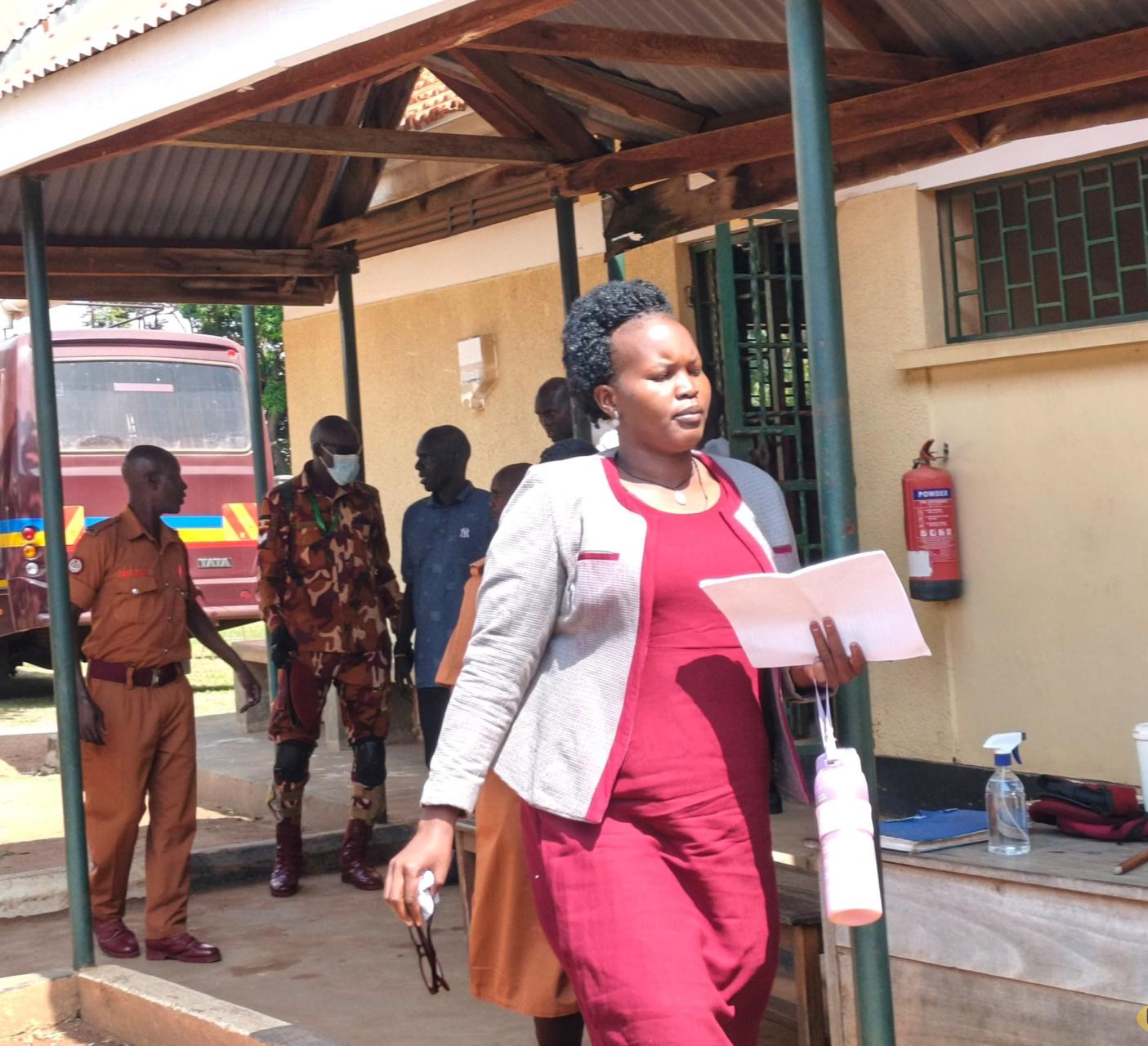
    Suzan Vivian Ariokot Okedi, the key suspect in Joan Faith Apio’s murder being escorted to court

    “I found Apio lying on her stomach with her neck cut. Ariokot told me to go to the school canteen to bring a knife from Osula. When I returned with the knife, she further cut Apio’s neck to make it wider. Ariokot then pushed her hand into Apio’s throat, removed something and put it in a black polythene bag before handing it to Obotol, who was standing outside,” A6 testified.

    The juvenile further told the court that she kept silent because she feared for her life. “She told me if I told anyone, she would do to me what she did to Apio. That is the reason I refused to reveal anything to anyone because I feared for my life,” A6 said. The second juvenile witness, A7, who is the daughter of the school directors, also testified after Justice Wamala first satisfied himself that she understood the duty to tell the truth.

    Before her testimony, her mother, Suzan Vivian Ariokot, objected to her giving evidence. “That’s my daughter, and I know her. She doesn’t tell the truth; here she has even lied about her date of birth, so she shouldn’t be presented to this court to give witness against me,” Ariokot told the court. During her testimony, A7 admitted she had initially lied to investigators after allegedly being instructed by her mother.

    “I knew lying to people is punishable by God, and when mummy told me to lie, I did not like it. The first time I wrote the statement, I lied, but when I was called again by the police officers to East Kyoga Regional Police to write another statement, I told them the truth that mum told me she had killed Apio and instructed me not to reveal to anyone,” A7 testified.

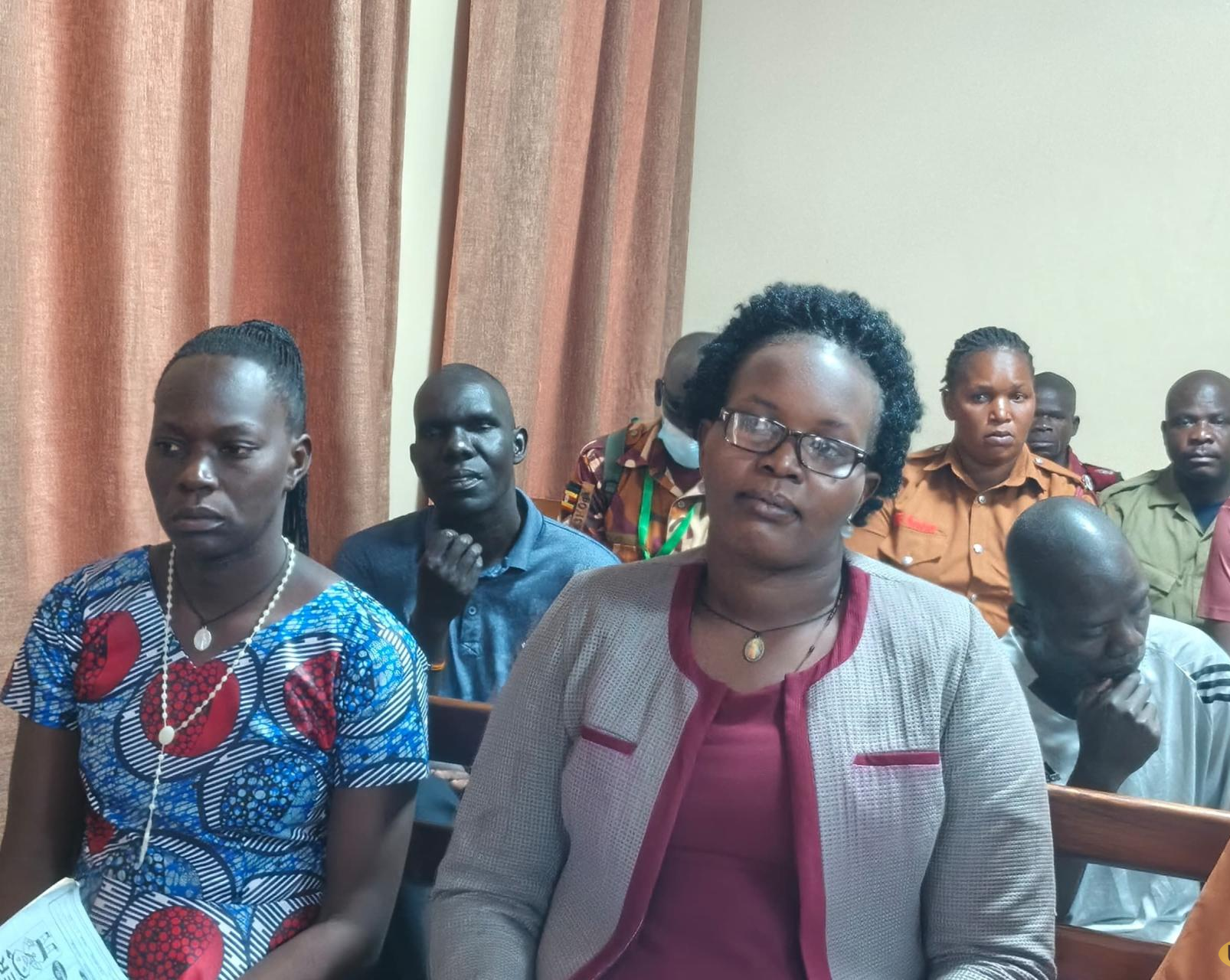
    The school matron Osula Adong on the left together with Ariokot on the right at Soroti High Court

    She further alleged that her mother later confessed the killing to her and ordered her to dispose of the toilet key. “My mother returned to school later in the evening around 6 p.m. together with my uncle Obotol. She gave me the keys to throw and told me she had killed Apio but warned me not to reveal to anyone what had happened. I went to throw the key into the latrine as instructed by her, and they went back,” A7 told the court.

    The hearing continued until about 8 p.m. before Justice Wamala adjourned proceedings to Wednesday, July 29, 2026, when the prosecution is expected to present three more witnesses. The six adult suspects were remanded, while the two juveniles were transferred to Mbale Remand Home.


    GOT A HOT STORY? LET US KNOW!

    Got breaking news, explosive secrets, or hard evidence?

    Email us: redpeppertips@gmail.com

    We accept tips, documents, videos, photos, and recordings—the more evidence you have, the better.

    CONFIDENTIALITY IS OUR TOP PRIORITY. SOURCES ARE ALWAYS PROTECTED!

    About Post Author

  • Inside Kingdom Kampala Phase Two: The Next Chapter in Sudhir Ruparelia’s Vision for a Modern Capital

    Inside Kingdom Kampala Phase Two: The Next Chapter in Sudhir Ruparelia’s Vision for a Modern Capital

    Stand anywhere near the Kingdom Kampala complex today and it’s easy to see why it has become one of the city’s defining landmarks. It is where office workers rush between meetings, shoppers browse through stores, diners gather over coffee and visitors catch a glimpse of a Kampala that is steadily reinventing itself.

    But for businessman Dr. Sudhir Ruparelia, the story was never meant to end there.

    The next chapter is already taking shape. Kingdom Kampala Phase Two is an ambitious expansion that aims to push the boundaries of what mixed-use developments look like in Uganda. At its centre is a sleek 21-storey glass tower that will rise above the existing complex, adding a bold new silhouette to Kampala’s skyline and signalling a city that is looking confidently towards the future.

    Yet the tower is only part of the story.

    Among the features attracting the most attention is a rooftop helipad—a rarity in Uganda’s private commercial real estate sector. More than a luxury addition, it reflects a project designed with regional and international business travellers in mind, offering the kind of convenience found in some of the world’s leading commercial hubs.

    Step inside the vision, and the development becomes even more impressive.

    Rather than creating another office block, the Ruparelia Group is building what amounts to a self-contained urban destination. The plans bring together premium Grade-A office space, a luxury hotel with around 200 rooms and suites, elegant serviced apartments, exclusive penthouses and an expanded retail experience that complements the existing shopping mall. The idea is simple: create a place where people can work, stay, meet, shop and relax without ever needing to leave the complex.

    The attention to detail extends beyond the interiors. Landscaped rooftop gardens and green terraces will introduce pockets of calm above the city’s bustle, while spacious public terraces, pedestrian walkways and open podium spaces are intended to make the development feel as welcoming as it is modern. Instead of being just another high-rise, Kingdom Kampala Phase Two is being designed as a place where people can spend time, not simply pass through.

    Business is also central to the vision. The integrated hotel will feature modern conference and meeting facilities capable of hosting regional and international events, supported by executive lounges, fine dining restaurants and premium hospitality services. Together, these amenities position the development as more than a commercial address—it is expected to become a destination for investment, networking and high-level business engagements.

    Its impact, however, reaches well beyond architecture.

    The project is expected to create hundreds of jobs during both construction and operation, while injecting fresh investment into Kampala’s Central Business District. At a time when demand for world-class commercial and hospitality spaces continues to grow, Kingdom Kampala Phase Two represents another vote of confidence in Uganda’s economy and the capital’s potential to compete with leading cities across the region.

    In many ways, the development mirrors Kampala itself—a city that is growing upwards, becoming more connected and increasingly open to global investment. Every new floor, every glass panel and every carefully designed public space tells the story of a capital determined to evolve.

    For Sudhir Ruparelia, it is another landmark investment in a portfolio that has helped shape Kampala’s urban landscape over the years. For the city, it is something bigger: a glimpse of what the next generation of urban living, business and hospitality could look like in Uganda.

    When Kingdom Kampala Phase Two finally opens its doors, it will not simply add another skyscraper to the skyline. It will stand as a symbol of a capital that continues to dream bigger—and build accordingly.

    Do you have a story in your community or an opinion to share with us: Email us at Submit an Article

  • Africa’s creative industry deserves to be treated like healthcare- Julius Kyazze

    Africa’s creative industry deserves to be treated like healthcare- Julius Kyazze

    Julius Kyazze wants governments, investors and even ordinary Africans to stop thinking of entertainment as a luxury. The entrepreneur behind Swangz Avenue believes the continent’s creative industry performs a role every bit as essential as healthcare and education because it restores people after work, fuels productivity and creates livelihoods for millions.

    “What we do is an essential service,” Kyazze says. “People think we’re in the music business or the entertainment business. I don’t. I believe we’re in the reward industry.”

    It is an unconventional argument from one of East Africa’s most influential entertainment executives, but one he has spent years refining as his businesses expanded from music into radio, live events, media, production and talent development.

    His reasoning begins with a simple observation.

    Every economy depends on productive people.

    Doctors keep them healthy. Teachers prepare them for work. Employers rely on them to deliver results.

    But after five or six days of work, Kyazze asks, how do those people recover?

    “They have to rest,” he says. “You can’t work Monday to Monday.”

    That period of rest, he argues, is where the creative economy quietly performs one of society’s most overlooked functions.

    Whether someone listens to music on the drive home, attends a concert over the weekend, laughs at an online comedy sketch or spends an evening at a festival with friends, they are recharging mentally before returning to work.

    “That’s the industry I’m in,” he says. “The industry that rewards your good work from Monday to Friday.”

    It is a perspective that shifts entertainment from recreation to economic infrastructure.

    Kyazze argues that a tired, stressed and emotionally exhausted society cannot remain productive for long.

    In his view, the creative economy is not merely producing songs or events. It is helping sustain the workforce that drives every other sector.

    The argument also challenges long-held perceptions that musicians, actors and content creators occupy the fringes of national development.

    Instead, he says, they are participants in an industry that directly influences economic performance.

    Yet despite that contribution, he believes governments and regulators have struggled to understand how the sector works.

    Uganda’s creative economy, he says, continues to be approached largely through taxation rather than development.

    Regulators often see revenue before they see opportunity.

    “There is a disconnect,” Kyazze says, arguing that authorities should engage industry players to understand how creative businesses grow before imposing policies that could slow their expansion.

    He believes the challenge extends beyond Uganda.

    Across Africa, creative entrepreneurs frequently find themselves explaining their business models to banks, investors and policymakers who still regard entertainment as informal rather than industrial.

    That misunderstanding, he argues, limits investment in infrastructure capable of transforming the sector into a major employer.

    His own businesses have increasingly focused on building those foundations.

    Beyond producing musicians, they now invest in training, production, media, live events and regional operations designed to help creatives earn sustainable incomes rather than temporary fame.

    The objective is not simply to create stars.

    It is to build careers.

    Kyazze says Africa has no shortage of talent.

    What it lacks are enough businesses capable of commercialising that talent, building systems around it and opening opportunities across borders.

    He believes that gap represents one of the continent’s greatest economic opportunities.

    The entrepreneur’s thinking also reflects a broader shift in how creative industries are being viewed worldwide.

    Once dismissed as leisure sectors, film, music, gaming and digital content have become significant contributors to national economies, generating employment, exports and tourism while shaping cultural influence.

    Kyazze believes Africa should position itself to benefit from that transformation rather than continue exporting its talent to better-developed markets.

    His vision is ambitious.

    He wants African creatives to build careers that allow them to tour, collaborate and grow businesses across the continent without depending on recognition from Europe or North America.

    The infrastructure to achieve that future, he says, must be built by Africans themselves.

    That means investing in education, production facilities, management, technology, financing and cross-border partnerships that allow creative businesses to scale.

    It also means changing public attitudes.

    For too long, he argues, parents have encouraged children to become doctors, lawyers and accountants while discouraging careers in music, film or digital content.

    Yet those same families consume creative products every day.

    They stream music, attend concerts, watch films, follow influencers and spend hours on social media engaging with content created by the very industry they often dismiss.

    “Everyone consumes what we produce,” Kyazze says.

    If Africa is serious about creating jobs for its rapidly growing youth population, he believes the creative economy deserves to be viewed not as entertainment on the sidelines of development but as an industry capable of standing alongside manufacturing, agriculture and technology.

    For Kyazze, the challenge is no longer convincing audiences that African creatives are talented.

    It is convincing policymakers that creativity itself is productive work—and that investing in the people who produce it may prove just as valuable as investing in the industries they help sustain.


    Do you have a story in your community or an opinion to share with us: Email us at Submit an Article

  • Why Some Gamblers Track Patterns While Others Trust Pure Chance

    Why Some Gamblers Track Patterns While Others Trust Pure Chance

    I’ve been watching betting behavior around Zimbabwe for three years, and there’s this split that keeps showing up. Walk into any betting shop and you’ll see it – some people tap whatever numbers feel right in that moment, pure gut instinct. Then you’ve got folks with notebooks, Excel spreadsheets on their phones, systems they’ve been tweaking forever.

    Last month I spent time with regulars at a Harare betting spot. Roughly 67% said they actively track patterns before putting money down. They check resources like mwos lucky numbers and similar sites, searching for any possible advantage.

    What Actually Drives These Choices

    We live in a country where economic uncertainty isn’t abstract – it’s part of waking up every morning. When your currency shifts as frequently as ours does, you develop a different relationship with risk altogether.

    I talked to this mechanic from Bulawayo, Samuel. Started tracking number frequencies in 2019, spent exactly $12.50 weekly on specific combinations. Sometimes big wins, other times nothing. But the tracking made him feel like he wasn’t throwing money into a void – like he had some control over the chaos.

    Maybe that’s what this is really about.

    The Psychology Behind Number Selection

    People tracking numbers actually spend less money on average than random bettors. Sounds backward, but there’s logic there. When you’re following some system, you’re setting boundaries before emotions take over.

    Random bettors tend to chase losses. Drop $5 on nothing? Try $8 next round. Then maybe $15 because surely this time it’ll hit. Next thing you know it’s Tuesday at 3pm and you’ve burned through your weekly budget.

    Number-tracking people usually lock in their stake at something specific like $3.75 per session. Then they stick to it.

    What The Numbers Actually Show

    Can I prove tracking works better than picking randomly? Not really. But I observed across four Harare betting locations over 18 weeks.

    Tracked-number players stayed active longer. They didn’t blow through money in two sessions and disappear. Whether they actually won more frequently – that’s harder to pin down because winnings jumped around dramatically.

    Real Stories From Regular Players

    Grace lives in Mutare and picks numbers based on family birthdays plus meaningful dates. She’s run this system since 2021 and estimates she’s roughly broken even. “Getting rich isn’t the point,” she said. “I like having my system and following it.”

    Patrick does “gap analysis” – tracking numbers that haven’t shown up recently and betting those. He claims about 34% return over nine months, though I didn’t see his records.

    Completely different approaches. But both treated betting as entertainment with clear rules, not some desperate scramble to solve financial problems overnight. Grace set aside $8 weekly, Patrick budgeted $15, and neither ever went over those amounts.

    That discipline actually matters way more than whatever system you’re running. You could track every number combination ever drawn, analyze it six ways, build predictive models – but if you’re putting down rent money or grocery funds because you’re chasing something, you’ve already lost the game that actually matters.

    Do you have a story in your community or an opinion to share with us: Email us at Submit an Article

  • Top Ugandan Universities For 2026 Named, KIU Retains Best Private University Spot

    Top Ugandan Universities For 2026 Named, KIU Retains Best Private University Spot

    The latest July 2026 Webometrics Ranking of Universities is out, confirming Makerere University as Uganda’s top-ranked institution overall, while Kampala International University (KIU) holds onto its position as the country’s best-performing private university.

    According to the rankings, Uganda’s top five universities for 2026 are:

    ADVERTISEMENT

    1. Makerere University — National leader
    2. Kampala International University (KIU) — Top private university, ranked 49th in Africa
    3. Mbarara University of Science and Technology
    4. Uganda Management Institute
    5. Kyambogo University

    KIU’s continued hold on second place nationally also places it among Africa’s top 50 universities, a notable achievement for the institution as a private university competing against public institutions with far larger public funding bases.

    KIU’s Ranking Comes Alongside Fresh International Push

    The rankings landed shortly after KIU staff and students took part in the Erasmus+ Exchange Programme at Ondokuz Mayıs University (OMÜ) in Türkiye, an initiative the university expects will strengthen its international academic partnerships and further boost its global visibility.

    KIU Vice Chancellor Prof. Muhammed Ngoma, who personally took part in the exchange, described the experience as an important milestone in the university’s internationalisation agenda, calling it fulfilling and full of networking, benchmarking, and lessons relevant to higher education.

    He framed KIU’s participation as more than a routine exchange, describing it instead as a deliberate investment in internationalisation, a factor he says increasingly shapes global university rankings alongside research impact, academic collaboration, digital presence, and institutional visibility.

    “Internationalisation is no longer optional for universities that aspire to global relevance,” Ngoma said.

    He added that through Erasmus+, KIU is strengthening partnerships, sharing knowledge, expanding its research networks, and exposing staff and students to international best practices, benefits he says feed directly into both academic quality and the university’s global reputation.

    The Webometrics ranking evaluates institutions using a composite score built around web impact, research excellence, and openness, essentially measuring how visible, research-active, and digitally accessible a university is on the global stage. It is one of the most widely cited global ranking systems specifically because it draws on publicly available web data across tens of thousands of institutions worldwide.

    For prospective students weighing options among Uganda’s public and private universities, the July 2026 rankings reaffirm a fairly stable top tier, with Makerere holding its long-standing lead and KIU continuing to set the pace among private institutions, ahead of Mbarara University of Science and Technology, Uganda Management Institute, and Kyambogo University.

    CampusBee will continue tracking how Ugandan universities perform in future ranking cycles.

About UGNEWS24

UGNEWS24 is a Uganda local news service, a product of SOLAVIA GROUP LIMITED, Reg. No. 80048169153974.

Registered office

Plot 2335, Buwambo-Katadde-Najjo Road,
Nansana Municipality, Wakiso District, Uganda
P.O. Box 214231, Kampala

© 2026 SOLAVIA GROUP LIMITED. All rights reserved.