Blog

  • Pallaso applauds Ykee Benda’s impact beyond music – Sqoop

    Pallaso applauds Ykee Benda’s impact beyond music – Sqoop

    In an industry often fueled by rivalry and subtle jabs, Pallaso has struck a surprisingly reflective tone, offering flowers to Ykee Benda in the middle of an ongoing conversation about musical legacy.

    It all started when Ykee Benda publicly rolled out his catalog of hits, seemingly in response to Pallaso’s earlier remarks that any artist deserving a “seat at the table of men” must boast at least 20 hit songs. The statement stirred debate across Uganda’s music circles, with fans and artists weighing in on what truly defines greatness.

    But in a twist that adds depth to the narrative, Pallaso has now acknowledged Ykee Benda’s place in the game, not just as a hitmaker but as a contributor to the industry’s growth.

    Speaking during an interview on Sanyuka TV, Pallaso didn’t hold back his respect.

    “Ykee Benda is a good artist with a big catalog,” he said. “And not just that, he has also given other people a chance. He brought Dre Cali.”

    The praise goes beyond numbers. For Pallaso, legacy isn’t just measured in chart-toppers; it’s in influence, mentorship, and what an artist leaves behind. In his view, the true test of greatness is whether one nurtures others while rising.

    “There are things in the industry that have to prove someone’s legacy,” he added thoughtfully. “When a tree grows, it has to bear fruits.”

    It’s a metaphor that hits home. In an era where self-investment dominates the narrative, Pallaso challenges artists to look outward. Success, he suggests, isn’t just about building your own brand but about lifting others along the way.

    “You work hard, but it’s not good to invest only in yourself,” he continued. “People have supported you, but have you nurtured anyone? What do they say about you? Are you a hypocrite? Which awards have you won? Which stadiums have you filled?”

    Don’t want to miss out on any story? For updates on all Sqoop stories, follow this link on Telegram: https://t.me/Sqoop and Whatsapp: https://whatsapp.com/channel

  • Second phase of Namboole Stadium renovation to cost Shs225 billion

    State Minister for Sports Peter Ogwang has revealed that Phase Two of the Mandela National Stadium renovation will cost $60 million (about Shs225 billion) to meet standards set by the Confederation of African Football.

    The second phase of works, which will again be handled by the UPDF Engineering Brigade, follows an earlier phase that cost $25 million (about Shs97.9 billion).

    This development comes after a recent CAF inspection report showed that none of Uganda’s stadiums currently meet the requirements to host the Africa Cup of Nations, Africa’s biggest football competition.

    Under Phase Two, the stadium’s capacity will be increased from just over 40,000 to 60,000 seats. The upgrade will also include construction of a modern hotel, an Olympic-sized swimming pool, an indoor multi-purpose arena, and installation of a fully covered roof. The VIP section will be expanded to accommodate up to nine heads of state, while dressing rooms will be moved to the western wing. New media centres and mixed zones are also planned.

    Meanwhile, Ogwang said SUMMA, the contractor that built Hoima City Stadium, has returned to fix issues highlighted in the CAF inspection. He emphasised that the government will not incur additional costs, as the repairs fall under the initial contract.

    He added that all works are expected to be completed before CAF conducts another inspection in August 2026, expressing confidence that Uganda will be ready to co-host the 2027 AFCON alongside Kenya and Tanzania.

  • Katonga Bridge reconstruction nears completion

    Katonga Bridge reconstruction nears completion

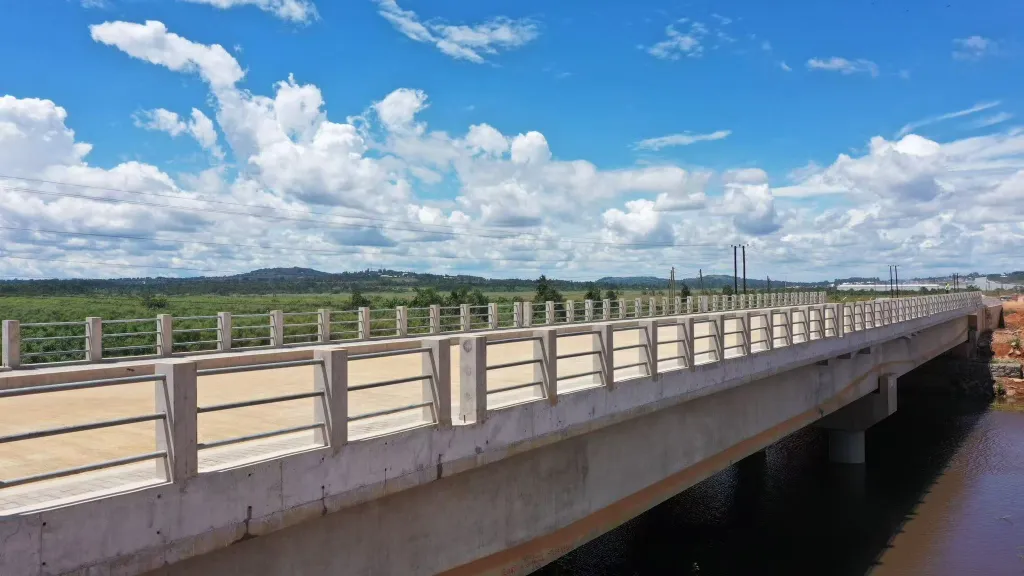
    Reconstruction works on the Katonga Bridge along the Kampala–Masaka Highway are entering the final stretch, with authorities indicating the project may be completed earlier than planned.

    According to the Ministry of Works and Transport, the new bridge structure is now largely complete, with key components already in place. The deck has been fully installed, forming a continuous concrete surface across the span, while safety railings have been fitted on both sides.

    Despite ongoing works, traffic flow along the highway remains uninterrupted, with vehicles using temporary access routes set up during construction.

    Engineers say the redesigned bridge marks a significant upgrade from the previous structure. Built higher and stretching further across the floodplain, the new bridge is intended to better withstand rising water levels by allowing floodwaters to pass more freely underneath.

    The Katonga Bridge, which crosses the River Katonga in Mpigi District, is a vital transport link on one of Uganda’s busiest highways, connecting the country to regional markets including Tanzania, Rwanda, Burundi and the Democratic Republic of Congo.

    The original bridge was destroyed in May 2023 after heavy flash floods swept through the area, cutting off traffic for months and disrupting trade and travel along the key route.

  • Chozen Blood speaks out on stage harassment after Tracy Melon walkout sparks debate – Sqoop

    Chozen Blood speaks out on stage harassment after Tracy Melon walkout sparks debate – Sqoop

    Over the weekend, Ugandan singer Tracy Melon cut short her performance in Mbarara after a fan touched her inappropriately, leaving her visibly shaken and forcing her to walk off stage.

    The moment quickly spilled onto social media, dividing opinion. While some argued she should have pushed on with the show, others defended her decision, saying no artist should be expected to endure such violations.

    READ: Tracy Melon walks off stage in Mbarara after being harassed by fan

    Now, fellow artist Chozen Blood has added his voice, sharing a deeply personal experience that mirrors the same troubling reality many performers face.

    Recalling a performance in Mbale, Chozen Blood described a moment that went far beyond the usual chaos of live shows. In the middle of his set, a fan attempted to unzip his trousers.

    To some, it may have looked like a joke. To him, it was anything but.

    “Someone might take it lightly in front of their eyes,” he said, “but it’s never the same for the victim.”

    His reflection cuts through the glamour often associated with stage life, reminding fans that behind the energy and confidence is a person navigating real emotions in real time.

    For Chozen Blood, the message is clear. Performing is work, and like any workplace, it deserves respect and boundaries. Crossing that line does not just disrupt a show, it alters the entire experience.

    “It turns the performance down,” he admitted, pointing to the emotional toll such incidents carry long after the music fades.

    He also highlighted a rarely discussed consequence. For artists with partners and families, such moments can create tension away from the spotlight. What may seem like harmless excitement to a fan can easily be misinterpreted, leading to personal strain.

    As the conversation grows, both his experience and Tracy Melon’s reaction are forcing a deeper look at fan behavior and the need for safer, more respectful concert environments.

    Don’t want to miss out on any story? For updates on all Sqoop stories, follow this link on Telegram: https://t.me/Sqoop and Whatsapp: https://whatsapp.com/channel

  • KAGENYI LUKKA: This is how Honourable Babalanda and Hajji Yunus Kakande have transformed Presidency ministry

    KAGENYI LUKKA: This is how Honourable Babalanda and Hajji Yunus Kakande have transformed Presidency ministry

    The two are like Siamese twins. Their cooperation and understanding of public service and service delivery is unmatched. They work till late. They have total loyalty to the father of the country and our great leader, Gen. Yoweri Museveni.

    The Minister for Presidency, Honourable Milly Babirye Babalanda and Haji Yunus Kakande, the Secretary, Office of the President have, in many ways, steered the Ministry. They have revamped the psychology of public service. They have reinvigorated the energy of all workers—and like the youth say, this dynamic duo has brought vibe into the Presidency Ministry.

    From the office attendant, cleaner to even the always stubborn Resident District Commissioners (RDC), the vibe is always present.

    The term started with the launch of the Strategic Plan for the Ministry. They also rolled out the Service Delivery Standards and the Client Charter. They were visionary documents that aimed at strengthening public sector performance. These documents also enhanced transparency and reaffirmed Government’s commitment to serve the citizens of Uganda with excellence.

    According to Babalanda and Kakande, service delivery to citizens is a must do—and all RDCs were put on high alert to ensure that serve the people.

    In fact, I recall that during the launch of these three documents Kabira Country Club in Kampala, Babalanda said the three instruments were not merely administrative documents but a public commitment, a social contract between the Office of the President and the citizens of Uganda defining what services they deliver, how they deliver them, and within what timelines.

    The Minister for Presidency further noted that the Client Charter sets out the services offered by the Office of the President, the standards citizens should expect and the responsibilities of both the Office and the public.

    Like a true leader with a compass, the Minister said the three documents also reflect His Excellency President Yoweri Museveni’s call for a Government that is transparent, accountable, and close to the people.

    Indeed, true to her word, during her tenure, the Office of the Presidency and Presidency Ministry have reflected the vision of serving the people above self. Accountability has also been a key aspect of this visionary goal.

    Under Babalanda and Kakande’s watch, all public servants, including RDCs, were tasked to clearly define service expectations of the citizens, timelines to deliver were also earmarked and feedback mechanisms to hear from citizens, especially their pressing concerns, were developed.

    These guiding documents, especially the Client Charter, has indeed, over time, strengthened trust between citizens and Government. It has also empowered Ugandans to demand quality and timely services, and it has, to a great extent, guided the Office of the Presidency to deliver with consistency, integrity, and efficiency values.

    At at the core of this, of course, is the President’s vision for a people-centred public service.

    The Minister and the Secretary have also ensured that these Service Delivery Standards translate into commitments with measurable expectations for staff across all Departments.

    These documents have indeed been our guiding principles. And the fruits, for the last five years, are easy to see. We have used this guidance from the Minister and the Secretary to promote efficiency, professionalism, and ethical conduct—pillars of effective governance that His Excellency, Gen. Yoweri Kaguta Museveni, continues to champion.

    These guiding principles have also ensured that we work as a team and in unity. These standards have also reinforced President Yoweri Katuga Museveni’s message that the Government must serve the ordinary Ugandan with discipline, diligence and excellence.

    So, armed with this unified framework that our leaders, Minister Babalanda and Kakande gave us, we have strengthened our internal operations. This vision of the Minister and the Secretary have also given birth to a results-oriented culture that places citizens and National priorities at the centre of public service.

    This is also rooted and aligned with the National Development Plan, Government policy direction, and President Yoweri Museveni’s focus on improved governance and accountability.

    With the Minister’s guidance, a clear roadmap for programme supervision, security and intelligence coordination, citizen engagement, institutional strengthening, and effective oversight of public administration was rolled out. This has helped all staff at the Presidency Ministry to work towards President Yoweri Museveni’s mission and vision for Uganda—securing Uganda’s future through stability, prosperity, and efficient service delivery.

    Honourable Babalanda’s commitment to greater openness; measurable performance; efficiency in service delivery; and responsiveness to citizens’ needs remains one of the guiding principles for all staff at the Presidency Ministry.

    The Minister also always tells staff to lead by example in public administration and to set the standard for the rest of Government.

    So, as lower cadres we have integrated these tools into our daily operations, and we have largely made them our guiding principles in the planning, service delivery and decision-making processes.

    Honourable Babalanda’s vision on service delivery has also become the blue print for all RDCs within their respective areas of jurisdiction.

    These principles have also enabled RDC to amplify His Excellency Yoweri Kaguta Museveni’s clarion call to all leaders to champion effective service delivery through initiatives such as the Parish Development Model (PDM), Emyooga, the Youth Livelihood Programme (YLP), and other poverty alleviation programmes.

    Minister Babalanda and Secretary Kakande’s vision on service delivery to citizens has also enabled all staff, especially RDCs, to to assess the progress of various Government programmes, including the PDM, and identify gaps and notify Government on how to fix these gaps.

    With this vision from Honourable Minister, RDCs, who are mandated to monitor Government programmes, have risen to the occasion, and in most cases, they have taken decisive action.

    This has enabled Government and the ruling National Resistance Movement (NRM) to safeguard and consolidate the gains.

    This is the mission and vision that all citizens must embrace.

    At one time, the Secretary-Office of the President, Kakande, said the all staff must embrace President Yoweri Museveni’s collective resolve to strengthen leadership, accountability and service excellence within the public service of Uganda.

    So, these principles as rolled out by Honourable Babalanda and Secretary Kakande, symbolized a moment of renewal for the Office of the President, an opportunity to reflect deeply on the constitutional mandate, national responsibilities and the aspirations of the citizens we serve.

    So, for the past five years, under the guidance of Honourable Babalanda, the focus of all staff has been tailored on how to ensure higher household incomes across the country’s homesteads, full monetization of the economy and employment for socio-economic transformation.

    They have also over and over guided that we should not get our eyes off the major focus—sustaining industrialization for inclusive growth, employment and sustainable wealth creation.

    Therefore, the strategic plan as rolled out by Minister Babalanda and Kakande provided a clear and ambitious roadmap for enhancing the effectiveness, visibility and impact of our work.

    By anchoring the plan on the need to ensure that the citizen is and must always remain at the centre of public administration, our work was well cut out. And under the guidance of Honourable Babalanda, the foundation of a more responsive, people-centred and result-oriented Office of the President was set, and in the last five years, the results are everywhere for one to see.

    Every team, every unit, every section, and every individual or staff at the Presidency Ministry took charge of Honourable Babalanda’s vision and it was translated into action—into the decisions we make every day and the way we respond to those we serve.

    The Minister’s vision has also enabled us navigate the current operating environment that is rapidly evolving. It also prepared us to operate in the face of e-government services where the job of a Public Servant is facing an increasing demand for transparency, efficiency, digital transformation, and service excellence—often in the context of constrained resources and complex risks.

    Honourable Babalanda’s Strategic Plan ensured that we acknowledge these current realities that public service requires, and respond with a clear, disciplined, and forward-looking approach – which in turn will provide a coherent framework to guide decision-making, resource allocation, and performance measurement for the Office of the President.

    Yet for those who know Babalanda closely, it is not surprising that she has delivered.

    A loyal, dependable, reliable, and tested National Resistance Movement (NRM) cadre, who is a believer in God, are some of the words that can best describe Babalanda.
    Born on December 5, 1970 to Mr. Sosani Magunda and the late Namuwaya Ruth of Nalinaibi Village, Nawantumbi Parish, Nawanyago Sub-County, Buzaaya County in Kamuli District, Babalanda is married to Pastor Samuel Babalanda of the Seventh Day Adventist Church.

    She met the father of the country and our dear leader of the NRM revolution, President Yoweri Museveni, in December 2010 in Jinja.

    At the time, she was a simple NRM mobiliser in Kamuli.

    However, when she made a spirited submission on matters of poverty alleviation in Busoga sub-region, President Museveni picked interest in her. The President also made a commitment to support her poverty-alleviation initiatives.

    After the 2011 general elections, she received a telephone call from His Excellency, President Yoweri Museveni, appreciating her submission on poverty alleviation in Busoga sub region.
    The President also asked if she could work with him, especially on the move to eradicate poverty.

    This was Honourable Babalanda’s turning point in life.

    Fast forward, the President appointed her as Deputy RDC Busia in 2014. Later in 2015, he deployed her as the Assistant Head of the NRM National Chairman’s office at Mbuya, headed by Honourable Molly Kamukama Nawe.

    Later, after the 2016 elections, he appointed her as Senior Presidential Advisor on Political Affairs and head of the NRM National Chairman’s office assisted by Mr. Kirunda Faruk, the current Deputy Press Secretary.

    Later on, the President appointed her as Minister in Charge of the Presidency.

    This is the story of Babalanda, the “humble village girl” from the districts of Kamuli and Buyende.

    It is no wonder that the people of Budiope West in Buyende district overwhelmingly elected her as their MP during the just-concluded 2026 general polls.

    According to voters in Buyende, they elected Babalanda to save them from years of bondage as orphans.

    It is a story of the lady from Buyende who has not only changed the Ministry for Presidency, but she has also ensured that she personally monitors government projects, gather people’s challenges and fix them using the President’s Office.

    Babalanda is indeed a loud testament that she is a good mobiliser for President Yoweri Museveni and a trusted NRM cadre, who has delivered social-economic transformation.

    The writer is the Deputy RCC Kampala City -Kawempe Division and a member of the Rotary club of Kasangati

    Do you have a story in your community or an opinion to share with us: Email us at Submit an Article

  • Kampala closes March in style at The Big Meeting

    Kampala closes March in style at The Big Meeting

    If there is ever a question about where Kampala goes to truly unwind at the end of the month, Sunday’s edition of The Big Meeting had all the answers.

    Held at Thrones Bar and Lounge on March 29, the now signature day-to-night experience curated by The Singleton once again lived up to its billing as the city’s ultimate daytime party, effortlessly blending music, flavor, fashion and expression into one seamless gathering.

    From as early as 11am, revellers began to stream in, easing into the afternoon with a mix of anticipation and familiarity. The Big Meeting has, over time, built a loyal following, and this edition felt like a reunion of sorts, friends catching up, new faces finding their rhythm, all drawn by the promise of a good time.

    At the center of it all was the experience that continues to define the event, the cocktails.

    Aprons on, sleeves rolled up, guests stepped behind the bar to craft their own drinks, guided by expert mixologists and powered by The Singleton’s smooth single malt whisky. Some approached it with precision, carefully balancing flavors, while others leaned into the fun of it all, laughing through trial and error before landing on something uniquely theirs.

    It’s this sense of participation that sets The Big Meeting apart. Here, the drink isn’t just served; it’s created, making every glass a small personal victory.

    Beyond the bar, the atmosphere carried a distinct ease. Plates of good food made their rounds, conversations flowed freely, and as always, Kampala showed up dressed for the occasion. From breezy brunch fits to bold, fashion-forward statements, the crowd turned the venue into a visual celebration of style.

    Then came the music.

    The DJ lineup; DJ Nova, Em That Guy, Kamali, and DJ Big E, delivered a carefully paced sonic journey that matched the mood of the day. Starting with laid-back, soulful selections, the tempo gradually built into high-energy sets that pulled more people to the dancefloor as the evening settled in.

    Each DJ brought their own flavor, but together, they created a cohesive soundtrack that kept the crowd engaged from afternoon through to the late hours.

    And while the music kept the energy high, the essence of The Big Meeting remained in its freedom, freedom to move, to create, to connect.

    Simon Lapyem, The Singleton brand manager, noted that this is exactly what the experience is designed to achieve. “The Big Meeting is about creating a space where people can come together and express themselves, whether it’s through music, through the cocktails they make, or simply through the moments they share. With The Singleton, we want every experience to feel personal and memorable,” he shared.

    By the time the night settled in, it was clear that March had been properly toasted.

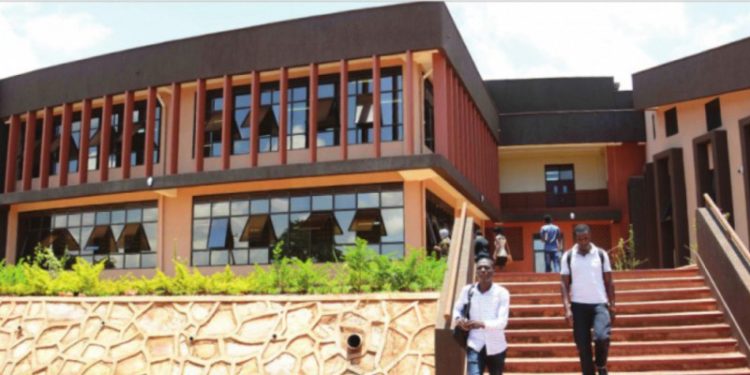
  • Kyambogo University Second Year Student Killed By Speeding Vehicle In Bweyogerere

    Kyambogo University Second Year Student Killed By Speeding Vehicle In Bweyogerere

    Environmental Science Student Dies On The Spot After Being Knocked Down At Fuelex Petrol Station — Body To Be Buried In Kapchorwa

    ADVERTISEMENT

    Kyambogo University is in mourning following the tragic and sudden death of one of its students, Cherotich Anita Scovia, who was killed by a speeding vehicle in Bweyogerere town on Monday, March 30, 2026.

    The death was formally announced by the Office of the Dean of Students in a letter addressed to Vice Chancellor Prof. Eli Katunguka, signed by Student Welfare Officer Bridget Mugume.

    Scovia, a second year student pursuing a Bachelor of Environmental Science Technology and Management at Kyambogo University, was knocked down by a speeding vehicle at Fuelex Bweyogerere town at approximately 1:30 pm. She died on the spot.

    Her body was subsequently transported to Mulago City Morgue by police. A postmortem examination confirmed that she passed on due to Crash Blunt Force Trauma Injuries sustained from the impact of the collision.

    Scovia, whose student registration number was 24/U/BME/0971/PE, was attached to Nanziri Hall at the university.

    The university’s Student Welfare Department moved swiftly to support the bereaved family in accordance with Kyambogo University’s Student Burial Policy. The body was handed over to the family on the evening of Monday, March 30, 2026, at 7:00 pm.

    Cherotich Anita Scovia will be laid to rest in Kapchorwa District, Kiserem Sub-county, Rotok Village.

    The death announcement was copied to university top management, the Senate, the 21st GRC, the Chairperson of the Student Welfare Committee, and the Dean of the Faculty of Science.

    Scovia was only in her second year of university — a young woman at the very beginning of what should have been a long and promising academic and professional journey. Her death is a painful reminder of the dangers that students navigating busy Kampala roads face daily, often on foot, in areas where speeding vehicles and inadequate pedestrian infrastructure create life-threatening conditions.

    The Campusbee community extends its deepest condolences to the family, friends, classmates, and lecturers of Cherotich Anita Scovia. May her soul rest in eternal peace.

  • DR. SAMUEL B. ARIONG: MK Fund and Taiwanization of Uganda (Part Two): Governance and the benchmarks

    DR. SAMUEL B. ARIONG: MK Fund and Taiwanization of Uganda (Part Two): Governance and the benchmarks

    In development policy, the success of financing initiatives rarely depends on how much money is announced. It depends on how those resources are governed.

    This reality will likely determine whether the MK Fund becomes a credible tool for youth enterprise development or joins the long list of well-intentioned financing initiatives whose impact faded after early enthusiasm.

    In part one of this article, I examined the broader development logic behind the fund, and whether it has a potential to contribute to Uganda’s productive sectors, and to Tawanise the economy. The next question is more practical: what governance design would allow such an initiative to deliver measurable economic results?

    Three institutional features will likely prove decisive; transparent selection, performance-based financing, and credible monitoring systems.

    Transparent selection and credibility

    Public financing programs derive legitimacy from the way beneficiaries are chosen.

    Uganda’s earlier youth financing initiatives expanded access to capital for many citizens, but they also revealed a recurring institutional challenge: perceptions of political influence in the allocation process. Whether those perceptions reflected reality or not, they often weakened public confidence and undermined repayment discipline.

    As for the MK Fund to build credibility, selection criteria will need to be clear, public, and anchored in economic viability rather than personal connections.

    Viable indicators could include the scalability of business ideas, employment generation potential, and alignment with priority sectors such as commercial agriculture, agro-processing, light manufacturing, mineral beneficiation, and technology-enabled services.

    Independent review panels that include private-sector practitioners, financial experts, and academic specialists could further strengthen the selection process. Public disclosure of supported enterprises would also enhance transparency while signaling that the initiative is designed as an investment mechanism rather than a patronage channel.

    Such institutional clarity may appear technical, but it often determines whether development funds achieve lasting impact.

    Performance-based financing

    Another distinguishing feature of successful enterprise financing programs is performance discipline.

    Rather than distributing funds as a single grant, the MK Fund could adopt a staged financing approach in which capital is released in phases tied to measurable milestones. These milestones might include production targets, job creation thresholds, revenue growth benchmarks, or successful entry into export markets.

    This model reflects lessons from several high-performing economies where development finance operated under strict performance expectations. Firms that achieved productivity improvements gained continued access to credit, while those that failed to meet benchmarks gradually exited support programs.

    Such mechanisms protect public resources while encouraging entrepreneurial accountability. They also shift the relationship between the state and enterprises from simple disbursement to structured partnership.

    Monitoring that measures real outcomes

    Even well-designed financing programs require effective monitoring systems.

    In practice, monitoring involves more than submitting occasional reports. It requires systematic tracking of enterprise performance through regular data collection, site verification, and financial oversight.

    Digital reporting platforms could help streamline this process. Supported enterprises could periodically submit information on employment numbers, production volumes, sales growth, and market expansion. Aggregated data would allow policymakers to track trends and identify sectors where support is generating meaningful returns.

    Equally important is public accountability. Publishing annual reports detailing disbursements, sector distribution, repayment rates, and enterprise performance would strengthen transparency while allowing citizens to evaluate whether the initiative is delivering measurable value.

    Development policy ultimately depends on evidence. Programs that measure outcomes rigorously are better able to learn, adapt, and scale.

    Defining success beyond disbursement

    Another challenge facing many development initiatives in the developing South, and a key lesson for the MK fund to pay keen attention is how success is defined.

    Too often, programs measure achievement by the number of beneficiaries reached or the amount of money disbursed. While administratively convenient, such indicators reveal little about whether structural economic change is actually occurring.

    More meaningful indicators would focus on enterprise performance and economic upgrading. These might include:

    1. The number of sustainable enterprises created or expanded
    2. Jobs generated within funded firms
    3. Growth in production output and value addition
    4. Entry of supported businesses into regional or international markets
    5. Repayment rates and reinvestment within the fund

    Tracking these metrics over several years would provide a clearer picture of whether the MK Fund is helping build scalable businesses or merely supporting short-term activity.

    Sustained economic transformation occurs when firms grow, innovate, and compete in increasingly sophisticated markets. If the fund contributes even modestly to this process, its impact could extend beyond the size of its initial capital base.

    From pilot initiative to institutional model

    At its current scale, the MK Fund may be best understood as an experimental initiative rather than a comprehensive solution to Uganda’s youth enterprise financing gap.

    Pilot programs often serve as learning platforms. Early implementation can reveal what works, what requires adjustment, and how institutional frameworks can be strengthened.

    Over time, successful models can evolve into larger financing mechanisms involving commercial banks, development partners, and private investors. A revolving or blended finance structure could gradually expand the fund’s reach while reinforcing financial sustainability.

    Such an evolution would align with Uganda’s broader ambition to deepen industrialization and strengthen productive sectors of the economy.

    The broader ecosystem

    Enterprise financing alone cannot transform an economy.

    Entrepreneurs also depend on reliable electricity, efficient transport networks, stable regulatory frameworks, and access to regional markets. Without improvements in these complementary areas, even well-capitalized businesses may struggle to scale.

    In this sense, initiatives like the MK Fund function best as components within a wider development ecosystem rather than as standalone solutions.

    The real test

    The MK Fund has generated considerable attention, partly because of the personalities involved and partly because youth enterprise development remains one of Uganda’s most pressing economic priorities.

    Yet in development policy, attention is temporary while institutions endure.

    If the fund operates under transparent rules, enforces performance standards, and measures outcomes carefully, it could evolve into a credible model for targeted enterprise financing. If those governance foundations remain weak, however, the initiative risks repeating the familiar cycle of high expectations followed by limited long-term impact.

    As for Uganda’s young entrepreneurs, the ultimate assessment will be practical rather than political: whether the initiative provides fair access to capital and helps viable businesses grow.

    In development policy, credibility is earned not through announcements but through consistent institutional performance. The MK Fund’s long-term significance will therefore depend less on its launch and more on the systems that sustain it. In part, three we shall look at the institutional implementation framework for success.

    The author is an Associate Professor of poverty and development policy.


    Do you have a story in your community or an opinion to share with us: Email us at Submit an Article

  • Museveni’s brother Sodo Kaguta dragged to court over alleged forged academic papers, vote rigging in Mawogola North election

    Mawogola North parliamentary aspirant Jet John Tumwebaze has petitioned the High Court in Masaka, seeking to overturn the election of Godfrey Aine Kaguta, popularly known as Sodo.

    The petition, filed on 30 March, challenges the outcome of the 15 January polls in which Sodo, the ruling National Resistance Movement (NRM) candidate, was declared winner by the Electoral Commission.

    Official results showed Sodo securing 12,895 votes, ahead of Tumwebaze, an independent candidate, who polled 6,426 votes.

    Through his legal team, Tumwebaze accuses Sodo—who is also a younger brother to President Yoweri Museveni—of presenting forged academic documents during nomination. He argues that Sodo does not meet the academic qualifications required to contest for Parliament.

    The petition further alleges widespread electoral malpractice, including vote rigging, violence, and the involvement of the Uganda People’s Defence Forces (UPDF) in the electoral process.

    Tumwebaze is asking the court to nullify the election results and order fresh polls.

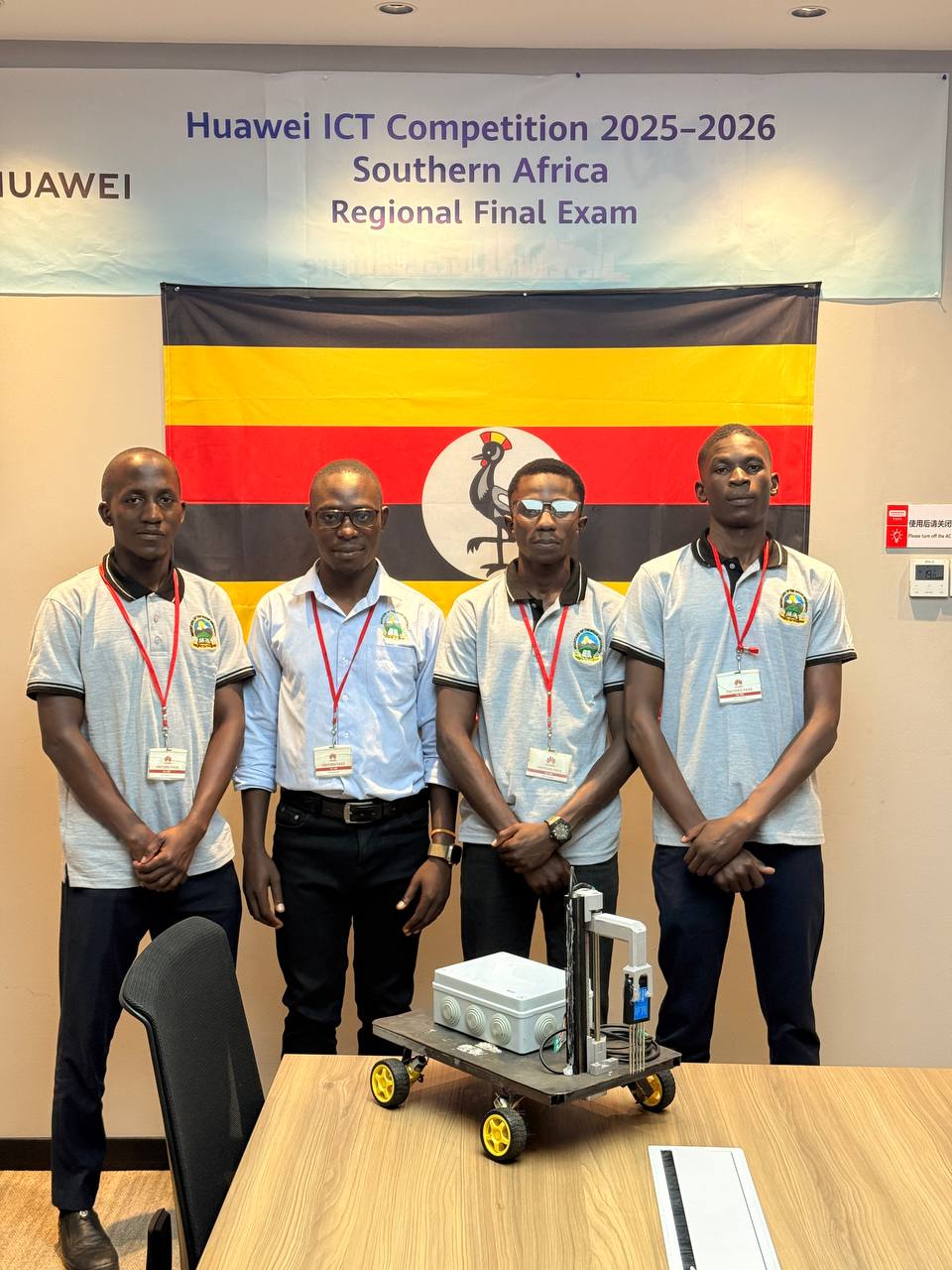
  • Mountains of the Moon University Students Advance to Global Finals of the Huawei ICT Competition 2025–2026 Following Regional Victory

    Mountains of the Moon University Students Advance to Global Finals of the Huawei ICT Competition 2025–2026 Following Regional Victory

    Fort Portal City, Uganda – March 2026 — Mountains of the Moon University (MMU) has achieved a significant milestone in technology and innovation, with its AgriChain Team (Uganda Innovation Team) emerging winners of the Regional Innovation Track at the Huawei ICT Competition 2025–2026. The team will now represent Uganda at the Global Finals scheduled to take place in Shenzhen from 2nd to 5th June 2026.

    The winning team, comprising Okoo Elvis, Wasswa Atibu, and Masendi Aaron under the instruction of Alinaitwe Mukonyezi, impressed judges with their innovative project, AgriChain—an artificial intelligence-powered solution developed using MindSpore. The project aims to transform agriculture across Africa and beyond by enhancing efficiency, transparency, and productivity within agricultural value chains.

    This achievement follows a highly competitive journey, where the students advanced from preliminary rounds in December 2025, excelled in the National Finals in January 2026, and went on to outperform teams from 21 Sub-Saharan African countries at the Regional Finals held in Kampala on 5th March 2026.

    Speaking on the achievement, Arinda Ronnie Akantorana, Public Relations Manager at Huawei Technologies (Uganda) Co., Ltd, commended the Mountains of the Moon University, stating:

    “Seeing the students excel on such a competitive stage is a testament to the high standard of education, mentorship, and technical training provided by Mountains of the Moon University. Achievements like this bring great pride to the academic community and serve as an inspiration to fellow students. We look forward to supporting them as they progress to the global stage.”

    The Vice Chancellor of Mountains of the Moon University, Prof. Pius Coxwell Achanga, also praised the team’s success:

    “I warmly congratulate our Innovations Team for emerging winners at the regional level and qualifying for the global finals. This initiative provides a vital platform for talent cultivation, enabling our students to enhance their digital skills and compete at the highest level. We are proud to see MMU and Uganda represented on the global stage.”

    Aaron Masendi, a Computer Science Student & one of the participants, expressed appreciation for the opportunity and highlighted the broader impact of the experience:

    “We are deeply grateful for the opportunity to participate in this competition. It has provided a powerful platform for advancing agriculture-technology innovation while strengthening the role of youth and education in solving real-world challenges. Competing at this level has not only enhanced our technical capabilities but also reinforced our commitment to developing solutions that can transform agriculture in Africa.”

    The Huawei ICT Competition is a globally recognized platform that brings together students and educators from over 2,000 universities across more than 100 countries. Since its launch in 2015, the competition has played a critical role in nurturing ICT talent, enhancing practical skills, and fostering innovation in areas such as artificial intelligence, cloud computing, and networking. It is also recognized as a flagship program partner of the UNESCO Global Skills Academy.

    The AgriChain team’s success underscores the growing role of African universities in driving innovation and positions Uganda as a rising hub for technology-driven solutions in agriculture.

    Further details regarding the awarding ceremony and the global finals roadmap will be communicated in due course.

    Do you have a story in your community or an opinion to share with us: Email us at Submit an Article

About UGNEWS24

UGNEWS24 is a Uganda local news service, a product of SOLAVIA GROUP LIMITED, Reg. No. 80048169153974.

Registered office

Plot 2335, Buwambo-Katadde-Najjo Road,
Nansana Municipality, Wakiso District, Uganda
P.O. Box 214231, Kampala

© 2026 SOLAVIA GROUP LIMITED. All rights reserved.