Blog

  • Why UHRC Boss Wangadya is being Targeted in online smear campaign

    Why UHRC Boss Wangadya is being Targeted in online smear campaign

    Justice Musa Ssekaana, the controversial Court of Appeal judge and Uganda Human Rights Commission chairperson Hon. Mariam Wangadya have all of a sudden become house hold names for online blogs known for negative publicity against prominent Ugandans. Our sources in the corridors of power have revealed the likely reason why all of a sudden the said media are interested in those two, but particularly Wangadya.

    It is said there has been an ongoing lobbying from different legal gurus to be appointed to the office of the Deputy Chief Justice, ever since the bearer Dr. Flavian Zeija was elevated to the position of Chief Justice.

    The Judicial Service Commission through its Permanent Secretary Dr. Rose Nassali Lukwago announced that the process of looking for the suitable Ugandan to be appointed to the said office had kicked off.

    It is said lobbying from different actors is in high gear as senior judicial officers and private lawyers are fighting for the juicy job. Even though Justice Ssekaana and Wangadya have not publicly expressed interest, sources say, they are among the top suitable contenders.

    Highly placed State House sources reveled to this website that Muslim leaders both at Uganda Muslim Supreme Council and the Kibuli based Supreme Mufti leadership are intensely lobbying that the job be awarded to a Muslim lawyer.

    However, the president’s stand is on a lawyer who is not corrupt and the problem he is facing with appointing career judicial officer is that most of them have been mentioned in corruption intelligence reports.

    Wangadya being a former deputy Inspector General of Government (IGG) and also chairperson of the country’s human rights watchdog is has an upper hand especially given the fact that the president is looking for a person to clean the judiciary.

    This set in mortion a series of plots to discret her, including the recent purported whistle-blowers’ report which for the past three weeks was being peddled by a single online media house. It is said the said report was filed at the IGG’s office, State House Anti-Corruption Unit and Police’s Criminal Investigation Department asking them to carry out investigations against her and has been circulated to different online media houses with a lot of passion though most of them have preferred to wait until action is taken by the investigating bodies.

    Why Wangadya?

    Sources revealed that apart from her being a muslim lawyer, Wangadya is workholic. She has almost single-handedly improved the rate at which decisions of the Uganda Human Rights Commission Tribunal are delivered. She does an average of 20 decisions in a two-day sitting yet at the court of appeal level, Justices are required to deliver 20 in a quarter of four months or as and when sessions are fixed.

    Talk from the corridors of power indicate that the president this time round prefers a female DCJ after comparing the tenures of former DCJs like Justice Alice Mpagi Bahegeine and Justice Constance Btamugisha. It is said during the two tenures, Jurisprudance of Uganda’s Appelate courts was stronger and used to attract citations from International courts unlike when the DCJs have been male. Analysts also blame the Male DCJs for having widened the gap between the Bar and the Bench (lawyers and judges) to the extent that for the first time in Museveni’s 40-year leadership, a President of Uganda Law Society was exiled. Critics attribute this to the uncompromising nature of men and ego thus the need to balance the power at the helm of the judiciary with a female gender.

    It is also alleged that some of the people behind the plot want to revenge on Wangadya who is remembered to have leaked corruption syndicates in Parliament especially during the process of budget making to the president which resulted into the arrest of a number of legislators including Lwengo district Woman Member of Parliament Cissy Namujju, Paul Akampa and others. Others are her own members of the Commission and staff envious about the ease with which she gets the attention of the President.

    Wangadya testified against the accused persons and narrated how the deal that led to their arrest was planned with the president, but the criminal charges were withdrawn and the accused persons set free which placed Museveni’s government in bad light in terms of fighting corruption.

    Justice Ssekaana

    From the time he headed the Civil Regustry at the High Court, all indications were rife that Justice Ssekaana was destined for bigger things. In fact most people, especially the Muslim community were already bracing themselves for the first-ever Muslim Chief Justice. However, detractors started on him making felocious complaints and leaking unsolicited negative reports to the appointng authority and the Judicial Service Commission (JSC). Sources at this Dr. Dauglas Singiza Commission revealed to this website that a number of the said complaints filed against him have been scheduled for expedicious hearing before the conclusion of the process of getting the next deputy chief justice.

    Sources added that although some Muslim leaders are lobbying for a Muslim to take the job, Kibuli Muslim leadership are not happy with Ssekaana on grounds that he declined to recuse himself from the court case involving Juma Zukuli after they accused him of being biased.

    Titular Muslim leader Sheikh Dr Prince Dr Kassim Nakibinge Kakungulu who played a central role in lobbying for Ssekaana to be appointed a High Court judge in 2018 is not happy with Ssekaana’s biased decision which resulted into imprisoning Sheikh Khalifa Lutaaya and Sheikh Hassan Kinene on contempt of court charges.

    He is also dicredited for being intolerant to those who criticise him on social media and often going personal with lawyers during court hearings.

    President Museveni on several occasions has been appointing the deputy chief justices from justices of the Supreme Court.

    Others are Justice Geoffrey Kiryabwire, Justice Barishaki Cheborion, Justice Egonda-Ntende all of the Court of Appeal.

    The Deputy Chief Justice is the head of the Court of Appeal which also doubles as the Constitutional Court, and to apply for the job, one has to be with Bachelor’s degree in law, a judge, of the Court of Appeal or Supreme Court or High Court.

    Advocates who have practiced for fifteen years are also suitable to apply for the job and according to sources, the president is set to appoint the Deputy Chief Justice before he swears-in the next term of office because he doesn’t want any vacuum in his government and it is the reason why he directed that local village leadership to be elected before May 2026.

    Do you have a story in your community or an opinion to share with us: Email us at Submit an Article

  • Nambooze Betty: 10 Reasons Mukono Municipality MP Should Become LoP in 12th Parliament”

    Nambooze Betty: 10 Reasons Mukono Municipality MP Should Become LoP in 12th Parliament”

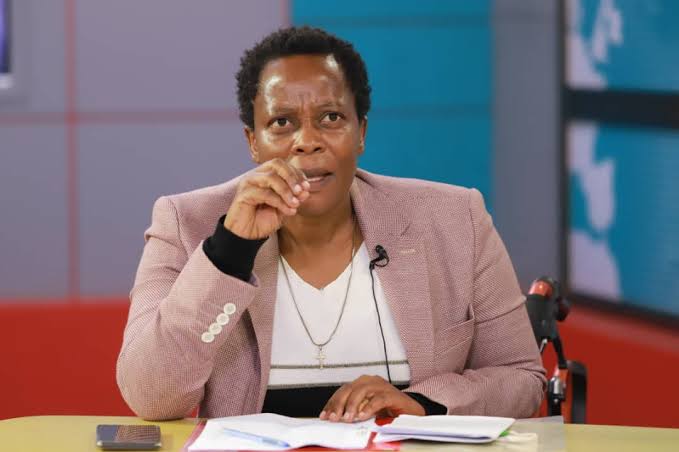
    As Uganda’s 12th Parliament settles in following the hard-fought 2026 general elections, the position of Leader of Opposition (LoP) has become a focal point of intense debate within the National Unity Platform (NUP) and broader opposition circles. With the current LoP Joel Ssenyonyi seen as a strong contender to retain the role, other experienced figures like John Baptist Nambeshe, Paul Mwiru, and notably Betty Nambooze Bakireke – the resilient Mukono Municipality MP—are emerging as serious alternatives. Amid reports of heavy opposition losses (including key Buganda allies) and calls for seasoned, battle-tested leadership to effectively check the government, here are “10 compelling reasons why Betty Nambooze” stands out as the ideal choice to lead the opposition in this critical term.

    1. Unmatched parliamentary tenure and institutional knowledge
    Over 15 years in Parliament (multiple terms since ~2010–2011, now entering her fifth in the 12th Parliament after her 2026 re-election), she brings rare continuity, legislative expertise, and deep memory of opposition tactics—essential for steering strategy in a challenging political landscape.

    2. Fearless and articulate executive watchdog
    Renowned for bold, evidence-driven critiques of corruption, age-limit amendments, governance lapses, and public service failures, her sharp debating style keeps the government accountable—a hallmark of any strong LoP.

    3. Incredible personal resilience amid persecution
    Surviving alleged poisoning, physical attacks, threats, and overseas medical challenges—yet consistently rebounding to win elections—embodies the opposition’s fighting spirit and inspires MPs under similar pressure.

    4. Electoral powerhouse: Anchoring NUP’s full sweep in Mukono District
    In the 2026 polls, NUP captured all Mukono parliamentary seats (Mukono Municipality: herself; Mukono North: Abdallah Kiwanuka; Nakifuma: Sulaiman Kiwanuka; Mukono South: Robert Maseruka; Woman MP: Sheilah Amaniyo) despite reported chaos. As the veteran who helped establish NUP’s stronghold here early, she demonstrated kingmaker-level influence.

    5. Sole survivor of Buganda’s influential “Gang of Seven”
    With long-time allies (Mathias Mpuuga Nsamba, Ibrahim Ssemujju Nganda, Medard Lubega Sseggona, Muhammad Muwanga Kivumbi) defeated in 2026, Nambooze stands alone as the remaining voice from this key Buganda opposition bloc—granting her unparalleled regional leverage to unify and mobilize support.

    6. Unwavering loyalty to NUP and the change agenda
    Joining NUP in 2020/2021, she fully embraced Bobi Wine’s vision, collaborating on campaigns and prioritizing unified, credible alternatives over personal or factional interests.

    7. Proven grassroots mobilizer and consistent voter turnout
    Her repeated victories in competitive Mukono races—even amid 2026 polling disruptions—highlight her ability to energize supporters, deliver votes, and maintain opposition momentum across elections.

    8. Stabilizing, experienced voice in a time of opposition losses
    Heavy defeats for senior figures in 2026 leave few veterans; her survival and focus on issue-based politics, candidate vetting, and strategy offer mature guidance for rebuilding and advancing the opposition agenda.

    9. Relevant Shadow Cabinet and sectoral expertise
    Prior service (e.g., as Shadow Minister for Internal Affairs) equips her with targeted insight into security, governance, and oversight—critical areas for holding the executive to account in the 12th Parliament.

    10. Symbolic unifier and icon of resistance
    As the “last standing” from Buganda’s opposition elite amid widespread setbacks, her story of survival, regional delivery, and principled stand makes her a powerful symbol—capable of bridging divides, boosting morale, and transforming the LoP role into a force for national accountability.

    With the LoP decision ultimately resting on NUP’s internal processes and parliamentary caucus consensus, Betty Nambooze’s unique blend of endurance, proven electoral impact, regional clout, and battle-tested leadership positions her strongly in the ongoing conversation. She’s not just a survivor—she’s ready to lead the opposition forward in the 12th Parliament.

    Do you have a story in your community or an opinion to share with us: Email us at Submit an Article

  • AI Platform to Predict Breast Cancer Chemotherapy Resistance in Advance Developed

    AI Platform to Predict Breast Cancer Chemotherapy Resistance in Advance Developed

    By Brian Musaasizi

    CHIL AI Lab, an African-led health technology company, has announced a breakthrough in breast cancer care. Their new AI platform can detect signs that a patient’s treatment is not working, much earlier than ever before. Instead of giving a simple “yes” or “no,” the system gives a confidence score, so doctors always know how sure the AI is.

    The project is led by Dr. Nabuuma Shamim Kaliisa, who designed the platform to solve a painful problem as many patients wait up to six months just to find out if their treatment is working.

    Most medical AI works like a “black box” giving an answer but doesn’t explain why. CHIL AI Lab’s platform is different. It measures how confident it is with every scan, working more like a trusted specialist than a machine.

    When the AI is unsure about a scan, it says so — and immediately flags the case for a doctor to review, rather than guessing.

    The platform can spot warning signs that treatment may not be working as early as the first 21 days — instead of waiting months.

    It gives oncologists a range of possibilities, helping them decide sooner whether to change a patient’s treatment plan.

    The study ran for 24 months and included 306 patients across multiple cancer centers in Africa. The results showed that the AI’s early confidence scores accurately predicted how patients would respond to treatment by the end of their care.

    “In oncology, an ‘I don’t know’ from a tool can be just as life-saving as a ‘Yes,’” said Dr. Nabuuma Shamim Kaliisa. “By building a system that can quantify its own certainty, we are giving doctors a tool they can actually trust. We are moving away from guessing and toward a future where we can pivot treatment the moment the math shows a high probability of failure.”

    The CHIL AI Lab team will present their findings at the upcoming World Health Assembly. Their work shows that advanced, life-saving technology can be built in Africa — and that it is urgently needed across emerging healthcare markets.

    The team is now moving into the next phase, expanding the platform to cover more cancer types and improve its accuracy even further.

    About Post Author

  • Mbale City Missed Paul Mugoya Wanyoto as MP: 7 Reasons Voters Are Regretting It

    Mbale City Missed Paul Mugoya Wanyoto as MP: 7 Reasons Voters Are Regretting It

    Here are seven compelling reasons why Mbale City (particularly the Northern City Division constituency) missed out on having Paul Mugoya Wanyoto as their MP in the 12th Parliament following the January 2026 general elections. Paul Mugoya Wanyoto, a prominent High Court advocate, former FDC flag bearer, and vocal community advocate, contested strongly but ultimately lost the seat (which went to independent candidate Hajji Umar Nangoli or a similar victor amid a crowded race and incumbent shifts in Mbale City). Residents and supporters continue to lament what could have been.

    1. Deep local roots and genuine understanding of Mbale’s challenges
    Born and bred in Mbale City, Wanyoto repeatedly emphasized his intimate knowledge of local issues—from infrastructure decay and youth unemployment to poor service delivery—unlike some “outsider” or party-imposed candidates. His grounded perspective could have translated into more targeted, Mbale-first advocacy in Parliament.

    2. Proven track record as a community mobilizer and giver
    Before and during the campaigns, he donated essentials like 100-seater tents, plastic chairs, and other support to constituents, mosques, and community events. Many voters saw him as someone who already delivered tangible benefits without being in office—imagine the scale of impact he could have had with MP resources and oversight powers.

    3. Strong legal and professional credentials for effective representation
    As a distinguished High Court advocate, Wanyoto brought expertise in justice reform, governance, and accountability. Mbale could have benefited from an MP capable of drafting strong motions, challenging executive overreach, and advocating for legal reforms on land, corruption, and human rights—areas where the region has long struggled.

    4. Focus on community priorities over party loyalty
    In fiery campaign speeches, he vowed to prioritize constituents over blind party allegiance, criticizing MPs who arrive in Parliament “beholden” to higher powers. This independent-minded approach resonated with voters tired of NRM dominance or opposition infighting, and his absence means Mbale lost a potential voice for genuine, non-partisan service delivery.

    5. Experience from prior flagbearer roles and political maturity
    Having won FDC flags in the past (e.g., for Northern Division) and contested competitively before, Wanyoto had the maturity to navigate Parliament’s complexities. With many incumbents losing seats in Mbale (including shifts in Northern and Industrial Divisions), his seasoned presence could have provided stability and strategic opposition or cross-party collaboration.

    6. Potential to bridge divides and unify Bugisu interests
    Amid NRM’s strong showing in Bugisu sub-region (securing a majority of seats) and opposition fragmentation, Wanyoto’s profile as a respected lawyer and community figure positioned him to advocate for broader regional development—roads, health, education, and economic opportunities—while representing Mbale’s unique urban needs.

    7. Symbol of hope for change and accountability in a shifting landscape

    In an election marked by incumbent losses (e.g., in Mbale City divisions) and calls for fresh leadership, Wanyoto represented a “new dawn” for Northern Division—promising justice, improved service delivery, and constituent-focused politics. His defeat left many feeling Mbale missed a rare chance for principled, high-caliber representation that could have elevated the city’s voice nationally.

    While the 2026 results favored other candidates (with independents and NRM figures prevailing in Mbale’s divisions), supporters argue Paul Mugoya Wanyoto’s blend of local authenticity, professional expertise, generosity, and visionary promises would have made him an outstanding MP. Mbale City continues to feel the void as the new Parliament gets underway.

    Do you have a story in your community or an opinion to share with us: Email us at Submit an Article

  • What Next for Mathias Mpuuga After Losing His Parliamentary Seat?

    What Next for Mathias Mpuuga After Losing His Parliamentary Seat?

    Mathias Mpuuga Nsamba, the former Leader of Opposition (2021–2024), ex-NUP Deputy President, and founder/president of the Democratic Front (DF) party, lost his Nyendo-Mukungwe Division seat in Masaka City to NUP’s Gyaviira Sebina Lubowa in the January 2026 general elections. This marked a significant setback, especially as his newly formed DF failed to win any parliamentary seats nationwide despite fielding candidates. He has rejected the results, citing widespread irregularities like military involvement, delayed voting materials, EC failures, and alleged vote rigging (including claims of non-residents being ferried to vote).

    As of March 2026 (with the 12th Parliament underway), Mpuuga remains politically active. Here’s a realistic outlook on his likely next steps, based on his recent statements, media appearances, and the broader opposition landscape:

    1. Strengthen and reposition the Democratic Front (DF)
    Despite the zero-seat debut, Mpuuga has framed it positively—claiming DF candidates were often the “second choice” for voters and highlighting the party’s growing relevance. He could focus on party-building: recruiting members, fundraising, grassroots mobilization in Greater Masaka and beyond, and preparing for future by-elections or local polls to build momentum.

    2. Continue as a vocal critic and commentator
    He’s already active in media—appearing on platforms like Radio Simba, CBS FM, and others to discuss opposition gaps (e.g., criticizing Bobi Wine’s approach or absence), electoral reforms, and national issues. Expect more interviews, talk shows, and opinion pieces positioning him as an independent voice for change, justice, and accountability.

    3. Advocate for electoral and political reforms
    Mpuuga has repeatedly called for comprehensive reforms, a transitional process, and national reconciliation to fix flaws in the system (drawing from his pre-election observations of U.S. elections). He may lead or join campaigns/petition drives pushing the EC, Parliament, or international bodies for changes ahead of future cycles.

    4. Explore alliances or reconciliation in opposition circles
    With his fallout from NUP (stemming from the 2023 “service award” controversy), reconciliation seems unlikely in the short term, but he could seek tactical partnerships with other opposition figures (e.g., independents, FDC remnants, or Buganda-region leaders) to challenge NRM dominance or amplify shared causes like anti-corruption and governance.

    5. Return to legal/professional work or civil society
    As a trained lawyer and teacher, he could resume private legal practice (focusing on human rights, constitutional cases, or pro bono work for opposition causes), lecture, or engage in civil society/NGO roles—perhaps advising on governance, observing future elections, or writing on Ugandan politics.

    6. Mentor younger leaders or build a personal brand
    His experience as a former LoP, parliamentary commissioner, and party founder positions him well to mentor emerging politicians in Masaka or nationally. Social media posts (e.g., Eid greetings emphasizing unity and service) suggest he’s maintaining a public profile focused on values like compassion and justice.

    7. Potential for future electoral comeback
    Many Ugandan politicians rebound from losses—through by-elections, different constituencies, or higher roles (e.g., local government or party leadership). If DF grows or conditions change (e.g., opposition realignment), he could contest again in 2031 or target other positions.

    In summary, Mpuuga isn’t fading away—he’s pivoting to party leadership, public commentary, and reform advocacy while leveraging his experience to stay relevant. The opposition space is fragmented post-2026 (with NUP dominating but facing its own challenges), so his independent stance could carve out a niche. However, rebuilding credibility after the DF’s poor showing and the NUP rift will be key. Watch for his next media engagements or DF announcements—they’ll signal the direction.

    Do you have a story in your community or an opinion to share with us: Email us at Submit an Article
  • Presidents Museveni and Ruto launch Kisumu- Malaba SGR extension to boost regional trade

    Presidents Museveni and Ruto launch Kisumu- Malaba SGR extension to boost regional trade

    President Yoweri Kaguta Museveni this morning arrived in Kenya where, together with his Kenyan counterpart H.E William Ruto, officiated at the launch of the construction of the Kisumu–Malaba Standard Gauge Railway (SGR) Extension (Phase II).

    Upon arrival at Kisumu International Airport, President Museveni was received by Musalia Mudavadi, Kenya’s Prime Cabinet Secretary, alongside James Opiyo Wandayi, Cabinet Secretary for Energy and Petroleum. The Ugandan leader inspected a guard of honour mounted in his recognition.

    Members of the Ugandan delegation included officials from the Uganda High Commission in Nairobi such as Ambassador Unice Kigyenyi, Charge d’Affaires, Doreen Ruyondo, Minister Counsellor, Brig. Gen. MacDans Kamugira, Defence Attaché, and Elias Kassirabo, Police Attaché.

    Bilateral Talks on Trade and Regional Integration:

    Following his arrival, President Museveni held a closed-door meeting with President Ruto where the two leaders discussed bilateral relations, regional trade, and infrastructure development between Uganda and Kenya.

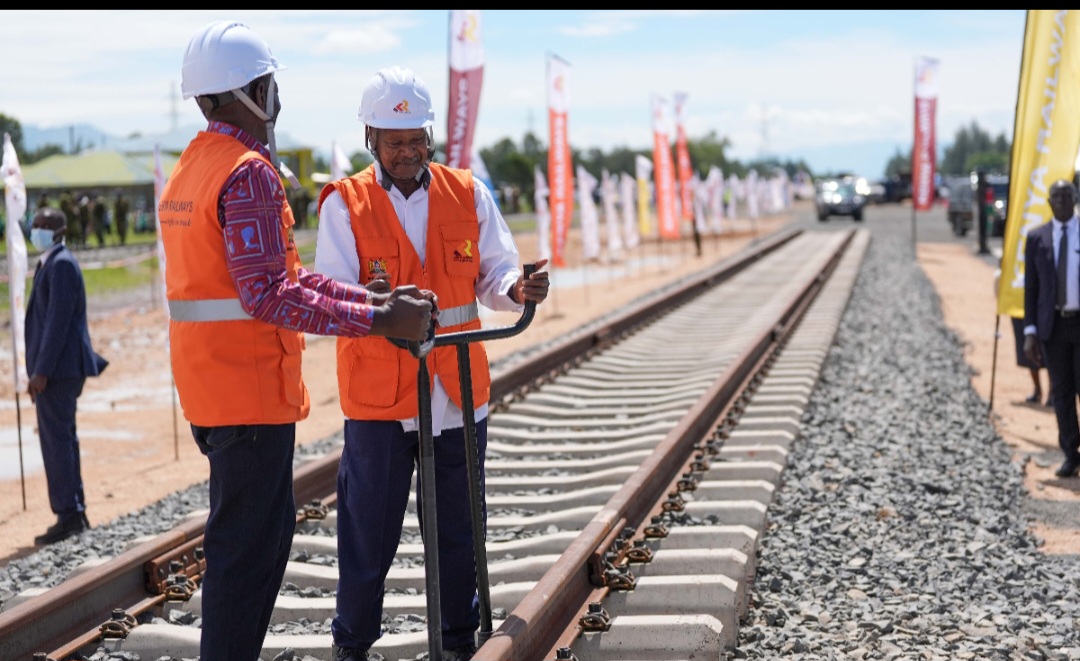
    The two Presidents later jointly launched the project and symbolically tightened a bolt on the railway line to mark the commencement of construction works.

    President Museveni congratulated President Ruto and the people of Kenya upon what he described as a significant milestone in regional infrastructure development.

    “This is a very important function of launching the Naivasha–Kisumu to Malaba Standard Gauge Railway,” President Museveni said.

    President Museveni explained that the railway forms part of a broader plan to rationalise the transport system within the region, particularly in Uganda where he noted that over-reliance on road transport increases costs and inefficiencies.

    “The railway is part of the rationalisation of our transport system, especially on the Ugandan side which is irrational and wasteful because passengers, light cargo, heavy cargo and petroleum products are all concentrated on the roads,” he said.

    He explained that Uganda’s long-term plan is to transfer heavy cargo to the railway, petroleum products to pipelines and water transport, while reserving roads mainly for passengers and light cargo.

    The President noted that this approach will reduce road congestion and improve the competitiveness of regional economies.

    President Museveni emphasised that Africa must focus on producing high-quality but affordable goods to remain competitive globally. He identified high transport costs, expensive electricity, and the high cost of financing as key challenges affecting business competitiveness.

    “If Africa does not address these cost pushers, we shall be outpriced and our goods will not be competitive even within Africa,” he warned.

    President Ruto commended President Museveni for his commitment to regional integration and his long-standing advocacy for East African unity.

    He noted that the Standard Gauge Railway from Suswa through Kisumu to Malaba will unlock Kenya’s economic potential and benefit the entire East African region.

    The multi-billion-dollar infrastructure project is expected to strengthen connectivity to the Port of Mombasa and facilitate trade with landlocked countries including Uganda, Rwanda, Burundi, South Sudan, and the Democratic Republic of Congo.

    President Ruto highlighted the growing demand for efficient transport, noting that cargo volumes through the Port of Mombasa reached 7.37 million tonnes in just six months of 2025, with nearly 70 percent destined for Uganda.

    He observed that cargo currently takes up to 80 hours to move from Mombasa to Malaba and more than 100 hours to Kampala, stressing that slow logistics corridors undermine competitiveness.

    “A slow transport corridor inevitably loses business and weakens our competitiveness as a nation,” President Ruto said.

    The railway extension is expected to significantly improve the Northern Corridor by reducing transport time, lowering freight costs, and improving the movement of goods between Uganda and the Kenyan coast.

    The corridor also supports key economic sectors including agriculture and fisheries around the Lake Victoria basin and is expected to become a critical trade route for the Great Lakes region.

    The Kisumu–Malaba SGR extension forms part of a broader regional railway network connecting Mombasa, Nairobi, Naivasha, Kisumu, Malaba, and eventually Kampala.

    Leaders from both countries expressed optimism that the project will accelerate regional integration, enhance trade efficiency, and strengthen economic cooperation between Kenya and Uganda.

    The launch was also attended by
    Rt. Hon. Rebecca Alitwala Kadaga , the First Deputy Prime Minister of Uganda and the Minister for East African Community Affairs and the Minister of Works and Transport, Gen. Katumba Wamala.


    Do you have a story in your community or an opinion to share with us: Email us at Submit an Article
  • Career Boost! Pick a Core Discipline and Digital Tool – UNOC’s Samantha Muhwezi

    Career Boost! Pick a Core Discipline and Digital Tool – UNOC’s Samantha Muhwezi

    By Evans Najuna

    Kampala – The Chief Operations Manager of Uganda National Oil Company (UNOC) has advised the young generation in Uganda to choose a core discipline, Health, Safety, and Environment, and then add a digital tool; the combination will make them highly employable.

    Samantha made the remarks while representing UNOC as the keynote speaker at the 7th National Career Guidance Day, held on Friday, 20th March, at Kololo Ceremonial Grounds in Kampala. She highlighted UNOC’s role in building national expertise and long-term value across the oil and gas sector, adding that as an institution, their mandate is to manage Uganda’s commercial interests in petroleum.

    She noted that one of their greatest responsibilities is preparing Ugandans, especially the youth, to participate in and ultimately lead this transformation sector.

    “I hereby advise you, the youth: Choose a core discipline, HSE, and add a digital tool. That combination makes you highly employable,” Samantha said.

    According to Samantha, UNOC supports structured career entry through graduate training and internship programs, providing exposure to project delivery, commercial negotiations, refinery and pipeline planning, ESG compliance, and operations management.

    She explained that these initiatives ensure that, beyond technical trades, Uganda is developing talent pipelines for managers, engineers, geoscientists, economists, and future sector leaders.

    “As a shareholder on behalf of the government in the ongoing development and pipeline projects, UNOC collaborates with JV partners to maximize national participation,” she added.

    Samantha reminded the youth that TotalEnergies’ (Tilenga) Talent Pipelines – Tilenga Academy is training 200 youth in operations, production, mechanical, electrical, and instrumentation over a 2.5-year pathway. The first cohort completed international OPITO-aligned certification in France, Malaysia, and Oman.

    Over USD 200,000 in software and hardware donations has been given to universities. USD 12M has been invested in supplier skilling, and approximately USD 36M has been spent procuring from host community suppliers.

    CNOOC (Kingfisher) Vocational Strengthening has a strong emphasis on coded welding, upstream operations, and HSE, with CNOOC supporting 781 trainees at UPIK in 2025.

    Regarding welding certification pathways (3G/6G), Samantha informed the youth that, with support jointly from UNOC, CNOOC, and industry partners, there is a transition to hydropower-powered rigs, reducing emissions and exposing trainees to modern operational standards.

    In EACOP, midstream Vocational and Livelihood Empowerment, EACOP Academy has trained 141 trainees (25% women) in operations, instrumentation, mechanical, and electrical disciplines. Over 527 households have been trained in enterprise development with starter kits across five districts.

    She highlighted the types of training and who they target: technical and vocational pathways delivered through UPIK, UT colleges, and accredited TVET centers, including HSE (INSP, ECITB), rigging and scaffolding, coded welding (3G/6G), NDT/QC inspection, lifting operations, and electrical and instrumentation production operations.

    Additionally, the Ministry of Education and Sports has listed over 145 public TVET institutions aligned with these pathways, targeting youth aged 18-28, aligned with Academy recruitment models.

    University and Professional Pathways have strengthened petroleum geoscience and engineering through advanced digital platforms donated to universities. International placements across TotalEnergies and CNOOC affiliates have provided exposure to operations in Africa, Europe, Asia, and the U.S. UNOC’s graduate training continues to build commercial, regulatory, and operational talent.

    Samantha tipped them on the skills most in demand today, including HSE and Process Safety (IHSP/ECITB/OPITO), welding and fabrication (3G/6G), NDT, QA/QC, electrical and instrumentation (EACOP heat-tracing, commissioning), mechanical maintenance and rotating equipment, lifting operations and heavy machinery, and digital petroleum workflows (Petrel, Techlog, Eclipse, Petromod).

    The opportunities on the horizon include Tilenga entering production readiness, with new roles for OPITO-certified Ugandans. EACOP commissioning will expand operational, maintenance, and control-room opportunities. Supplier growth through IEC and regional partnerships will allow SMEs to scale into long-term operations. UNOC’s growth into midstream and downstream (refining, storage, trading) will create additional technical, commercial, and operations careers.

    The 7th National Career Guidance Day was attended by several government agencies, private institutions, universities, and schools. Under the theme “The Future of Work: Surviving in the AI Era,” the event was officiated by Hon. Dr. Joyce Moriku Kaducu, the State Minister for Primary Education, on behalf of the First Lady, Janet Kataha Museveni, the State Minister for Education and Sports. The Chief Guest was Rt. Hon. Robinah Nabbanja, on behalf of President Museveni.


    About Post Author

  • Mbarara Traders Cry Blood as City Crackdown Leaves Thousands Homeless, Goods Seized in Ruthless Town Clean-Up

    Mbarara Traders Cry Blood as City Crackdown Leaves Thousands Homeless, Goods Seized in Ruthless Town Clean-Up

    By Amos Tayebwa

    Tears, anger and desperation have engulfed the streets of Mbarara after a sweeping city council operation to restore “order” turned into a full-blown eviction storm, leaving thousands of street vendors, kiosk owners and small traders counting heavy losses and staring at an uncertain future.

    The no-nonsense crackdown, jointly executed by Mbarara City South Division and Mbarara City North Division, kicked off earlier this week and has since spread like wildfire across the city, flattening kiosks, dismantling containers and chasing hawkers off the streets in what authorities describe as a decisive move to enforce urban order.

    But on the ground, the story is heartbreak.

    “I have lost everything,” one vendor cried as enforcement teams loaded confiscated merchandise onto trucks. “This is how I feed my children. Where do they expect us to go?”

    From Bishop Macklista Road to Kijungu in Nyamityobora, from Kakoba-BSU Road to Bucunku, the once-bustling informal trading hubs now lie in disarray, with broken structures, scattered goods and stunned traders watching helplessly as their livelihoods vanish.

    City authorities, however, remain unapologetic.

    According to Allan Buhanda, the City Commercial Officer, the operation is both lawful and long overdue.

    “We notified these people by using different forums. We had two days of mobile drive informing the traders to prepare themselves, but as you know, human beings operate under pressure. Some removed their things, others remained adamant, so we had to come in to enforce. What we are doing is within acceptable limits,” Buhanda said.

    Enforcement team carrying some of the items confiscated

    He insisted the operation is not temporary — but permanent.

    “The operation is infinite. We are not going to leave the streets,” he declared.

    Buhanda further revealed that the city has already provided alternatives, pointing to thousands of available spaces in both public and private markets.

    “We have more than 5,000 spaces where these people can be accommodated. The city will not lose revenue because those we are removing are not paying licenses or rent, yet they compete with compliant traders.”

    But for many affected traders, that argument offers little comfort.

    “They are telling us to go to markets we cannot afford,” another displaced vendor lamented. “Rent is high, and customers are on the streets, not inside those markets.”

    The operation has been ruthless in execution. Traders who resisted eviction saw their goods confiscated on the spot, while those who delayed compliance returned to find their structures already torn down.

    “We gave them a grace period,” Buhanda added. “Some started removing themselves, but we have come to clear what they left behind and evict those who remained.”

    The enforcement teams, backed by security personnel, have cast a wide net, targeting not just kiosks and containers, but also street vendors, mobile money operators on verandas, food sellers, traders occupying walkways, and even illegal boda boda stages.

    City leaders insist the crackdown is necessary to restore sanity.

    Some of the containers opposite Baguma being removed

    Prisca Murongo, the Deputy Mayor of Mbarara, defended the operation as part of a broader vision to transform the city.

    “This exercise is intended to bring order to Mbarara City. Physical planning teams will follow enforcement to ensure building owners pave walkways and improve the appearance of their premises.”

    She warned that property owners are next in line if they fail to comply.

    Yet as the city pushes forward with its vision of order and modernisation, critics argue that the human cost is being ignored.

    “Mbarara may become clean, but at what cost?” a local observer questioned. “You cannot talk about development while destroying people’s only source of income.”

    For years, Mbarara has struggled with a surge in illegal structures and informal businesses crowding its central areas. The latest operation marks one of the most aggressive attempts yet to reclaim the city’s streets.

    But as bulldozers move in and enforcement teams tighten their grip, one thing is clear — behind the promise of order lies a growing wave of displacement, anger and uncertainty.

    For thousands of traders now left stranded, the city’s clean-up has come at a devastating price.


    About Post Author

  • Nato Boss Names Artistes Who Made His Start in Music Easier

    Nato Boss Names Artistes Who Made His Start in Music Easier

    Nato Boss has opened up about the musicians he could count on when he was still finding his way in the industry.

    Speaking during an interview on Rewind, the singer, real name Nsubuga Pavio, said only a few names stood out, but they showed up when it mattered.

    What he valued most was simple, they picked his calls, offered advice, and did not turn him away when he needed direction.

    They are not many, but I can name about four musicians: King Zale, Nina Roz, Uncle Pallaso, and A Pass. Someone may not give you money, but they give you advice and it satisfies your heart. You know they may not give you money, but when I call them when I need something, they do not refuse. So those are the people I have mentioned.

    He also spoke about what drives him as an artiste and made it clear that fame has never been the main goal.

    Even before he stepped into music, he already knew what he wanted, not just for himself, but for the people around him.

    I did not just start wanting these things when I began singing, I had already wanted them long before that. What everyone else wants is what Nato Boss wants as well. I just want where I come from to be okay, my mother to be okay, me to be okay, and my close friends to be okay. That is all I need.

    For Nato Boss, success is simple, making sure the people closest to him are okay.

  • STOP POLITICS, SERVE THE PEOPLE! Bamuturaki Cracks Whip as Mbarara Power Fights Rage On

    STOP POLITICS, SERVE THE PEOPLE! Bamuturaki Cracks Whip as Mbarara Power Fights Rage On

    A strong message of unity, reconciliation and service has been sounded by Kashari South MP-elect Rtd. Capt. John Bosco Bamuturaki Tumusiime, who has warned leaders across Mbarara and Kashari to drop endless politicking and get down to the real work of transforming people’s lives.

    Speaking in a congratulatory message to the Muslim faithful following the successful completion of Ramadan, Bamuturaki used the moment to call for calm and maturity in a region still simmering with political tension.

    “We cannot keep in politics all the time. This is the time for service delivery, this is time for getting back to work for our communities’ transformation. Politics has its time, it has its calendar, it has its agenda. When it’s done, we go back and fend for our families and communities,” Bamuturaki said firmly.

    The retired army officer turned politician stressed that elections are now behind the people, and what lies ahead is the real test of leadership — delivering results, not trading insults or deepening divisions.

    “Unity is paramount. Leaders must reconcile with the people, regardless of who supported them, their religion or tribal background. This is the time to work together,” he added.

    Bamuturaki also urged believers across different faiths — including Muslims and Christians observing Lenten seasons — to maintain the discipline, humility and values demonstrated during the fasting period, warning against using religion as a dividing line in leadership.

    “Let us not use religion as a yardstick for leadership. What matters now is social and economic transformation,” he emphasized.

    His message comes at a time when political tensions in Mbarara District remain dangerously high, threatening to overshadow the post-election recovery phase.

    At the centre of the storm is a bitter dispute between Woman MP-elect Loyda Kyarikunda Muhimbura and incumbent Margaret Rwebyambu Ayebare, whose fallout has now spilled into the courts. Rwebyambu recently petitioned the High Court, challenging the academic credentials submitted by Loyda during her nomination process — a move that has ignited heated debates across the district.

    “This fight is dividing people,” a local resident said. “Instead of leaders focusing on development, everyone is now arguing about politics again.”

    The court battle has deepened political camps, with supporters on both sides digging in, raising fears that reconciliation may not come easily.

    But Bamuturaki appears determined to steer the conversation in a different direction — away from conflict and toward cooperation.

    “There should not be more political conflicts or fights. This is the time to engage, to dialogue, and to serve all people equally,” he said.

    As Mbarara grapples with post-election tensions and rising expectations from voters, Bamuturaki’s message lands as both a warning and a challenge to fellow leaders: drop the politics — or risk failing the very people who put them in power.

    For now, the question remains whether the region’s political actors will heed the call — or continue down a path of division that could stall development before it even begins.


    About Post Author

About UGNEWS24

UGNEWS24 is a Uganda local news service, a product of SOLAVIA GROUP LIMITED, Reg. No. 80048169153974.

Registered office

Plot 2335, Buwambo-Katadde-Najjo Road,
Nansana Municipality, Wakiso District, Uganda
P.O. Box 214231, Kampala

© 2026 SOLAVIA GROUP LIMITED. All rights reserved.