Blog

  • MIKE SSEGAWA/Masaka’s NRM Feud: Why Gen. Museveni’s Call for Unity Must Be Heeded

    MIKE SSEGAWA/Masaka’s NRM Feud: Why Gen. Museveni’s Call for Unity Must Be Heeded

    When President Yoweri Kaguta Museveni visited State Lodge in Kizungu, Masaka City, on March 11, 2026, he delivered a message that was both simple and urgent: stop the internal fights and concentrate on serving the people. Unfortunately, events unfolding in Masaka suggest that this advice has yet to be fully embraced.

    Barely two months after the January elections, a bitter public disagreement has emerged between Masaka City Woman MP Justine Nameere and the city’s NRM chairman Rogers Bulegeya. What began as a dispute over the Woman MP election results has now evolved into a public political contest that risks undermining the very unity Gen. Museveni called for.

    Nameere’s victory followed a court-supervised recount that overturned the initial tally announced by the Electoral Commission. Her closest rival, Hanifa Nalubowa, later withdrew her petition, effectively confirming Nameere’s position as the duly elected Woman MP for Masaka City. In legal terms, the matter was settled.

    Yet politics rarely ends where legal proceedings conclude.

    Bulegeya used the presidential platform during Gen. Museveni’s visit to express reservations about the outcome, suggesting that the MP did not enjoy genuine voter support. Nameere, who had organised the gathering attended by the President, firmly defended her victory. The exchange created visible tension, overshadowing what should have been a moment for Masaka’s leaders to present a united front.

    This dispute may appear personal, but its consequences are far wider. Masaka City is a growing urban centre facing real challenges—youth unemployment, unresolved land conflicts, struggling traders, and infrastructure gaps. Addressing these issues requires cooperation between political leaders and party structures.

    The Woman MP provides the legislative voice and access to national decision-making platforms. The NRM chairman, on the other hand, commands the grassroots mobilisation machinery that connects government programmes to communities. When these two pillars pull in different directions, the result is paralysis rather than progress.

    Residents who voted overwhelmingly for President Museveni expect leadership focused on results—not endless political quarrels. Gen. Museveni himself was clear during his address. He criticised leaders who waste time in arguments instead of tackling citizens’ daily problems. He also reminded the gathering that the NRM remains one family, where disagreements should be handled with discipline and responsibility.

    Masaka cannot afford a prolonged leadership feud.

    Land disputes, for instance, remain a major concern in the region, with leaders raising alarms about land grabbing affecting ordinary residents. At the same time, local entrepreneurs are eager to partner with government in economic revitalisation efforts. Opportunities exist—but they require coordinated leadership.

    If the city’s NRM leaders remain divided, progress on road improvements, market modernisation, youth skilling initiatives, and transparent land management will inevitably slow down. Investors and development partners are far more confident when local leadership speaks with one voice.

    Both Nameere and Bulegeya have long histories within the ruling party. They mobilised support for the President and have deep political roots in Masaka. Their strengths are complementary: one holds a parliamentary platform while the other commands the party’s organisational network at the grassroots.

    That combination could be powerful—if harnessed properly.

    Gen. Museveni has already pointed the way forward. He listened carefully to the concerns raised in Masaka and urged leaders to focus on development and accountability. What remains now is for the local leadership to translate that guidance into action.

    A simple gesture of reconciliation—a private meeting followed by a public commitment to cooperation—would send a powerful signal to the people of Masaka. Joint community engagements, inclusive consultations with other leaders, and a shared development agenda presented to the President would restore public confidence.

    Masaka City does not need rival power centres within the NRM. It needs a leadership team working together to deliver tangible progress.

    The President has spoken clearly. Now Masaka’s leaders must prove they were listening.

    Mike Ssegawa is a journalist, media consultant and deputy RDC Kassanda.

    Do you have a story in your community or an opinion to share with us: Email us at Submit an Article
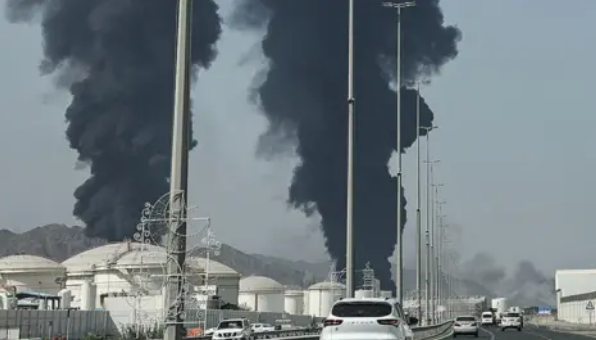
  • IRAN WAR! Why has the US targeted Iran’s economic lifeline Kharg Island?

    IRAN WAR! Why has the US targeted Iran’s economic lifeline Kharg Island?

    Donald Trump has said the US military has bombed a small island off the coast of Iran – home to a major oil terminal that is considered the country’s economic lifeline.

    The US president said Kharg Island’s military facilities were “totally obliterated” but that it had held off targeting its oil infrastructure.

    Trump, however, warned that he would reconsider the decision not to target oil facilities on the island should Iran or others “do anything to interfere” with the safe passage of ships through the Strait of Hormuz – one of the world’s most important shipping channels, located south of Iran’s coast.

    Iran’s military said oil and energy infrastructure belonging to firms working with the US would “immediately be destroyed” should Kharg’s oil infrastructure be attacked.

    Why is Kharg Island important to Iran?

    Kharg Island is a small rocky outcrop just 15 nautical miles (24km) off the coast of Iran.

    Despite its size, it is one of the most critical pieces of Iran’s energy infrastructure.

    The US striking this small but vital island in the northern Gulf is like going for Iran’s economic jugular vein.

    Ninety percent of Iran’s crude oil comes through a terminal on the island – transported through pipes from the mainland.

    Very large tankers – capable of carrying up to 85 million gallons of oil – are able to come up to the island’s long jetties to pick up the oil. The island’s coast is close enough to deep waters, unlike the shallower coast of the mainland.

    The tankers then come back down the Gulf and out of the Strait of Hormuz, to China – the main buyer of Iranian oil.

    A terminal for the export of Iranian oil, the island provides a major source of revenue for the Islamic Revolutionary Guard Corps (IRGC).

    What has the US and Iran said about the attack?

    On Friday, Trump said the US Central Command had “executed one of the most powerful bombing raids in the History of the Middle East and totally obliterated every MILITARY target in Iran’s crown jewel, Kharg Island”.

    He added that, “for reasons of decency”, he had “chosen NOT to wipe out the Oil Infrastructure on the Island”.

    Iranian state media reported that no damage was done to the island’s oil facilities. The Fars news agency said US attacks targeted air defences, a naval base, airport control tower and a helicopter hangar.

    Ehsan Jahanian, political deputy to the governor of Bushehr province in southern Iran, said “no military personnel, oil company employees, or island residents suffered casualties in the attack, and all sectors are continuing their routine activities”.

    Jahanian said the process of exporting oil from Kharg was “fully under way”, and the “activities of companies based on the island are continuing without interruption”, according to a report by the IRGC-affiliated Tasnim news agency.

    Following the strikes, the country’s military warned that oil and energy infrastructure belonging to firms working with the US would “immediately be destroyed and turned into a pile of ashes” if its energy facilities were attacked.

    Why didn’t the US target the island’s oil facilities?

    Military action to destroy the island’s infrastructure would be hugely damaging to Iran.

    It would also present a significant escalation to the conflict.

    It would likely send global oil prices soaring even higher and could also lead to Iran targeting more oil infrastructure across the Middle East.

    Two weeks into the war, Iran still has the capacity to launch large numbers of low-cost, high explosive drones at its Gulf Arab neighbours as well as at shipping vessels.

    It could, potentially, expand those targets to include vital infrastructure like desalination plants that provide drinking water to millions.

    Justin Crump, a military analyst and former British Army officer, said the bombing was an attempt by Trump to deter Iran from escalating the conflict further.

    “He’s showing it as being merciful but saying he could be more punishing to the IRGC” by targeting the oil facilities, Crump, who is also CEO of intelligence consultancy Sibylline, told BBC Radio 4′ s Today programme.

    Trump previously stated that the aim of the war was so that Iran’s people could rise up and overthrow the Islamic Republic’s regime.

    While he has since expressed other motivations for the war, Crump said targeting the island’s oil infrastructure was “difficult” as it would destroy the country’s economic lifeline for a long period of time.

    “That doesn’t really say much for their [the Iranian people’s] future”, he said, adding that when the island’s oil infrastructure was destroyed during the Iran-Iraq war in the 1980s, it took a long time to rebuild.

    Will the US try to seize the island?

    There has been speculation about whether US forces would at some point attempt to take over Kharg Island.

    Its seizure would not only choke off Iran’s oil exports but could also provide a platform from which to carry out attacks against the mainland.

    US media reports that amphibious ships carrying up to 5,000 Marines and sailors are now being sent to the Gulf, adding to that speculation.

    The Pentagon has declined to comment.

    Taking the island would effectively cut off the IRGC’s economic lifeline, impacting its ability to be able to conduct war, security analyst Mikey Kay, from the BBC’s Security Brief, says.


    About Post Author

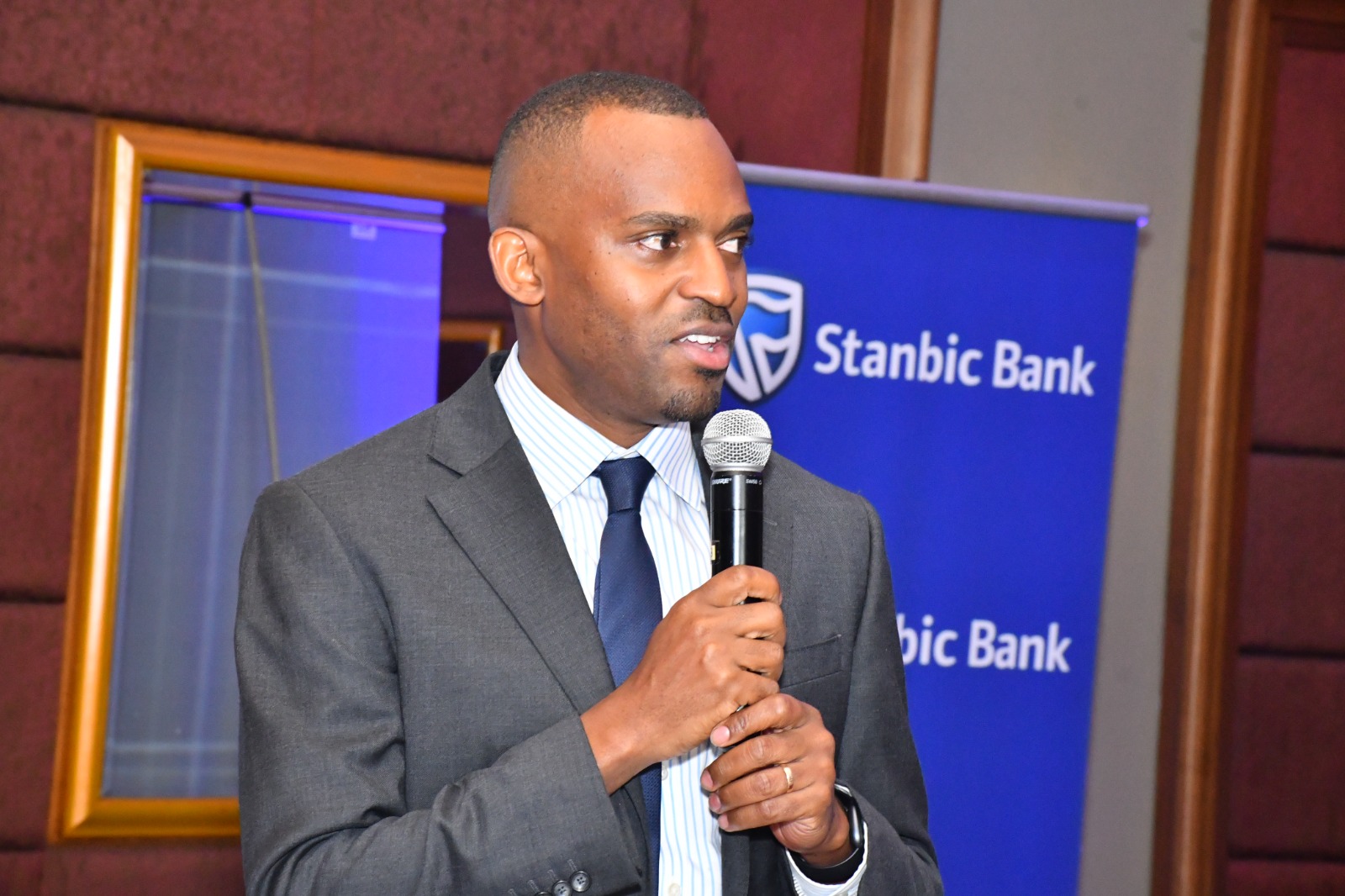
  • Stanbic analysts see opportunity for disciplined investors amid global unrest

    Stanbic analysts see opportunity for disciplined investors amid global unrest

    Kampala, March , 2026 – Global crises often unsettle markets. But they can also create openings for investors willing to take a longer view.

    That was the message from analysts and investment advisers during a webinar hosted by SBG Securities Uganda Limited on Wednesday, where economists argued that while the escalating conflict in the Middle East may introduce short-term volatility, it could also present opportunities for disciplined investors and policymakers in Uganda.

    “Such times can come with a lot of uncertainty,” said Grace Semakula, chief executive of SBG Securities Uganda Limited, the investment and brokerage arm of Stanbic Uganda Holdings Limited.
    “But these are not times to panic. They are times to take a patient, long-term view and consistently allocate funds.”

    Semakula noted that geopolitical disruptions often create moments when investors can reposition portfolios and identify emerging opportunities, provided they remain focused on long-term fundamentals rather than short-term noise.

    A strong starting point

    Uganda enters this uncertain period from a position of relative strength. Inflation has remained subdued, economic growth robust and exports particularly gold and coffee have expanded significantly over the past year.

    Yet economists caution that global conflict could still ripple through the economy, particularly if the disruption becomes prolonged.

    “We might see a protracted conflict,” said Christopher Legilisho, an economist at the Standard Bank Group. “That could weigh on global growth and create spillovers to different countries, including Uganda.”

    Central banks are starting to turn cautious. For much of 2024 and early 2025, central banks around the world were preparing to ease monetary policy as inflationary pressures began to ease.

    That trajectory may now be less certain. Rising geopolitical tensions have increased the likelihood of higher oil prices and renewed inflationary pressure, prompting policymakers to reassess their approach.

    “Because of the conflict, we are starting to see expectations that inflationary pressures could return,” Legilisho said. “Central banks may become more cautious or preventative in their policy stance.”

    Uganda’s central bank, Bank of Uganda, has kept its benchmark policy rate steady at 9.75% since October 2024. If inflation accelerates, analysts say the bank could delay any rate cuts or even tighten policy.

    Risks and opportunities

    Uganda’s trade links to the Middle East also expose it to disruptions, noted the experts.
    Gold exports now the country’s largest export earner are heavily concentrated in that region. Uganda ships roughly $6 billion worth of gold annually, with about $5.2 billion destined for the United Arab Emirates.

    Any interruption to that trade route could temporarily disrupt exporters. “If producers are unable to ship gold to the UAE, refiners and exporters may struggle to find immediate alternative markets,” Legilisho said.

    Yet the disruption could also accelerate domestic policy initiatives. The Bank of Uganda has been preparing to launch a domestic gold purchase programme aimed at strengthening foreign-exchange reserves—a move that could gain urgency if export flows slow.

    Energy markets present another layer of complexity.

    Higher oil prices would increase Uganda’s import bill in the short term because the country still relies heavily on imported refined petroleum products, much of which originates from the Middle East.
    “You could see Uganda’s oil import requirements rise significantly if prices spike,” Legilisho said.

    But the longer-term outlook may be more favourable. Uganda expects first oil production from its petroleum sector later this year, which could transform the country’s trade balance over time.

    Market volatility already visible
    Financial markets have already begun to react. The Ugandan shilling has weakened by roughly 3% since the conflict escalated, and analysts warn that inflation could rise if energy prices climb further.

    In an extreme scenario, Legilisho estimates inflation could reach around 8.3%, potentially prompting the central bank to raise interest rates. Higher borrowing costs would slow credit growth and could temper economic expansion.

    Remittances could also be affected. Uganda receives significant inflows from citizens working in the Middle East, and any regional disruption could affect those earnings.

    Still, the scale of the impact will depend heavily on how long the conflict lasts.
    “If the crisis is resolved within a month, the economic impact would likely be limited,” Legilisho said. “But if it continues for several months, the pressures on growth and inflation could become more significant.”

    Looking beyond the turbulence
    For investment advisers, the key message is that volatility should be managed rather than feared.

    “Even through crisis, there are significant opportunities to explore,” Semakula said. “Our role as an investment partner is to help clients see beyond the immediate noise and make informed, long-term decisions.”
    SBG Securities Uganda Limited ended 2025 with more than UGX540 billion in assets under management, adding over 4,000 new clients during the year.

    The firm was also recognised by the Capital Markets Authority as Collective Investment Scheme Manager of the Year.

    For Uganda’s economy, the coming months may test its resilience. But as Semakula suggested, periods of uncertainty can also reward those prepared to look beyond the immediate horizon.

    Do you have a story in your community or an opinion to share with us: Email us at Submit an Article

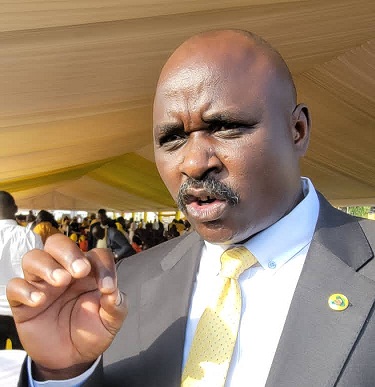
  • MITOOMA BOSS-ELECT BREATHES FIRE! Karitundu blasts district leaders after anti-graft arrests: “Corruption has eaten our home!”

    MITOOMA BOSS-ELECT BREATHES FIRE! Karitundu blasts district leaders after anti-graft arrests: “Corruption has eaten our home!”

    Political fireworks have erupted from the hills of Mitooma after the district’s incoming boss launched a blistering attack on the current leadership following the dramatic arrest of several top officials over corruption allegations.

    The outspoken Mitooma LC5 Chairperson-elect, Alex Okanga Karitundu, did not mince words as he accused the district’s current political leadership of failing to stop a growing corruption scandal now embarrassing the area.

    Karitundu’s outburst comes just days after operatives from the State House Anti-Corruption Unit swooped into Mitooma and arrested several senior officials, including the Chief Administrative Officer (CAO), District Health Officer (DHO) and members of the District Service Commission.

    The arrests sent shockwaves across the district, which is home to senior national leaders including Deputy Speaker Thomas Tayebwa and Internal Affairs Minister Kahinda Otafiire.

    Speaking to journalists at the Kololo Ceremonial Grounds during the “Yoga Yoga Jajja” celebration in Kampala on Friday, Karitundu described the corruption scandal as a humiliation for the district.

    “This doesn’t give us a good image as Mitooma District,” he said.

    Karitundu blamed what he called egoism and entitlement among leaders, saying such attitudes have allowed corruption to flourish unchecked.

    Karitundu also turned his guns on the outgoing-current district chairperson, Karyaija Johnson Benon, accusing him of remaining silent while the district sinks into scandal.

    “The silence of the district chairperson speaks volumes,” Karitundu said.

    “How can workers like the CAO or DHO operate like this without political leadership giving direction?”

    He argued that as the political head of the district, the chairperson has a duty to ensure discipline and accountability in government offices.

    The incoming chairperson vowed to launch a major clean-up of the district administration once he officially takes office.

    “It will sweep out that rubbish once I’m sworn in as the political head of Mitooma District,” Karitundu declared.

    He promised that under his leadership, public officials will be forced to serve citizens without extorting money from them.

    Karitundu also used the occasion to welcome President Yoweri Museveni’s “Yoga Yoga Jajja” campaign message against corruption.

    He said the President’s stance on zero tolerance for corruption reflects exactly what needs to happen in Mitooma.

    Karitundu thanked mobilisers including Amina Mukarazi for organizing the colourful celebration and rallying support for the ruling party.

    With arrests already made and political tempers rising, all eyes are now on Mitooma as residents wait to see whether the incoming leadership will deliver on promises to clean up corruption and restore the district’s reputation.

    For now, however, the message from the boss-elect is loud and clear:

    “The corruption era in Mitooma must end.”


    GOT A HOT STORY? EMAIL: redpeppertips@gmail.com WITH AS MUCH EVIDENCE AS POSSIBLE.

    SOURCE PROTECTION/CONFIDENTIALITY IS OUR NO.1 PRIORITY.

    About Post Author

  • LC elections to be held in April, 2026

    LC elections to be held in April, 2026

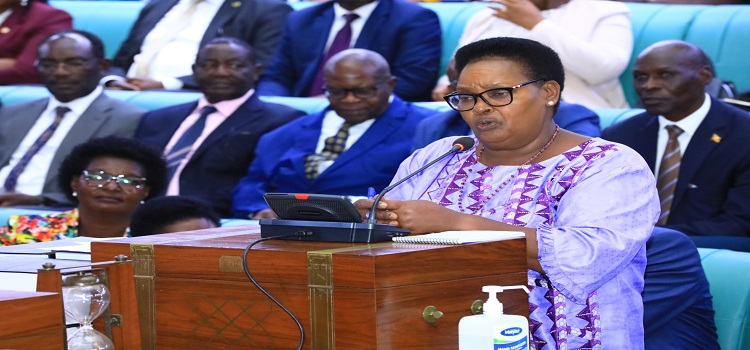
    The long-awaited elections for Local Councils 1 and 2 will be held by the end of April, 2026, the Minister of State for Local Government, Hon. Victoria Rusoke, has said.

    The minister made the revelation during plenary sitting presided over by Speaker Anita Among, on Thursday, 12 March 2026.

    The term of office for the LCs 1 and 2 who were elected in 2018 expired in 2023, and their elections have since been extended six times.

    “I want to confirm to this House that elections of LCs 1 and 2, and Women Councils were properly scheduled and this information has reached the districts,” Rusoke said.

    This was after the Kiboga East County MP, Hon. Keefa Kiwanuka, raised the matter and tasked the Minister to provide specific dates of the elections.

    He expressed concern that the conflicting statements from the responsible authorities are increasingly causing uncertainty over the elections.

    “The Chairperson of the Electoral Commission, Justice Byabakama, told us that money had been released, however, shortly, the Ministry of Local Government indicated that there was a funding shortfall of Shs58 billion. This was followed by a statement by Cabinet, indicating that the elections will be held in March and April,” Kiwanuka said.

    He added, “Can we have confirmation whether the money was released. Can we also have confirmation when these elections will be held?”

    Kiwanuka said that the continued extension of the local government leadership elections creates a void in governance structures.

    “Whereas LC 1 and 2 systems are critical in implementation of government programmes, we are now consistently relying on arguably un-elected structures,” he said.

    Kiwanuka pointed out that apart from legal and administrative reforms and boundary issues, the main issue has been funding constraints.

    Speaker, Among reiterated that absence of local council leaders has deprived the country off democratically elected leaders.

    “We need confirmation if we are going to have elections, what is the shortage, and if it is there, it was approved by Cabinet. Why are we not releasing that money,” she said.

    The Speaker added, “EC said they had received funding, so which shortage is there, why are we not releasing that money?”

    The minister is yet to provide the specific dates of the elections.

    Uganda has over 70,000 villages and these are governed by LCs 1 and 2.

    Do you have a story in your community or an opinion to share with us: Email us at Submit an Article

  • Malaria Fight Stalls as 44% of Households Lack Sufficient Mosquito Nets – UBOS Report

    Malaria Fight Stalls as 44% of Households Lack Sufficient Mosquito Nets – UBOS Report

    By Evans Najuna

    Uganda has made notable progress in the fight against malaria through the distribution and use of insecticide-treated mosquito nets (ITNs). However, recent findings show that gaps in household coverage remain, highlighting the need for expanded distribution efforts to protect more families. This is contained in the 2024-25 malaria survey report released on Thursday at the Uganda Bureau of Statistics house in Kampala.

    According to the report, surveys conducted in 2016 included mosquito nets treated with insecticides within the previous 12 months. However, the retreatment questions were removed starting with the 2016 Uganda Demographic and Health Survey and the 2018-19 Uganda Malaria Indicator Survey, after the country shifted to long-lasting nets that do not require annual retreatment.

    The use of ITNs remains central to Uganda’s malaria prevention strategy. When widely distributed and properly used, the nets protect individuals from mosquito bites and reduce the overall mosquito population, lowering the risk of malaria transmission across communities.

    According to the 2024-25 Uganda Malaria Indicator Survey (UMIS), 84% of households own at least one insecticide-treated net, while 87% own at least one mosquito net of any kind. These figures show a slight change from the 2018-19 UMIS, when 83% of households reported owning at least one mosquito net.

    Despite high ownership levels, many households lack enough nets to protect all members. The survey found that only 56% of households had at least one mosquito net for every two people who stayed in the household the night before the survey.

    The findings reveal that 16% of households own no insecticide-treated nets, while 28% have at least one net but lack enough for all members. Chris Mukiza, Executive Director of the Uganda Bureau of Statistics, said it’s time for the Ministry of Health and stakeholders to use this data and find solutions.

    The Uganda Malaria Elimination Strategic Plan aims to ensure every household has at least one insecticide-treated net for every two people by 2030. The strategy includes distributing next-generation nets, targeted indoor residual spraying, and climate-responsive vector control.

    Uganda’s recent nationwide mosquito net distribution campaign (May-December 2023) contributed to high household ownership levels. However, ownership varies across regions and populations. The Teso sub-region reported 95% ownership, while Kampala reported 69%.

    The report recommends expanding distribution to reach the 16% of households without nets and increasing the number of nets for households with insufficient coverage to meet the 2030 goal.


    About Post Author

  • URA’S $11.5M Tax System in Turmoil After Firing Indian Tech Giant

    URA’S $11.5M Tax System in Turmoil After Firing Indian Tech Giant

    KAMPALA: Shockwaves are rippling through Uganda’s tax administration after insiders revealed that the Uganda Revenue Authority (URA) abruptly cut ties with software experts linked to the global IT powerhouse Tata Consultancy Services (TCS), the firm that helped build the country’s multi-million-dollar tax management system.

    The development has reportedly thrown URA’s digital tax operations into confusion and mounting pressure, forcing overwhelmed staff to revert to manual processes as system challenges pile up.

    THE $11.5 MILLION TAX MACHINE

    TCS — a flagship company of the Tata Group — previously designed and installed the Integrated Tax Administration System (ITAS) for URA in a project worth about $11.5 million.

    The sophisticated platform was meant to manage key tax streams including Income Tax, VAT and Withholding Tax, helping the government track revenue more efficiently and widen the tax base.

    For years, the system formed the backbone of URA’s digital tax collection infrastructure.

    But insiders now say the authority terminated support arrangements with the Indian IT experts, triggering serious operational headaches.

    SYSTEM UNDER PRESSURE

    Sources inside URA claim that after the exit of the foreign specialists, technical glitches and reconciliation challenges have increased, leaving the in-house IT team struggling to keep up.

    “They were the people who built and understood the system architecture,” an insider said.

    “Once they left, everything became harder to maintain.”

    Staff in some units are reportedly working long hours reconciling data manually as the system struggles to keep pace with transactions.

    CLIENTS START COMPLAINING

    The disruptions are now beginning to affect taxpayers and clearing agents who depend on URA’s digital platforms for payment confirmations and tax account updates.

    Some users complain that delays in reflecting payments and system slowdowns are becoming more frequent.

    “It used to be quick,” one taxpayer said.
    “Now sometimes the system hangs or takes too long to update.”

    DIGITAL TRANSFORMATION AT RISK?

    TCS is widely recognized as one of the world’s largest IT services companies, with operations across Africa and Asia supporting governments and major corporations.

    The company’s systems were intended to help URA reduce operational costs, strengthen financial accountability and modernize revenue collection.

    But insiders warn that without proper technical support, the sophisticated platform could become difficult to sustain at peak efficiency.

    PRESSURE MOUNTS

    With complaints rising and staff reportedly stretched thin, pressure is mounting on URA leadership to stabilize the system and restore confidence in the digital tax platform.

    Industry observers say the situation highlights how dependent modern tax systems are on specialized technical expertise.

    For now, however, insiders say the once-celebrated digital tax machine is creaking under pressure, leaving the tax authority scrambling to keep the system running.

    URA officials allegedly terminated the contract claiming the foreign company was “too expensive”.

    The termination of the Indian support team reportedly sparked serious tensions inside the tax authority.

    Sources claim that during the heated transition period, one senior URA official allegedly threatened to shoot one of the foreign support staff members during a dispute over access to the system infrastructure.

    The claim could not be independently verified, but insiders say the incident left staff shocked and deepened the hostility surrounding the contract termination.

    “Connected” Replacement Firm

    Even more controversial are claims that URA quickly replaced the Indian software provider with a local company allegedly linked to powerful officials within the authority.

    Critics inside URA claim the local firm lacks the technical capacity to manage the complex tax ledger system previously handled by the foreign specialists.

    “They chased away people who built and understood the system,” another insider said.
    “Now the people replacing them are learning on the job.”


    GOT A HOT STORY? EMAIL: redpeppertips@gmail.com WITH AS MUCH EVIDENCE AS POSSIBLE.

    SOURCE PROTECTION/CONFIDENTIALITY IS OUR NO.1 PRIORITY.


    About Post Author

  • SYSTEM CRASH CHAOS! URA Fires Indian Ledger System Firm — Staff Now Reconciling Taxes Manually

    SYSTEM CRASH CHAOS! URA Fires Indian Ledger System Firm — Staff Now Reconciling Taxes Manually

    Panic, confusion and sleepless nights have reportedly gripped officials at the tax body, the Uganda Revenue Authority (URA), after the institution allegedly switched off a sophisticated tax ledger system and forced staff to revert to manual reconciliation of taxes.

    According to an explosive internal memo seen by insiders, URA management terminated the contract of an Indian technology company linked to the global IT powerhouse Tata Consultancy Services (TCS) that had been providing system support for the authority’s tax database, reconciliation processes and other critical digital infrastructure.

    The Indian firm had reportedly been responsible for ensuring that tax payments, ledger entries and reconciliation systems ran smoothly within URA’s digital platforms.

    But in a controversial decision, URA officials allegedly terminated the contract claiming the foreign company was “too expensive”.

    What followed, sources say, is total operational chaos.

    “Everything Is Manual Now”

    Insiders say URA staff in the IT and finance departments are now struggling to keep up with mountains of tax data manually after the automated systems started experiencing major disruptions.

    “People are overwhelmed,” a source said. “We used to rely on automated reconciliations. Now officers are doing entries manually like in the 1990s.”

    Staff reportedly spend long hours checking payment records line-by-line, something the digital system previously handled within seconds.

    The situation has reportedly slowed down tax confirmations, reconciliations and ledger balancing, triggering complaints from taxpayers and system users.

    Threats and Tension

    The termination of the Indian support team reportedly sparked serious tensions inside the tax authority.

    Sources claim that during the heated transition period, one senior URA official allegedly threatened to shoot one of the foreign support staff members during a dispute over access to the system infrastructure.

    The claim could not be independently verified, but insiders say the incident left staff shocked and deepened the hostility surrounding the contract termination.

    “Connected” Replacement Firm

    Even more controversial are claims that URA quickly replaced the Indian software provider with a local company allegedly linked to powerful officials within the authority.

    Critics inside URA claim the local firm lacks the technical capacity to manage the complex tax ledger system previously handled by the foreign specialists.

    “They chased away people who built and understood the system,” another insider said.
    “Now the people replacing them are learning on the job.”

    System Struggling

    Since the change, sources say system outages, slow processing and reconciliation backlogs have become increasingly common.

    Taxpayers and clearing agents have reportedly begun complaining about delays in verification of payments and system responses.

    “The system keeps hanging,” a user reportedly complained. “Sometimes payments take too long to reflect.”

    Cost Cutting or Costly Gamble?

    URA management reportedly justified the termination of the Indian contract as a cost-cutting measure aimed at reducing operational expenses.

    But critics inside the authority say the move may end up costing more in lost efficiency, operational disruptions and reputational damage.

    “The irony is that in trying to save money, they may have broken the entire system,” one insider said.

    Internal Pressure Mounts

    With the system struggling and staff overwhelmed, pressure is now reportedly mounting inside URA to find a quick technological fix before the backlog spirals further out of control.

    For now, however, insiders say the tax body responsible for collecting trillions of shillings annually is stuck doing critical financial reconciliations by hand.

    And for many staff inside the authority, the situation can only be described in one phrase: “Total chaos.”

    URA has been contacted for a comment.

    Watch this space!


    GOT A HOT STORY? EMAIL: redpeppertips@gmail.com WITH AS MUCH EVIDENCE AS POSSIBLE.

    SOURCE PROTECTION/CONFIDENTIALITY IS OUR NO.1 PRIORITY.

    About Post Author

  • NEW URA LICENSING RULES SPARK PANIC! Insiders warn billions threshold could lock out hundreds of agents

    NEW URA LICENSING RULES SPARK PANIC! Insiders warn billions threshold could lock out hundreds of agents

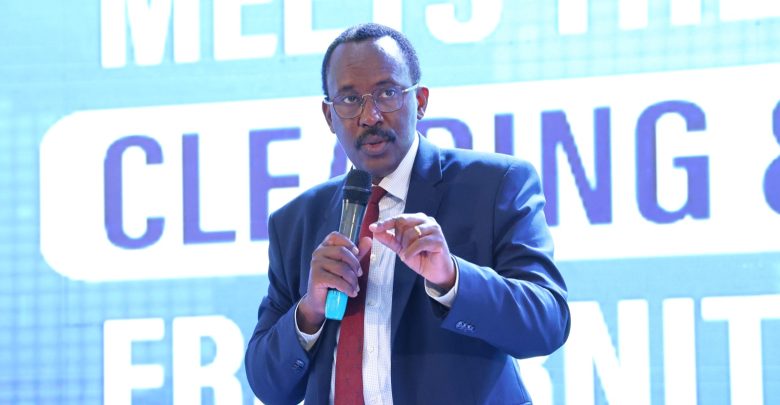
    KAMPALA: A storm is brewing inside the Uganda Revenue Authority (URA) after a controversial proposal to overhaul licensing requirements for clearing and forwarding agents sparked fears of a massive industry shake-up that could push smaller players out of business.

    According to an internal communication circulating among industry stakeholders, URA is reviewing new licensing conditions for 2027 that would dramatically increase the minimum customs value agents must clear in order to qualify for licenses.

    The letter, signed by Assistant Commissioner Trade Henry B. Kwaligonza, asks industry associations to submit views on the proposed thresholds before March 16.

    But insiders within the clearing and forwarding sector say the move could effectively lock out many small and medium-sized agents from the lucrative customs business.

    BILLIONS OR YOU’RE OUT

    Under the proposed framework, agents applying for a General Agency License would be required to prove they cleared imports worth at least UGX 10 billion in the previous year.

    They must also demonstrate they handled transit cargo worth UGX 10 billion and exports valued at not less than UGX 1 billion.

    Industry insiders say such thresholds are far beyond what many small clearing firms handle annually, raising fears that the rules are designed to squeeze them out.

    “This is a death sentence for small agents,” one clearing agent fumed.

    “Most firms don’t clear goods worth Shs10 billion a year. It means they will automatically be disqualified.”

    INDUSTRY GROUPS ALERTED

    URA addressed the request for input to several clearing industry bodies including the Uganda Clearing Industry & Forwarding Association, the Customs Agents Single Umbrella Organisation, the Federation of Uganda Customs Agents and Freight Forwarders, and the Uganda Freight Forwarders Associations Ltd.

    But agents say the consultation may simply be a formality before the controversial rules are pushed through.

    License update 2026

    “BIG FIRMS WILL DOMINATE”

    Critics warn that the new system could concentrate the customs clearing business in the hands of a few large firms, leaving hundreds of smaller agents stranded.

    “If this passes, only a handful of big companies will remain in the market,” another insider warned.

    “This will kill competition and destroy livelihoods.”

    FEARS OF A HIDDEN AGENDA

    Some players in the sector believe the changes could benefit well-connected clearing firms that already dominate large cargo volumes.

    “There is suspicion this could be designed to favor certain big players,” said another agent.

    “If you set the bar that high, you know exactly who qualifies.”

    THOUSANDS OF JOBS AT STAKE

    Uganda’s clearing and forwarding sector employs thousands of agents, transporters and logistics workers, many of whom depend on small firms operating at border points and inland clearance depots.

    Industry observers warn that forcing smaller agents out of the market could trigger job losses and disrupt trade logistics.

    PRESSURE ON URA

    With the consultation deadline approaching, pressure is mounting on URA to reconsider the proposed thresholds.

    Some industry players are now urging the tax body to introduce more flexible licensing tiers that allow both large and small agents to operate.

    But behind the scenes, insiders say anxiety is spreading across the industry as agents fear the reforms could quietly redraw the entire customs clearing landscape.

    For now, one thing is clear: if the proposals pass in their current form, the customs clearing business in Uganda may never look the same again.


    GOT A HOT STORY? EMAIL: redpeppertips@gmail.com WITH AS MUCH EVIDENCE AS POSSIBLE.

    SOURCE PROTECTION/CONFIDENTIALITY IS OUR NO.1 PRIORITY.

    About Post Author

  • Etania Mutoni makes history as first female DJ from East Africa at Afro Nation

    Etania Mutoni makes history as first female DJ from East Africa at Afro Nation

    DJ and media personality Etania Mutoni is set to make history as she joins the lineup for the pool party programme at the upcoming Afro Nation Festival.

    Etania becomes the first female deejay from East Africa to perform on the platform.

    Her set, dubbed “Life of the Party – Sounds by Etania,” will take place on Friday from 12 PM to 3 PM.

    The pool party is part of the extended Afro Nation experience, which begins ahead of the main beach festival and features a series of curated lifestyle events for festivalgoers.

    This particular event will be held at the Kimpton Atlântico Algarve and will be exclusively open to guests with official Afro Nation hotel packages.

    The post Etania Mutoni makes history as first female DJ from East Africa at Afro Nation appeared first on MBU.

About UGNEWS24

UGNEWS24 is a Uganda local news service, a product of SOLAVIA GROUP LIMITED, Reg. No. 80048169153974.

Registered office

Plot 2335, Buwambo-Katadde-Najjo Road,
Nansana Municipality, Wakiso District, Uganda
P.O. Box 214231, Kampala

© 2026 SOLAVIA GROUP LIMITED. All rights reserved.