Blog

  • Hajji Kakande tasks Lango RDCs to ensure effective implementation of national priorities 

    Hajji Kakande tasks Lango RDCs to ensure effective implementation of national priorities 

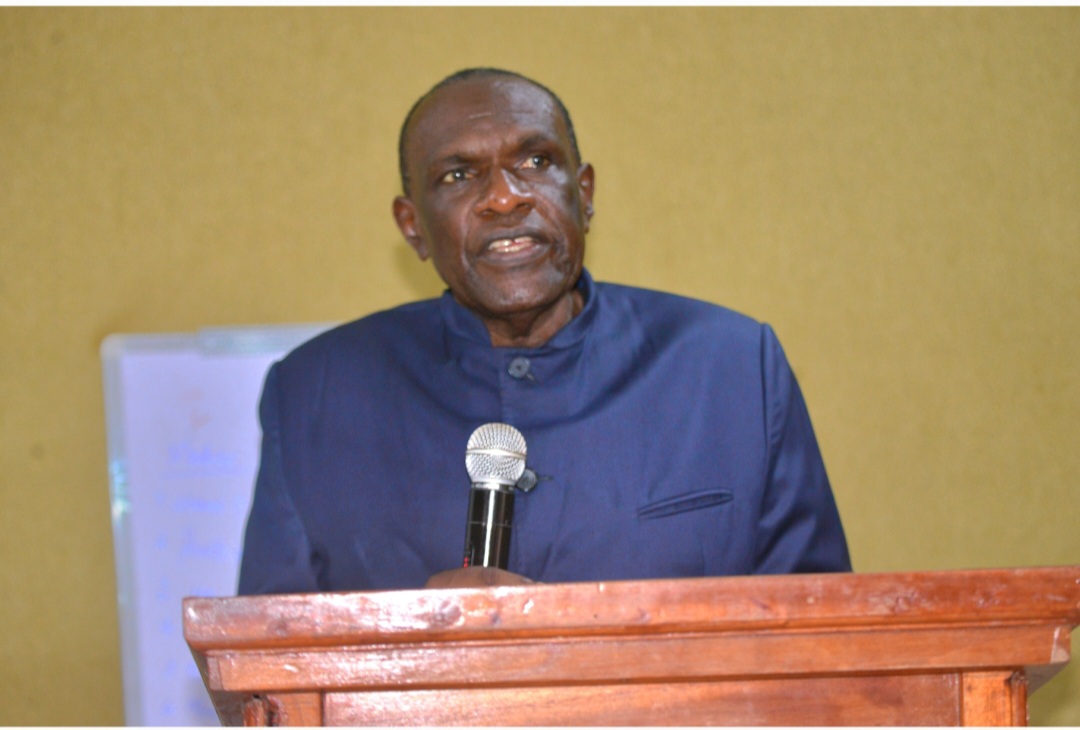
    The Secretary Office of the President, Hajji Yunus Kakande has implored Resident District Commissioners (RDCs) to ensure effective implementation of national priorities at the grassroots.

    “Your responsibilities are clearly provided for in the 1995 Constitution of the Republic of Uganda as amended and relevant administrative frameworks that guide the work of government. Among your core mandates is the responsibility to monitor government programs and projects to ensure that public resources allocated to districts are utilized efficiently and that services reach the intended beneficiaries,” he said.

    Hajji Kakande who was represented by the Senior Presidential Advisor- Mobilization at the RDC Secretariat, Lt. Col. Kibrai Ambako, made the remarks on Friday 13th March, 2026 during the closure of the 3- day capacity building Workshop for RDCs/RCC, Deputy RDCs/RCCs, Assistant RDCs/RCCs, RISO and DISOs serving in Lango Sub-Region, held at Margarita Palace Hotel, Lira City.

    He noted that the government has continued to invest substantial resources in priority sectors such as agriculture, infrastructure development, education, health services as well as wealth creation initiatives, and these investments are intended to accelerate socio-economic transformation and improve the livelihoods of households across the country.

    “However, the effectiveness of these investments largely depend on the quality of supervision, monitoring and coordination at the district level. It is therefore critical that RDCs and district security leaders should remain vigilant and proactive in overseeing the implementation of these programs,” he said.

    Hajji Kakande further revealed that during the course of the workshop, several key areas were discussed in detail and these included the legal and policy framework guiding the work of RDCs, the importance of effective monitoring of government programs, strengthening coordination between administrative and security institutions at the district level, and improving accountability in public service delivery.
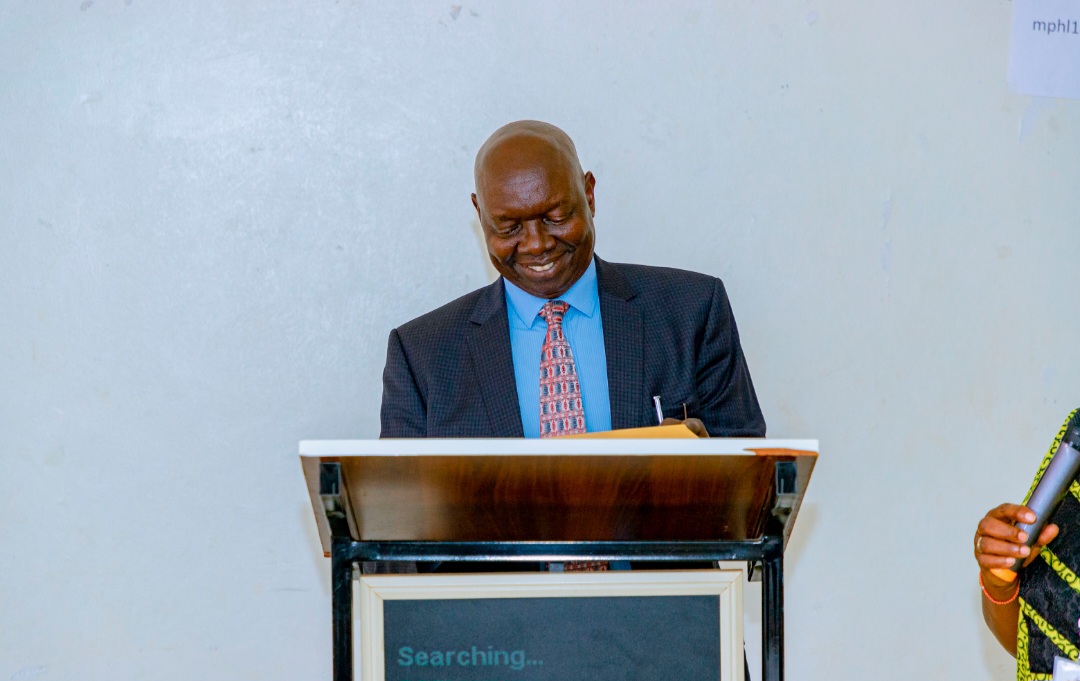
    Lt Col. Kibrai Ambako

    “Participants also had the opportunity to examine practical approaches to monitoring government projects, including conducting regular field inspections, engaging with beneficiaries of government programs, verifying progress reports submitted by implementing agencies and ensuring that any emerging challenges are reported to the relevant authorities for timely intervention.”

    He also advised that monitoring should not only be confined to reviewing reports in offices; It must involve regular presence in the field to verify that projects such as schools, health facilities, roads and wealth creation initiatives are being implemented according to approved plans and budgets.

    He emphasised the importance of effective coordination among government institutions operating within the districts.

    “Many government programs involve multiple actors including line ministries, local governments, development partners and private sector actors. Without proper coordination, there is a risk of duplication of efforts, inefficiencies and gaps in service delivery. RDCs therefore have a critical responsibility to convene coordination meetings and ensure that all government actors within the district operate in a complementary and harmonized manner,” he stated.

    “Equally important is the role played by RISOs and DISOs in maintaining situational awareness and ensuring that the security environment remains stable to support development activities. Security and development are closely interconnected.”

    Hajji Kakande reminded the participants that sustainable socio-economic transformation can only take place in an environment where peace and stability are guaranteed, noting that the continued collaboration between administrative leaders and the security agencies remains essential in ensuring that potential security threats are identified early and addressed appropriately.

    “Another important matter that I wish to emphasise is the need to strengthen accountability and integrity within public service. As representatives of government at the district level, you occupy positions of trust and responsibility. Your conduct, decisions and leadership style have a direct influence on the credibility of government institutions,” he stressed.
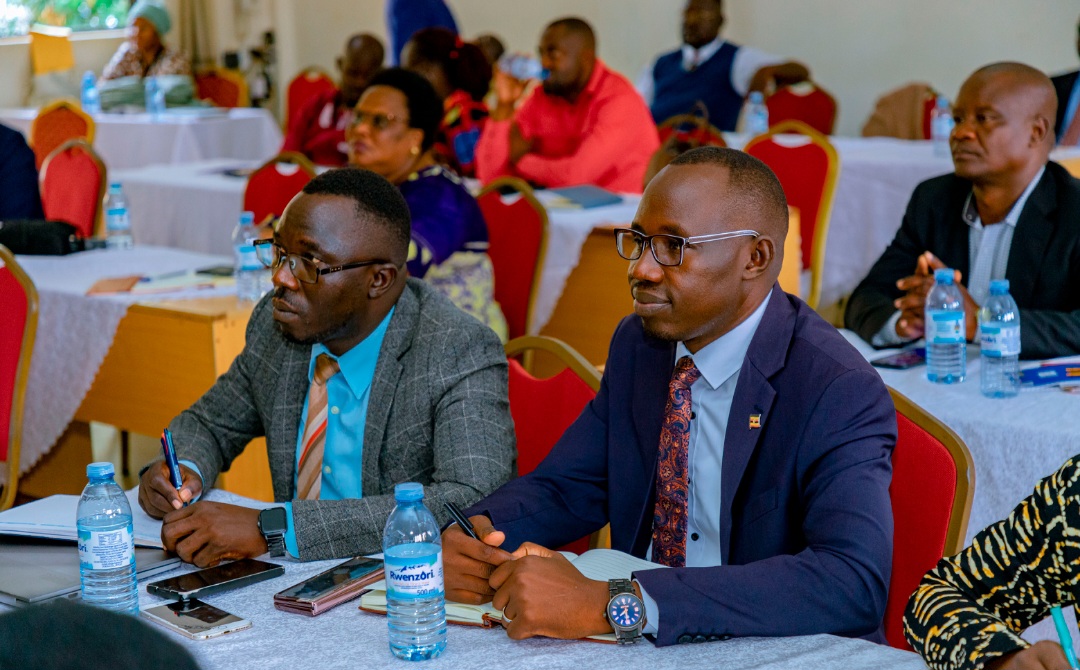
    “It is therefore important that you continue to uphold high standards of professionalism, transparency and integrity in the execution of your duties. You must ensure that your actions are guided by the law, government policies and the broader national interest.”

    Furthermore, Hajji Kakande disclosed that the Office of the President places great importance on effective reporting and communication between the districts and the centre, underscoring that timely and accurate reporting enable the government to assess the progress of programs, identify emerging challenges and take appropriate corrective measures where necessary.

    “I therefore encourage all RDCs and district security leaders to maintain consistent communication with the Office of the President and other relevant government Institutions regarding the status of programs within your areas of jurisdiction,” he noted.

    “Ladies and Gentlemen as you are aware,
    Capacity building is a continuous process. The Office of the President will continue to organize these engagements across all the Sub-regions of the country to ensure that government representatives remain well equipped to perform their duties effectively in an evolving governance and development environment.”

    Mr. Robert Mugabi, the Director Political Affairs at the Internal Security Organization (ISO) who represented the organisation’s Director General, urged the participants to ensure the gains of the NRM government are protected by securing security.

    He said national security refers to everything a state does to ensure its continued existence as a sovereign entity and defend its essential interests.

    “Survival of the state is the motivating force behind national security. If you find a district with an RDC and DISO, not working together, that makes it a failed district. The issue of differences shouldn’t come out when we are defending our country, ” he added.

    Mr. Marvin Ssenkungu, an economist at the Manifesto Implementation Unit (MIU)- Office of the President, highlighted the performance of the 2021-2026 Manifesto for Lango sub-region and Uganda at large.

    He said overall, the Manifesto attained an achievement of 54 percent of all the commitments, with 33 percent of the set commitments ongoing while 13 percent of the commitments had not been implemented.

    “Consequently, the share of Ugandans living below the national poverty line has fallen to 16 percent from 20 percent four years ago- surpassing the 2025 national target of 18.5 percent,” Mr. Ssenkungu said.

    “In the new manifesto 2026-2031,the strategic mission is to double the size of Uganda’s economy, transform livelihoods and turn every adult Ugandan into a producer of a good or a service for sale. We will focus on generating more painful jobs, expanding wealth creation opportunities and empowering Ugandans to take charge of their economic destiny.”

    Do you have a story in your community or an opinion to share with us: Email us at Submit an Article

  • ALEX ATWEMEREIREHO: Uganda’s Youth Bulge: Is it an Opportunity or a Ticking Time Bomb?

    ALEX ATWEMEREIREHO: Uganda’s Youth Bulge: Is it an Opportunity or a Ticking Time Bomb?

    “The wealth of nations lies not in their natural resources, but in the productive capacities of their people.”- Adam Smith, The Wealth of Nations (1776)
    Uganda stands today at a profound demographic crossroads. Few nations on earth possess a population profile as youthful and energetic as ours. According to the Uganda Bureau of Statistics (UBOS) 2024 National Population and Housing Census, Uganda’s population has surpassed 45 million, with over 77% below the age of 30 and approximately 63% under the age of 25. The median age of the country is roughly 16.7 years, making Uganda one of the youngest societies on the planet.

    Demographers often describe such a phenomenon as a “youth bulge”-a demographic structure where a large share of the population is comprised of young people transitioning into adulthood. In theory, this can become a tremendous demographic dividend capable of accelerating economic growth, innovation, and national renewal. Yet history warns that when such a youthful population is neglected, unemployed, politically alienated, and economically marginalized, the same demographic advantage may mutate into a destabilizing force. Uganda must therefore confront an urgent and uncomfortable question: Is our youth bulge a golden opportunity for national transformation, or is it quietly evolving into a ticking time bomb?

    The answer depends largely on whether Uganda’s political economy can meaningfully absorb, empower, and deploy the talents of its young people. Every year, approximately 700,000 to 800,000 young Ugandans enter the labour market, according to the World Bank’s Uganda Economic Update (2023). Yet the formal economy generates barely 90,000 new jobs annually. The arithmetic is brutal. The gap between opportunity and aspiration widens each year, leaving hundreds of thousands of educated young citizens navigating a precarious informal economy. While the official youth unemployment rate oscillates around 13–16%, many economists argue that underemployment and disguised unemployment push the real figure far higher, particularly among graduates. A 2022 study by the International Labour Organization (ILO) found that nearly 80% of young Ugandans are engaged in vulnerable or informal employment, often characterized by low productivity, instability, and absence of social protection. In practical terms, this means that a significant portion of Uganda’s youthful energy is trapped in low-value economic activity that barely sustains livelihoods, let alone propels national prosperity.

    This structural imbalance between education and job creation exposes one of Uganda’s deepest policy contradictions. Over the past three decades, the country has made remarkable strides in expanding access to education. The introduction of Universal Primary Education (UPE) in 1997 and Universal Secondary Education (USE) in 2007 dramatically increased school enrolment. Uganda’s tertiary institutions have also proliferated, producing tens of thousands of graduates annually in disciplines ranging from law and business administration to engineering and information technology. Yet the economy has not evolved at the same pace to absorb this educated cohort. As the late economist Albert O. Hirschman (1970) warned in Exit, Voice, and Loyalty, when citizens’ expectations rise faster than institutions’ ability to deliver opportunity, frustration becomes inevitable. In Uganda’s case, the education system often produces degree holders whose skills do not align with market realities. The World Bank Human Capital Index (2023) notes that many graduates lack critical competencies in innovation, industrial productivity, and technological application areas essential for modern economic competitiveness.

    Equally significant is the deeper philosophical question of the purpose of education itself. Classical thinkers such as Aristotle, in Politics, argued that education must ultimately serve the good life of the polis, the flourishing of the state and its citizens. When education becomes detached from productive enterprise, it risks producing a generation rich in credentials but poor in opportunity. Uganda’s universities, while expanding access, must therefore increasingly become engines of research, industrial innovation, and enterprise creation rather than mere degree-granting institutions. A nation with such a youthful intellectual reservoir cannot afford to treat its universities as passive institutions of certification.

    To understand the gravity of Uganda’s demographic moment, it is essential to appreciate the concept of the demographic dividend, a phenomenon extensively studied by economists David Bloom, David Canning, and Jaypee Sevilla (2003) in The Demographic Dividend: A New Perspective on the Economic Consequences of Population Change. They argue that when a country experiences a decline in dependency ratios meaning the working-age population becomes larger relative to children and the elderly; it gains a window of economic opportunity. If employment, education, and governance systems are aligned, productivity rises, savings increase, and economic growth accelerates. East Asia’s economic miracle, for example, is estimated by the Asian Development Bank to have drawn nearly one-third of its growth between 1965 and 1990 from demographic dividends alone.

    Uganda is approaching precisely such a demographic window. Yet dividends are not automatic; they are earned through deliberate policy choices. If young people remain unemployed, the demographic dividend can quickly become a demographic burden. Nobel Laureate Amartya Sen (1999) reminds us in Development as Freedom that human capital must be treated not merely as a statistic but as an expansion of people’s capabilities to live productive lives. The challenge before Uganda is therefore not the existence of a youthful population; it is the absence of sufficiently dynamic economic structures to absorb it. Demography, as population scholar Nicholas Eberstadt (2012) observed in A Nation of Takers, rewards societies that convert human numbers into human productivity. Uganda’s youthful population therefore represents an immense reservoir of latent economic energy waiting to be activated through wise policy, visionary leadership, and institutional innovation.

    This tension raises uncomfortable questions about Uganda’s development model. The country remains heavily dependent on subsistence agriculture, which still employs nearly 64% of the workforce according to UBOS. Yet agriculture’s productivity remains low, and many young Ugandans perceive it as a sector of last resort rather than a platform for prosperity. Meanwhile, Uganda’s industrial base remains narrow, contributing roughly 24% of GDP, while the services sector dominated by informal trade absorbs a growing number of young people with limited prospects for upward mobility.

    Without deliberate industrialization, technological expansion, and investment in value-added sectors, Uganda risks producing generations of educated youth whose ambitions outstrip the economy’s capacity to employ them. The risk here is not merely economic; it is social and political. Idle populations, particularly youthful ones, can become fertile ground for despair, migration pressures, and social unrest.

    The political dimension of this youth bulge is equally consequential. Uganda’s Constitution recognizes the importance of youth participation in governance. Article 21 guarantees equality and freedom from discrimination, while Article 30 affirms the right to education. More specifically, Article 78(1)(c) provides for youth representation in Parliament, and the National Youth Council Act establishes structures for youth participation in public affairs. On paper, Uganda recognizes the youth as stakeholders in national development. In practice, however, many young citizens still feel distant from meaningful decision-making processes. The average age of political leadership in Uganda remains significantly higher than that of the population it governs. According to a 2021 analysis by the African Development Bank, the median age of Uganda’s parliamentarians exceeds 50 years, a stark contrast to a national median age below 17.
    President Yoweri Kaguta Museveni has repeatedly emphasized the importance of stability, strategic planning, and ideological clarity in national development. Uganda’s political history marked by turbulence before 1986 reminds us that stability is a precious national asset. Yet history also teaches that enduring national systems deliberately cultivate new leadership and ideas across generations. Nations flourish when experienced leadership consciously mentors’ younger citizens to assume responsibility within the framework of constitutional governance and national vision. In this respect, Uganda’s youthful population should not be viewed as a challenge to authority but as a strategic reservoir of future leadership and innovation capable of advancing the country’s long-term transformation.

    The youth bulge therefore intersects with a broader governance dilemma. If the state fails to integrate young people into economic production and political participation, demographic pressure could evolve into social instability. Yet the opposite scenario is equally plausible. If properly harnessed, Uganda’s youth could become the engine of a transformative demographic dividend. Economists studying East Asian development frequently cite the example of South Korea, which leveraged its youthful population during the 1960s and 1970s through aggressive industrialization, investment in education aligned with industry, and export-driven growth. Uganda may not replicate that model exactly, but the principle remains instructive: demography rewards countries that plan ahead and punishes those that drift.

    The experience of other nations confronting similar demographic pressures offers instructive lessons. China transformed its enormous youthful population into the backbone of the world’s manufacturing powerhouse through economic reforms beginning in 1978 and the establishment of Special Economic Zones such as Shenzhen.

    Between 1980 and 2010, China lifted more than 800 million people out of poverty according to the World Bank. Singapore, under the leadership of Lee Kuan Yew, invested relentlessly in technical education and meritocratic governance, ensuring that its young population became highly skilled and globally competitive. India, with over 65% of its population below the age of 35, has embraced digital innovation through initiatives such as “Startup India,” “Digital India,” and “Skill India,” generating a vibrant technology ecosystem and thousands of youth-led enterprises.
    Uganda can draw valuable lessons from these experiences. The lesson is not to replicate foreign models mechanically but to adapt their underlying principles strategic planning, industrial expansion, human capital development, and disciplined governance to Uganda’s unique historical and economic context. The way forward therefore demands bold structural reforms rather than incremental adjustments. Uganda must align education with economic strategy, strengthening science, technology, engineering, and vocational training linked to industrial development. The National Development Plan III already identifies agro-industrialization, tourism, mineral development, and ICT as priority sectors, but these ambitions require stronger implementation, research investment, and industry-university collaboration.

    Uganda must also deepen industrialization anchored in regional and global value chains. The Presidential Industrial hubs and projects across different regions of the country represent promising beginnings, but they must evolve into fully functioning production ecosystems capable of employing large numbers of young Ugandans. Uganda’s membership in the African Continental Free Trade Area presents an unprecedented opportunity to access a market of more than 1.3 billion people. With deliberate policy direction, Uganda could position itself as a regional hub for agro-processing, mineral beneficiation, extractive industry, pharmaceuticals, and light manufacturing.

    Furthermore, the country must invest heavily in digital infrastructure and innovation ecosystems. The global economy is increasingly shaped by technology, artificial intelligence, and digital entrepreneurship. Kampala’s emerging technology hubs and fintech startups demonstrate that Ugandan youth possess remarkable ingenuity when provided with the right environment. Supportive regulatory frameworks, venture capital ecosystems, and research partnerships could unlock enormous opportunities in the digital economy.

    Uganda’s youth bulge ultimately presents a profound national test. A generation brimming with ambition, creativity, and technological awareness is rising. They are farmers experimenting with modern agriculture, programmers designing digital platforms, researchers exploring natural resource governance, and entrepreneurs building new businesses. They are not merely statistics; they are citizens with aspirations equal to any generation before them.

    The responsibility of leadership especially at the highest level is to ensure that this demographic wave becomes a tide of progress rather than a storm of frustration. Youth empowerment must therefore become a central pillar of Uganda’s long-term national strategy. Economic planning, constitutional governance, and political renewal must converge toward a single objective: transforming Uganda’s youthful population into a formidable engine of prosperity and stability.

    History will judge this moment with unforgiving clarity. If Uganda harnesses its youth, the country could emerge as one of Africa’s most dynamic economies by mid-century. But if demographic opportunity is neglected, the consequences may be equally dramatic. The ticking clock of demography does not wait for political comfort. Statesmanship requires the wisdom to act while the window of opportunity remains open.

    Uganda’s youth are not a problem to be managed. They are a power to be unleashed. The question is whether the nation and its leadership possess the vision, courage, and foresight to do so.

    The writer is a lawyer, researcher, governance analyst and an LLM Student in Natural Resources Law at Kampala International University

    alexatweme@gmail.com

    Do you have a story in your community or an opinion to share with us: Email us at Submit an Article

  • Ugandan opposition leader Bobi Wine announces departure from the country

    Ugandan opposition leader Bobi Wine announces departure from the country

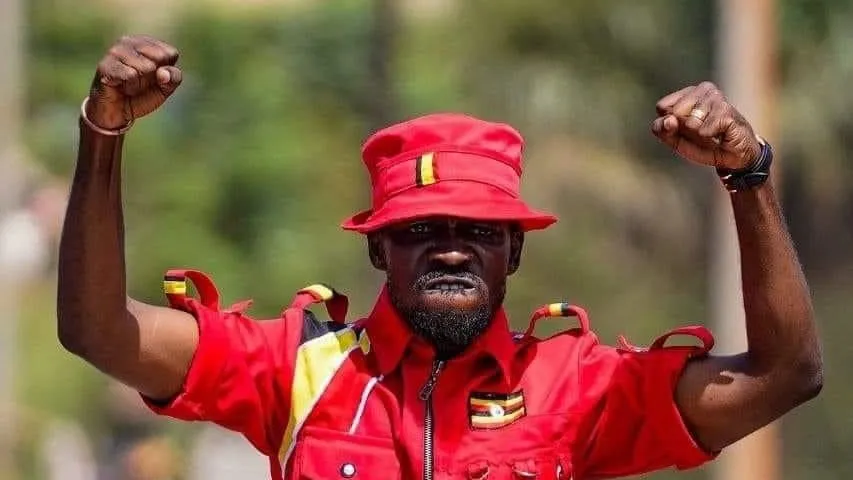
    Bobi Wine, real name Robert Kyagulanyi Sentamu, a Ugandan opposition leader, has announced his exit from Uganda after months of hiding from security who reportedly have been searching for him.

    Bobi Wine has been in hiding since mid-January 2026, following a contested election loss and a military raid on his home. He has, through various channels and social media, alleged that his life is in danger.

    In a video revealed on the morning of Saturday, 14th March 2026, the 44-year-old reveals that he has finally left the country for “critical engagements” outside Uganda.

    By the time you see this video, I will have left the country for some critical engagements outside Uganda, and at the right time, I will come back and continue with the cause.

    He thanked Ugandans, whom he claims have concealed and protected him while in hiding. “Those who fed me, clothed me, and those who offered me shelter, God bless you,” Bobi Wine said.

    Bobi Wine did not reveal his next destination, but revealed that Dr. Lina Zedriga Waru will now serve as the acting president of the National Unity Platform in his absence.

    The post Ugandan opposition leader Bobi Wine announces departure from the country appeared first on MBU.

  • Pia Pounds recalls driving a stolen Uber car before my music breakthrough – Sqoop

    Pia Pounds recalls driving a stolen Uber car before my music breakthrough – Sqoop

    Pia Pounds has revealed that in 2016, long before her music career took off, she briefly worked as an Uber driver in a bid to earn a living and stay financially independent.

    At the time, ride-hailing had just gained traction in Uganda and the business was paying fairly well. Pia says she could make between Shs50,000 and Shs70,000 a day, money that helped her cover basic needs like rent and food.

    “I did Uber in 2016,” she recalled. “Back then it was paying well. You could make at least 50k or 70k a day, so it helped me survive.”

    Pia explained that she did not own the car she was using. Instead, she had entered an arrangement with a man who gave her the vehicle to drive while sharing the earnings and costs. What she did not know at the time was that the car had been stolen.

    “I got the car from a guy who told me to drive it and we share the money,” she said. “But unfortunately, the guy had stolen the car. They scammed me.”

    The shocking discovery came one day while she was parked in Bunga. Two police officers, accompanied by another man, approached her and informed her that the vehicle she was driving had been reported stolen.

    “They found me parked around Bunga and two police officers and one man came to me and told me the car was stolen,” she recounted.

    She was immediately taken to Kabalagala Police Station, where she recorded a statement about the incident.

    For Pia, the ordeal was frightening and confusing, especially since she had unknowingly walked into the situation while simply trying to make an honest living. Despite the setback, the experience became one of the many difficult chapters in her journey.

    Don’t want to miss out on any story? For updates on all Sqoop stories, follow this link on Telegram: https://t.me/Sqoop

  • Makerere Releases 2025 Private Sponsorship Cut-Off Points

    Makerere Releases 2025 Private Sponsorship Cut-Off Points

    Makerere University has released the 2025 cut-off points for students applying under the private sponsorship scheme, giving applicants a clear picture of the minimum points required to secure admission into various programmes.

    The cut-off points show the minimum UACE weighted score required for admission into each course. Competitive programmes such as Medicine, Law, Engineering, and Biomedical Laboratory Technology continue to require significantly higher scores compared to other programmes.

    ADVERTISEMENT

    According to the list, Bachelor of Medicine and Bachelor of Surgery remains among the most competitive courses with cut-off points approaching 50 points, while Law is also highly selective with entry based on percentage scores.

    Several science programmes including Mechanical Engineering, Software Engineering, and Computer Science also recorded high cut-off points, reflecting increasing demand for STEM courses.

    Meanwhile, programmes in the humanities, arts, and social sciences generally have lower entry cut-offs, though popular courses such as Journalism and Communication, Human Resource Management, and Business Administration still remain competitive.

    Below is a simplified table highlighting selected cut-off points for some of the most popular courses under private sponsorship.


    Programme Cut-off Points
    Bachelor of Medicine & Surgery 49.7
    Bachelor of Pharmacy 48.9
    Biomedical Laboratory Technology 41.9
    Mechanical Engineering 47.9
    Electrical Engineering 48.9
    Computer Science 43.1
    Software Engineering 44.7
    Land Surveying & Geomatics 47.0
    Civil Engineering 49.7
    Architecture 49.5
    Journalism & Communication 44.5
    Business Administration 39.4
    Information Systems & Technology 32.3
    Human Resource Management 28.6
    Procurement & Supply Chain Management 26.9
    Tourism & Hospitality Management 31.8
    Statistics 29.7
    Quantitative Economics 29.2
    Environmental Science 32.6
    Population Studies 15.0
    Library & Information Science 14.2
    Entrepreneurship 14.4
    Development Studies 15.0

    Law Entry Requirement

    Admission into Bachelor of Laws is based on percentage performance rather than points.

    Programme Cut-off
    Bachelor of Laws 57%
    Bachelor of Laws (Evening) 55%

    What the Cut-Off Points Mean

    The cut-off points represent the minimum weighted score of admitted students from the previous admission cycle, meaning the actual admission scores may vary depending on competition and the number of applicants.

    Education experts say the release of the cut-offs helps students strategically select courses based on their UACE results, especially for those planning to apply under private sponsorship.

    Makerere remains Uganda’s most competitive public university, attracting thousands of applicants every year across its campuses in Kampala, Jinja, and Mbale.

  • King Saha, John Blaq, Kapeke, AgaNaga, Ecko Star announced for Roast and Rhyme decade celebrations

    King Saha, John Blaq, Kapeke, AgaNaga, Ecko Star announced for Roast and Rhyme decade celebrations

    As the Roast and Rhyme Reggae Ragga Nyam Nyam edition celebrates ten years on 22nd March, a star-studded lineup of artists has been confirmed to perform.

    The event scheduled for the Hockey Grounds, Lugogo, is part of the festival’s 10th-anniversary celebrations, and music lovers anticipate an exciting experience.

    The upcoming edition will feature some of Uganda’s most exciting performers, including King Saha, Kapeke, Kalifah Aganaga, and John Blaq, who will take to the stage to deliver electrifying live sets for revelers.

    Other acts lined up for the event include live performances from Double Black, Ivuga Band, and C Wayne, alongside a lineup of top deejays who will keep the energy high throughout the day.

    Organized by Swangz Avenue, #RoastAndRhyme has grown into one of Uganda’s most popular lifestyle festivals, blending live Ugandan music, grilled meat, fashion, games, and outdoor picnic experiences.

    This particular edition will also shine a spotlight on rising dancehall talent Ecko Star, continuing the festival’s tradition of introducing new artists to larger audiences.

    Ecko Star

    An enhanced production setup, including improved stage design, upgraded sound and lighting, and bigger visual elements, aimed at elevating the overall festival experience, has been promised.

    With the gates opening at 11:00 AM, revelers are encouraged to arrive early to fully enjoy the variety of experiences lined up throughout the day.

    Beyond the music performances, attendees can look forward to nyama choma grills, interactive games, art experiences, and vibrant social spaces that define the signature Roast And Rhyme picnic vibe.

    Known for its relaxed outdoor atmosphere, the festival allows revelers to enjoy live band performances while grilling meat, sharing food with friends, and experiencing Kampala’s vibrant social scene.

    The post King Saha, John Blaq, Kapeke, AgaNaga, Ecko Star announced for Roast and Rhyme decade celebrations appeared first on MBU.

  • Master Parrot opens up about alcohol struggles, seeks second chance

    Master Parrot opens up about alcohol struggles, seeks second chance

    Veteran singer Master Parrot has opened up about his personal struggles with alcohol, revealing that he is now focused on rebuilding his life and career while asking promoters to give him another chance on stage.

    Speaking during an appearance on Sanyuka TV, the ragga artist said he is in the process of rediscovering himself and working hard to control his drinking habits.

    As part of that journey, he appealed to event promoters and organisers to consider booking him for performances again.

    When asked about the longest period he has ever gone without drinking alcohol, Master Parrot revealed that he once stayed sober for one and a half years. However, he admitted that he later relapsed.

    Despite that setback, the singer says he is now determined to make a permanent change.

    It’s going to be infinity now. I’m pleading with all promoters out there, give Master Parrot a stage and I sing my ragga. Please give me jobs and I sing for you.

    Master Parrot explained that his situation is unique because he can go for long periods, sometimes up to one or two years, without drinking. The challenge, he says, comes when he returns to alcohol and ends up overindulging.

    He also expressed frustration with people who have recorded or shared videos of him during difficult moments, saying such clips have unfairly painted him as a chronic alcoholic.

    Many artists have a drinking problem but I don’t know why they use me as a sacrifice. Everyone wants to talk, but I found out three weeks ago that I had a drinking problem that I needed to cure.

    The post Master Parrot opens up about alcohol struggles, seeks second chance appeared first on MBU.

  • Daxx Kartel slams music industry for valuing looks over talent

    Daxx Kartel slams music industry for valuing looks over talent

    Daxx Kartel has criticized the local music industry, claiming it often celebrates people who do not necessarily deserve the recognition while overlooking genuine talent.

    Speaking from personal experience, Daxx said the industry tends to appreciate the wrong qualities in artists, particularly focusing on appearance instead of actual musical ability.

    According to him, many performers gain praise for their looks rather than their talent.

    This industry appreciates those who don’t deserve it.

    Daxx Kartel

    He explained that some female artists are often applauded simply for their physical appearance despite lacking strong vocal ability.

    They will praise a female for having a nice bum yet they sing like a success card.

    Daxx also pointed out that the industry needs to clearly distinguish between performing artists and recording artists, arguing that the two require different strengths.

    He noted that some artists may not have appealing looks but possess exceptional vocal delivery and recording ability. Such artists, he said, should focus more on audio releases and album projects rather than being pressured into producing music videos.

    Using himself as an example, Daxx admitted that he does not consider himself physically attractive, joking that he cannot even “front a bride out,” but insists he is a strong stage performer.

    The singer believes his real strength lies in performance rather than image.

    Bring me out among those ones and see. I am among the artists who don’t need songs, only being present is enough.

    Daxx further emphasised that true performing artists can command a crowd even without having major hit songs, because their stage presence alone is enough to entertain audiences.

    The post Daxx Kartel slams music industry for valuing looks over talent appeared first on MBU.

  • Daxx Kartel: Hypocrisy fuels Ugandan music industry

    Daxx Kartel: Hypocrisy fuels Ugandan music industry

    Daxx Kartel has shared his thoughts about the current state of the country’s music industry, claiming that it is largely sustained by hypocrisy.

    Speaking about the dynamics within the industry, Daxx Kartel compared it to a house that is supposed to stand on four pillars. However, according to him, the Ugandan music industry currently stands on only three pillars, with the strongest one being hypocrisy.

    Using the house analogy to explain his point, the singer said that hypocrisy has become so deeply embedded in the industry that removing it would almost bring the entire structure down.

    A house is supposed to have four pillars, but our industry has three. The strongest one is hypocrisy. Anyone who tries to remove it might end up demolishing the whole house because that pillar was built with very strong cement a long time ago. It’s too strong.

    Daxx Kartel further noted that hypocrisy exists at almost every level of the industry, from established musicians to newcomers trying to find their place.

    According to him, even upcoming artists often fall into the same trap once they achieve some level of success. He explained that many musicians enter the industry with humility and admiration for those who came before them, but their attitudes tend to change after they get a few hit songs.

    He illustrated this with a scenario where a new artist joins the music business and is introduced to the big names who have already made it.

    However, once that artist also begins to gain recognition and success, they start behaving differently and lose the humility they once had.

    The post Daxx Kartel: Hypocrisy fuels Ugandan music industry appeared first on MBU.

  • Police hunt suspects in viral assault video – Sqoop

    Police hunt suspects in viral assault video – Sqoop

    The Uganda Police Force has launched investigations into a viral video showing a group of men scaling a perimeter fence before violently assaulting an unidentified individual.

    According to Kampala Metropolitan Police spokesperson Rachael Kawala, authorities became aware of the incident after the footage began circulating widely on social media.

    Kawala said the police have not yet established the identity or whereabouts of the victim and are appealing to the public for information that could help with the investigation.

    “The identity and whereabouts of the victim are not yet known. We urge the person seen being assaulted, or anyone with relevant information about the incident, to report to the nearest police station to assist with ongoing investigations,” she said.

    Police said a preliminary review of the video has already helped investigators identify one of the suspected attackers.

    According to Kawala, efforts are currently underway to track down and arrest the suspect. She also warned members of the public against taking the law into their own hands, noting that mob justice is a criminal offence.

    “We strongly warn members of the public against engaging in acts of lawlessness and mob justice. Such conduct is criminal and will not be tolerated,” she said.

    Police added that all individuals involved in the assault will be traced and dealt with in accordance with the law as investigations continue.

    Don’t want to miss out on any story? For updates on all Sqoop stories, follow this link on Telegram: https://t.me/Sqoop

About UGNEWS24

UGNEWS24 is a Uganda local news service, a product of SOLAVIA GROUP LIMITED, Reg. No. 80048169153974.

Registered office

Plot 2335, Buwambo-Katadde-Najjo Road,
Nansana Municipality, Wakiso District, Uganda
P.O. Box 214231, Kampala

© 2026 SOLAVIA GROUP LIMITED. All rights reserved.