KAMPALA, UGANDA — A medicine may be discovered in a laboratory, protected by a patent, and manufactured by a global pharmaceutical firm, but for a patient waiting in a Ugandan clinic, its value hinges on one critical question: Is it available when I need it?
That question dominated discussions in Kampala on Thursday as health experts, lawyers, government officials, pharmaceutical manufacturers, regulators, patient advocates, and academics convened to scrutinize Uganda’s intellectual property (IP) system and its direct impact on access to life-saving medicines.
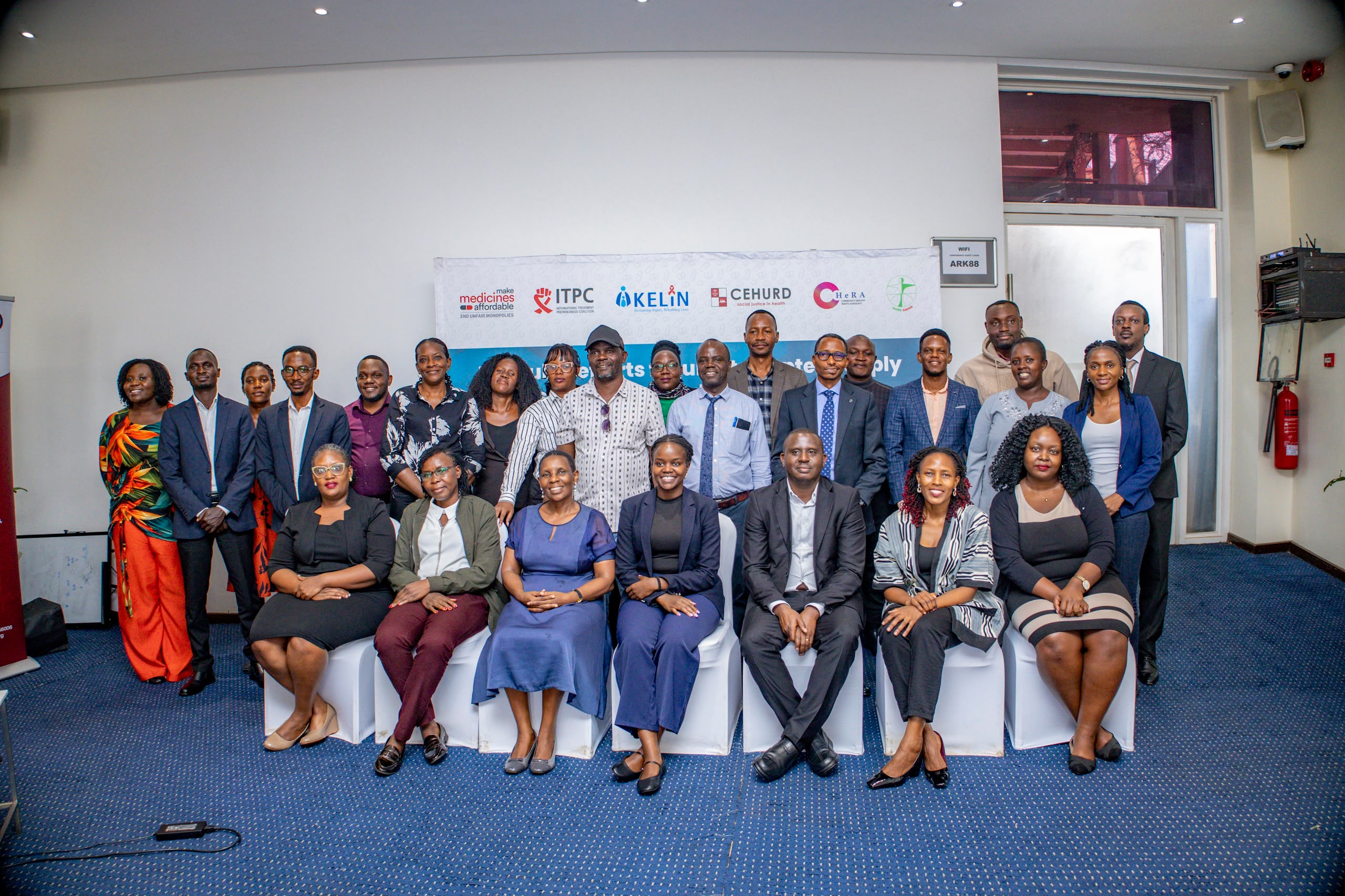
The national dialogue, hosted at the Protea Skyz Hotel in Naguru, was organized by KELIN in partnership with the International Treatment Preparedness Coalition (ITPC). The event drew over 30 key stakeholders across the justice, trade, legislative, and health sectors. Representatives of communities living with HIV, tuberculosis (TB), hepatitis C (HCV), and cancer also actively participated.
At the heart of the symposium was a delicate policy balance: how Uganda can foster pharmaceutical innovation while ensuring IP laws do not create artificial barriers to affordable healthcare.
Translating Knowledge into Action
For Gloria Imodia, a Programme Officer at Dumaic Global Health, the symposium highlighted the urgent need to bridge legal frameworks with public health requirements.
“Today, I gained a lot of knowledge,” Imodia noted. “If applied effectively within our national intellectual property framework, it can empower developing countries like Uganda to build resilient systems.”
Her sentiment underscored a pressing reality: in a nation where limited public health budgets struggle against a heavy disease burden, IP decisions directly influence drug availability, market pricing, and ultimately, patient survival.
Innovation Must Serve the Public Good
Seth Nimwesiga, a legal expert representing the Centre for Health, Human Rights and Development (CEHURD), urged stakeholders to balance creator rights with public welfare. While acknowledging that innovators deserve protection, he stressed the importance of utilizing legal flexibilities—such as compulsory licensing—to safeguard public health.
“If someone develops a drug, they must register it,” Nimwesiga explained. “However, the IP system must not only protect the developer—it must enable society to benefit from those essential advancements.”
His contributions centered the debate on the human right to health, countering the heavily technical rhetoric often surrounding patent law.
Institutional Capacity and Strategic Collaboration
Dr. Denis Kirabira, Chief Executive Officer of Dumaic Global Health, observed that while Uganda’s IP policy framework is evolving, the institutional capacity to interpret and execute it strategically remains a bottleneck.
Dr. Kirabira emphasized that legal professionals, regulators, local manufacturers, and policymakers must understand how IP rules dictate domestic drug production and market affordability.
“Partnership is essential,” Kirabira stated, noting that no single entity can solve the supply crisis in isolation. “Government must engage local manufacturers, researchers must align with policymakers, legal experts must grasp health priorities, and patients must have a seat at the decision-making table.”
Countering “Evergreening” and High Costs
Bringing an international perspective, Sergey Kondratyuk, an IP expert with the ITPC, unpacked the complexities of pharmaceutical patenting, specifically highlighting the practice of “evergreening.”
Evergreening occurs when pharmaceutical companies seek additional patents on existing drugs by making minor modifications—such as changing a formulation or dosage—thereby artificially extending their monopoly and blocking cheaper generic alternatives.
Referencing specialized treatments that cost upwards of $28,000 per course globally, Kondratyuk stressed the need for lower-middle-income countries like Uganda to leverage statutory flexibilities within international trade agreements to negotiate better pricing and access.
“Strategic partnership and policy awareness are the way forward,” Kondratyuk advised.
Ensuring Uninterrupted Supply Lines
For patients managing chronic conditions like HIV, TB, HCV, or cancer, consistent drug supply is a matter of life and death. A single break in the supply chain can lead to drug resistance, treatment failure, or disease progression.
Attendees called on the government and regulatory bodies to strengthen national procurement strategies, support local manufacturing, and eliminate administrative bottlenecks that jeopardize drug availability.
While expanding local pharmaceutical manufacturing offers a long-term solution for health security and economic growth, experts cautioned that infrastructure alone is insufficient. Uganda requires skilled technical personnel, robust research institutions, stringent quality control, and a modern IP regime designed to foster local industry.
The Human Cost
As legal and technical experts deliberated on legal statutes, patient advocates reminded the room of the everyday realities on the ground.
Whether it is a mother seeking cervical cancer screening or an individual accessing daily antiretroviral therapy, policy choices directly shape their quality of life. Participants agreed that IP frameworks cannot be drafted in isolation; they must align with local procurement strategies, regulatory capacity, and health equity targets.
As the meeting concluded, the consensus was clear: discussions cannot remain confined to conference rooms. Policy updates must translate into tangible results at the pharmacy counter.
For Uganda, the ultimate test of any intellectual property framework remains remarkably simple: Does the medicine reach the person who needs it, when they need it most?
Do you have a story in your community or an opinion to share with us: Email us at Submit an Article