Programme targets household enterprises as Government pushes transition from subsistence production to the money economy
By Brian Mugenyi
KAMPALA — The Government of Gen. Yoweri Kaguta Museveni has invested Shs4.317 trillion in the Parish Development Model (PDM), reaching more than 3.5 million beneficiaries across Uganda as part of efforts to move households from subsistence production into the money economy.
The Parish Development Model has so far reached 3,571,108 beneficiaries, with the Government capitalising the Parish Revolving Fund with Shs4.317 trillion to support household enterprises.
The figures were presented during a PDM inter-ministerial meeting held on Tuesday, September 15, 2026, at the Ministry of Finance.
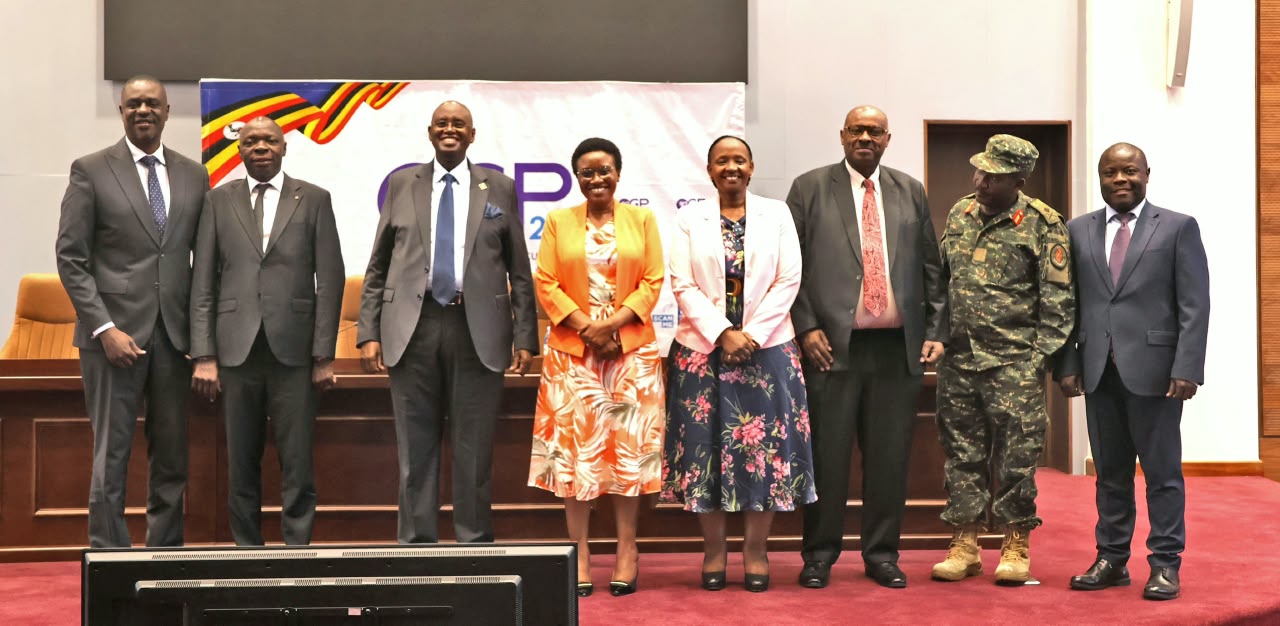
The meeting, chaired by the Minister of State for Microfinance, Hon. Hamson Obua, brought together ministers and technical officers responsible for implementing the seven PDM pillars to assess progress, strengthen coordination and identify reforms needed to improve sustainability, accountability and household impact.
The funds have been channelled through 10,589 PDM Savings and Credit Cooperative Organisations (SACCOs).
Each SACCO has received at least Shs400 million over the four-year period.
Under the programme, beneficiaries can access loans of up to Shs1 million at an interest rate of six per cent per annum, repayable over three years, including a two-year grace period.
Women form majority of beneficiaries
According to the Ministry of Finance’s Financial Inclusion Pillar report, adults aged between 31 and 59 years form the largest share of PDM beneficiaries, with 1,946,086 people, representing 54.50 per cent.
They are followed by youth aged 18 to 30 years, who account for 1,086,998 beneficiaries, or 30.44 per cent.
Elderly persons aged above 60 years account for 538,024 beneficiaries, representing 15.07 per cent.
Women constitute the majority of beneficiaries, with 1,924,188 women, or 53.88 per cent, compared with 1,646,920 men, representing 46.12 per cent.
The Financial Inclusion Pillar has also recorded 222,389 enterprise groups, of which 183,430 have been profiled on the PDM Information System.
Digital systems
Government is using digital systems to strengthen transparency, tracking and accountability in the management of PDM funds.
The Integrated Financial Management System (IFMS) transfers funds to PDM SACCO accounts, while the PDM Information System registers eligible beneficiaries.
Wendi, managed by Pearl Bank, disburses loans directly to beneficiaries’ mobile phones, while Zaidi provides real-time tracking and verification.
Government has recruited 14,133 Wendi agents and distributed 27,100 tablets to support registration and monitoring.
Minister of State for National Guidance Alion Yorke Odria commended cooperation among ministries implementing PDM and proposed greater use of Government agencies and regional radio platforms to strengthen public sensitisation.
He said the sensitisation should cover loan repayment, programme updates and policy changes.
Agriculture and enterprise
Minister of State for Animal Industry Bright Rwamirama said Government had registered 645 premises handling agricultural chemicals and seeds as part of efforts to reduce counterfeit agricultural inputs.
He also said Government had procured and distributed 50.6 million Foot and Mouth Disease vaccine doses and established solar-powered cold-chain facilities in 53 districts.
According to the Financial Inclusion Pillar report, as of June 2026, PDM beneficiaries had invested Shs425.27 billion in poultry, Shs461.12 billion in piggery and Shs453.52 billion in coffee.
The investments form part of Government’s wider effort to encourage households to engage in productive enterprises and participate in commercial agriculture.
Accountability
Minister of Local Government Balaam Barugahara called for stronger accountability in the implementation of PDM and warned against extortion, illegal charges, favouritism, political interference, fraud and diversion of programme funds.
He urged local government officials to take ownership of implementation and ensure that PDM success is measured through increased production, savings, value addition, market access, enterprise growth and improved household incomes.
Minister of State for Gender and Culture Mary Kamuli Kuteesa emphasised the need to adequately prepare beneficiaries before disbursement.
She called for stronger training, involvement of political leaders in monitoring and improved follow-up after beneficiaries receive training and financing.
PDM National Coordinator Dennis Galabuzi said the programme was moving towards a coordinated, whole-of-government approach organised around value chains.
The approach covers inputs, production, storage, electricity, processing, value addition and markets.
The latest figures indicate that PDM has moved beyond the initial phase of establishing financing structures, with Government now placing greater emphasis on accountability, productive investment and ensuring that household enterprises generate sustainable incomes.
Do you have a story in your community or an opinion to share with us: Email us at Submit an Article