Author: admin

  • Viana Indi joins NRG Radio

    Media personality Viana Indi, whose real name is Vivian Ayesiga Kabahindi, has joined NRG Radio Uganda just weeks after exiting Next Media.

    Viana Indi will host NRG Circle alongside Gaga and DJ VXFaisal, airing Monday to Thursday from 7:00 PM to 11:00 PM.

    Her move adds her to a growing roster of youth-driven media personalities at the station, including Crysto Panda, Prim Asiimwe, Etania, Mr Henrie, Gaga, Evelyn Mic, Sheilah Salta, Eyo Mackus, Rick Man, and Winnie Mbabazi, among others.

    Viana joined Next Media in June 2022 and quickly became a familiar face on both television and radio. She first stepped in for Sheila Gashumba on NBS After 5, before officially taking over as the show’s female host in 2023. On the programme, she worked alongside Douglas Lwanga, MC Kats, DJ Roja, and VJ Mercy.

    During her time at the station, she also co-hosted Next Brunch on Next Radio, where she strengthened her connection with audiences and expanded her profile in the media industry.

    Before joining Next Media, Viana worked with NTV Uganda and Galaxy FM, steadily building her reputation as one of Kampala’s most recognisable media personalities.

    Off air, she remains active as a brand influencer, event MC, and club hype personality.

  • Five New Ugandan Music Videos feat. Feffe Bussi, Gloria Bugie, Lydia Jazmine, Jowy Landa

    Five New Ugandan Music Videos feat. Feffe Bussi, Gloria Bugie, Lydia Jazmine, Jowy Landa

    Discover the latest 2026 music visuals from top Ugandan artists, including Feffe Bussi, Gloria Bugie, Lydia Jazmine, and Kalifah AgaNaga, among others.

    • Okuffa Obuffi – Feffe Bussi

    With a concert in prospect (scheduled for 16th May), Feffe Bussi is letting the trumpets blow. Okuffa Obuffi (produced by Eddie Dee) is another banger for party lovers.

    • Omukono Gwo – DJ Magic Touch feat. Lydia Jazmine

    Talent Walls’ deejay DJ Magic Touch collaborates with The One And Only Lydia Jazmine on ‘Omukomo Gwo.’ The Nikoly Ten-written song was produced by BassBoi and mastered by Anel Tunes.

    • Aya – Single Dee feat. Gloria Bugie

    The year of consistency continues for Gloria Bugie, who features on South Sudanese artist Single Dee’s ‘Aya’. The song is a blend of East Africa as the artists express their understanding of love.

    • Nkaluba – Kalifah AgaNaga

    Kalifah AgaNaga’s reunion with the Emma Carlos-owned Twinkle Entertainment has already birthed a fresh version of the dancehall star. His latest release, “Nkaluba,” is a high-energy, vibe-laden, lyrical-depth song with stunning visuals.

    • Munkwateko – Jowy Landa

    Beyond the controversies, 2026 has so far been consistently musical for Jowy Landa, and she continues the streak with a new release dubbed “Munkwateko,” which was produced by Bassboi.

    The post Five New Ugandan Music Videos feat. Feffe Bussi, Gloria Bugie, Lydia Jazmine, Jowy Landa appeared first on MBU.

  • Uganda Theatre Excellence Awards 2026 – Full List of Winners

    Uganda Theatre Excellence Awards 2026 – Full List of Winners

    While the rest of the world marked World Theatre Day 2026 (24th–27th March), with the main international celebrations held in Luxembourg City by the International Theatre Institute, UNESCO, and the Theatre Foundation, Uganda’s theatre community gathered on 28th March at the Uganda National Theatre to celebrate in its own vibrant way.

    The event, organised by the Uganda Centre of ITI, featured a rich lineup of activities. These included a Copyright Symposium, the “Twali Banji” audio play installation by Betty Lunkuse, and “Balembezi”, an immersive performance that drew the audience into movement, singing, and orature, organised by Lloyd Lutara

    The evening culminated in the inaugural Uganda Theatre Excellence Awards, recognising outstanding achievements across ten categories.

    Before sharing the winners, special appreciation goes to the executive committee whose efforts made the event possible: Aganza Kisaka (President), Kenneth Kimuli (Vice President), Charles Batambuze (Secretary), Julius Lugaya (Vice Secretary), Patience Nakamanya (Treasurer), and Vicent Sekasanvu (Project Supervisor).

    Seeing multiple generations of theatre practitioners gathered in one space was deeply inspiring, and as a theatre enthusiast (drama actor, director, teacher, consumer) myself, it was a proud moment to witness.


    Full Winners List

    1. Best Light Design – GAMPISI by Arafat Mugambe
    2. Best Sound Design – SSEWATTI by Arafat Mugambe & Mariam Ndagire
    3. Best Costume Design – THE PHANTOM OF THE OPERA by Guy Jairus Zziwa
    4. Best Stage Manager – SHE LOVES ME by Precious Nsimenta
    5. Best Theatre Script – MAKE ROOM by Brenda Ibarah
    6. Best Set Design – SHE LOVES ME by Kenneth Kanaabi
    7. Best Actor (Male) – Ronald in UNDER THE SUN
    8. Best Actress – Tayo Shonubi in SHE LOVES ME
    9. Best Director – Aganza Kisaka for SHE LOVES ME
    10. Best Production – SHE LOVES ME by Yenze Theatre Conservatoire

    Congratulations to all the winners of this inaugural edition.

    These awards mark an important step forward for the industry. Recognition and healthy competition have a way of raising standards, and this first edition shows the future of Ugandan theatre looks even more promising.

    Gallery

    The post Uganda Theatre Excellence Awards 2026 – Full List of Winners appeared first on MBU.

  • CONFIRMED: Viana Indi moves to NRG Radio Uganda after Next Media exit

    CONFIRMED: Viana Indi moves to NRG Radio Uganda after Next Media exit

    Viana Indi, real name Vivian Ayesiga Kabahindi, has been announced as the newest radio presenter to join the Kampala-based NRG Radio Uganda.

    At the start of March, Viana Indi parted ways with Next Media’s NBS TV and NEXT Radio, where she had served for four years.

    She thanked her former employees for providing her with a platform that has facilitated her growth, learning, and new connections.

    The bubbly Viana Indi was announced as a new NRG Radio Uganda presenter on Sunday via social media.

    “She is home. She is where she belongs,” NRG Radio Uganda posted on IG.

    Speaking to MBU, Viana revealed that she will be presenting the NRG Circle show, which airs from 7 pm to 10 pm every week, starting Monday to Thursday.

    Viana Indi also expressed her excitement upon joining the station, which she has described as “pure energy” and “a whole new era” in her life.

    Joining NRG feels like stepping into pure energy. Fast, loud, and full of life. Not just a moment… a whole new era.

    The post CONFIRMED: Viana Indi moves to NRG Radio Uganda after Next Media exit appeared first on MBU.

  • King Saha still ‘half excited’ about the copyright amendment bill, urges artists to stay woke

    King Saha still ‘half excited’ about the copyright amendment bill, urges artists to stay woke

    As the Copyright and Neighbouring Rights (Amendment) Bill, 2025, awaits approval from the president, King Saha has urged fellow artists to stay vigilant and follow up to ensure its regulations do not end up affecting them.

    In an interview, Saha mentioned how “half excited” he is as he still has unanswered questions about the bill, its regulations, and its implementation.

    “I am half excited about the copyright development. It is promising, but we are only at 60%, and we await the government to help us achieve the remaining 40%, which is implementation,” King Saha told Galaxy TV.

    Of course, I have my questions; did the government just want a photo op with the artists, or is this copyright bill a real issue it is pursuing? Was it a one-day discussion, or will it continue until it is fully achieved? We await to see.

    King Saha is still skeptical as he claims that several other bills have been passed in the parliament, but with limiting regulations, which in the end affect their implementation.

    I urge my fellow artists to keep their eyes and ears open as we wait for the next step. Personally, I am still pondering because so many bills have been passed in that parliament, but with regulations that limit their implementation.

    The post King Saha still ‘half excited’ about the copyright amendment bill, urges artists to stay woke appeared first on MBU.

  • Why Trump’s Visa Bond Targets Uganda — And What It Means for US–Uganda Relations

    Why Trump’s Visa Bond Targets Uganda — And What It Means for US–Uganda Relations

    The decision by the United States to place Uganda on a visa bond list under the Trump administration marks a significant shift in Washington’s immigration posture toward Kampala and other African capitals. Under the new policy, certain Ugandan applicants for U.S. visitor visas will be required to post refundable bonds ranging from USD 5,000 to USD 15,000, aimed at discouraging visa overstays.

    From an analytical standpoint, the move is less about Uganda specifically and more about a broader hardline immigration philosophy associated with President Donald Trump’s return to power. Trump’s political brand has consistently revolved around border control, migration deterrence, and enforcing compliance through financial and legal pressure. Countries flagged for higher overstay rates — many of them in Africa, Asia and Latin America — have become prime targets for such experimental deterrent measures.

    For Uganda, the inclusion reflects longstanding U.S. concerns about visa compliance rather than a collapse in diplomatic relations. However, it also exposes deeper global inequalities. A visa bond of USD 10,000 is beyond the reach of most ordinary Ugandans, effectively transforming travel into a privilege for the wealthy, diplomats, and corporate elites. While the bond is refundable, the upfront cost alone creates a psychological and economic barrier.

    At the people-to-people level, the policy risks chilling educational exchanges, tourism, family visits, religious missions, and business travel. Ugandan students, church leaders, NGO workers and traders — traditionally strong bridges between the two countries — may now reconsider U.S. travel altogether. This could gradually weaken soft diplomacy ties that have been built over decades.

    Diplomatically, the bond policy introduces quiet strain but not rupture. The U.S. and Uganda remain strategic partners on security, regional stability, health programs, and counterterrorism, particularly in Somalia and the Great Lakes region. Washington is unlikely to sacrifice these interests. However, Kampala may increasingly interpret such unilateral measures as punitive and insensitive to socio-economic realities.

    There is also a reputational dimension. Being publicly listed as a “high-risk” country reinforces negative stereotypes about Ugandans abroad, even though the vast majority of travelers comply with visa rules. This perception may affect how Ugandans are treated at embassies, airports and border points globally.

    Ultimately, Trump’s visa bond policy signals a transactional era in U.S. immigration policy, where trust is replaced by financial guarantees. For Uganda, the challenge is diplomatic engagement — presenting compliance data, negotiating exemptions, and protecting citizens’ mobility rights — while also addressing domestic factors that drive overstays, such as limited economic opportunities.

    If left unaddressed, the bond requirement could quietly erode goodwill between the two peoples, even as official relations remain formally cordial.

    Do you have a story in your community or an opinion to share with us: Email us at Submit an Article

  • BWANIKA JOSEPH: Ugandans in Diaspora face a narrow window to challenge the unfair proposed taxation

    BWANIKA JOSEPH: Ugandans in Diaspora face a narrow window to challenge the unfair proposed taxation

    As the Government of Uganda continues to struggle with economic pressures, a new proposal to tax citizens in the diaspora has sparked concern and urgency among Ugandans living abroad.

    With limited time to respond before such measures potentially take effect, the Leadership in Diaspora communities must engage policymakers and voice their concerns about this unfair and counterproductive tax policy.

    Uganda’s economy continues to face structural challenges, including a rising public debt burden of about UGX 130 trillion (approximately US$34.86 billion, persistent budget deficits, and increasing pressure to finance infrastructure and social services.

    In response, the Uganda Revenue Authority (URA) has sought to widen the tax base.

    While this objective is understandable, the proposal to tax Diaspora income risks overlooking a critical reality. Ugandans abroad are already among the country’s most consistent and impactful economic contributors.

    According to estimates from the Bank of Uganda, remittances from the diaspora bring in approximately $1.2 to $1.4 billion annually, making them one of the country’s largest sources of foreign exchange second only to key exports like coffee and Gold. This inflow accounts for roughly 4% to 5% of Uganda’s Gross Domestic Product (GDP).

    These inflows are not evenly distributed but reflect strong regional diaspora hubs.

    Ugandans in the United States contribute the largest share estimated at around 30%–35% of total remittances followed by the United Kingdom at approximately 15%–20%.

    The Middle East, particularly countries like the UAE, Saudi Arabia, and Qatar, accounts for about 25%–30%, largely driven by labor exports. The remaining 15%–20% comes from Europe, Canada, and other parts of Africa.

    These contributions go far beyond household support. They sustain foreign exchange reserves, stabilize the Ugandan shilling, and indirectly generate tax revenue through consumption, investment, and financial transactions.

    Diaspora funds are channeled into real estate, small and medium enterprises, education, and healthcare sectors that are essential for long-term development.

    Against this backdrop taxing diaspora income raises concerns of double taxation, as these individuals are already taxed in their countries of residence. More importantly, such a policy risks weakening the very flows it seeks to harness. Diaspora investors are highly sensitive to policy signals.

    A perception of unfair taxation could trigger a gradual withdrawal of investments, reduced remittances, and a shift of capital to more predictable environments. The economic consequences of such a shift would be significant, affecting growth, employment, and foreign exchange stability.

    For policymakers, the central issue is not whether more revenue is needed, but how it is generated and managed.

    Uganda’s fiscal challenges are as much about efficiency and accountability as they are about revenue collection.

    Public concern over underperforming or stalled projects such as the Lubowa International Specialized Hospital highlights the urgent need for stronger financial oversight.

    Borrowing to finance development is not inherently problematic, but when projects fail to deliver value, the burden shifts unfairly onto taxpayers.

    This calls for a decisive pivot toward strengthening public financial management. Transparent budgeting, strict expenditure controls, and effective monitoring of public investments must become non-negotiable.

    Every shilling borrowed or collected in taxes should be traceable to measurable outcomes that benefit citizens.

    Equally important is proper budget allocation. Uganda must prioritize sectors with the highest economic returns, particularly agriculture and technological infrastructure.

    Agriculture employs the majority of the population, yet remains underfunded and under-mechanized. Strategic investments in irrigation, agro-processing, and market access could transform it into a major revenue generator.

    Similarly, investing in digital infrastructure and innovation can expand the tax base organically by formalizing economic activity and reducing inefficiencies.

    However, the responsibility for better governance does not rest with policymakers alone. Citizens both at home and in the diaspora must take a more active interest in the country’s fiscal affairs.

    Budget transparency means little without public engagement. Ugandans should demand accountability, follow budget processes, and question how public funds are allocated and spent. A more informed and engaged population is essential for building a culture of accountability.

    For the diaspora, this is a moment to move beyond remittances and become active participants in shaping national policy. Advocacy, and organized engagement with government institutions can help ensure that policies reflect fairness and economic logic.

    Uganda stands to gain far more from strengthening trust and improving financial management than from imposing additional taxes on its diaspora. Sustainable economic growth will not come from overburdening contributors, but from efficient governance, strategic investment, and shared responsibility.

    The path forward requires collaboration between government and citizens, at home and abroad to build a resilient and inclusive economy.

    Author is a social development specialist and CEO Bridge your mind Centre.

    Email: bwani.jose@gmail.com

    Do you have a story in your community or an opinion to share with us: Email us at Submit an Article

  • Sudhir Ruparelia Gifts Wheelchair to 104-Year-Old Esther Amoding at Rajiv Memorial Eye Camp in Bukedea

    Sudhir Ruparelia Gifts Wheelchair to 104-Year-Old Esther Amoding at Rajiv Memorial Eye Camp in Bukedea

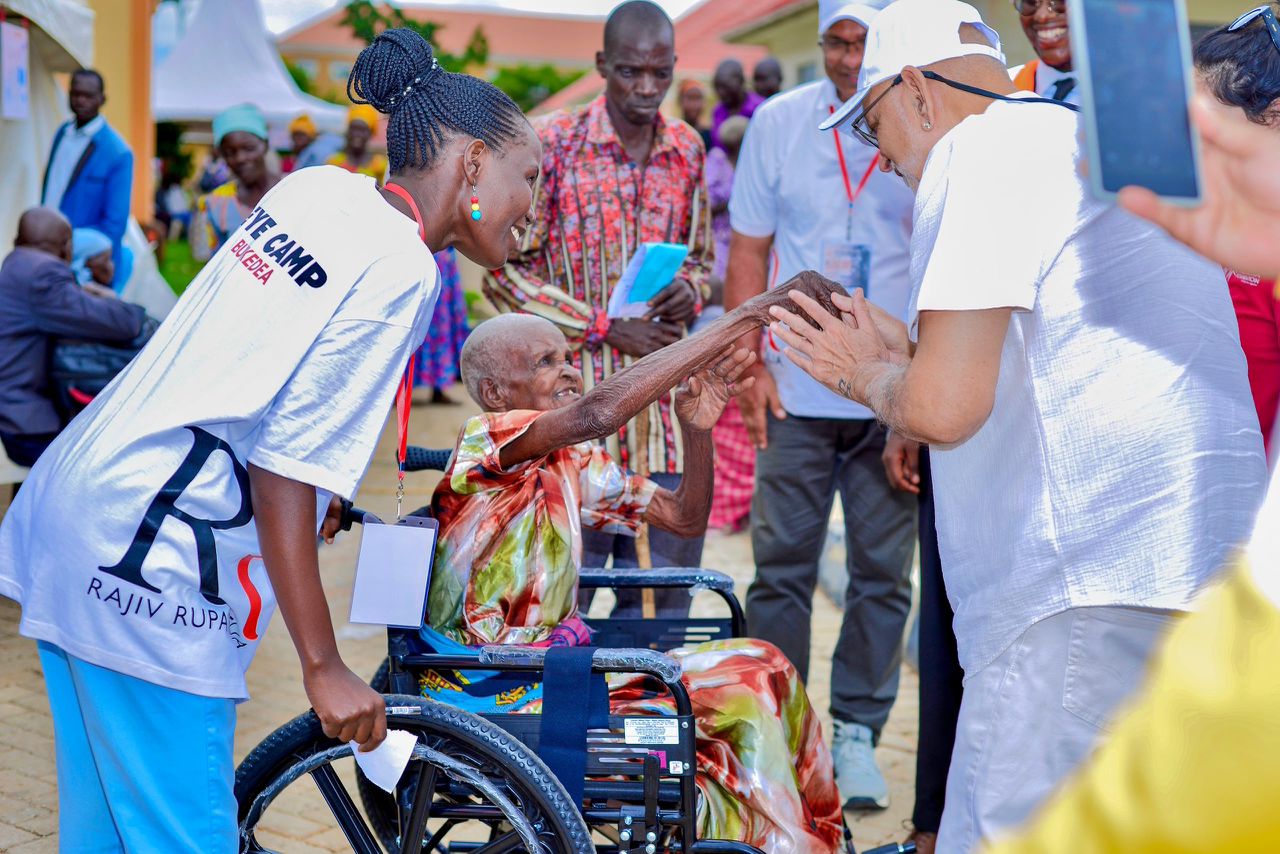
    In a deeply emotional climax at the three-day Rajiv Ruparelia Memorial Free Eye Health Camp, billionaire Dr Sudhir Ruparelia personally handed over a brand-new wheelchair to 104-year-old Esther Amoding at Bukedea Teaching Hospital today. The centenarian, visibly moved to tears, responded with a heartfelt prayer: “May you live for many more years to keep helping your people.”

    This touching exchange stood out as the highlight of an outreach that drew thousands of Ugandans of all ages — from infants to the elderly — who converged on Bukedea Teaching Hospital from Teso, Lango, Acholi, and Bugisu regions between March 27 and 29. Patients queued for hours for free eye screenings, consultations, cataract surgeries (over 300 performed, including 50 on children), and more than 1,000 pairs of spectacles.

    Dr Sudhir Ruparelia and his wife Jyotsna demonstrated rare commitment by stepping away from the comforts of Kampala to spend the entire period in rural Bukedea. They personally supervised the camp, engaged directly with beneficiaries, and ensured every needy person received care — a sacrifice that underscored their dedication beyond mere financial support.

    Hundreds of lives were transformed: blind grandparents regained sight to see their grandchildren, mothers could read again, and vulnerable residents found renewed dignity and hope. The camp has cemented the Ruparelia Foundation’s position as Uganda’s most visible and active local philanthropy organisation, driven by the enduring memory of the late Rajiv Ruparelia, who tragically passed away in a road accident on May 3, 2025.

    In remembrance of Rajiv, the Foundation has rolled out several impactful initiatives, including 100 fully-funded Master’s scholarships at Victoria University, a major Christmas charity drive providing essentials to the needy, and community outreaches such as the distribution of blankets, clothes, food, and toys in areas like Kilawuli.

    As the camp concluded today, the message from Bukedea was unmistakable: Rajiv’s legacy lives on through acts of compassion that bridge the gap between privilege and need, proving that true service often means leaving the boardroom for the village.

    Do you have a story in your community or an opinion to share with us: Email us at Submit an Article

  • Northern Uganda Farmers Urged to Embrace Research-Driven Technologies

    Northern Uganda Farmers Urged to Embrace Research-Driven Technologies

    Gulu City, March 29, 2026 — Farmers in Northern Uganda have been urged to embrace research-driven agricultural technologies as a pathway to increased productivity and household incomes.

    According to Frank Mugabi, Head of Communications at the National Agricultural Research Organisation (NARO), research-driven agricultural technologies provide farmers with proven, high-yielding, and climate-resilient solutions that reduce risks, lower production costs, and increase output and quality, ultimately translating into higher productivity and improved household incomes.

    “When farmers adopt research-driven technologies, they move from guesswork to precision thereby producing more, losing less, and earning better from every acre they cultivate.” Mugabi said.

    He made the remarks while addressing the media at the 5th Northern Uganda Agricultural Show underway at Kaunda Grounds in Gulu City on Sunday.

    The show, which opened on March 26 and will run until March 30, 2026, has brought together farmers, researchers, agribusiness players, and development partners in a shared effort to advance agricultural transformation in the region.

    NARO is a key participant at the exhibition, with its institutes including the National Livestock Resources Research Institute (NaLIRRI), the National Coffee Resources Research Institute (NaCORI), and the Ngetta and Abi Zonal Agricultural Research and Development Institutes (ZARDIs) showcasing a range of innovations tailored to Northern Uganda’s farming systems.

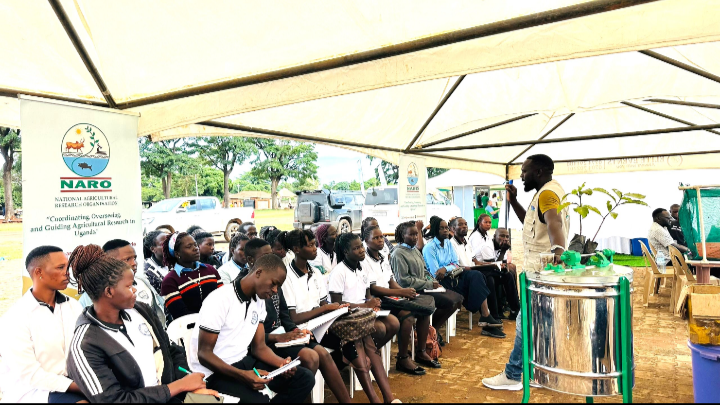
    At the NARO exhibition booth, visitors are engaging with technologies in bee products, improved pasture systems, resilient seed systems, shea nut value addition, agro-processing, and coffee production suited to the region.

    Beyond exhibitions, NARO scientists are conducting practical training sessions aimed at equipping farmers and agripreneurs with hands-on skills to adopt and benefit from these innovations. The sessions are designed to ensure that research outputs translate into real impact at farm level.

    Shea value addition has emerged as a key highlight at the show, reflecting its economic significance in Northern Uganda, where the shea tree is widely abundant. Researchers are demonstrating improved processing techniques to enhance product quality and market value, opening up new income opportunities, particularly for women and youth.

    Coffee is also taking center stage at the exhibition, underscoring its growing role as a leading income earner for Ugandan farmers. Once largely associated with Central and Western regions, coffee is now being actively promoted in Northern Uganda as a viable commercial enterprise. Through NaCORI, NARO is showcasing improved varieties and climate-suitable agronomic practices, while training farmers on crop establishment, pest and disease control, and post-harvest management to ensure quality and competitiveness.

    Mugabi emphasized the need for farmers to actively engage with research institutions nearest to them across the country.

    “We call upon farmers across Northern Uganda to take full advantage of platforms like this to learn, adopt, and apply proven technologies. Research is a launchpad for agricultural transformation but farmers have to embrace these innovations and turn them into productive enterprises that improve livelihoods.” He noted.

    Mugabi further re-echoed the importance of value addition as a key driver of higher farmer incomes, noting that NARO has developed a wide range of prototype value-added products from various agricultural commodities that farmers can replicate. He emphasized that value addition not only increases earnings but also reduces post-harvest losses and improves livelihoods.

    Using shea nut as an example, he highlighted its strong global demand due to its unique skincare properties, yet warned that the tree, abundant in Northern Uganda, is increasingly under threat from indiscriminate cutting.

    “Every time you cut down a shea nut tree, you cut down potential income,” he noted, adding that Ngetta ZARDI in Lira City is actively conducting research to reduce the time it takes for shea trees to mature and begin yielding. He described the shea tree as a “treasure that must be jealously protected,” adding that all this information is readily available to showgoers visiting the NARO exhibition stalls.

    The commended the agricultural show organisers for reinforcing the importance of research, innovation, and farmer engagement in addressing food security, building climate resilience, and driving sustainable agricultural development in the region.

    Do you have a story in your community or an opinion to share with us: Email us at Submit an Article

  • WADADA ROGERS: The AG’s opinion on the fate of persons convicted under the impugned sections of the Computer Misuse Act and the amendments is not only erroneous but misleading

    WADADA ROGERS: The AG’s opinion on the fate of persons convicted under the impugned sections of the Computer Misuse Act and the amendments is not only erroneous but misleading

    The Attorney General (AG) of Uganda has in a lengthy opinion advised against appealing the Constitutional Court decision that struck down the Computer Misuse (Amendment) Act, 2022 over procedural breaches. In his letter to several government departments, the AG also guided that the law should be sent back to Parliament for fresh enactment.

    I personally have a problem with this guidance of sending the law back to parliament. It is clear we have not learnt anything from history. Just last year, the Supreme Court nullified sections of the Uganda Peoples’ Defence Forces (UPDF) Act on subjecting civilians to trials before the Court Martial. Within a short time, the law was hurriedly reviewed and the Uganda Peoples’ Defence Forces (Amendment) Act, 2025 was passed.

    As of today, a number of petitions are pending in the Constitutional Court against the amended UPDF Act for having violated key provisions of the Constitution by reinstating the jurisdiction of the Army Court Martial to try civilians under sections 117A clauses 29 and 30) and Clause 82, a practice that was declared unconstitutional by the Supreme Court.

    My fear is that history could repeat itself through the Computer Misuse Act which will soon be tabled before Parliament. The AG’s guidance follows last week’s ruling in consolidated Constitutional Petitions No. 34, 37 and 42 of 2022, where the Court quashed some sections of the Act and section 162 of the Penal Code Act on criminal libel.

    In its ruling, the Constitutional Court did not address its mind to the merits of the Computer Misuse (Amendment) Act, 2022, the focus was on the allegation that the legislation was passed without quorum. This therefore means that the temptation to return the amendment as it could easily blind the legislators to simply pay more attention to the issue of quorum.

    For instance, sections 2, 3, 4, 5, 6, and 7 of the Computer Misuse (Amendment) Act 2022 were not tailored to cure any mischief in the existing legislations. Above all, many of these sections are inconsistent with of Articles 2, 28(12), 29(1)(a) and (b), 40(2), and 41 of the 1995 Constitution to the extent that they make every social media user a potential criminal. These will definitely not survive the scrutiny of court.

    The opinion also addressed the issue of the permanent injunction restraining government agencies from enforcing any of the affected provisions; with the implication that all ongoing criminal proceedings based on the nullified provisions should be halted. The AG also guided that no arrests should be made, basing on the impugned provisions.

    I have been flipping through the books of law to identify a provision by which a judicial officer can be arrested, fined, or committed to civil prison for contempt of court if they willfully disobey lawful orders made by any court above their hierarchy. I am aware that while judicial officers have immunity for actions taken in good faith, deliberate defiance of higher court orders, such as injunctions can constitutes contempt at individual level.

    Now that the AG has made it clear that he does not intend to appeal the decision, why are the lower courts still holding accused persons on remand aware that the Court actually issued a permanent injunction against enforcing the nullified sections of the Act. Why is Male Mabirizi who was charged under Section 26 and 28 of the impugned Act still on remand?

    This week, Lawyers representing Lawyer Male Mabirizi were ordered by the Chief Magistrates Court of Buganda Road to obtain a certified copy of the Constitutional Court decision which the lawyers complied with. Upon being presented with evidence of the ruling, the Magistrate again demanded for a decree as a way of buying time.

    In a statement by the Uganda Law Society, it was noted that the conduct of the trial Magistrate at Buganda Road Court in Criminal Case No. 52 of 2026 was not in tandem with what is expected of a judicial officer. The society argued that the circumstances suggest the involvement of an invisible hand, turning the court into “an instrument of personal vendetta against Male Mabirizi rather superintending over the tenets of justice.

    The society warned that such actions erode public confidence in the judiciary and threaten constitutional freedoms. It called for immediate intervention, urging the Chief Registrar and Principal Judge to intervene administratively and bring the Magistrate to order for delaying justice and keeping the accused person in remand when the cases abated.

    Be reminded that it is sections 11, 23, 26, 27, 28 and 29 of the Computer Misuse Act that were nullified. The rest of the Act remained intact and can be enforced as such. Instead, it is the Computer Misuse Amendment Act, 2022 that was nullified in its entirety given that it was passed by parliament without the constitutional mandatory quorum.

    The opinion of the AG was just fine until he mentioned that individuals already convicted under those provisions and currently serving sentences are not affected by the court’s decision. Indeed, the Constitutional Court did not state whether or not its decision would operate retrospectively with the effect of overturning convictions already secured. However, the AG should be alive to the fact that even those convictions can be reversed.

    I am aware that a decision of a court particularly a precedent-setting ruling from the Constitutional Court or Supreme Court can operate retrospectively to overturn convictions already secured more so where the law under which the person was convicted is declared unconstitutional or fundamentally flawed. It is only newly enacted laws that do not operate in a backward manner, court decisions do.

    This means that if a person is convicted under a law that is subsequently found to have been passed illegally or unconstitutionally, the conviction is considered null and void, and the person is entitled to legal remedies, including compensation or potential release and the reversal of the conviction. One of such situations is where a law if found to have been passed without complying with proper procedures such as a lack of a quorum in Parliament.

    This therefore means that where a person was convicted under a law that is later found to have been void ab initio (invalid from the beginning), the law is treated as if it never existed hence removing the legal basis for the conviction. The affected person has the right to have their conviction vacated and their sentence terminated, though this is rarely automatic especially in a backward setting like Uganda.

    The process is generally not self-executing as we would have wished. The individual or their counsel must actively challenge the conviction in court and once the conviction is vacated, the person must go through the necessary steps to ensure his/her file is cleared of the criminal record that comes with a conviction.

    I have listened to argument that a conviction arising out of a nullified law should stand because it was the prevailing law at the time. This argument is based on the legal principle of finality and the general rule against retrospective application of laws. This view cannot however be invoked when dealing with decisions arising out of a Constitutional Court decision that nullified sections of the Computer Misuse Act, Section 162 of the Penal Code Act and the entire Computer Misuse (Amendment) Act, 2022.

    Wadada Rogers is a commentator on political, legal and social issues. wadroger@yahoo.ca

    Do you have a story in your community or an opinion to share with us: Email us at Submit an Article

About UGNEWS24

UGNEWS24 is a Uganda local news service, a product of SOLAVIA GROUP LIMITED, Reg. No. 80048169153974.

Registered office

Plot 2335, Buwambo-Katadde-Najjo Road,
Nansana Municipality, Wakiso District, Uganda
P.O. Box 214231, Kampala

© 2026 SOLAVIA GROUP LIMITED. All rights reserved.