Author: admin

  • Top Ugandan Universities in 2026 Ranked: Makerere Leads as NCHE Unveils New Ranking Parameters

    Top Ugandan Universities in 2026 Ranked: Makerere Leads as NCHE Unveils New Ranking Parameters

    Makerere University has lived the test of time. The oldest higher institution of learning in East Africa has been ranked the top university in the region. It is followed by the University of Nairobi in second position. In Africa, it is ranked 7th. From research and innovation to PhDs and the largest enrolment, Makerere remains at the summit of a pack of 343 universities within the East African Community.

    Rankings conducted by EduRank and Webometrics, both reputable research houses, place Makerere University in the lead, followed by Kampala International University and Mbarara University of Science and Technology (MUST) in second and third position respectively.

    ADVERTISEMENT

    Whilst the two research houses agree on the top three positions, they differ in the subsequent numbers from fourth position to tenth. Edu-Rank places Kyambogo University in fourth position, Gulu University in fifth position, with Uganda Christian University (UCU) and Uganda Martyrs University (UMU) coming in sixth and seventh respectively.

    On the other hand, Webometrics places Uganda Management Institute in fourth position, while Kyambogo, UMU and Gulu are ranked fifth, sixth and seventh respectively.

    Methodology: How the Rankings Work

    The positions of Ugandan universities according to Edu-Rank are based on its 2025 report, while those of Webometrics are based on the January 2026 report. According to EduRank.org, the institution ranks a total of 14,131 universities across 183 countries, utilising the world’s largest scholarly papers database, with 119,027,372 scientific publications and 3,164,054,493 citations, to rank universities across 246 research topics.

    The overall rankings incorporate non-academic prominence and alumni popularity indicators, as well as information drawn from official university websites regarding the latest enrolment figures.

    The Webometrics ranking of world universities, produced by the Cybermetrics Lab of the Spanish National Research Council, reviews at least 31,000 higher education institutions from 222 countries, based on their web presence, visibility and open-access scientific results.

    NCHE Unveils New Ranking Parameters

    According to the National Council for Higher Education (NCHE), global rankings are a fair indication of the quality of universities. Dr. Vincent Sembatya, the director of quality assurance at NCHE, said being ranked by a reputable research house is a privilege to any institution and that it demonstrates that the institution has reached a higher benchmark.

    “With such rankings, the higher institutions of learning are able to identify areas in which they should improve. Although some rankings are biased towards a certain goal, generally they are good for any institution,” he said.

    Sembatya said research and innovation are key for a university to attain a higher position in global rankings. The New Vision has learnt that NCHE is set to roll out approximately 50 new parameters that would place Ugandan universities in better positions in global rankings.

    In addition to the number of programmes offered and the level of education of university staff, the new parameters to be introduced by NCHE will capture the drop-out rate at each university, the employability of graduates and employer perception of graduates from each of the higher institutions of learning. Furthermore, NCHE will capture the research output of each member of academic staff at the universities, as well as the proportion of international students at each university.

    Under the new parameters, NCHE will capture the sources of funding for higher institutions, including contributions from government, industry and development partners. While he confirmed that the parameters are being discussed, Sembatya said they are yet to be approved by the NCHE governing council.

    First Lady: Universities Must Solve Problems, Not Just Acquire Knowledge

    During the recent Makerere University graduation ceremony, the First Lady and Minister for Education, Mrs. Janet Museveni, noted that education must not only be about acquisition of knowledge, but problem solving alike. The need for innovation and problem solving, Mrs Museveni said, is the reason why the government, through her ministry, has tasked universities with introducing competence-based curriculum by July 2027, to aligned universities with lower education levels.

    In her speech, the First Lady assured universities of government commitment to support research like it has already done with the Makerere University Research and Innovation Fund (Mak-RIF). Annually, the Government allocates sh30b towards the Mak-RIF programme.

    What Experts Say

    Prof. Francis Omaswa, a celebrated researcher, cardiovascular surgeon and retired public servant, backed the rankings, indicating that any university ought to be proud to be ranked. Omaswa advised universities, especially practical units such as medical schools, to prioritise hands-on training, in addition to research and innovation.

    However, Omaswa indicated that several universities, especially private ones, are not performing well in terms of ranking because they have prioritised generating revenue and attracting large enrolments, as opposed to maintaining high standards. Omaswa has called on the Government to empower regulatory bodies such as NCHE to conduct regular inspections of higher institutions of learning.

    Prof. Celestino Obua, the former vice-chancellor of MUST, urged Ugandan universities to prioritise the improvement of facilities, as well as research and innovation, in order to better their rankings. “These rankings matter. They are truly important for any institution. I wish to encourage universities to develop a culture in which they support their academic staff to conduct research and publish it,” he said.

    Uganda University Rankings — Webometrics Global Position (January 2026)

    1. Makerere University
    2. Kampala International University
    3. Mbarara University of Science and Technology
    4. Uganda Management Institute
    5. Kyambogo University
    6. Uganda Martyrs University
    7. Gulu University
    8. Busitema University
    9. Kabale University
    10. Makerere University Business School
    11. Islamic University in Uganda
    12. Uganda Christian University
    13. Ndeije University
    14. Mountains of the Moon University
    15. Kumi University
    16. Uganda Technology and Management University
    17. Nkumba University
    18. Clarke International University
    19. Lira University
    20. Bishop Stuart University
    21. Victoria University Kampala
    22. Muni University
    23. Bugema University
    24. International University of East Africa
    25. Cavendish University Uganda
    26. Kampala University
    27. Law Development Centre Kampala
    28. Muteesa I Royal University
    29. Uganda Institute of Information and Communications Technology
    30. Livingstone International University
    31. African Rural University
    32. ISBAT University Kampala
    33. University of Kisubi
    34. Soroti University
    35. St Lawrence University
    36. Africa Reformation Theological Seminary
    37. Uganda Pentecostal University
    38. Insurance Training College
    39. Ne.us International University
    40. Metropolitan International University
    41. Uganda Institute of Banking and Financial Services (UIBFS)
    42. King Ceasor University
    43. Institute of Petroleum Studies Kampala
    44. Team University Kampala
    45. Ibanda University
    46. Ankole Western University
    47. Africa Renewal University
    48. Greenbridge School of Open Technology
    49. All Saints University Lango
    50. University of The Sacred Heart Gulu
    51. Artfield Institute of Design Kampala
    52. Valley University of Science and Technology
    53. Fins Medical University
    54. Glad Tidings Bible College
    55. Institute of Advanced Leadership Uganda
    56. Salaama Vocational Education Center
    57. Permanent Centre for Education
    58. Management and Accountancy Training Company Limited
    59. Great Lakes Regional University
    60. Monaco Institute
    61. Kayima International University
    62. Mulago School of Nursing and Midwifery
    63. e uaton University of Science and Technology
    64. Avance International University
    65. Kampala School of Health Sciences

    EduRank: Best Universities in Uganda — 2025

    1. Makerere University
    2. Kampala International University
    3. Mbarara University of Science and Technology
    4. Kyambogo University
    5. Gulu University
    6. Uganda Christian University
    7. Uganda Martyrs University
    8. Busitema University
    9. Islamic University in Uganda
    10. Nkumba University
    11. Mountains of the Moon
    12. St. Augustine International University
    13. Victoria University
    14. Ndeije University
    15. International University of East Africa
    16. Cavendish University Uganda
    17. Kabale University
    18. Bugema University
    19. Bishop Stuart University
    20. Kampala University
    21. Uganda Technology and Management University
    22. Clarke University
    23. Kumi University
    24. Muni University
    25. Muteesa 1 Royal University
    26. Lira University
    27. Livingstone International University
    28. African Rural University
    29. Busoga University
    30. Soroti University
    31. Uganda Pentecostal University
    32. St Lawrence University-Uganda
    33. Team University
    34. African Bible University
    35. International Business, Science and Technology University
    36. All Saints University
    37. University of the Sacred Heart Gulu
    38. Africa Renewal University
    39. Ibanda University
    40. Ankole Western University
    41. Metropolitan International University
    42. Avance International University
    43. Staff University Uganda
    44. Kayima International University
    45. Valley University of Science and Technology
    46. Mityana Agro-vet Institute
  • Music, culture, energy take centre stage at Bridges & Beats – Sqoop

    Music, culture, energy take centre stage at Bridges & Beats – Sqoop

    Music, culture and international collaboration came together in a vibrant showcase at the Bridges & Beats Concert, held at Kingdom Kampala as part of the global Francophonie Month celebrations.

    Under this year’s theme, “Activating your Francophonie,” the event offered a fresh and immersive interpretation of French cultural expression, blending it seamlessly with African artistic traditions.

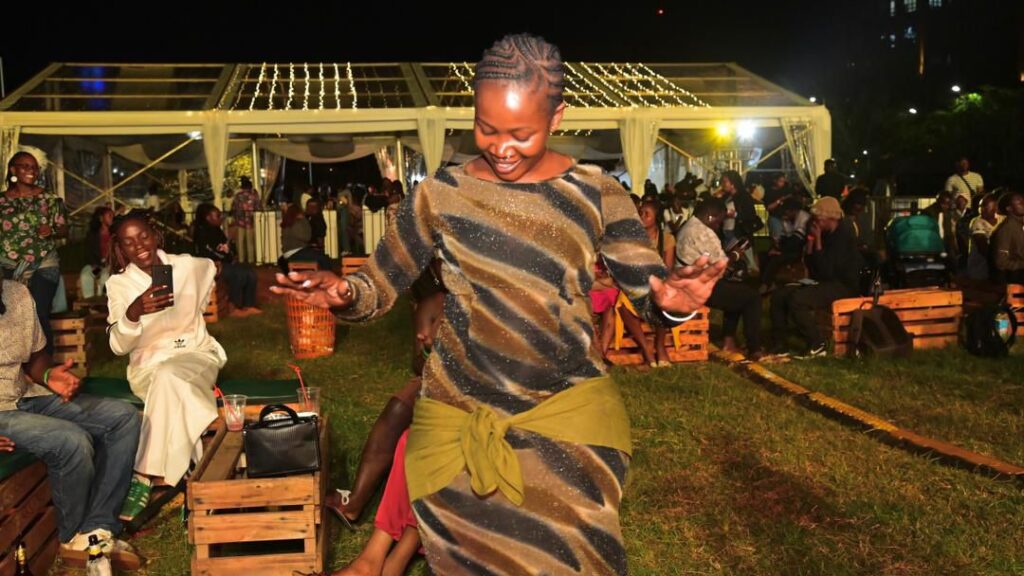
    From the moment gates opened, the atmosphere was electric. Revelers were drawn into a carefully curated musical journey that celebrated unity through rhythm, performance and cultural storytelling.

    High-energy sets from DJs Rocky and Lavet set the tone early, warming up the crowd with a mix of contemporary sounds that kept the energy steadily building.

    The night’s cultural depth came alive through performances by the Impundu Cultural Group and the Royal Drums, a UNESCO-recognised heritage ensemble. Their sets paid homage to Africa’s rich traditions, using rhythm, movement and symbolism to connect the past with the present.

    As the evening progressed, performances from Doch Dodava and Blac Queen sustained the momentum, before Ssewa Ssewa and Prof Joewi delivered a fusion of modern and traditional sounds that resonated with the diverse audience.

    Returning to the decks, DJ Lavet lifted the energy even higher with an Afrobeat-heavy set that turned the venue into a dancefloor. Tracks like Aringo and Make You Dance drew loud reactions, with the crowd singing along and moving in unison during her standout 30-minute session.

    Aliddeki Brian brought a different kind of energy to the stage. Starting on a calmer note, his performance quickly transformed into an interactive experience. Midway through his set, he jumped into the crowd before inviting audience members on stage, blurring the line between performer and fan.

    By the time Tracy Melon stepped on stage, anticipation had peaked. Fans surged forward, phones raised, as she delivered a lively set featuring crowd favourites such as Kakana, Tota and Ogenda Kukilaba, before closing with Kankwagale.

    The night reached its climax with Elijah Kitaka, whose performance demonstrated the power of a strong catalogue. With hits like Nothing, Good Idea, Dawa, Ekyange and Go Remix, he kept the audience fully engaged until the final moments.

    The concert attracted a vibrant mix of music lovers, cultural enthusiasts, media personalities and influencers, reinforcing its place as one of the standout events on Kampala’s entertainment calendar.

    Organised by Talent Africa Group in collaboration with Alliance Française Kampala, Bridges & Beats continues to serve as a dynamic platform for celebrating Francophone culture while fostering cultural exchange with Uganda’s growing creative scene.

    As the final beats faded, one message remained clear: music, when paired with culture, has the power to connect worlds.

    Don’t want to miss out on any story? For updates on all Sqoop stories, follow this link on Telegram: https://t.me/Sqoop and Whatsapp: https://whatsapp.com/channel

  • Singer Biswanka reveals health battle, personal challenges – Sqoop

    Singer Biswanka reveals health battle, personal challenges – Sqoop

    Renowned Ugandan singer Biswanka Derick has shared a deeply personal update, revealing a mix of health battles and ongoing tensions in his private life.

    In a post on his Facebook page, the singer disclosed that he is considering changing his son’s name from Biswanka Derrick Junior to “Samanya,” following a strained relationship with the child’s mother. Despite the decision, he emphasized that the child remains his and that he is committed to playing his role as a father.

    Biswanka explained that the situation with the baby mama has been difficult, marked by misunderstandings, financial pressure, and troubling incidents where he claims to have been targeted and robbed by individuals allegedly connected to her.

    At the same time, the singer revealed he is quietly battling kidney-related health issues.

    According to him, the condition has led to noticeable weight gain, something he says has been widely misunderstood by the public.

    “People think I’m living a soft life, but the truth is my body has changed because of my kidney problems,” he shared, adding that he has chosen not to publicly seek sympathy despite the challenges.

    The artist also noted that while he didn’t plan to have a child under the circumstances, he accepts the reality and continues to support his son within his means.

    Looking ahead, Biswanka hinted at hoping for a more stable future, both in his personal life and family, expressing a desire to one day raise a child in a more understanding environment.

    Don’t want to miss out on any story? For updates on all Sqoop stories, follow this link on Telegram: https://t.me/Sqoop and Whatsapp: https://whatsapp.com/channel

  • Sudhir Ruparelia inducted into Teso community as “Eminat,” donates Shs50 million to support the Teso Cultural Union

    Business magnate Sudhir Ruparelia has been formally welcomed into the Teso community. The induction took place at Bukedea Teaching Hospital during the closing ceremony of a three-day eye medical camp held in honour of his late son, Rajiv Ruparelia.

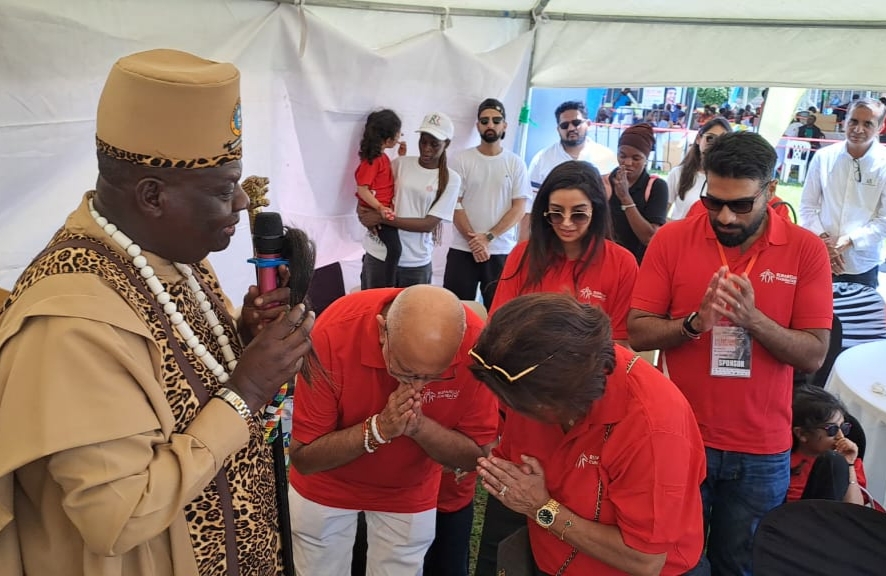
    Presided over by the Emorimor of the Iteso, Paul Sande Emolot, the ceremony saw Sudhir given the name “Eminat Sudhir” — a symbolic gesture of acceptance and respect within the Teso cultural institution. His wife, Jyotsna Ruparelia, was also inducted.

    The outreach, dubbed the Rajiv Ruparelia Eye Camp, drew thousands from across the Teso sub-region, highlighting the area’s pressing eye healthcare needs.

    More than 5,000 patients — both adults and children — received free services ranging from eye examinations and cataract screening to surgeries and provision of reading and prescription glasses.

    Beyond the medical intervention, Sudhir pledged Shs50 million to support the Teso Cultural Union. The contribution is expected to support community-driven programmes under the cultural institution.

    The event also delivered a boost to local healthcare infrastructure. An ambulance donated by the Speaker of Parliament, Anita Annet Among, together with Bukedea MP-elect David Beecham Okwere, was handed over to the hospital.

    The new addition is expected to improve emergency response, particularly in reducing maternal deaths and handling critical cases in the district.

  • Azawi recounts dramatic escape from show gone wrong – Sqoop

    Azawi recounts dramatic escape from show gone wrong – Sqoop

    Like many artists, Azawi operates with a clear structure, especially for upcountry shows. Payment terms are agreed upon in advance, with balances cleared before stepping on stage. This time, however, things began to unravel upon arrival at the venue in Luwero.

    The booking agent, someone she had worked with before, assured her team that the remaining payment would be completed on-site. But when her management asked for the balance, the response was vague: “Hold on.”

    For an artiste who typically charges ten million shillings for performances outside Kampala, the situation was already uncomfortable. Unknown to her, the agent had negotiated two different deals, one with the event organizers and another with her team.

    As Azawi and her team sat inside their vehicle, a Toyota Super Custom she often uses for such trips, tension escalated quickly.

    “Out of nowhere, about 12 bodyguards surrounded the car,” she says. “They started banging on it, demanding that I go perform.” She narrated on a live video chat with A Pass.

    The driver hesitated. The car was parked facing the wrong direction, toward Gulu instead of Kampala, making a quick escape harder than it should have been.

    “I told him, ‘Drive. Get us out of here.’”

    What followed was not just an exit. It was a chase.

    The team sped off, but the situation didn’t end at the venue. They were pursued for nearly an hour, all the way to Mijera. Calls were made in panic, including to her label, Swangz Avenue, as fear replaced confusion.

    In those moments, it was no longer about money or performance. It was about safety. Desperate, they sought refuge at a nearby police station. But even that didn’t bring immediate relief.

    As their car pulled into the station, police officers, unaware of the situation, opened fire, suspecting they were criminals fleeing something far more sinister.

    “A few seconds later, the same people chasing us showed up,” she explains. “They told the OC that I had refused to perform after being paid and that people were destroying property.”

    In a cruel twist, the narrative had flipped.

    Despite her attempts to explain, Azawi was ordered into a cell. Her team members were beaten. Even the booking agent—now caught between both sides of his deception—was eventually locked up.

    “The OC said Kampala artists are proud,” she says. “He wanted to make me an example.”

    Her fear was being paraded in front of journalists the following morning because that is the daily routine at police stations. Suspects are lined up every morning, but luckily enough, the situation was resolved that night.

    Don’t want to miss out on any story? For updates on all Sqoop stories, follow this link on Telegram: https://t.me/Sqoop and Whatsapp: https://whatsapp.com/channel

  • Film is not a hobby: Uganda pushes cinema as a serious economic sector – Sqoop

    Film is not a hobby: Uganda pushes cinema as a serious economic sector – Sqoop

    For years, Uganda’s film industry has been viewed as a passion-driven space—creative, vibrant, but economically uncertain. That perception, however, is steadily shifting, with policymakers and industry players now positioning film not just as art, but as a viable economic sector capable of creating jobs and driving growth.

    At the Northern Region awards gala of the recent Regional Film Competitions in Arua, both government and industry leaders signalled a deliberate change in mindset about the role of film in Uganda’s economy.

    Arua Resident City Commissioner, Retired Major Betty Akello, who officiated as chief guest, emphasised that the creative industry should be taken seriously as an economic driver.

    “The creative industry is not a hobby. It is an economic sector,” she said.

    “When you produce a short film, you hire actors, editors, scriptwriters, costume designers, sound engineers, caterers and transport providers. That one production creates a chain of income.”

    Her remarks reflect growing recognition that filmmaking has ripple effects far beyond the screen. Even small-scale productions support a network of workers—many of them young people—earning an income from a single project.

    UCC’s Eng.Alfred Bogere (R) handing over the award for the Best Community Impactful Film to director Trapped Kwak (2nd Right)

    In a country grappling with youth unemployment, this multiplier effect is increasingly being seen as an opportunity to create livelihoods.

    The Regional Film Competitions, organised by the Uganda Communications Commission (UCC) in partnership with MultiChoice Uganda, form part of a broader strategy to professionalise the industry.

    Now in their fourth edition, the competitions have been held across the country, including in Soroti, Luwero and Arua, with Hoima set to host the Western region leg.

    Beyond recognising talent, the programme focuses on capacity building. Participants undergo training in scriptwriting, directing, acting and production before creating films that compete at the regional level.

    Winners receive up to Shs15 million from UCC, alongside additional incentives from MultiChoice Uganda. But officials say the long-term value lies beyond the prize money.

    Eng Alfred Bogere, UCC’s Director of Engineering and Communications Infrastructure, said the initiative is designed to build a sustainable filmmaking ecosystem.

    “We have seen past participants submit films to the Uganda Film Festival, secure commercial contracts, start production companies and employ fellow youth,” he said.

    “That is how ecosystems grow—through exposure.”

    These outcomes point to a gradual but important shift, with filmmaking increasingly seen as a viable career path rather than a side pursuit.

    Bogere also acknowledged lingering scepticism about creative careers, particularly among parents.

    “Sometimes parents still ask their children, ‘Film, what job is that?’” he said.

    “Yet a single feature film production can employ over 100 people. That is a significant number earning income from one project.”

    Through initiatives such as the Regional Film Competitions, the Uganda Film Festival and the Content Development Support Programme, UCC is positioning the creative industry within Uganda’s broader economic framework.

    Rinaldi Jamugisa (R) Multichoice Uganda’s PR and Communications Manager handing over the award for Best Smartphone Film
    The cast and crew of No Safe Place To Call Home celebrate winning Best Film

    “As the regulator and promoter of the communications sector, we see the creative industry as a powerful economic driver,” Bogere added.

    The industry is also being reshaped by technology. Several films showcased in Arua were produced using minimal equipment, including smartphones—highlighting how lower production costs are making filmmaking more accessible.

    “We have seen entries shot with minimal equipment, yet the storytelling is powerful,” Bogere noted.

    “Equipment matters, but creativity matters more.”

    This shift is helping democratise the industry, particularly for young creatives outside Kampala who may lack access to expensive production tools.

    However, as access expands, officials warn that professionalism must keep pace.

    “Good storytelling must be matched with respect for intellectual property, professional contracts and compliance with national content standards,” Bogere said.

    “Professionalism is what will attract investors.”

    MultiChoice Uganda’s involvement, particularly through the MultiChoice Talent Factory, is helping bridge that gap by offering advanced training and exposure to selected filmmakers.

    For government leaders, the long-term ambition is clear: to transform Uganda’s film industry into a structured sector capable of contributing meaningfully to national development.

    “Globally, film industries have transformed economies, and Uganda can do the same,” Akello said.

    “But it begins with supporting our storytellers, investing in skills and maintaining quality standards.”

    As the Regional Film Competitions head to Hoima to complete this year’s cycle, attention will turn to whether such initiatives can sustain momentum—turning creativity into consistent production, jobs and income.

    Northern Region winners

    Best Film: No Place To Call Home – Directed by Daniel Komakech

    Best Actor: Hallandno Opio (No Place To Call Home)

    Don’t want to miss out on any story? For updates on all Sqoop stories, follow this link on Telegram: https://t.me/Sqoop and Whatsapp: https://whatsapp.com/channel

  • EMINAT SUDHIR: Tycoon Sudhir, wife Jyotsna Inducted into Teso Culture, named Eminat, donates Ugx50M As Historic Bukedea Eye Camp Ends in Style

    EMINAT SUDHIR: Tycoon Sudhir, wife Jyotsna Inducted into Teso Culture, named Eminat, donates Ugx50M As Historic Bukedea Eye Camp Ends in Style

    EMINAT SUDHIR: Tycoon Sudhir Ruparelia Inducted into Teso Culture as 50M Bounty Seals Historic Bukedea Eye Camp

    BUKEDEA | UGANDA – In a powerful display of “Solution Journalism” through philanthropy and cultural integration, the Teso sub-region has gained a new son. Dr. Sudhir Ruparelia, Chairman of the Ruparelia Group, has been officially inducted into the Teso community, taking on the name “Eminat Sudhir.”
    The historic induction was performed by His Royal Highness Paul Sande Emolot, the Emorimor (Paramount Chief) of the Iteso, during the emotional closing ceremony of a three-day medical eye camp held at Bukedea Teaching Hospital.

    A Legacy of Sight: The Rajiv Ruparelia Eye Camp
    The medical outreach, held in memory of Rajiv Ruparelia, addressed a critical healthcare gap in Eastern Uganda. Over the course of three days, the camp attracted hundreds of patients from across the region, many of whom had traveled long distances seeking relief from various visual complications.

    The success of the camp underscored a vital lesson in community health: when private philanthropy meets specialized medical infrastructure, the “solution” to rural health challenges becomes visible.

    The 50 Million Shillings Gesture
    To cement this newfound bond with the people of Teso, Dr. Sudhir announced a significant contribution of 50 million shillings toward the Teso Cultural Union (Iteso Cultural Institution).
    The donation is seen as a strategic boost to the Kingdom’s social initiatives, ensuring that the partnership between the Ruparelia family and the Emorimor’s subjects extends beyond a one-off medical event.

    Cultural Integration: From Tycoon to “Eminat”
    In a ceremony rich with Teso tradition, the Emorimor inducted both Dr. Sudhir and his wife, Mrs. Jyotsna Ruparelia, into the community.

    “His name in Teso is now Eminat Sudhir,” the Emorimor declared, signaling a deep level of respect and acceptance for the businessman’s contributions to the region’s development.

    Strengthening Local Emergency Response
    The closing ceremony also served as a platform for further community empowerment. In a joint effort to bolster emergency medical services in Bukedea, a brand-new ambulance was delivered to the local community.

    The life-saving vehicle was donated by the Rt. Hon. Speaker of Parliament, Anita Annet Among, and the MP-elect for Bukedea, David Beecham Okwere. The addition of the ambulance to the Bukedea Teaching Hospital fleet is expected to significantly reduce maternal mortality and improve response times for medical emergencies in the district.

    Watchdog Analysis
    This development in Bukedea represents more than just a donation; it is a blueprint for how private-sector leaders and political figures can collaborate with traditional institutions to deliver tangible results. By naming Dr. Sudhir “Eminat,” the Teso Kingdom is not just honoring wealth, but rather a commitment to the “Solution Journalism” pillars Watchdog Uganda champions: health, community, and sustainable development.

    Do you have a story in your community or an opinion to share with us: Email us at Submit an Article

  • Peter Okoye Says He Has Not Been to the Gym Since Pandemic

    Peter Okoye Says He Has Not Been to the Gym Since Pandemic

    It might look like heavy gym work, but Peter Okoye says that is not the case.

    The Nigerian music star surprised fans after he revealed that he has not stepped into a gym since the pandemic, despite showing off his fit physique in recent photos.

    He shared the update on Instagram and explained that his current shape comes from discipline and lifestyle, not recent workouts.

    Most people do not know this. I have stayed away from the gym since the pandemic, but discipline, lifestyle, and consistency kept me right.

    His revelation sparked reactions online, with many pointing to his consistency and personal routine as proof that fitness goes beyond the gym.

    For Peter, it is less about where the work happens and more about how consistently he puts in the effort.

  • Liya Says She Left DMW Due to Depression and Burnout

    Liya Says She Left DMW Due to Depression and Burnout

    For Liya, leaving Davido Music Worldwide was not just a career move, it was a personal decision shaped by what she went through behind the scenes.

    The singer, born Abdulsalam Suliyat Modasola, opened up about her exit from the label during an interview on Wahala with Josy Anne, explaining that her time there took a toll on her wellbeing.

    She revealed that while she joined DMW in 2020 as its first female artiste, the experience later became overwhelming, marked by emotional strain, exhaustion and health challenges that forced her to rethink her path.

    Why did I leave? I just wanted more for myself, as a person and as an artiste. It was sad, it was depressing, I was tired, I was sick, but it was a decision that I had to make for myself.

    Beyond the internal struggles, Liya also faced public criticism during her time at the label.

    She said many people misunderstood her situation and labelled her as unproductive.

    They called me names, saying she’s lazy, she does not know what she is doing. They are just pouring money on her, and she is not doing anything.

    The pressure extended to her online presence as well. Liya disclosed that she did not personally handle her Instagram account for over two years, leaving it in the hands of her manager during that period.

    Despite everything, she expressed appreciation for her manager, noting that he remained patient and supportive without forcing her through the difficult phase.

    He was tired, but I am so glad he understood. He never pushed me or forced me.

    Liya eventually parted ways with DMW in 2023, choosing to prioritise her health and personal growth.

    She first gained recognition after signing to the label in 2020, releasing songs such as “Melo,” “Adua,” and “Lakiriboto.”

  • Dance takes centre stage as Tusker Neon Raves Lite up Mbarara City

    Dance takes centre stage as Tusker Neon Raves Lite up Mbarara City

    There are nights when music leads, and others where movement tells the story.

    On Saturday, March 28, at Mugaba Palace, it was dance that first claimed the spotlight.

    The Tusker Lite Neon Rave, converging with the Explore Ankole concert, unfolded as a high-energy showcase of rhythm and rivalry, with the dance competition emerging as the night’s early heartbeat. Before the headlining acts took over, groups from across the region stepped forward, not just to perform, but to prove.

    Under streaks of neon light, bodies moved with precision and urgency. Each group arrived with its own language, choreography that blended street influence with performance discipline. The crowd responded instinctively, tightening around the stage, erupting in cheers, whistles, and chants that turned the contest into something larger than competition.

    Among the standout crews was The Family from Kasese, whose journey to Mbarara echoed the event’s regional pull. Their routine, defined by synchronisation and bold transitions, drew admiration and set the tone for what quickly became a fiercely contested showcase.

    But it was TYG Group that ultimately seized the moment.

    With sharp coordination and an almost relentless energy, they commanded both stage and audience, delivering a performance that felt as much like a statement as it did entertainment. Ice Breakers followed closely behind, securing second place with a routine that balanced creativity and control, while The Family settled into third, their presence lingering beyond the final score.

    The three crews qualified for the finale which will be held in Kampala later this year. The finale in Kampala will bring together crews from the entire country; the Tusker Lite Neon Raves have been going on for at least two months with competitions in Hoima, Masaka and now Mbarara already done. More countrywide stops in Arua, Gulu, and Kampala are yet to be communicated.

    In that opening stretch of the night, dance did more than entertain, it unified. Strangers leaned into one another, reacting in real time, finding common ground in rhythm and spectacle. It set a tone that would carry through the rest of the experience.

    Only then did the music fully take over.

    As the competition gave way to performances, the transition felt seamless, less like a shift and more like an expansion. DJ Mercy Pro picked up the tempo, threading Afrobeat, dancehall, and Ugandan hits into a continuous sonic wave that kept the energy intact.

    When Pastor Wilson Bugembe stepped onto the stage, the atmosphere recalibrated without losing its intensity.

    His set turned the neon-lit venue into a chorus, the crowd singing along in unison, voices rising above the beat. It was a different kind of movement now, less about choreography and more about connection.

    Then came T Paul, whose appearance grounded the night in local pride. The response was immediate, cheers rising as he delivered a set that pulled the audience back into high-energy celebration. Pastor Herbert Twina and other performers followed, each adding a distinct layer to the night’s evolving rhythm.

    What could have been a fragmented programme instead held together, gospel and secular, competition and concert, all coexisting within the same space. The fusion of the Explore Ankole concert and the Neon Rave proved intentional, stretching across audiences and tastes without losing coherence.

    For Tusker Lite, the night was also about recognising the talent that defined it. “What we witnessed in Mbarara was an incredible display of raw and refined talent,” said Sandra Againe, the Tusker Lite Brand Manager. “The dance crews showed up with an intensity and creativity that pushed the competition to new heights. For us, promoting dance across the country is intentional, because dance is at the heart of youth culture. The Tusker Lite Neon Raves are about giving that talent a stage, celebrating it, and connecting it to a wider audience.”

    As the night deepened, the neon lights intensified, bouncing off a crowd that refused to slow down. Conversations dissolved into dance, performances blurred into shared moments, and the energy carried long past the final set.

    In the end, what unfolded at Mugaba Palace was more than a party.

    It was a progression, from competition to concert, from movement to music, a night where Mbarara didn’t just host the experience, but became it.

About UGNEWS24

UGNEWS24 is a Uganda local news service, a product of SOLAVIA GROUP LIMITED, Reg. No. 80048169153974.

Registered office

Plot 2335, Buwambo-Katadde-Najjo Road,
Nansana Municipality, Wakiso District, Uganda
P.O. Box 214231, Kampala

© 2026 SOLAVIA GROUP LIMITED. All rights reserved.