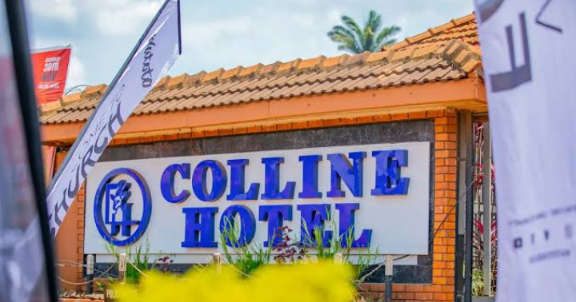
Tears are reportedly flowing in Mukono after city businessman Augustine Kasozi, the once-booming proprietor of Colline Hotel and Mukono Bookshop, suffered a crushing legal blow that could see his multibillion empire sold off piece by piece.
The Civil Division of the High Court has slammed the door on Kasozi’s desperate attempt to stop the auction of his prized properties, with Justice Joyce Kavuma dismissing his application with costs and clearing the way for creditors to strike.
In a ruling that hit like a thunderbolt, the judge tore into Kasozi’s conduct, faulting him for dragging his feet for more than five years before rushing to court in a last-minute bid to block execution.
“This Court finds that such conduct amounts to inordinate delay which cannot be condoned,” Justice Kavuma ruled, effectively sealing the businessman’s fate.
Kasozi had tried to argue that the execution process only kicked off in September 2025 when respondent Magdalene Lamwaka moved to enforce the court orders, insisting he acted swiftly thereafter. But the court was not buying it.
Justice Kavuma made it clear that Kasozi had all the time in the world to act and failed to do so, emphasizing that nothing stopped him from filing for a stay much earlier—even before execution proceedings began.
In a further blow, the court dismantled Kasozi’s claims that he would suffer massive loss if the auction goes ahead. The judge ruled that merely crying foul over the size of the money involved or the looming threat of losing property is not enough.
“The mere fact that there is an imminent threat of execution… is not itself proof of substantial loss,” she stated firmly, adding that Kasozi failed to prove that Lamwaka would be unable to refund the money if his appeal ever succeeds.
With that, the court found no reason to shield him—leaving auctioneers free to move in.
The ruling couldn’t have come at a worse time for the embattled tycoon. Even as he reels from this setback, another storm is gathering, with Bank of Baroda breathing down his neck over a separate unpaid loan.
The bank is already pushing to auction more of his properties, and Kasozi is now locked in a frantic legal battle at the Court of Appeal to save what remains of his crumbling empire.
From a respected Mukono businessman to a man fighting to keep his assets from going under the hammer, Kasozi’s fall is unfolding in dramatic fashion—one court loss at a time.
The High Court of Uganda has dismissed key claims by Dr. Peter Musoke Gukiina in a long-running land dispute involving businessman Sudhir Ruparelia and Speke Hotel 1996 Limited, ruling that the plaintiff failed to prove ownership of a kibanja interest beyond his registered land.
In a detailed judgment delivered by Justice P. Basaza-Wasswa, the court found that Dr. Gukiina’s alleged kibanja—customary tenancy rights—was confined strictly to Busiro Block 443 Plot 50 in Kongero, Wakiso District, and did not extend into neighboring plots owned by Speke Hotel 1996 Ltd.
The case, filed in 2019, centered on claims of trespass, unlawful eviction, illegal land transfers, and destruction of property. Dr. Gukiina argued that he lawfully occupied approximately 1.287 acres of land overlapping several adjacent plots—namely plots 49, 52, 74, and 76—which are currently registered under Speke Hotel 1996 Ltd.
However, the court rejected this claim after examining documentary evidence, including sale agreements presented by the plaintiff. Justice Basaza-Wasswa ruled that the agreements clearly indicated that all kibanja interests purchased by Dr. Gukiina were located only on Plot 50.
“The language used in the agreements is plain and unambiguous,” the judge held, adding that no external interpretation could be introduced to extend the scope of the land beyond what was explicitly stated in the documents.
The court emphasized the legal principle that documentary evidence takes precedence over oral testimony. It found that Dr. Gukiina’s attempt to argue that his kibanja extended into neighboring plots was unsupported and contradicted by the written agreements he relied upon.
In her analysis, Justice Basaza-Wasswa noted that the plaintiff failed to provide any additional evidence of purchase, consent from registered landowners, or lawful acquisition of interests in the disputed plots. She further ruled that any developments or activities carried out by the plaintiff outside Plot 50 were done unlawfully.
The judgment also highlighted inconsistencies in the plaintiff’s case, particularly regarding earlier litigation. In a 2000 criminal case, Dr. Gukiina had complained of damage to only five banana stems, contradicting his later claims of widespread destruction across multiple plots.
“This inconsistency amounts to estoppel by conduct,” the judge stated, warning that allowing such contradictory positions would undermine the integrity of the judicial process.
The court instead accepted the defense’s position that any dispute between the parties historically related only to a boundary issue between Plot 50 and Plot 75—an issue already addressed in earlier proceedings.
On the legality of land transfers, the court found no evidence of wrongdoing by the defendants. It upheld the transactions through which the disputed plots were sold—from Erieza Kaggwa to Ephraim Ntaganda, and subsequently to Speke Hotel 1996 Ltd—ruling that the transfers were lawful and conducted without notice of any competing interest by the plaintiff.
The court also cleared the Commissioner of Land Registration of any liability, finding no basis for claims that the land registry maintained improper records.
As a result, the court dismissed Dr. Gukiina’s claims for declarations of ownership over the disputed plots, unlawful eviction, trespass, and damages. His request for an injunction against Speke Hotel 1996 Ltd was also denied.
The ruling effectively affirms Speke Hotel 1996 Ltd’s ownership and possession of the contested plots, while limiting Dr. Gukiina’s rights strictly to Plot 50 as registered.
This judgment brings to a close a protracted legal battle spanning over two decades, marked by multiple suits, appeals, and conflicting claims over land boundaries and occupancy rights in the rapidly developing Wakiso area.
Legal analysts say the decision reinforces the primacy of documentary land titles and written agreements in Uganda’s property disputes, particularly in cases involving kibanja tenure.
Afrobeat singer Seun Kuti has stirred fresh debate after speaking out against pastors who claim to perform miracles.
During a live video, he argued that many of these claims cannot be proven and should face strict legal consequences.
He said there should be a law stopping anyone from publicly performing or announcing miracles unless they can be verified by a recognised medical institution.
Seun suggested that any pastor claiming healing powers should be tested under proper medical supervision.
If they fail to prove it, he believes they should be held accountable under the law, including possible jail time.
His comments quickly spread online, with mixed reactions from Nigerians.
Some supported his call for accountability, while others defended faith practices and spiritual beliefs.
The conversation has once again brought attention to the tension between religion, science, and regulation, raising questions about where belief ends and responsibility begins.
Sharon Pinks has opened up about her love life and the attention she continues to receive from the opposite gender.
Speaking on Sanyuka Uncut, the TikTok star, born Namata Maria Gorret Sharon, said many boys approach her, but she chooses carefully who she gives her time.
She made it clear she avoids anyone who comes with the wrong intentions and prefers to protect her peace.
I do not want men who only come to me with bad intentions.
Sharon also revealed that she is already in love.
She said the person she cares about lives a private life and stays away from social media, something she appreciates.
I have someone I love, and the good thing is that he is not on social media.
At the same time, she addressed a viral audio clip that sparked concern about her home life.
The recording spread quickly and reached her family, who questioned her about it.
She said the situation created confusion and unnecessary tension.
That audio spread everywhere and even reached my family. They asked me why I was embarrassing them.
Despite the controversy, Sharon ended with a message to her young followers, urging them to focus on school and take their education seriously.
My message to the youth who like me is to study hard because the pain of not studying is very big.
A storm is brewing at the Uganda National Bureau of Standards after a bombshell report exposed shocking gaps in oversight, weak enforcement, and a baffling multi-billion-shilling shortfall in the highly sensitive digital stamps system.
At the centre of the controversy is a jaw-dropping revenue gap involving Swiss-linked firm SICPA Global Fluids Integrity SA, contracted to run the Digital Conformity Marking (DCM) system. According to the audit, since the system went live, only UGX 3.573 billion—just 27%—has been remitted to UNBS out of an expected UGX 13.208 billion.
That leaves nearly three-quarters of the expected revenue unaccounted for, raising explosive questions about compliance, contract enforcement, and whether UNBS is either asleep at the wheel or deliberately looking the other way.
The Auditor General notes bluntly: “Since the go-live date, SICPA only remitted UGX 3.573Bn (27%) to UNBS, out of the expected revenue of UGX 13.208Bn from digital stamps.” The silence on the missing billions is deafening.
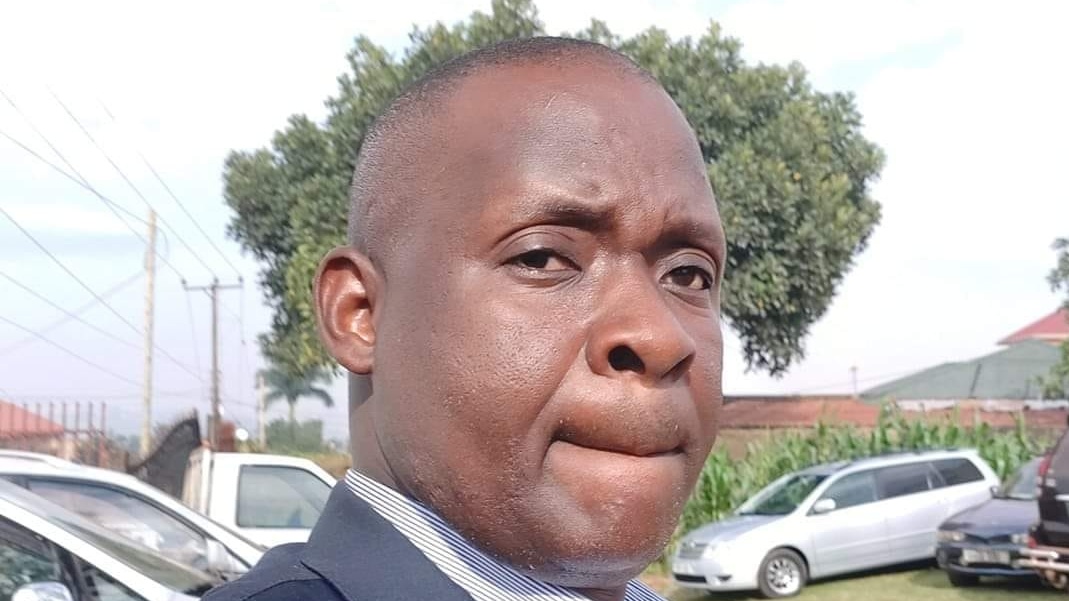
The Ugandan arm of the operation is overseen by Suzan Mweheire Kitariko, who heads the local subsidiary of the Swiss conglomerate. With such a glaring revenue gap, pressure is mounting on both SICPA and UNBS to explain why the money has not been fully remitted—and who is responsible for enforcing the contract.
Despite this massive red flag, the Bureau still walked away with an “Unqualified Opinion,” a technical clean bill that sharply contrasts with the troubling realities uncovered beneath the surface.
The audit reveals that UNBS itself is structurally weak and struggling to perform its core mandate. A structural review carried out in 2023 found that the Bureau’s current setup is inadequate to execute its functions effectively. Yet, in a move that has left insiders stunned, the new structure has never been implemented.
This means the institution tasked with safeguarding standards in Uganda’s booming manufacturing and agro-industrial sectors is operating with a system it already knows is broken.
The consequences are already spilling into the market.
In one of the most alarming findings, the Auditor General discovered that commodities have been released onto the Ugandan market without proper testing simply because UNBS had no standards to test them against. The report points to “delays and laxity in developing and publishing new standards,” effectively allowing potentially substandard or unsafe goods to slip through regulatory cracks.
This revelation strikes at the heart of consumer protection, raising fears about the quality and safety of products on shelves across the country.
The failures don’t stop there.
UNBS was also found to have neglected its contractual obligations by failing to audit Pre-Export Verification of Conformity (PVoC) service providers. These audits—both technical and financial—are mandatory under the contracts, yet none were conducted.
The Auditor General states clearly: “UNBS did not conduct any technical or financial audits of the PVoC service providers as required by the contracts.” In a system designed to ensure imported goods meet standards before entering Uganda, this lapse opens the floodgates for non-compliant products.
Even more worrying is the legal vacuum surrounding emerging sectors. The current UNBS Act is silent on critical areas where measurement accuracy is essential, including smart electricity meters, airtime and data bundles, digital gas meters, radiation equipment, speed guns, online platforms, and even upstream oil and gas technologies.
This means entire sectors are operating without clear regulatory oversight, leaving consumers exposed and enforcement agencies powerless.
Meanwhile, the Digital Tax Stamps (DTS) ecosystem—linked to the same SICPA system—has been actively promoted with training sessions across the country. Working alongside the Uganda Revenue Authority, SICPA has trained inspectors and distributed enforcement gadgets to curb fraud such as reuse and counterfeiting of stamps.
But even as these enforcement efforts are rolled out, the core issue remains unresolved: where is the money?
The contrast is striking. On one hand, authorities are cracking down on traders over compliance. On the other, billions expected from the system itself appear to be missing or unremitted, with no clear accountability.
The Auditor General’s findings stop short of directly accusing wrongdoing but lay bare a system riddled with weak oversight, delayed reforms, and enforcement gaps that insiders say create fertile ground for financial leakages.
Adding to the intrigue, it remains unclear whether the outstanding funds have since been paid, with reports indicating that this could not be independently verified at the time of publication.
The report paints a picture of an institution overwhelmed by its mandate, lagging behind in reforms, and failing to assert control over key revenue-generating systems. It raises uncomfortable questions about whether UNBS has the capacity—or the will—to enforce compliance on powerful contractors.
For a body entrusted with protecting standards, ensuring product safety, and supporting Uganda’s industrial growth, the stakes could not be higher.
As pressure mounts, the spotlight is now firmly on UNBS leadership and the SICPA deal. Ugandans are demanding answers to one simple but explosive question: how does a system designed to boost compliance and revenue end up with billions unaccounted for—and no one taking responsibility?
Ugandan musician Fred Seruga is marking a major milestone after graduating from law school, adding a legal career to his journey in music.
His achievement comes just after the passage of the Copyright and Neighboring Rights Amendment Bill, 2025, a process that saw artistes engage Parliament in a push for stronger protections.
In an interview with Sanyuka Uncut, Seruga said the new law could change how artistes earn from their work.
“Artistes are going to gain in the copyright law,” he said, expressing confidence in the reforms.
Drawing from his new legal background, Seruga pointed to what comes next, noting that implementation will take a structured approach.
“The government will first regulate the law and then take action,” he added.
Now operating at the intersection of law and music, Seruga steps into a space where few artistes stand, at a time when the industry is shifting toward stronger protection of rights and earnings.
A shocking Auditor General’s report has blown the lid off years of chronic mismanagement, weak oversight, and questionable financial handling at Uganda Livestock Industries Limited (ULI), painting a grim picture of a once-strategic national asset now plagued by inefficiency, neglect, and systemic failures.
Despite receiving an “Unqualified Opinion” for FY 2023/2024, the underlying findings read like a catalogue of institutional decay—raising serious questions about the competence of those entrusted with managing Uganda’s livestock resources and the oversight role of their supervisors at the Ministry of Agriculture.
At the centre of the storm is massive underutilisation of land. Out of 2,072 acres leased to FICA, only about 65% is being utilised each planting season, leaving vast swathes of land idle. In a country where agricultural land is a prized resource, this revelation is nothing short of scandalous. The Auditor General flags this as a glaring inefficiency, a sign that prime land is lying wasted under the watch of those meant to maximise its productivity.
Even more baffling is the failure to resume seed production despite the completion of an irrigation scheme in 2022. The infrastructure is in place, the investment already made—yet production remains stalled. It is a classic case of a project delivered on paper but abandoned in practice, raising questions about planning, follow-through, and accountability.
The rot is visible on the ground. At the Masindi Processing Plant and Kisindi farm, machinery has been left abandoned and obsolete, turning what should be productive assets into scrap. The audit points to a “failure to maintain the assets,” a damning indictment of management’s stewardship over public investments.
Meanwhile, in Kasese, land meant for organised livestock and agro-industrial use is slowly slipping away. Out of 452 hectares opened up, 4.0116 hectares have already been encroached upon by communities who have constructed structures within concession boundaries. This creeping land grab exposes weak enforcement and a dangerous lack of control over government property.
Financial management tells an equally troubling story. Trade and other payables amounting to UGX 1.87 billion could not be adequately supported, with the Auditor General noting that documentation was insufficient “to enable the assessment of the authenticity, accuracy, and collectability of these payables.” In essence, millions of shillings sit in the books without clear backing—raising red flags about transparency and accountability.
The audit also exposes a failure to monitor lease agreements. ULI did not evaluate whether conditions set out in these agreements were being met, effectively allowing lessees to operate without proper oversight. The situation is worsened by “inadequacies in the lease agreement between ULI and one of the lessees,” suggesting weak contract management that could cost the government dearly.
Perhaps most alarming is the governance vacuum at the top. The company is operating without a fully constituted Board, with only two members instead of the required minimum of four. The Auditor General warns that this “stifles the Company’s strategic stewardship,” leaving critical decisions hanging in limbo and accountability structures severely weakened.
But the 2023/2024 findings are only the latest chapter in a long-running saga of unresolved audit queries stretching back years.
As far back as FY 2017/2018, ULI reported trade receivables of UGX 912.37 million without supporting documentation. A staggering UGX 852.64 million—93% of that amount—was linked to a single supplier for undelivered cattle, yet no evidence was provided to confirm the debt. The same pattern repeated in FY 2018/2019, with identical figures and the same lack of documentation, suggesting a persistent failure to clean up the books.
The situation did not improve in subsequent years. In FY 2019/2020, receivables rose to UGX 912.85 million, again unsupported. Long-outstanding liabilities of UGX 1.867 billion also lacked documentation, making it impossible to verify their legitimacy.
By FY 2020/2021, the story remained unchanged. Out of UGX 887.05 million in receivables, UGX 852.65 million—over 96%—was still tied to the same supplier for undelivered cattle, with no supporting documents. The liabilities, standing at UGX 1.86 billion, were equally unsupported.
The pattern persisted into FY 2021/2022, where receivables of UGX 887.04 million again featured UGX 852.64 million linked to the same unresolved cattle transaction. The Auditor General highlights that this balance remains unsupported, a glaring anomaly that has survived multiple audit cycles without resolution.
At the same time, long-term liabilities amounting to UGX 1.86 billion—including a UGX 1.72 billion debt swap owed to the Ministry of Finance and UGX 141.38 million owed to suppliers dating back to 1999—also lacked documentation. Decades-old debts with no clear records point to deep-rooted financial mismanagement.
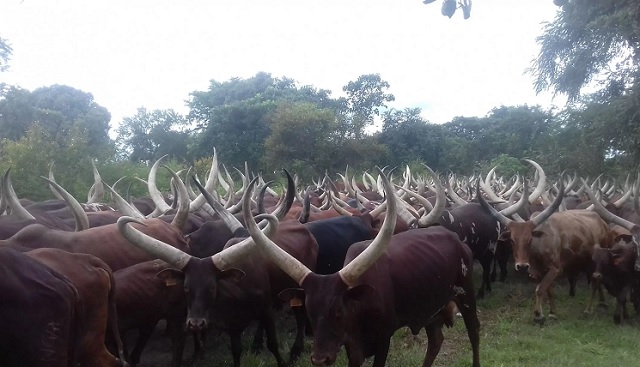
All this unfolds against the backdrop of the historic Maruzi Ranch, a vast government-owned facility in Apac District once envisioned as a cornerstone of Uganda’s beef production. The ranch, leased to ULI in 1968 for 99 years, collapsed during the insurgencies of the late 1980s and has since undergone attempts at revitalisation.
In 2018, ULI issued a 50-year lease for 54 square kilometres of the ranch to a private firm for palm oil cultivation, while portions were allocated to National Animal Genetic Resources Centre and Data Bank for breeding and National Agricultural Research Organization for research. Yet even with these interventions, the audit findings suggest that governance and oversight remain weak.
The Auditor General’s conclusions leave little room for doubt. While ULI sits on vast resources and strategic assets, its operations are undermined by persistent failures in financial management, land utilisation, governance, and accountability.
What emerges is a troubling picture of an institution drifting without direction—where land lies idle, machinery rots, debts remain unverified, and the same audit queries resurface year after year without resolution.
For a sector central to Uganda’s agro-industrialisation agenda, the implications are serious. The big question now is whether those in charge—both within ULI and at the supervising Ministry—will finally act, or whether this cycle of neglect and mismanagement will continue unchecked.
Nairobi, 18th March 2026: Equity Group Holdings Plc has announced record FY2025 results in Kenya’s corporate history, posting a 55% increase in Profit After Tax of KSh75.5 billion, up from KSh48.8 billion. The performance reflects the Group’s successful business transformation, diversified revenue growth, enhanced efficiency, and robust regional contributions. The balance sheet expanded by 9% to KSh1.97 trillion (FY2024: KSh1.8 trillion), with customer deposits rising 4% to KSh1.46 trillion (FY2024: KSh1.40 trillion) and net loans increasing 8% to KSh882.5 billion (FY2024: KSh819.2 billion). The Group closed the year with 22.4 million customer accounts, supported by a strong regional distribution and digital ecosystem.
Strong revenue performance saw net interest income grow 17% to KSh 126.9billion, non‑funded income rise 7% to Ksh90.8 billion, and total income increase by 12% to Kshs 217.7 billion (FY2024: KSh193.8 billion). Operational efficiency improved significantly, with the cost‑to‑income ratio falling to 51.0% from 58.2%, driven by continued migration to self‑service channels, productivity gains, and tighter cost discipline supported by Group-wide shared services and digital infrastructure. Over 98% of customer transactions were conducted outside branches, with 88.4% processed through digital channels, reflecting continued demand for digital services with increased investment in customer‑centric digital infrastructure. Loan loss provisions declined 28%, while NPL coverage strengthened to 67.7%, supported by a reduced cost of risk of 1.7%.
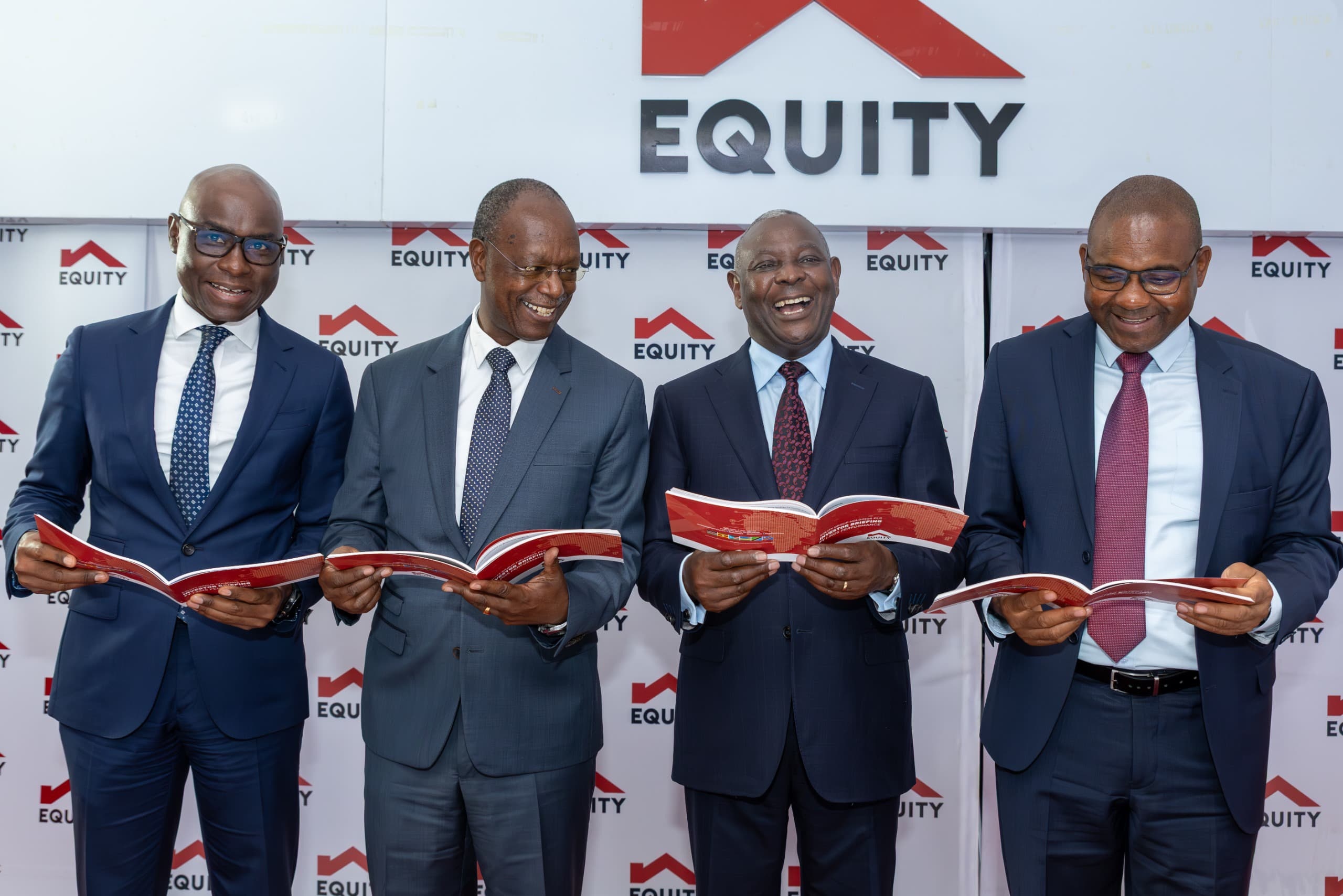
From L-R: Equity Group Chairman, Prof. Isaac Macharia, Group Managing Director and CEO, Dr. James Mwangi and Director Equity Group Foundation Operations, Dr. Joanne Korir, during the FY 2025 Investor Briefing event
Commenting on the results, Equity Group Managing Director and CEO Dr. James Mwangi said the performance demonstrates the strength of the Group’s strategic transformation, driven by diversified revenue streams, improved efficiency and growing contributions from regional subsidiaries: “The 2025 performance reflects the success of our deliberate transformation into a diversified, regional financial services group. We delivered strong profit growth by expanding and deepening our income streams, improving efficiency across the franchise, and strengthening the quality of our balance sheet. Importantly, our regional subsidiaries now contribute about half of our banking profitability, demonstrating the value of our pan-African footprint and the resilience that comes from diversification.”
On the back of this performance, the Directors have recommended a dividend of Kshs 5.75 per share, up from Kshs 4.25 amounting to a payout of Kshs 21.7 billion (2024: Kshs 16 billion), representing a 35.3% growth in dividends.
Equity Bank Kenya Limited (EBKL) reported a 63% rise in profit after tax to KSh39.2 billion (FY2024: KSh24.1 billion), driven by a 28% increase in net interest income and a 37% reduction in interest expense. Shareholders’ funds grew 11% to KSh136.2 billion, while returns on assets and equity strengthened to 3.9% from 2.4% and 26.8% from 20.2%, respectively. The performance reinforces EBKL’s leadership in supporting enterprise growth, with the Bank having been recognised at the Kenya Bankers Association Sustainable Finance Initiative (KBA SFI) Awards as the Best Bank for MSME Financing contributing 45% of all banks lending to SMEs.
From L-R: Equity Group Chairman, Prof. Isaac Macharia, Group Managing Director and CEO, Dr. James Mwangi and Equity Life Assurance Kenya Limited Managing Director, Angela Okinda, during the FY 2025 Investor Briefing event
Regional operations accounted for about half of Group profitability in FY2025, underscoring Equity’s emergence as a pan-African financial services group. In the DRC, profit after tax rose 58% to KSh24.7 billion, supported by 17% loan growth. Uganda’s profit after tax jumped 500% to KSh3.6 billion, while Rwanda posted profit after tax of KSh5.4 billion, with total assets up 5% and the loan book expanding 22%. Tanzania’s profit after tax grew 125% to KSh2.7 billion, alongside a 75% increase in shareholders’ funds. Overall, subsidiaries contributed 51% of banking profit before tax and 48% of banking profit after tax.
Equity Insurance Group continued its strong expansion, driven by newly acquired life, general, and health underwriting licenses. Gross written premiums rose by 75% to Kshs 9.17 billion, delivering Profit Before Tax growth of 36% to Kshs 2.0 billion, and a 150% rise in insurance revenue to Kshs 3.57 billion. All subsidiaries delivered solid growth: Equity Life Assurance which delivered a Profit Before Tax of KShs 1.77 Billion now serves unique 6.9 million customers with 19.2 million policies issued since inception, Equity General Insurance reported Kshs 1.79 billion in Gross Written Premiums and Kshs 199 million in Profit Before Tax in its first year of operations whilst Equity Health Insurance reported Gross Written Premium of KShs 20 Million and KShs 40 million in Profit Before Tax in its first 4 months of operations .
Africa continues to show strong economic momentum, with 11 of the world’s 20 fastest‑growing economies in 2025, including South Sudan, Rwanda, and Uganda. A minerals boom is lifting growth in DR Congo, Tanzania, and Uganda, while high gold, copper, and coffee prices – combined with low oil and wheat prices and a weaker US dollar – are supporting East African economies. Although geopolitical risks have risen due to the Iran conflict, the impact is expected to be temporary; oil prices briefly spiked to about $100 but are projected to ease to the mid‑$60s after a ceasefire, helping stabilize trade and inflation. Global inflation remains contained, though recent rate cuts in the DRC and Kenya may face short‑term pressure from higher oil prices.
From L-R: Equity Group Chairman, Prof. Isaac Macharia, Group Managing Director and CEO, Dr. James Mwangi and Equity Bank Tanzania Managing Director, Isabela Maganga, during the FY 2025 Investor Briefing event
The Equity Group Foundation (EGF) is driving meaningful social impact across Africa – supporting 1,115 scholars with global university scholarships, including 145 airlifted during the year, training nearly one million entrepreneurs, and enabling over 500,000 MSMEs to access Kshs 401 billion in credit. It has empowered 3.8 million farmers with climate‑smart agriculture skills, distributed over half a million clean energy solutions, and planted 44.6 million trees. Through the growing Equity Afya network, now 150 centres strong, 4.6 million patients received affordable, quality healthcare.
The Foundation is scaling its Innovation and Technology Pillar by training over 600,000 youth in AI, machine learning, and data analytics through partnerships with iamtheCODE, Huawei, and WorldQuant University. With strengthened impact measurement under the global Sustainable Disclosure Impact Data (SDID) framework and recognition through the 2025 Sustainable CSR Award, EGF continues to show how integrated investments in education, enterprise, health, and climate resilience drive inclusive growth.
The Group’s strong performance also reflects its intentional focus on anchoring a refreshed corporate culture and strengthening staff productivity to deliver a consistently delightful customer experience. By institutionalizing robust internal controls, elevating performance standards, and embedding disciplined, data‑driven execution across all teams, the Group has enhanced operational efficiency, strengthened risk management, and deepened customer‑centricity.
From L-R: Equity Group Chairman, Prof. Isaac Macharia, Group Managing Director and CEO, Dr. James Mwangi and Equity Bank Rwanda Managing Director, Hannington Namara, during the FY 2025 Investor Briefing event
These strategic measures, combined with a culture of accountability, agility, and service excellence, continue to position the Group to deliver superior outcomes across all markets.
Equity Bank was named the Best Regional Bank in East Africa and retained its position as Kenya’s most valuable brand in 2025, reaffirming the Group’s regional leadership and commitment to financial inclusion and socio‑economic transformation. Beyond lending, the Group is strengthening market linkages for SMEs by enabling cross-border trade through its regional footprint and integrated digital payments and transaction-banking capabilities; helping businesses access new customers, suppliers and growth opportunities across the region.
Dr. Mwangi added that the Group will continue to execute its 2030 strategy anchored in the Africa Recovery and Resilience Plan (ARRP), leveraging next‑generation digital and AI‑enabled capabilities to scale impact, deepen inclusion and accelerate growth across the continent: “Our focus is to build a future-ready institution that is scalable, secure and impact-led. Through our Africa Recovery and Resilience Plan, we are investing in next-generation digital and AI-enabled capabilities that enhance customer experience, strengthen risk management and lower the cost-to-serve, while extending access to affordable credit, insurance and investment solutions. As we progress toward our 2030 ambitions, we are evolving beyond traditional banking into a Transformation Finance Institution that mobilizes capital, connects ecosystems and accelerates inclusive, sustainable prosperity across Africa,” he said.
From L-R: Equity Group Chairman, Prof. Isaac Macharia, Group Managing Director and CEO, Dr. James Mwangi and EquityBCDC Managing Director, Willy Mulamba, during the FY 2025 Investor Briefing event
Equity Group’s 2030 strategy positions the organization for transformative, continent‑wide growth. Anchored in the Africa Recovery and Resilience Plan (ARRP), the Group aims to operate in 15 countries and serve 100 million customers by 2030. With strong governance, upgrades include next‑generation digital, AI‑enabled systems, and the launch of innovative applications supported by a modern go‑to‑market model. These developments drive more effective service to diverse customer segments while building a culture of client centricity, agility, and innovation. Through blended finance, strategic partnerships, and ecosystem development, Equity is evolving from a traditional bank into a Transformation Finance Institution – mobilizing private capital to drive inclusive, sustainable prosperity across Africa.
From L-R: Equity Group Chairman, Prof. Isaac Macharia, Group Managing Director and CEO, Dr. James Mwangi and Equity Bank Kenya Managing Director, Moses Nyabanda, during the FY 2025 Investor Briefing event
For award-winning singer Eddy Kenzo, the moment carries deeper meaning beyond legislation.
In an interview on Sanyuka TV shortly after the bill passed, Kenzo reflected on what the reform means for musicians who have long struggled to earn from their work.
He pointed out that for years, artistes created music that generated income across radio, television, and public spaces, yet saw little return.
I have done my part as a leader and as a fellow musician. I stepped up because our music lacked value, and that was our biggest problem.
Kenzo said the push for change came from a growing concern about the long-term reality many artistes face once their careers slow down.
He described a future where performers risk losing both relevance and financial stability after their peak years.
I cannot be in a profession where, at the end of the day, when I grow old, my children will see me as a joker. Today you are energetic, you can jump on stage, you can perform, but reality will come tomorrow when you cannot even jump anymore.
The new law aims to strengthen intellectual property protections and ensure that artistes earn from the commercial use of their music, especially by broadcasters and businesses.
Kenzo stressed that achieving this change required artistes to confront the system and take action rather than remain passive.
That is why we decided to get out of our comfort zone.
Teams are like finely tuned engines: when every part works in harmony, they generate incredible power. But when even one piece grinds out of sync, the whole machine sputters. Anyone who has worked in a Ugandan bank branch, a startup in Kampala, or a university project group knows the sinking feeling when once-vibrant teamwork begins to wobble.
The first crack often shows up as poor communication. Messages are misunderstood, emails are ignored, and meetings become monologues. A single missed memo can snowball into duplicated work and finger-pointing. Without a shared language, even the most talented group starts to sound like a badly tuned radio.
Next comes the stealthy spread of mistrust. When deadlines slip or promises break, teammates begin to doubt one another’s commitment. Soon, people guard information like squirrels with precious nuts. Once trust erodes, collaboration becomes a series of cautious transactions instead of a confident dance.
Uneven workload distribution is another silent saboteur. If a few members carry the weight while others coast, resentment brews faster than a pot of Kampala street coffee. Over time, even the most dedicated high-performers burn out or disengage, leaving the team wobbling on one leg.
Then there’s the menace of unclear goals. Without a shared North Star, each person follows their own compass. The result? A group of hard-working individuals headed in opposite directions, like bodaboda riders in a chaotic evening jam. Energy is spent, but progress stalls.
Leadership or the lack of it, can either patch cracks or pry them wider. A manager who plays favourites, avoids tough conversations, or micromanages creates a perfect storm for disengagement. Without steady guidance, even skilled teams can drift into chaos.
Cultural clashes add more fuel. Diverse teams bring fresh ideas, but without mutual respect and cultural intelligence, differences become fault lines. A joke that falls flat or a misunderstood tradition can create rifts wider than the River Nile.
Technology, ironically, can help or hurt. Overreliance on chat threads and endless Zoom calls breeds fatigue and miscommunication. Digital tools are brilliant servants but terrible masters when human connection gets lost in the noise.So what can we do about it? First, invest in clear, open communication.
Whether through weekly stand-ups or an old-fashioned team lunch, create spaces where concerns surface early. Transparency builds trust before suspicion has room to grow.Second, clarify purpose. A team that knows its “why” can handle almost any “how.” Set measurable goals, share progress openly, and celebrate small wins. A visible destination keeps everyone rowing in rhythm.
Third, balance the load. Use simple tools, like task boards or project trackers, to make effort visible. When everyone sees who is carrying what, it’s easier to redistribute work and keep resentment at bay.
Fourth, nurture trust deliberately. Encourage vulnerability: leaders admitting mistakes, teammates asking for help without fear. Trust is like a savings account, you build it with small deposits daily so it’s there when you need a withdrawal.
Fifth, give leadership the tune-up it deserves. Train managers to give constructive feedback, listen actively, and handle conflict early. Strong leadership doesn’t mean barking orders; it means creating an environment where people can do their best work.Sixth, embrace diversity with intention. Celebrate different perspectives and set norms that respect all voices. The more inclusive the culture, the less likely misunderstandings will degenerate into lasting divisions.
In conclusion, balance tech with touch. Use digital platforms to share information efficiently, but don’t let them replace human connection. Sometimes the fastest way to fix a problem is still a five-minute face-to-face chat. Teams fall apart not because people are bad but because human systems need maintenance. With consistent care, clear communication, shared purpose, fair workloads, and a dash of empathy, the wheels stay on and the ride stays smooth.
The writer is the General Manager, Commercial Banking at Centenary Bank
About Post Author
About UGNEWS24
UGNEWS24 is a Uganda local news service, a product of
SOLAVIA GROUP LIMITED,
Reg. No. 80048169153974.