St. Nelly-sade reveals that doctors have asked him to stay away from sex for six months following his hernia operation.
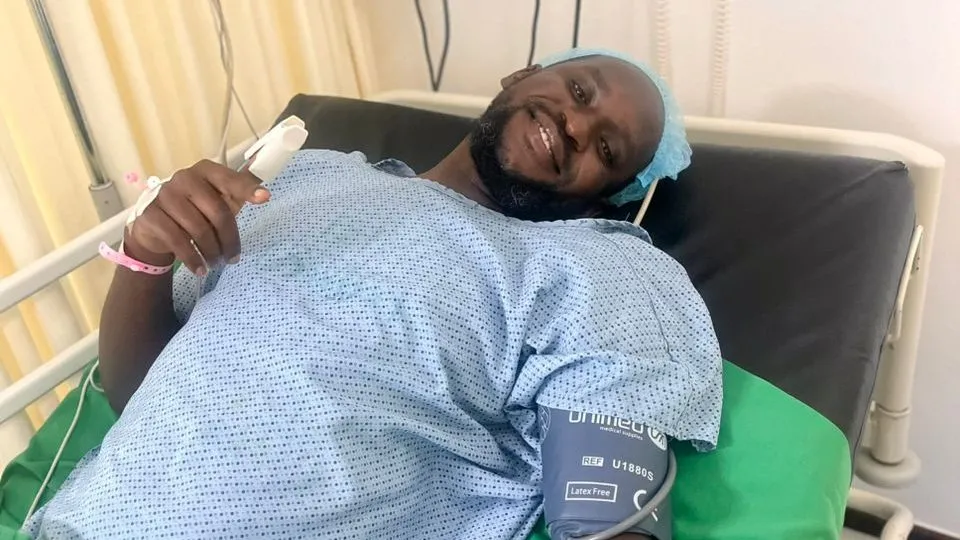
Ugandan rapper St. Nelly-sade, whose real name is Nelson Nsubuga, underwent a successful hernia operation at THE International Hospital Kampala (IHK) on Tuesday, 18th March 2026.
The rapper revealed the news via his social media pages, where he shared a photo of himself giving a thumbs-up sign while on a hospital bed in a hospital gown.
St. Nelly-sade thanked the medical team for a job well done and further revealed that he has been asked to stay away from sex for the next six months.
The Incredible Dr. Ashraf Muhammad, the main an behind my Successful Operation. Much love to the whole team at IHK. Naye angambye teli kwegatta for 6 Months.
His fans, followers, and fellow celebrities have since congratulated him on the successful surgery and wished him a quick recovery.
Ugandan artist D-Star of the Hoozambe fame has expressed her desire to collaborate with Karole Kasita, referring to her as one of the most talented female artists in the country.
During an interview, D-Star, whose song ‘Envunza Ento’ continues to dominate the airwaves, made his desires known while on phonecall with the self-styled Mamacita.
I would cherish a chance to work with Karole Kasita because she is a good artist. Among the male artists, honestly, there isn’t any I yearn to collaborate with.
Karole Kasita expressed her willingness to have that collaboration done, highlighting how she, too, is a fan of D-Star.
The songstress, who is preparing for her ‘The Power Within’ concert, which is scheduled for the 29th of May 2026 at Kampala Serena Hotel, asked D-Star to reach out to him to get down to business.
“Let’s get that collaboration done. I am a big fan of yours, so we can work on something. Let’s do it, no problem. You have my number, let’s connect and do it,” she said excitedly.
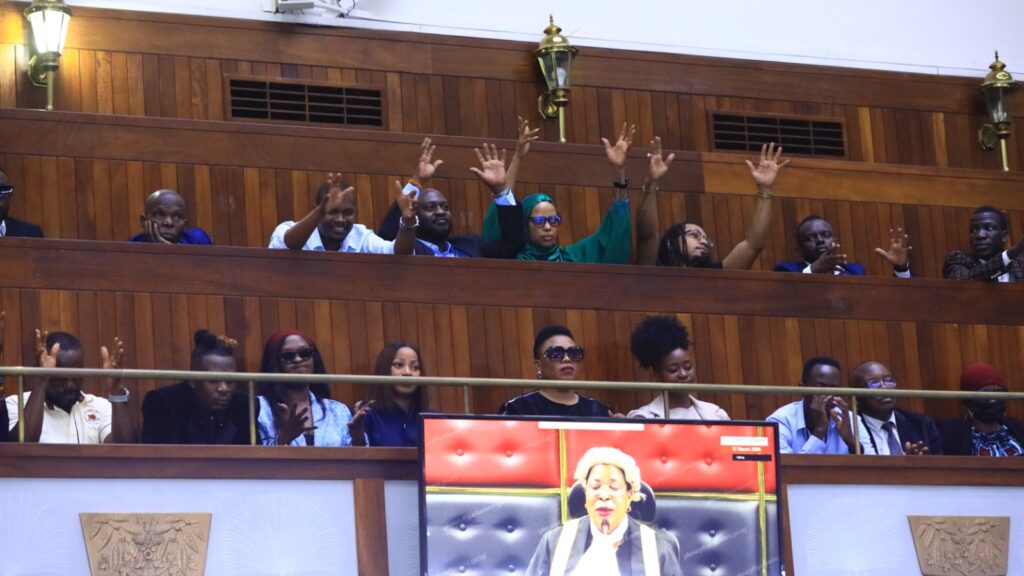
Yesterday, parliament passed the, Copyright and Neighbouring Rights (Amendment) Bill 2025, a major reform that is expected to reshape how artists, producers and rights holders earn from their work. While much of the public debate focused on Clause 9, the new law introduces several key changes that creators need to understand.
Written contracts are now mandatory
The law now requires all copyright agreements, including assignments, licences and transfers to be in writing. This is a major shift in an industry where verbal deals have been common. Going forward, artists will have stronger legal backing, as undocumented agreements may not hold up.
Caller ringback tone (CRBT) revenues clarified
The amendment introduces a defined revenue-sharing model for telecom services like caller ring back tones. 30% goes to authors (songwriters/composers). 30% goes to performers (artists) This recognises both groups as separate rights holders, ensuring each earns directly from their contribution.
Clause 9: CMOs can now set fees
This is the most talked-about provision. The law allows Collective Management Organisations (CMOs) to set fees, in consultation with their members for the commercial use of music and other works. This means businesses such as bars, radio stations, TV stations, and hotels will be expected to pay for using copyrighted content, with a clearer legal basis for enforcement.
70/30 rule on royalties
The law now requires CMOs to distribute at least 70% of collected revenue to artists, while retaining no more than 30% for administration. This aims to improve transparency and ensure that creators receive a larger share of the money generated from their work.
Stronger digital protections
The amendment introduces provisions to help address online piracy, including mechanisms for taking down unauthorized use of creative content on digital platforms.
With all the above in play, however, it should be noted that some proposals were dropped. Most notably, a proposed clause on Artificial Intelligence (AI) and copyright was removed, leaving questions around AI-generated content and training data unresolved.
Marvel fans have something new to talk about after the teaser for Spider-Man: Brand New Day dropped and quickly picked up attention online.
The short clip does not reveal much, but it sets the tone. This time, Spider-Man looks like he is stepping into a quieter and more personal chapter.
The title alone has fans thinking. Brand New Day points to a reset, especially after what happened in Spider-Man: No Way Home.
Peter Parker is now in a very different place, and the teaser leans into that shift.
Instead of big moments, the focus seems to be on Peter Parker trying to rebuild his life.
He is on his own now, dealing with everyday struggles while still carrying the weight of being Spider Man.
That change has sparked plenty of discussion. Some fans expect a more grounded story, while others are already guessing which new villains could show up next.
It is still early, but the direction feels clear. This next chapter looks more focused on Peter himself, with a story that could explore what it really means to start over.
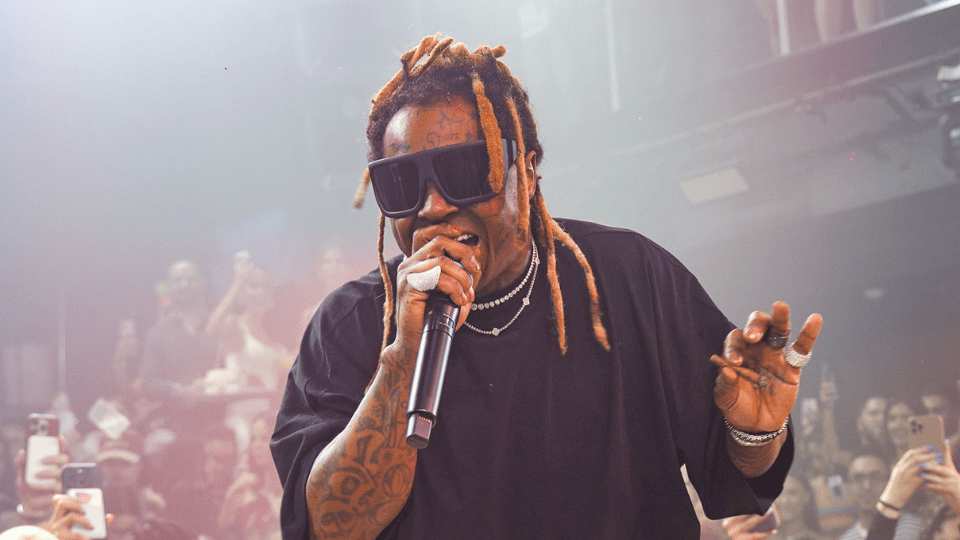
Rap icon Lil Wayne is back in the spotlight as talk grows around a possible extension of his current tour.
Online reports suggest he could add more dates, with 2 Chainz and The Game linked to selected shows. While no one has confirmed full details yet, the update has already grabbed fans’ attention.
Wayne continues to use the tour to celebrate his Tha Carter era, a period that helped shape modern rap and build his global influence.
Fans have quickly reacted to the possible lineup, with many calling it a strong mix of rap heavyweights. The idea of seeing these artists share one stage has become a major talking point online.
For now, the tour remains focused on the United States, but the growing buzz shows global interest.
Fans continue to push for more dates as excitement builds around what could come next.
Jabari Banks has sparked excitement online after sharing his dating preference during a recent podcast appearance.
The Bel Air star revealed that East African women are his type while speaking on The Crew Has It podcast, hosted by Michael Rainey Jr. and Gianni Paolo.
During the conversation, Banks spoke openly about attraction and relationships. He said he is drawn to East African women, a comment that quickly caught attention across social media.
Fans across the region reacted with excitement, especially those who follow his role on Bel-Air.
The show, inspired by The Fresh Prince of Bel-Air, introduced Banks to a global audience and marked his breakout role.
Beyond the viral moment, Banks also reflected on his journey in the industry. He shared details about his background and how he worked toward landing the role of Will, a character first made famous by Will Smith.
Since the series premiered, Banks has continued to grow his fan base worldwide.
His latest comments have only added to the strong connection he now has with audiences, especially in East Africa.
In 1986, as the National Resistance Movement (NRM) government took the reins of a war-weary Uganda, the nation’s electricity grid was more a memory than a utility. With an installed capacity of 150 megawatts (MW) at the Owen Falls Dam—of which only 60MW was actually functional—and an access rate of less than 2%, electricity was a luxury for the elite.
Fast-forward to the first quarter of 2026, and the landscape is unrecognizable. Uganda now boasts a generation capacity exceeding 2,000MW, a grid access rate of over 60%, and a dynamic tariff structure that targets everything from “lifeline” social equity to industrial competitiveness.
The journey from 1986 to 2026 is not merely a story of poles and wires; it is a four-decade analytical map of shifting economic ideologies—from state monopoly to aggressive privatization, and finally to the modern “hybrid” model of state and private cooperation.
A ground transformer in Tororo, near the Simba Cement Factory. Uganda’s continued investment in the distribution grid has significantly contributed to increased stability and reliability of electricity in Uganda.
The UEB Era (1986–1999): The Illusion of Cheap Power
For the first 13 years of the NRM government, the Uganda Electricity Board (UEB) operated as a vertically integrated monopoly. It generated, transmitted, and distributed power. During this era, pricing was largely a political tool rather than an economic one. Tariffs were heavily subsidized, but the “low price” was an illusion.
By 1993, the tariff stood at an average of 7.3 US cents per kWh (a unit of electricity), but the system was collapsing. Revenue collection was as low as 50%, and distribution losses were staggering, often exceeding 40%.
Because the government could not afford to maintain the infrastructure, “load shedding” became a national anthem. Power was “cheap” on paper but unavailable in practice. The government, working with development partners, eventually stepped in, arguing that the only way to save the sector was through “cost-reflective” pricing and private-sector efficiency.
The Great Unbundling (1999–2005): Shock Therapy
The passage of the 1999 Electricity Act was the seismic shift that defined the next 20 years. UEB was unbundled into three entities: Uganda Electricity Generation Company Limited (UEGCL – responsible for generation), Uganda Electricity Transmission Company Limited (UETCL – responsible for transmission), and Uganda Electricity Distribution Company Limited (UEDCL – responsible for distribution).
This period saw “shock therapy” in pricing. Between 1999 and 2002, electricity tariffs nearly doubled in shilling terms as the government moved to satisfy donor requirements for a self-sustaining sector. The establishment of the Electricity Regulatory Authority (ERA) in 2000 ushered in an arm’s-length independent regulator—one of the key pillars in fostering cost reflectivity and attracting much-needed private capital.
The Concessionaire Model Era (2003–2024): Growth at a Cost
In 2003 and 2005, the government handed over the generation and distribution networks to Eskom Uganda Limited and Umeme Limited, respectively, under 20-year concessions. This era was defined by a paradox: massive expansion coupled with public outcry over high costs.
Eskom was tasked with efficiently running, at the time, the largest power generation facility in the country, while Umeme had the more uphill task of revamping and expanding the distribution network. Umeme succeeded in growing the customer base from 280,000 in 2005 to over 2.3 million by 2024. However, the early years of the concession were brutal for consumers. In 2005, prices jumped by 24%, followed by twin hikes of 35% and 41% in 2006. These increases were driven by a supply crisis—a drought in Lake Victoria reduced hydro output, forcing the government to rely on expensive emergency thermal (diesel) generation.
By 2012, when the Bujagali Hydropower Plant was commissioned, Uganda achieved “cost-reflective” status. But this meant domestic consumers were paying some of the highest rates, often exceeding 18 US cents per unit. The narrative of “expensive power” became the primary political grievance of the 2010s.
The 2025 Pivot: The Second-Generation Reforms
In April 2025, the 20-year Umeme concession expired, and the government, through UEDCL, took back the national grid. This transition was driven by a desire to lower the return-on-investment costs required by private players, thereby creating room for tariff reductions.
The commissioning of the 600MW Karuma Hydropower Plant in late 2024 provided an even cheaper source of electricity generation, which is expected to translate into lower end-user prices as consumption increases. For the first time in 40 years, the government had more power than the market could consume—shifting the focus from rationing electricity to marketing it.
2026: A Sophisticated Social and Industrial Balance
As we stand in the first quarter of 2026, the ERA tariff schedule reflects a mature, multi-tiered strategy that would have been unthinkable in 1986.
1. The Industrial Engine (The 5-Cent Dream): The flagship policy of 2026 is the 5 US cent tariff for extra-large manufacturers. Currently, the average rate for extra-large industrial consumers is UGX 203.6 per kWh (approximately 5.6 US cents). During off-peak hours (midnight to 6:00 a.m.), this drops to UGX 184.6 (5 US cents). This is a strategic move to turn Uganda into a regional manufacturing hub, shifting the burden of sector costs away from factories to stimulate job creation.
2. The Social Lifeline: For the “bottom of the pyramid,” the 2026 tariff maintains a “lifeline” rate of UGX 250 for the first 15 units. This ensures that even as the standard domestic rate sits at UGX 756.2, the poorest households can afford basic electricity use.
3. The Cooking Transition: To save Uganda’s disappearing forests, the 2026 schedule includes a “cooking tariff” of UGX 412 per unit for domestic users who consume between 81 and 150 units. This is a direct attempt to shift households from charcoal to electricity for cooking.
The Analytical Verdict: Was the Journey Worth It?
Comparing 1986 to 2026 requires looking beyond the numbers to the underlying mechanics.
Currency Vulnerability: In 1986, the shilling was in freefall. Today, while it has depreciated significantly over 40 years, the 2026 tariff is stabilized by a stronger-than-expected exchange rate (averaging UGX 3,624 to the dollar).
Losses: Distribution losses have dropped from over 40% in 1988 to roughly 18% in 2026. These efficiency gains are what allow for the current lower tariffs.
Knowledge Transfer: Unbundling UEB enabled knowledge transfer by creating specialized entities (UEGCL, UETCL, UEDCL), attracting private-sector expertise, fostering institutional capacity, and developing local skills through training, research, and benchmarking best practices. This transformed a struggling monopoly into a modern electricity sector with improved service delivery and increased generation capacity.
Conclusion
Uganda’s electricity pricing history from 1986 to 2026 mirrors the country’s broader economic evolution. The sector has moved from a broken state monopoly to a high-cost private regime, and now to a state-led “surplus” era.
While the 2026 tariffs are among the most competitive the country has seen in decades—particularly for industry—the challenge for the next ten years will be reliability. As the grid now powers over 2.5 million customers, the focus is shifting from “how much does it cost?” to “can we keep it on?”
After 40 years, the lights are finally on—and for the first time, the price is beginning to make sense.
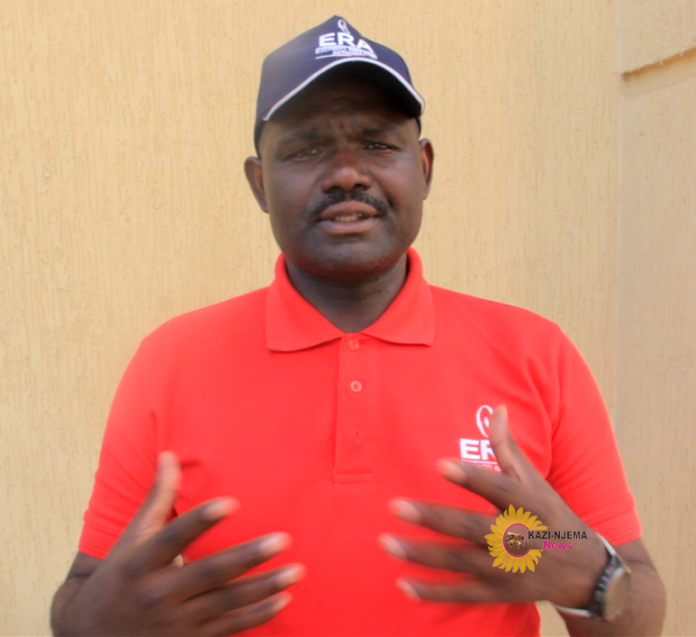
The author serves at the Electricity Regulatory Authority.
Do you have a story in your community or an opinion to share with us: Email us at Submit an Article
Mecca, Saudi Arabia – Celebrated Ugandan media personality, Faridah Nakazibwe, has captured hearts back home after accomplishing a rare and remarkable spiritual feat at Islam’s holiest site.
The former NTV Uganda Head of News, now fondly known as Hajat, successfully reached and touched three of the most sacred points around the Kaaba — the Black Stone, Yemeni Corner, and Multazam — in under 10 minutes, despite the overwhelming crowds of Ramadan pilgrims.
Nakazibwe, who is currently in Mecca for the final ten days of the holy month, shared the emotional moment in a post on X late Tuesday, describing how what seemed nearly impossible turned into a deeply fulfilling experience.
“You see the gentleman there? He is called Ashraf, a Ugandan (I met him today). Him and two other Ugandan gentlemen saw me struggling… They guided me through the stampede,” she wrote. “Ladies and gentlemen, I touched the three of them in less than 10 minutes.”
She credited the trio — identifying two as Ashraf and Hood — for navigating her through the dense sea of worshippers performing Tawaf, a ritual that draws millions to circle the Kaaba, especially during Ramadan. The third helper, she noted, remained unnamed in the excitement of the moment.
The achievement has resonated widely, with many Muslims noting that accessing these sacred points during peak pilgrimage periods can take hours — and in some cases pose serious safety risks due to overcrowding. Social media followers flooded her post with prayers and admiration, describing her experience as “Masha’Allah” and a sign of divine favor.
A graduate of the Islamic University in Uganda with a Bachelor of Mass Communication, Nakazibwe remains one of Uganda’s most recognizable media figures. For nearly two decades, she was a staple on television screens, anchoring Luganda news and hosting the widely followed morning show Mwasuze Mutya before stepping away in 2023.
She now leads a quieter but impactful chapter of life, focusing on family and entrepreneurship as the founder of Nanaville 24-hour Baby Care Centre.
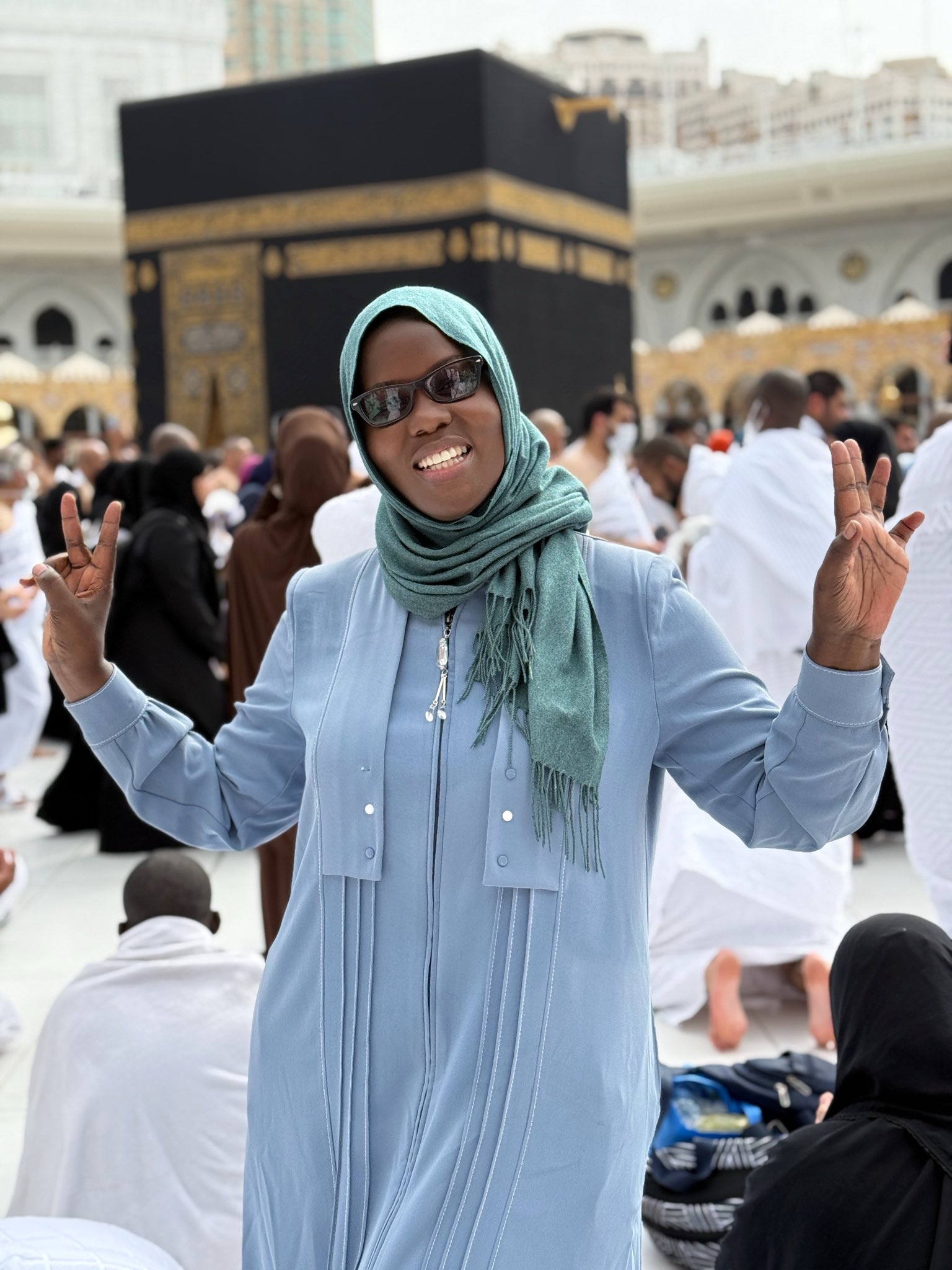
Photos accompanying her post show a radiant Nakazibwe in a flowing light-blue abaya and teal hijab, smiling against the backdrop of the Grand Mosque, alongside fellow pilgrims and her Ugandan guides — a visual testament to a deeply personal spiritual milestone.
In the intense heat and human tide of Ramadan Umrah, her story stands out as one of faith, solidarity, and resilience — a Ugandan moment etched at the very heart of Islam.
May Allah accept her Umrah. Ameen.
Do you have a story in your community or an opinion to share with us: Email us at Submit an Article
For Etania Mutoni, known simply as Etania, headlining at Hockey Grounds isn’t just a personal achievement—it’s a milestone for the community that has supported her every step of the way.
Her upcoming show, Becoming Life of the Party, marks the first time a Ugandan female DJ has taken this stage, but for Etania, it’s a celebration of everyone who refused to let her story end before it began.
Before the lights, decks, and crowds, Etania built her foundation working the nightlife in Kampala with the events and marketing collective Muchachos. As a hostess, she learned the subtle art of reading a room, holding space, and making people feel noticed. She discovered early on that a party isn’t just about music—it’s about the energy you give the person next to you. And she knew she had to master both.
Then came COVID-19. While the world went quiet in 2020, Etania’s career took an unexpected leap. The empty clubs became the stage for her personality, as TV audiences across Uganda tuned in to the NTV Dance Party every Saturday night. With her signature biker shorts, sneakers, and infectious confidence, Etania brought life to living rooms nationwide. She became the antidote to lockdown blues, proving that being unapologetically yourself inspires others to do the same.
It was during this time that her unique energy began to align with big brands. Her years-long partnership with Smirnoff turned her into a fixture at every Smirnoff Fiesta, and her persona became synonymous with the brand’s “We Do We” spirit. “I love that this allows me to be myself,” she often says. “In other spaces, you lose your character to fit in. Here, the character is the point.” That authenticity is how the title Life of the Party came to be.
From high-energy MC to DJ commanding the decks, Etania’s evolution has been fueled by talent, hard work, and the backing of brands that believe in her vision. She joined NRG Radio, toured internationally, and cemented her place in Uganda’s media and entertainment scene.
Now, she stands on the brink of her biggest moment yet. But becoming the Life of the Party isn’t just about the music or the lights. Audiences see the drop, the energy, the fun—but not the rehearsals, the doubt, or the phone call that almost made her question if she was ready for it all.
In Part 2, we go behind the scenes, sharing the preparations, the nerves, and the unexpected voice on the other end of the line that could have changed everything for Etania.
Rae Nattie has revealed that Sheebah Karungi has been her biggest inspiration for years, long before she stepped into music.
The rising singer, born Racheal Natukunda, made the revelation during an appearance on Level Up, where she spoke about the artiste who shaped her love for music.
I have been looking up to Sheebah Karungi. I love her since childhood. I really love her music and vibe and energy that she shows on stage.
Her remarks raised eyebrows in the studio, subtly hinting at how far back that influence goes and what it might suggest about Sheebah’s age.
Rae, 26, stood by her words and insisted her admiration started early.
Even before I became a teenager, yes I have been looking up to her. Sheebah started singing when she was young.
While her name is still new in music circles, Rae says her journey in the industry did not start with singing.
She only began releasing music recently, with a career that is about three months old and already includes her second song titled “Mine.”
Before that, she built her presence through modeling, video vixening, and brand campaigns.
I have been in the industry, but not as an artiste. I have been a model, and I also used to do video vixening, runway fashion shows, and commercials, including billboards with big brands. I am new as an artiste, but not new in the industry.
About UGNEWS24
UGNEWS24 is a Uganda local news service, a product of
SOLAVIA GROUP LIMITED,
Reg. No. 80048169153974.